LVMH Watch Week 2026: Louis Vuitton’s Pure Convergence
Watch Fairs
LVMH Watch Week 2026: Louis Vuitton’s Pure Convergence

It might not have been the most groundbreaking of Louis Vuitton’s launches last year, but the Tambour Convergence was certainly one of its most elegant. Certainly, the guichet style watch is a measured flex of Louis Vuitton’s watchmaking maturity and in-house expertise in movement design, case-making and métiers d’art. Powered by a full rotor automatic base movement developed by La Fabrique du Temps, it came in a refined Tambour case that’s entirely produced and exquisitely finished in-house.
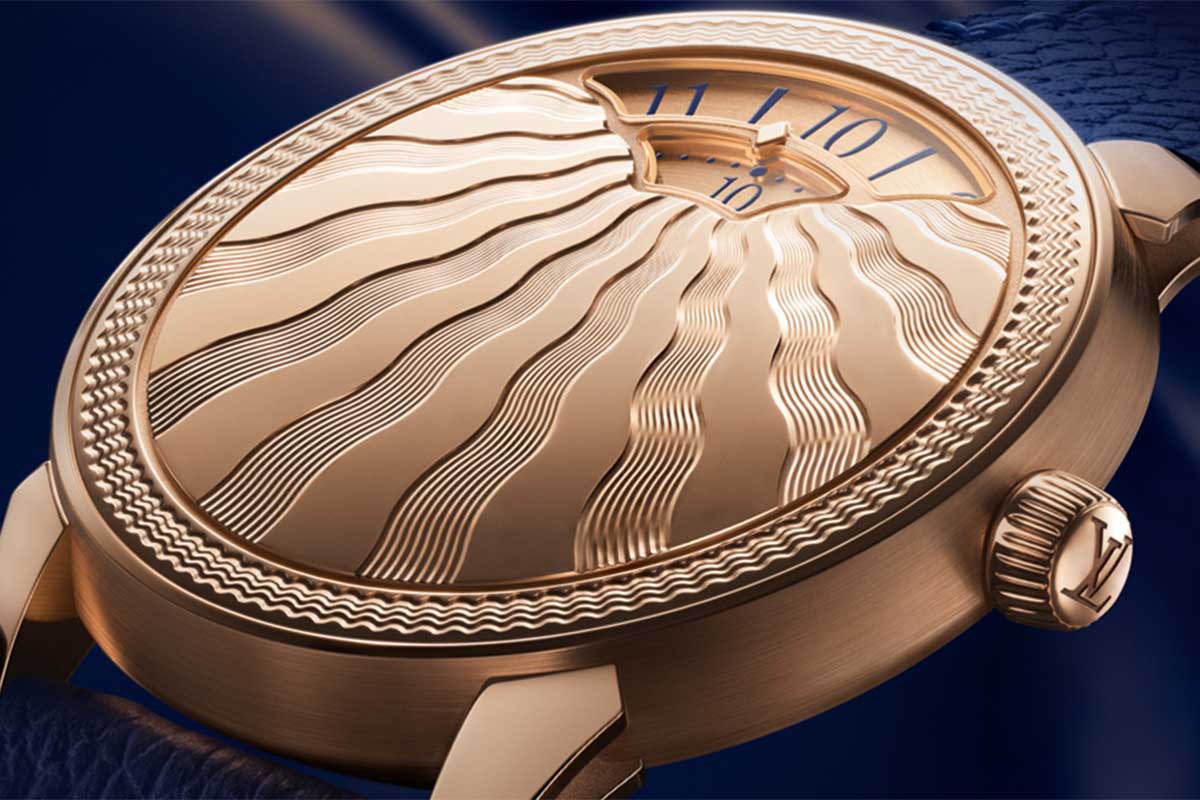
This year’s release stays firmly on the same trajectory, with a clear emphasis on in-house capability and craft. As its name suggests, the Tambour Convergence Guilloché is, first and foremost, a magnificent showcase of the maison’s mastery of guilloché. As with its predecessors, the dial plate is the tabula rasa of choice, and here, it is embellished with two distinct guilloché techniques, each cut by hand using restored antique machines from the mid-19th and early 20th centuries. The result is clearly not decoration for decoration’s sake, but a clear demonstration of expertise and respect for traditional craft.
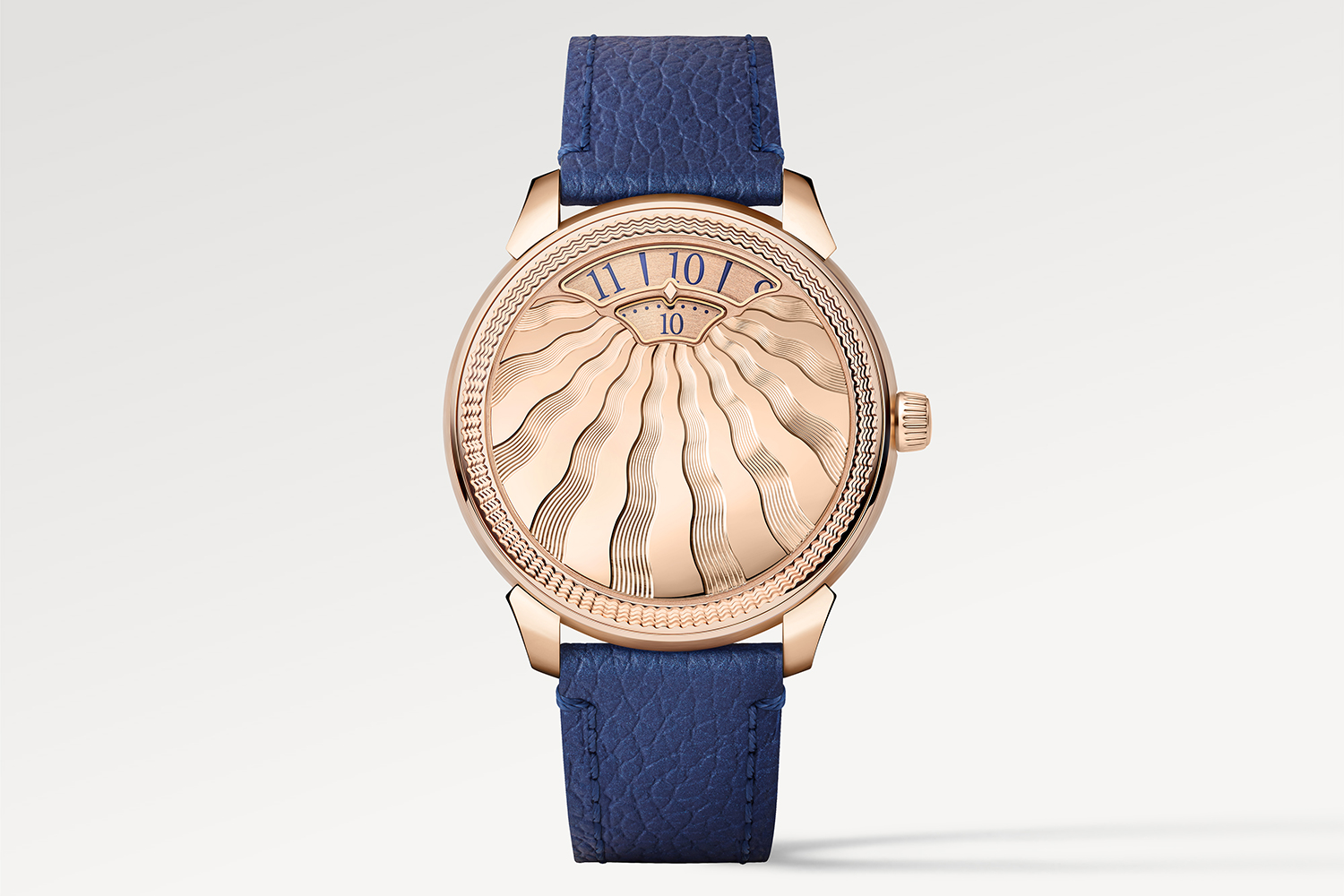
Louis Vuitton Tambour Convergence Guilloché
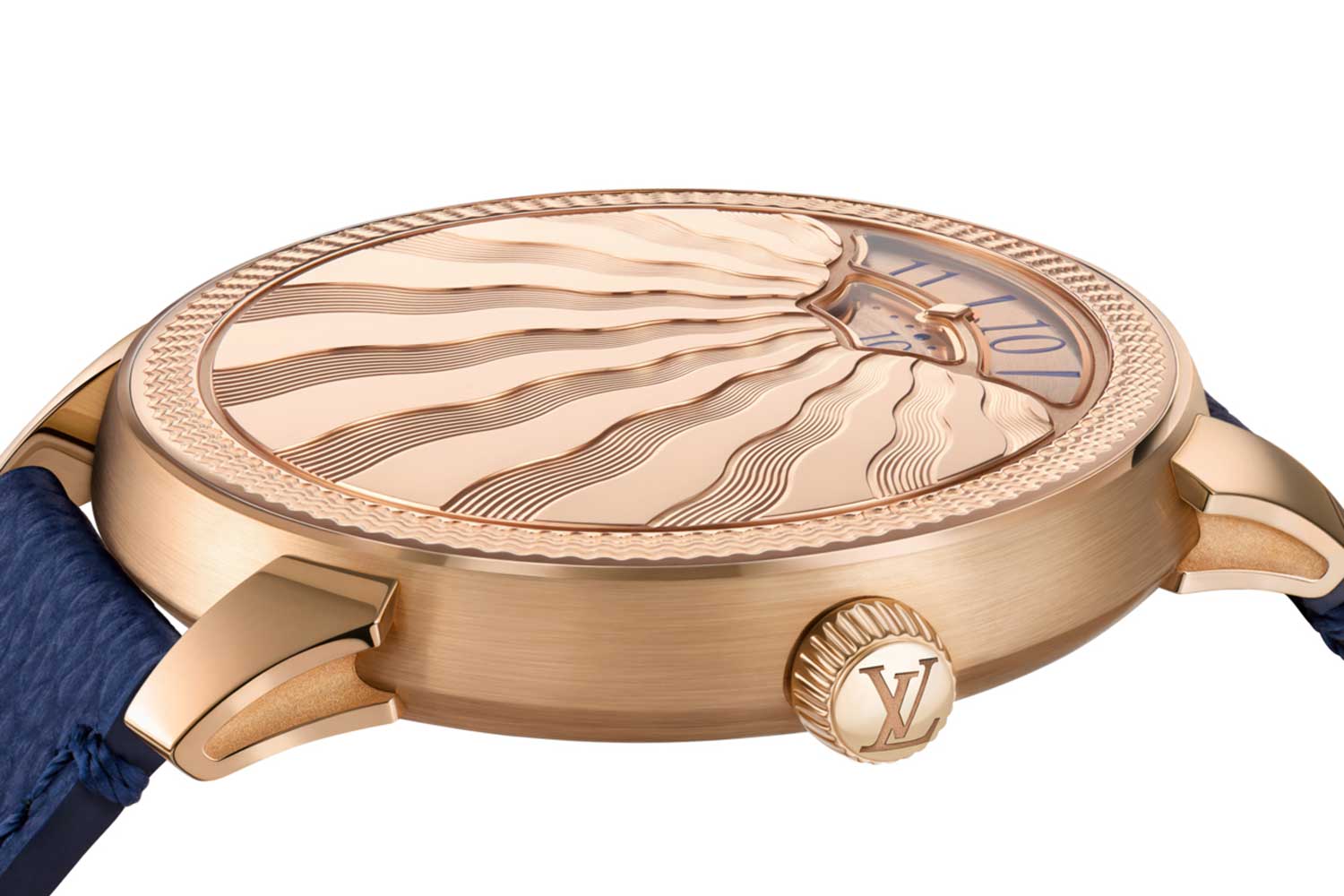
To work on these machines with any satisfactory level of skill, the artisans must first devote painstaking hours of practice. The challenge is compounded here by the uneven contours of the domed case, which requires a constant adjustment of the angle and pressure of the cutting tool. Any lapse on the part of the artisans to do so would result in uneven cuts and inconsistent patterns. In other words, failure. It is an intense and demanding task that requires not just the highest skill, but of concentration as well.
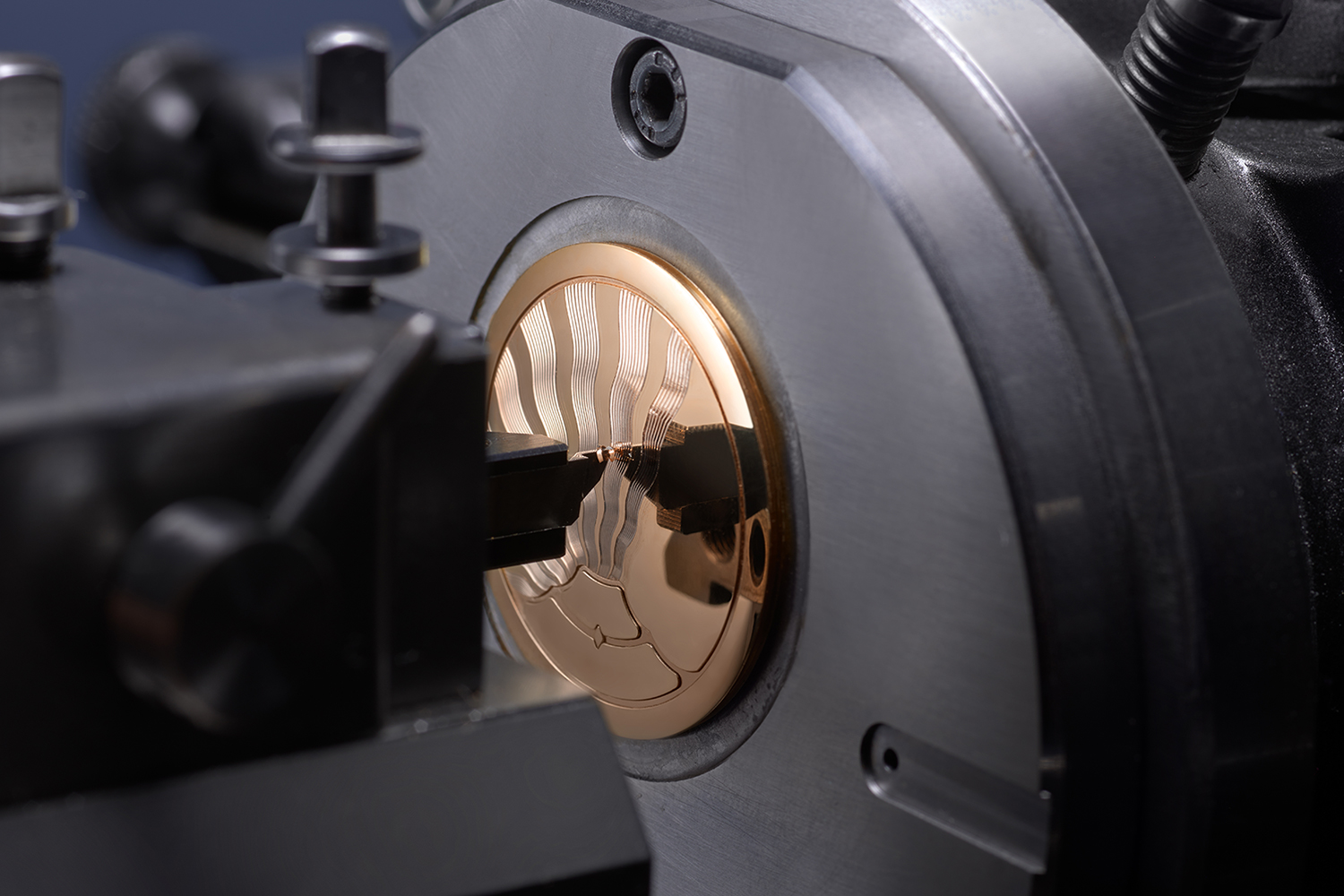
The making of the case with a straight-line engine from 1935
Two different patterns produced on two separate manual lathes are featured on the Tambour Convergence Guilloché. The first is made using a rose engine machine from 1850s, fitted with traditional rosettes for a delicate concentric wave around the perimeter. The second linear pattern, meanwhile, is made with a straight-line engine from 1935, adapted with a bespoke cam to ensure the smooth flow you see on the dial plate. To ensure contrast and overall tactile richness, the lines are etched deeper, up to three times more than conventional dial guillochage, according to Louis Vuitton. The entire process takes no less than 16 hours for a single dial, after which it will be polished by hand for the final shine.
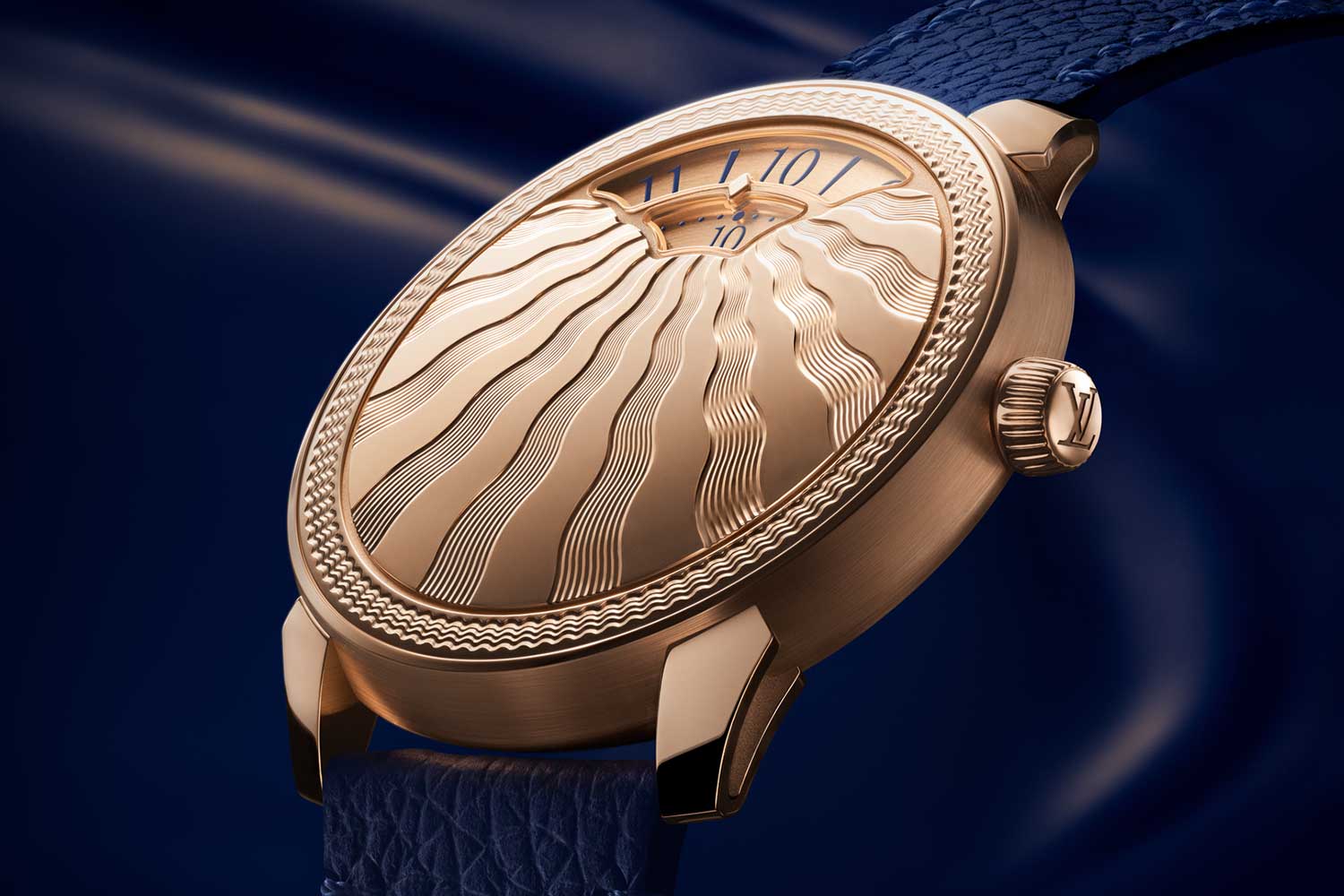
The traditional rosettes for a delicate concentric wave around the perimeter and second linear patterns are etched deeper, up to three times more than conventional dial guillochage
Both hours and minutes are dragging and told via blue printed numerals and markers on two rotating galvanically treated brass disks. These are framed by an arched guichet with scalloped edges and indicated via a polished lozenge marker.

The blue printed numerals and markers on two rotating galvanically treated brass disks
Inside, Louis Vuitton retains the in-house self-winding Caliber LFT MA.01.01 of the earlier references, featuring a 18K rose gold rotor bearing the LV logo and a string of interlocking letter “V” that resembles a staccato zigzag, and sandblasted bridges with frosted recesses reminiscent of the LFT023 of 2023’s Tambour. As in the latter, jewels are clear and transparent here, instead of traditional ruby red, which gives it a sleek contemporary feel. Beating at 4Hz with a free-sprung balance, it offers a steady 45-hour power reserve.
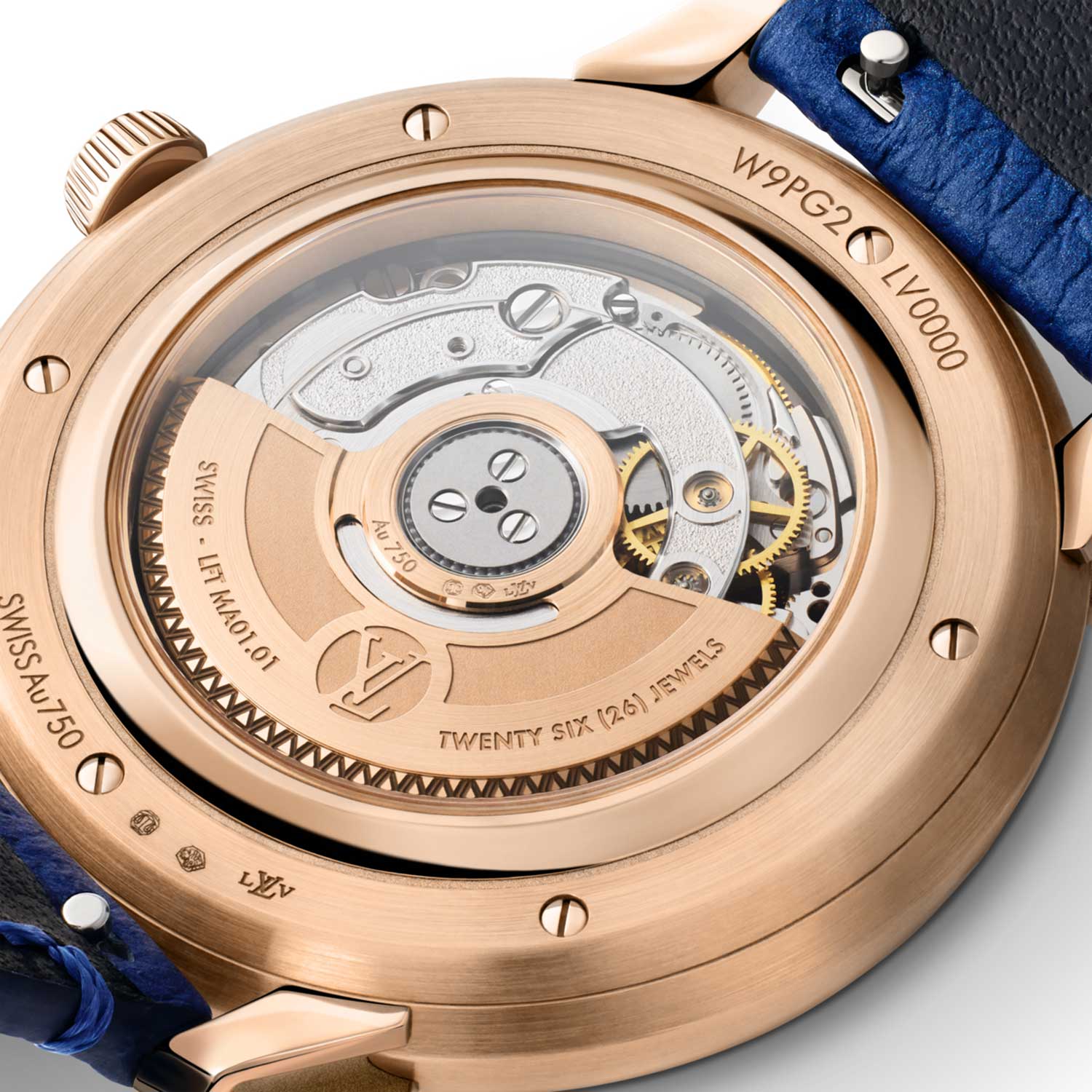
The in-house self-winding Caliber LFT MA.01.01
Tech Specs: Louis Vuitton Tambour Convergence Guilloché
Movement Self-winding Caliber LFT MA.01.01; 45-hour power reserve
Functions Dragging hours and minutes
Case 37mm x 8mm; 18K rose gold; water resistant to 30m
Dial Guichet-style with two different guilloché patterns
Strap Blue calf leather
Price CHF 50,000
Louis Vuitton

You may also like

Watch Fairs
LVMH Watch Week 2026: Louis Vuitton’s La Camionnette — The Art of Travel in Miniature
Jan 19, 2026
Watch Fairs
LVMH Watch Week 2026: Louis Vuitton’s La Camionnette — The Art of Travel in Miniature
Jan 19, 2026

Watch Fairs
LVMH Watch Week 2026: Louis Vuitton Escale — A Journey of Discovery
Jan 19, 2026
Watch Fairs
LVMH Watch Week 2026: Louis Vuitton Escale — A Journey of Discovery
Jan 19, 2026

Editorial
The Revolutionary List: 25 Watchmakers and Construction – Enrico Barbasini & Michel Navas
Dec 15, 2025
Editorial
The Revolutionary List: 25 Watchmakers and Construction – Enrico Barbasini & Michel Navas
Dec 15, 2025