Introducing the Audemars Piguet 150th Heritage Pocket Watch With A Universal Calendar
Editorial
Introducing the Audemars Piguet 150th Heritage Pocket Watch With A Universal Calendar

One of the most admirable aspects about Audemars Piguet has been its commitment to a modern understanding of complications. Intelligent problem solving is brought to bear in the service of usability and experience, rather than spectacle for its own sake. The Royal Oak Perpetual Calendar powered by the Calibre 7138 or 7136 in which all indications can be individually adjusted via the crown is one example. The more recent RD#5 is another for re-engineering the fundamentals of a chronograph for the sake of creating softer pushers, and then there’s the Calibre 1000 in the RD#4, a grand complication that reconciled immense complexity with genuine ease of use.
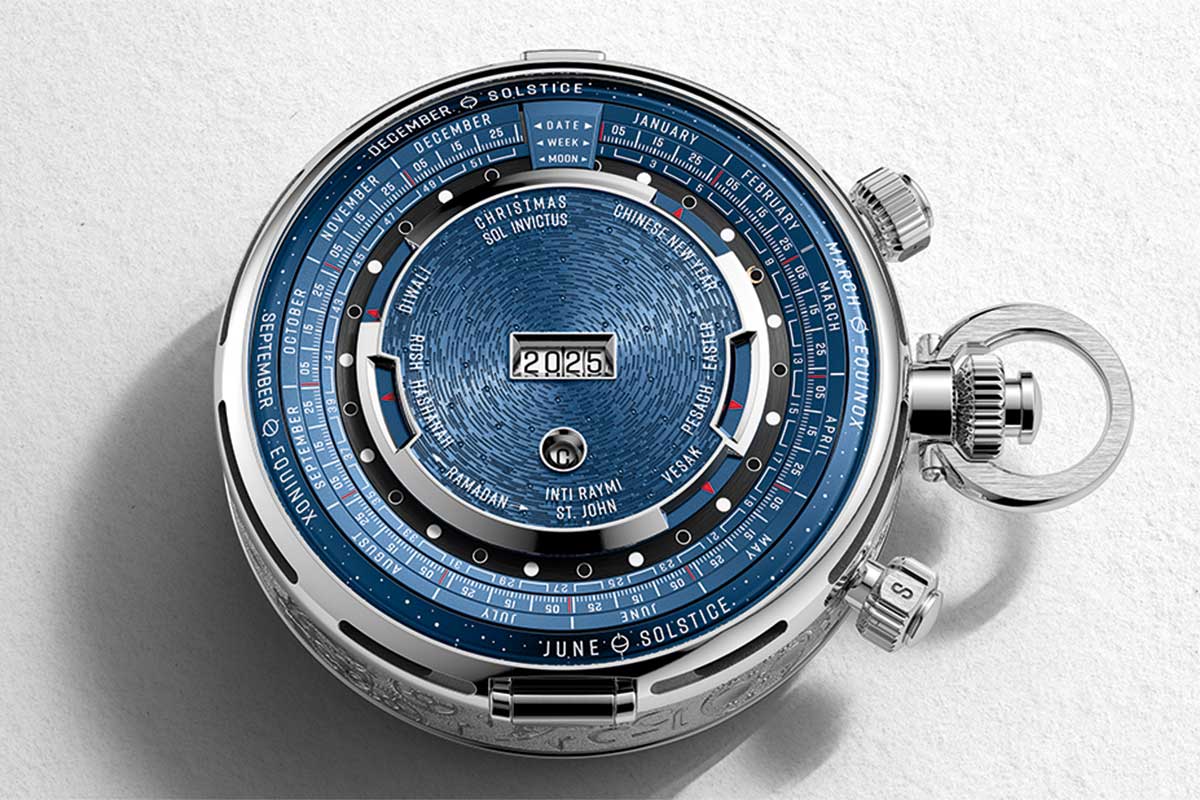
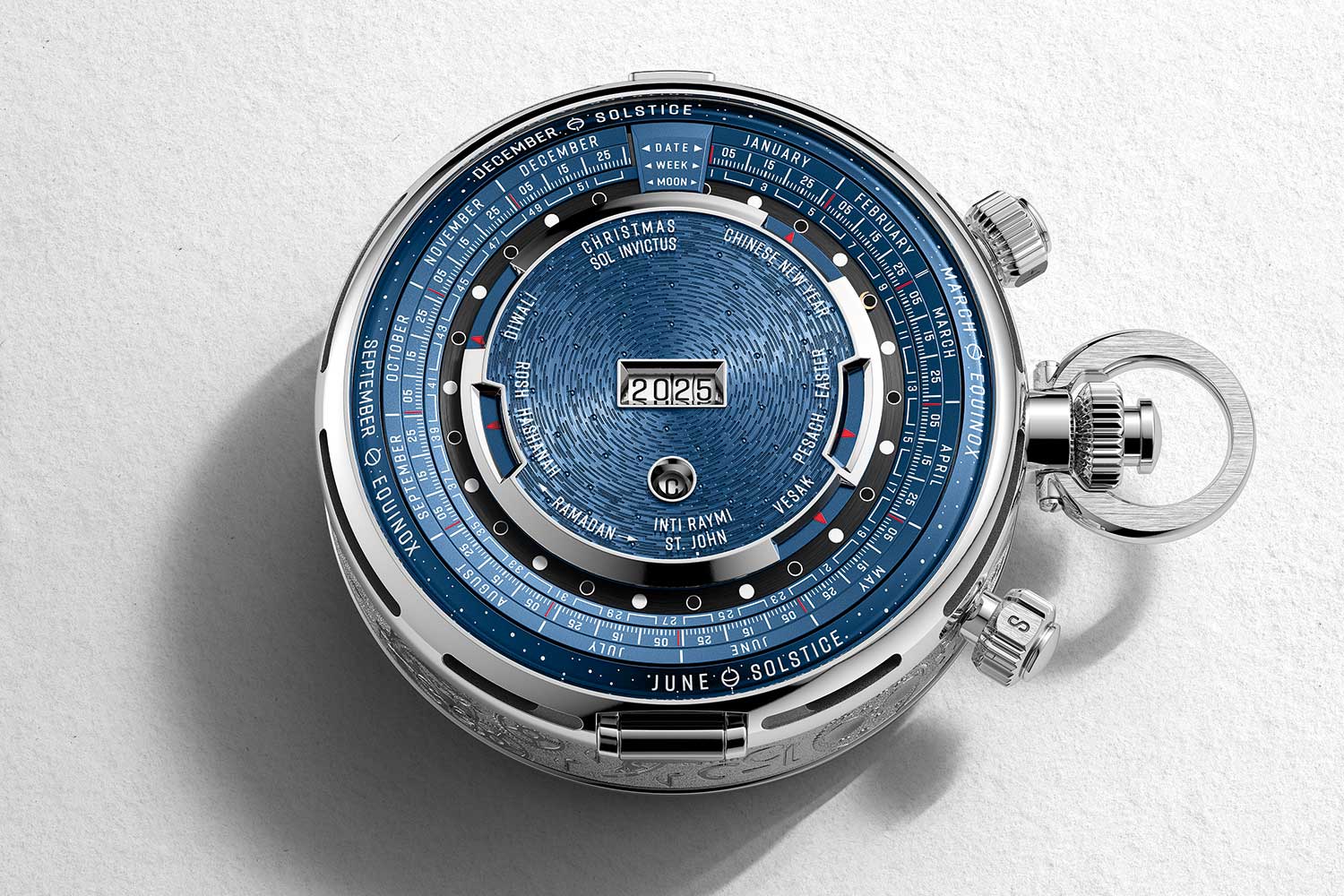
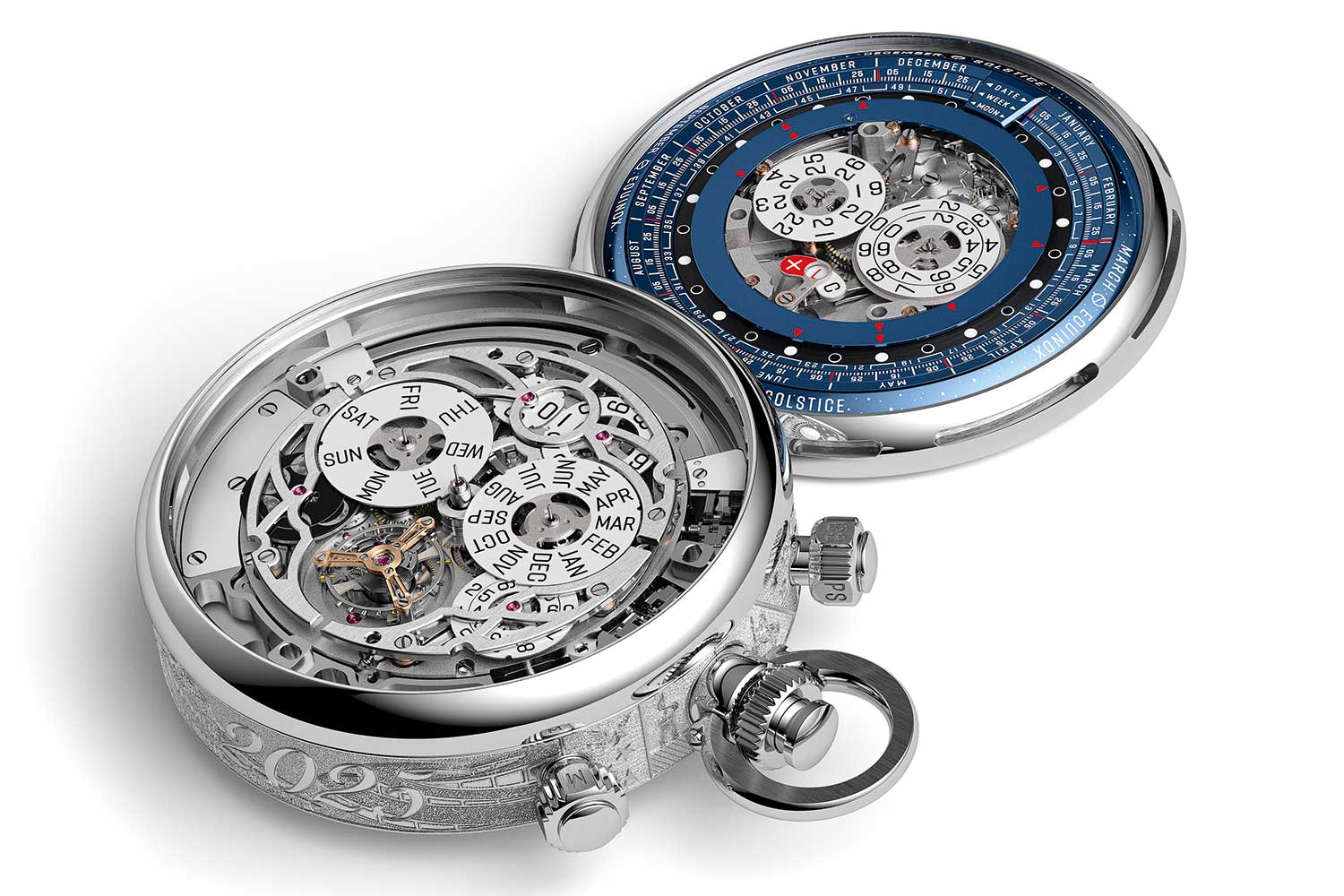
Now as part of its ongoing 150th anniversary celebrations, the brand has unveiled the 150th Heritage Pocket Watch. It takes the architecture of the Calibre 1000 but reworks the control scheme for use as a pocket watch. More than that, it introduces what AP calls a “Universal Calendar” that reconciles solar, lunar and lunisolar time in a single display on the case back and is capable of indicating the dates of Christmas, Ramadan, Saint John’s Day, Diwali, Rosh Hashanah, Pesach, Vesak, Easter and the Chinese New Year, for any year from 1900 to 2099. Functionally, it offers a mechanical means of understanding how different calendrical systems intersect within a given year, presented all at once.
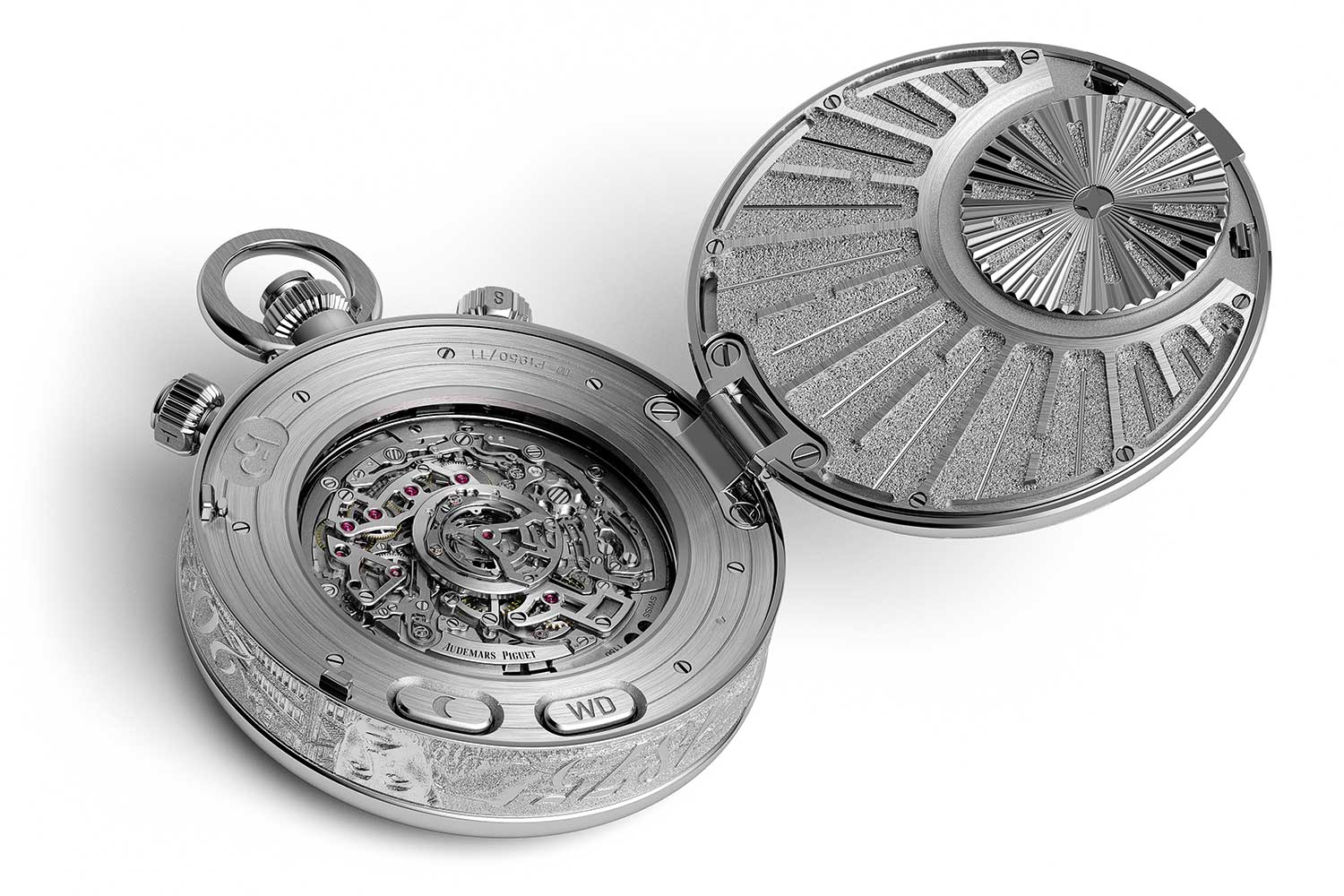
One thing to note right out of the gate is that this is a module that is contained within the case back and has no connection to the movement, meaning it does not run continuously. Instead, it is lookup table that is advanced manually via a fluted bidirectional wheel set into the caseback. Once the year is selected, it will display whether it is common or leap year, positions the lunar ring so that new and full moons align with their corresponding dates for the selected year, along with the correct dates of all the listed observances for that year until the year is manually changed again by rotating the fluted wheel in the case.
Audemars Piguet 150th Heritage Pocket Watch With Universal Calendar
As such, the Universal Calendar is more of an instrument than a complication in the traditional sense. But it doesn’t make the module any less interesting or clever. Its ingenuity lies in how the relationships between the solar year, lunar phases, seasonal markers and the timing of solar, lunar and lunisolar observances are made legible and navigable through a finite set of states selected directly by the user. This makes immediate sense in places like Singapore, where multiple religious observances such as Christmas, Ramadan, Chinese New Year, Deepavali, Vesak and Easter coexist within the same civic year.
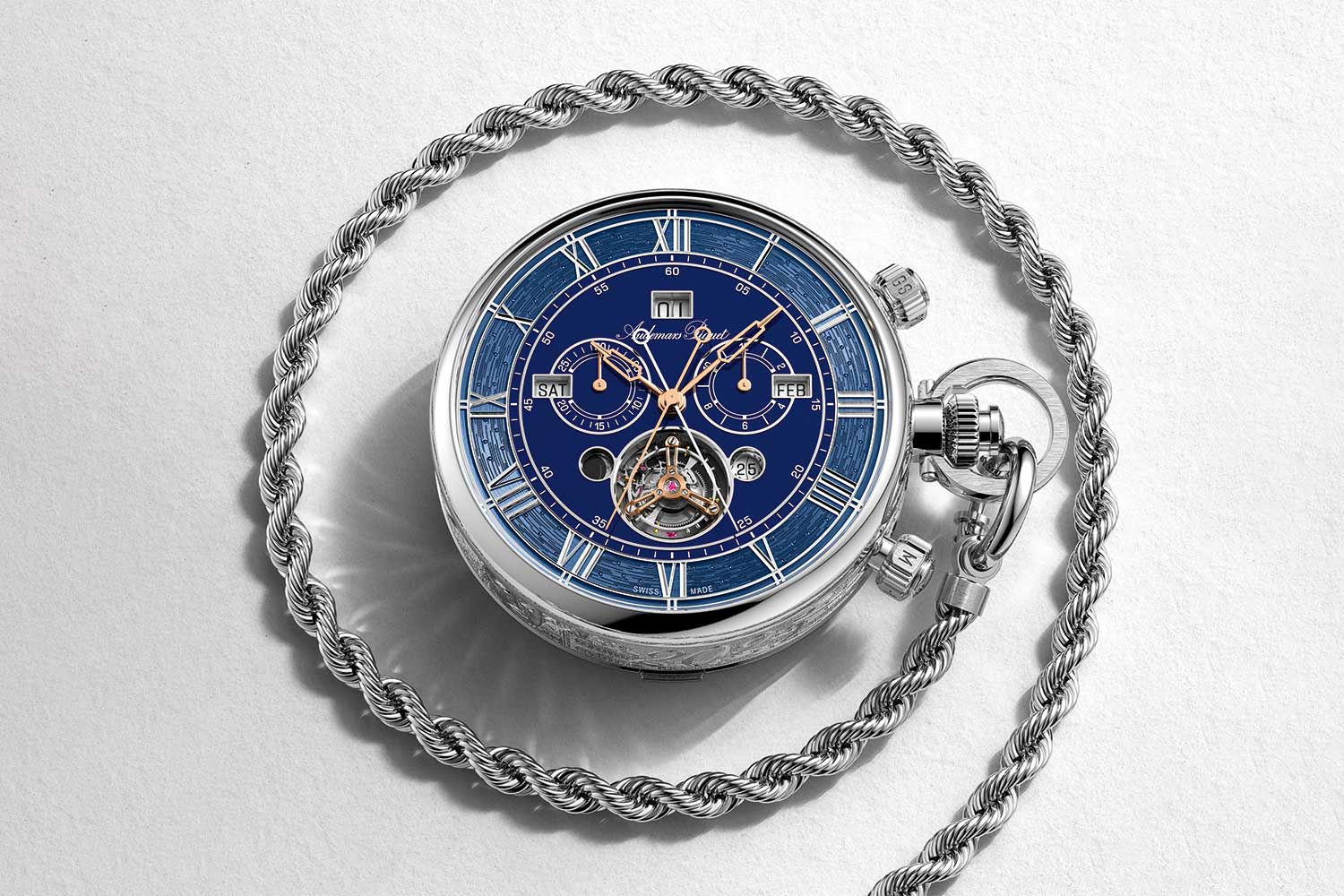
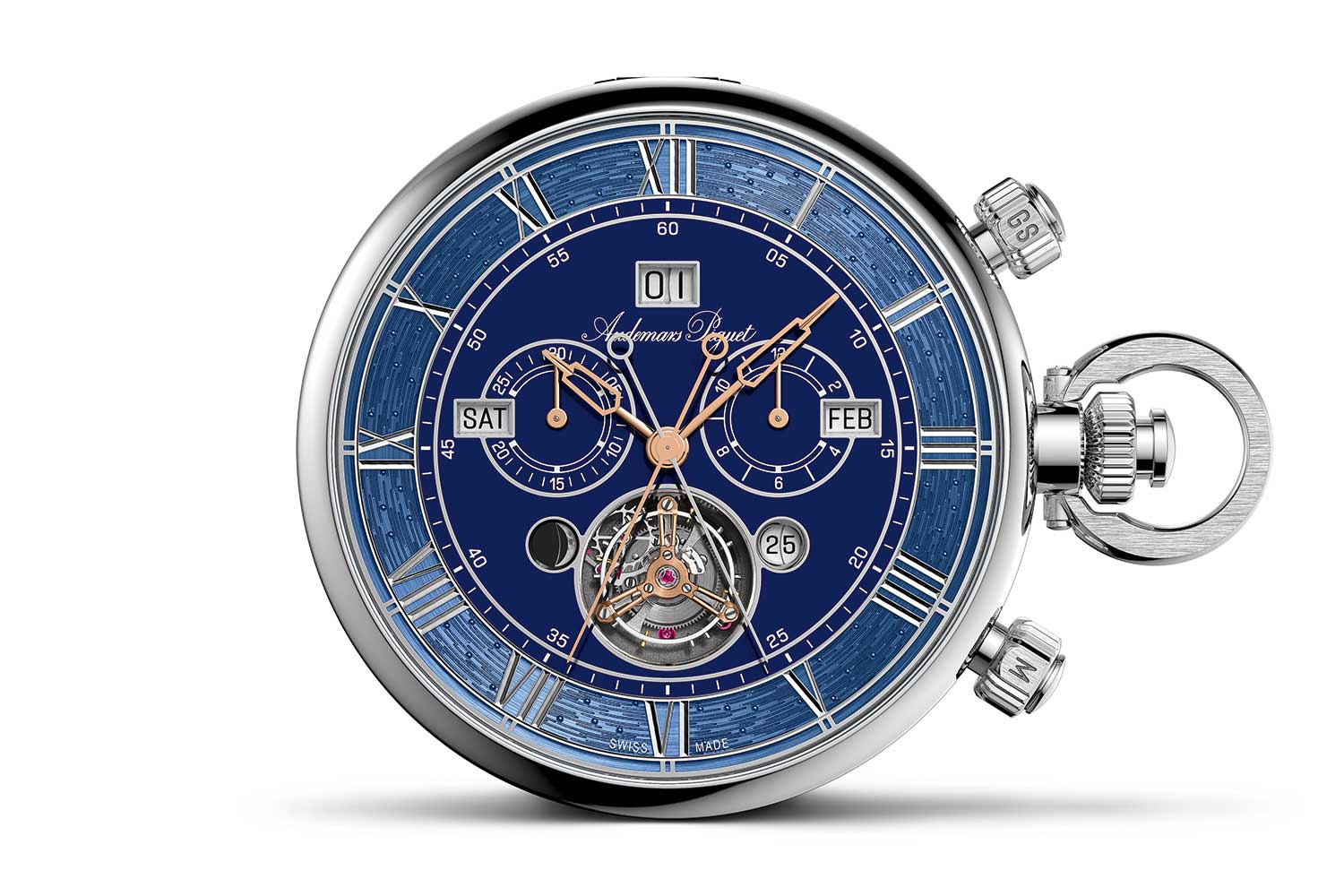
The pocket watch measures 50mm in diameter and 23.4mm thick. The decoration of the watch is extensive. The platinum case is hand-engraved in stunning detail with commemorative motifs drawn from the company’s history, including portraits of its founders and the anniversary emblem. The dial is executed in solid white gold and brings together several métiers d’art. Blue translucent grand feu enamel is built up through successive firings. Surrounding it, the Roman numerals are relief-engraved by hand and sit against a field of stars. The pink gold hands are also engraved by hand. Their warmer tone improves legibility while echoing the chronograph indications and the flying tourbillon bridge, creating a visual linkage across functions. The watch is delivered on a hand-made platinum chain. Only 10 pieces will be produced in total – two one-of-a-kind pieces in platinum and 8 additional examples in white gold.
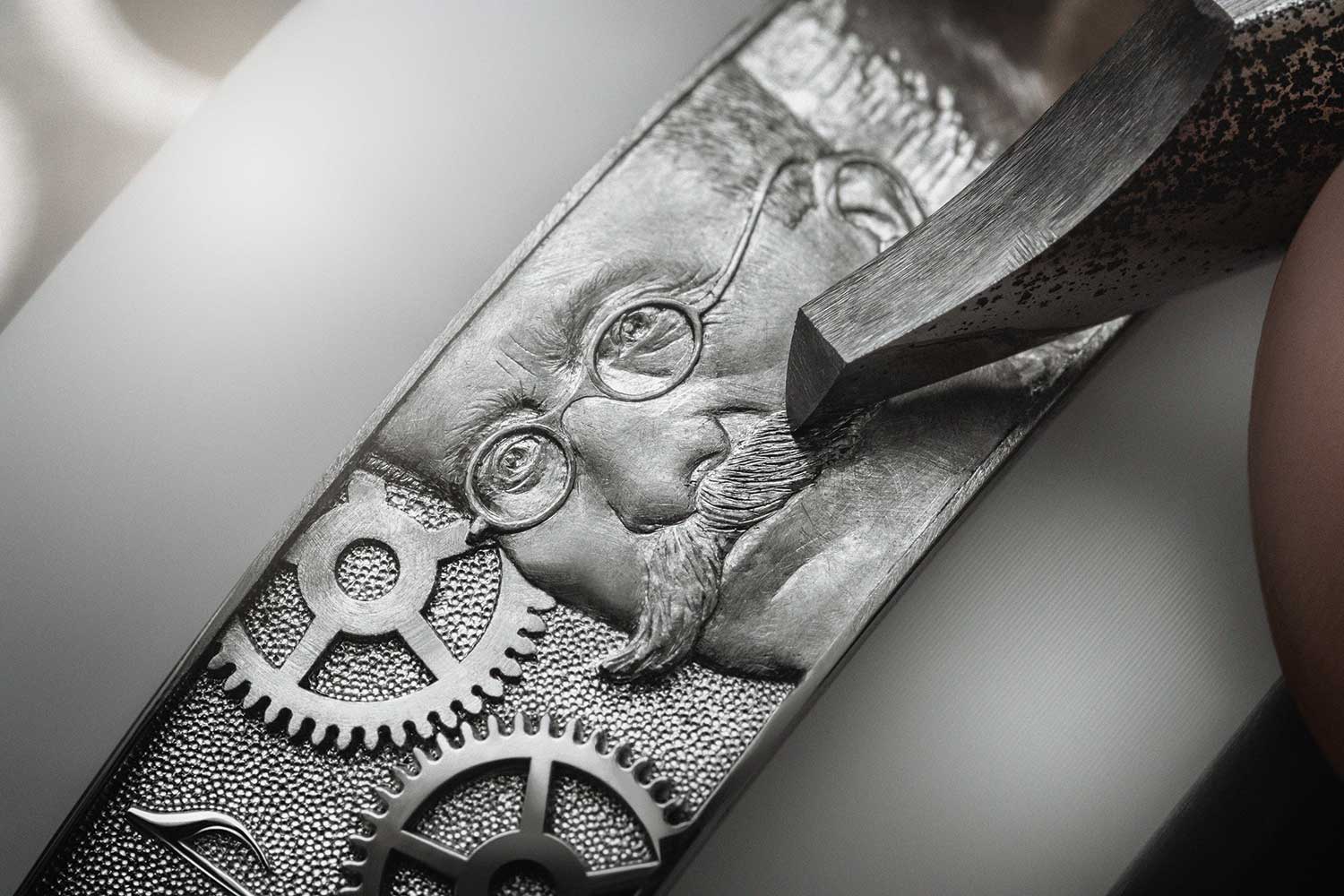
Engraving the portrait of Edward Auguste Piguet
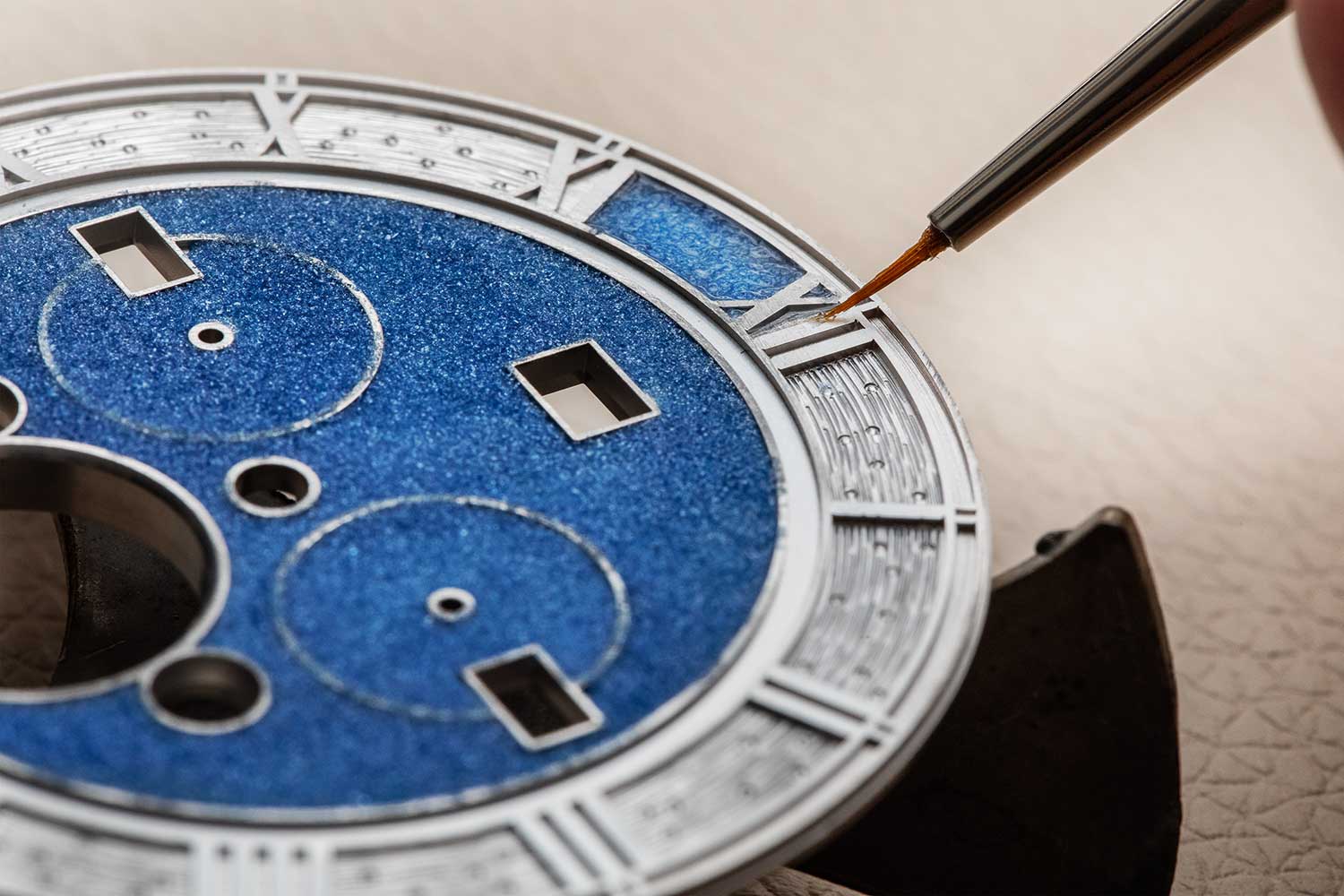
Blue translucent grand feu enamel
Universal Calendar
On the Universal Calendar dial, the indications are arranged concentrically, with the four digit year and leap year indicator displayed in the middle. There are two fixed outer rings. The outermost ring carries the seasonal markers for the solstices and equinoxes, followed by a combined month and date ring. The date ring is marked at five-day intervals and punctuated by red hashmarks indicating the start of each month, which allows the varying lengths of the months to be read without breaking the ring. An inner rotating ring carries the week indication that divides the year into numbered weeks. At each adjustment, it advances incrementally to compensate for the extra one or two days each year, ensuring the week numbering remains aligned despite leap years.
Audemars Piguet 150th Heritage Pocket Watch With Universal Calendar
Then there’s a rotating lunar ring, marked with alternating new-moon and full-moon symbols distributed around its circumference. This ring also rotates when the calendar is adjusted, positioning the lunar phases relative to the fixed date scale for the selected year. Once set, both the week and lunar rings remain stationary.
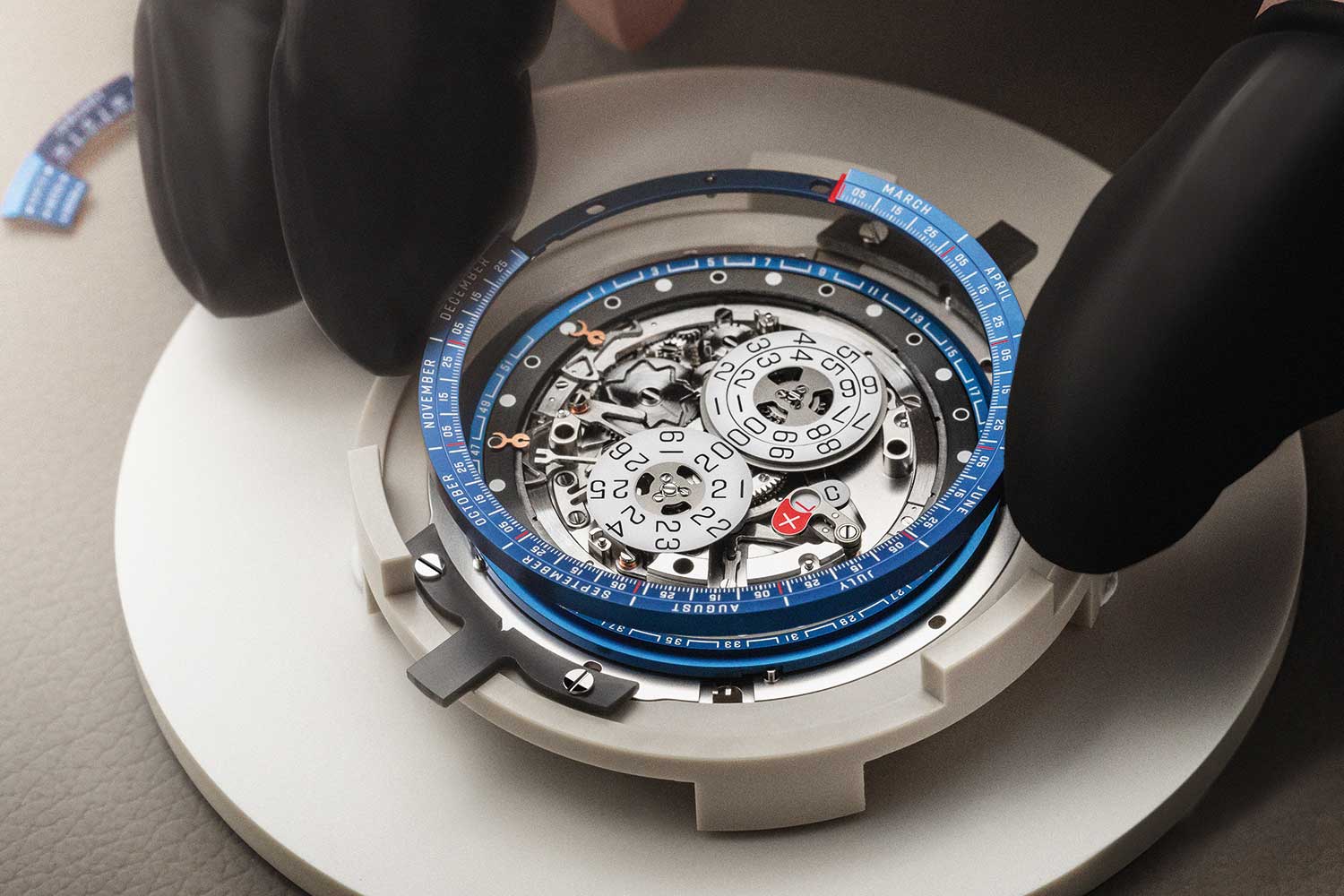
Assembling the month and date ring which has a moving sector for leap year indication
The dates of the various lunisolar religious and cultural observances – Diwali, Rosh Hashanah, Pesach, Vesak, Easter and the Chinese New Year – are indicated by red arrow markers printed on a rotating disc that moves beneath the dial when the calendar is adjusted. While Easter is celebrated within a strictly solar calendar, it is governed by a lunisolar formula. It is solar in its anchoring to the equinox and lunar in its dependence on the full moon.
One thing you’ll notice is that the beginning of Ramadan is handled differently. Instead of a fixed arrow, it is shown by a crescent symbol mounted on its own independently moving element. This reflects the fact that Ramadan is governed purely by the lunar calendar, with its start based on the sighting of the new moon. As such, it is driven by the moonphase wheel. Solar festivals – Christmas and Saint John’s – are fixed to the civil calendar, occurring on the same date each year and are hence indicated with printed dots on the dial itself.
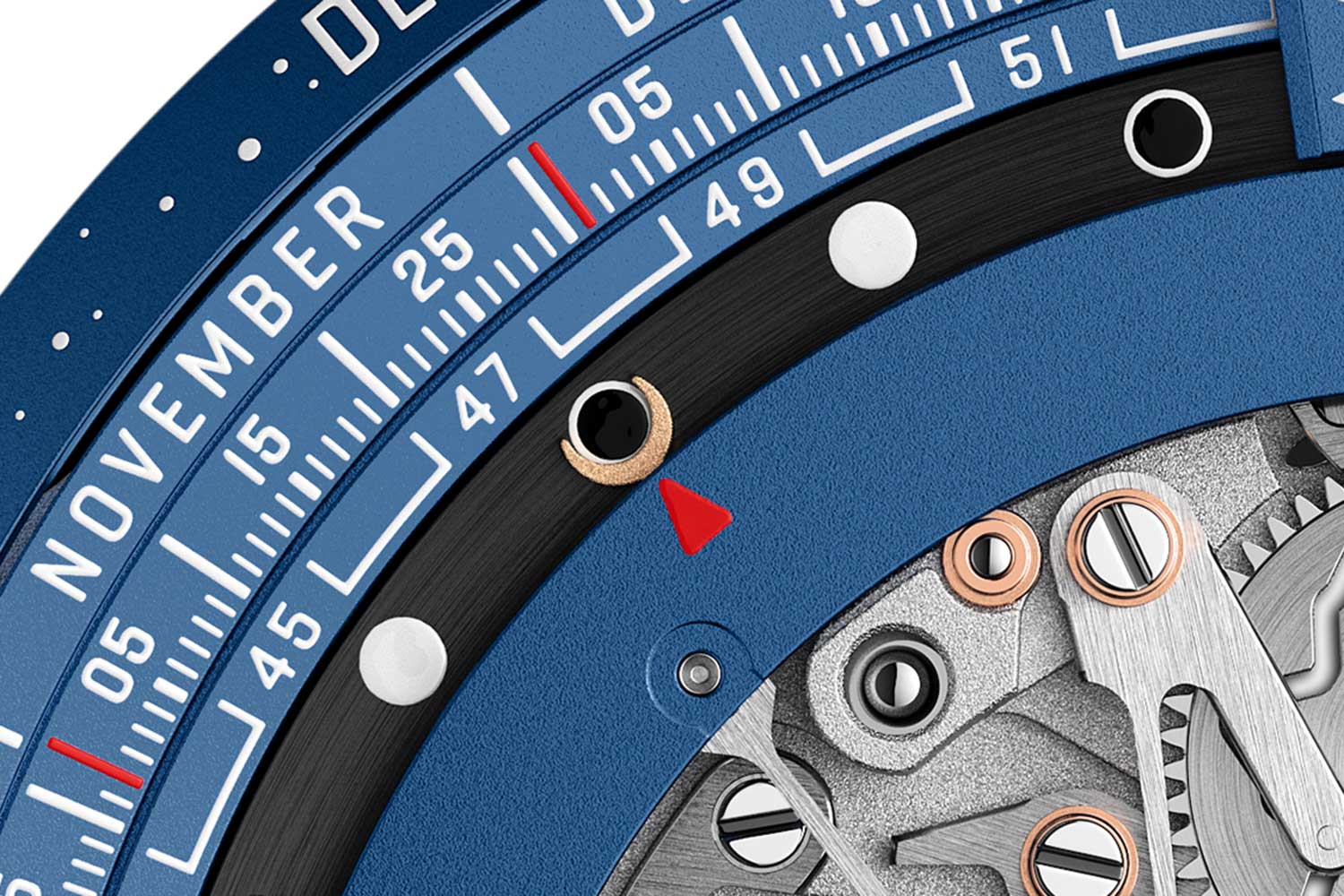
A moving crescent symbol indicates the start of Ramadan
All moving elements advance together only when the bidirectional wheel in the caseback is turned, after which the display remains static until the year is changed again. One thoughtful detail is that in leap years, a red marker overlays the date scale to indicate the extra day at the end of February.
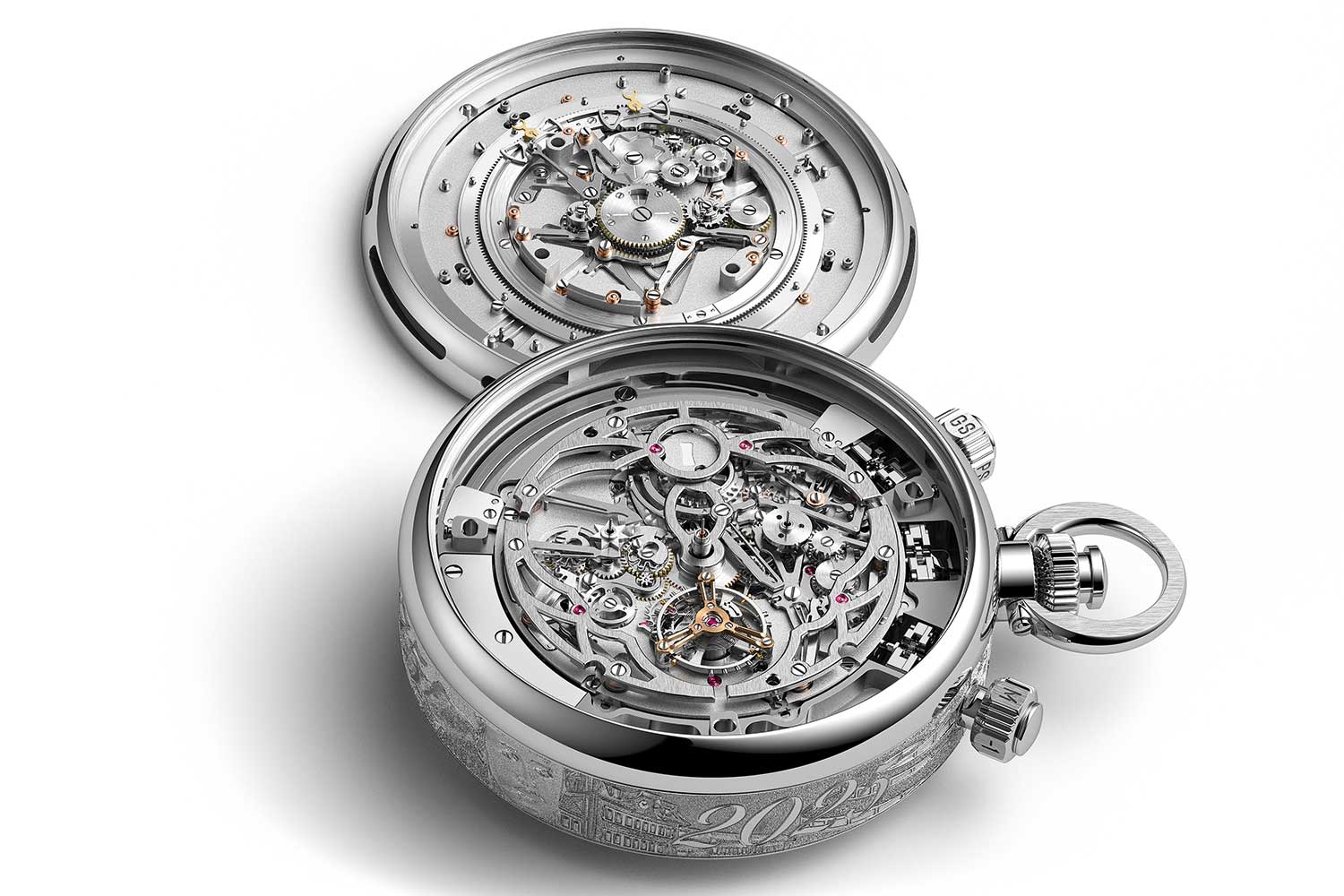
Audemars Piguet 150th Heritage Pocket Watch With Universal Calendar
One full revolution of the fluted wheel spans exactly one Metonic cycle, which is 19 years because this is the shortest interval over which the solar year and the lunar month return to nearly the same relationship. Over that span, the drift between the two systems is small enough that lunar phases can be laid out coherently against the structure of the Gregorian year, with seasons and fixed solar observances providing stable reference points.
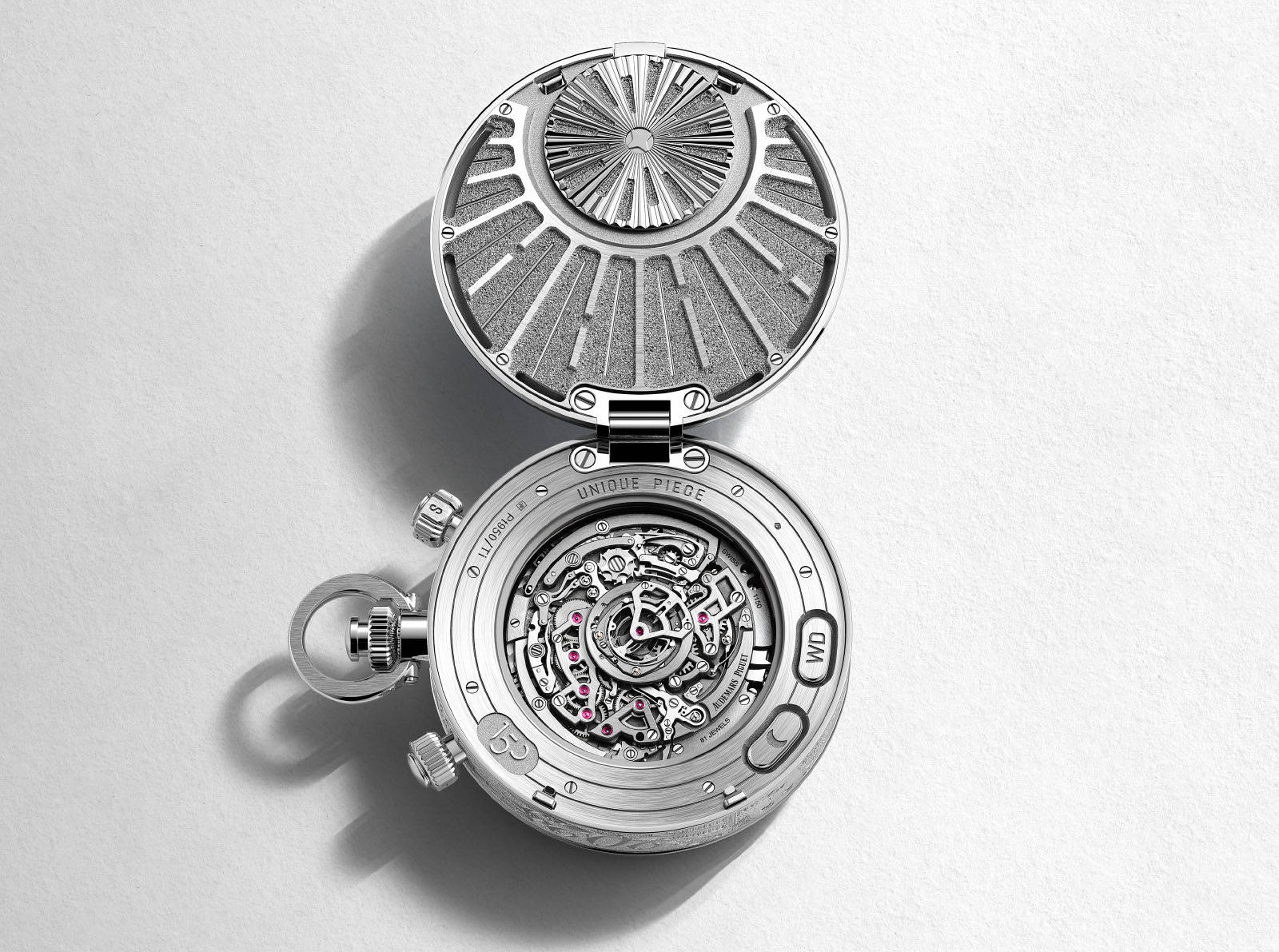
The Universal Calendar can be adjusted forwards and backwards via the fluted wheel in the case back
The most striking part of the calendar is the grooved plate at 12 o’clock, which acts as the lunisolar program wheel. Cut with a continuous groove, it converts the selected year within the 19-year Metonic cycle into a precise angular position for the lunisolar festival disc. In other words, it encodes lunisolar offsets. The feeler riding in the groove reads the path and forces the disc into the position in which its printed arrows align with the correct dates for that year.
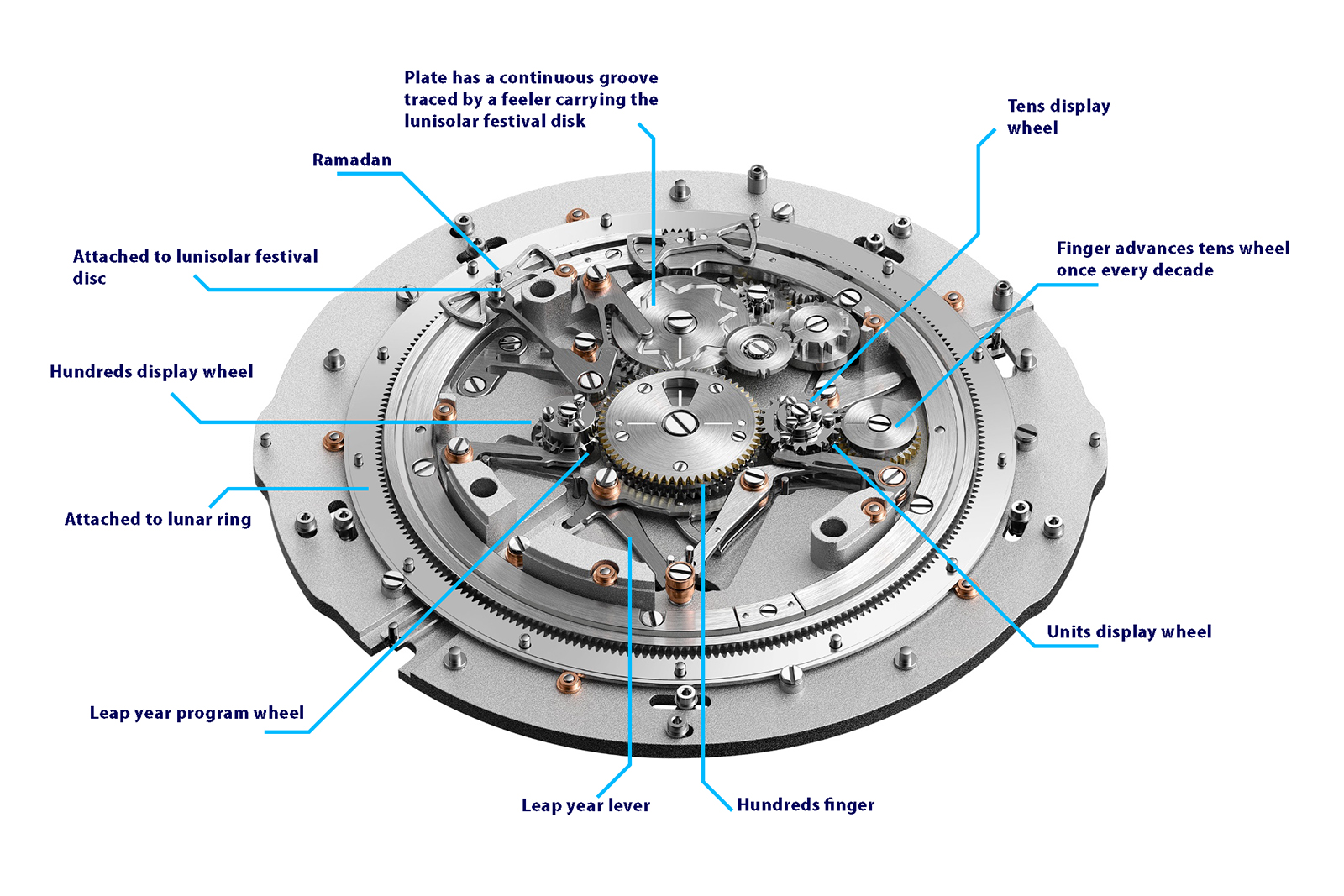
A consistent theme across the module is the use of pinions with paired teeth, separated by a gap. They are in turn driven by a finger with two flanking grooves which allows the pair to rotate in both directions. This bidirectional design underpins the entire system, enabling the calendar to be adjusted freely forwards or backwards.
Even though this is essentially a state selector, it still requires a leap year program wheel. Within the span of 1900 to 2099, there is only a single secular exception to contend with. As such, it applies the four-year cycle while suppressing the leap correction once, at 1900. While the available images do not fully reveal how this is implemented, a dedicated leap-year cam is visible beneath the hundreds display wheel.
Calibre 1150
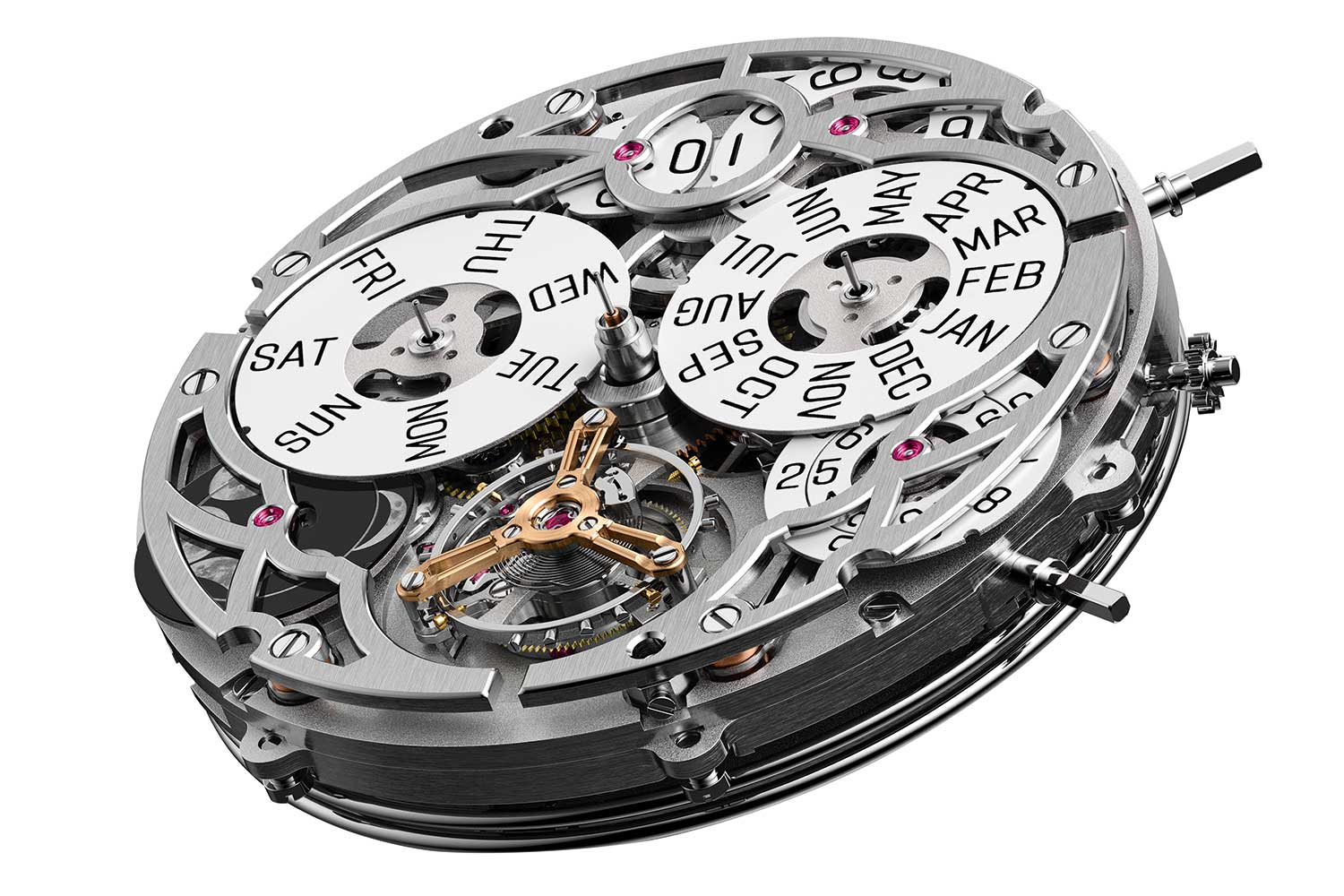
The Calibre 1150 comprises 22 complications, one fewer than Calibre 1000, as it has been converted from an automatic to a manual-winding movement. The calibre nonetheless retains an extraordinary combination of mechanisms, including a grande sonnerie, minute repeater, split-seconds flyback chronograph, flying tourbillon, and a perpetual calendar. The calendar is described as semi-Gregorian because all standard perpetual calendars are technically Julian calendars which only account for leap years every four years. The Calibre 1150 goes beyond this standard by correctly treating century years as common years. However, it does not implement the full Gregorian correction that reinstates a leap year every four centuries, and for this reason it cannot be considered fully Gregorian and will need a correction in the year 2400.
Audemars Piguet 150th Heritage Pocket Watch With Universal Calendar
Mechanically, this is achieved through a 36 month program wheel, rather than the usual 48, meaning February is always cut to 28 days. Leap years are not encoded in this wheel directly. A separate leap-year cam intervenes, which limits the drop of the grand lever into the February notch so that the month runs to 29 days every four years. Once every century, however, the combined action of the tens and hundreds cams pivots an additional lever to block this correction, ensuring that century years not divisible by 400 are treated as common years. This architecture allows for a more compact system with a year display driven directly off the secular gear train. As with the Universal Calendar module, the use of pinions with paired teeth, driven by a finger with two flanking grooves allows the month and date to be adjusted forwards and backwards.
Calibre 1000
Additionally, to reduce height, the perpetual calendar, like that in the RD#2, consolidates multiple layers into one. In a traditional perpetual calendar, the month program wheel is not a gear at all but a cam. Its perimeter is cut with notches and raised sections of varying depths, each one corresponding to the length of a particular month. Because it cannot transmit motion on its own, watchmakers add a separate month wheel beneath it, along with an intermediary train, to drive the month hand. The date wheel, on the other hand, is traditionally a 31-point star. It carries a finger to advance the month wheel at the end of each month. It is also rigidly fixed to an end-of-month snail cam, which is read by a feeler on the grand lever to trigger the correction for months shorter than 31 days. The end-of-month cam and finger is integrated into the date star, and the month program cam into the month wheel. Thus, both the program wheel and the date wheel serve as both gear and cam, capable of being sampled and driven.
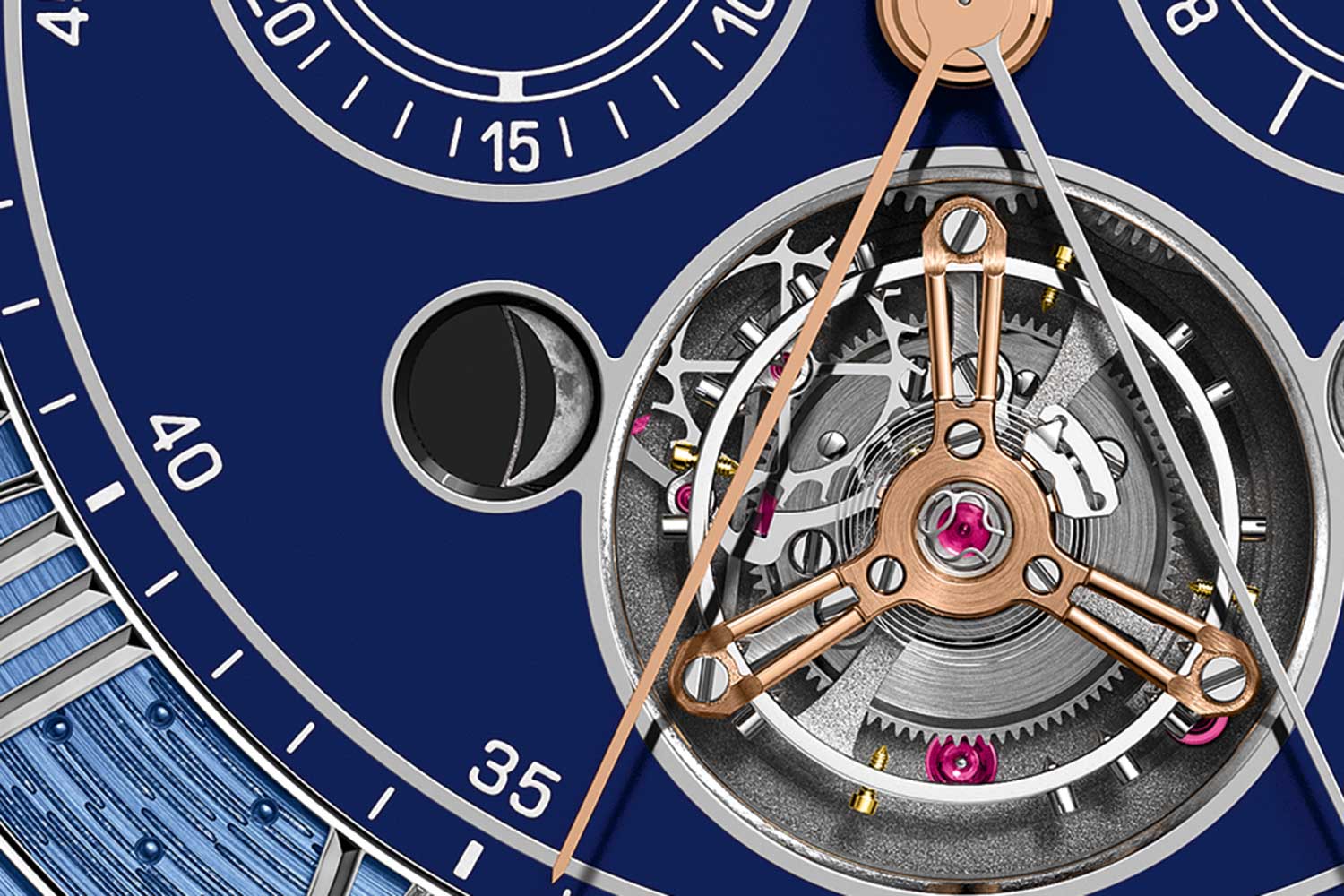
The moonphase display is equally ingenious. It is compact yet looks realistic across all stages. Traditional moon phase displays are mechanically simple but visually inaccurate for much of the lunar cycle. The classic two-moon disc, which advances once per day, only appears correct at full moon and near new moon. It fails at quarter moons, where the terminator should be a straight line, and during the gibbous phases, where the moon should appear humpbacked. A traditional display, with its static convex aperture, simply cannot reproduce these shifts. Various alternatives have tried to address, most notably the use of three-dimensional rotating spheres. These solutions tend to become bulky, complex, or still fail to reproduce the moon convincingly across the entire cycle.
The moonphase display and flying tourbillon
In the Calibre 1150 and 1000, two concentric discs are used, each carrying partial moon images rather than complete moons. One disc carries part of the illuminated surface, while the other carries the complementary shadow shape. When aligned in the display window, the two partial images combine to form a complete moon phase. This approach makes it possible to generate 10 realistic phases from a relatively small number of printed images. Because the same partial image can be reused in multiple combinations, the images can be larger and clearer without increasing the size of the discs.
Accuracy is achieved through an impulse-based drive system rather than a daily step. Program wheels control when each disc advances, with teeth placed only at specific angular positions. This allows some phases, such as full moon or quarter moon, to appear for a single impulse, while gibbous phases remain visible for several impulses. The transitions are instantaneous, ensuring the display is always legible, and the symmetry of the waxing and waning phases allows the same sequence to be reused twice per lunar month.
The grande et petite sonnerie with minute repeater benefit from Audemars Piguet’s Supersonnerie technology, first introduced with the RD#1. The gongs are mounted to a resonating soundboard positioned between the movement and the caseback. In this instance, the soundboard is made of sapphire crystal. The gongs are mounted on a resonating soundboard between the caseback and the movement. In this case, the soundboard is made of sapphire crystal, which both amplifies the vibrations of the gongs and offers an unobstructed view of the movement. Additionally, the strike racks were redesigned to eliminate dead time traditionally heard between hours and minutes when no quarters are struck.
Audemars Piguet 150th Heritage Pocket Watch With Universal Calendar
At 6 o’clock sits a flying tourbillon with a free-sprung balance beating at 3 Hz. It employs a tourbillon lever escapement first introduced in the RD#3. The escapement is optimised to accommodate very high balance amplitudes without overbanking by increasing the distance between the balance and pallet-fork pivots, while the geometry of the horns, guard pin, and safety notch has been reworked. As a result, the escapement can absorb extreme amplitudes without jamming, improves shock recovery and isochronism, and provides greater headroom for higher driving torque, all while retaining the proven reliability of a guard-pin safety system.
The lateral-clutch, flyback, split-seconds chronograph was originally conceived with the entire split assembly integrated into the hub of the automatic rotor in Calibre 1000, where the split-seconds wheel, clamps, and column wheel were housed within the oversized ball-bearing assembly. In this pocket-watch version, both the rotor and the automatic winding train have been removed, while the chronograph architecture itself is retained.
Most of all, all functions can be controlled intuitively via 3 crown pushers and 2 push-piece correctors. The crown pusher at 2 o’clock starts and stops the chronograph. Rotating it switches between silence, petite sonnerie and grande sonnerie, and a pull function triggers the minute repeater. A second crown-pusher at 3 o’clock, fitted with a rounded bow, is used for winding and setting the watch. It also allows bidirectional date correction and controls the split-seconds hand during chronograph timing via an automatic return mechanism integrated with the stem, which forces the stem back to a neutral position and ensures complete disengagement of the controlled functions. The third crown-pusher, at 4 o’clock, is used to reset the flyback chronograph and to adjust the month display forwards or backwards.
Audemars Piguet 150th Heritage Pocket Watch With Universal Calendar
Two further push-piece correctors are concealed within the caseback. One is dedicated to setting the weekday, marked “WD”, while the second, distinguished by a crescent symbol, is used to adjust the moon phase. The control scheme reflects a consistent effort to rationalise interaction with an otherwise dense mechanical system.
While the RD#4 was a masterclass in making a grand complication user friendly and practical for daily wear on the wrist, the same user-driven approach arguably has greater impact in a pocket watch, where the contrast between traditional form and modern interaction is more pronounced, which makes the achievement all the more striking.
Tech Specs:150e Héritage Pocket Watch With A Universal Calendar
Movement Hand-wound Calibre 1150; 3Hz, or 21,600vph; 60-hour power reserve
Functions 30 complications in total including Grande and Petite Sonnerie; minute repeater; flying tourbillon; “semi-Gregorian” perpetual calendar with large date, tens and units; moon phase; flyback chronograph; split-seconds; hours and minutes; Universal Calendar with four-digit year, leap year indicator; moon phase; week, date, month, solstices and equinoxes; Christmas, Ramadan, Saint John’s Day, Diwali, Rosh Hashanah, Pesach, Vesak, Easter and the Chinese New Year
Case 50mm x 23.4mm; Platinum with Supersonnerie soundboard caseback
Dial Blue grand feu translucent enamel dial, 18k white gold roman numerals with hand-engraved backdrop, tone-on-tone subdials with silver-grey toned thread and white indications, 18k pink gold hand-engraved hands and 18k white gold split-seconds hand
Chain Hand-made platinum chain (~ 40 cm) fitted with two spring ring clasps.
Price Upon request
Audemars Piguet

You may also like

News
Watches & Wonders 2026 Looks Forward to Its Biggest Fair Yet
Feb 10, 2026
News
Watches & Wonders 2026 Looks Forward to Its Biggest Fair Yet
Feb 10, 2026

Editorial
The Audemars Piguet 2026 Releases Makes Complexity User-Friendly, And Celebrates the Skeleton
Feb 3, 2026
Editorial
The Audemars Piguet 2026 Releases Makes Complexity User-Friendly, And Celebrates the Skeleton
Feb 3, 2026

Editorial
The New Audemars Piguet Royal Oak Offshore Diver
Feb 3, 2026
Editorial
The New Audemars Piguet Royal Oak Offshore Diver
Feb 3, 2026