Greubel Forsey Introduces the Balancier QM, the First Watch to Bear Its New Qualité Musée Hallmark
News
Greubel Forsey Introduces the Balancier QM, the First Watch to Bear Its New Qualité Musée Hallmark

Since its founding in 2004, Greubel Forsey has pursued watchmaking to an almost fanatical degree of completeness. This includes the pursuit of better chronometry, the advancement of traditional complications, the richly architectural construction of its movements but also the question of how each part is finished. It is easy to forget that when the company began, the almost perverse obsession with finishing that would come to characterise much of collecting culture in the Instagram age had not yet become the common language of high-end watchmaking. To insist on hand finishing as one of the central virtues of the watch was then a far more unusual position than it is today. Even years later when I started writing about watches in 2015, the fixation on finishing as a marker of value had yet to take shape. There were fewer than a handful of watchmakers capable of work at this level, and it was still far from comprehensible that a standard Greubel Forsey watch would require more than four months of finishing alone, or that a workforce of around 100 people then would produce only about 100 watches a year. The point is Greubel Forsey got there long before the rest of the industry, and long before collectors began rewarding it.
With the Balancier QM, Greubel Forsey introduces Qualité Musée, a formal quality hallmark for the level of hand finishing it has championed since the beginning. More significantly, a dedicated research division within the Experimental Watch Technology Laboratory has been created to push the craft further, and the Balancier QM is the first watch to emerge from that program.
Greubel Forsey Balancier QM
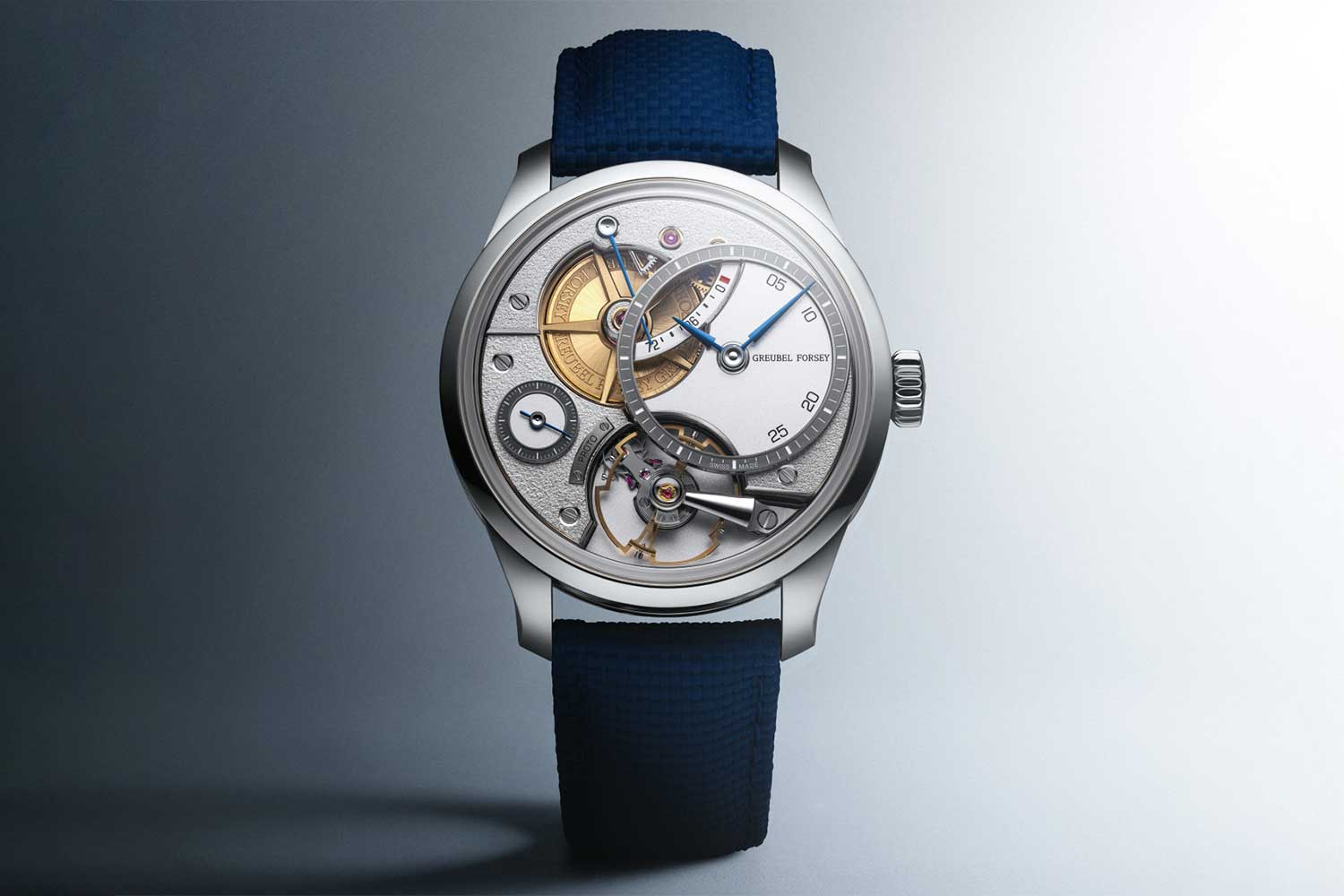
The company points out that Qualité Musée does not create two separate standards of finishing. As the press release puts it, “There are not two standards of hand finishing at the Atelier: a three-hand timepiece gets the same attention as the Grande Sonnerie.” Yet it immediately adds that Qualité Musée “adds one demand on top,” namely that “each component, on its own, must hold up as a work of art.” It is not an easy distinction to make, especially when the starting point is already among the best in the business. Even so, there are discernible differences in the supplied images, particularly with the application of anglage and the finish on the escapement, although describing them inevitably feels like an exercise in splitting hairs.
The watch also continues Greubel Forsey’s shift towards more compact dimensions. At the same time, it marks another important milestone for the company. After debuting a fully in-house hairspring in the Hand Made 1 and Hand Made 2, the Balancier QM is the first Greubel Forsey outside that series to incorporate one. Produced entirely in-house using the same antique equipment, from the alloy itself to the finished spring, it represents the beginning of Greubel Forsey’s plan to extend in-house hairspring production across its entire catalogue.
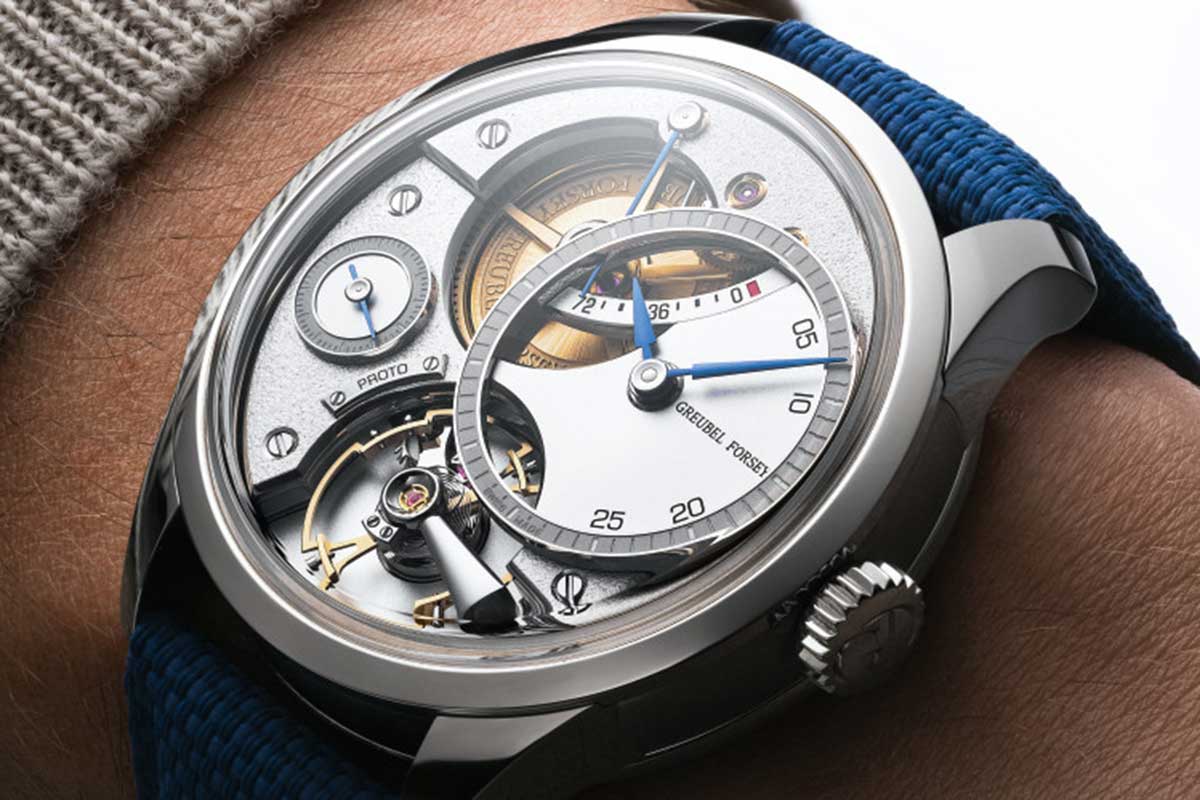
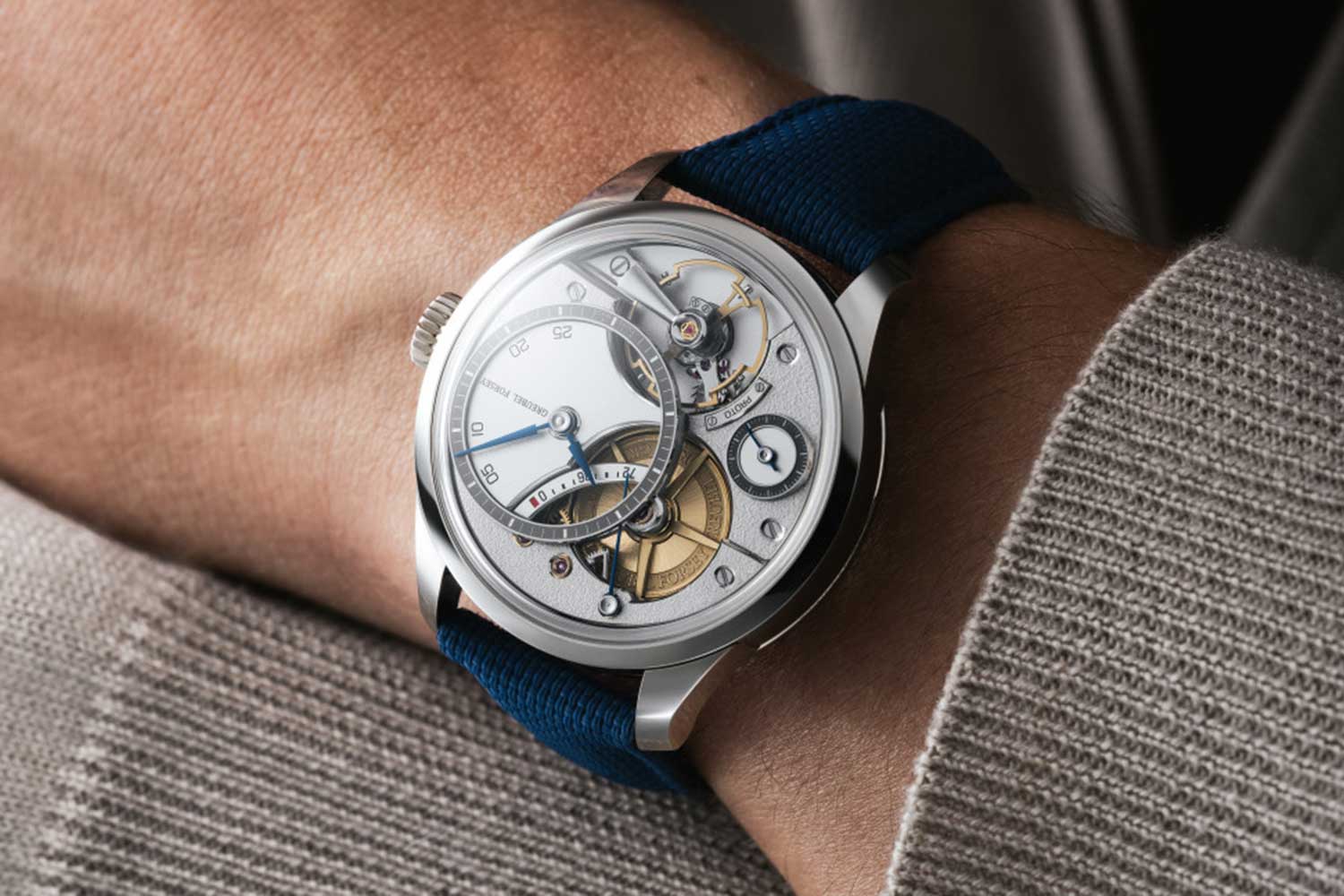
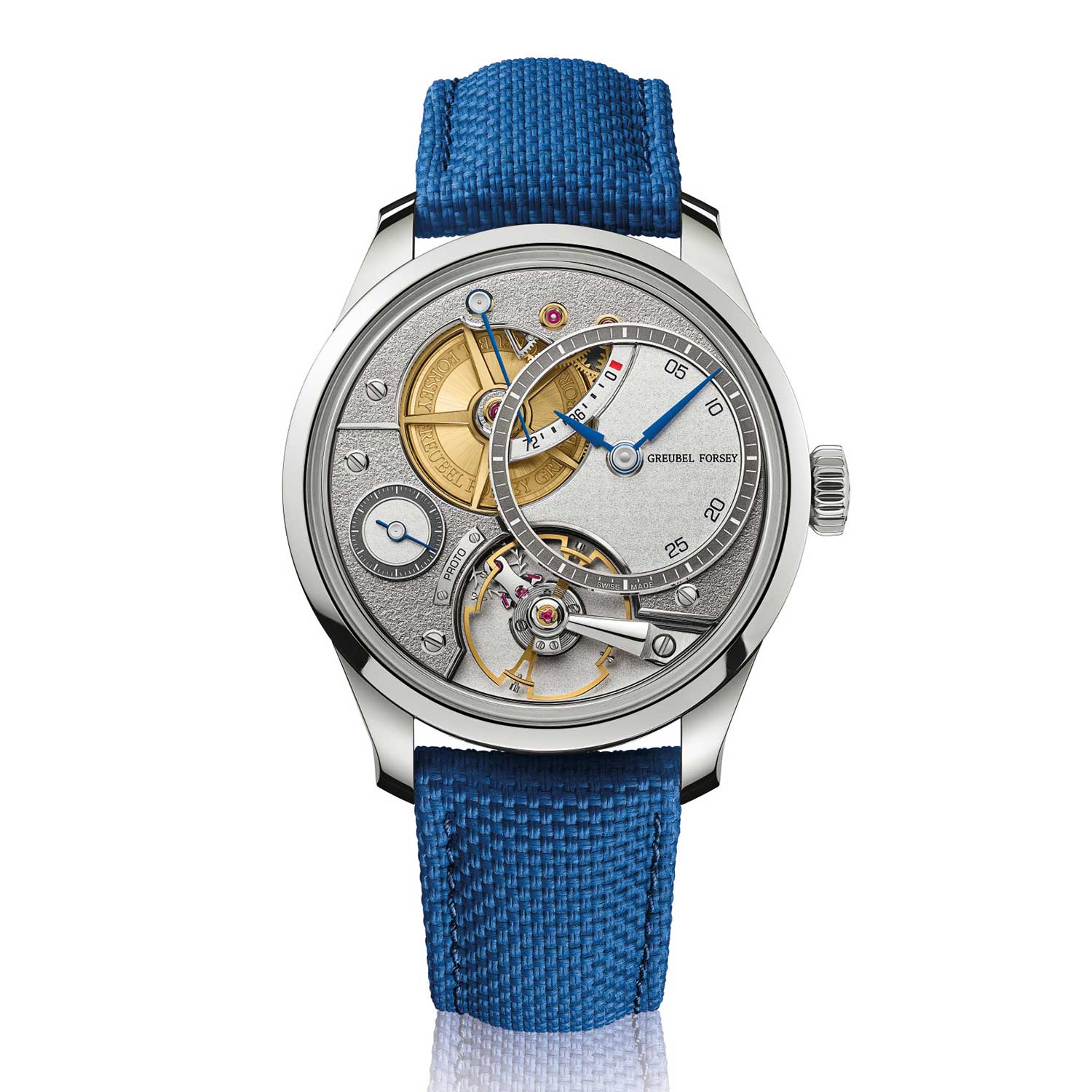
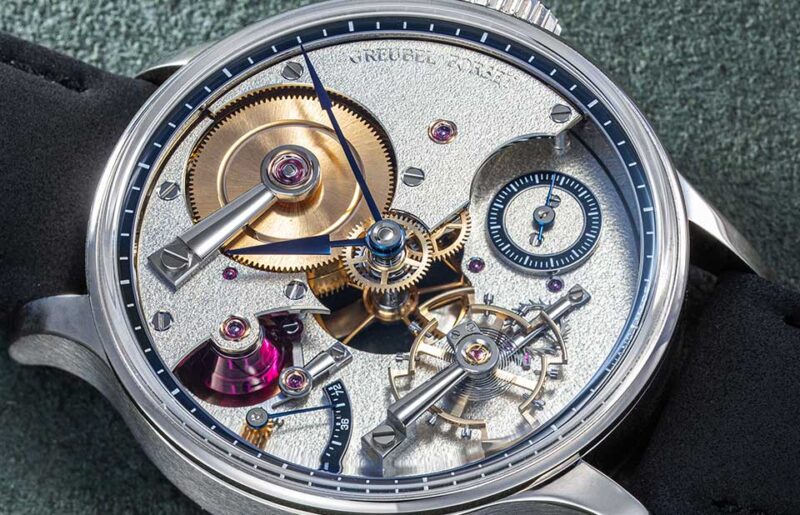
Limited to 33 pieces, the Balancier QM is effectively the successor to the discontinued Balancier Contemporain. The case is white gold case and measures 39.6mm in diameter and 9.45mm thick excluding crystals. Despite its relatively slim profile, the watch has a tremendous amount of depth. It consists of at least six layers, beginning with the escapement, to the main bridge, small seconds, to the offset chapter ring with flame-blued hands, beneath which the power reserve hand travels on its 72 hour sector. The power reserve mechanism is notably compact and built around a “mysterious” display. There are two co-axial serially coupled barrels, and the differential takes its inputs from one drum and a five-spoked wheel mounted above the barrel. The latter is finished with particularly broad polished bevels, as are the bridges, which are made from German silver and treated with nickel-palladium.
Greubel Forsey Balancier QM
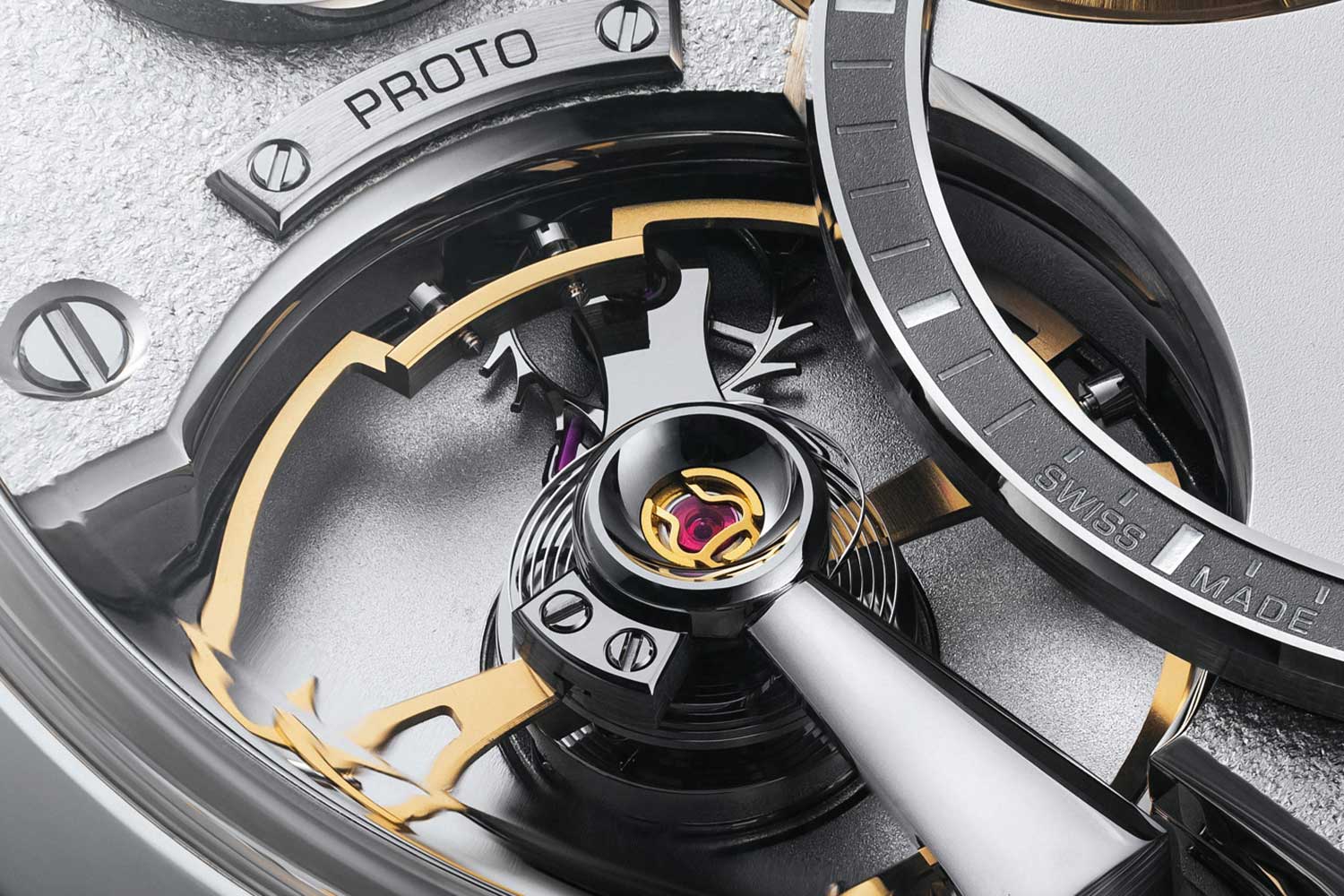
The most striking aspect on the dial side is the domed steel balance cock which previously only appeared in the Hand Made 1 and 2. It alone combines seven distinct hand-finishing techniques. Its domed arm is barrel polished, while the flat around the jewel is black polished and gives way to a deep, polished countersink. The screw recess is circular grained, the flanks are either mirror polished or straight grained according to their visibility, and every edge is hand beveled with a broad 0.4mm chamfer.
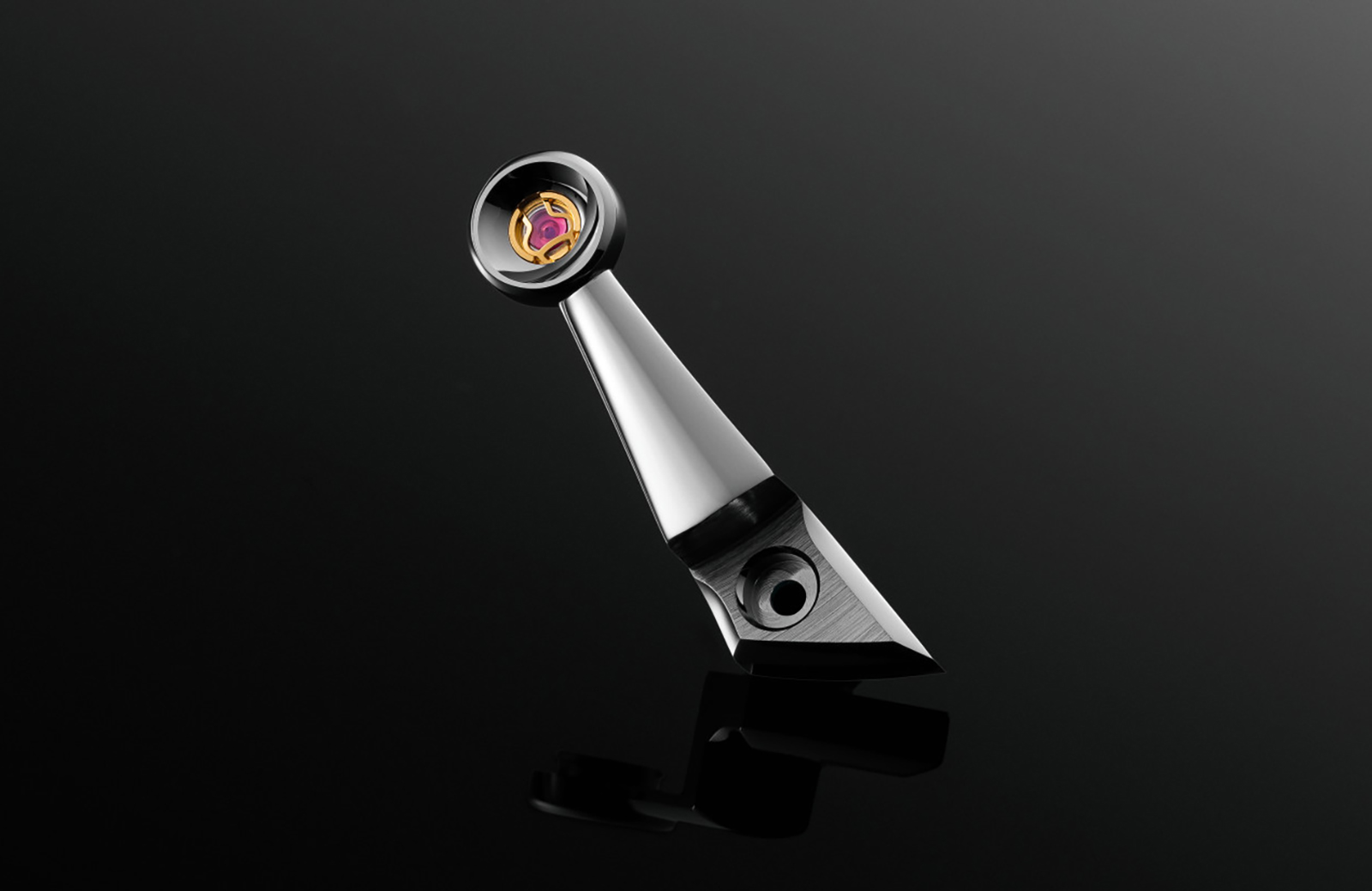
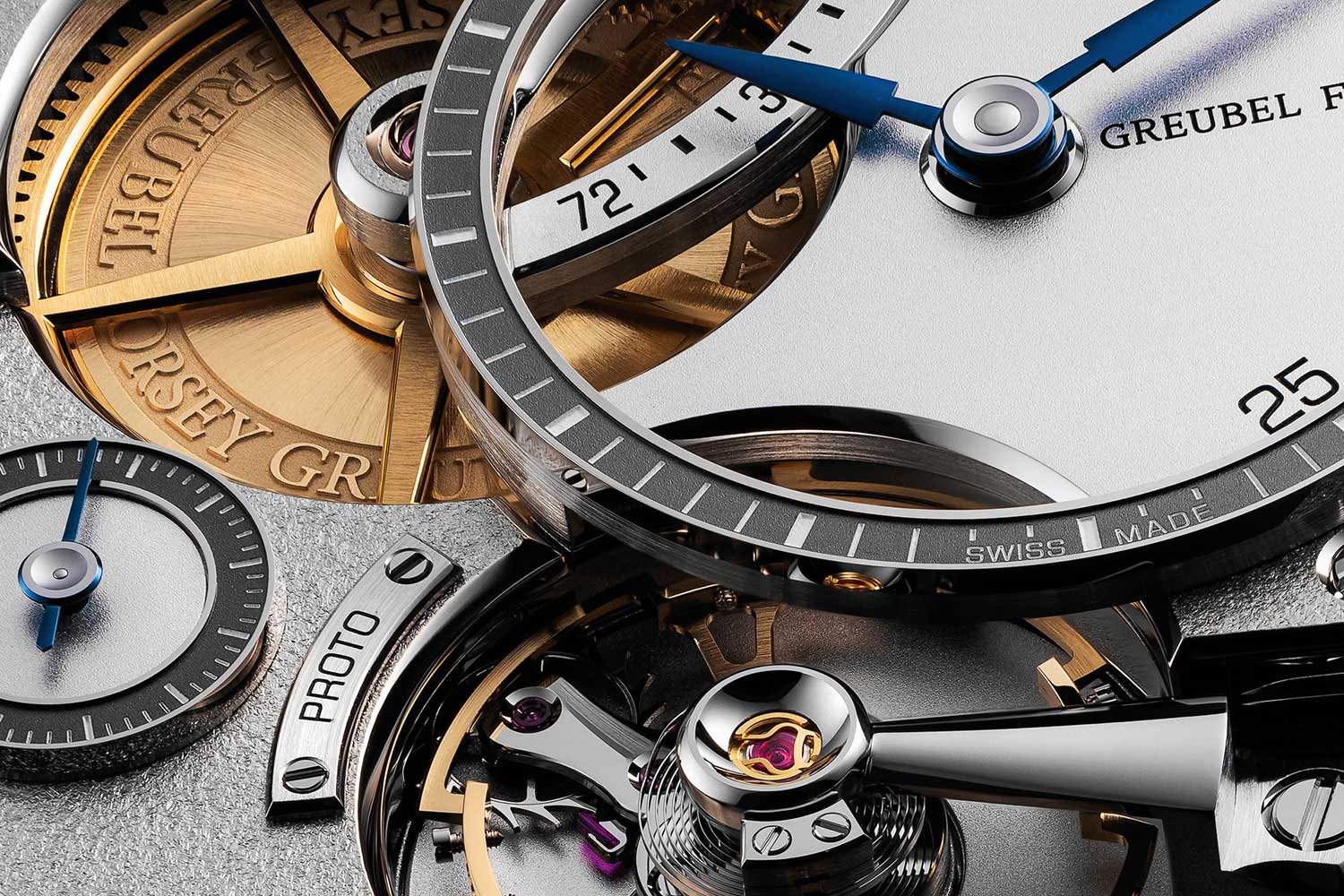
Greubel Forsey also points out that the escape wheel is beveled and polished on both faces while the pallet stones are made with a convex surface rather than the customary flat surface. The balance is of Greubel Forsey’s own free-sprung design, measuring 12.6mm in diameter and regulated by six gold meantime screws. These refinements are not intended solely for the present watch. The revised escape wheel, pallet stones and other finishing developments will be adopted throughout the collection where appropriate.
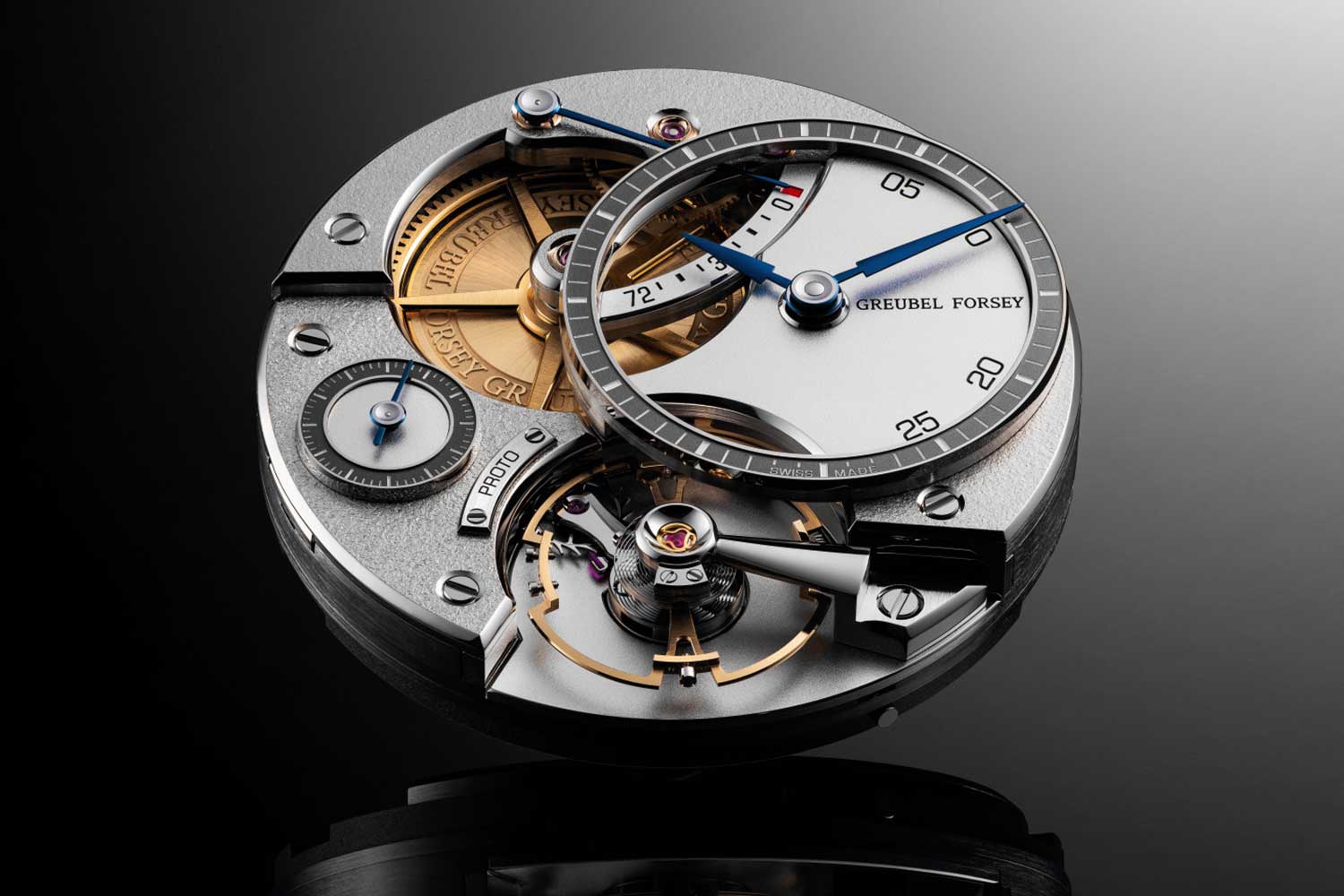
The reverse perhaps best illustrates the ambitions of the Qualité Musée most clearly. In general, bridge work has been where Greubel Forsey has stuck closely to the tradition of the great English pocket watches. Frosted bridges and polished or brushed flanks typically meet directly with little to no anglage. Here the barrel bridge and the train bridge have been embellished with pronounced polished bevels and internal angles.
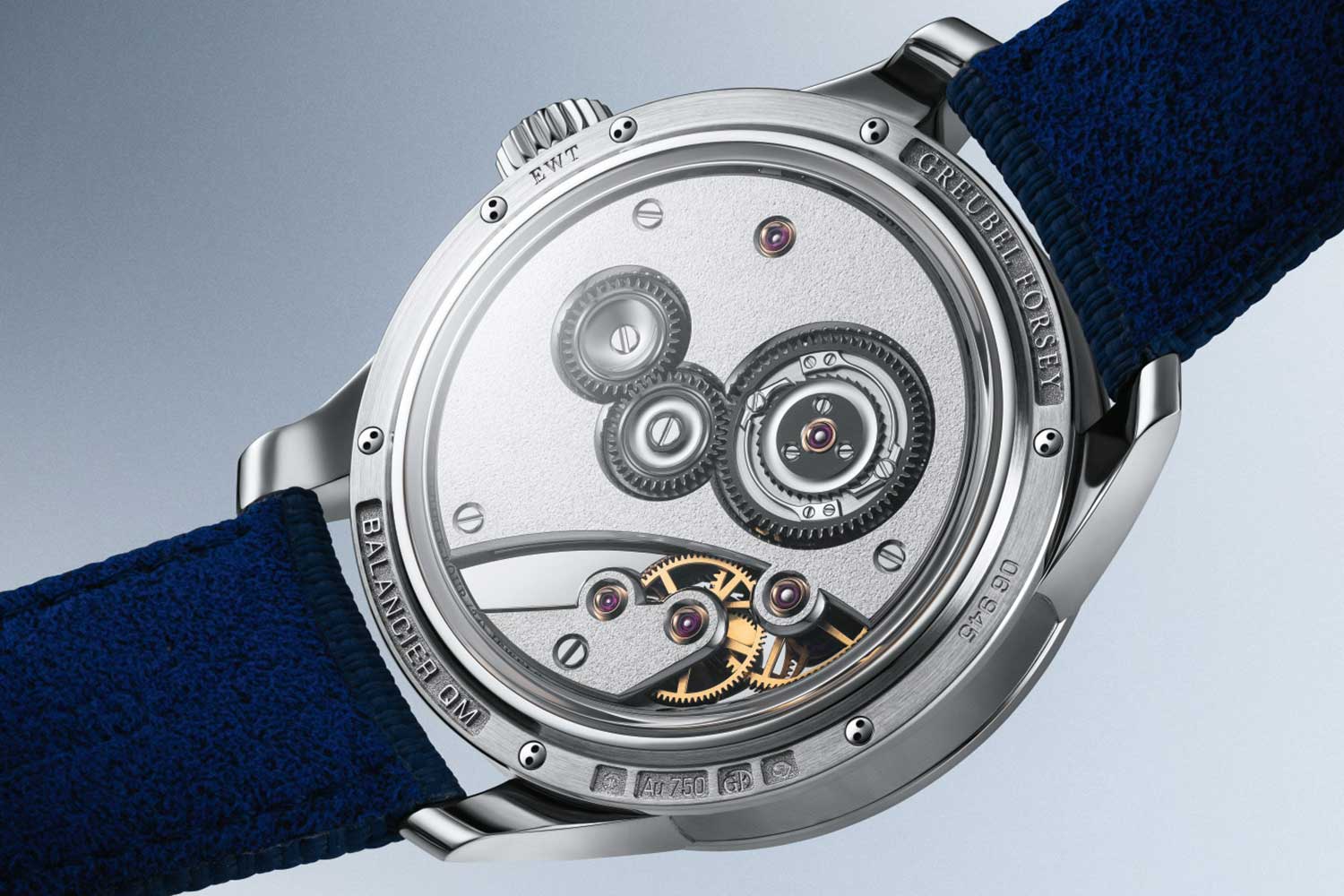
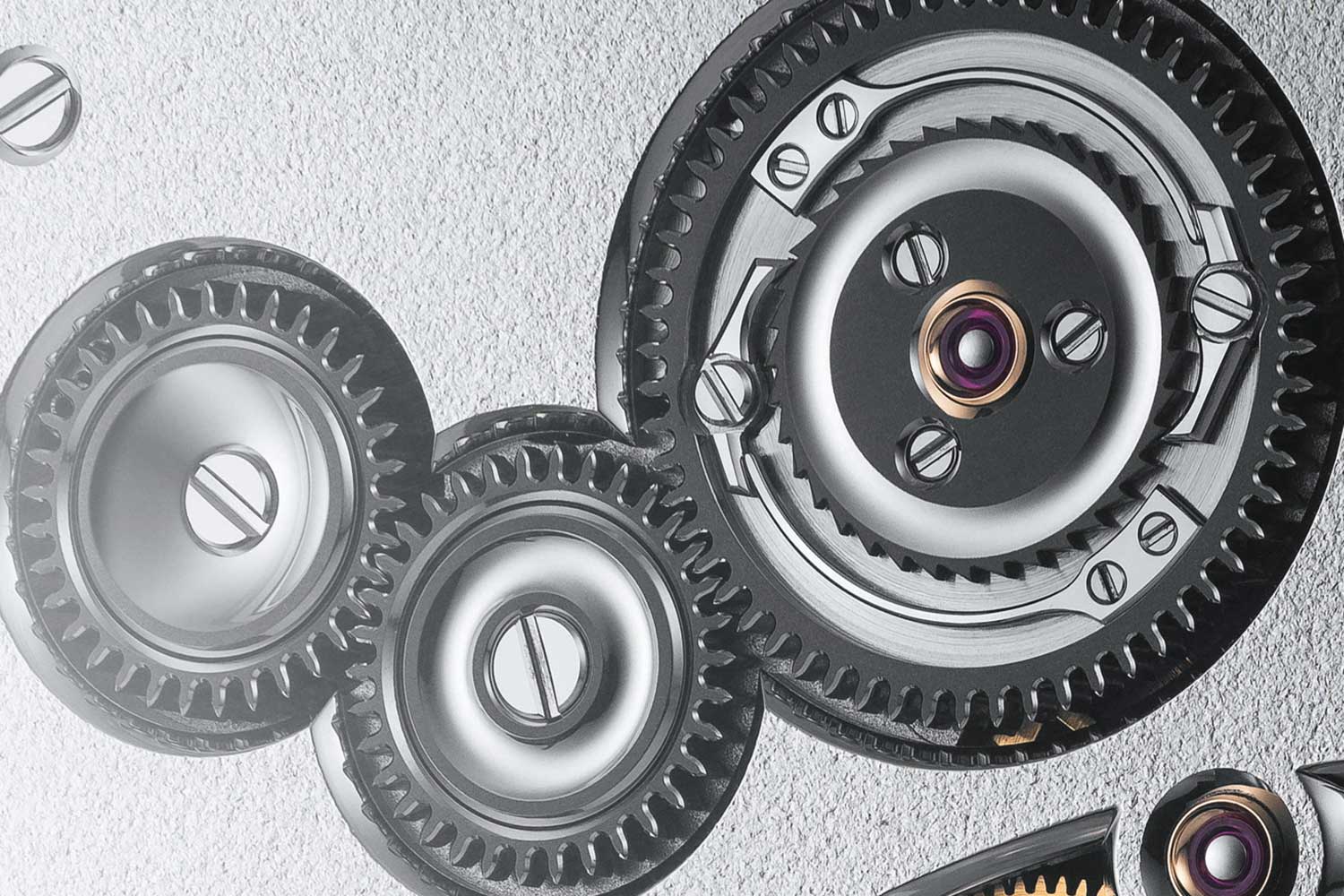
The winding wheels in particular are a work of art. They have concave sinks that are hand polished, while the teeth are beveled and polished individually. The ratchet wheel features integrated clicks and springs that are black polished on their top surfaces, with anglage throughout their outline. Such work demands considerable patience and skill, particularly on components of such intricacy and modest a size. Greubel Forsey asserts that every component is finished to the same standard, regardless of whether it is visible, and even the concealed steel parts of the winding mechanism are flat black polished with the same care as those on display. The dial has been deliberately left free of any reference to the new standard, and the hallmark is instead hidden within the movement.
The company says a new version of the Nano Foudroyante will follow later this year, followed by a new movement in a 39.5mm convex case before the end of 2026. Looking further ahead, 2027 is expected to bring both a new invention in a 39.5mm case and another new movement in a 38.5mm case.
It is an ambitious roadmap, but Greubel Forsey also acknowledges that pursuing this level of execution may ultimately reduce production. Beyond the Balancier QM, the Qualité Musée will also serve as the foundation for future projects within the Experimental Watch Technology program, the next of which is a movement with an entirely gold gear train.
Greubel Forsey Balancier QM
Much of the present regard for hand finishing as a measure of excellence in watchmaking owes something to Greubel Forsey and a handful of others, including Philippe Dufour. It is encouraging that, now the market has finally caught up with this level of work, the company seems intent on pushing it even further. This is meaningful, especially when the finishing work has always been matched by movements that leave very little to be desired from a technical standpoint.
Tech Specs: Greubel Forsey Balancier QM in White Gold
Movement Hand-wound Greubel Forsey calibre; 21,600 vph or 3 Hz; 72-hour power reserve
Functions Hours, minutes, small seconds, hacking seconds, power reserve on a sector
Case White gold; 39.60 mm diameter × 9.45 mm case height; 12.25 mm height including domed sapphire crystals; high-domed synthetic sapphire crystal front and back; three-dimensional variable-geometry lugs
Dial Multi-level rhodium-coloured gold dial with engraved Greubel Forsey logo and minute circle; gold small seconds and power-reserve displays, engraved and lacquered
Strap Hand-sewn textured rubber strap with white gold pin buckle, hand-engraved with GF logo
Availability Limited to 33 pieces
Price Upon Request
Greubel Forsey
You may also like
Editorial
Graduation for the Greubel Forsey Balancier Convexe S2
Mar 17, 2026
Editorial
Graduation for the Greubel Forsey Balancier Convexe S2
Mar 17, 2026
Editorial
Revolution Awards 2025: Best Handmade — Greubel Forsey Hand Made 2
Jan 27, 2026
Editorial
Revolution Awards 2025: Best Handmade — Greubel Forsey Hand Made 2
Jan 27, 2026
Editorial
The Revolutionary List: 25 Watchmakers and Construction – Stephen Forsey & Robert Greubel
Dec 15, 2025
Editorial
The Revolutionary List: 25 Watchmakers and Construction – Stephen Forsey & Robert Greubel
Dec 15, 2025