
Enter the Richard Mille RM 57-03 Tourbillon Sapphire Dragon
But let’s not forget that Richard Mille is also known to often apply métiers d’art to his watchmaking, the likes of which are always unheard-of. Case in point: the RM 19-02 Manual Winding Tourbillon Fleur (2015), RM 26-02 Tourbillon Evil Eye (2015) or the RM 68-01 Tourbillon Cyril Kongo.
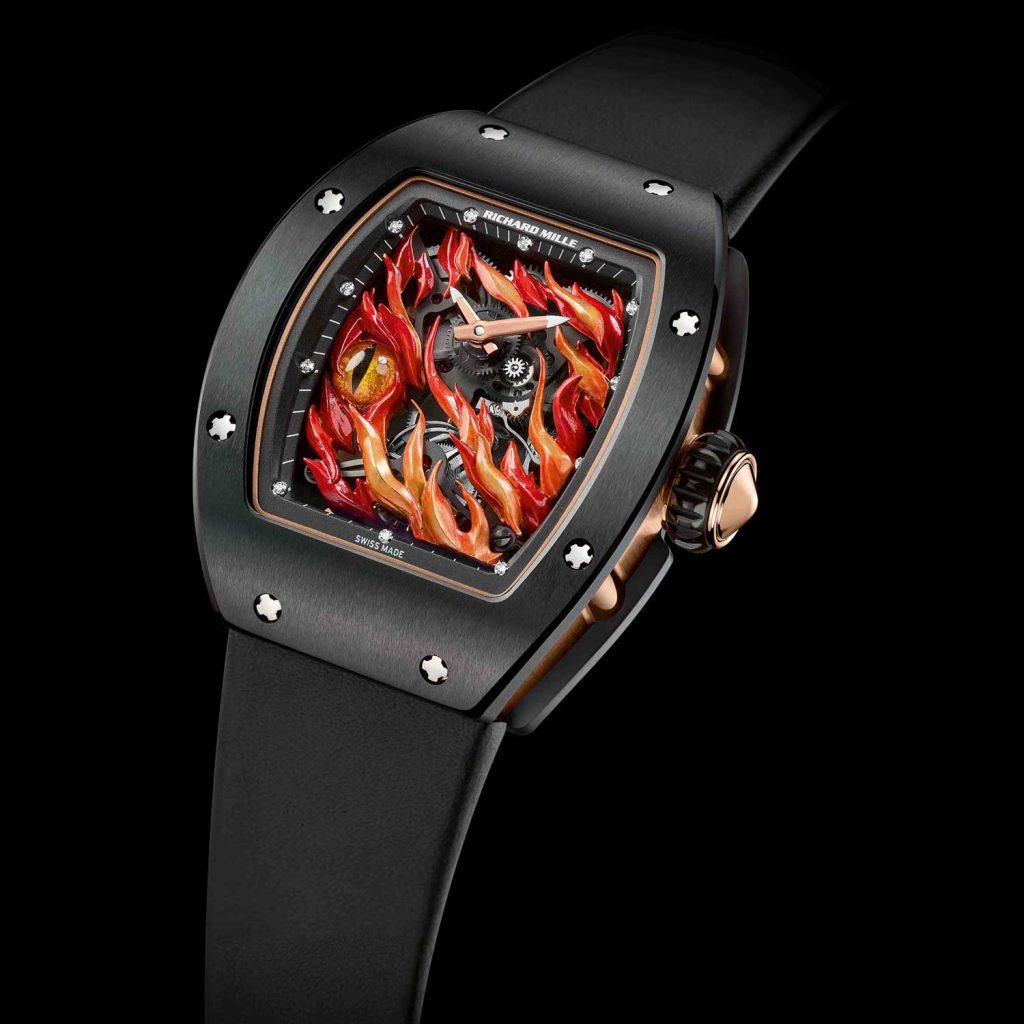
Richard Mille RM 26-02 Tourbillon Evil Eye
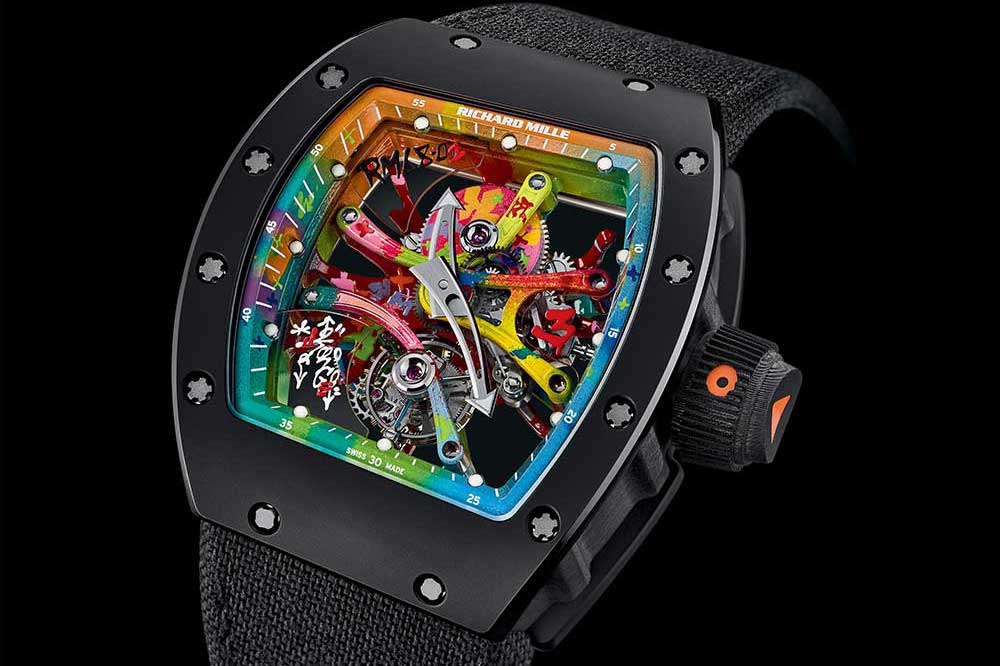
Richard Mille RM 68-01 Tourbillon Cyril Kongo
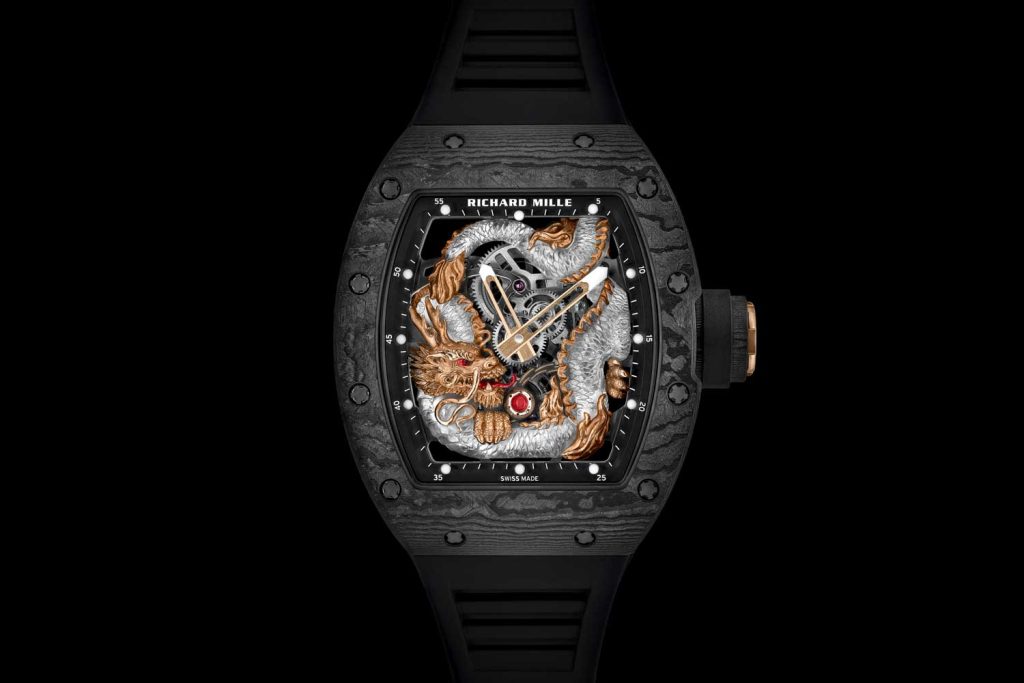
Richard Mille RM 57-03 Tourbillon Sapphire Dragon
Now, as easy as Arbona makes it all sound, truth of the matter is that sapphire is a very difficult material to work with. It is as hard as it is brittle (i.e. it is prone to shatter). How does one then go about crafting something so miniscule from the material? “Sapphire is an extremely hard material, however, the manner in which it is cut and worked has a great influence on its mechanical performance,” explains Arbona. “The complex volumes of the dragon with its intricate curves were studied in order to guarantee the greatest shock resistance.
“For this, we utilized computer simulations to predict the exact points where breakage might occur after undergoing extreme shocks in order to eliminate the chances of this happening. Thus, during the laser machining of the sapphire dragon, we were sure in advance that a structurally perfect product would result.”
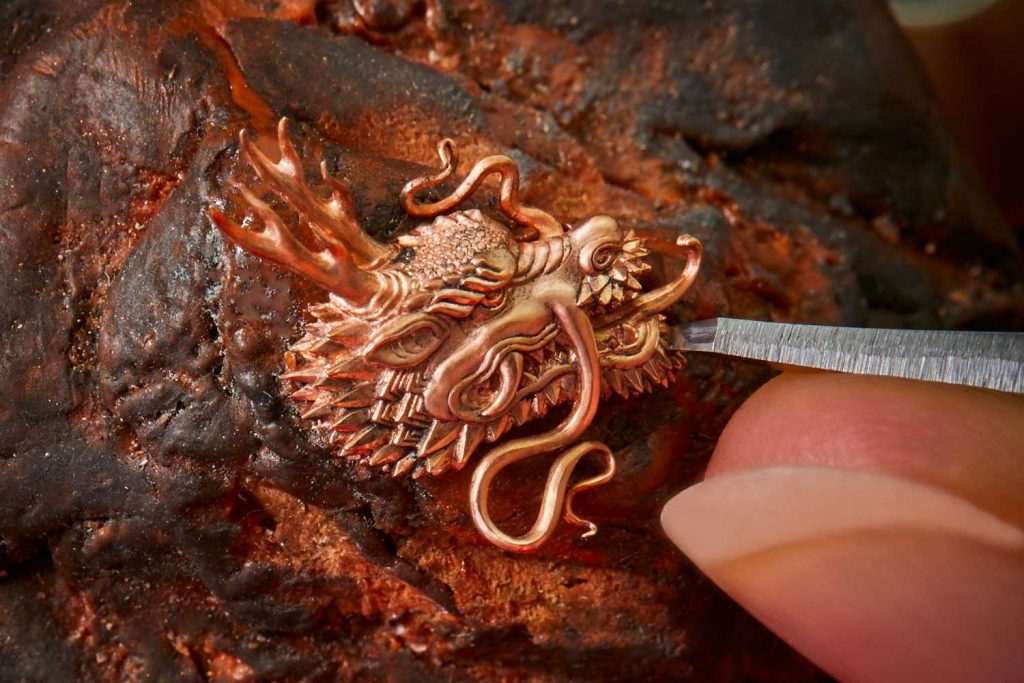
Richard Mille RM 57-03 Tourbillon Sapphire Dragon
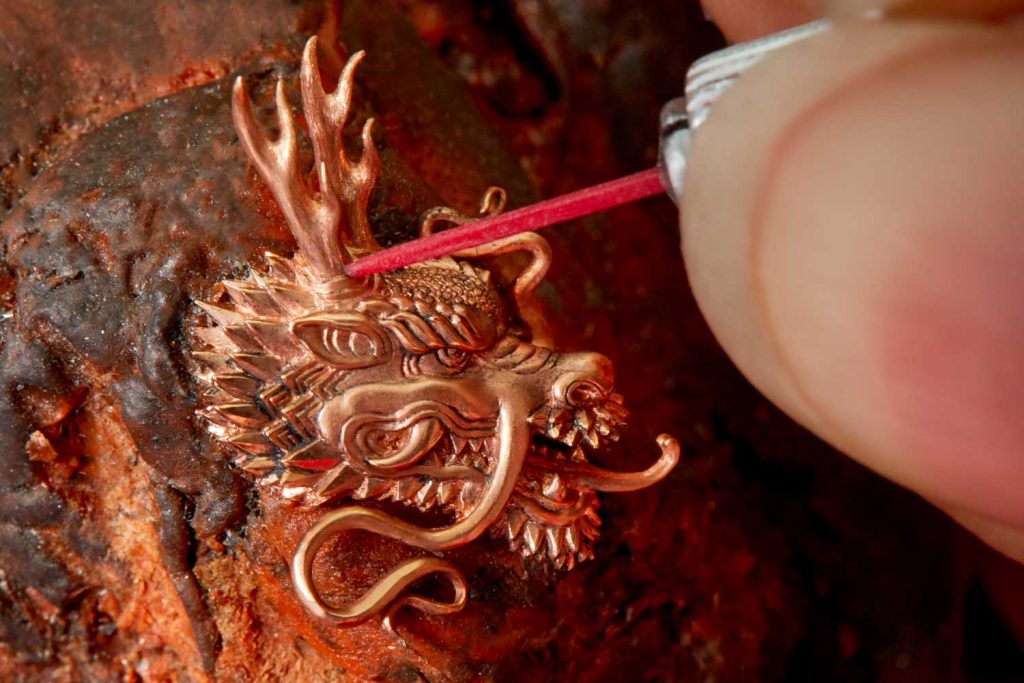
Richard Mille RM 57-03 Tourbillon Sapphire Dragon
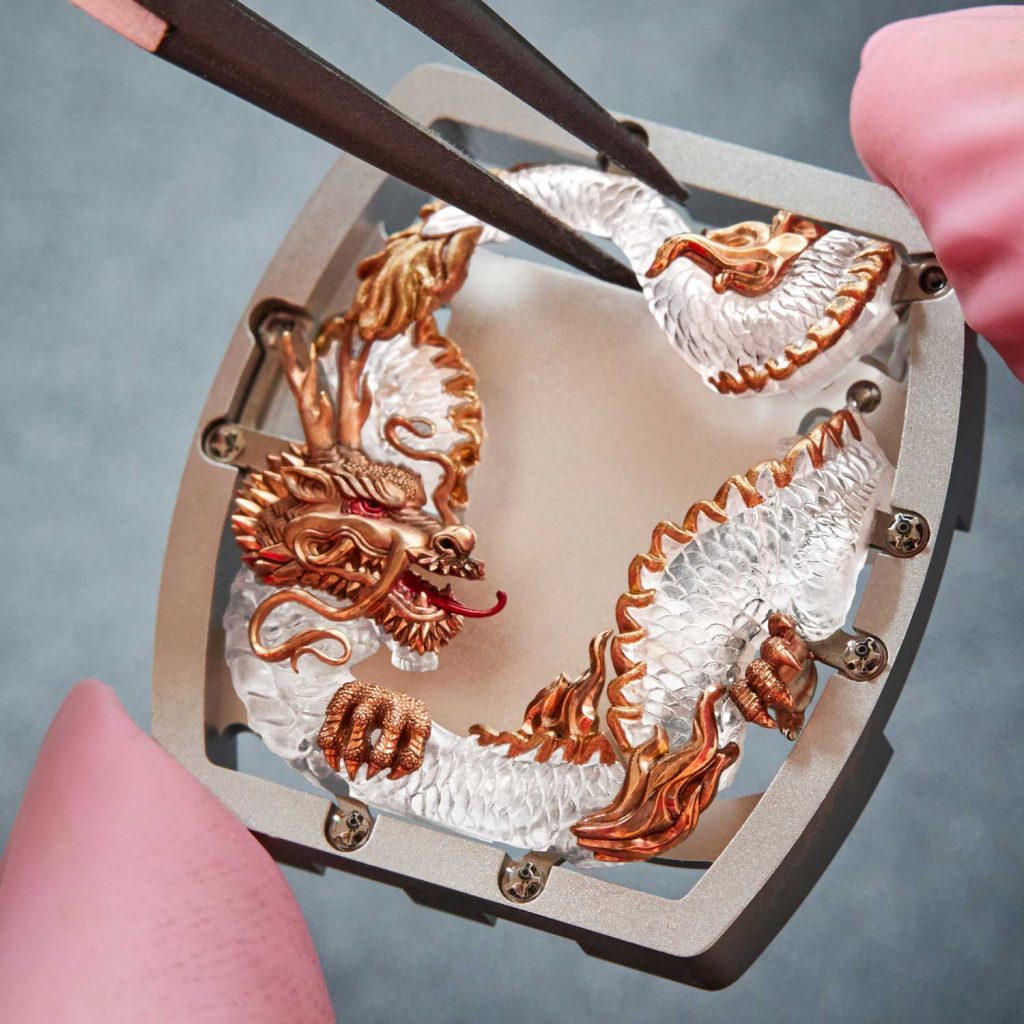
Richard Mille RM 57-03 Tourbillon Sapphire Dragon
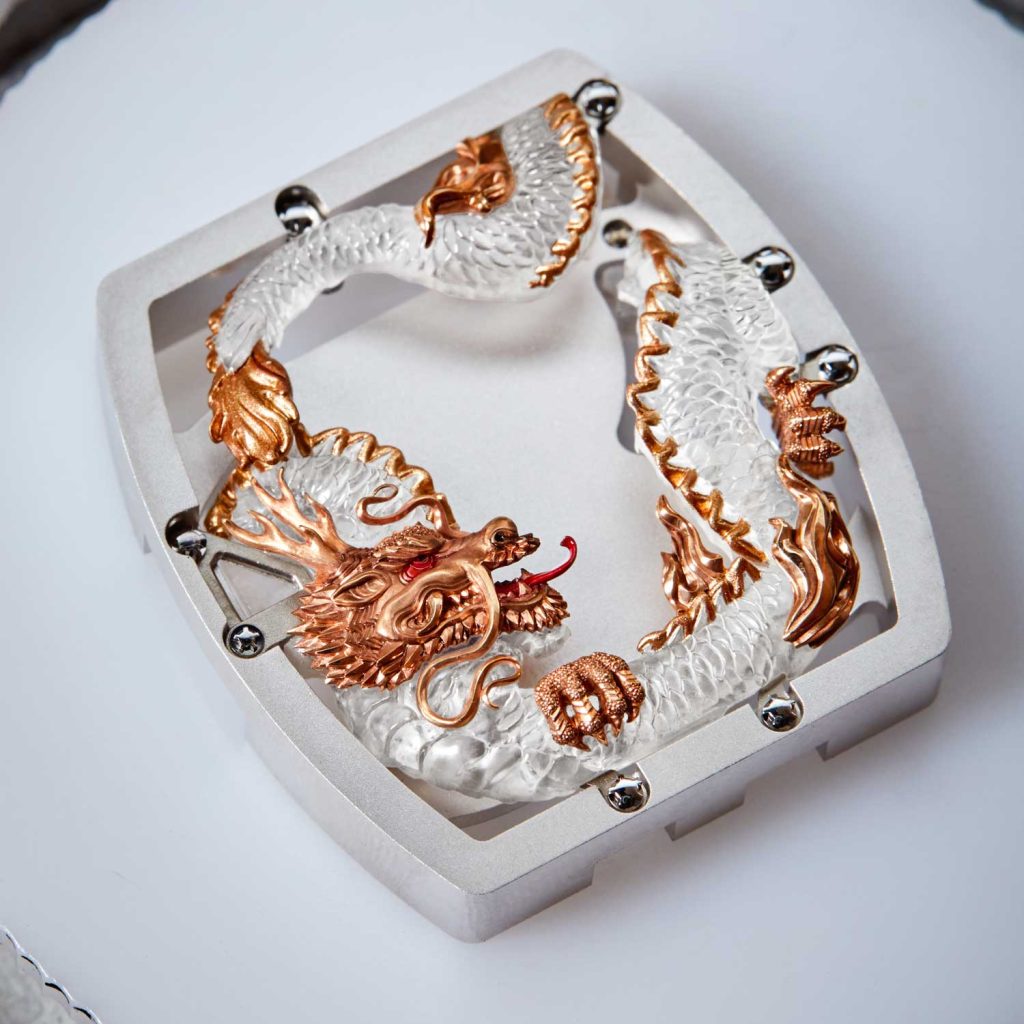
Richard Mille RM 57-03 Tourbillon Sapphire Dragon
Arbona goes on, “we actually start from a sapphire block created using the Kyropoulos process. Of course, it goes without saying that the dragon is composed out of a solid, single piece. The rest of the information on our production process is however proprietary.”
Once formed, the dragon then goes on to polishing — a novel hand-polishing technique, to be specific, with the purpose of enhancing the natural transparency of the sapphire. “This polishing technique, developed by Olivier Vaucher’s workshop, is the result of the great expertise of this renowned engraver, says Arbona. “As you know, sapphire is an extremely hard material, only one step below diamond on the hardness scale, so of course it does not allow for the use of traditional polishing methods to achieve a result that meets our specifications for the RM 57-03.
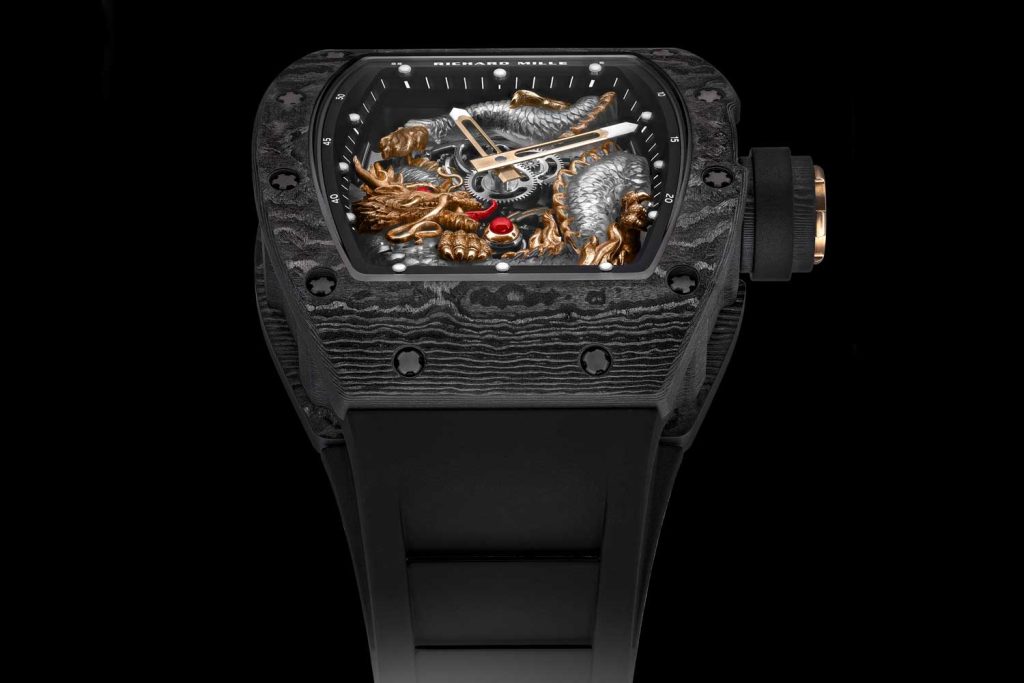
Richard Mille RM 57-03 Tourbillon Sapphire Dragon
With all that effort, you have to wonder though: why wasn’t the entire dragon formed in sapphire; why is its head and some other minute details made in gold? Arbona explains, “actually, yes, we could have created a dragon completely from sapphire, however, for artistic reasons that way we would have lost some visually pleasing contrast and the intensity of the dragon’s expression. The combination of gold and sapphire also makes the visual impact more three dimensional, which is why we have also coated some scales with gold.”
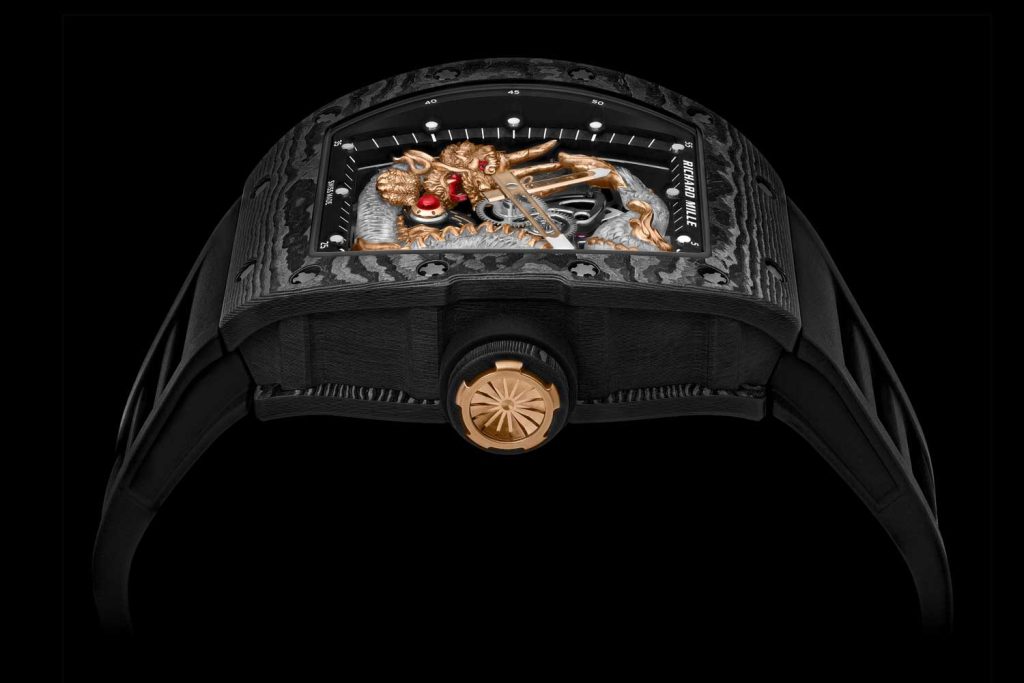
Richard Mille RM 57-03 Tourbillon Sapphire Dragon
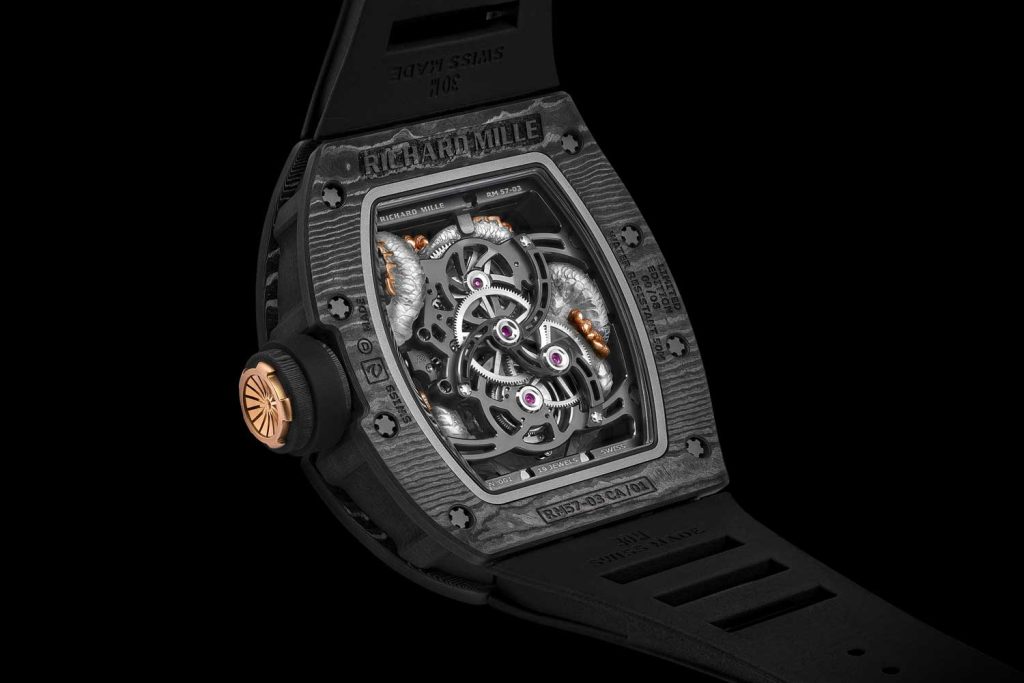
Richard Mille RM 57-03 Tourbillon Sapphire Dragon

You may also like
Editorial
Padel Is Now Watchmaking’s Newest Court of Play
May 18, 2026
Editorial
Padel Is Now Watchmaking’s Newest Court of Play
May 18, 2026

Editorial
LVMH Watch Week 2026
Jan 19, 2026
Editorial
LVMH Watch Week 2026
Jan 19, 2026

Editorial
Holiday Horology: Something Old, Something New, Something Special — Jola Chudy, Revolution Arabia Editor-in-Chief
Dec 17, 2025
Editorial
Holiday Horology: Something Old, Something New, Something Special — Jola Chudy, Revolution Arabia Editor-in-Chief
Dec 17, 2025