Introducing the Christiaan van der Klaauw x Revolution The Grand Planetarium Eccentric Si14 (Silicium)
Limited Edition
Introducing the Christiaan van der Klaauw x Revolution The Grand Planetarium Eccentric Si14 (Silicium)

Astronomical complications represent one of the most expansive and satisfyingly rich areas of watchmaking. At the entry level, you have the familiar moonphase that is charming, poetic and easy to understand at a glance. Move a little further, and the frame opens up into a world unto itself. Some watches show not only mean solar time but also sidereal time, which measures the Earth’s rotation relative to the fixed stars. Other watches indicate the equation of time, displaying the difference between mean solar time and true solar time which is a discrepancy born of orbital eccentricity and axial tilt. There are sunrise and sunset indications that must be calibrated to a specific latitude with their cam profiles shaped by axial tilt and orbital eccentricity; eclipse predictors derived from lunisolar cycles such as the Saros; tidal displays governed by the lunar day rather than the solar; and rotating star charts calibrated to a given hemisphere, mapping the apparent drift of the night sky across the year.
The possibilities are nearly endless, but arguably among the most evocative of them all are mechanical planetariums, or orreries. Where other indications isolate a single cycle, a planetarium seeks to depict the Solar System itself and must grapple with scale in a way few other complications do. There is also something inherently affecting about duration. When Earth makes one revolution per year, the motion is perceptible. When Saturn takes nearly 30 years, and Neptune more than 160, the movement becomes almost imperceptible. The watch is running, the gears are turning, but some of what it depicts will not complete a cycle within a human lifetime. The disparity between mechanical immediacy and astronomical duration lends the display a particular gravity.
A planetarium is irresistible too because it shifts perspective. Most of watchmaking is anthropocentric — hours, minutes, calendars — in which time is organized for human activity. A heliocentric display, by contrast, places the Earth among the other planets. It is no longer the reference point but simply a participant, and the realization that our daily experience unfolds within a broader, indifferent order set in motion by the heavens becomes difficult to ignore.
Christiaan van der Klaauw x Revolution The Grand Planetarium Eccentric Si14 (Silicium)
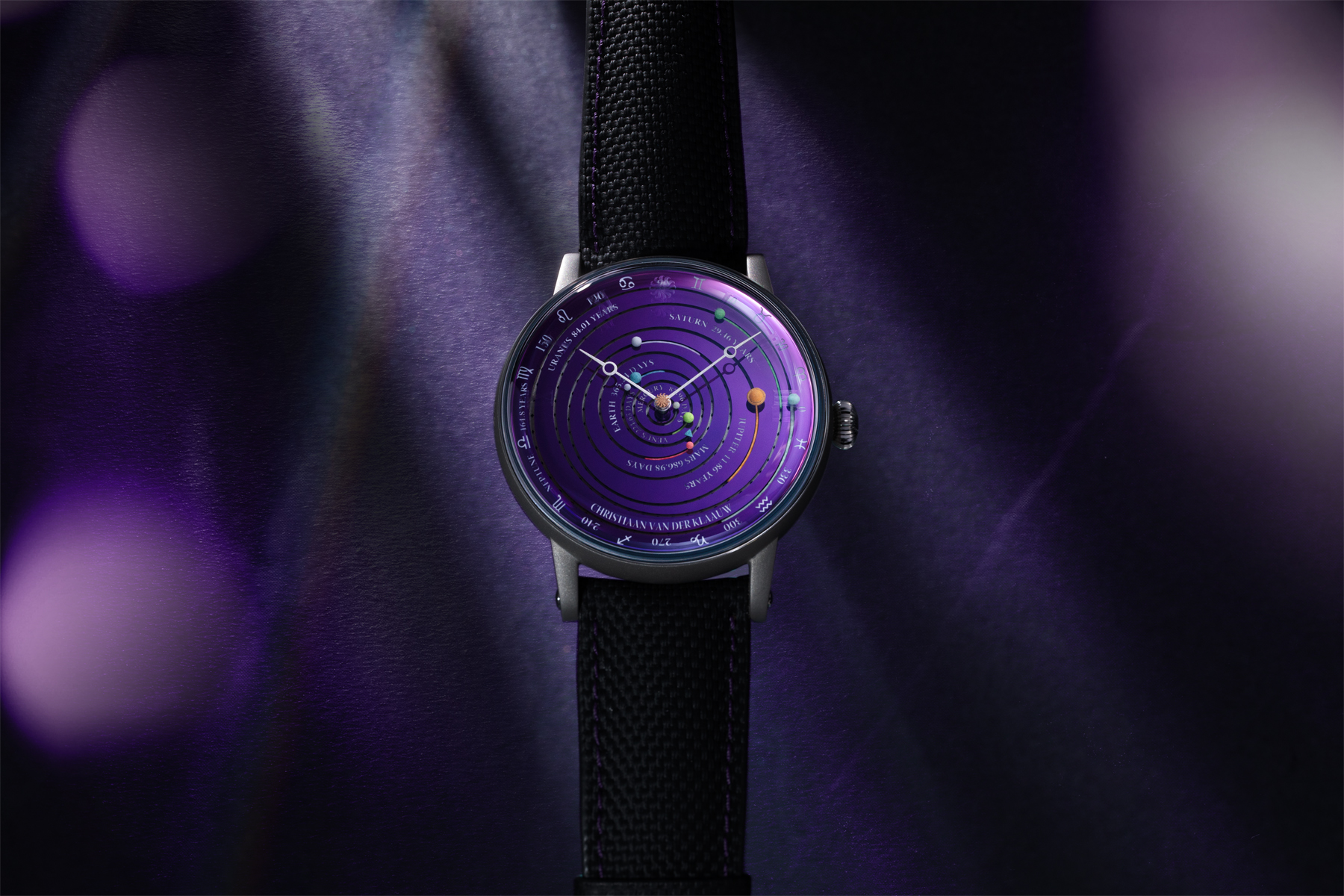
Wristwatch planetariums are exceedingly rare and rarely kept in continuous production. The single foremost exponent of this art today is none other than Christiaan van der Klaauw. Our latest collaboration with the brand is the CVDK × Revolution Grand Planetarium Eccentric Silicium, limited to six pieces and based on a model first introduced in 2024 to mark the 50th anniversary of CVDK. The Grand Planetarium Eccentric is the first and only mechanical wristwatch capable of displaying the real-time orbits of all eight planets in our Solar System, from Mercury all the way out to Neptune.
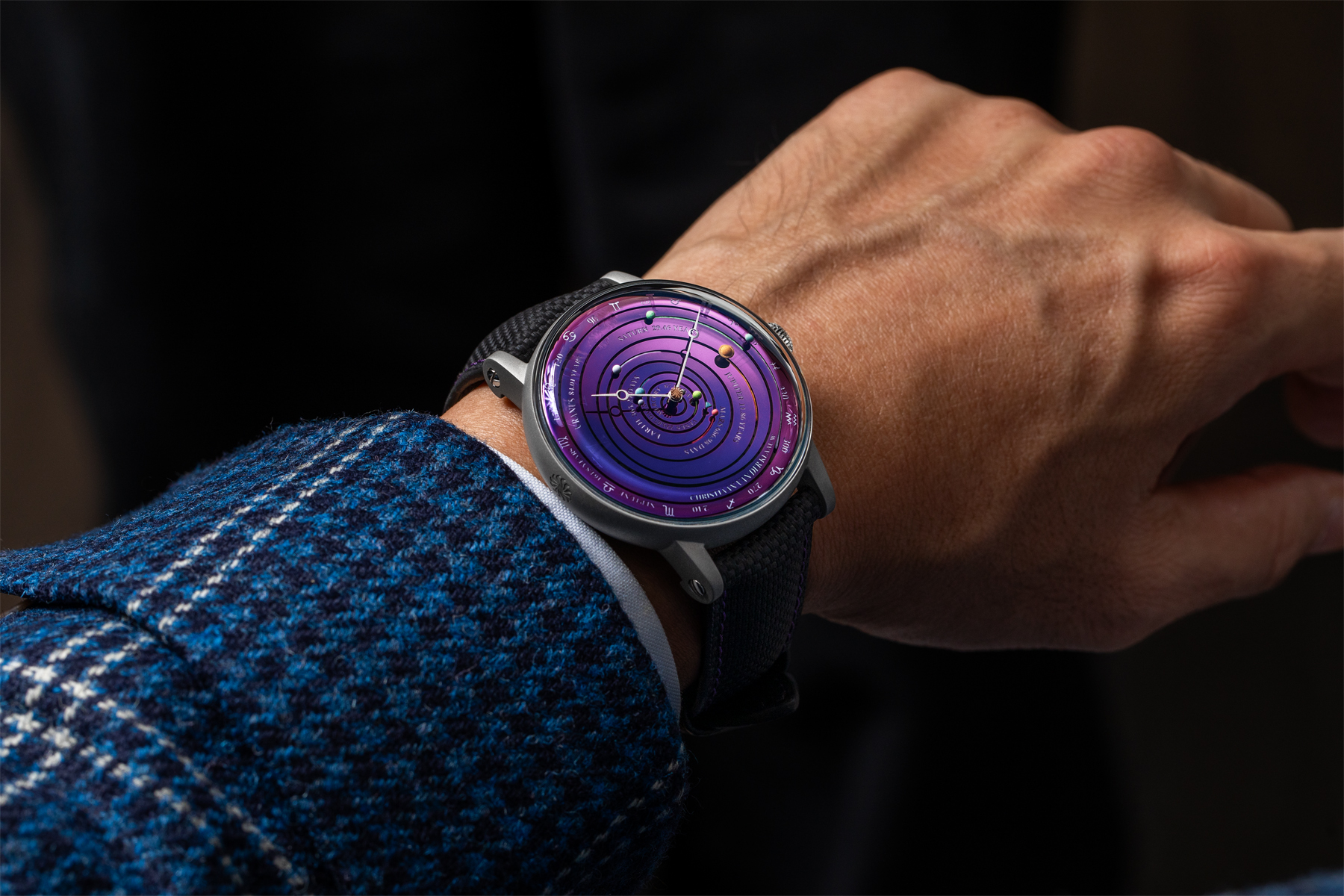
Christiaan van der Klaauw x Revolution The Grand Planetarium Eccentric Si14 (Silicium)
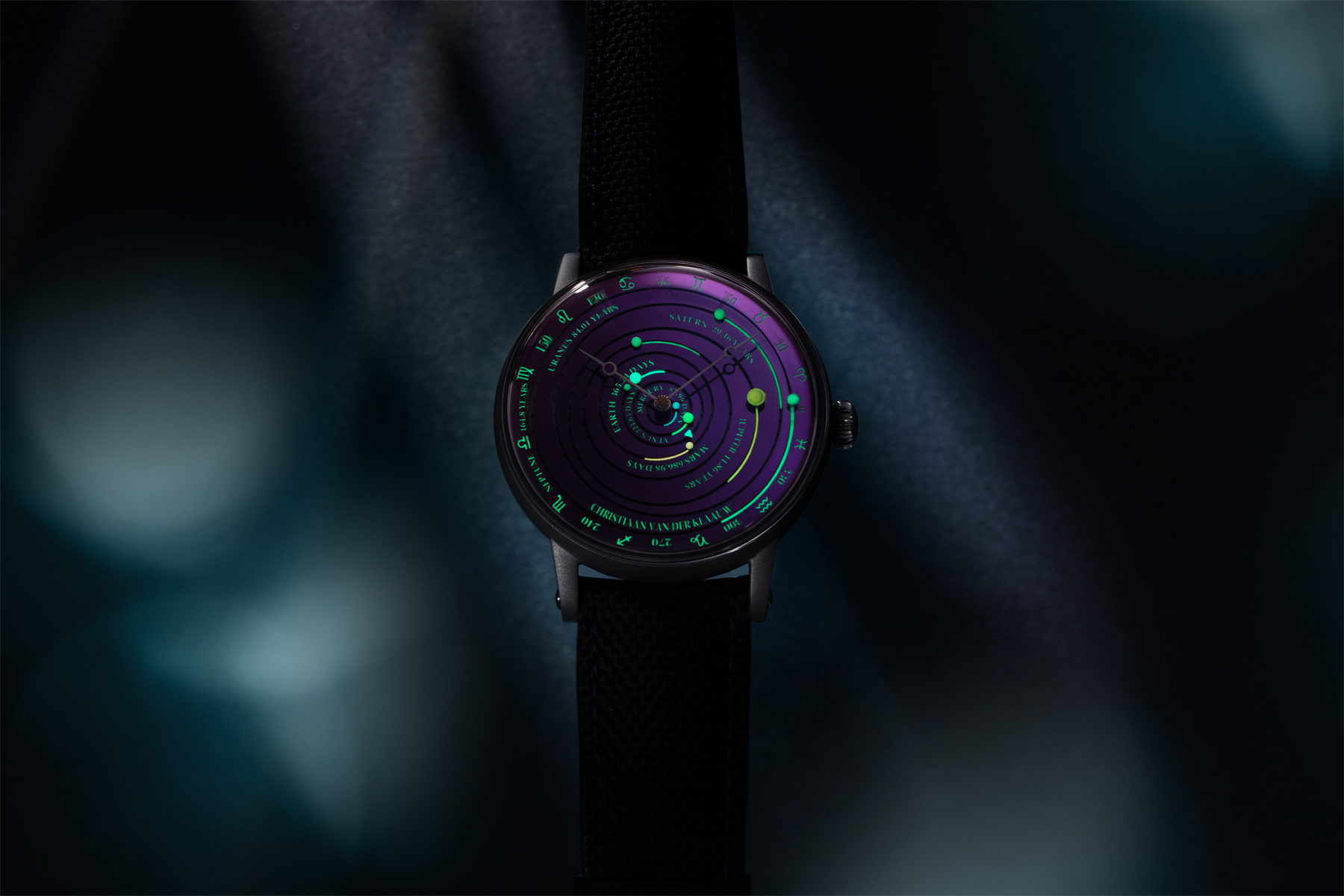
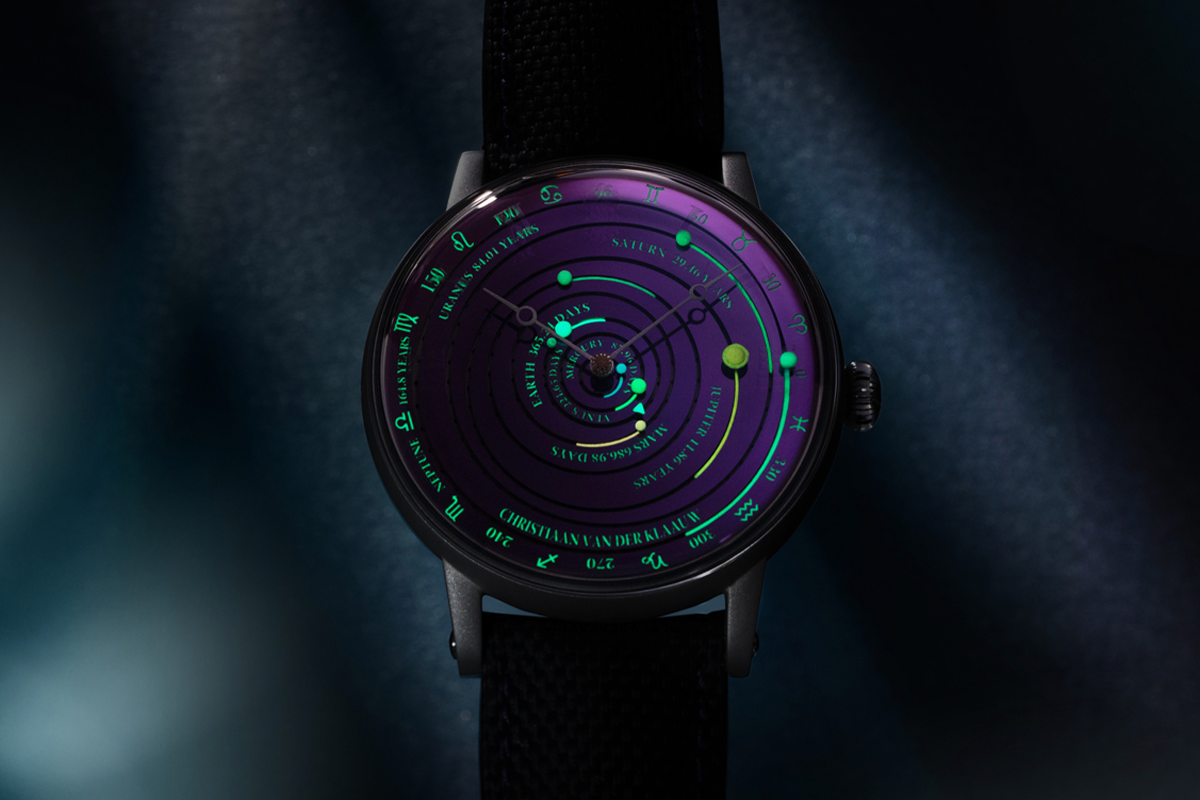
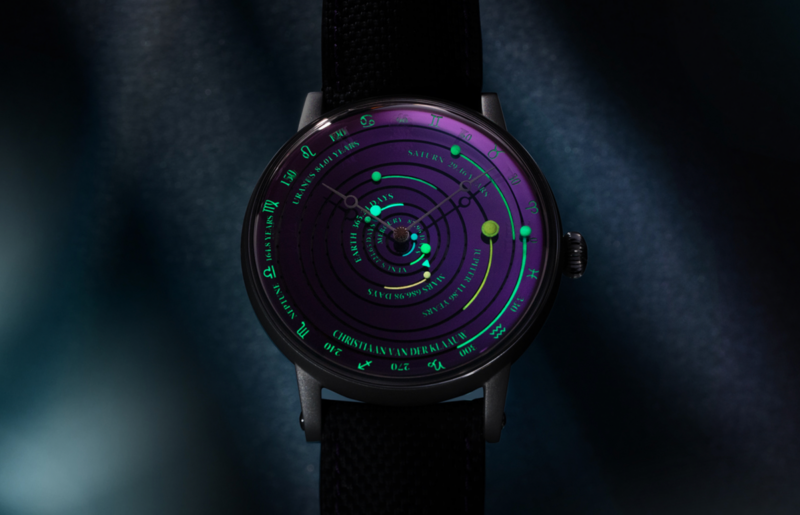
In darkness, the planetary display of the CVDK × Revolution The Grand Planetarium Eccentric Si14 (Silicium) becomes legible through Super-LumiNova. The hand-applied luminous planets and sections of their orbital paths glow softly against the oxidised silicon dial
Hardened Steel Case and Silicon Dial
The case of the CVDK × Revolution Grand Planetarium Eccentric is machined from 316L stainless steel and then subjected to low-temperature carbon diffusion, a process that raises surface hardness to roughly 1,200 Vickers — about six times that of untreated steel. There is something to be said, in particular, for fine watches that carry that sort of surface resilience. Anyone who has struck a watch against a hard surface — in my case, the cabinet inside an aircraft lavatory, with a report sharp enough for a stewardess to ask through the door if I was alright — knows the split second of dread before looking down. When the thin white line that would have caught the light forever after simply isn’t there, it thoroughly recalibrates your relationship with the watch.
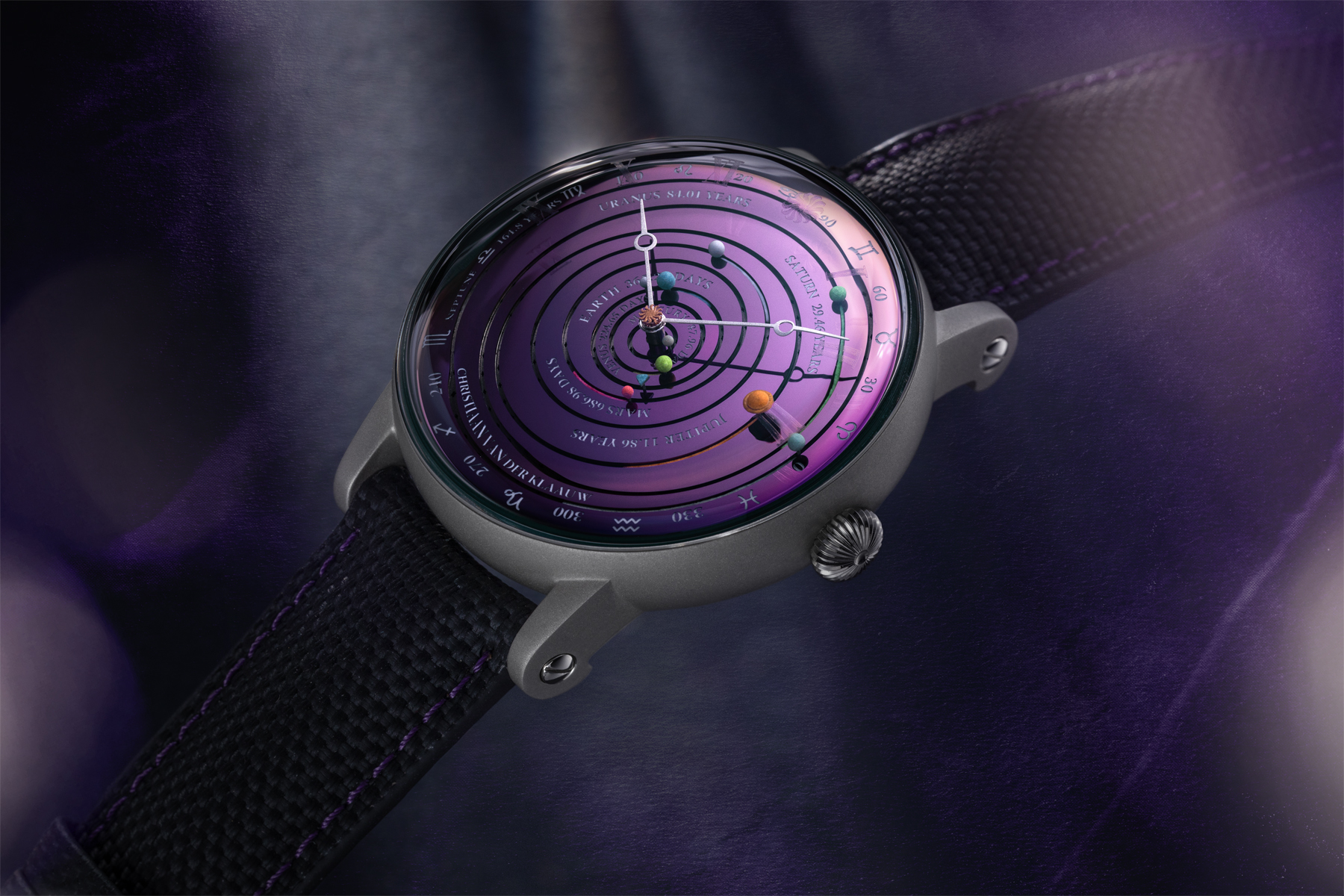
CVDK × Revolution The Grand Planetarium Eccentric Si14 (Silicium) is housed in a 44mm case made from 316L stainless steel that undergoes low-temperature carbon diffusion, increasing surface hardness to around 1,200 Vickers, which is almost as hard as ceramic
The case is finished with bead-blasting, giving it a matte, gray-toned surface that diffuses light, which makes what little wear that does occur far less conspicuous. It measures 44mm wide and 14.3mm high, which places it firmly outside the realm of discreet, but a watch that sets out to model the entire Solar System was never likely to whisper. Much of the height is a direct consequence of the complex astronomical module beneath.
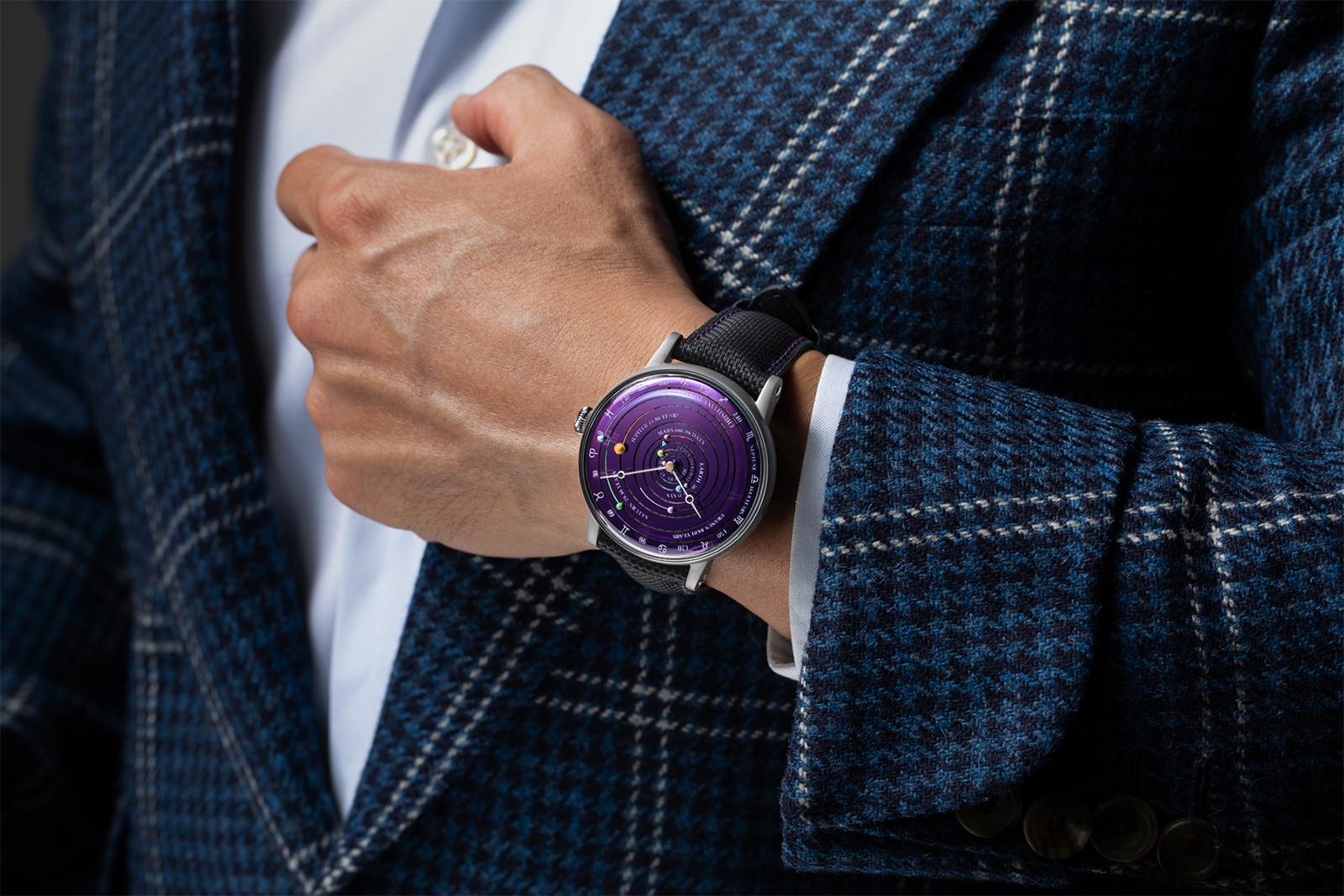
CVDK × Revolution The Grand Planetarium Eccentric Si14 (Silicium)
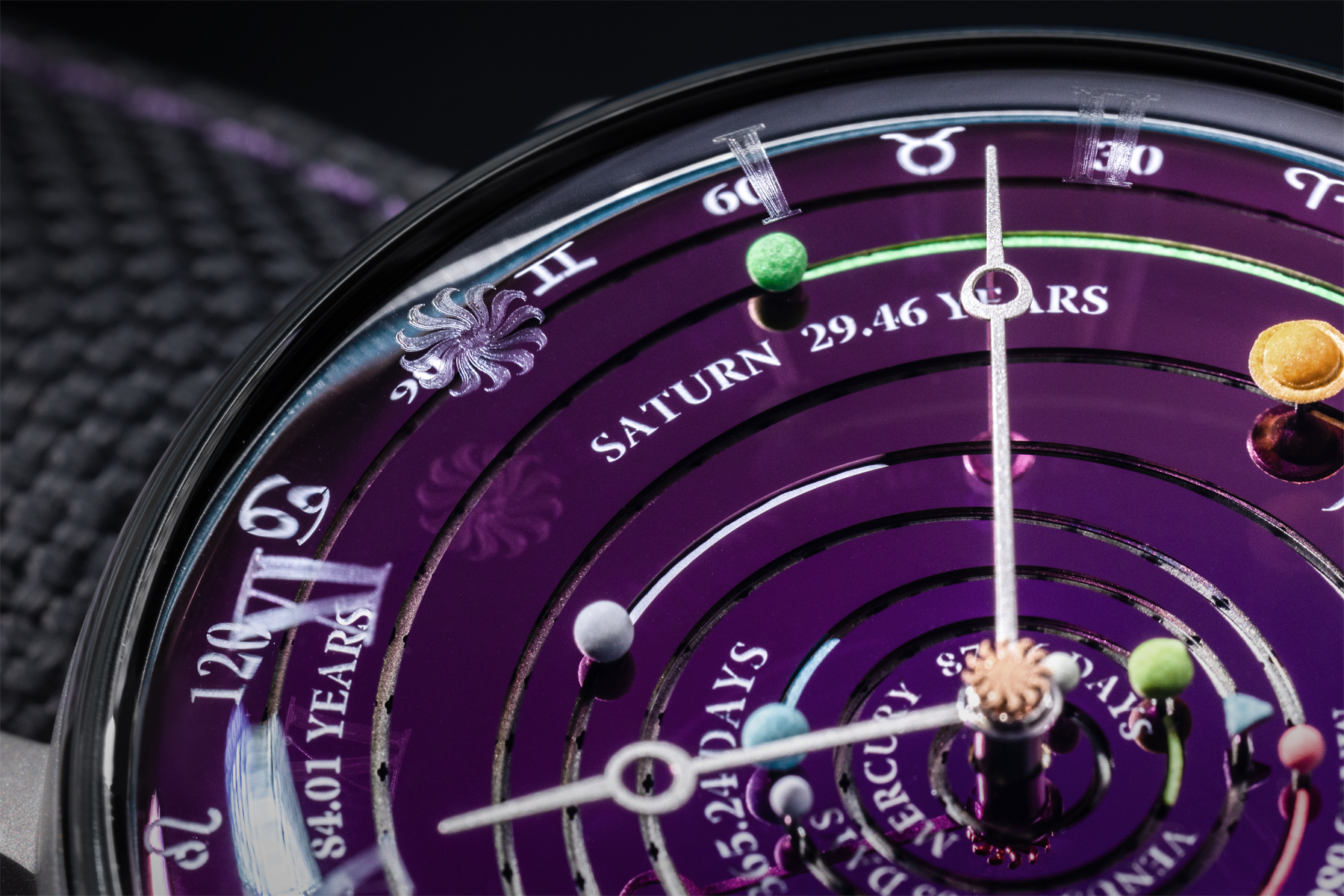
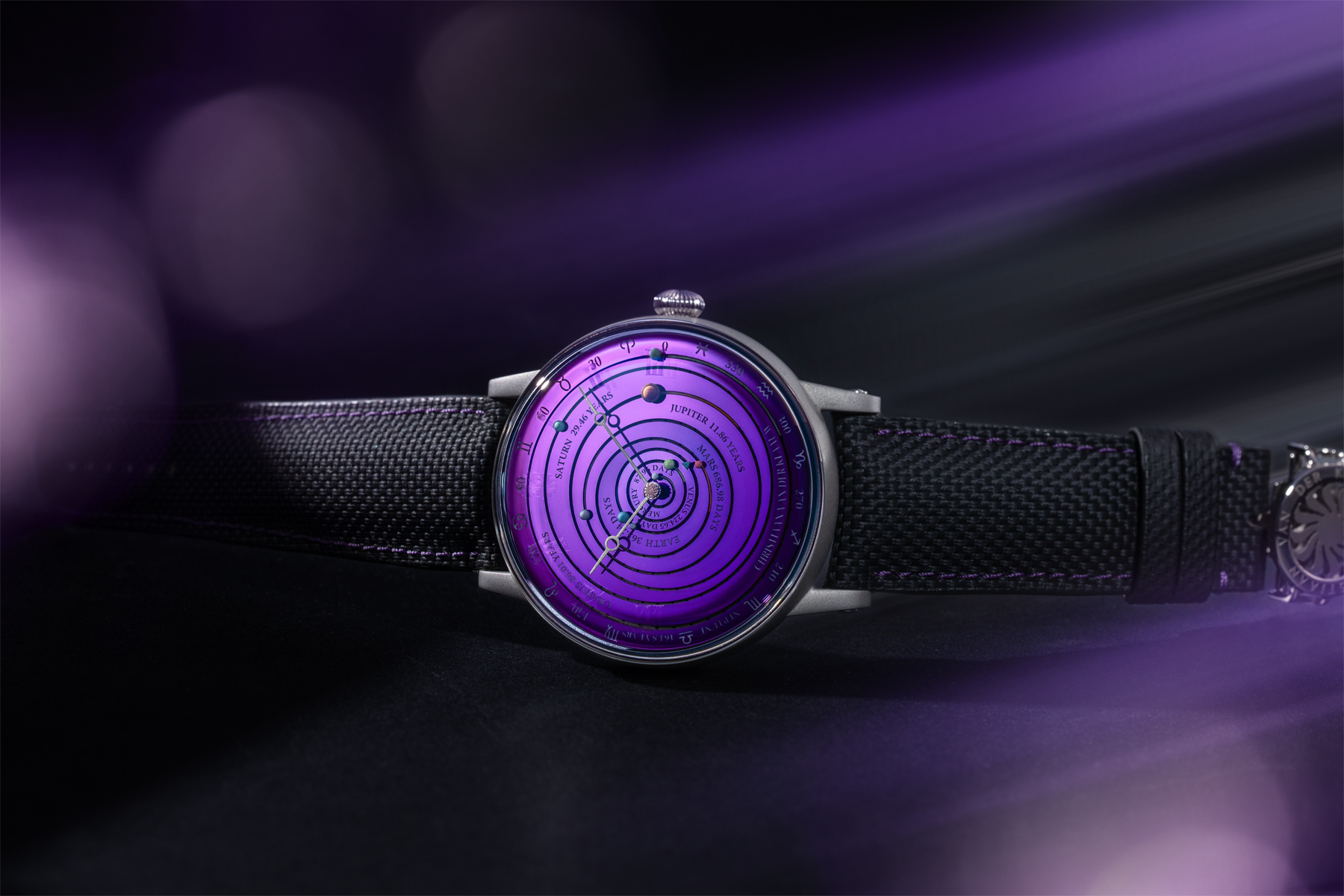
The dial is composed of nine pieces of oxidized silicon, producing shifting blue-violet interference colours that evoke the depths of space. Across its surface, hand-painted Super-LumiNova planets trace their real orbital periods — from Mercury’s 87.97 days to Neptune’s 164.80 years — forming a miniature mechanical model of the Solar System
To evoke the cosmos, the dial is made from nine separate pieces of oxidized silicon which gives it an iridescent surface that shifts between deep blue and violet depending on how the light strikes it. Silicon is better known in watchmaking for its functional role in escapements and hairsprings, but here it is pressed into service for something rather different. Through controlled oxidation, a thin oxide layer forms on the surface, which produces interference colors that give the dial its distinctive blue-purplish tone.
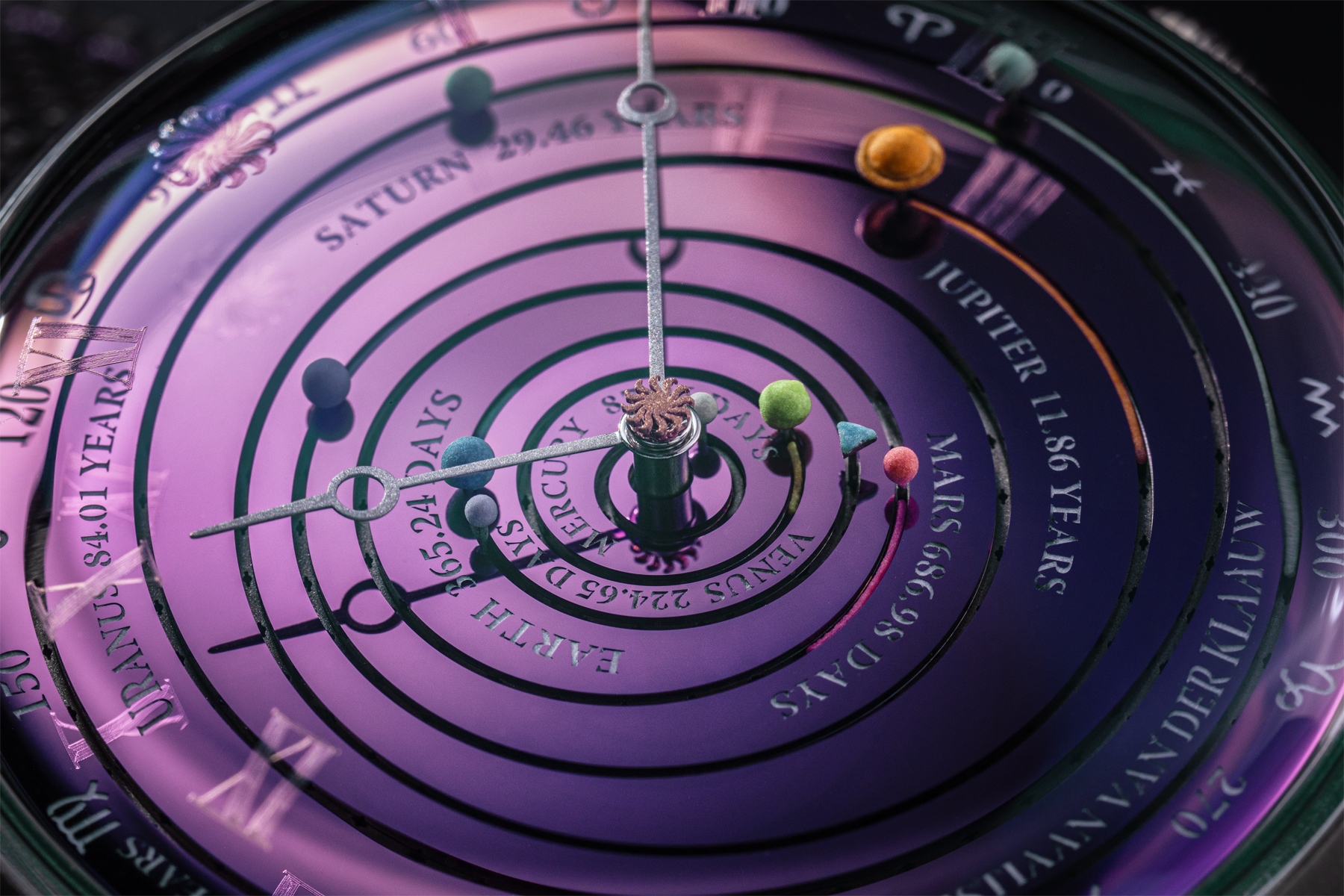
The sun, rendered as CVDK’s logo, rotates continuously and serves as the running seconds. Roman numerals — along with the logo at 12 o’clock — are engraved on the inner surface of the sapphire crystal, indicating the correct orientation of the display
Against this dark, shifting backdrop, the planets are painted by had in Super-LumiNova by the Maison’s master watchmaker. Notably, small engraved luminous markings indicate the orbital period of each planet: Mercury completes its orbit in 87.97 days, Venus in 224.70 days, Earth in 365.24 days and Mars in 686.98 days, while the outer planets move on a far more patient scale, with Jupiter taking 11.86 years, Saturn 29.46 years, Uranus 84.02 years and Neptune 164.80 years to circle the Sun. Even the Earth’s Moon is represented on the dial right next to Earth. The raised colored segments on the paths themselves are also luminous, and it all makes for a spectacular miniature light show of the cosmos where each planet is a small point of light suspended in the deep blue-violet of space.
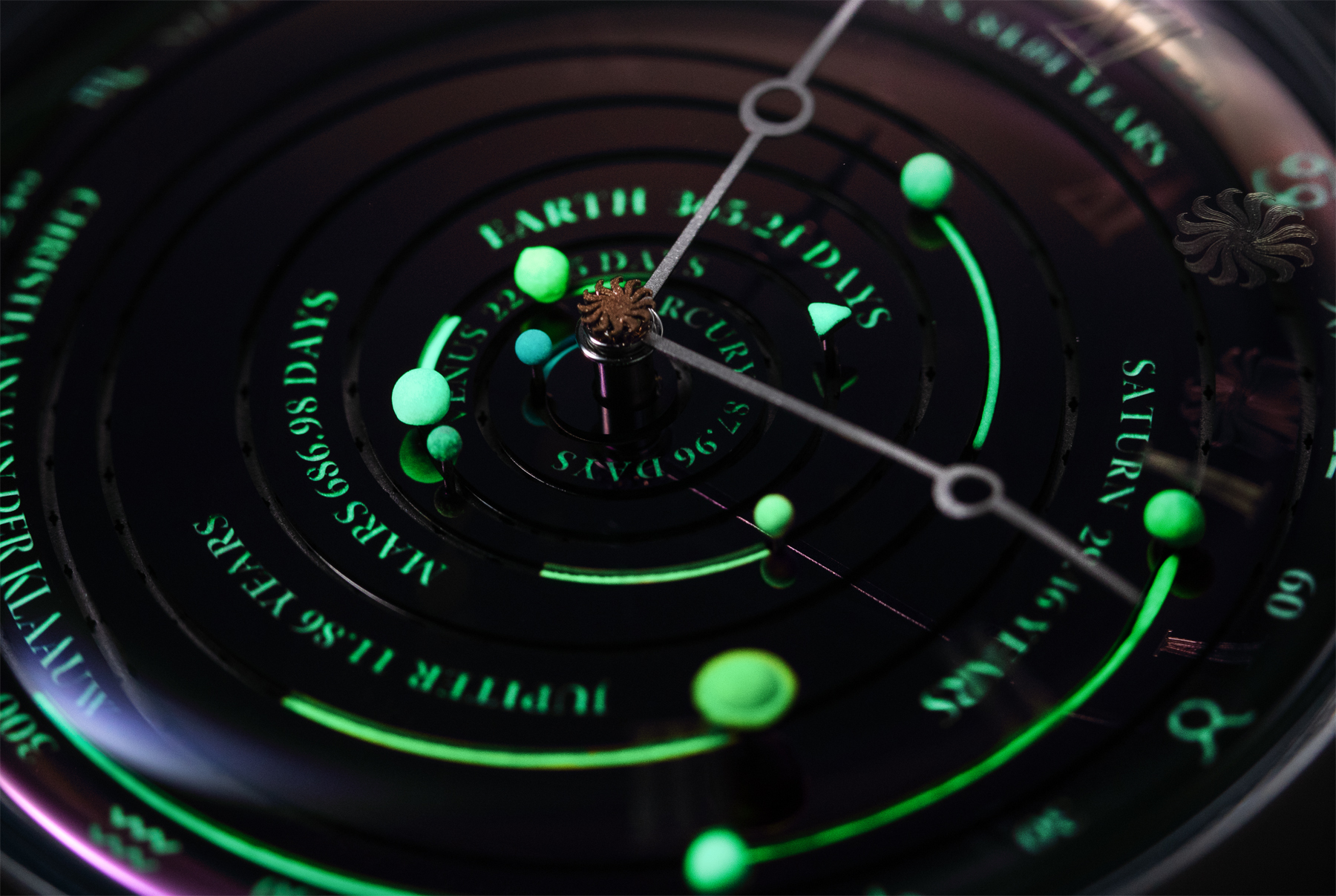
Each planet is hand-painted in Super-LumiNova by Pim Koeslag, allowing the Solar System to glow vividly in the dark. The luminous planets and highlighted orbital paths transform the dial into a miniature celestial light show against the deep blue-violet silicon backdrop
What’s appreciated is that the Grand Planetarium also includes an outer zodiac scale, read via a blue triangular indicator positioned opposite Earth. As Earth completes one revolution in 365.24 days, its position against the fixed zodiac scale shows where Earth lies in its orbit relative to the constellations along the ecliptic. In other words, the indicator reveals the portion of the zodiac in which the Sun appears from Earth at any given time of the year.
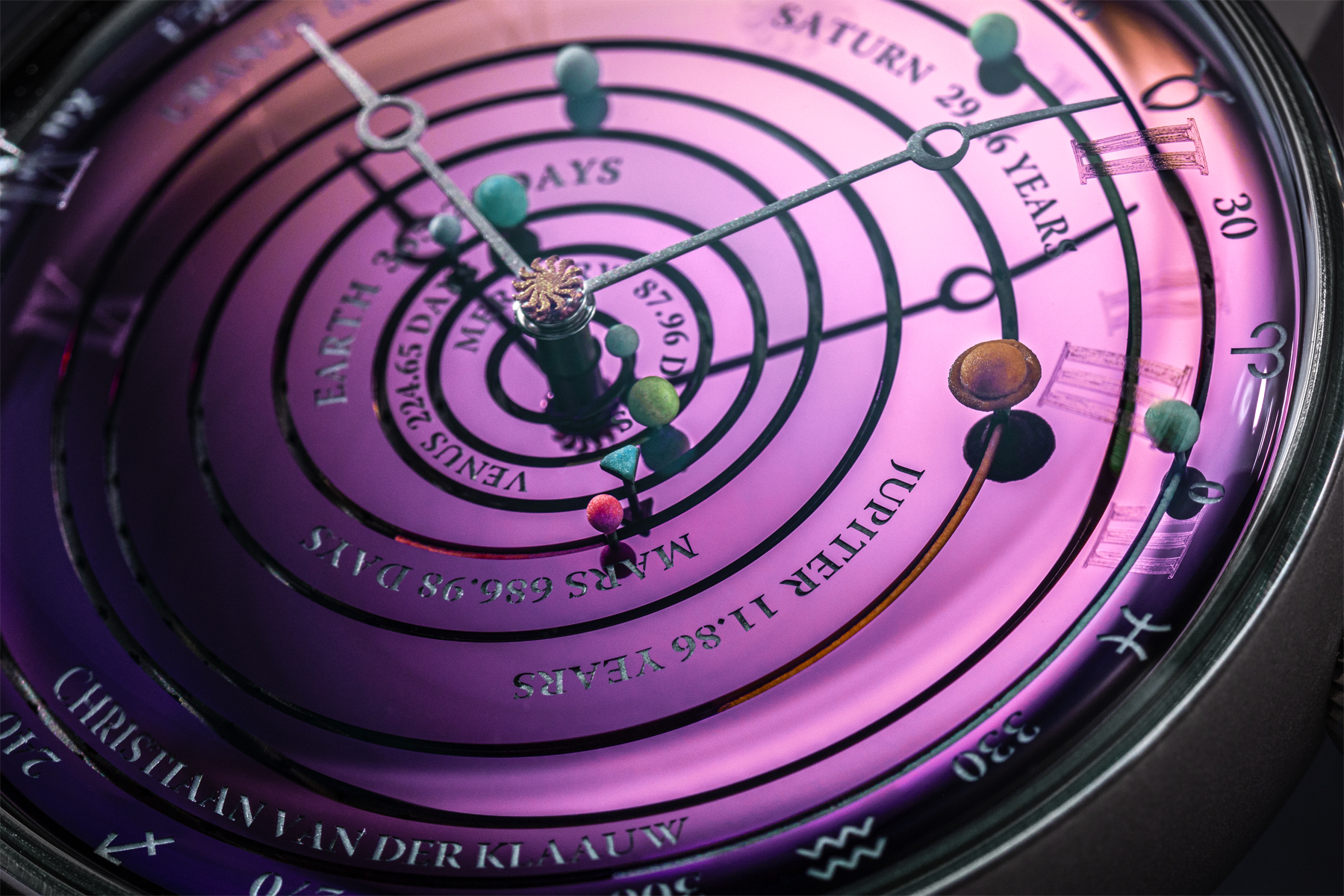
The Grand Planetarium displays the orbital periods of all eight planets as they circle the Sun, from Mercury to Neptune. The outer track carries a zodiac scale, read by a blue arrow positioned opposite Earth
This detail matters in a planetarium display because it links the heliocentric mechanics of the watch to the way the sky is actually experienced from Earth. A model of the Solar System that shows only the planets orbiting the Sun risks becoming a purely mechanical abstraction. By incorporating the zodiac scale — the band of constellations that lie along the plane of the ecliptic — the watch anchors the display to the celestial sphere we observe. The wearer can read not only where Earth sits in its orbit, but also which region of the sky the Sun currently occupies. The constellation directly behind the Sun is hidden in daylight, but the one opposite it becomes visible in the night sky.
The zodiac scale also provides a rough but functional indication of the current month, since the Sun appears to progress through the 12 zodiac signs, each spanning 30 degrees of the ecliptic, as the Earth advances along its orbit.
Celestial Mechanics
The planetarium module was originally conceived by Christiaan van der Klaauw himself. A few months after Pim Koeslag acquired the company in 2022, van der Klaauw mentioned that he had been working on the concept. Koeslag proposed developing it as a piece to mark the brand’s 50th anniversary. Van der Klaauw then presented a series of drawings — some 10 to 15 A3 sheets — detailing the mechanism. At Koeslag’s suggestion, two additional planets were incorporated into the design.
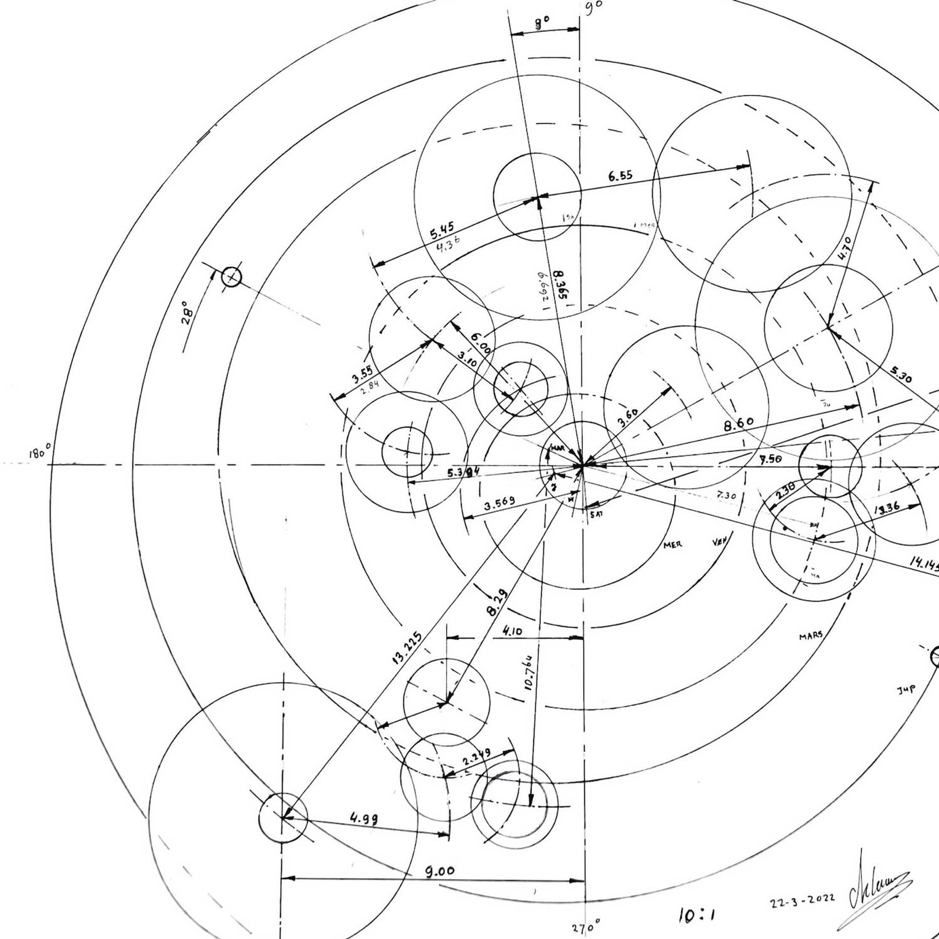
Hand-drawn plan executed at a scale of 10:1, by Christiaan van der Klaauw
What’s remarkably impressive is that instead of relying on computational power to sift through vast numbers of possibilities, as is often done today, van der Klaauw determined the planetary ratios and laid out the mechanism directly with pencil, compass and arithmetic. The mechanism was laid out geometrically to plot the positions of the wheels, their diameters, the center distances between them and the spacing required for the various gear trains to mesh within the module. Only once the entire layout had been resolved on paper was the design transferred into CAD to produce a three-dimensional model.

Pim Koeslag, CEO and master watchmaker of Christiaan van der Klaauw
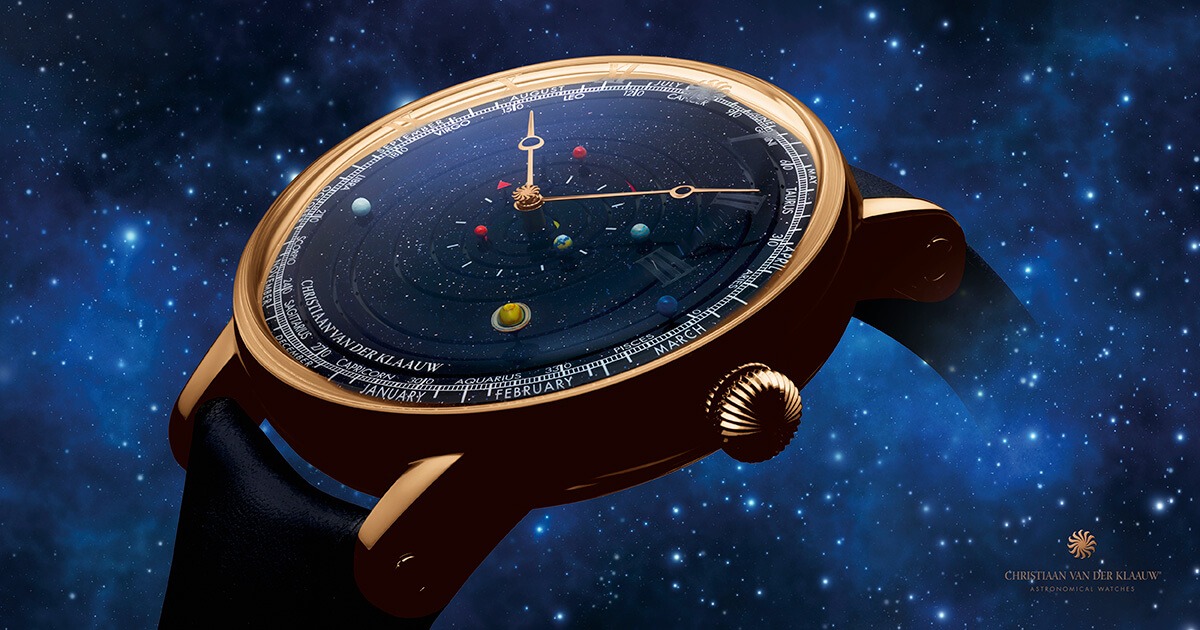
CVDK Grand Planetarium Eccentric Manufacture in Rose Gold
In contrast to van der Klaauw’s most celebrated wristwatch — the CVDK Planetarium — which features the world’s smallest mechanical planetarium measuring just 15mm, the Grand Planetarium spreads the display across the entire dial. Each planet follows a circular track arranged slightly off-center, intended to evoke their elliptical paths around the Sun.

Christiaan van der Klaauw × Revolution Planetarium Prometheus launched in 2024 limited to six pieces
The module itself is essentially a large gear train beginning at the 12-hour wheel in the motion works. From there, a compound reduction system represented by the yellow and magenta gears in the CAD illustration steps the motion down until a wheel is obtained that completes one rotation every 365.24 days. This becomes the Earth wheel, shown in blue. From this point, two branches of gearing extend radially to generate the orbital periods of the other planets — one branch moving inward to drive Mercury (green) and Venus (light blue), and the other outward toward the periphery to drive Mars (red), Jupiter (yellow) and Saturn (beige). Uranus and Neptune — the slowest moving planets, with orbital periods of 84.02 and 164.80 years respectively — are omitted from this CAD rendering.
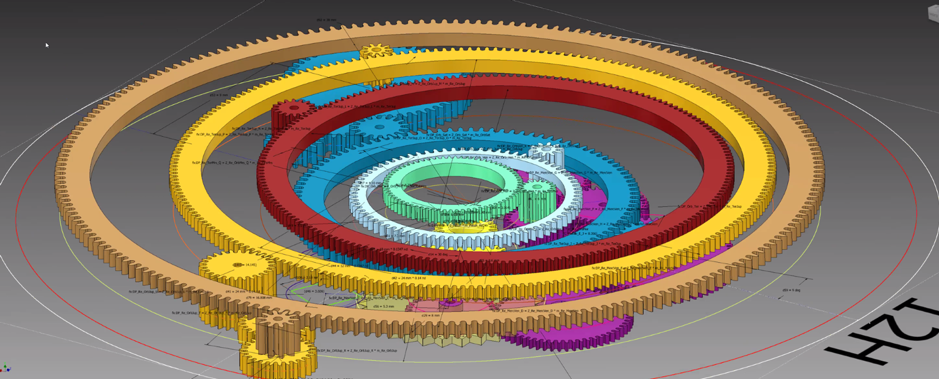
CAD drawing of the Grand Planetarium module, whose gear train comprises a total of 3,338 teeth
The inner planets require higher angular velocities relative to Earth, which are achieved through gear-up configurations using smaller pinions driven from the Earth wheel or intermediate stages. The outer planets move far more slowly, and their sidereal periods — from 686.98 days for Mars to 29.46 years for Saturn — are obtained through gear-down arrangements in which progressively larger wheels reduce the input speed. The result is a cascading gear train capable of reproducing the vastly different orbital rhythms of the planets within a single dial-side mechanism.
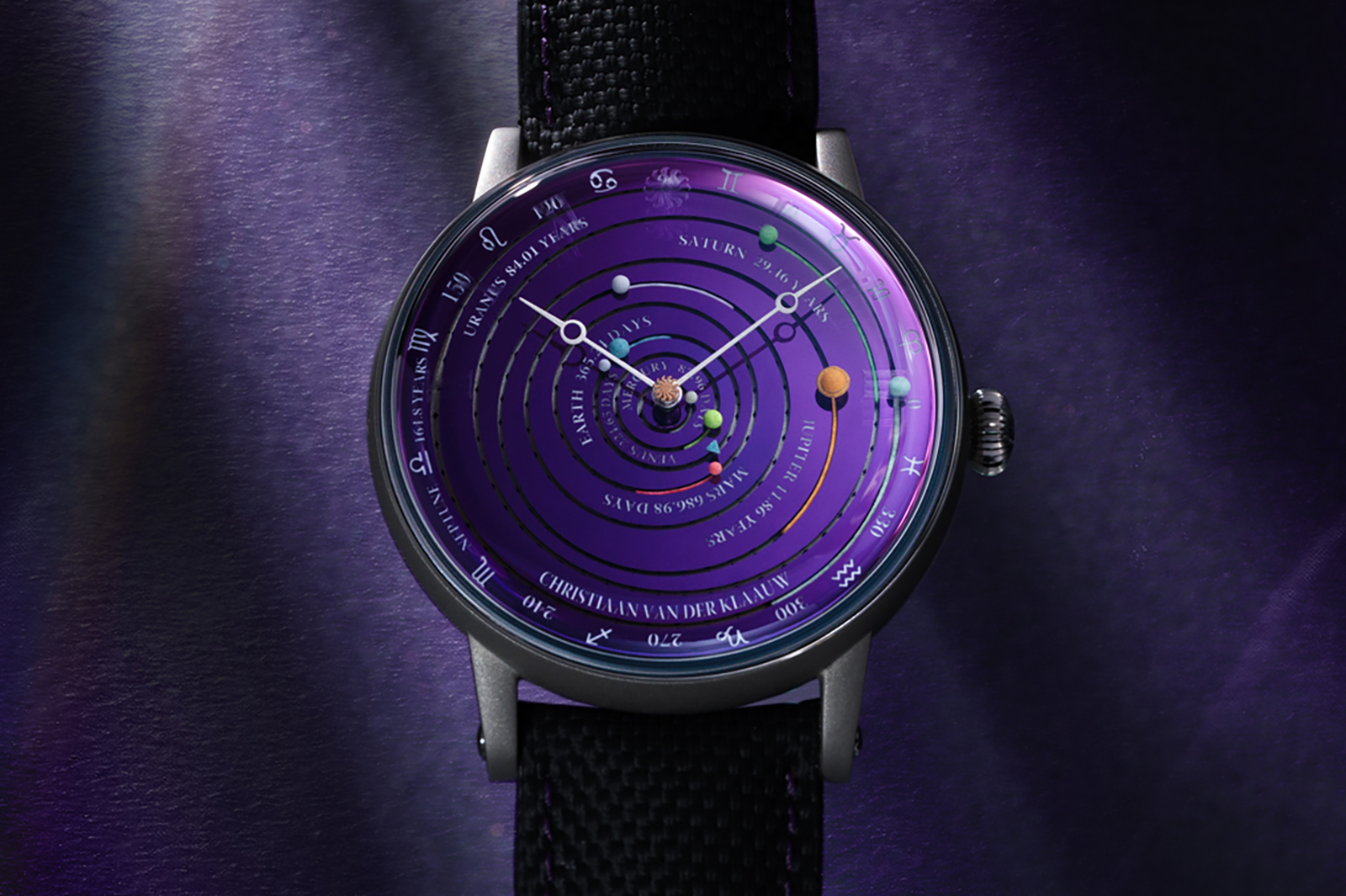
Christiaan van der Klaauw x Revolution The Grand Planetarium Eccentric Si14 (Silicium)
The module is mounted atop the brand’s proprietary automatic movement, which provides a power reserve of 60 hours. It runs at a frequency of 3Hz and is equipped with a free-sprung balance. The movement is visually striking. It is dominated by a gold rotor in the shape of the brand’s logo. Beneath it, the bridges are decorated with a field of stars produced by laser engraving. Each wheel in the going train, along with the balance wheel, is supported by a bridge tipped with a star, forming a depiction of a shooting star with a jewel sitting at the center. The stars themselves are circular grained, and the baseplate is finished with perlage.
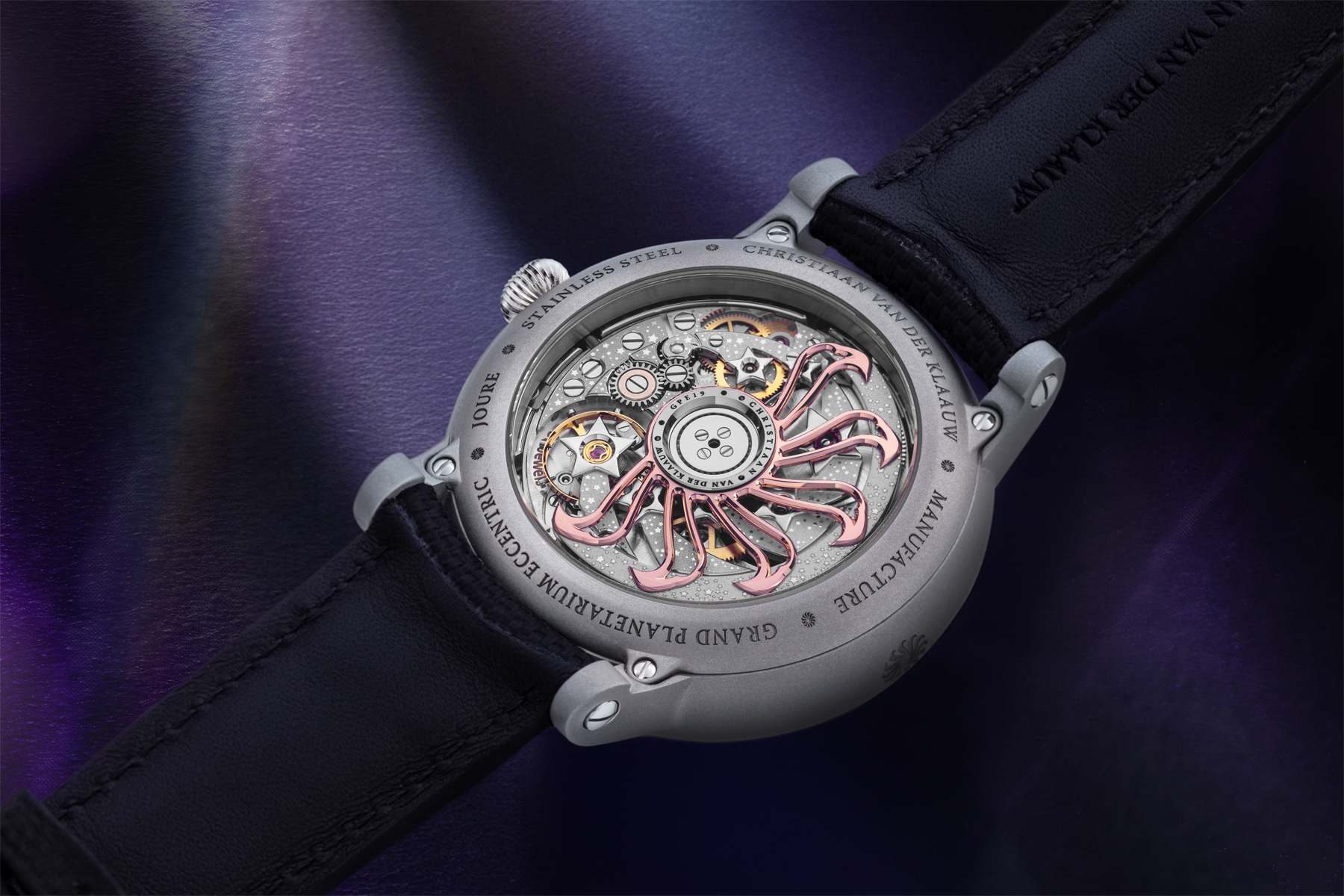
The Caliber CKM-01 automatic movement offers a 60-hour power reserve and beats at 21,600 vibrations per hour (3Hz)
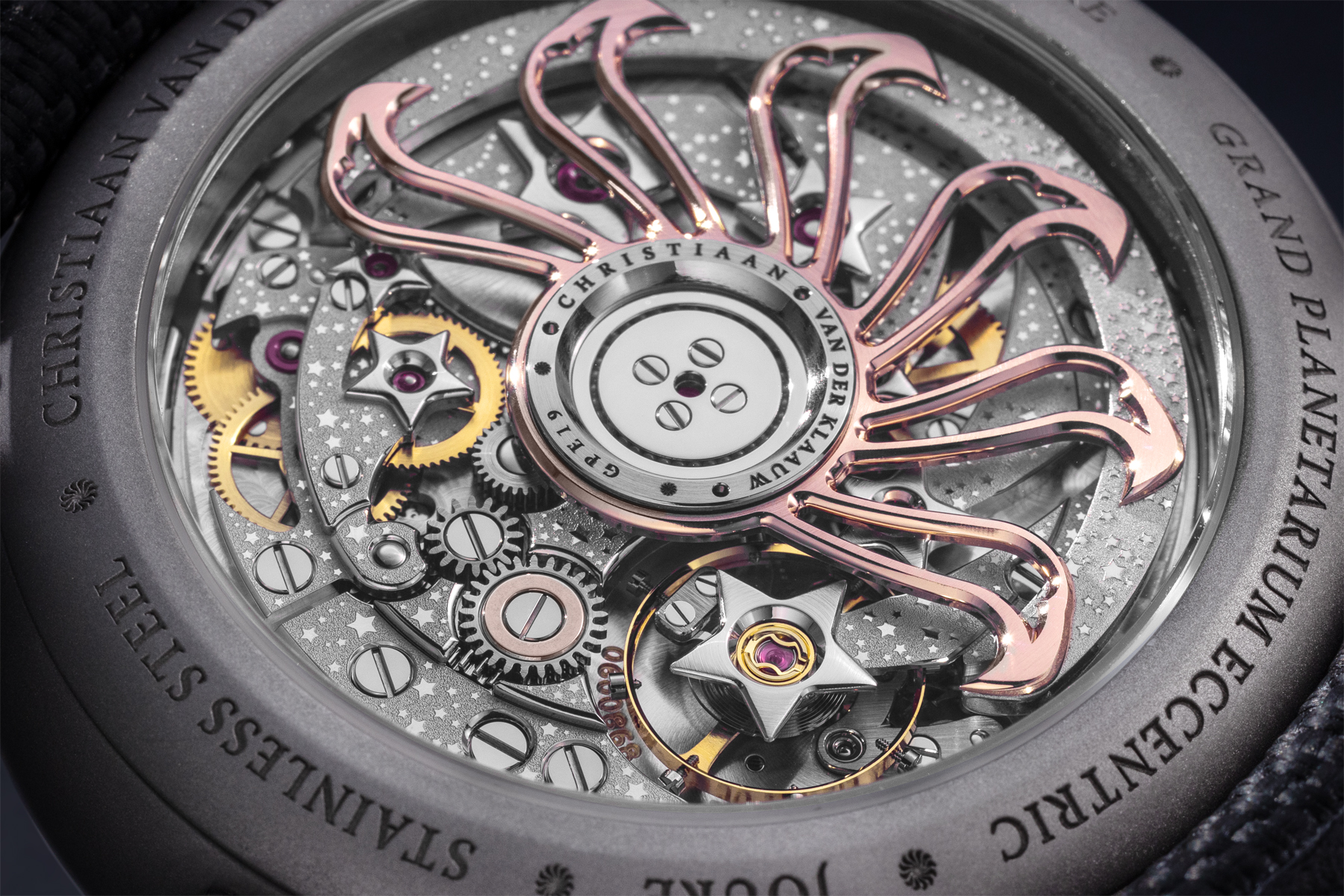
Star-shaped bridges sit against a frosted, rhodium-plated star motif, while a skeletonised brass rotor — plated in rose gold and shaped as the CVDK logo — carries a rhodium-plated tungsten weight
The design and execution both front and back make this an especially romantic watch. Planetarium watches have always occupied a special place in horology. They are not especially practical, nor were they ever intended to be, but they capture, within the confines of a watch, a small reflection of the much larger clockwork that governs the heavens. In the CVDK × Revolution Grand Planetarium Eccentric Silicium, what was already an intricate mechanical model of the Solar System comes vividly to live when darkness falls. It is a reminder perhaps that the universe we observe — its rhythms, its order, its beauty — comes to us written in light.
Tech Specs: Christiaan van der Klaauw x Revolution The Grand Planetarium Eccentric Si14 (Silicium)
Movement Self-winding Caliber CKM-01; 60-hour power reserve; 21,600 vph (3 Hz)
Functions Hours and minutes; central seconds (rotating sun logo); zodiac sign indicator; Eccentric Planetarium showing the orbits of Mercury, Venus, Earth, Mars, Jupiter, Saturn, Uranus and Neptune
Case 44mm × 14.3mm; hardened stainless steel; water resistant to 30m
Dial Oxidized silicon with astronomical display
Strap Black canvas leather strap with purple stitched lining; hardened steel pin buckle
Price EUR 157,000 (excl. taxes)
Availability Limited edition of six pieces
Christiaan Van Der Klaauw

You may also like
Watch Fairs
Christiaan van der Klaauw at Watches & Wonders 2026: Venus Zodiac and Venus Annual Calendar
Apr 15, 2026
Watch Fairs
Christiaan van der Klaauw at Watches & Wonders 2026: Venus Zodiac and Venus Annual Calendar
Apr 15, 2026
limited
Christiaan van der Klaauw × Revolution Grand Planetarium Eccentric Si14 (Silicium)
Mar 10, 2026
limited
Christiaan van der Klaauw × Revolution Grand Planetarium Eccentric Si14 (Silicium)
Mar 10, 2026
News
Christiaan van der Klaauw Introduces the Grand Planetarium Eccentric Meteorite
May 23, 2025
News
Christiaan van der Klaauw Introduces the Grand Planetarium Eccentric Meteorite
May 23, 2025