Christiaan van der Klaauw at Watches & Wonders 2026: Venus Zodiac and Venus Annual Calendar
Watch Fairs
Christiaan van der Klaauw at Watches & Wonders 2026: Venus Zodiac and Venus Annual Calendar

Christiaan van der Klaauw remains today virtually the only company that continues to produce miniature mechanical models of the heavens. The Venus Zodiac and Venus Annual Calendar continue that tradition, while narrowing the focus in a compelling way. Both watches focus on the relationship between Venus, Earth and the Moon.
The choice of Venus is an apt one. Seen from Earth, Venus is the brightest of the planets and, after the Sun and Moon, the brightest object visible to the naked eye. It is also the nearest planetary neighbour, and one of the few whose phases can actually be observed from here. It has occupied such a persistent place in human observation of the sky, whether as the Morning Star or the Evening Star. Yet for all that familiarity, it remains a world of spectacular hostility with surface temperatures of around 462°C and atmospheric pressure roughly 90 times that of Earth.
Both watches are powered by the proprietary automatic Calibre CKM-01, introduced in 2024, now fitted with a newly developed Venus module. The display is made up of four discs, three of them mobile, carrying Venus, Earth and the Moon. Together, they form a compact working planetarium, showing in real time the orbits of Venus and Earth around the Sun, as well as the orbit of the Moon around Earth. Earth completes its orbit in roughly 365.2 days and Venus in 224.7 days, which leads to the odd but well-known fact that a day on Venus is longer than its year.
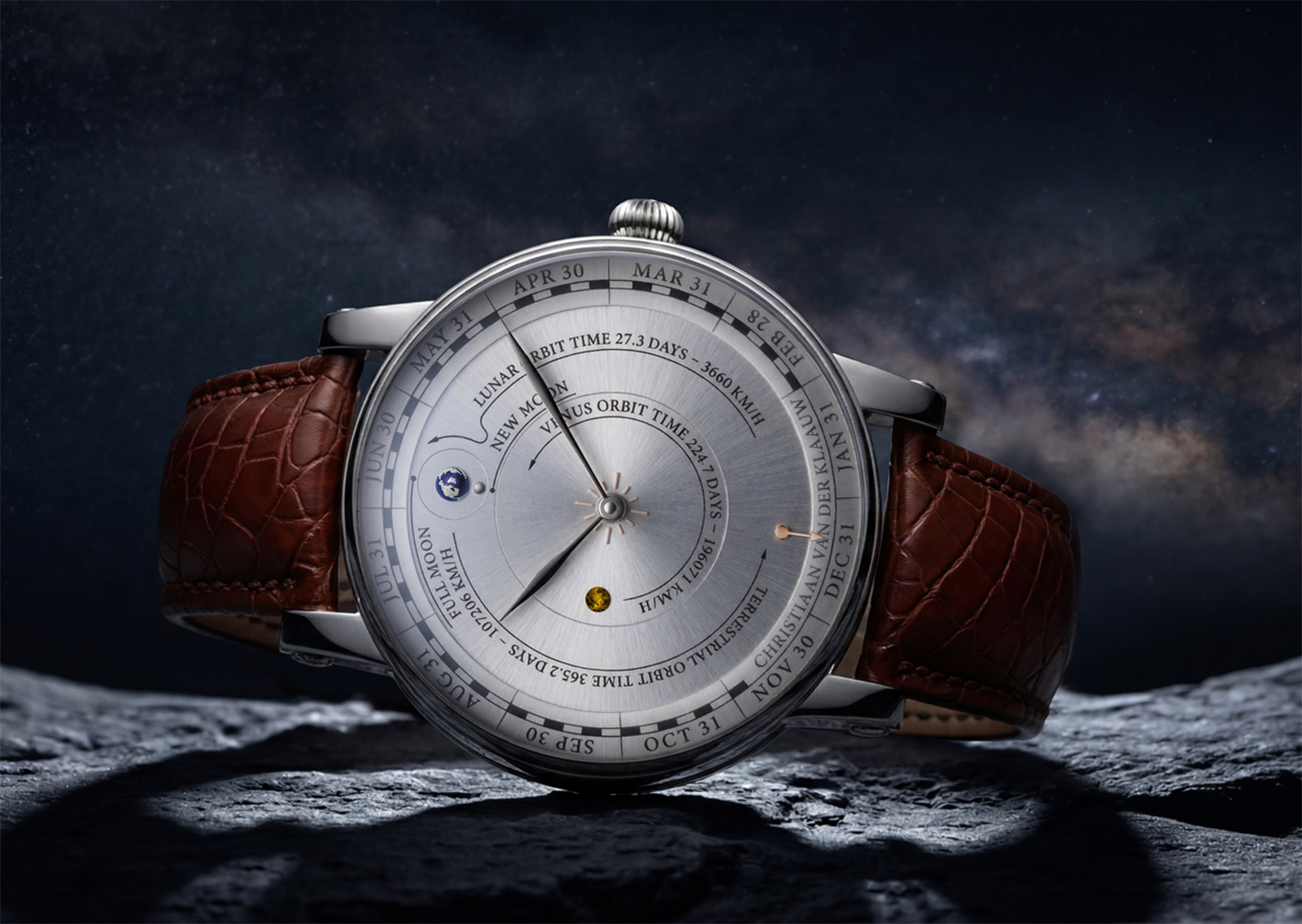
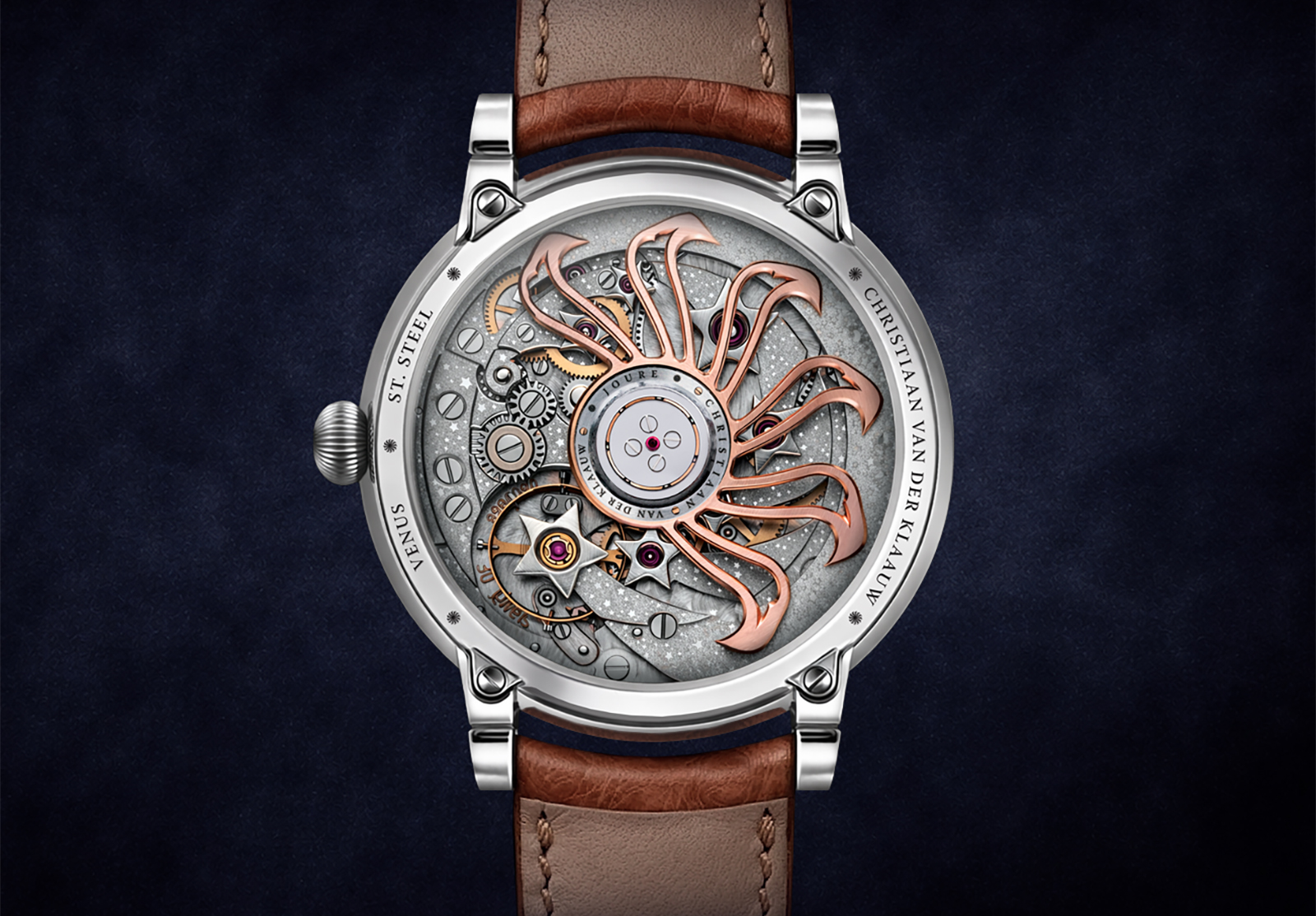
This also makes them the most compact planetarium watches produced by the brand. Both are 38mm in either stainless steel or rose gold, with a domed sapphire crystal over the dial and a sapphire case back that reveals the movement, including its star-shaped bridges and skeletonised rotor in the form of the CVDK sun logo. From there, the watches part ways. One uses the calendar as the framework, the other the zodiac.
Venus Zodiac
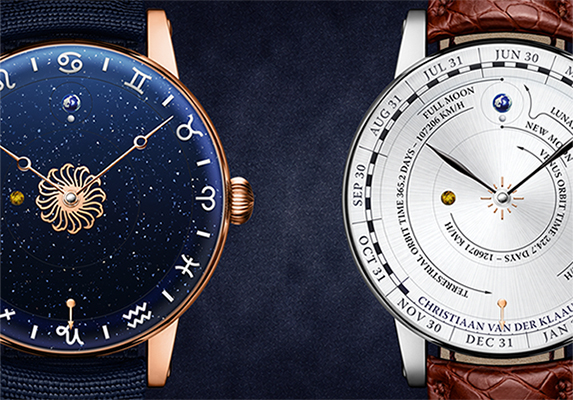
The Venus Zodiac presents the new display in its most astronomical form. The blue aventurine dial gives it the look one hopes for in a watch devoted to the sky, while the outer ring carries the 12 signs of the zodiac. Each marker between the signs corresponds to the start of a new zodiac period, generally around the 21st of the month, so the display reads the progress of the solar year through the Sun’s apparent path along the ecliptic.
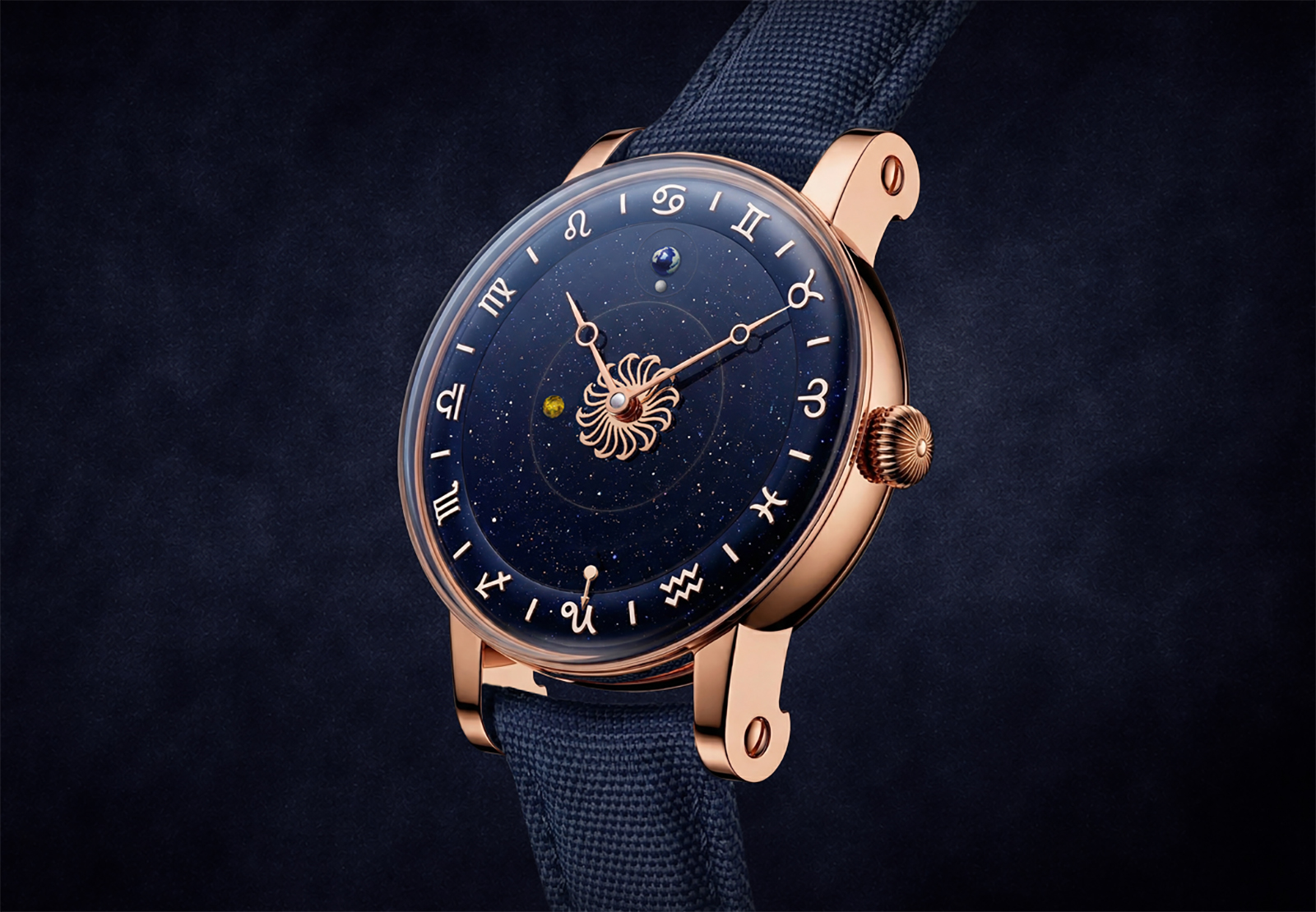
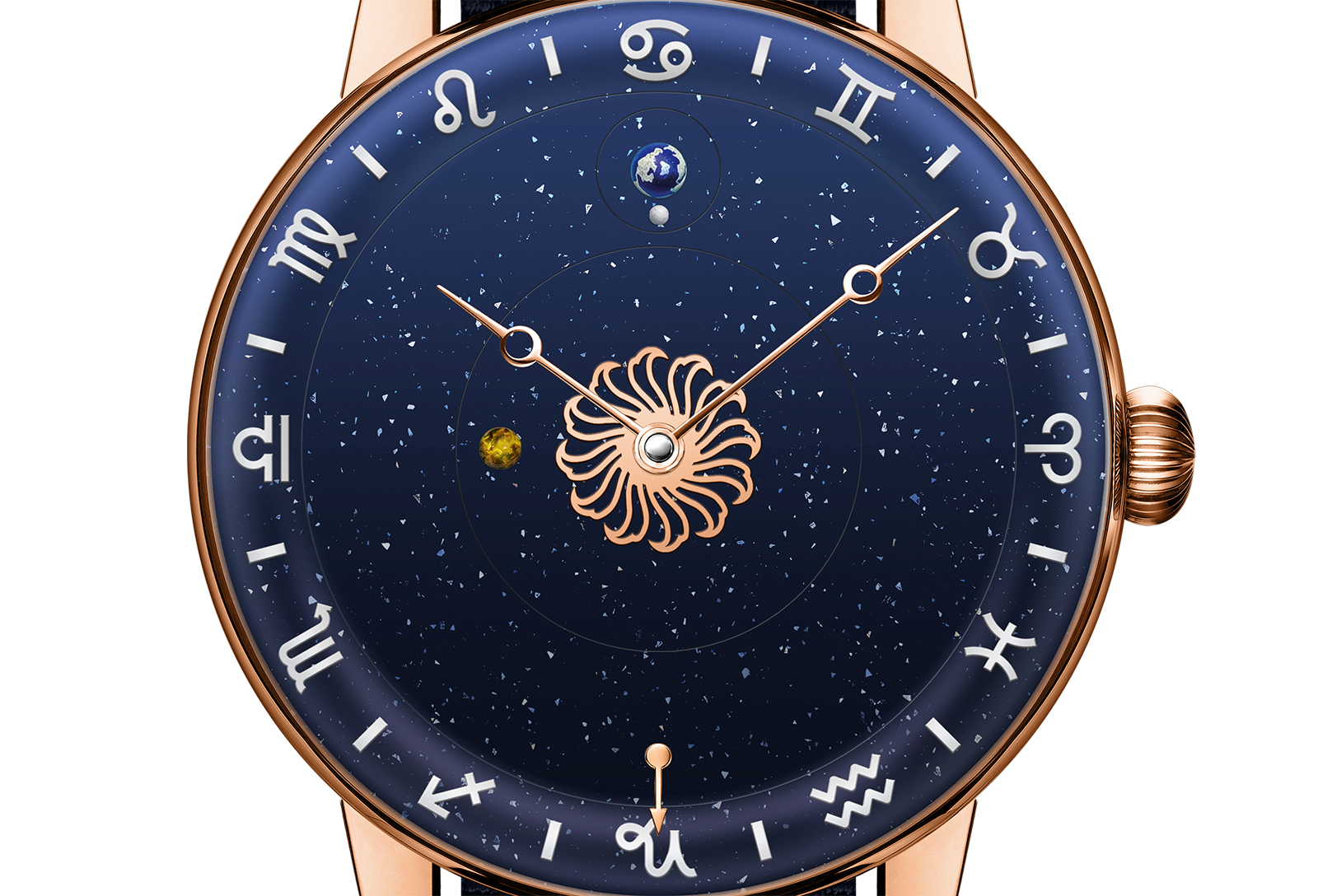
In astronomical terms, the indication follows from Earth’s position in orbit. Because the display is heliocentric, Earth is shown moving around the Sun; from our point of view on Earth, however, it is the Sun that appears to move through the zodiac. The two are opposite sides of the same relationship. If Earth is in one part of its orbit, the Sun’s apparent place in the zodiac lies 180 degrees opposite it. Hence, the Sun’s sign can simply be determined by locating Earth and reading the opposite point on the ring.
To make that easier, the watch includes a pointer opposite Earth. It advances through the zodiac over the course of the year and marks the Sun’s position directly, so the indication can be read at a glance.
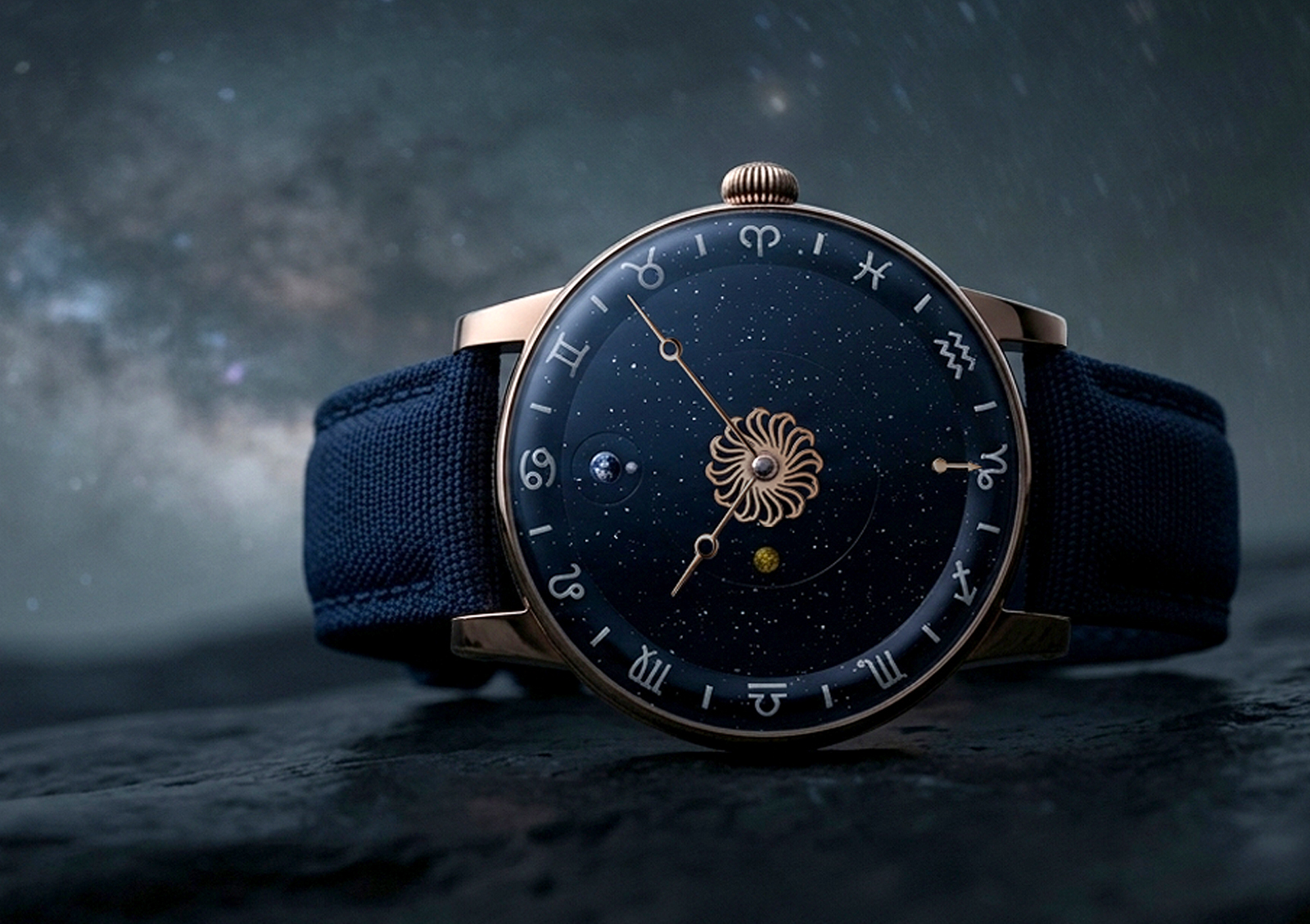
This is also the brand’s first planetarium to depict the Moon in orbit around Earth. The lunar phase can be inferred from the relative positions of the Sun, Earth and Moon on the dial. When the Moon lies between the Sun and Earth, it is new moon and when Earth lies between the Sun and Moon, it is full moon.
Venus Annual Calendar
The second watch pairs the heliocentric display with a calendar. The core display remains unchanged. Earth, Venus and the Moon continue their respective orbits across the dial, driven by the same set of gear ratios and reductions. What differs is the addition of a peripheral annual calendar.
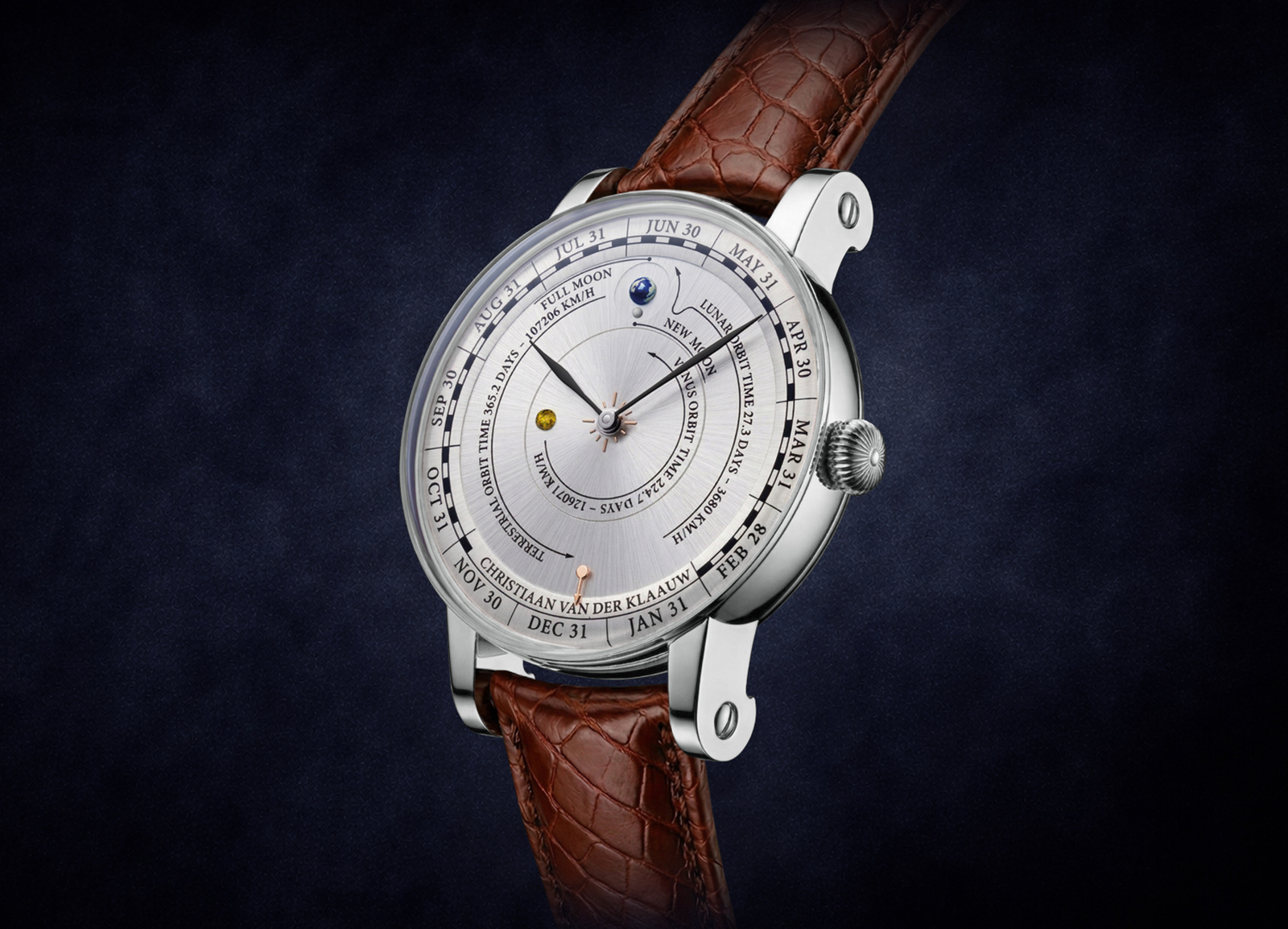
The outer ring of the dial is divided into 12 months, each further subdivided into six blocks. In months with 30 days, each block represents five days. In 31-day months, one block is extended to account for the additional day, representing six days, and in February, the last of the blocks is shorter to represent 3 days. The varying length of months in such a watch is not mechanically encoded, as in a regular annual calendar watch, as it doesn’t need to be. The annual cycle is already inherent in the planetarium, and the division of the outer ring does the work; the same pointer opposite the Earth simply indicates the current day of the month, advancing in uniform daily steps.
February is fixed at 28 days on the dial, so in a leap year the display will run straight from the 28th into March. At that point, the wearer simply returns date back by one day, via the crown.
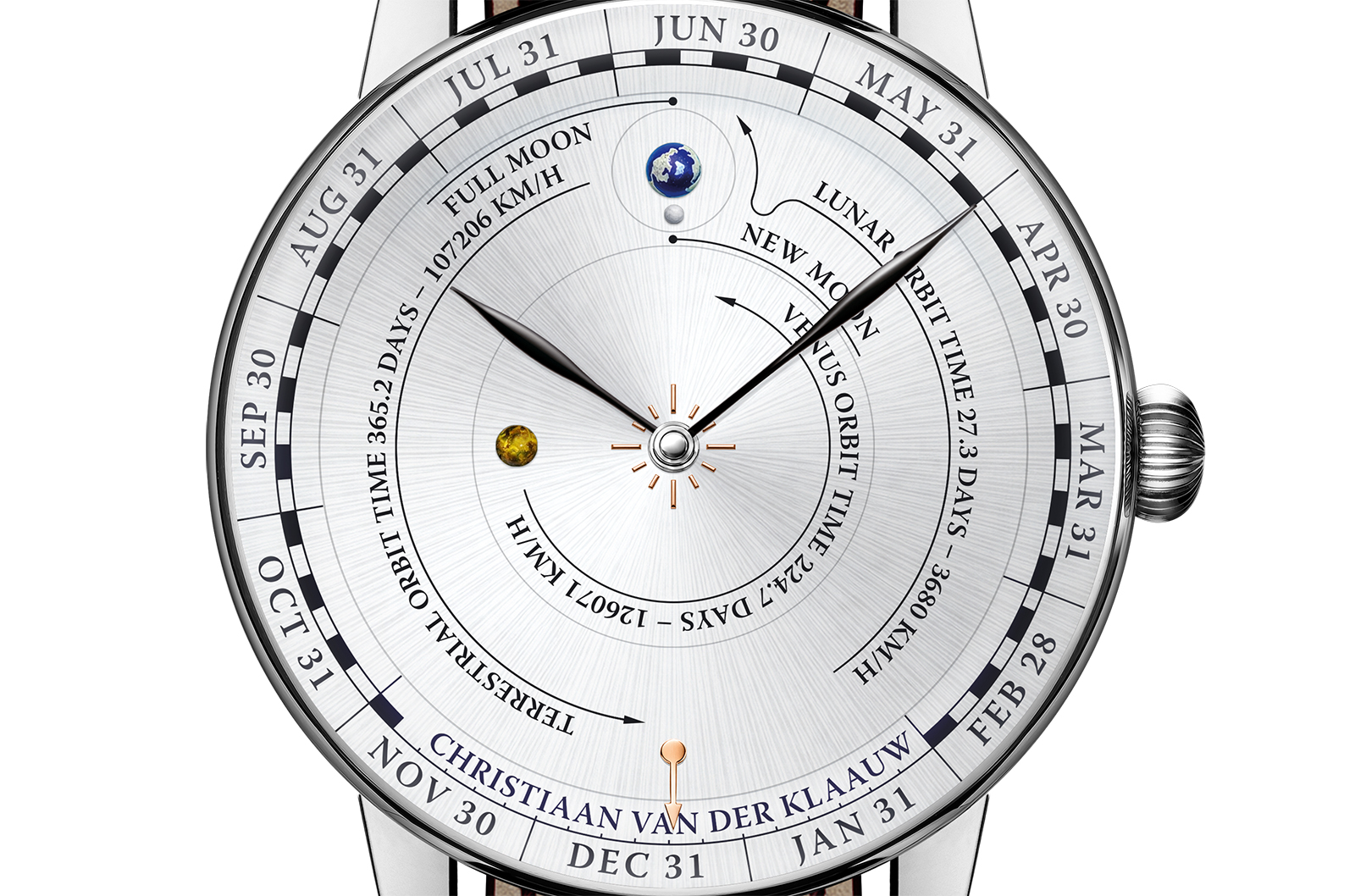
Beyond this, the discs that carry the celestial bodies are engraved with numerical data that describes the motion being depicted. These include the orbital periods and velocities of the Earth and Venus. The Earth’s orbit is given as 365.2 days, while its orbital speed is indicated at approximately 107,206 kilometres per hour. Venus, in turn, is shown with an orbital period of 224.7 days and a higher orbital velocity of around 126,071 kilometres per hour.
The same approach is applied to the Moon. Its path is annotated with its orbital period and velocity, and usefully, with indications marking the positions corresponding to the new and full Moon.
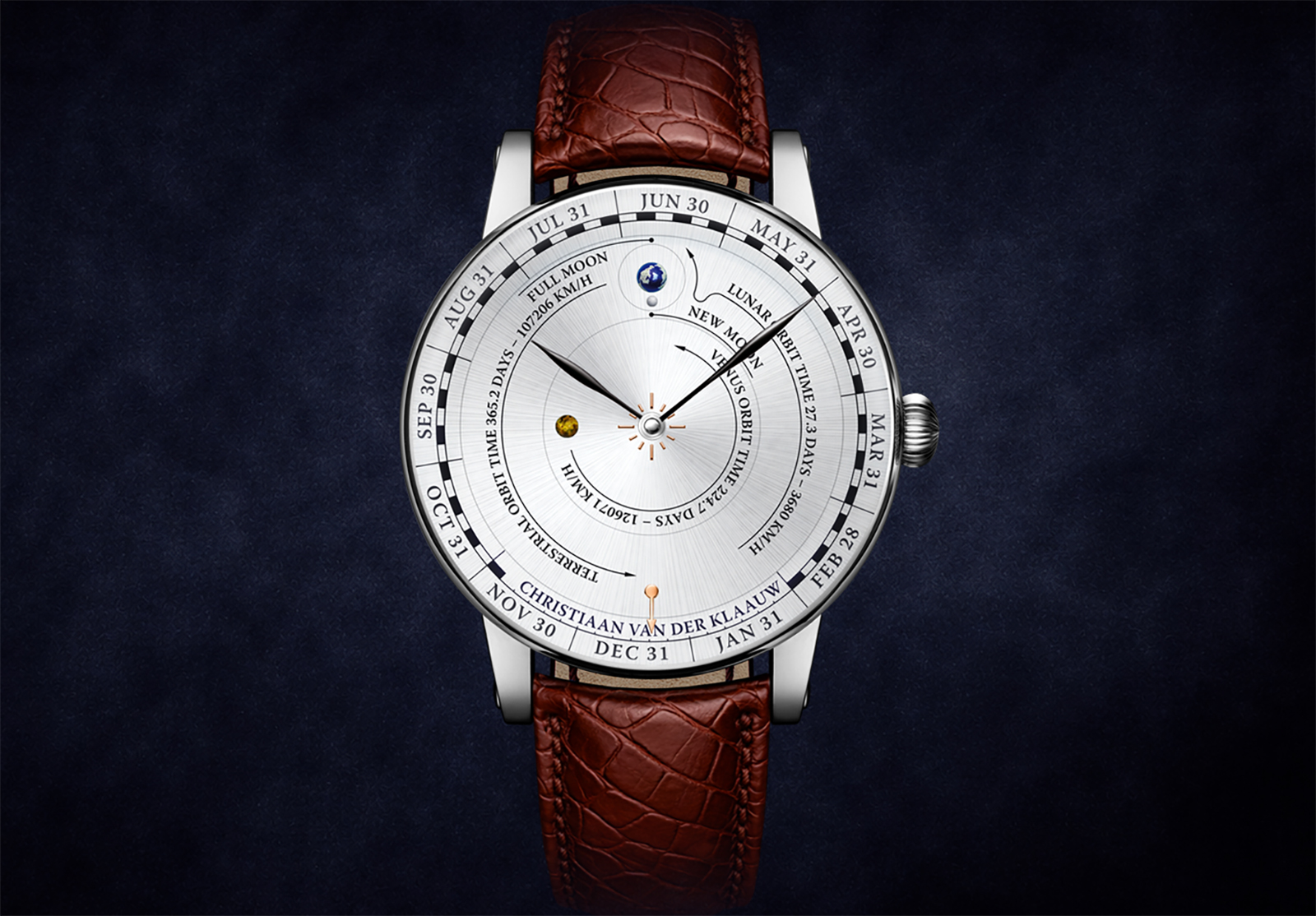
While both watches rely on the same mechanism and set out the same celestial relationships, the Venus Annual Calendar places that motion within the familiar structure of the calendar, so that it can be read directly against the year as it is lived. The Zodiac offers no such concession, and leaves the display where it belongs – within the larger cycle from which it is drawn, proceeding, as ever, with majestic indifference.
Tech Specs
Christiaan van der Klaauw Venus Zodiac and Venus Annual Calendar
Movement: Self-winding calibre CKM-01 with Venus module; 60-hour power reserve
Functions: Functions, hours, minutes, moonphase, Planetarium with Sun, Earth, Venus and the moon, zodiac signs (Venus Zodiac), annual calendar (Venus Annual Calendar)
Case: 38mm; rose gold or stainless steel
Dial: Blue aventurine glass (Zodiac) or silver sunray finished (Annual Calendar)
Price: Venus Zodiac Steel – SGD 67,700; Venus Zodiac Rose Gold – SGD 93,800; Venus Annual Calendar Steel – SGD 61,300; Venus Annual Calendar Rose Gold – SGD 87,400
Availability: Regular production
Christiaan Van Der Klaauw
You may also like
limited
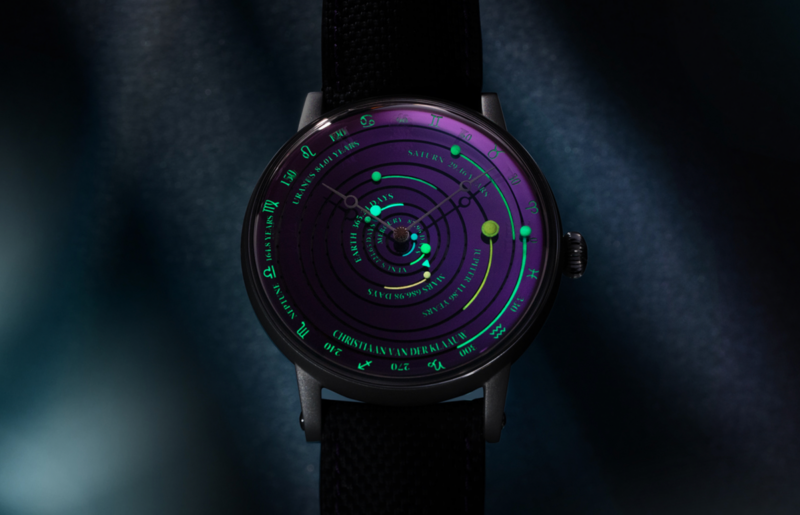
Christiaan van der Klaauw × Revolution Grand Planetarium Eccentric Si14 (Silicium)
Mar 10, 2026
limited
Christiaan van der Klaauw × Revolution Grand Planetarium Eccentric Si14 (Silicium)
Mar 10, 2026
Limited Edition
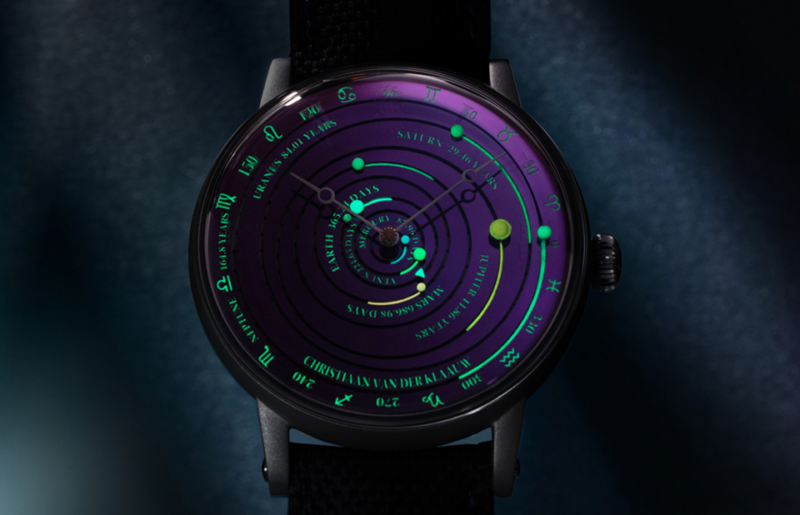
Introducing the Christiaan van der Klaauw x Revolution The Grand Planetarium Eccentric Si14 (Silicium)
Mar 10, 2026
Limited Edition
Introducing the Christiaan van der Klaauw x Revolution The Grand Planetarium Eccentric Si14 (Silicium)
Mar 10, 2026
News
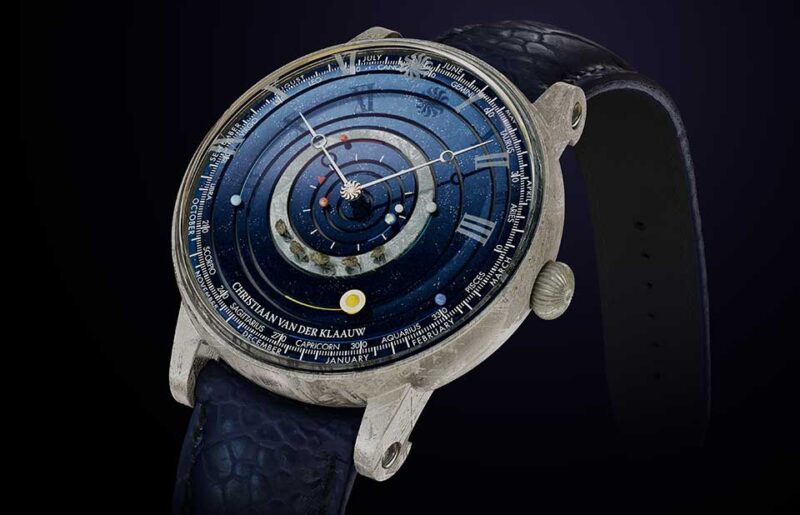
Christiaan van der Klaauw Introduces the Grand Planetarium Eccentric Meteorite
May 23, 2025
News
Christiaan van der Klaauw Introduces the Grand Planetarium Eccentric Meteorite
May 23, 2025