How Traditional “Tsuiki” Japanese Metalwork Shaped This G-SHOCK MRG-B5000HT
Editorial
How Traditional “Tsuiki” Japanese Metalwork Shaped This G-SHOCK MRG-B5000HT

Summary
In a modest town tucked away in Niigata Prefecture, something is quietly taking shape in an old, unmarked factory. Facing a wide stretch of paddy fields that roll back toward the mountains, the building says nothing of what happens inside. There is no name, no signage. From the outside, it could be anything. Or nothing at all.
There’s no industrial hum. No conveyor belts, no robotic arms. Just stillness. But if you stop and listen, you’ll hear it: the soft, steady rhythm of a hammer. Tap. Pause. Tap again. It’s not noise, but something calmer. And that’s because this isn’t a factory, not in the way it looks. It’s a workshop, led by a man with a mallet who has dedicated his life to a centuries-old discipline: hammered metalwork.
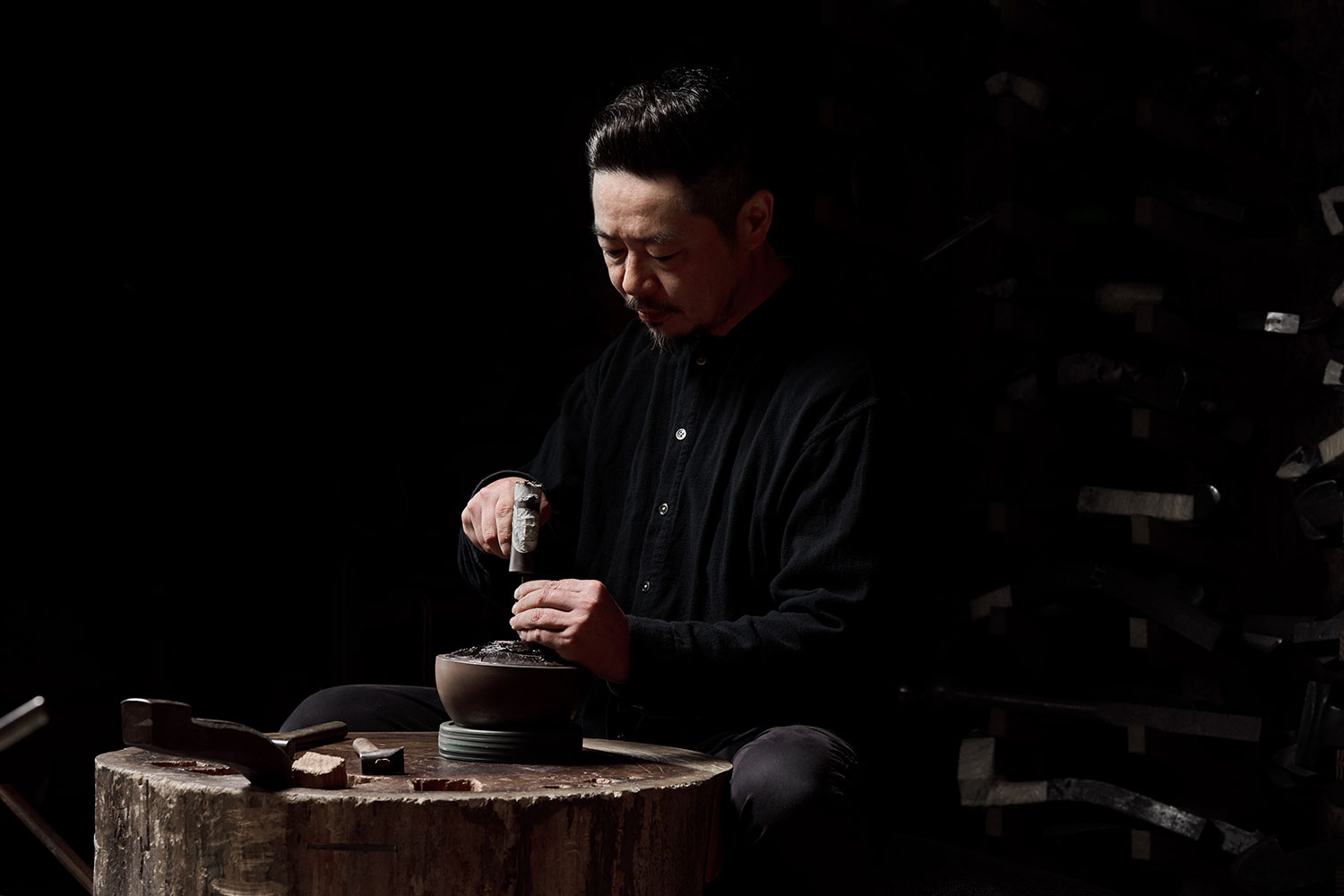
Tsuiki craftsman, Kazuya Watanabe
Kazuya Watanabe has been working with metal for most of his life. After graduating from the Nagaoka Institute of Design, he joined Tamagawa-do, a long-established copperware workshop with roots that trace back to the Edo period. There, he studied the traditional discipline of tsuiki, the art of hammering metal into shape through rhythm and repetition rather than brute force. In 2006, he decided to set out on his own and opened his workshop, Tankousha — right here, facing the paddy field.
Watanabe doesn’t believe craftsmanship belongs in glass cases. To him, it should live in the everyday. A kettle. A doorknob. A bowl. Things that are used, held, worn down over time. He pours the same care into these objects as any artist would a sculpture. It’s a quiet, almost impractical way of working in an age of fast production. But it makes sense to him. And it makes sense to the people who still look for something human in the things they touch.
One of those admirers comes from a world far removed from hand tools and metal sheets. Casio, Japan’s giant of digital toughness, approached Watanabe with an idea. On the surface, the two seemed worlds apart. Yet somehow, these two names, one small and traditional, the other large and modern, crossed paths for the first time. That’s where new stories began to unfold, and old ones quietly returned.
Explaining tsuiki, the tradition of Japanese hammered metalwork
When humans moved beyond the Stone Age, the first metal they truly embraced was bronze. Although copper was used as early as 8,000 B.C.E., it was bronze — copper alloyed with tin — that marked a real turning point in human civilization. From around 3,300 B.C.E., the Bronze Age began to take hold across regions like Mesopotamia, the Indus Valley and China. It lasted for more than a thousand years before the rise of the Iron Age. Many ancient civilizations mastered bronze, but few still maintain its traditions in daily life. Japan is one of the rare places where those echoes remain alive, though its path into metalworking was different from the rest.
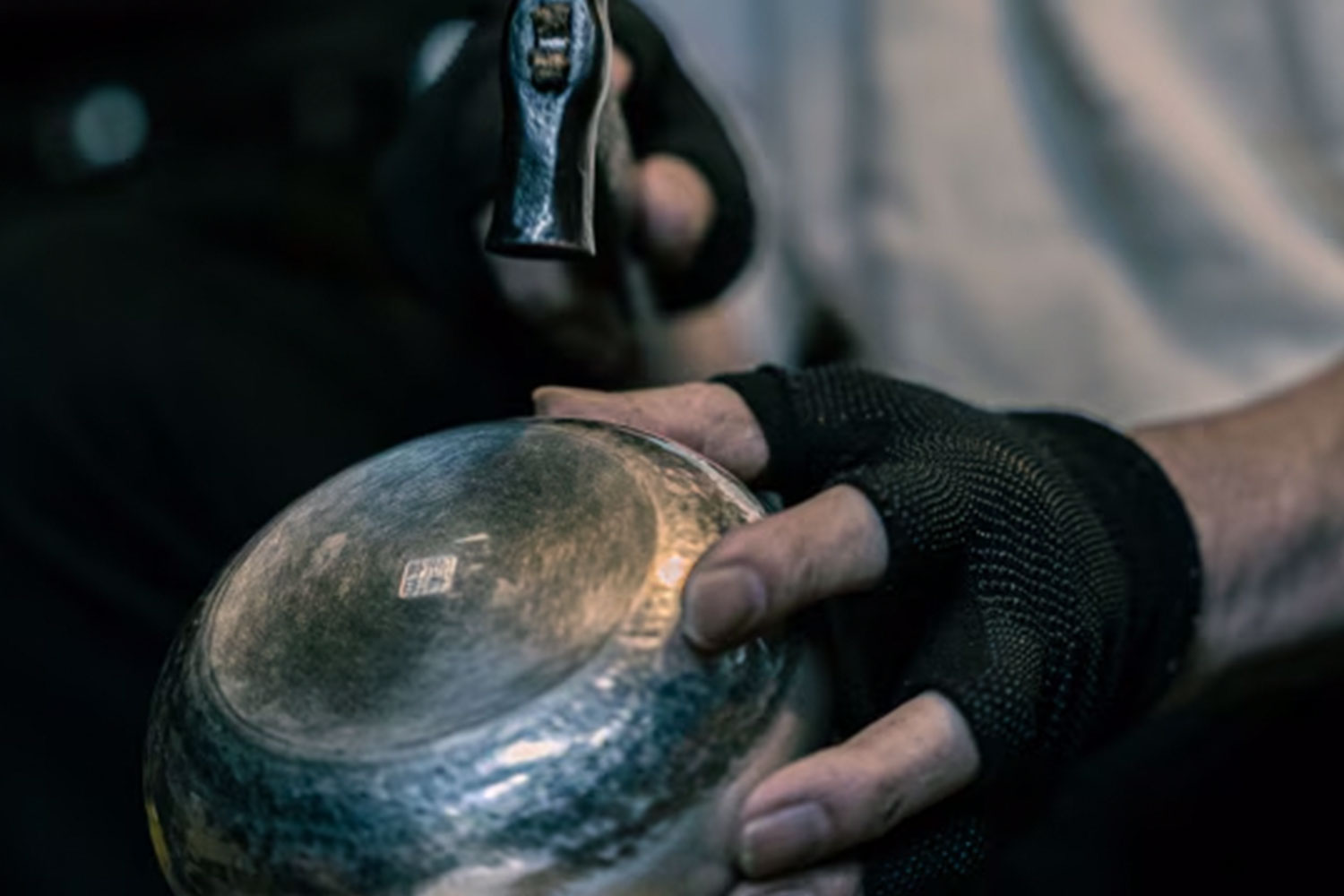
Tsuiki is a metalworking technique in which a lump of metal or metal sheet is repeatedly hammered out and stretched to form a three-dimensional shape (Image: Shimadzu)
Japan came into the bronze scene relatively late, around 300 B.C.E., during the Yayoi period. Unlike in other parts of the world, bronze in Japan was not used widely for tools or warfare. It carried symbolic weight instead, appearing most famously in ritual objects like slender swords, polished mirrors and large bells known as dōtaku.
The technique known as tsuiki, or hand hammering metal into shape, began to flourish in the early Edo period, around the 17th century. According to Gyokusendō, a metalworking house founded in 1816 and still active today, the craft started in the town of Tsubame in Niigata. The area suffered frequent flooding, which ruined rice crops and forced local officials to find new ways for people to earn a living. One governor invited a blacksmith to teach farmers how to make nails. These were forged from iron, but the process — hammering and shaping metal by hand — planted the seed of something much more.
Over time, this simple practice began to grow. In the 18th century, copper was discovered in the mountains around Tsubame and began to circulate widely in the region. Local artisans started receiving commissions to create not just practical tools, but also everyday objects and decorative pieces. What began as a survival craft rooted in iron slowly evolved into a more refined tradition of copperware. By the Meiji period in the 19th century, the tsuiki technique had fully matured. Tsubame was no longer just a town that made nails. It had become known for shaping beauty out of copper, one hammer strike at a time.
But tsuiki is more than surface texture. It’s not a decorative afterthought. It’s a way of creating objects from a single sheet of metal, with no seams, no joints and no casting. Everything is formed entirely through hammering. Even something as complex as a kettle is coaxed into being through countless small strikes. The iconic dimpled surface that results isn’t the point — it’s just a trace of the journey the metal has taken.
How Kazuya Watanabe brings ancient craftsmanship into modern watchmaking
It’s fortunate for Japan that the tsuiki technique is still alive, especially in Niigata. But even more inspiring is how some craftspeople aren’t just preserving tradition — they’re reshaping it. These are artisans with vision, blending centuries-old methods with modern life in meaningful ways.
One of them is Watanabe. He spent years at the historic Gyokusendō workshop, which has been around for more than 200 years. But eventually, he decided to go independent. His reason was simple: he wanted to connect with people. Not just to make well-crafted products that were expected of him, but to build something new with the people who would use it. He wanted to help them create objects that didn’t exist before.
In an interview five years ago, he said: “In the past, if a product was of good quality, it would sell, whether it was a traditional craft or not. But now, quality alone isn’t enough. The question is how to present products that fit into modern life in a way people understand. What the world wants is always changing.”
That thinking shaped his new path. Watanabe didn’t just open a workshop and sell what he made. He started working with people — not for them — to build objects that fit into their own lives. Customization became his calling card. Sometimes that meant unexpected requests: a bowtie, for example. Sometimes, it meant working with materials beyond copper. And sometimes it meant collaborating with a brand as futuristic as G-SHOCK.
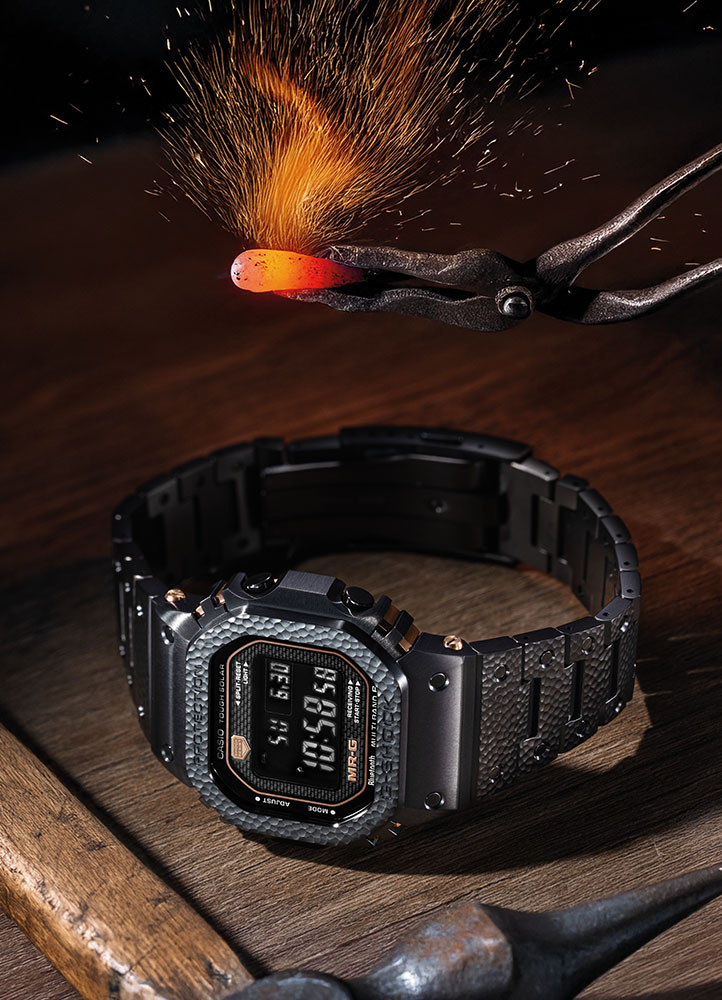
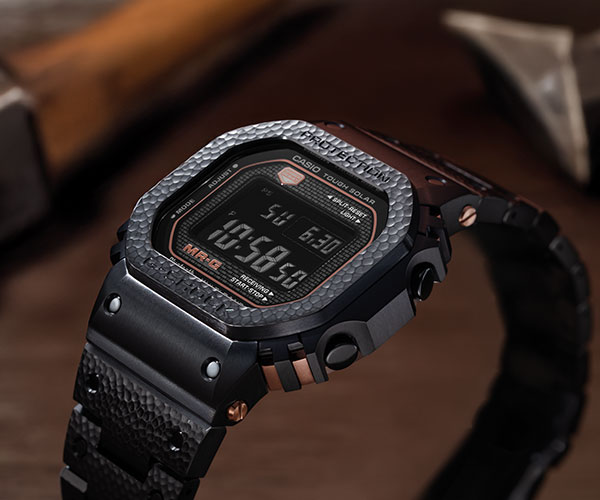
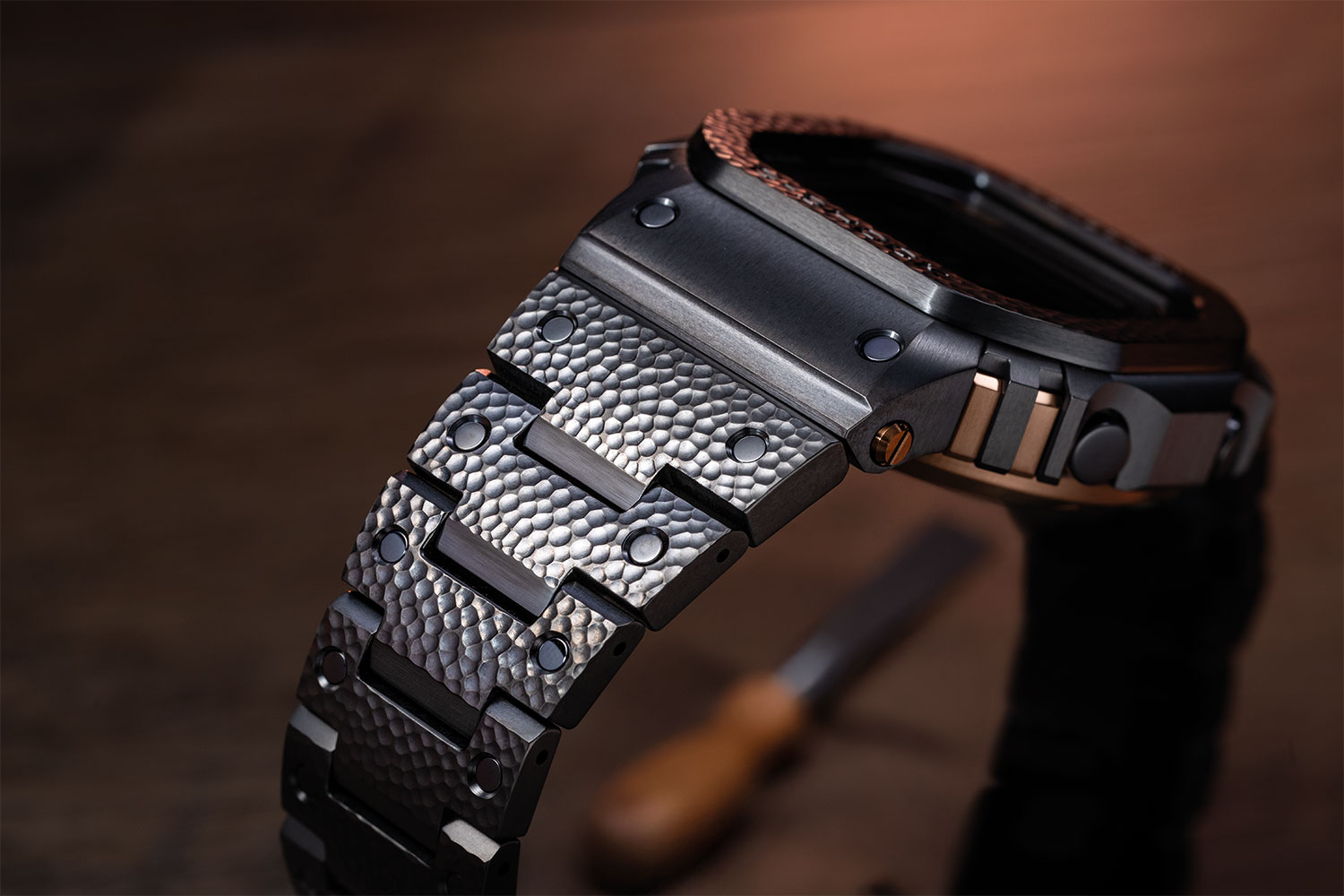
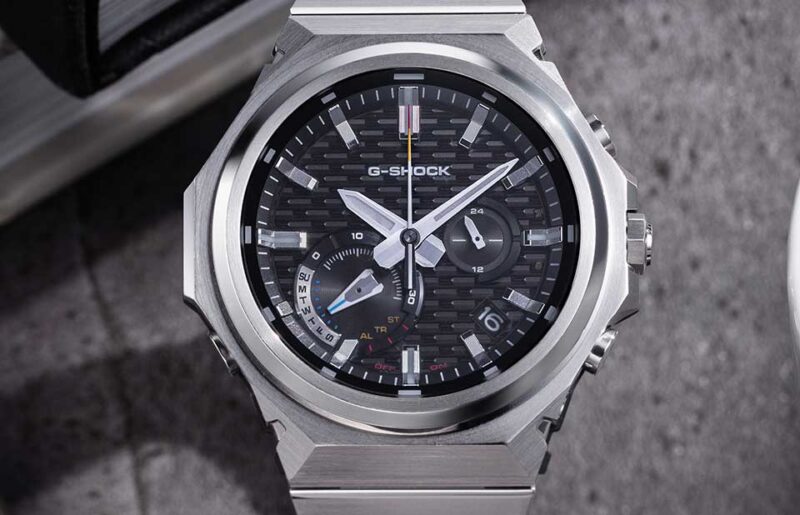
The MRG-B5000HT Tsuiki is a perfect example of what happens when traditional handcraft meets modern engineering. Watanabe was commissioned to hand hammer not just a small decorative plate, but the bezel and bracelet — a hammered finish across a full metal G-SHOCK. This isn’t just surface texture; it’s tsuiki. It’s kind of wild when you think about it, but it’s certainly bold, poetic, unmistakably Japanese.
There is something unmistakably Japanese about the MRG-B5000HT Tsuiki, not simply because it blends two of the country’s most recognizable exports, traditional metalwork and digital technology, but because it carries within it a deeper, more philosophical thread. The hammer marks that form the distinctive texture are not uniform. They vary in depth and spacing; some are pronounced, others barely present. And that irregularity is not a flaw — it is the point.
The aesthetic behind this pattern traces its roots to wabi-sabi, a philosophy that finds beauty in imperfection, in things weathered by time and use. One of its most influential thinkers was Sen no Rikyū, a 16th-century tea practitioner who believed that beauty did not reside in grandeur, but in natural simplicity. I remember reading in The Book of Tea a story that illustrates this perfectly. Rikyū once asked a disciple to clean the garden path. The young man scrubbed diligently, sweeping away every fallen leaf until the stones gleamed. But Rikyū was displeased. He walked over, gently shook a tree, and let a few red and gold leaves fall where they may. Only then was the scene complete. It wasn’t about cleanliness or perfection; it was about balance — about letting nature have its place.
Rikyū’s ideas left a lasting mark on Japanese culture, shaping not only the ritual of tea but also the way people built, lived and made things. It’s why so much of Japanese teaware feels understated, even rustic, yet impossibly comforting. In the hands of potters like Shōji Hamada, Arakawa Toyozō and Suzuki Osamu, modest clay vessels become something more — intimate, emotionally resonant and unmistakably alive — whether blooming or gently fading.
But this spirit is rarely seen in watchmaking. Even at the highest levels, craftsmanship is often measured by clinical perfection. From flawless bevels to mirror-polished screws, every detail is calculated and controlled. There is a clarity to that kind of work, an elegance rooted in precision. But over time, it can begin to feel distant.
That may be why I keep returning to objects that feel quietly alive. For me, it’s often antique porcelain — pieces made centuries ago by anonymous hands. They weren’t striving for perfection. And yet, in every uneven glaze, in every off-kilter brushstroke, there’s a trace of the person at work. Not just what they made, but how they felt as they made it.
The MRG-B5000HT Tsuiki evokes a similar feeling. Each hammer mark is slightly different. Some fall in a tight rhythm, others leave open space. Some impressions are deep and dynamic, others barely graze the surface. But when you take it all in, it resolves into something quietly whole, perfectly balanced without being uniform. This is where the watch sets itself apart, not only from mass production, but also from the polished perfection of traditional luxury. It doesn’t try to impress. It invites you to look, to pause, to feel the presence of time in more than just the numbers it may show.
The evolution of MR-G: From 1996 to today’s hammered titanium masterpiece
For centuries, the Japanese art of tsuiki has centered on shaping objects entirely from a single sheet of copper. But even enduring traditions must evolve to keep pace with a changing world. That doesn’t mean discarding what came before. It means adapting — making thoughtful changes to serve modern needs, or risk losing the tradition altogether. It’s a philosophy shared by a 400-year-old atelier that partnered with G-SHOCK when the brand introduced its first collection inspired by traditional Japanese artistry.
This is exactly the case with MR-G: a watch whose every part is the result of precise construction and assembly, hand crafted to exemplify strength and beauty. Such mechanical complexity inevitably demands adjustments to the age-old art of tsuiki. That’s where the collaboration becomes meaningful. It’s not a plug-and-play solution, but a conversation between two philosophies, two eras — brought together into one coherent whole.
A natural division of labor emerges from the pursuit of the pinnacle. MR-G is no ordinary metal watch, and its complexity demands that G-SHOCK take charge of the technical foundation, forging the case from advanced titanium alloys with exacting care. Only then does Mr. Watanabe take over to apply the tsuiki finish by hand.
There’s a reason G-SHOCK insists on setting the foundation themselves, and it goes back to the very beginning of MR-G.
The story begins in the 1990s, on an ordinary train ride. Kikuo Ibe, the creator of G-SHOCK, spotted a group of young people wearing the rugged timepieces he had designed. It was a proud moment — proof that the G-SHOCK had found its place in the next generation. But almost immediately, another thought surfaced. He felt a responsibility to create something that could grow up with those same people.
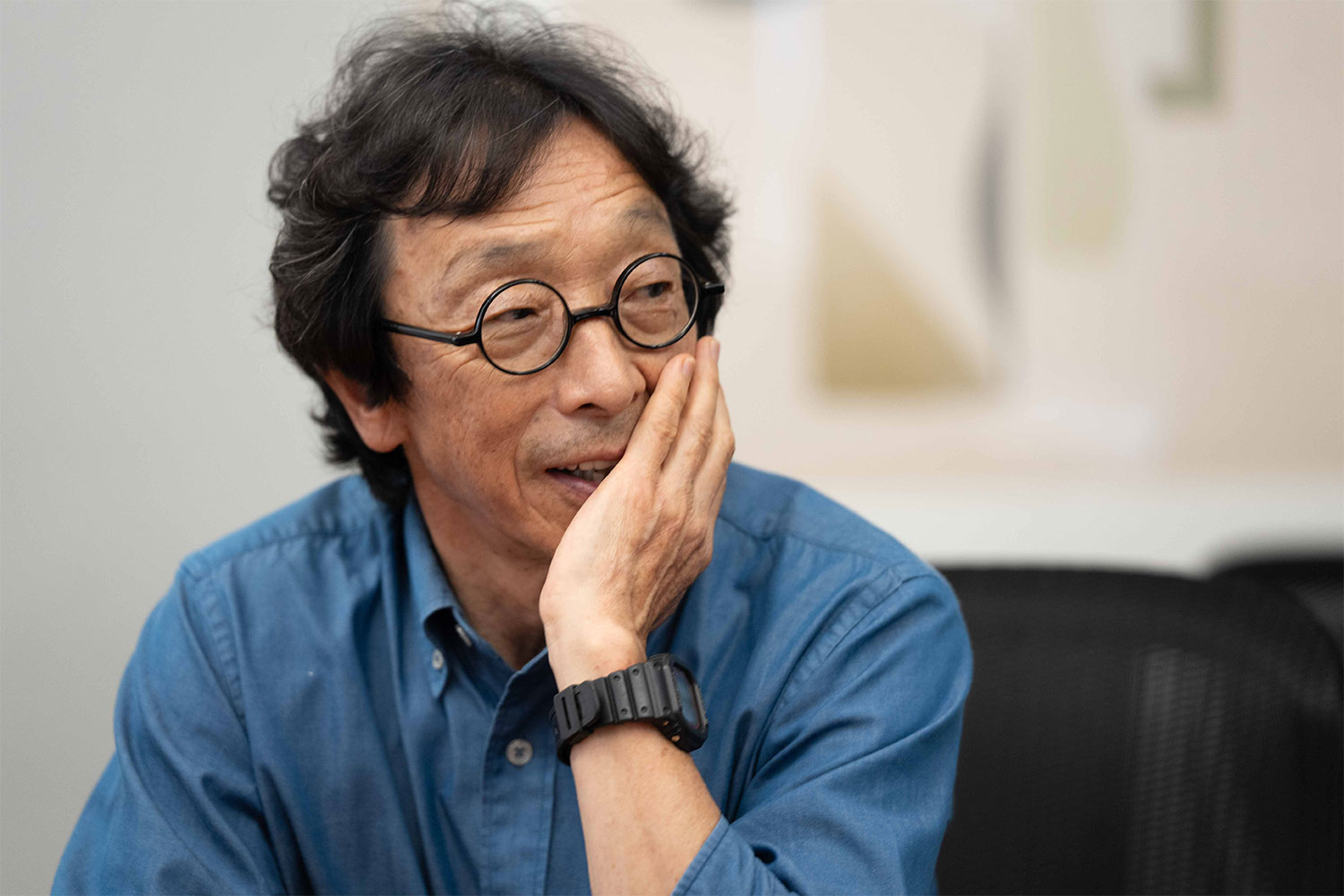
Kikuo Ibe, the Godfather of G-SHOCK (Image: Revolution)
That was the beginning of MR-G. Mr. Ibe wasn’t after just a tougher G-SHOCK. He wanted one that met the highest standards in both engineering and craftsmanship. A watch that felt refined, that would last, and that could be passed down. He imagined it in full metal — but how could that be done?
He assembled a team without delay. But turning the idea into reality proved far more difficult than designing a resin G-SHOCK. Metal doesn’t absorb shock the way resin does. To solve this, the team had to look beyond traditional watchmaking, even studying how car bumpers manage impact. In time, they succeeded. The first MR-G launched in 1996, an all-metal watch tough enough to survive a fall onto concrete.
Today’s MR-G is the result of countless iterations in design, construction and materials. Take the octagonal bezel, for example. On a regular metal G-SHOCK, this would be a single piece. But on the current MRG-B5000HT, the case and bezel is composed of 25 individual components. This approach allows every ridge, groove and surface to be finished separately, achieving the kind of depth and contrast that simply isn’t possible with a single-piece construction.
It’s a bit like the way high-end mechanical watches sometimes feature soldered lugs, but here the complexity of construction is taken further. That may explain why this design, despite having been introduced in the very first 5000-series G-SHOCK in 1983, only joined the MR-G lineup three years ago. It took time to get here, but the wait has been worthwhile.
What makes this model especially meaningful is its finish. For the first time, the MRG-B5000HT series features a traditional tsuiki hammered texture. While some MR-G models did feature variations of tsuiki hammered finishes, those were on different case designs that often looked more aggressive and ornate.
This version feels more balanced. It is expressive without being loud and refined without feeling sterile. It may well be the most beautiful MR-G yet.
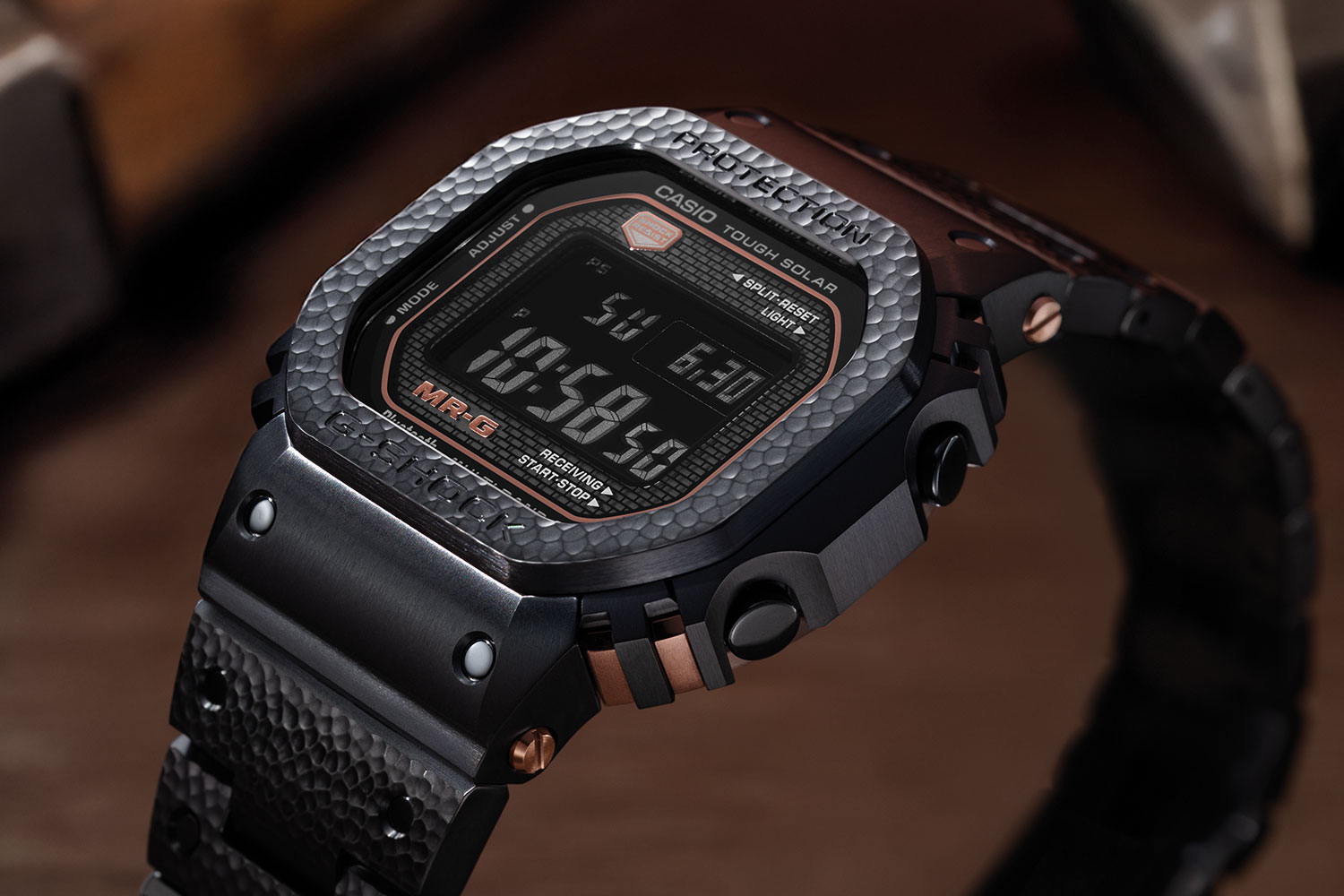
Of course, achieving that beauty isn’t just about design. It also demands technical mastery. Bringing together 25 individually finished components into a single, shock-resistant form is real challenge. It requires extremely tight tolerances, precise engineering and a deep understanding of materials.
The first challenge is shaping the case with near-perfect accuracy. G-SHOCK had to forge the metal — a special titanium alloy — to exact specifications before it could even be passed to Mr. Watanabe. His hammering technique had to be applied with extraordinary care, so as not to distort the delicate geometry of the bezel.

The second key is material choice. Two different titanium alloys were used, each selected for a specific reason. Ti-64, an aerospace-grade alloy known for its high strength, forms the sides and back of the case, plated in a rose gold ion-plating (IP) . The rest of the watch — including the bezel — is made of DAT55G, a proprietary Japanese alloy coated in a dark gray Diamond-Like Carbon (DLC) layer to protect the nuanced textures of Watanabe’s finish.
DAT55G, in particular, deserves special attention. It’s not a material you hear about often — because it’s unique to Japan. Compared to pure titanium, DAT55G is three times harder. And compared to the more common Grade 5 titanium, it offers nearly 20 percent greater tensile strength.
But remember, tsuiki was traditionally practiced on copper, a much softer, more forgiving metal. Working with a high-strength titanium alloy like DAT55G makes Mr. Watanabe’s task far more difficult. He had to apply the same centuries-old technique to a material that resists shaping at every step. And yet, looking at the final result, there’s no doubt he succeeded brilliantly.
That’s what makes this collaboration more than just decorative. It’s meaningful because it pushes boundaries and brings together two very different worlds — one rooted in ancient handcraft, the other in cutting-edge engineering.
For those who love both art and engineering — which is, at heart, what watchmaking is all about — wearing the MRG-B5000HT Tsuiki can be a magical experience. On one hand, it is built with extreme engineering, allowing it to sustain itself by drawing on solar power and staying sharp as it syncs across the globe. Yet at its core, it remains still, preserving a centuries-old craft in a way few modern watches do. It brings past and present together so naturally that it feels destined to be cherished far into the future.
In many ways, it fulfils Mr. Kikuo Ibe’s original dream: to create something that lives beyond its era. This isn’t the G-SHOCK you toss in a gym bag. It’s the one you pass down.
Explore the G-SHOCK MRG-B5000HT-1 Tsuiki here.
Tech Specs: G-SHOCK MRG-B5000HT-1 Tsuiki
Movement: Solar quartz; 200m water resistance
Functions: Hours and minutes; Bluetooth smartphone link, Multiband 6 (radio controlled), world time; stopwatch (1/100th second); countdown timer; multiple alarms; full-auto LED backlight
Case: 49.4mm × 43.2mm × 12.9 mm; Ti-64 titanium alloy with black DLC coating; DAT55G titanium alloy bezel with hammered finish (tsuiki technique) and black DLC coating
Strap: DAT55G bracelet with tsuiki hammered finish and black DLC coating
Price: USD 8,000
Availability: Limited to 500 individually numbered pieces worldwide
Casio G-Shock
You may also like
Editorial
The New CASIO G-SHOCK MRG-B2000KT-3A Shows the Brand at Its Artistic Best
Jan 29, 2026
Editorial
The New CASIO G-SHOCK MRG-B2000KT-3A Shows the Brand at Its Artistic Best
Jan 29, 2026
Editorial
Unbreakable Spirit: G-STEEL GST-B1000 Opens New Chapter for G-Shock
Nov 28, 2025
Editorial
Unbreakable Spirit: G-STEEL GST-B1000 Opens New Chapter for G-Shock
Nov 28, 2025

News
Of Majesty and Reality
Dec 16, 2024
News
Of Majesty and Reality
Dec 16, 2024