Arnold & Son: From Marine Chronometers to Constant-Force Tourbillons
Editorial
Arnold & Son: From Marine Chronometers to Constant-Force Tourbillons

From time to time, the watch industry sees the revival of old names. Names from centuries ago. Greats that were once pioneers and innovators, now forgotten by most, yet remembered by the people behind modern-day brands who share the same vision and passion. Some of these visionaries choose to carry these legacies forward. This is a welcome development, as it not only introduces strong new offerings to contemporary watchmaking, but also brings remarkable stories from the past back into view. One such name is Arnold & Son, an English family of watchmakers led by John Arnold and his son, John Roger Arnold, originally established more than two and a half centuries ago.
The modern-day Arnold & Son is a distinctive brand, understated yet remarkable, and perhaps often overlooked. Since its revival in 1995, it has developed all its movements in-house, producing around 15 calibers to date. More importantly, the brand remains adventurous and creative, very much in the spirit of its original founders. It continues to surprise with complicated watches that are thoughtfully executed, ranging from a pyramid-style gear train inspired by 19th-century pocket watches to an ultra modern, clean, and highly graphic spherical moonphase, among the largest ever seen in watchmaking. The collection also reflects the brand’s historical roots in chronometer timekeeping, with constant-force escapements and tourbillons.
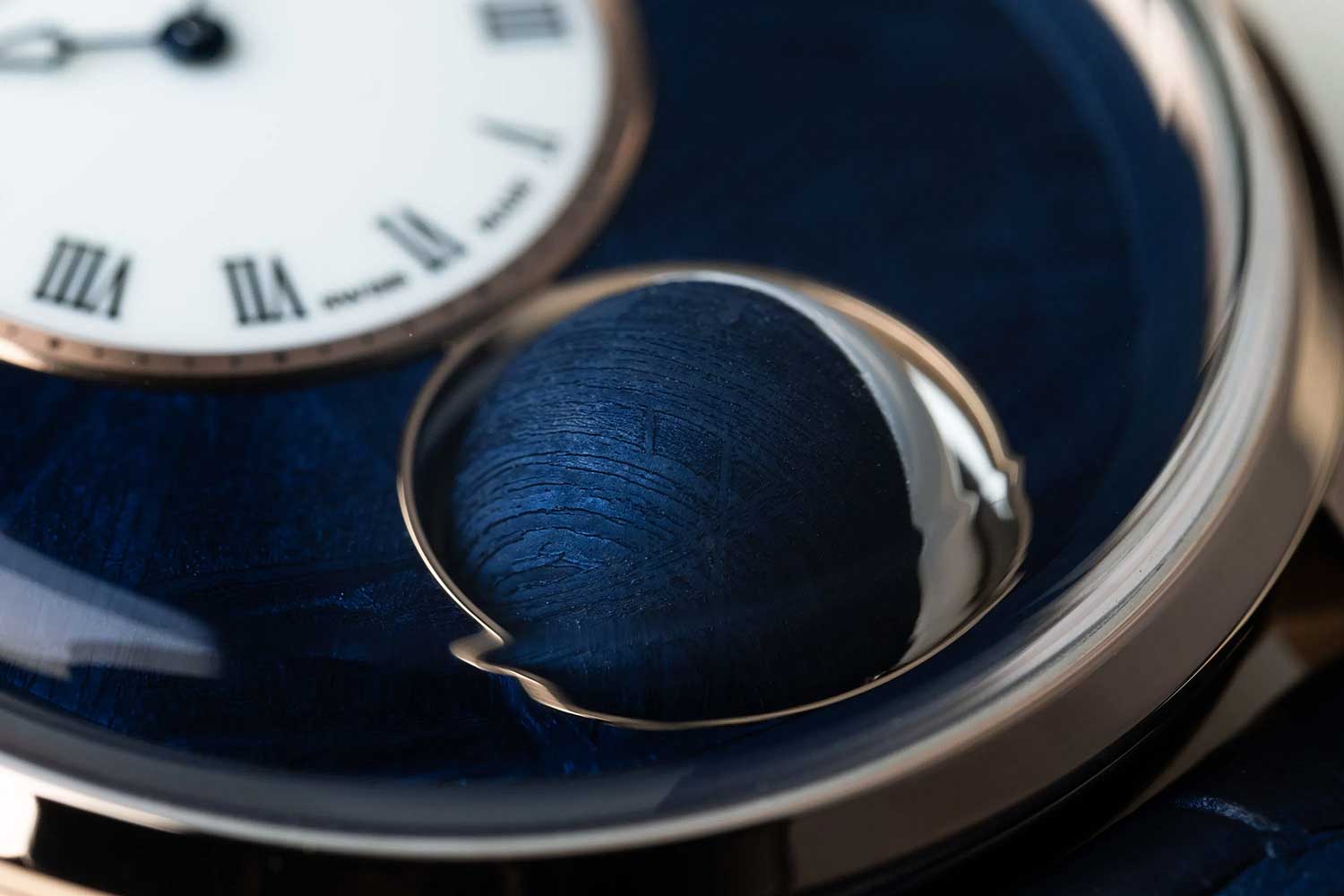
The Arnold & Son Luna Magna featured the largest rotating moon ever created in relief for a wristwatch
To better understand the breadth and complexity of Arnold & Son’s modern collection, it helps to take a brief look at its origins. Doing so makes the brand’s continued exploration of complications easier to appreciate.
John Arnold and the Pursuit of Precision
Arnold & Son was founded by John Arnold, born in 1736 into a watchmaking family. He learned the craft as an apprentice to his father, Richard Arnold, beginning in 1754. A year later, he left England to travel to the Netherlands, returning a few years later to set up as a repairer. His skill soon earned him the opening of a proper workshop, culminating in a defining moment in 1764 when he presented a miniature half-quarter repeater mounted in a ring to King George III. This aspect of Arnold’s work — refined, luxurious and aimed at the nobility — earned him 500 guineas and cemented his reputation among England’s wealthy collectors.
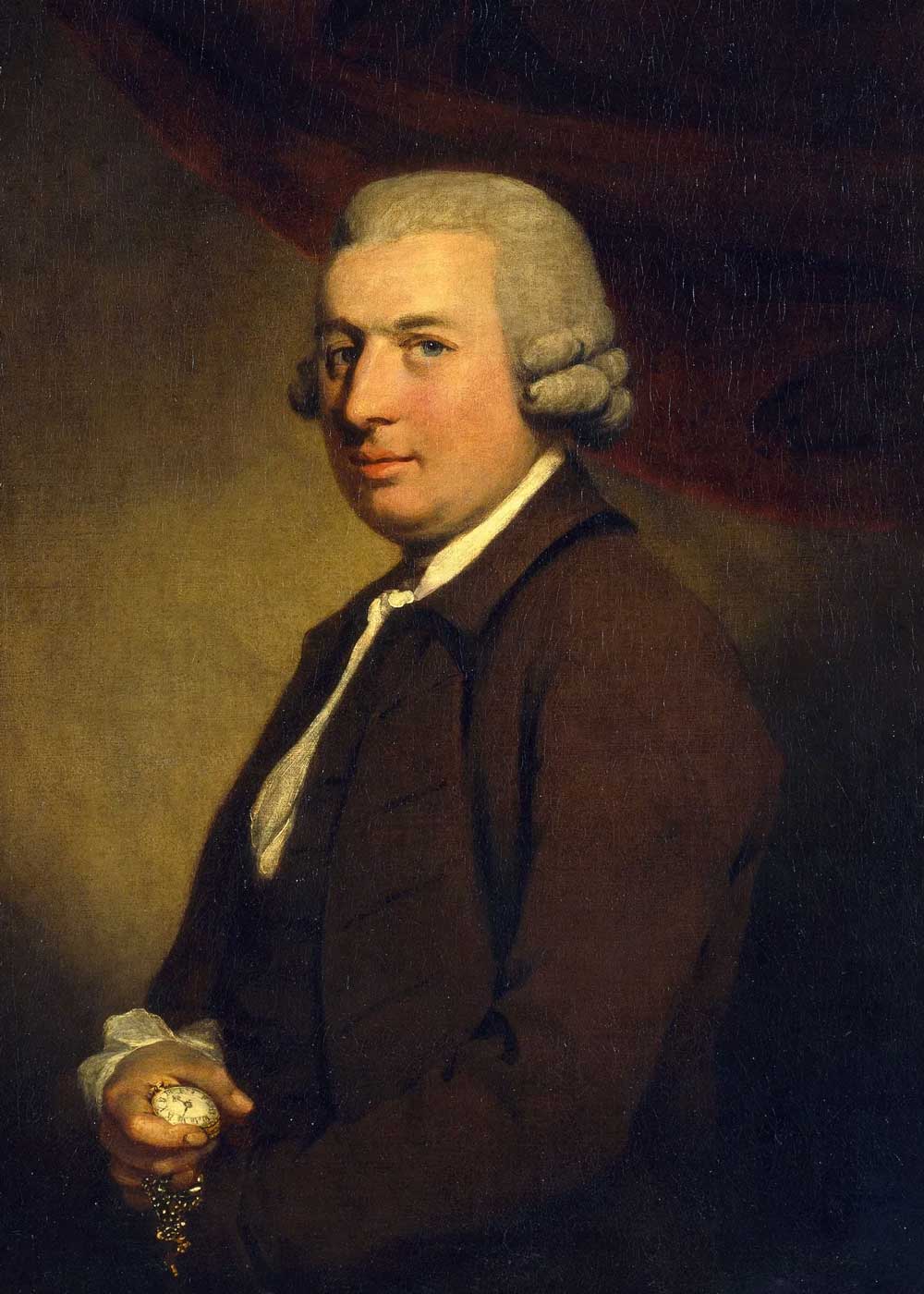
John Arnold is known as one of the most innovative watchmakers of his day (Image: Arnold & Son)
Yet it was in another aspect of John Arnold’s watchmaking that he truly distinguished himself: precision timekeeping, in particular the development of marine chronometers that supportedage British naval voys. The 18th century was a period marked by intense competition among European empires seeking to expand their reach across the continents. One of the most pressing challenges of long sea voyages was determining a ship’s longitude. As Sir Isaac Newton observed, “For determining the Longitude at Sea, there have been several Projects, true in the Theory but difficult to execute. One is by a Watch to keep time exactly; but, by reason of the Motion of a Ship, the variation of Heat and Cold, Wet and Dry, and the Difference of Gravity in different Latitudes, such a Watch hath not yet been made.”
It was against this backdrop that the British government passed the Longitude Act of 1714, establishing the Commissioners for the Discovery of the Longitude at Sea, more commonly known as the Board of Longitude. Made up of leading experts, the Board was tasked with evaluating proposed solutions and awarding prizes of up to £20,000, equivalent to around £3.4 million today, to successful inventors.
Arnold was one of the key contributors to this effort. Over the course of his career, he secured several patents and advanced multiple areas of horology, most notably the detent escapement, the bimetallic balance, and the helical hairspring. In particular, Arnold and Thomas Earnshaw independently and almost simultaneously developed the detent escapement. Both were later awarded £3,000 by the Board of Longitude in recognition of their contributions to a practical mechanical solution for marine chronometers.
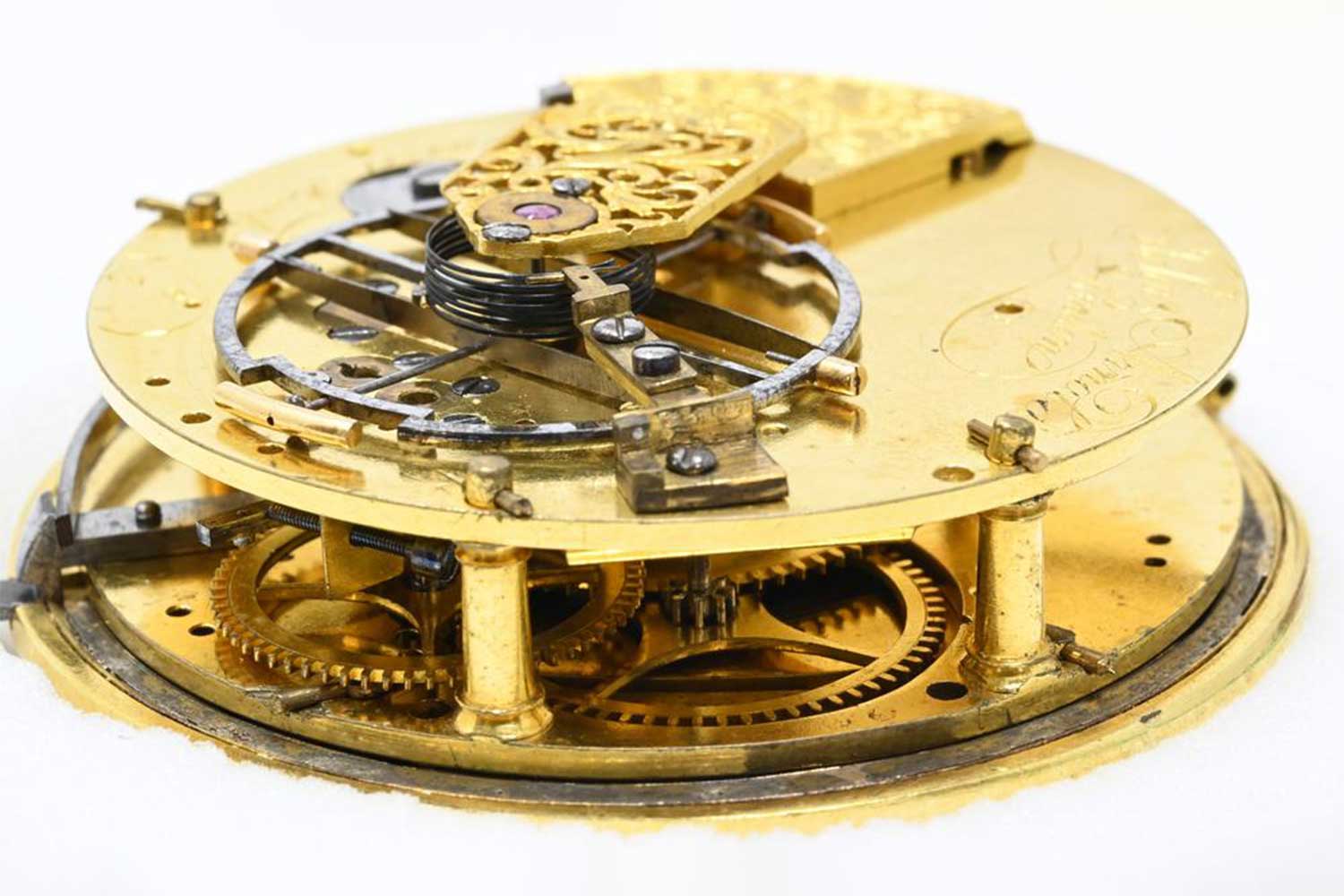
John Arnold’s Pocket Chronometer No.3 held patents for a detent escapement, a bimetallic balance and a helical balance spring, circa 1773 (Image: British Museum)
From Shipboard Instruments to Pocket Chronometers
Perhaps most intriguingly, John Arnold was not focused solely on large marine chronometers intended for shipboard use, including those carried on Captain James Cook’s South Sea voyages. He was equally committed to achieving chronometric precision in portable form. To that end, he fitted his patented mechanisms, including the detent escapement, into pocket watches and submitted them to the Royal Observatory in Greenwich for extended trials lasting 13 months. One such example, his No. 1/36, performed exceptionally well, earning high praise and securing its place as one of the earliest and most historically significant pocket chronometers.
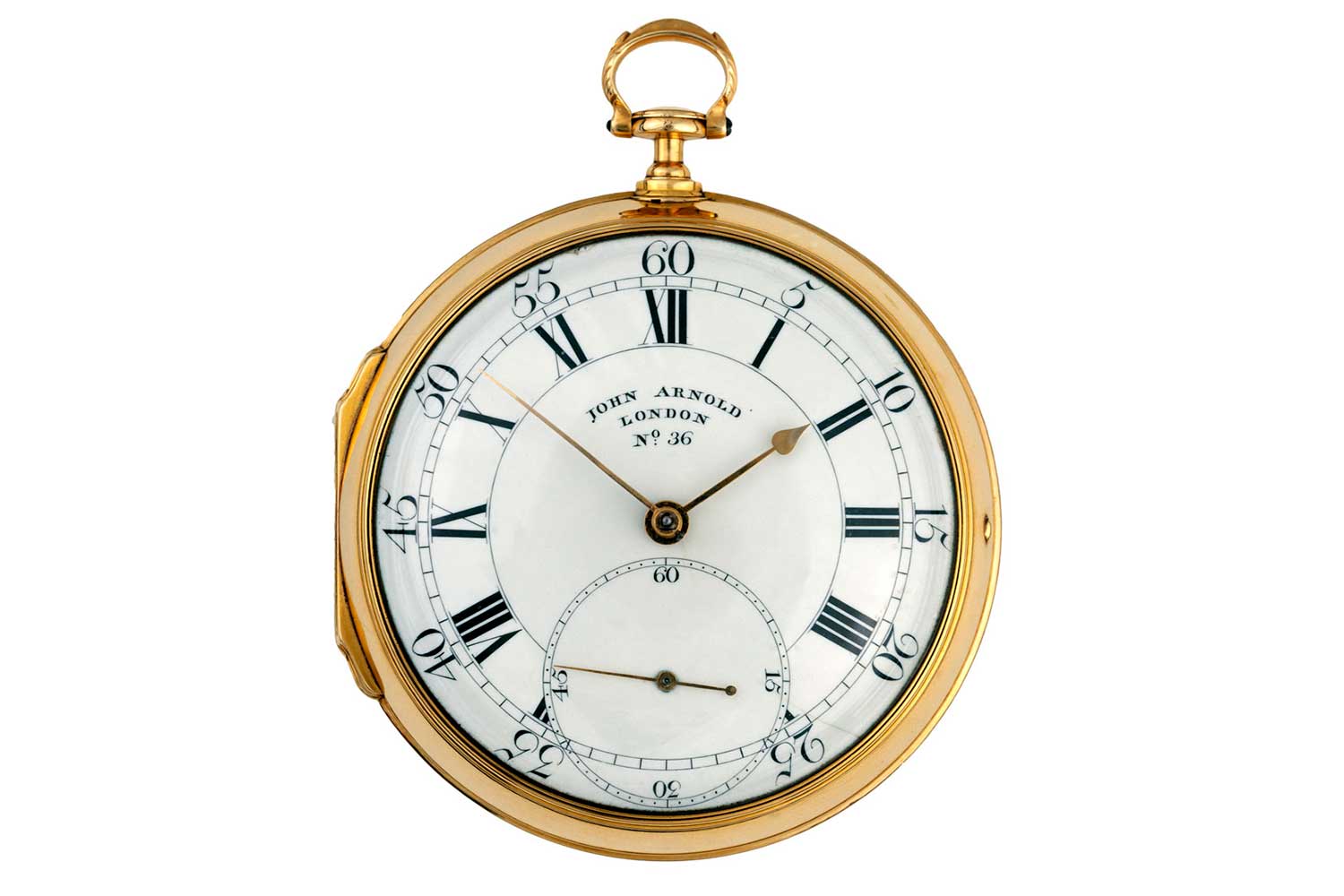
John Arnold’s Pocket Chronometer No. 1/36, circa 1778 (Image: Royal Museums Greenwich)
John Arnold was also a contemporary of Abraham-Louis Breguet, and the two maintained a friendship marked by mutual respect. Upon Arnold’s death, Breguet paid tribute by fitting one of Arnold’s early pocket watches — the No. 11 chronometer, now housed in the British Museum — with his own signature invention, the tourbillon regulator. The gesture speaks volumes about the esteem in which Arnold was held by one of horology’s greatest minds. After Arnold’s passing, his son, John Roger Arnold, continued the family legacy, supplying marine chronometers to the Royal Navy. Following his son’s death, the brand passed into the hands of another respected figure, Charles Frodsham, who maintained it until the mid-19th century. After a long period of dormancy, Arnold & Son was revived in 1995, setting the stage for its modern chapter.
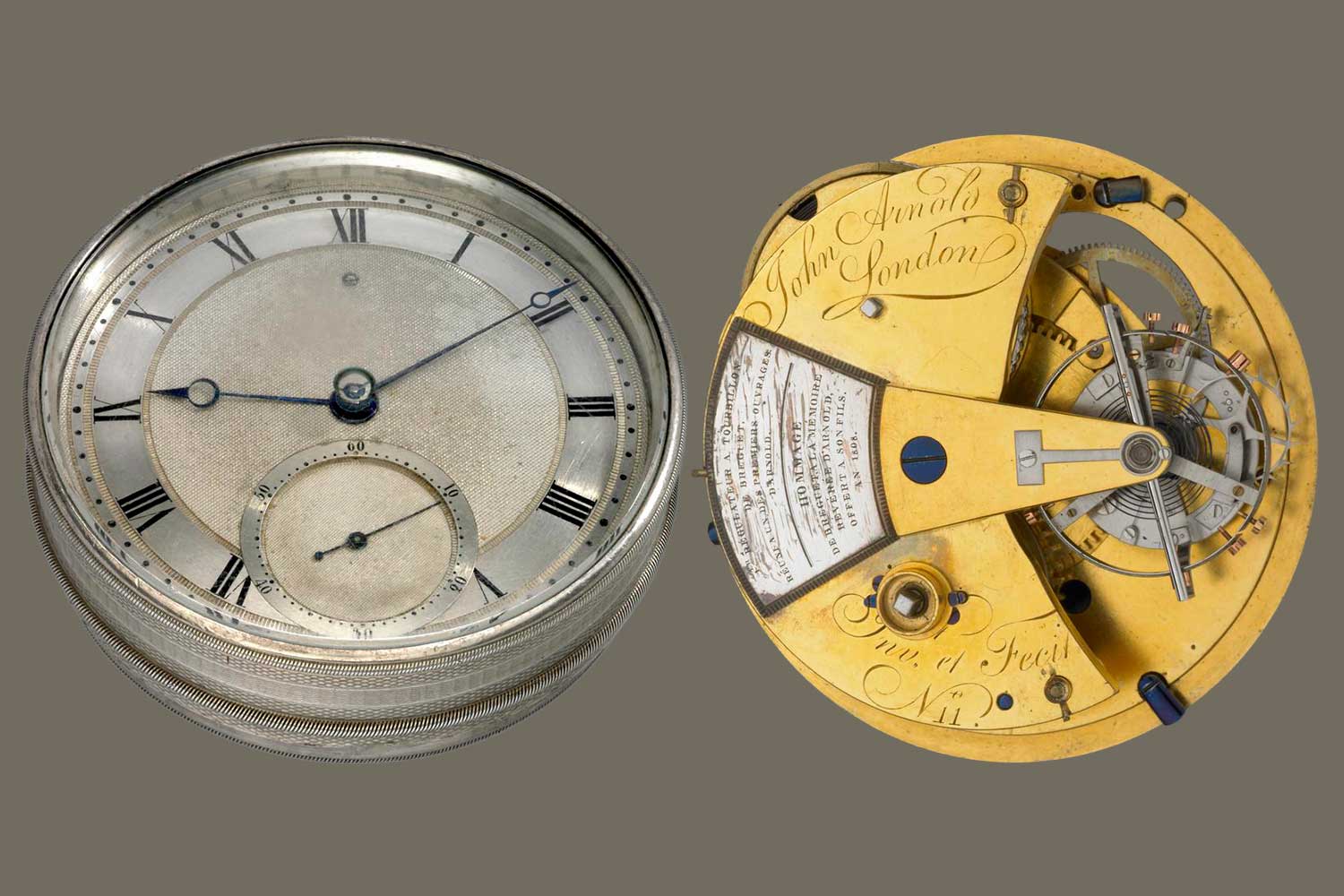
John Arnold’s Pocket Chronometer No. 11, circa 1808 (Image: British Museums)
The Modern Legacy of Arnold & Son
Like its original founders, the modern Arnold & Son offers a broad range of watches, from restrained time-only pieces to highly complicated models incorporating tourbillons and constant-force escapements. Regardless of complexity, all are powered by in-house movements, something still unusual even among independent brands. This is made possible through its close relationship with its sister company, La Joux-Perret, a respected movement manufacturer that also supplies calibers to some of the most established names in Swiss watchmaking.
To illustrate the different facets of Arnold & Son today, it is worth looking at three representative models. The first sits at the very top of the collection: the Constant Force Tourbillon 11 Platinum Edition. What makes this watch especially compelling is that its movement architecture is based on the historic No. 11 chronometer, the pocket watch made by Arnold and later fitted with a tourbillon by Breguet.
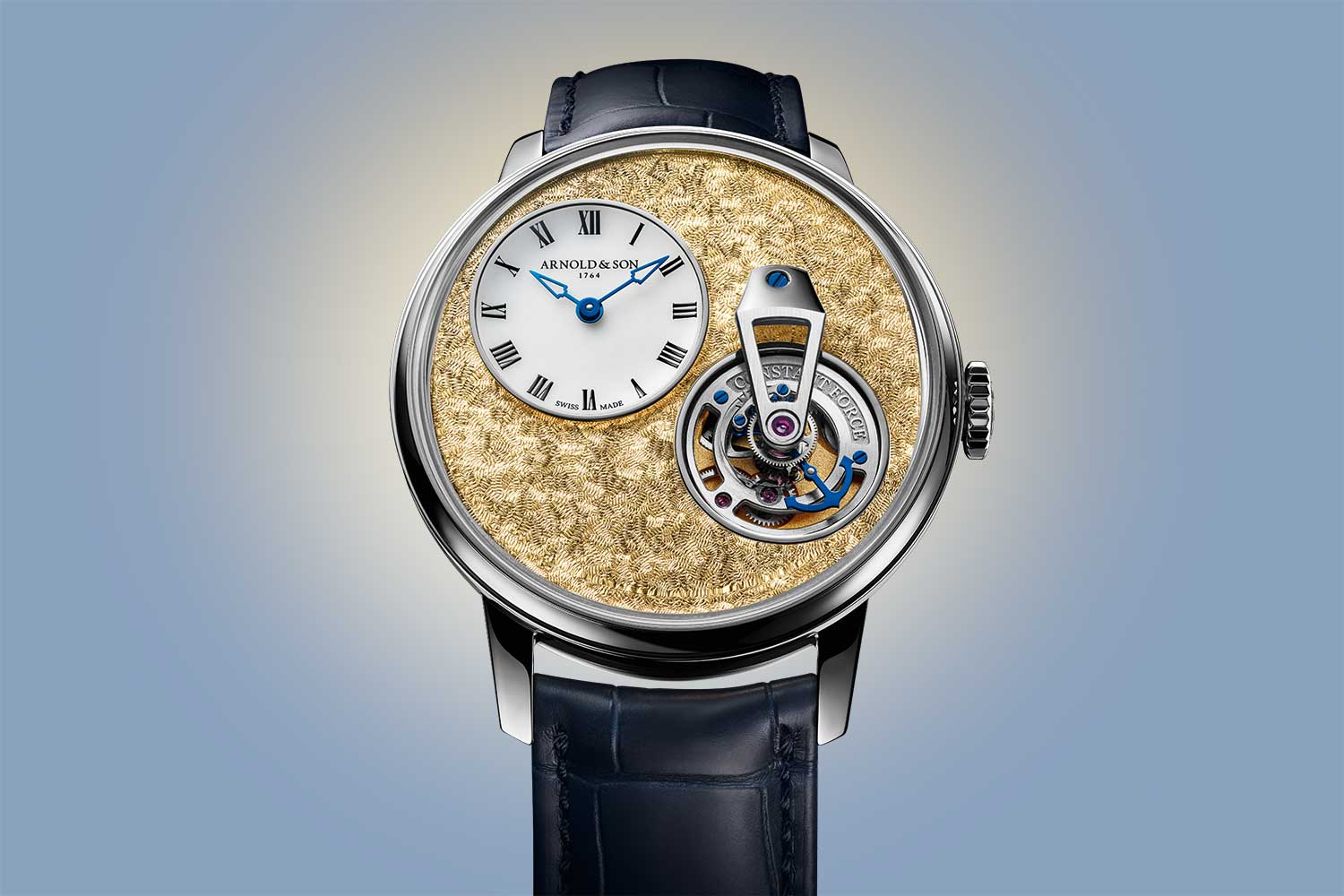
Arnold & Son Constant Force Tourbillon, Platinum Edition
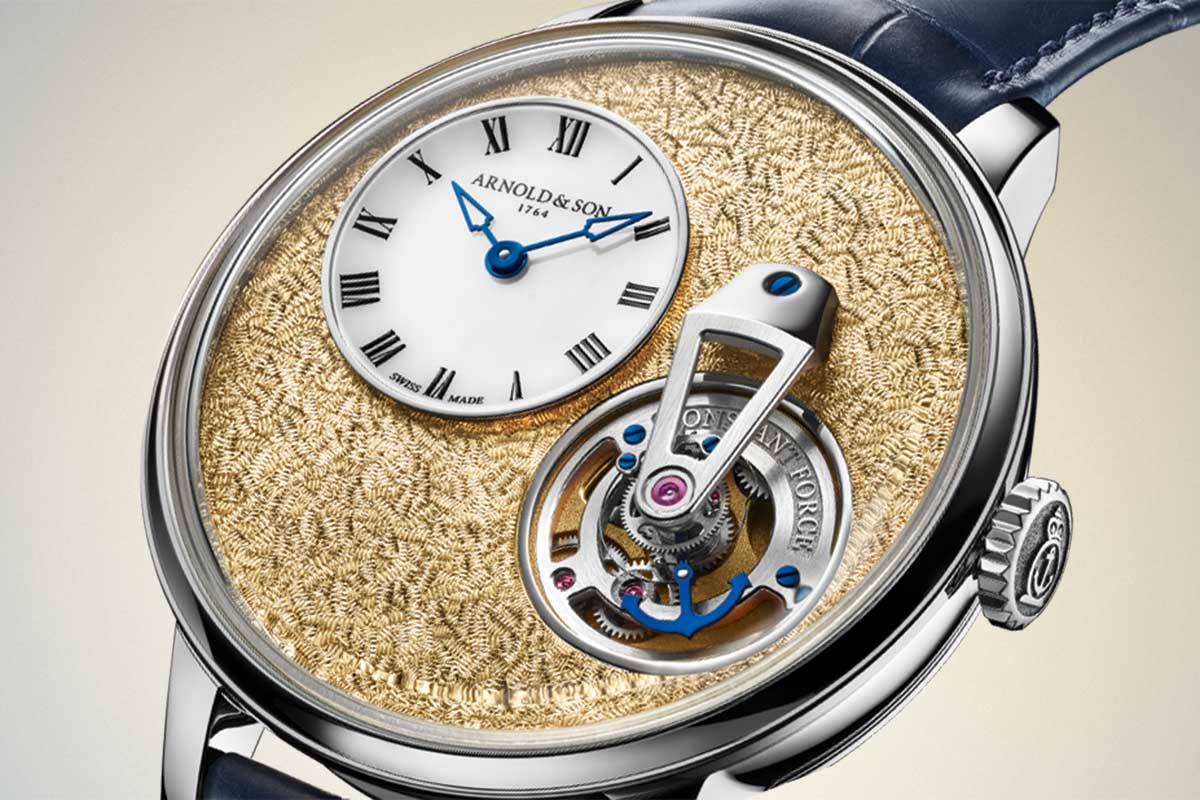
The Constant Force Tourbillon 11 is a clear example of how the brand combines past and present. While the movement is inspired by the original, with a central bridge dividing two symmetrical plates, the dial layout is entirely contemporary. Instead of the symmetrical display of the pocket watch, the wristwatch adopts a minimalist, asymmetrical composition. Two subdials sit opposite one another: one for timekeeping, and the other opening directly onto the tourbillon with its constant-force mechanism, the technical centerpiece of the watch.
-
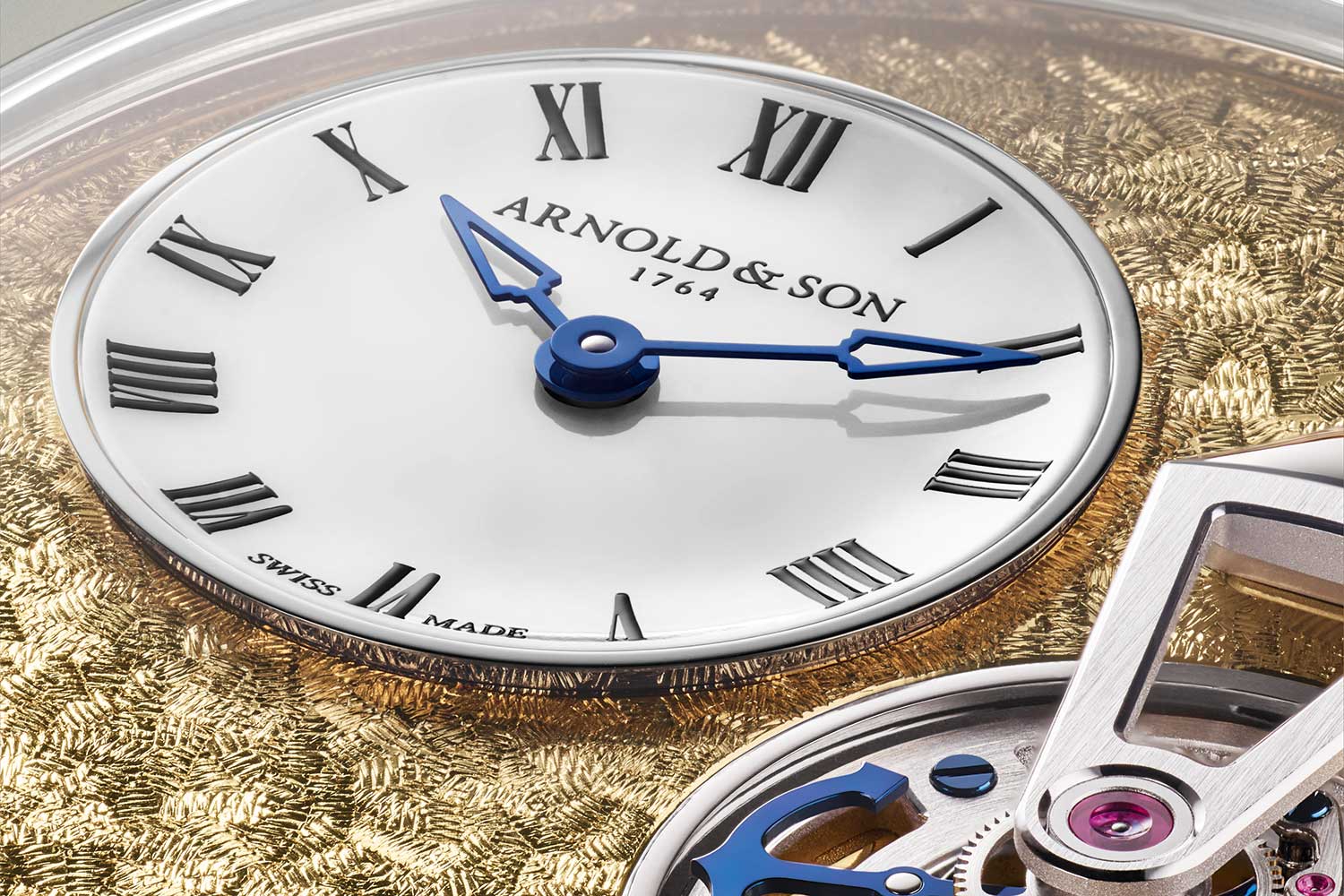
- The timekeeping
-
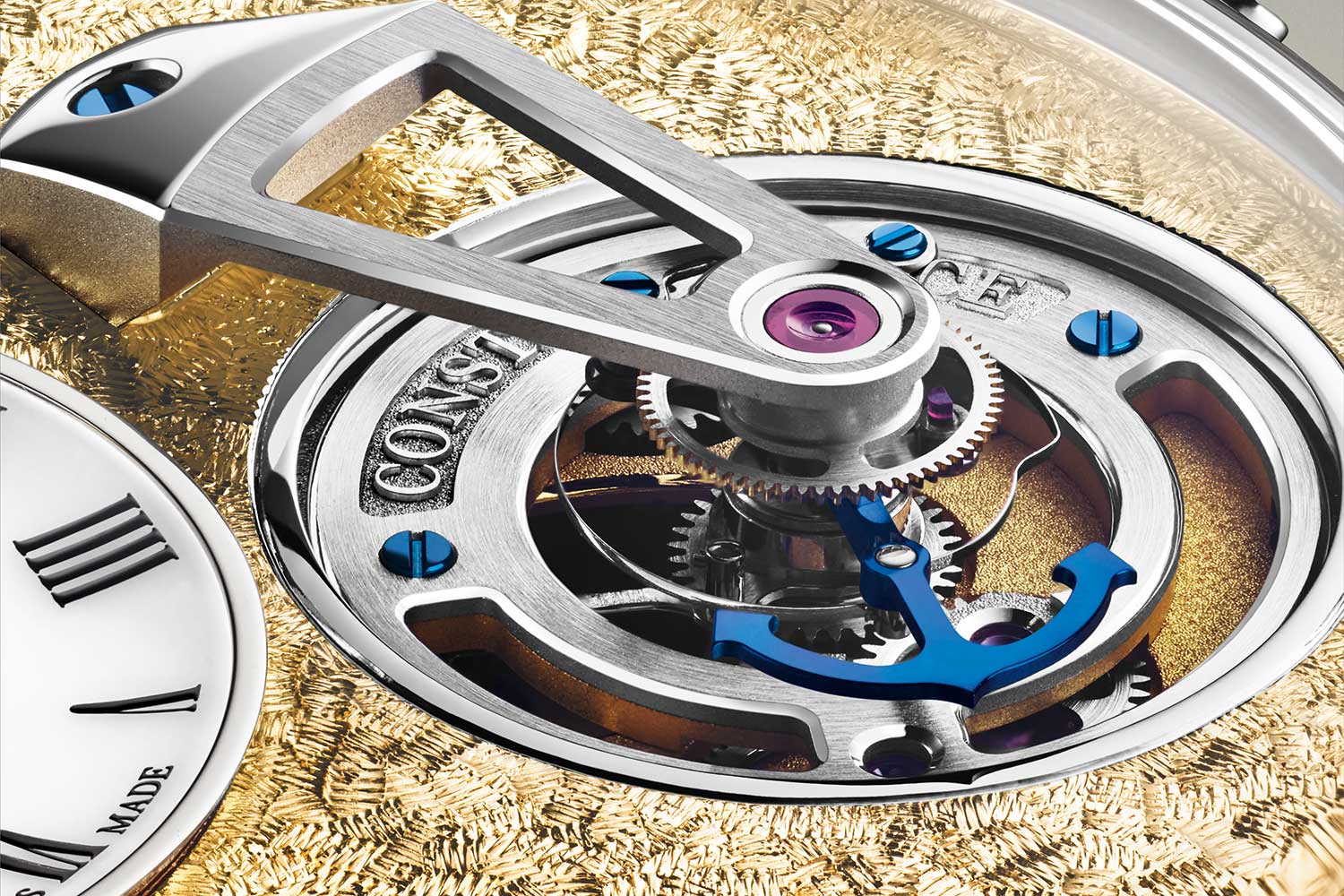
- The Tourbillon
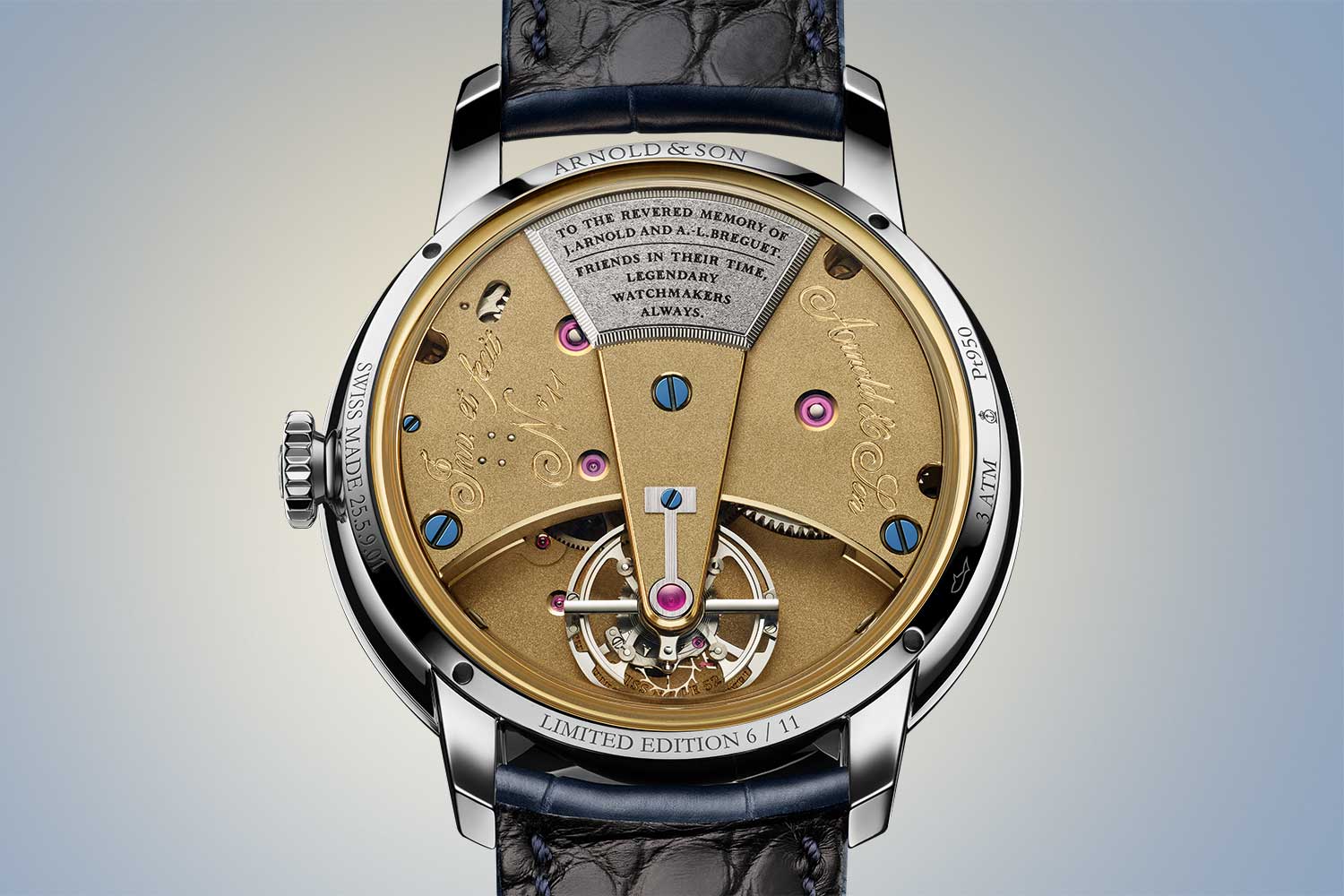
The movement with a central bridge dividing two symmetrical plates
The level of finishing is equally noteworthy. On the reverse, the bridges feature polished bevels throughout and extensive hand engraving, most notably on the barrel bridge. A further tribute appears on a dedicated plate bearing the inscription: “To the revered memory of John Arnold and Abraham-Louis Breguet. Friends in their time, legendary watchmakers always.” The dial continues this emphasis on handwork, with an organically engraved fern motif executed by hand using a burin.
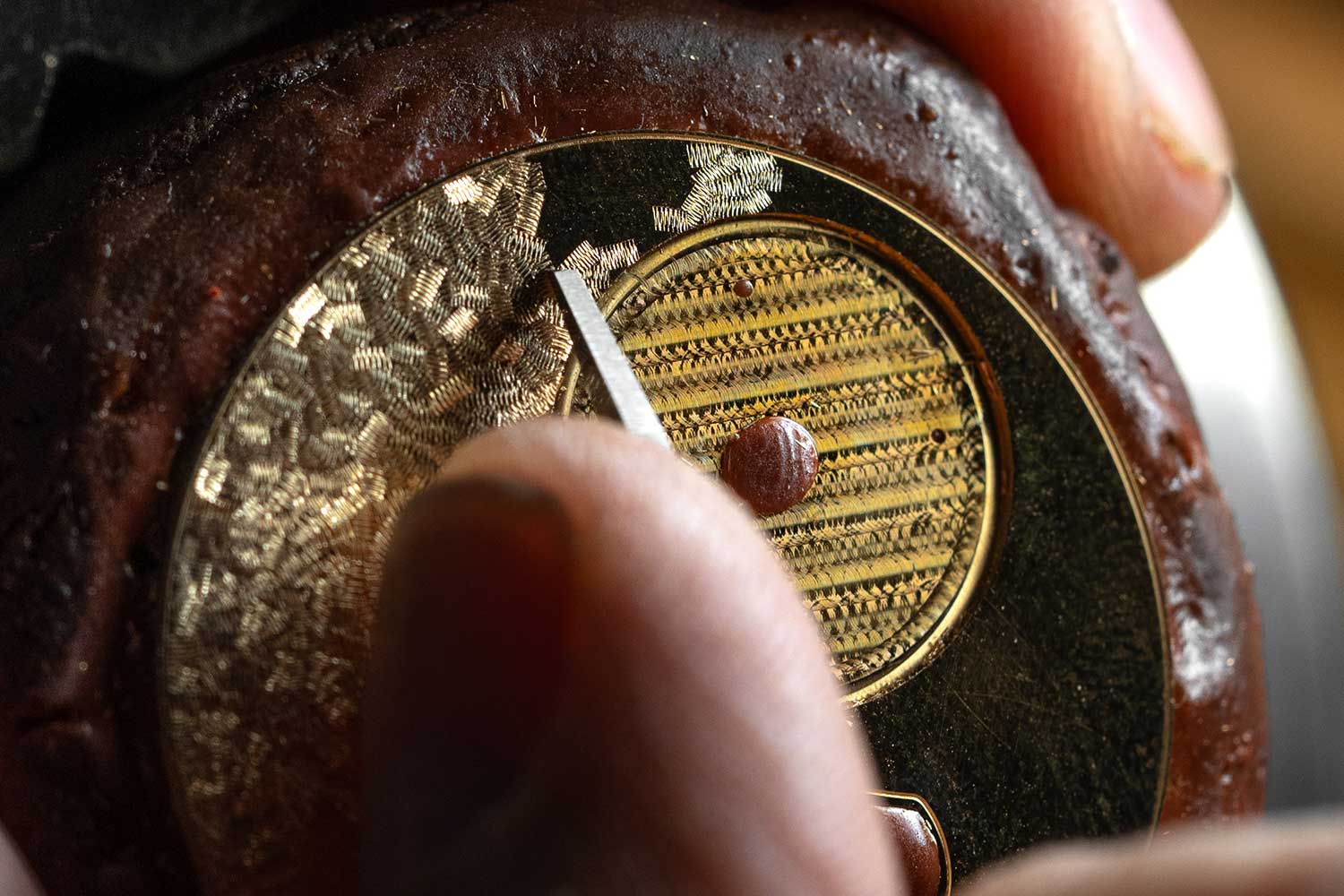
The extensive hand engraving on the dial
Next is a time-only watch, yet its expression is entirely different. There are no complications except for a power reserve indicator, but the visual complexity is impressive. The Time Pyramid Malachite Editions features a striking skeletonized movement arranged in a triangular, pyramid-like layout, with two gear trains on each side converging at a central balance. The design takes inspiration from 19th-century British skeletonized clocks, giving the watch a sense of historical depth and architectural elegance.
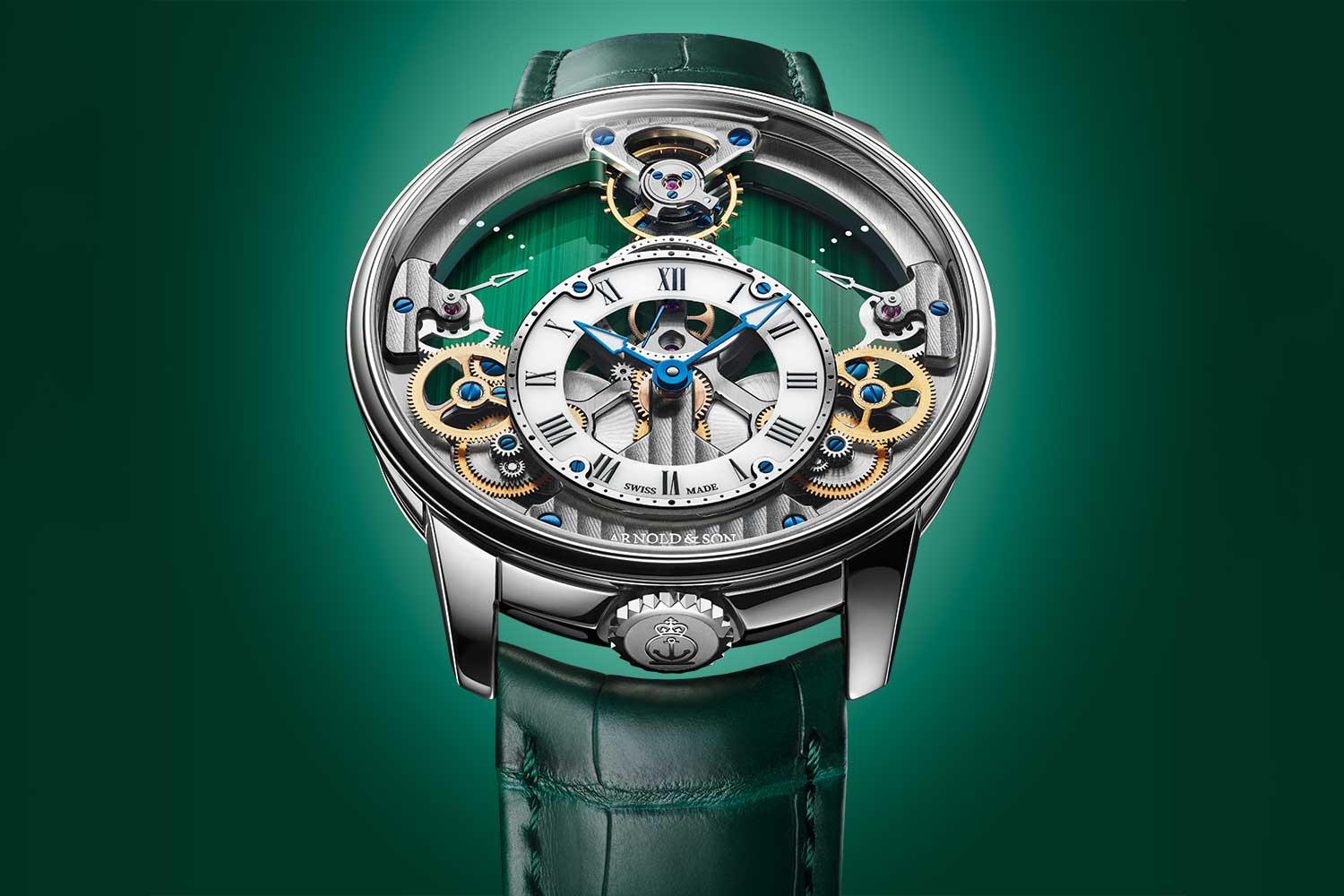
Arnold & Son Time Pyramid 42.5 Malachite Editions
When the original Arnold & Son Time Pyramid was unveiled at Baselworld 2013, it was an immediate head-turner. A decade later, the model remains an unusual and highly desirable creation, standing out as a genuinely unique design in the watchmaking world. A few quirky features set it apart. Each side has a twin power reserve indicator, showing the impressive 90-hour power reserve. These indicators also reveal the series configuration of the twin barrels. As the first barrel winds the second, the indicator on the first falls while that of the second rises, offering a visual representation not only of power but also of torque transfer between the barrels.
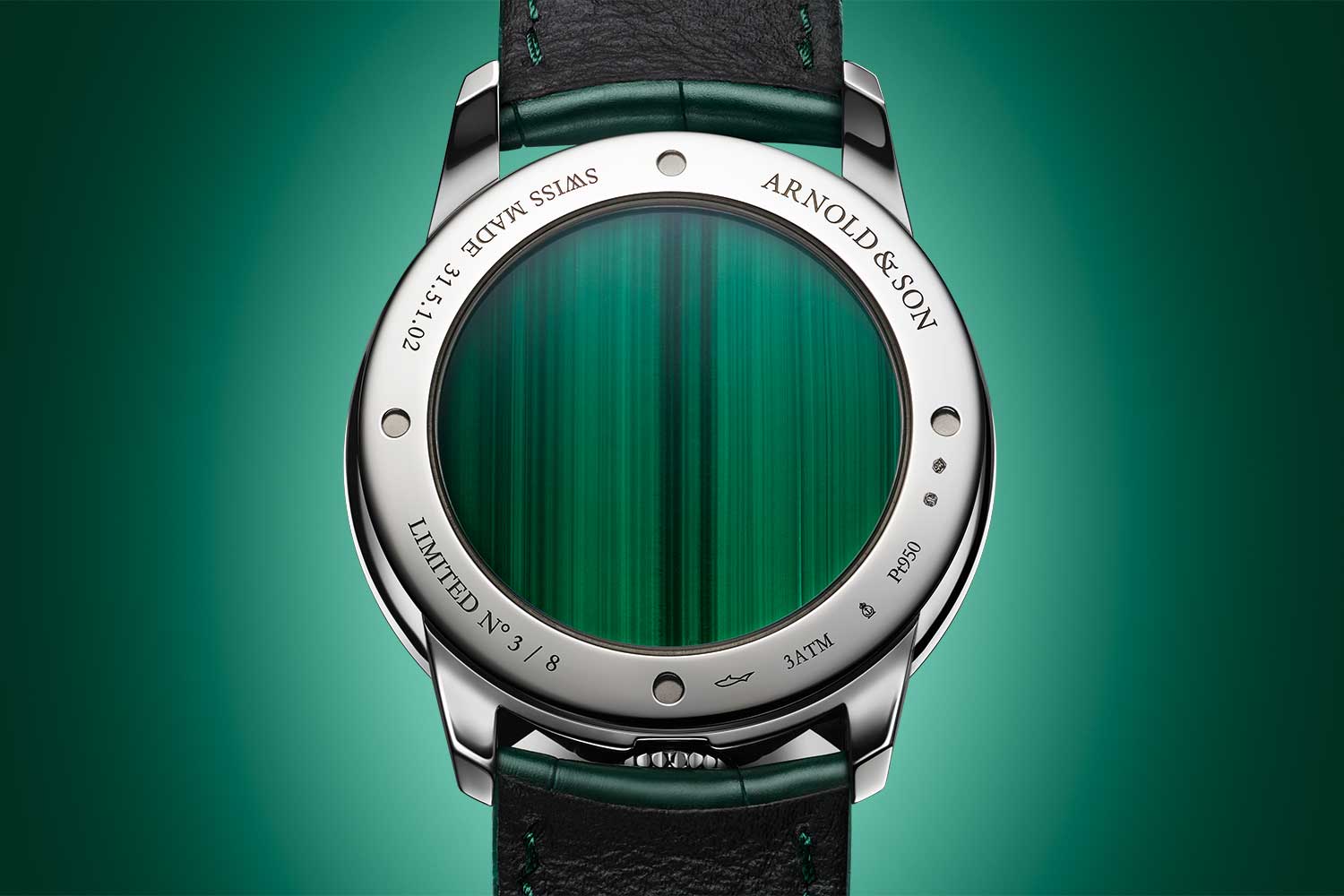
The brand new Time Pyramid in malachite stone dial replacing the fully transparent glass of the original release
Recently, the watch received an update with a malachite stone dial, replacing the fully transparent glass of the original release and adding a rich, tactile presence to the design.
Finally, for those who admire the historical contributions of Arnold & Son but prefer something simple, modern and sporty, the brand offers the Longitude Titanium 5°W Edition. Unlike the other watches, it is a luxury sports watch with an integrated bracelet or strap, offering versatility for the brand’s varied collectors.
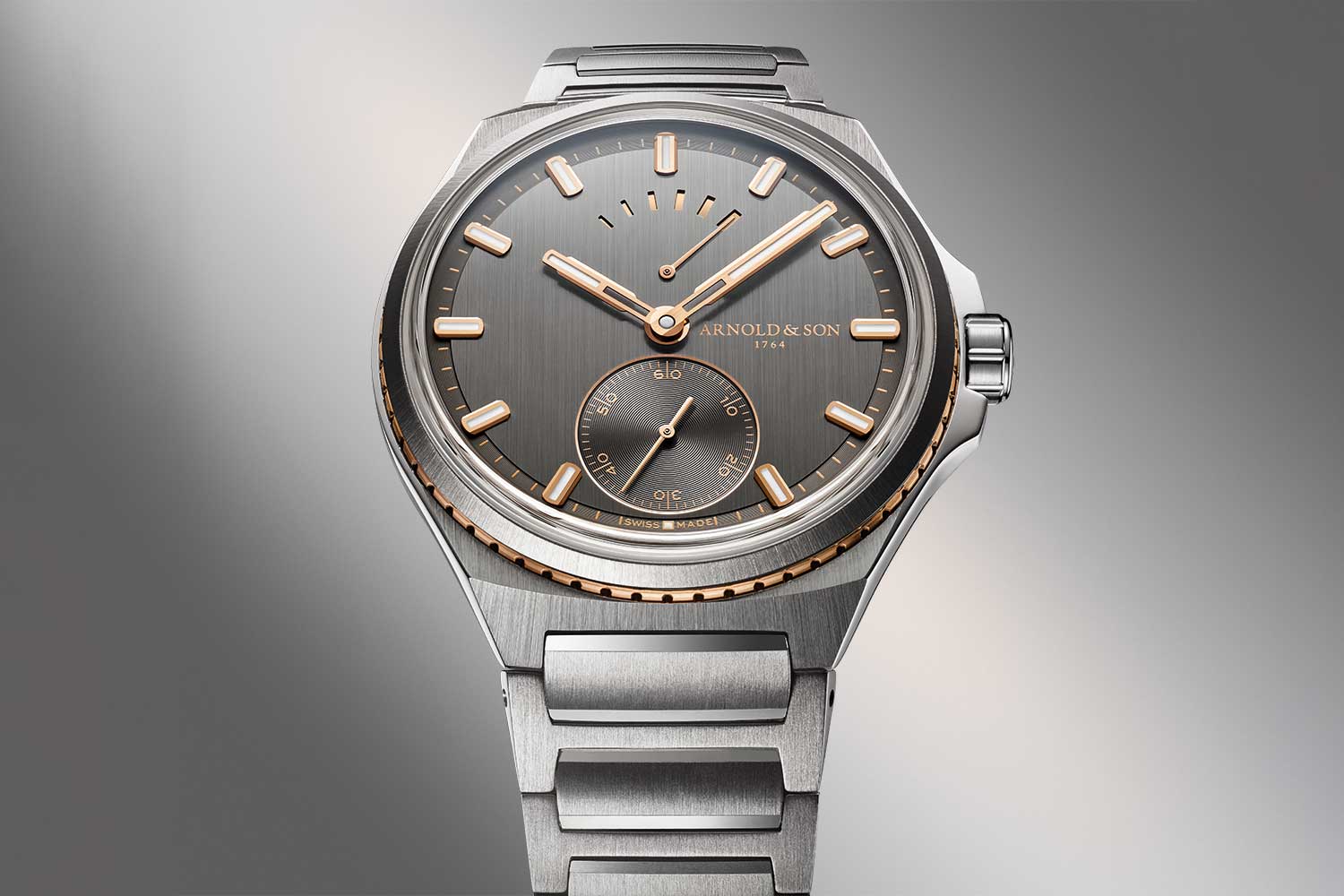
Arnold & Son Longitude Titanium 5°W Edition
The Longitude features an in-house automatic movement certified as a chronometer, beautifully finished with a Rayons de la Gloire (“Rays of Glory”) pattern, a variation of Côtes de Genève radiating from the center to the rim. It also has a 22K gold rotor and blued screws, a 60-hour power reserve and runs at the now-standard rate of 28,800 vibrations per hour (4Hz).
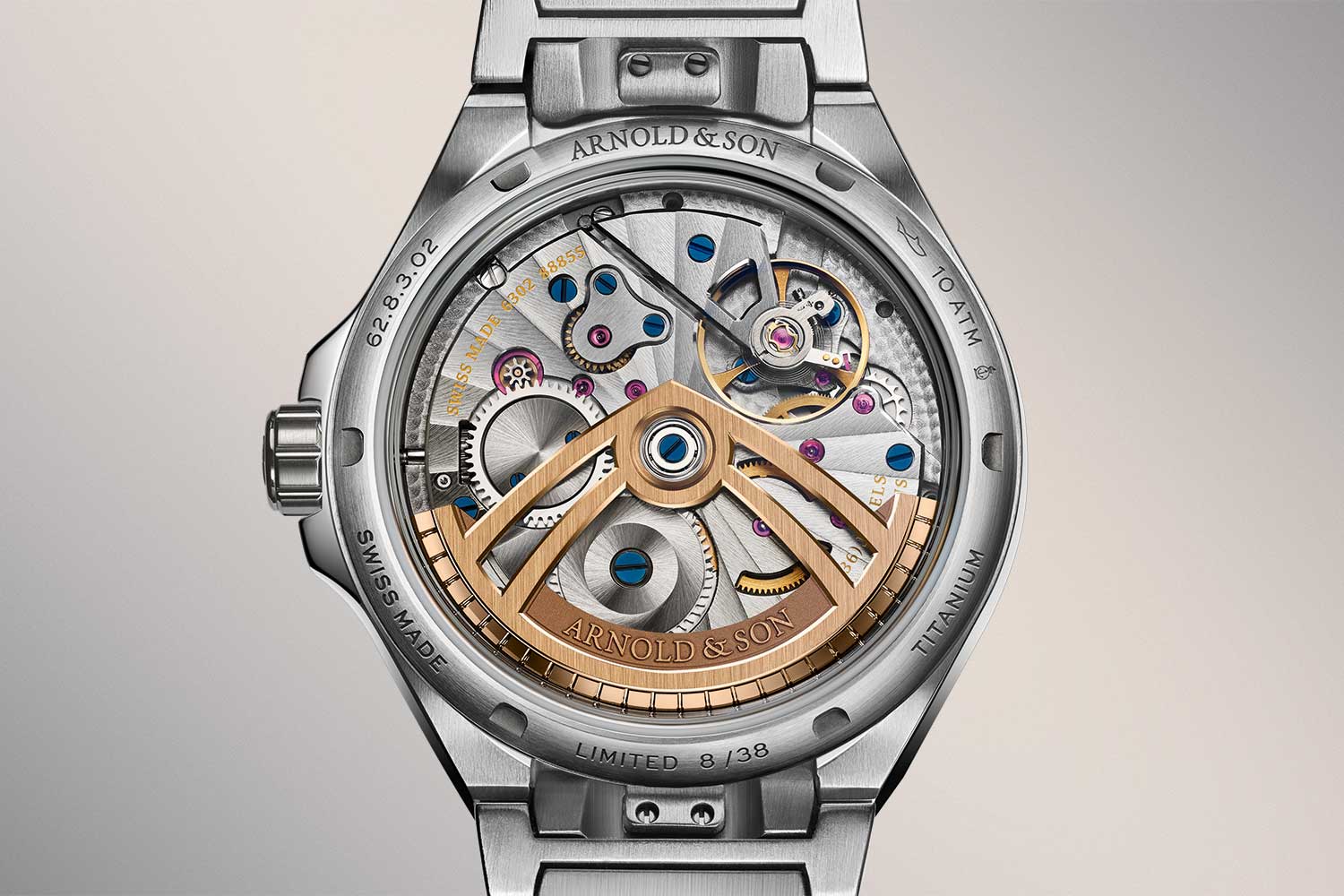
The COSC-certified Caliber A&S6302 with a 22K gold rotor and blued screws
Despite being an integrated bracelet sports watch, the Longitude has an understated design, in line with most of Arnold & Son’s recent offerings. The lightweight titanium case is ovoid with subtle cuts along the silhouette. In this special 5°W Edition, limited to just 38 pieces, the bezel is round with a thin ring of gold-colored notches for a refined highlight. The dial is equally minimalist, with a symmetrical layout featuring a small seconds at 6 o’clock and a power reserve indicator at 12. The rest of the dial is a large gray surface with a vertically brushed finish, while gold accents on the markers and chapter rings provide just enough warmth and sense of luxury.
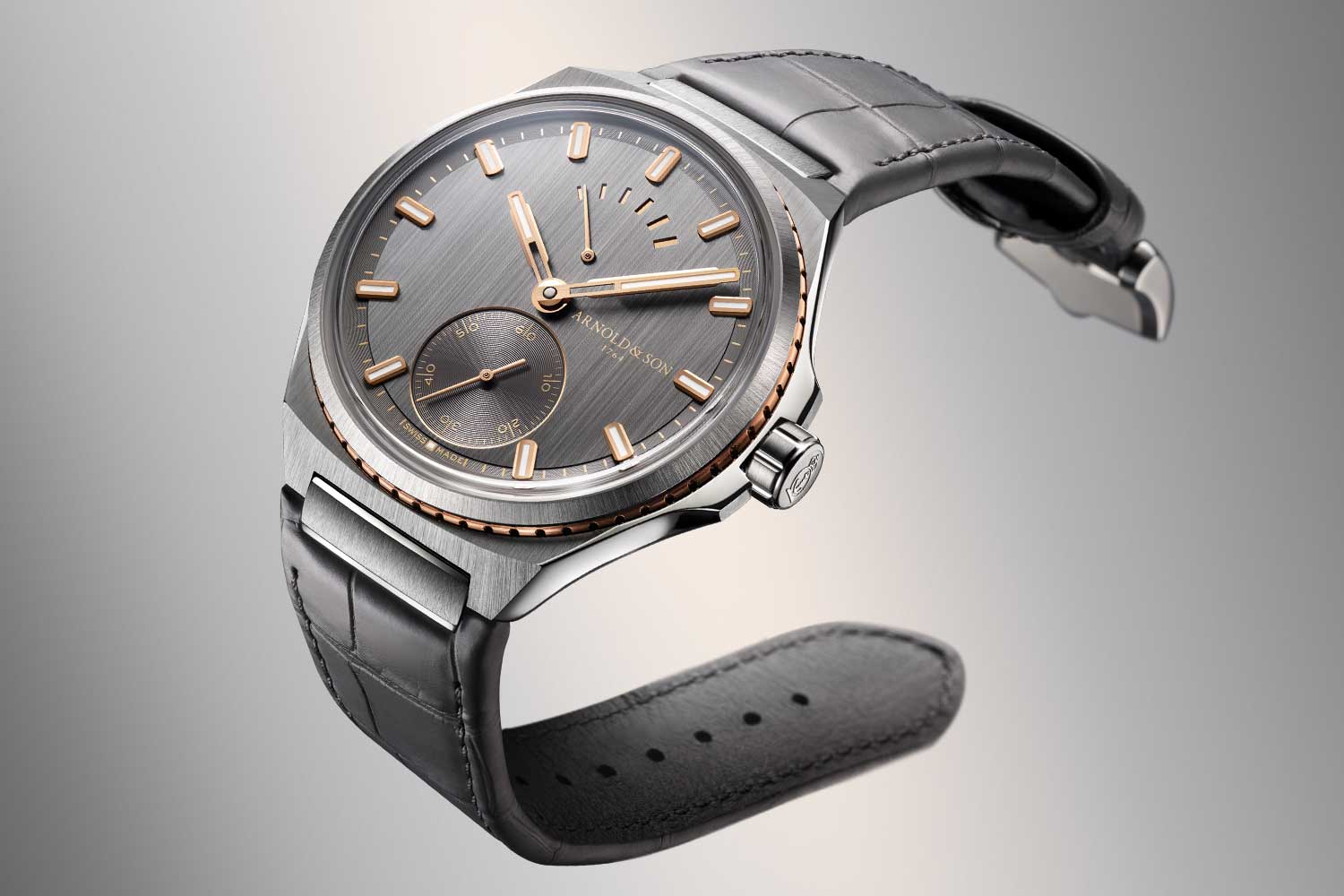
Another option for straps, the anthracite gray alligator leather with titanium pin buckle
Modern-day Arnold & Son is an understated brand rooted in the revival of a long-forgotten pioneer in both precision timekeeping and luxury watchmaking. It deserves more attention and effort to connect its work with collectors. Fortunately, visionary retail houses like Sincere Fine Watches have stepped in. As one of Asia’s pioneering independent watch retailers, particularly through its Sincere Haute Horlogerie (SHH) boutiques, Sincere highlights some of the brand’s most compelling creations, allowing collectors to appreciate both Arnold & Son’s historical significance and its modern achievements.
Discover Arnold & Son timepieces at Sincere Fine Watches, Takashimaya S.C. #02-12A/B/C, and SHH (Sincere Haute Horlogerie), The Shoppes at Marina Bay Sands #B2M-202.
Tech Specs: Arnold & Son Constant Force Tourbillon, Platinum Edition
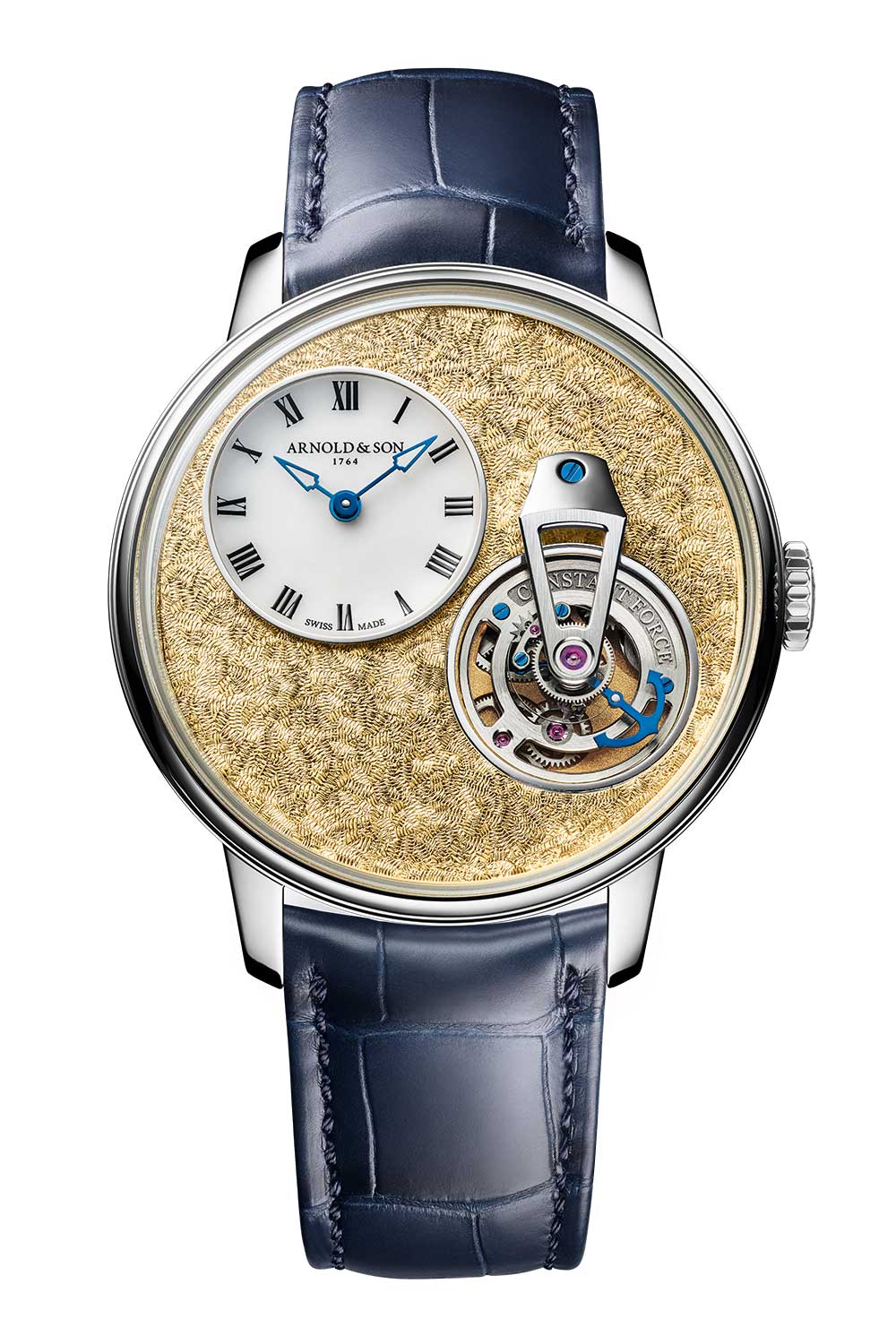
References 1FCBX.Z01A.C0232X
Movement Manual winding Caliber A&S5219, with constant-force mechanism and engraved plate featuring a tribute to John Arnold and Abraham-Louis Breguet; 100-hour power reserve
Functions Hours, minutes, true-beat seconds and tourbillon
Case 41.5mm × 13.7mm; 950 platinum; water resistant to 30m
Dial 18K yellow gold (3N), hand engraved with Arnold & Son “fern” pattern; off-centered white opal time display with black Roman numerals
Strap Hand-stitched midnight blue alligator leather with black alligator leather lining; 950 platinum folding clasp
Price CHF 140,600 incl. VAT
Availability Limited edition of 11 pieces
Tech Specs: Arnold & Son Time Pyramid 42.5 Malachite Editions
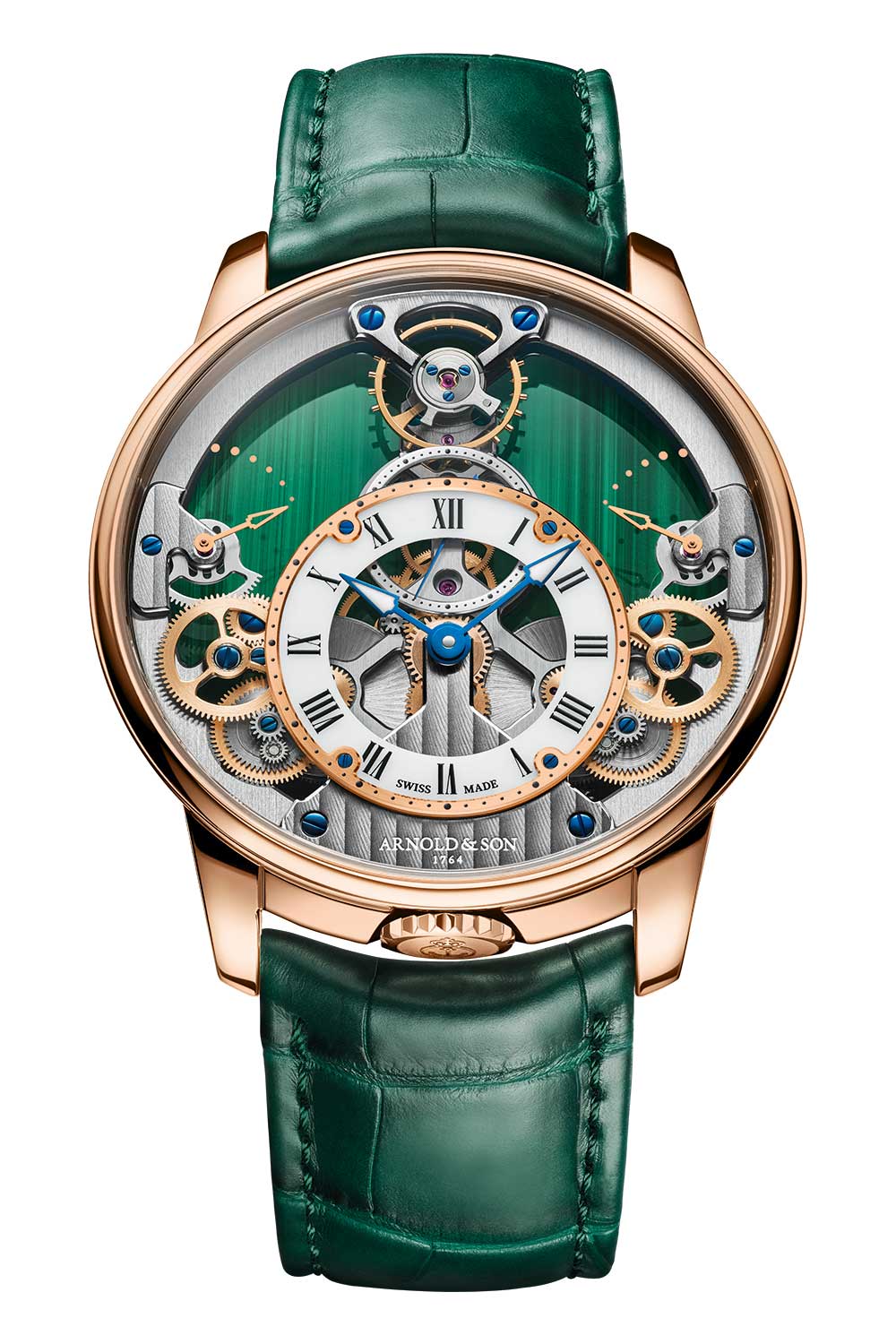
References 1TPER.F01A.C1250A (18K 5N red gold); 1TPEX.F01A.C1250X (950 platinum)
Movement Manual winding Caliber A&S1615; 90-hour power reserve
Functions Hours, minutes, seconds and dual power reserve
Case 42.5mm × 10.72mm; 18K 5N red gold or 950 platinum, with caseback in malachite; water resistant to 30m
Dial Off-centered time display with black Roman numerals
Strap Hand-stitched imperial green alligator leather; 18K 5N red gold or 950 platinum pin buckle
Price CHF 45,300, incl. VAT (18K 5N red gold); CHF 57,200, incl. VAT (950 platinum)
Availability Limited edition of eight pieces for each reference
Tech Specs: Arnold & Son Longitude Titanium 5°W Edition
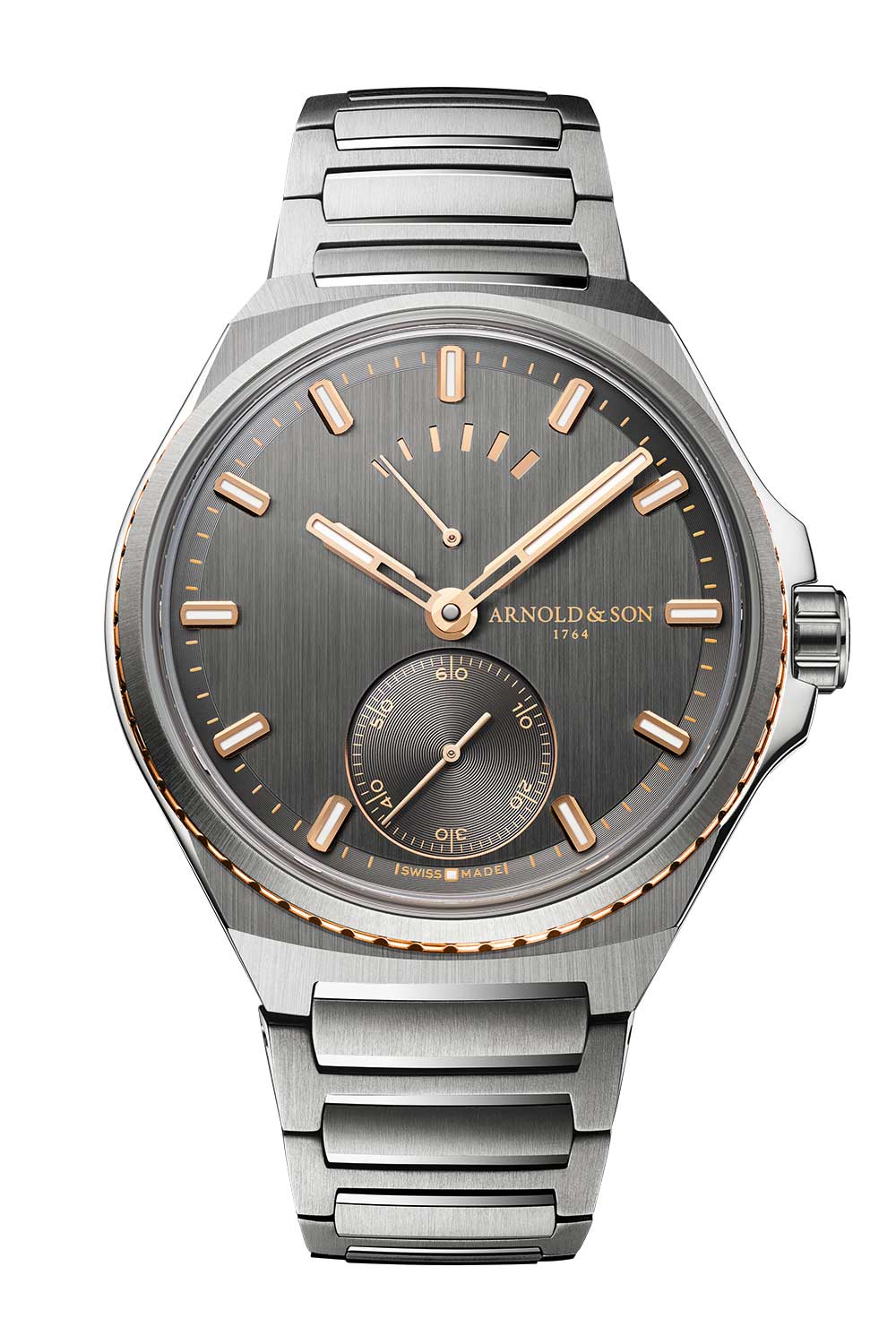
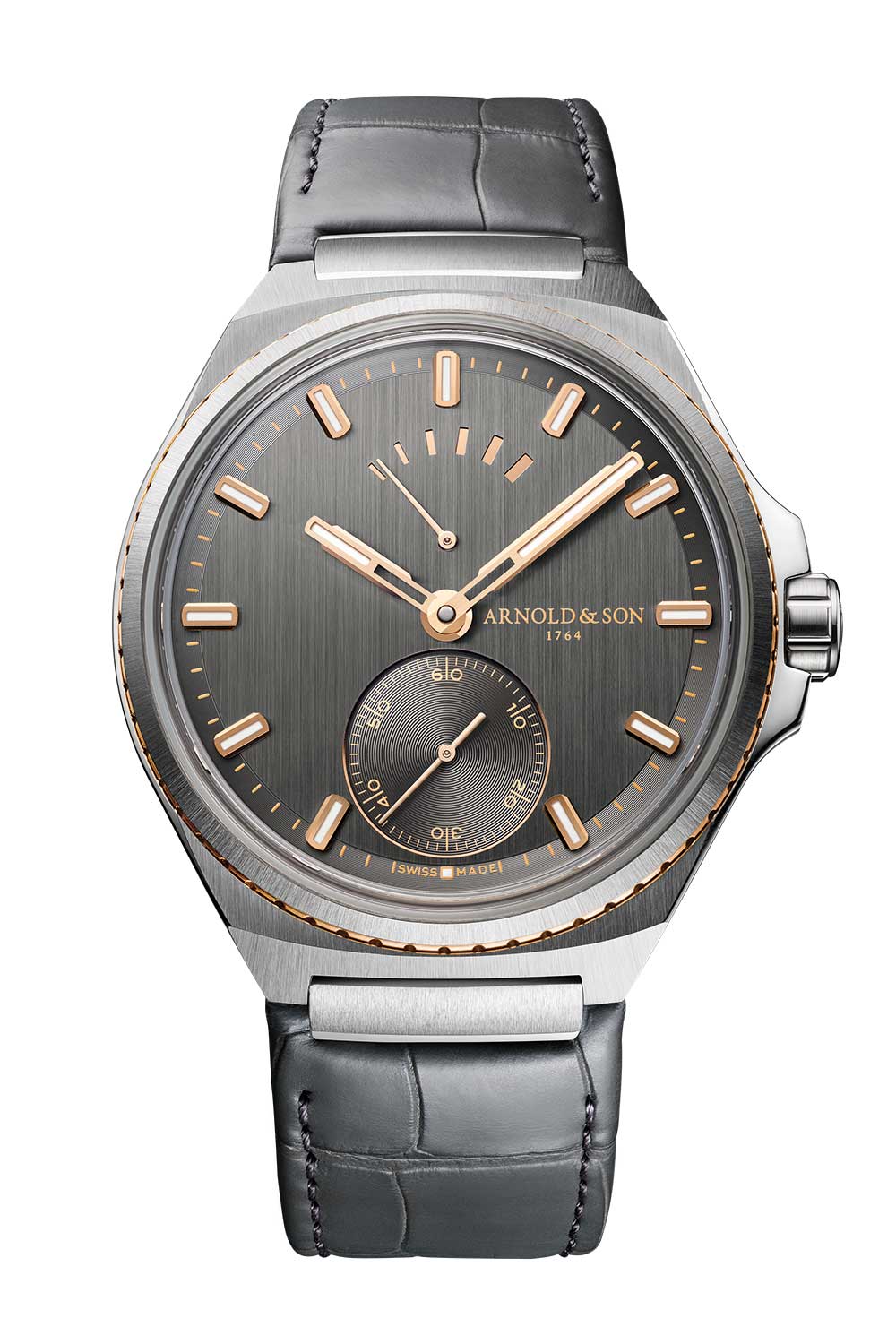
References 1LTAT.N01A.N0262U
Movement Self-winding, COSC-certified Caliber A&S6302; 60-hour power reserve
Functions Hours, minutes, small seconds and power reserve display
Case 42.5mm × 12.25mm; titanium, with 18K red gold (5N) bezel ring; water resistant to 100m
Dial Lizard Point Gray with vertical satin finish; golden-finish hour markers with Super-LumiNova coating
Strap Interchangeable titanium folding clasp; additional anthracite gray alligator leather with titanium pin buckle
Price CHF 25,900, incl. VAT
Availability Limited edition of 38 pieces
Discover Arnold & Son timepieces at Sincere Fine Watches, Takashimaya S.C. #02-12A/B/C, and SHH (Sincere Haute Horlogerie), The Shoppes at Marina Bay Sands #B2M-202.
Arnold & Son
You may also like

Video
First look: Arnold And Son at Geneva Watch Days 2022
Aug 30, 2022
Video
First look: Arnold And Son at Geneva Watch Days 2022
Aug 30, 2022

Video
The New Arnold & Son Perpetual Moon, Now In A More Wearable Size
May 5, 2022
Video
The New Arnold & Son Perpetual Moon, Now In A More Wearable Size
May 5, 2022

News
Introducing the Arnold & Son Nebula 41.5 Steel
Mar 17, 2022
News
Introducing the Arnold & Son Nebula 41.5 Steel
Mar 17, 2022