A Closer Look: Patek Philippe Celestial Sunrise and Sunset Ref. 6105G
Reviews
A Closer Look: Patek Philippe Celestial Sunrise and Sunset Ref. 6105G

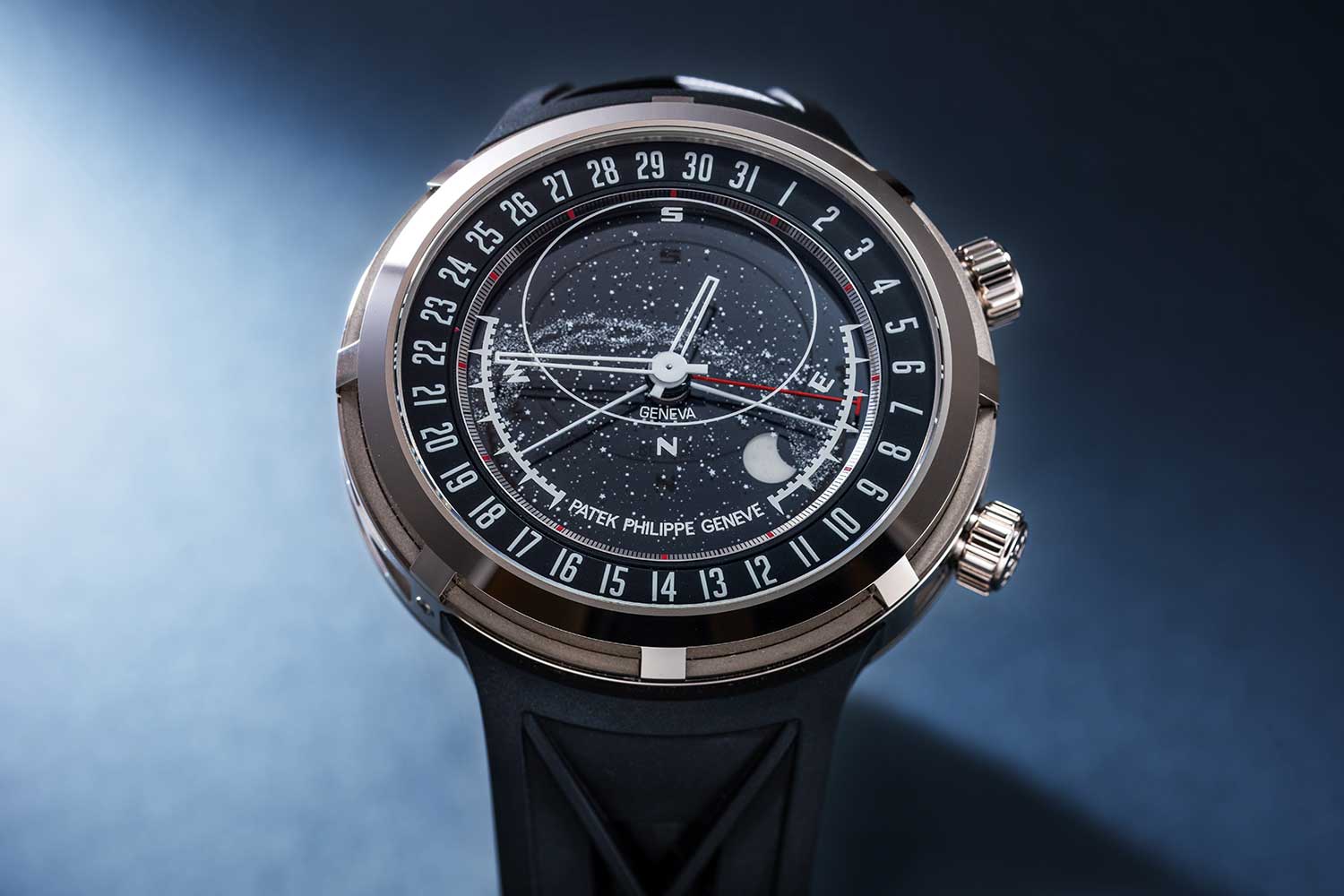
Every Watches & Wonders has its share of watches that impress on technical grounds in all manner of whims and fancies, and a smaller number that manage something more elusive by addressing a real problem that, in this case, exists within a very small subset of watchmaking. The new Patek Philippe Celestial Sunrise and Sunset Ref. 6105G is one of those watches, and it does what it does in a form that is both beautiful and affecting, even if, at 47mm, it remains, for me at least, something to think about rather than to wear, and certainly rather than to afford.
Patek Philippe Celestial Sunrise and Sunset Ref. 6105G (©Revolution)
The problem it addresses is not an obvious one, and it is easy to overlook, particularly in the context of a brand like Patek Philippe. Patek is, after all, one of the few manufactures for which high complication has been a long continuous practice. It is synonymous with virtually every major complication including perpetual calendars, chronographs, minute repeaters but there are others which, while perhaps less immediately associated, run just as deep in its history, including a long-standing interest in representing the sky mechanically.
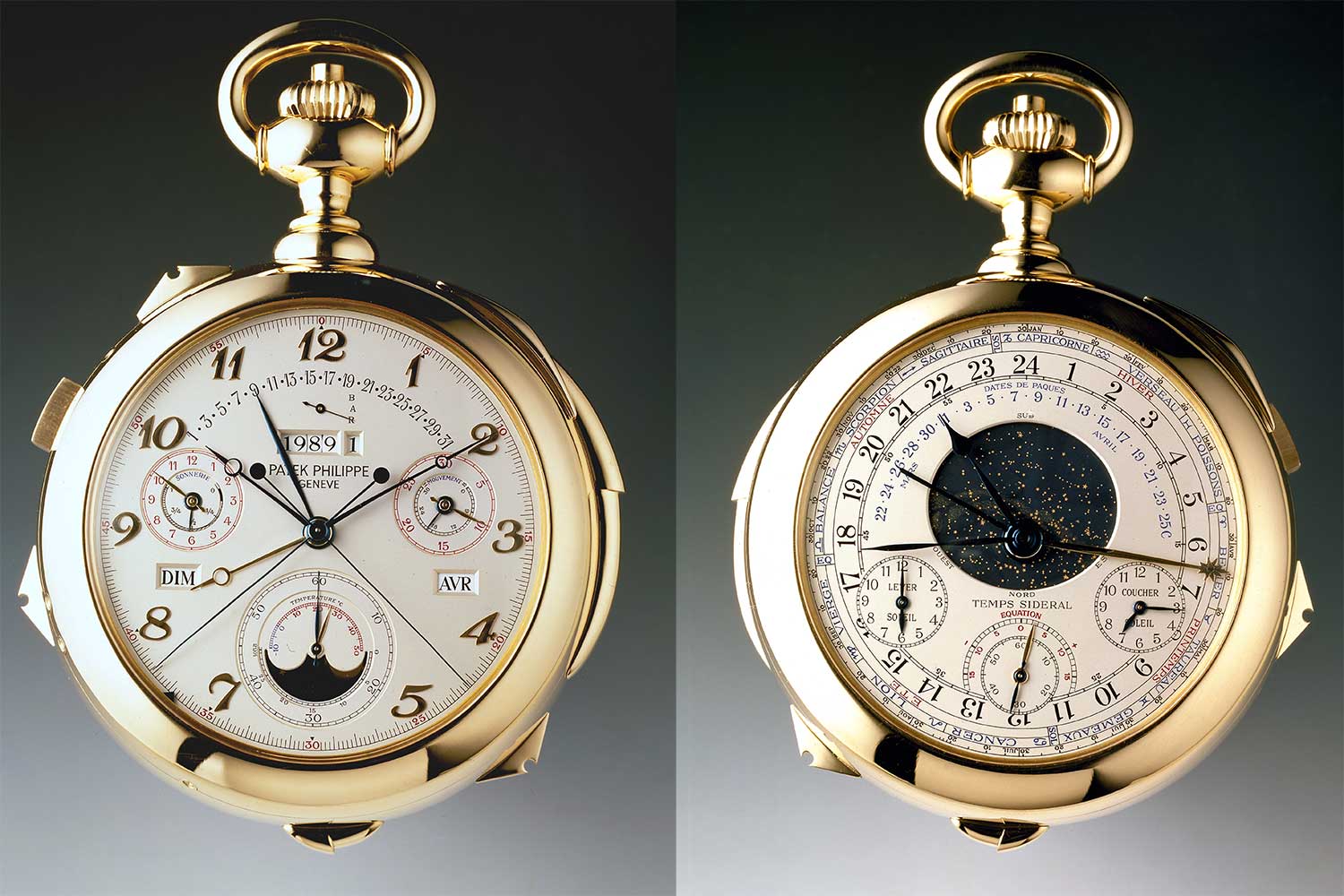
The particular combination of a celestial star chart with moonphase and indications for sunrise and sunset is not new to Patek Philippe. It appears in two of the most famous complicated watches made for James Ward Packard and Henry Graves Jr. in the early 20th century, and persisted through later works such as the Calibre 89 and the Star Caliber 2000.
Calibre 89
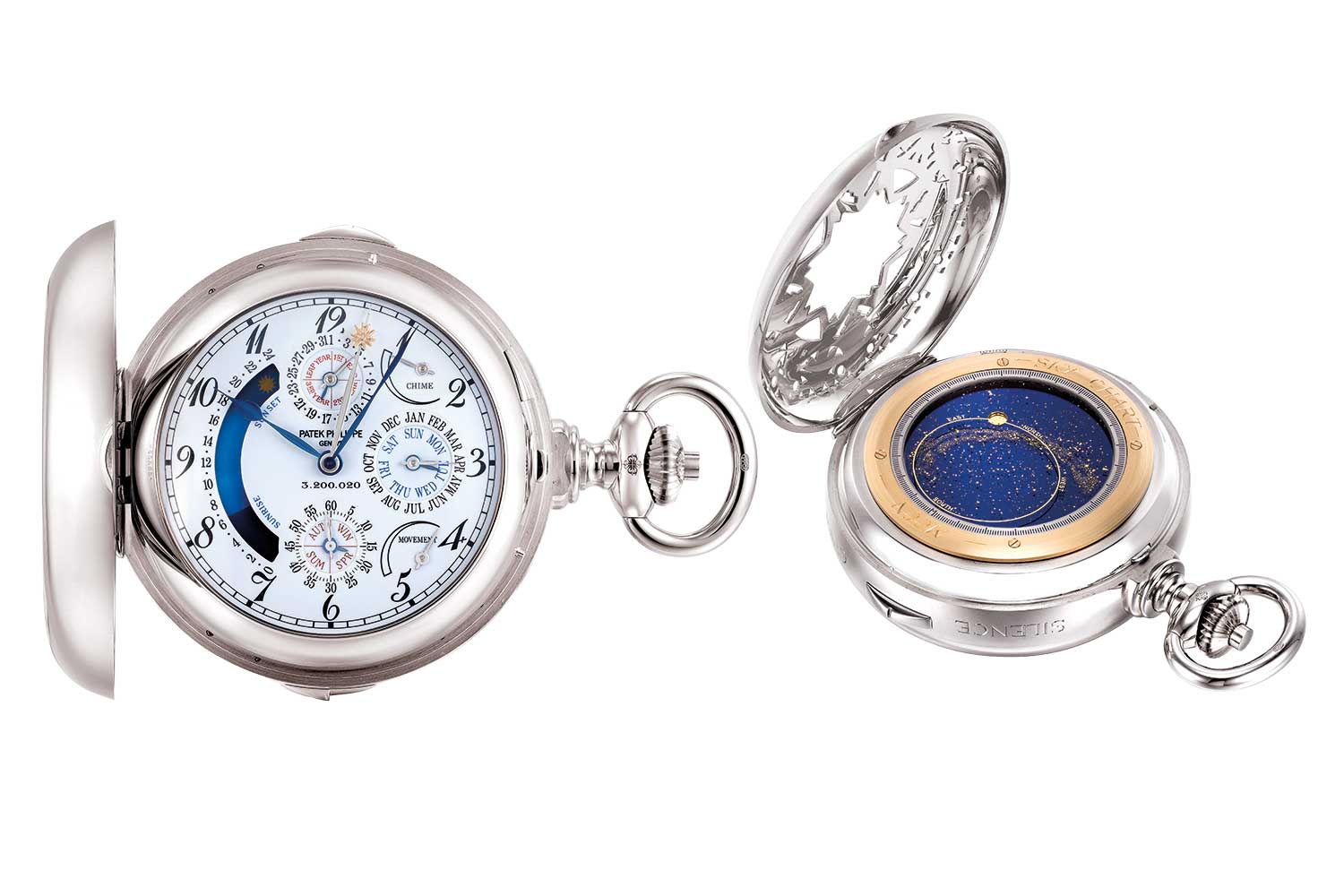
Star Caliber 2000
The star chart complication made the transition to the wrist at the turn of the millennium. Developed alongside the Star Caliber 2000, the double-faced Sky Moon Tourbillon Ref. 5002, with a total of 12 complications, was launched in 2001, followed in 2002 by the Celestial Ref. 5102, the brand’s first wristwatch dedicated entirely to a planisphere and moonphase display. In 2012, the Celestial was updated with the addition of a date, becoming the Ref. 6102.

Sky Moon Tourbillon Ref. 5002 (Image: Christie’s)
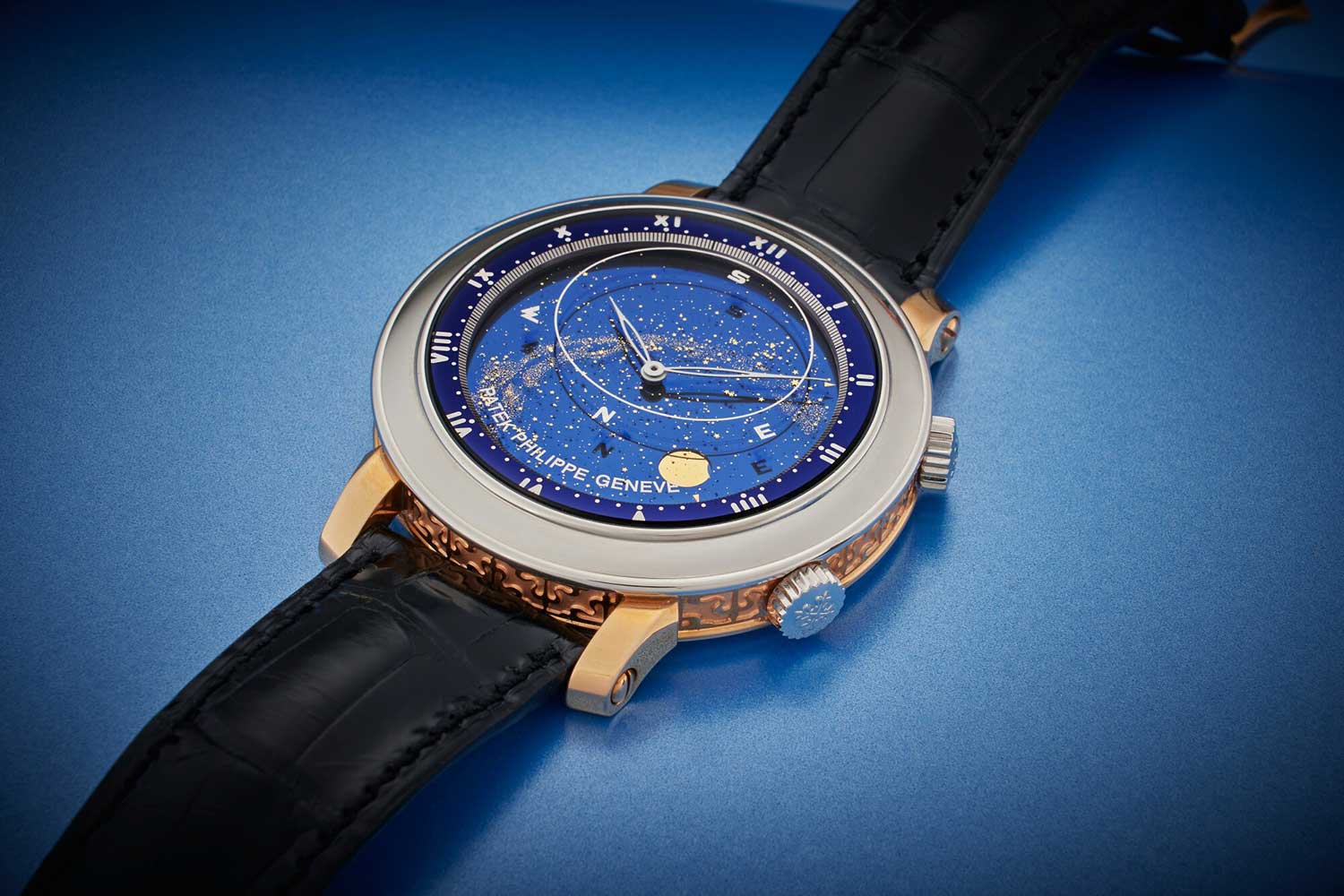
Celestial Ref. 5102 (Image: Sotheby’s)
The new Celestial ref. 6105G thus marks the first Patek Philippe wristwatch to incorporate a sunrise and sunset complication, and it also introduces a nifty solution that allows those indications to be brought into line with summer and winter time.
Let There Be Light – And DST
The sunrise and sunset complication itself has a particular appeal. There is something inherently compelling about having the transitions between light and darkness, expressed mechanically on the wrist. It is one of the more direct ways in which astronomical phenomena are translated into daily experience.
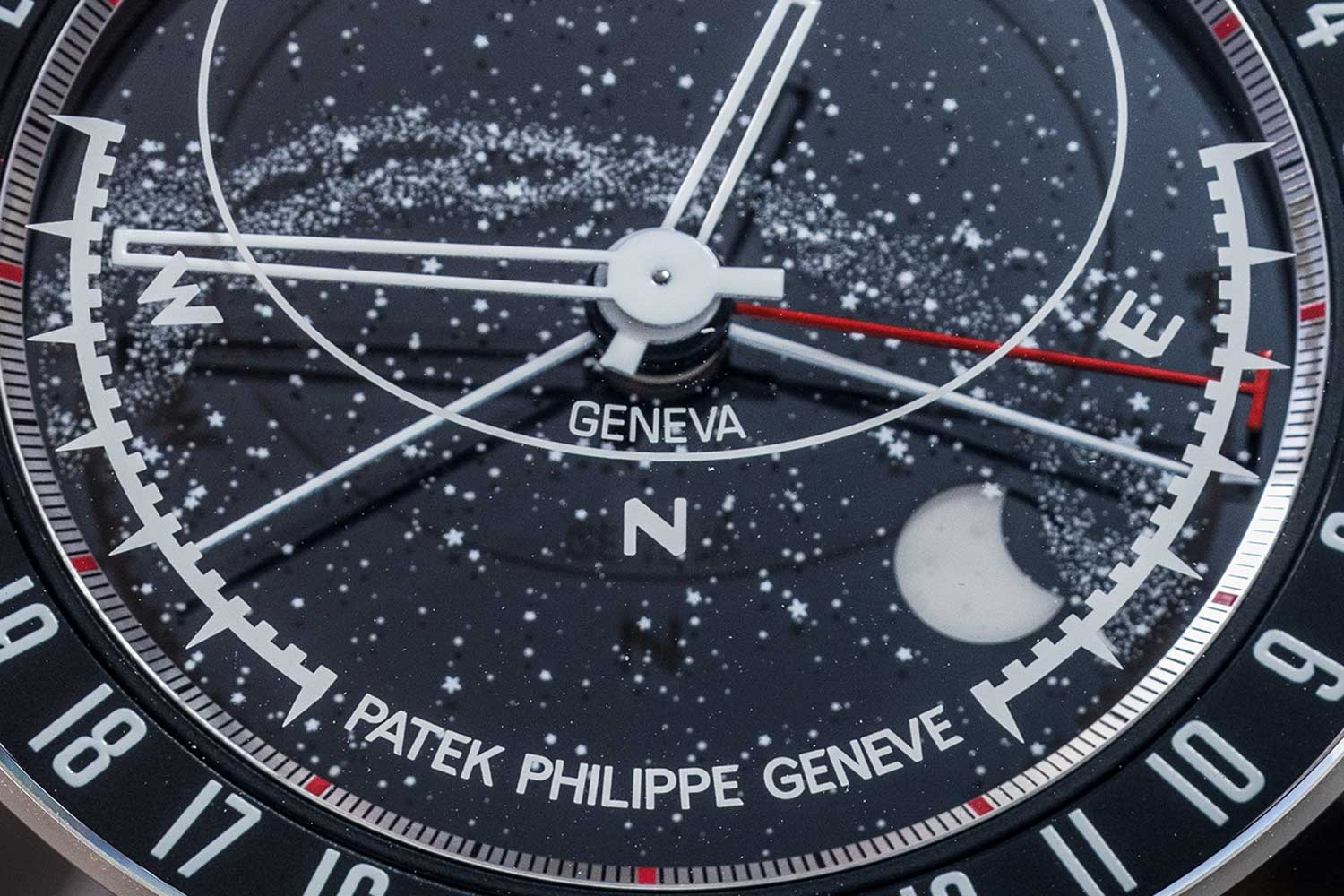
The Sunrise and Sunset indicator (©Revolution)
It is not, however, a recent idea. But for much of its history the complication remained confined to large format timekeepers, namely clocks and pocket watches. It was only in 1989 that it first made the transition to the wristwatch with the Longines Ephemerides Solaires, and more prominently with the Jules Audemars Equation of Time in 2000. Such watches remain exceptionally rare. Among the more recent examples are the Vacheron Constantin Celestia and the Solaria, with the latter modelling the motion of the Sun in its entirety from which sunrise and sunset are derived; Konstantin Chaykin’s Stargazer, which in addition shows the azimuth of sunrise and sunset; and the phenomenal Krayon Everywhere which for the first time allows sunrise and sunset to be adjusted for different locations by the owner, along with its more accessible counterpart, the Anywhere.
What the Patek Celestial addresses is not the encoding of sunrise and sunset, which remains conventional but the way those indications can be reconciled with civil time, specifically the one-hour shift imposed by decree twice a year in regions that observe daylight saving time.
The discrepancy arises as a direct consequence of the construction of the complication, namely the cams. The mechanism that determines sunrise and sunset follow an annual course, each driven by a cam that encode the changing length of the day. When the hour is advanced to account for DST, the 24-hour wheel is displaced accordingly, but the date mechanism is not actuated unless midnight is crossed. The annual cam that governs sunrise and sunset hence does not advance by a full daily increment. Its displacement corresponds only to one hour within a 24-hour cycle, which translates to a fraction of the annual rotation. As the cams are profiled to encode the day-to-day progression of sunrise and sunset over the course of the year, such a sub-daily displacement does not produce a change in the indicated times. The displayed times of sunrise and sunset will hence remain out of step with civil time for a significant portion of the year and can only be accounted for mentally.
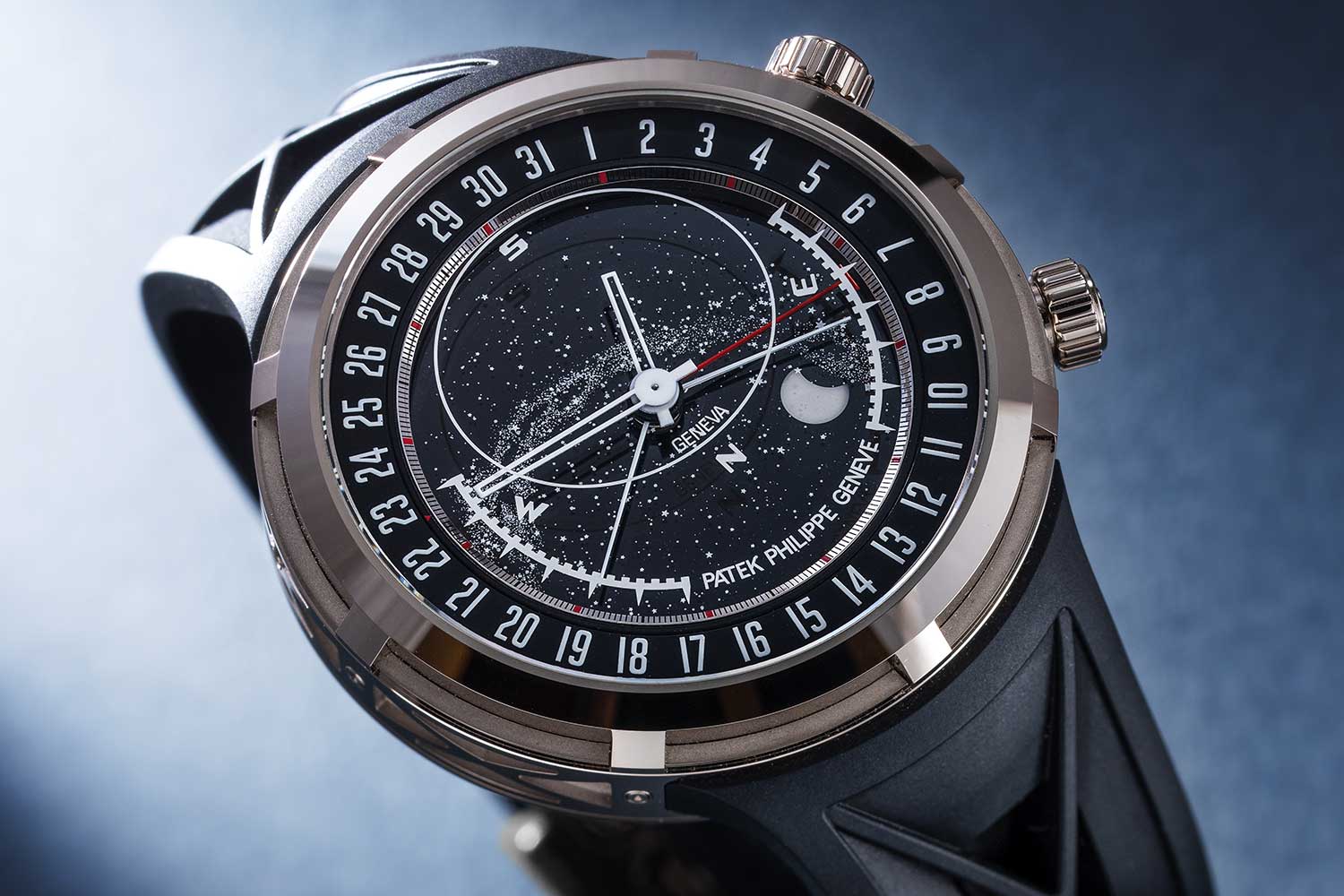
The times for sunrise and sunset are read directly against the date disc. Around the 23 marker sits a small red index, which can be adjusted to set the position within the year (©Revolution)
Patek’s solution is notably elegant and ingenious. The times for sunrise and sunset are displayed by two hands at the lower right and left sides of the dial respectively. They are read against a display that is itself mobile – the date disc. Under normal operation, the date disc remains fixed while the hands traverse it under the control of the cam system. The hour hand, meanwhile, is carried by the hour wheel and displays civil time in the usual way. When the correction for summer or winter time is actuated via case pushers at 9 and 10 o’clock respectively, the process begins with the movement of the selector, which pivots a lever at 10 o’clock. This lever ties the entire correction system together. It pivots about its axis and, in doing so, transmits motion to both sides of the mechanism at once.
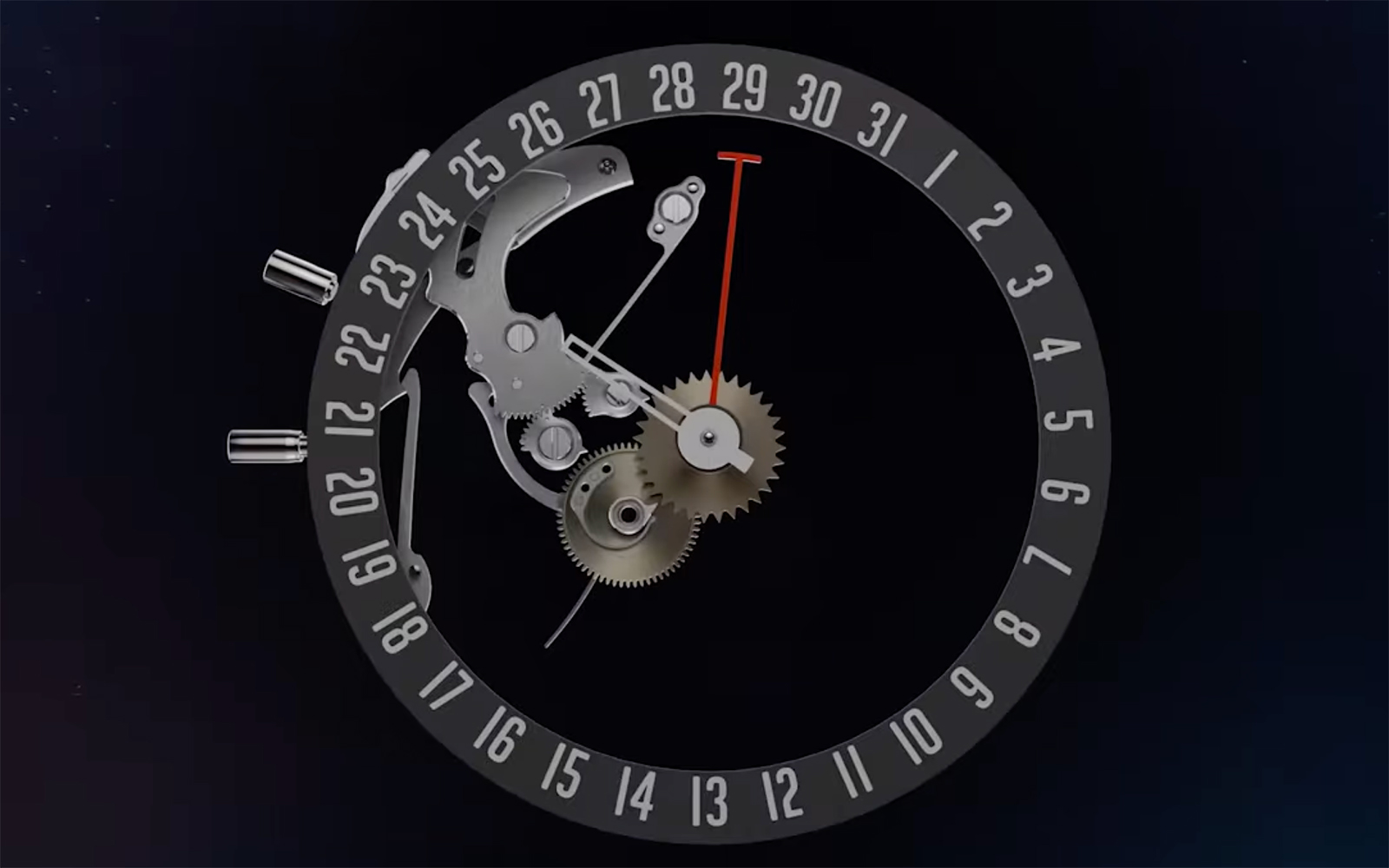
On one side, it is linked by a pin to the date disc, so that as it moves, it rotates the date disc by the exact amount corresponding to one hour. Its opposite end carries a toothed sector that engage the correction mechanisms for legal time and the date. For the legal time, the toothed sector drives the corrector finger on the left. This finger engages the date drive wheel. When actuated, it pushes the wheel forward or backward by one step. Because the date drive wheel is in mesh with the hour wheel, this step translates directly into a one-hour jump of the hour hand.
For the date, the toothed sector on the lever drives the date corrector finger on the right. This finger acts directly on the date star wheel, advancing or reversing it by one tooth. That corresponds to exactly one day, ensuring that the date pointer remains aligned with the rotated date disc. This is necessary because the date disc, having been rotated to serve as the scale for sunrise and sunset, must remain correctly indexed with the date indication.
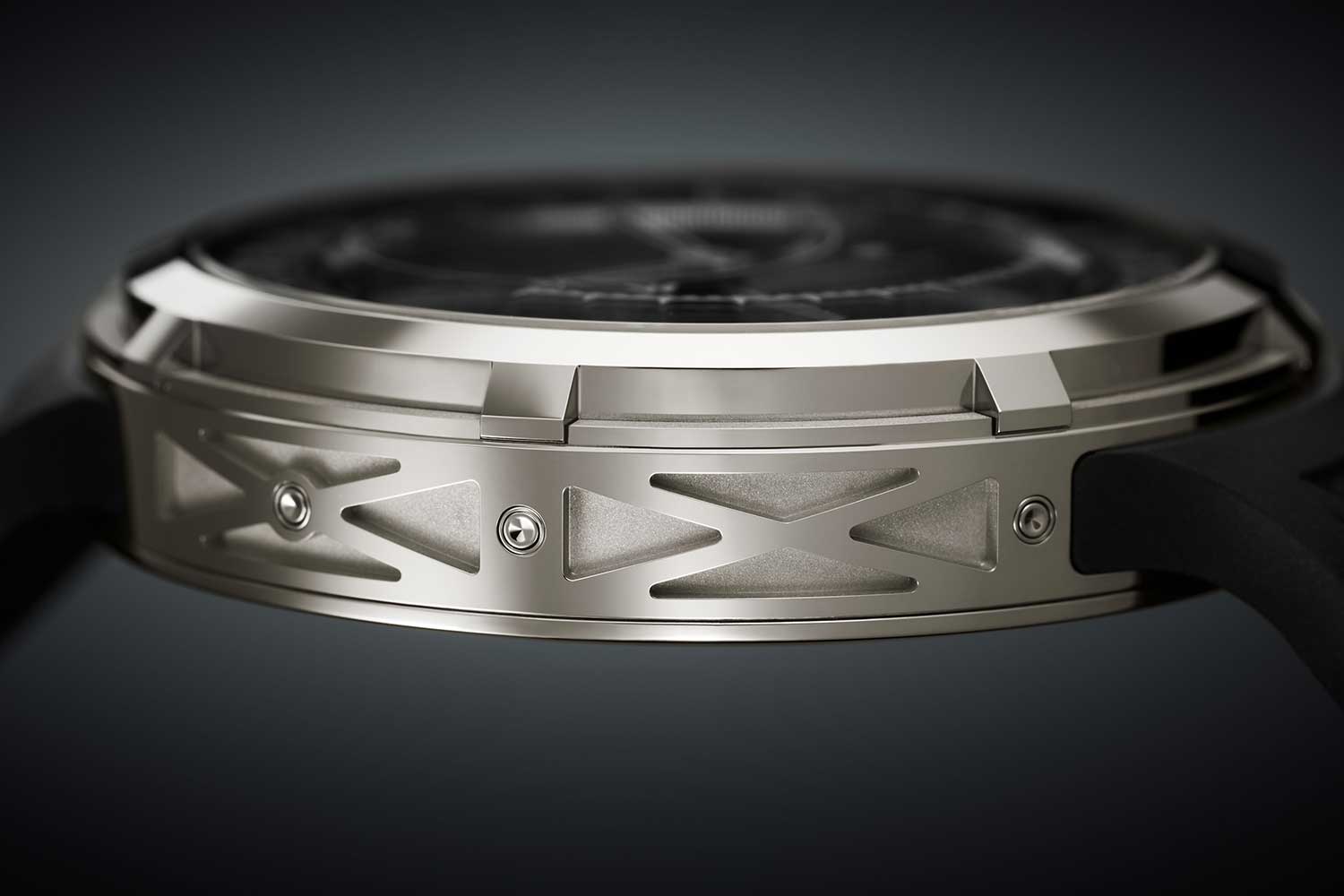
The correction for summer or winter time is actuated via case pushers at 9 and 10 o’clock
The entire sequence is completed in a single motion, after which the selector is held in its new position by a jumper. The result is that the hour hand, the date indication and the scale for sunrise and sunset have all been shifted in concert, while the hands indicating sunrise and sunset themselves have not moved.
As the graduation is fixed by the calendar with 31 equal divisions, the motion of the hands has to be recalibrated to match this reduced angular framework. Instead of advancing by 15 degrees per hour as on a conventional 24-hour scale, each hour is now compressed, and the entire transmission, including the cams, has to be proportioned accordingly.
Because the watch is calibrated for Geneva, each hand is confined to a six-hour span, corresponding to the limits within which these events occur at 46°12′ north latitude; sunrise falls between roughly 05:30 and 08:30 over the course of the year, while sunset occurs between approximately 16:30 and 21:30.
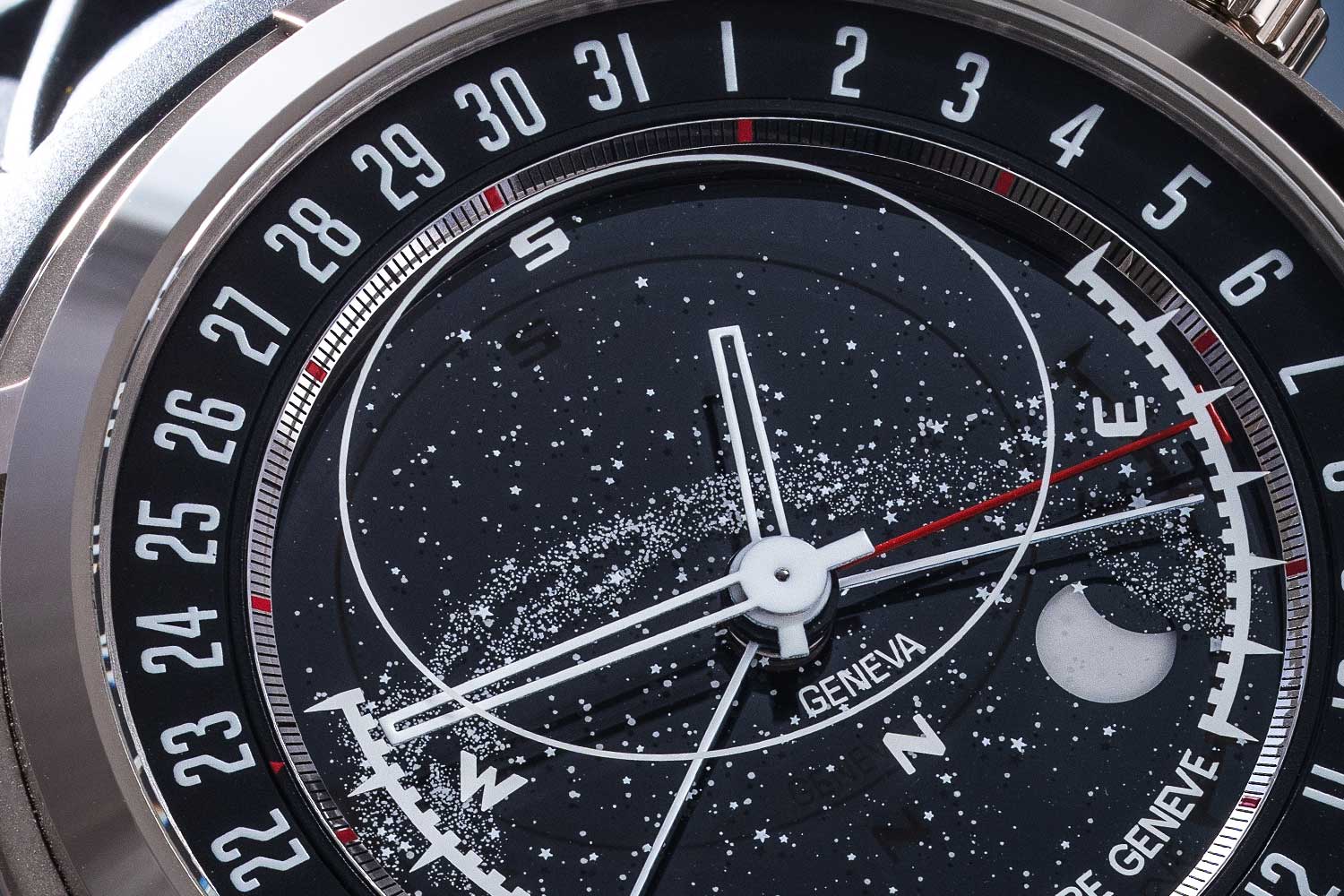
Patek Philippe Celestial Sunrise and Sunset Ref. 6105G (©Revolution)
The times of sunrise and sunset are determined primarily by latitude, which governs both the length of the day and its variation over the course of the year. As one moves away from the equator, the tilt of the Earth’s axis produces increasingly pronounced seasonal differences, expanding the range between the earliest and latest sunrise and sunset. The cams that drive the indications must hence be profiled for a specific latitude, with that variation encoded into its geometry. The closer the location is to the poles, the more pronounced the shape of the cam. Longitude and local time conventions introduce a secondary offset, but the fundamental shape of the curve is fixed by latitude. A sunrise and sunset complication is thus inherently local and must be calibrated by the manufacture for a specific location.
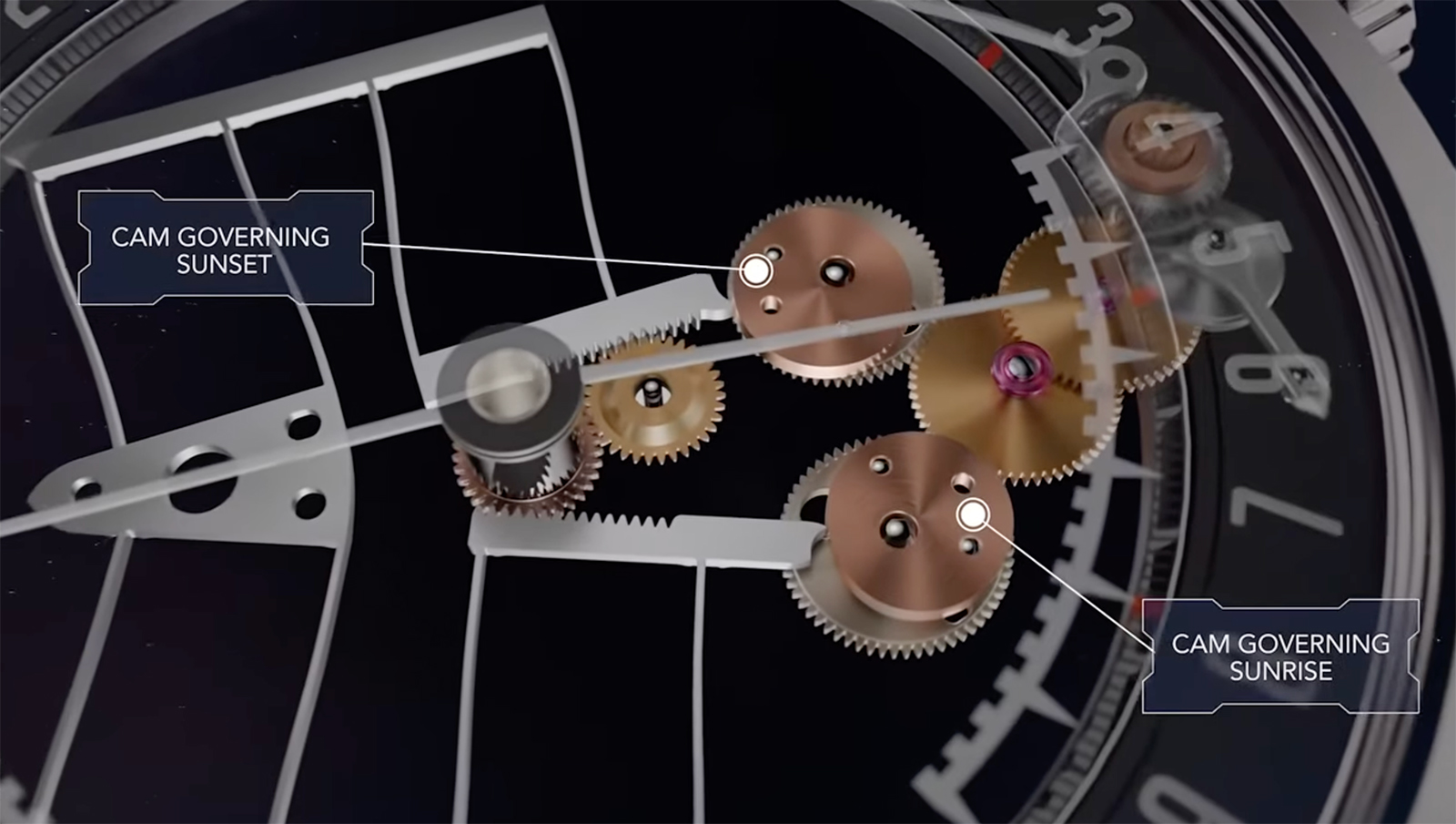
While the cams used adhere to convention, their feelers are unusual. In fact, the entire assembly of feelers, flexures and supporting structure is made as a single monolithic component, essentially a compliant mechanism, in which guidance and restoring force are built into the structure itself.
In a conventional sunrise and sunset mechanism, a feeler mounted on a rack bears against the cam and is returned by a spring. As the cam turns, the rack is displaced, but because the rack pivots about an axis, its motion follows an arc rather than a straight line. This introduces a geometric error between the cam radius and the angular position of the hand. To compensate, the cam profile itself has to be deliberately distorted, and that distortion depends on the amplitude of the variation. The more pronounced the seasonal variation particularly at higher latitudes the more complex the correction becomes.
Patek’s solution removes this entire layer of complication by ensuring that the feeler does not pivot at all. Each cam is still driven by a wheel that completes one rotation per year, so the underlying astronomical encoding remains the same. But instead of a rack mounted on a pivot, the cams are read by longitudinal feelers whose motion is constrained to a straight line. This is achieved by a system of flexible strips arranged in parallel, forming a double flexure that both presses the feelers against the cams and guides their motion.
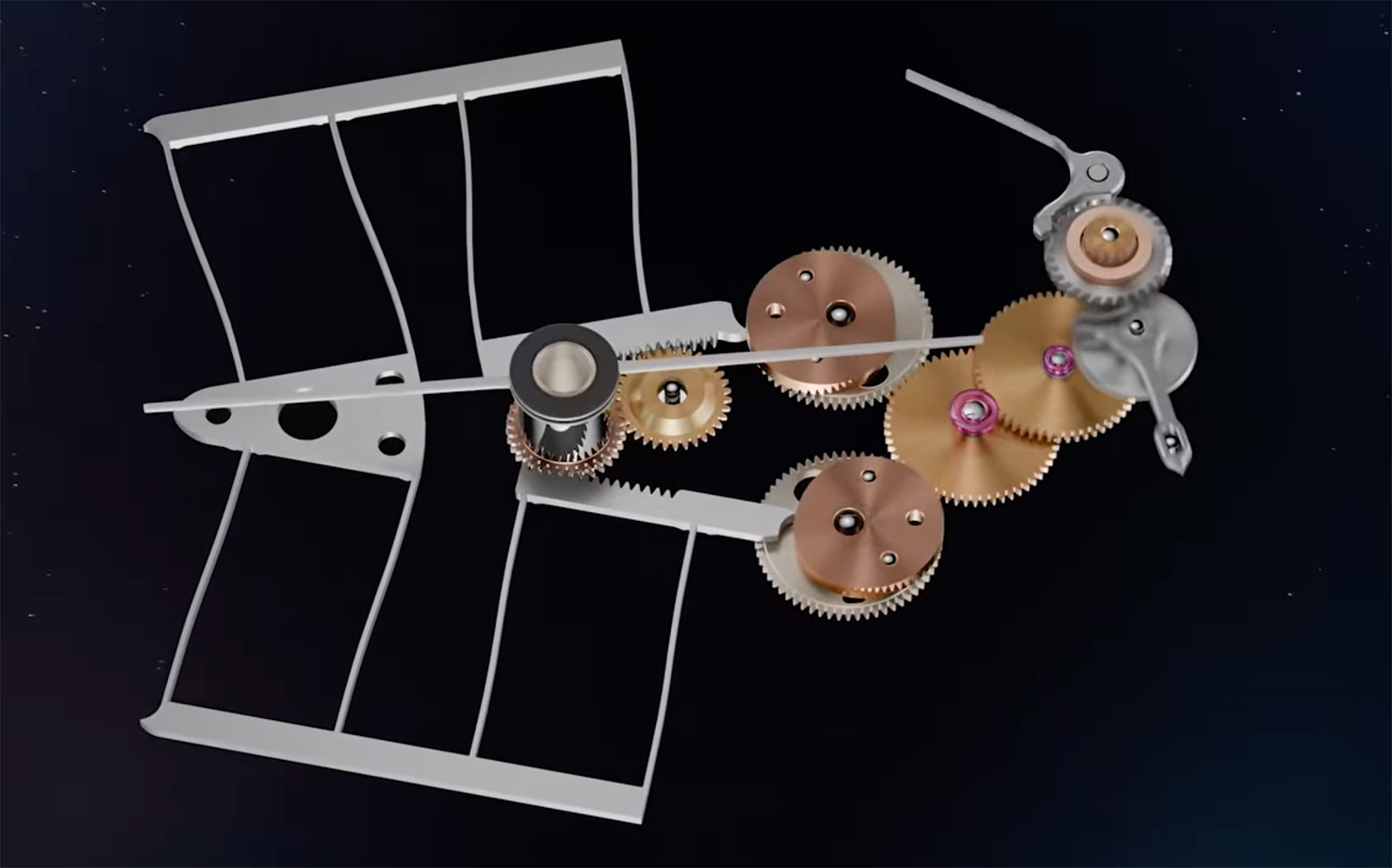
The traditional construction of racks and feelers mounted on pivots is replaced by a compliant mechanism in which guidance and restoring force are built into the structure itself.
As the cam rotates, the feeler is displaced along its length in direct proportion to the radius of the cam, with the flexures that bend elastically to accommodate that motion. There are no pivots, no separate return springs and no sliding guides; the same elements provide both guidance and restoring force. This reduces friction, play and assembly complexity.
The Heavens in Motion
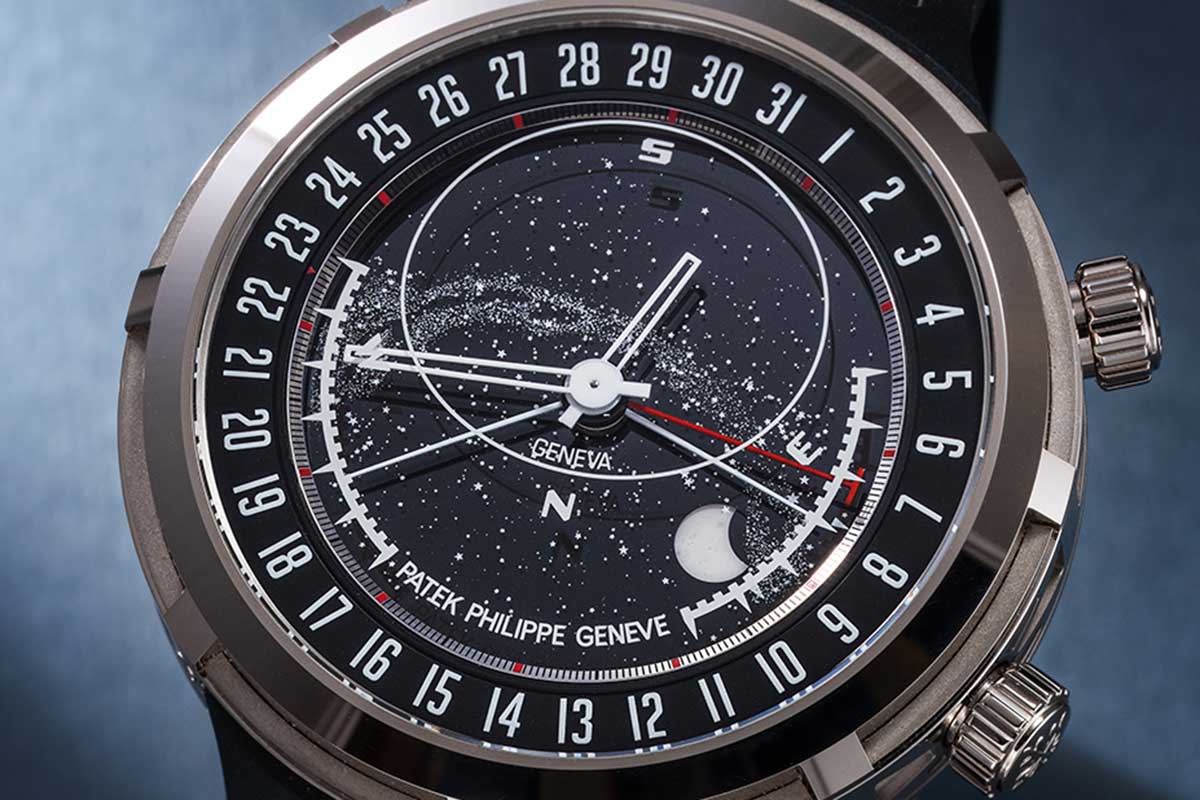
The rest of the dial remains that of the classic Celestial combining a depiction of the phases and apparent motion of the moon across the sky with a rotating star chart, or more precisely, a planisphere. The dial comprises of three superimposed discs, each just 0.2mm thick.
The uppermost is in sapphire and bears the star chart with the all the major constellations and a representation of the Milky Way. The stars are printed on the upper surface, while the Milky Way is printed on the underside, creating a subtle sense of depth. This celestial disc is mounted above the rest of the mechanism and supported at its periphery, rotating concentrically about the centre of the movement. It is driven via a friction-coupled wheel from the going train and completes one rotation per sidereal day, or approximately 23 hours, 56 minutes and 4.1 seconds.
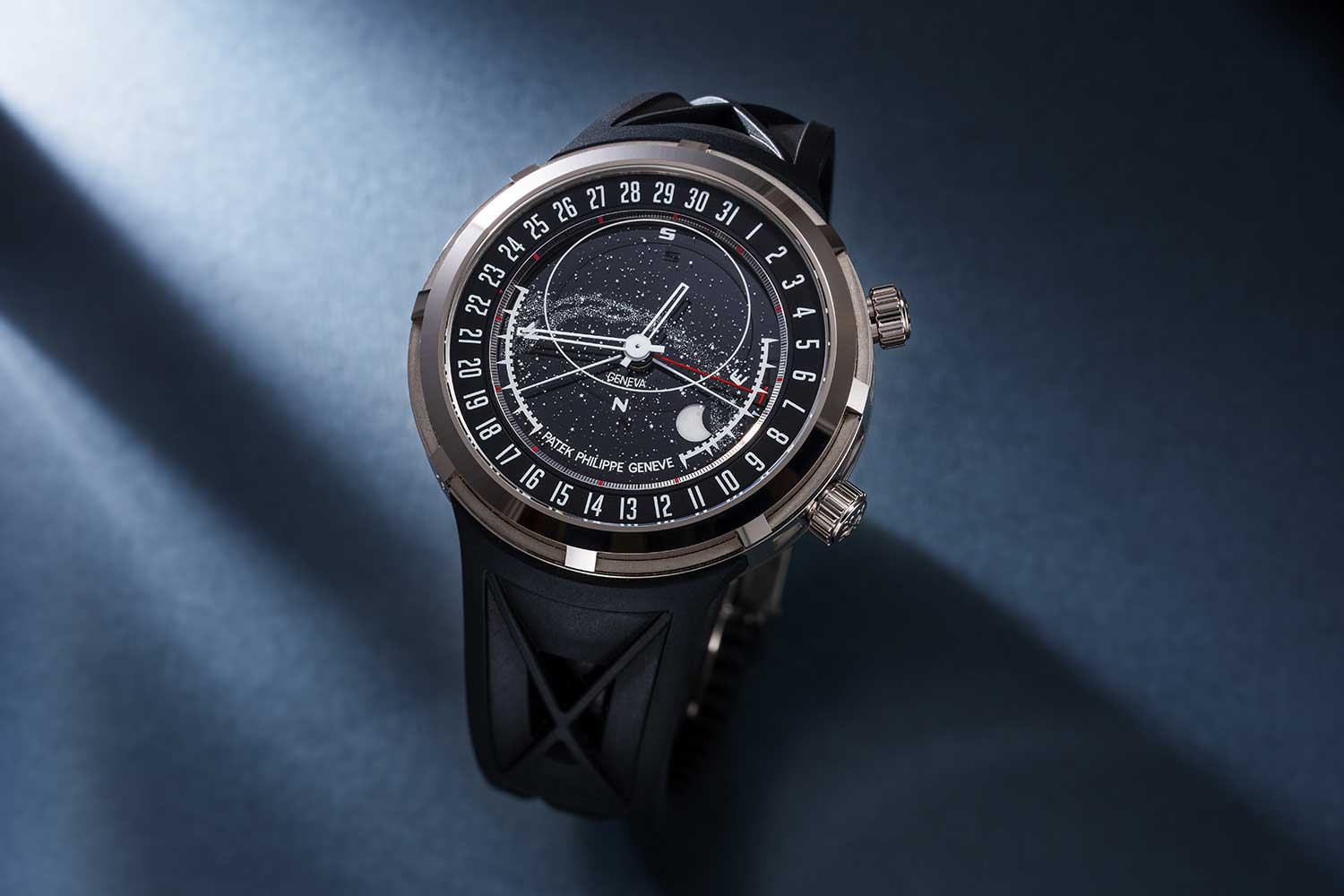
Patek Philippe Celestial Sunrise and Sunset Ref. 6105G (©Revolution)
A solar day, as used in civil time, measures the interval between successive returns of the Sun to the same position in the sky. Because of the Earth’s elliptical orbit and axial tilt, this interval is not perfectly constant, but it is averaged to 24 hours and displayed by the conventional hour and minute hands. Sidereal time, by contrast, is referenced to the fixed stars. As the Earth advances along its orbit, it must rotate slightly more than one full turn for the Sun to return to the same position, whereas the distant stars, effectively fixed, require only a single rotation. The result is the slightly shorter sidereal day that governs the motion of the celestial disc.
Beneath it sits a black PVD-treated disc made of mineral crystal, carrying a cut-out representing the Moon. This lunar disc is mounted on the same central axis and driven independently, again via a friction-coupled transmission, at a rate of every 24 hours, 50 minutes and 28.328 seconds per rotation. This slightly slower rotation reflects the Moon’s eastward motion in its orbit, so that its apparent position against the celestial vault shifts progressively from day to day.
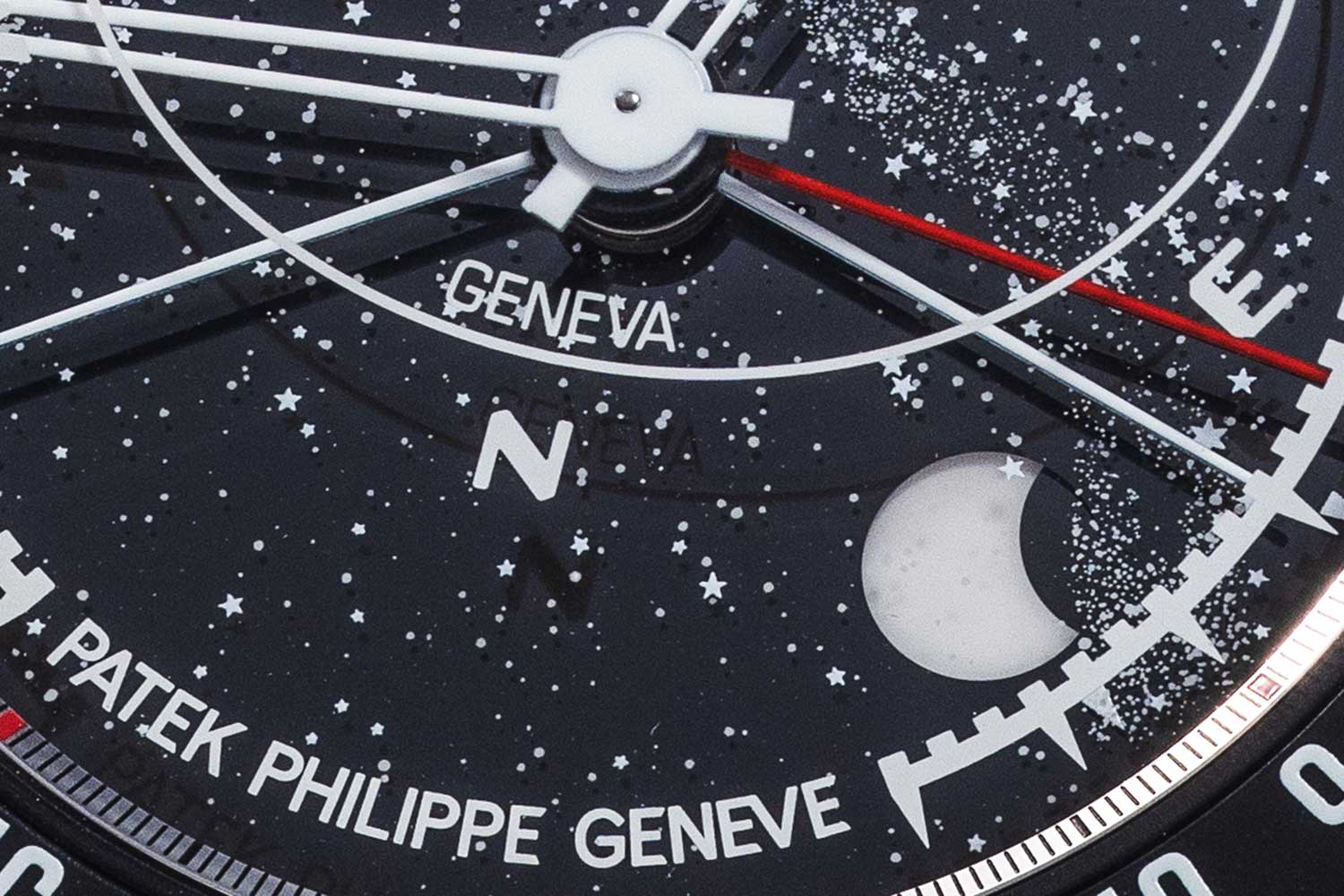
A black PVD-treated disc made of mineral crystal, carrying a cut-out representing the Moon (©Revolution)
The third disc below, also in mineral crystal, displays the lunar phases across the full cycle. Unlike the two upper discs, its motion is not a simple rotation derived directly from the train, but is generated by a compact planetary gear mounted beneath the lunar disc. As the latter turns, the planetary train drives a phase wheel whose rotation reproduces the synodic cycle, yielding a period of approximately 29 days, 12 hours, 44 minutes and 2.82 seconds between identical lunar phases.
Together, these three kinematic layers – the sidereal rotation of the sky, the slightly slower progression of the Moon across it, and the independently generated evolution of its phase – produce a mechanically coherent representation in which the Moon not only changes in appearance but also drifts correctly relative to the fixed stars.
An ellipse printed on the sapphire crystal delineates the portion of the sky visible from Geneva or more precisely, from any location at the same latitude. As the celestial disc rotates beneath it at sidereal rate, the stars carried on the disc pass into and out of this bounded field, reproducing their rising and setting relative to the observer’s horizon.
Adjustment of the astronomical indications is carried out via the crown at 2 o’clock adorned with a sky motif, which incorporates a bayonet system. In its resting position, the crown is disengaged and turns freely without acting on the mechanism. To activate it, the crown must be pressed firmly toward the case and rotated counterclockwise. In its first setting position, it acts on the annual index on the periphery of the dial, which enables adjustment to the day of the year from which sunrise and sunset indications are derived. Pulled further, it allows independent correction of the Moon and the sky chart – clockwise rotation drives the lunar disc and phase display, while counterclockwise rotation adjusts the celestial disc.

Adjustment of the astronomical indications is carried out via the crown at 2 o’clock
The astronomical module is paired with Patek’s ultra-thin stalwart, the micro-rotor Calibre 240. Despite the added complexity, most notably the double-feeler compliant system that measures just 0.48 mm in height, the watch comes in at a restrained 12.29 mm. Compared to the Celestial, the movement incorporates an additional 121 components, yet the overall thickness increased by only 1.12 mm. The base movement itself, at 27.5 mm in diameter, sits well within the 38mm span of the astronomical module it supports, making the decision to retain a closed caseback a sensible one.
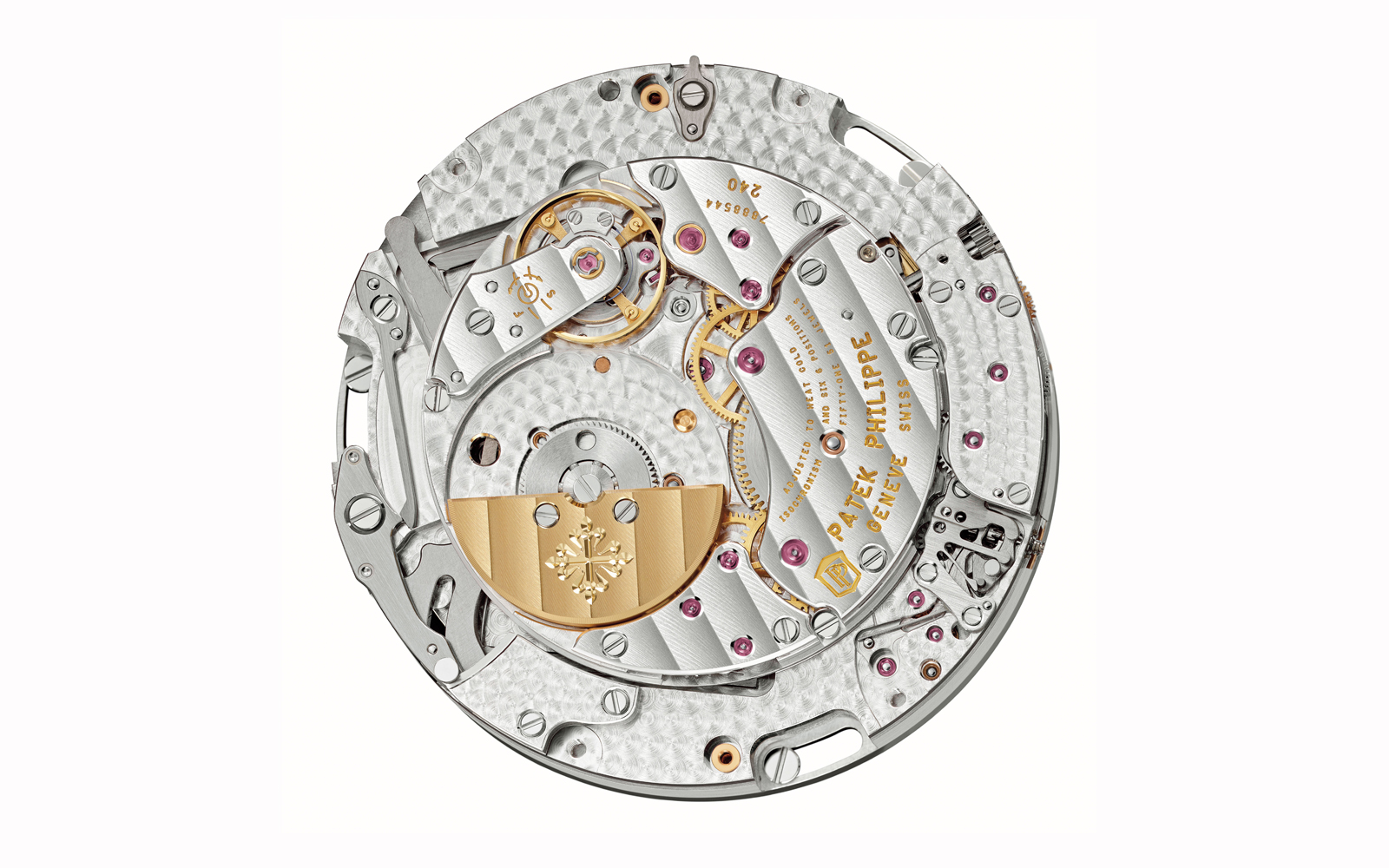
Caliber 240 C LU CL LCSO
The case, though unconventional, is rather attractive. It was conceived to echo the astronomical theme of the watch, with a streamlined, lugless form that lends it a distinctly forward-looking character. The caseband is articulated with an X-shaped motif in relief, recalling the cross-braced tubular frameworks of space modules. This pattern continues onto the solid caseback, where it converges around a Calatrava Cross.

Patek Philippe Celestial Sunrise and Sunset Ref. 6105G (©Revolution)
It is one of the most unusual, distinctive and beautiful watches in Patek’s catalogue. It takes an already exotic complication and approaches it from a more oblique angle. Ultimately, watches like this serve as a reminder that timekeeping did not begin with the abstraction of hours and minutes, but with an attempt to describe the world as it actually behaves. The rising and setting of the sun, the passage of the moon, the slow drift of the stars were the original references, observed long before time zones and seasonal adjustments imposed their own conventions. The dial itself reflects an older effort to understand these deeper, more fundamental cycles, now brought within the grasp of human comprehension and convention yet without ever being reduced to it.
Tech Specs: Patek Philippe Ref. 6105G Celestial
Movement Self-winding Caliber 240 C LU CL LCSO; 38–48h power reserve; 3 Hz (21,600 vph); 22K gold mini-rotor, unidirectional winding; Gyromax balance; Patek Philippe Seal
Functions Hours and minutes (mean solar time); sunrise and sunset; sky chart; angular motion of the moon; moon phases; date
Case 47mm diameter × 12.19mm height; 18K white gold; two crowns (screw down at 4 o’clock, disconnectable at 2 o’clock); water-resistant to 30m
Dial Sapphire and mineral crystal discs with metallization; sky chart calibrated for Geneva latitude with elliptical horizon, cardinal points and “GENEVA”; peripheral date scale; sunrise and sunset scale
Strap Black polymer strap with X-pattern; 18K white gold triple-blade double-security folding clasp
Price: CHF 350,000
Patek Philippe

You may also like
News
Last Week in Watches: Patek Philippe Takes Milan, G-Shock Turns to Blue Sapphire
Oct 5, 2026
News
Last Week in Watches: Patek Philippe Takes Milan, G-Shock Turns to Blue Sapphire
Oct 5, 2026
News
Patek Philippe’s Rare Handcrafts Take an Italian Grand Tour
Oct 1, 2026
News
Patek Philippe’s Rare Handcrafts Take an Italian Grand Tour
Oct 1, 2026

Editorial
Patek Philippe Debuts 6 New Gondolo Ladies First Watches in Milan
Oct 1, 2026
Editorial
Patek Philippe Debuts 6 New Gondolo Ladies First Watches in Milan
Oct 1, 2026