A Closer Look: H. Moser & Cie. Streamliner Perpetual Moon Concept Meteorite
Editorial
A Closer Look: H. Moser & Cie. Streamliner Perpetual Moon Concept Meteorite

There are few companies whose work has shown a genuinely unique point of view, both in how complications are conceived and in how watches are designed. It is fair to say that before the debut of the Moser Perpetual 1 in 2005, it was far from clear what minimalism could look like or mean in the context of watch design and watchmaking. At a time when much of the industry still equated value with visual density — layered dials, and overt displays of indications and complications — Moser proposed something radically reductive, and in so doing, something mechanically radical. The Perpetual 1 was a perpetual calendar without calendar subdials or a moonphase, reduced instead to a large date at 3 o’clock and a discreet central month hand, with no pusher correctors; instead the date can be adjusted both forwards and backwards with the same crown used to set the time, and there was no dead zone; the date could be adjusted at any time without risk of damaging the mechanism. Since then, Moser has continued to push that design language further, progressively stripping away its own logo, applied indexes or any form of visual ornament particularly with the Concept line.
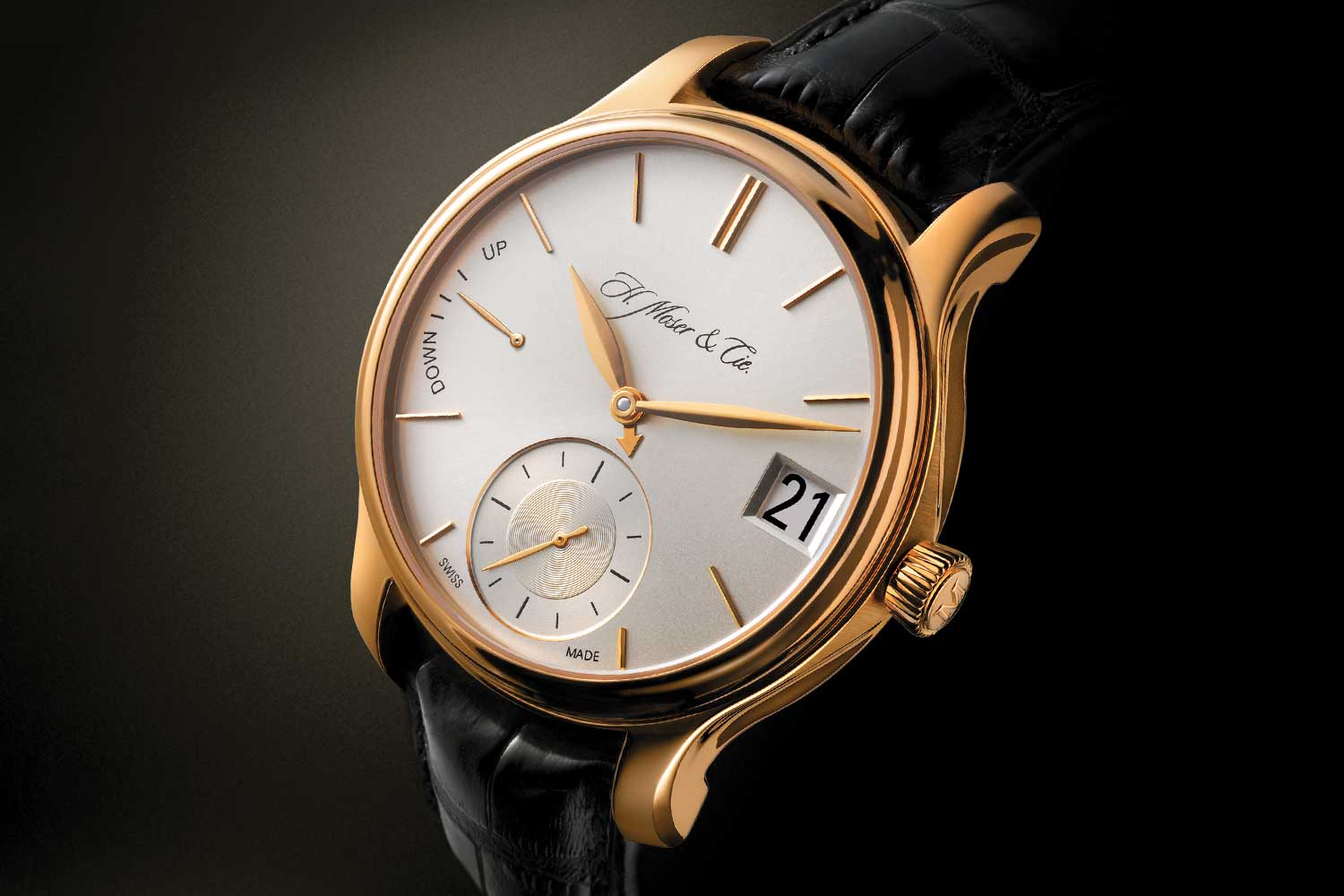
2005: Moser Perpetual 1
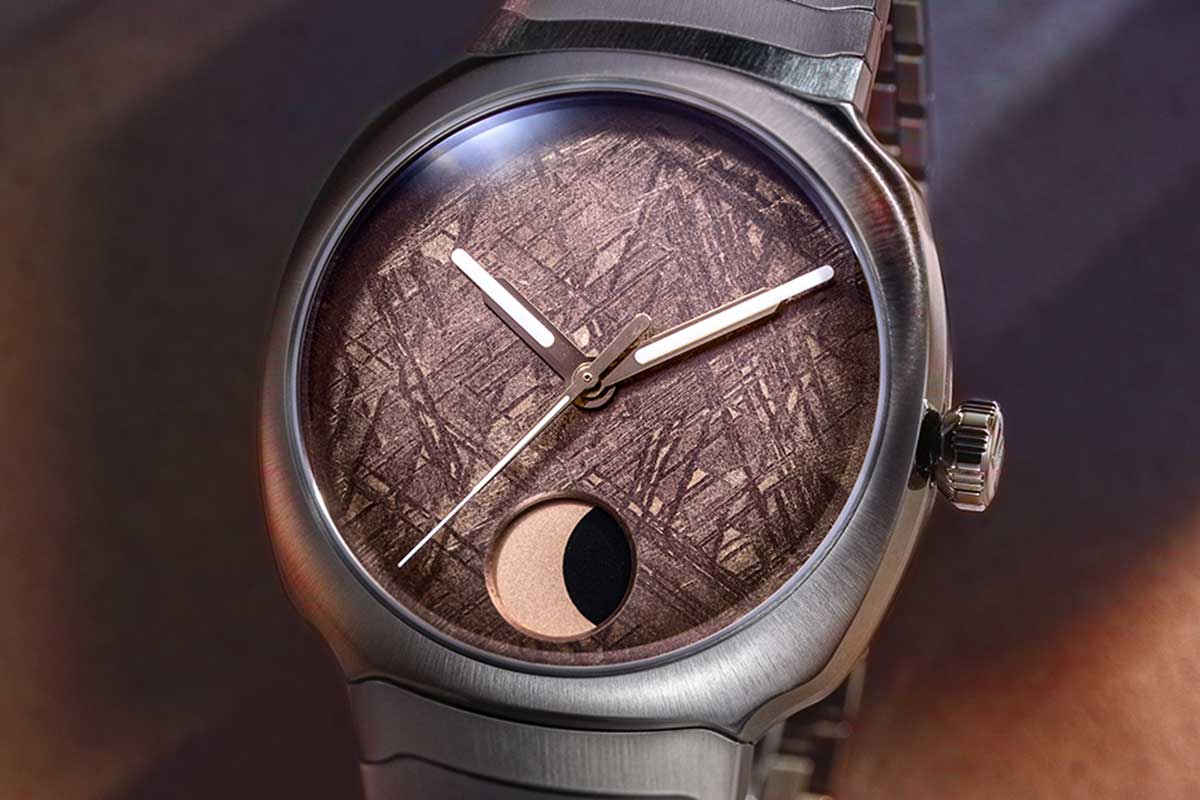
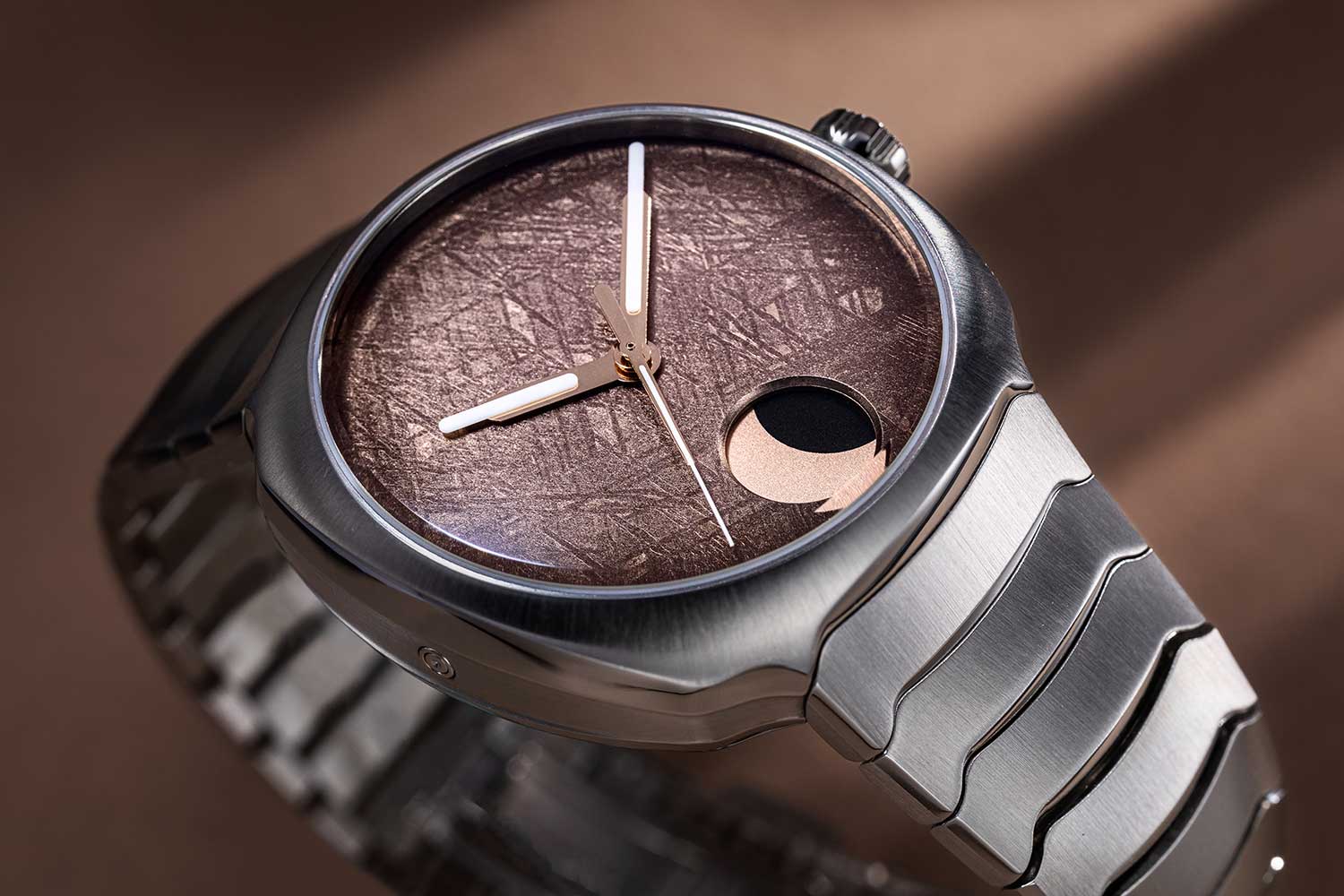
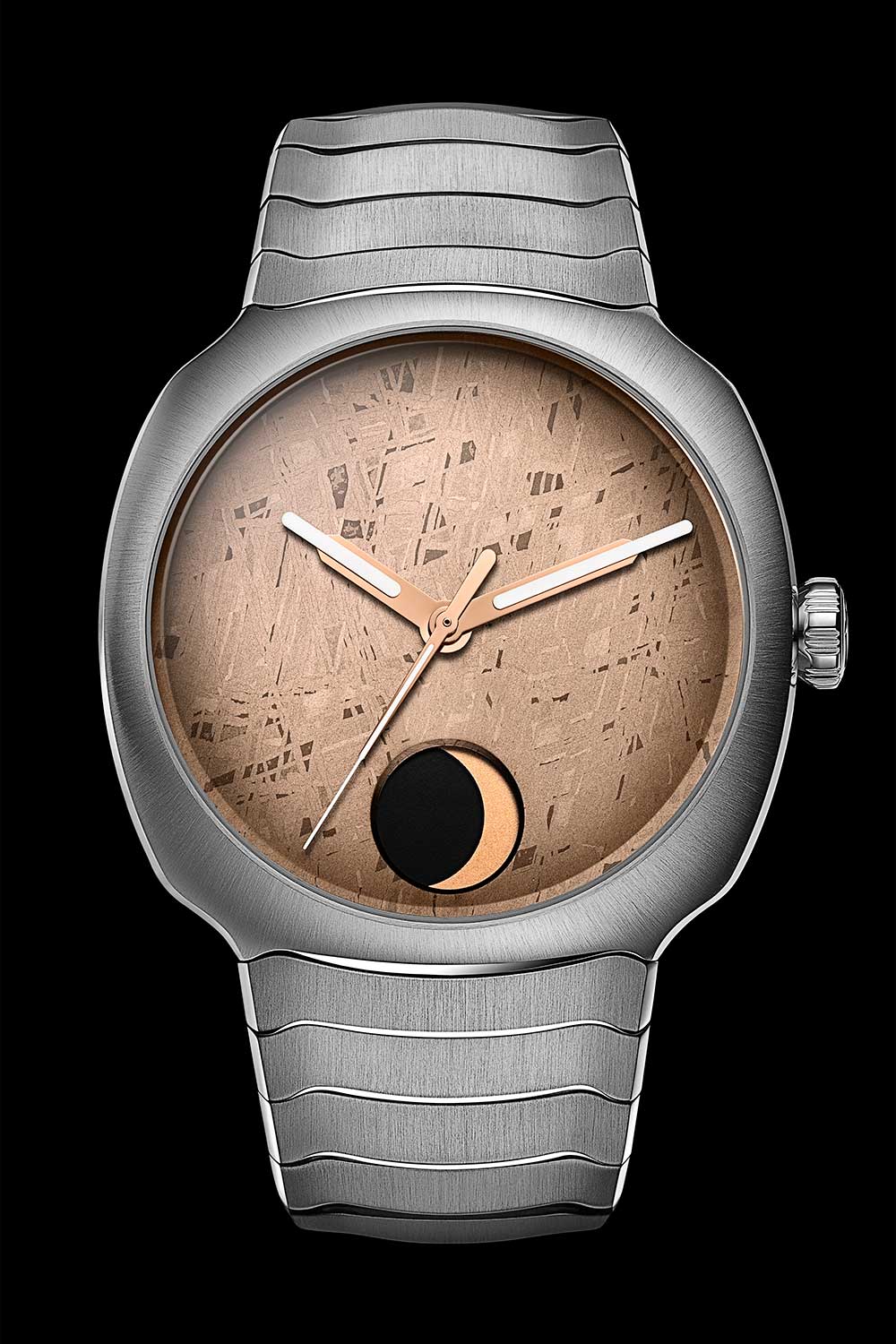
Most recently, it unveiled the Streamliner Perpetual Moon Concept Meteorite. Given the unusually fresh combination of the Streamliner’s fluid case and the unusual golden tone meteorite dial, it would be easy to mistake Moser’s Perpetual Moon for a recent innovation. But in fact, the complication dates back more than a decade, having first appeared just five years after the launch of the Perpetual 1. “Perpetual” in this case does not refer to a perpetual calendar but to the high-accuracy moonphase, which deviates by just one day in 1,027.3 years. Like Moser’s perpetual calendar, the moonphase complication itself is minimalist and was originally conceived with the help of independent watchmaker Andreas Strehler.
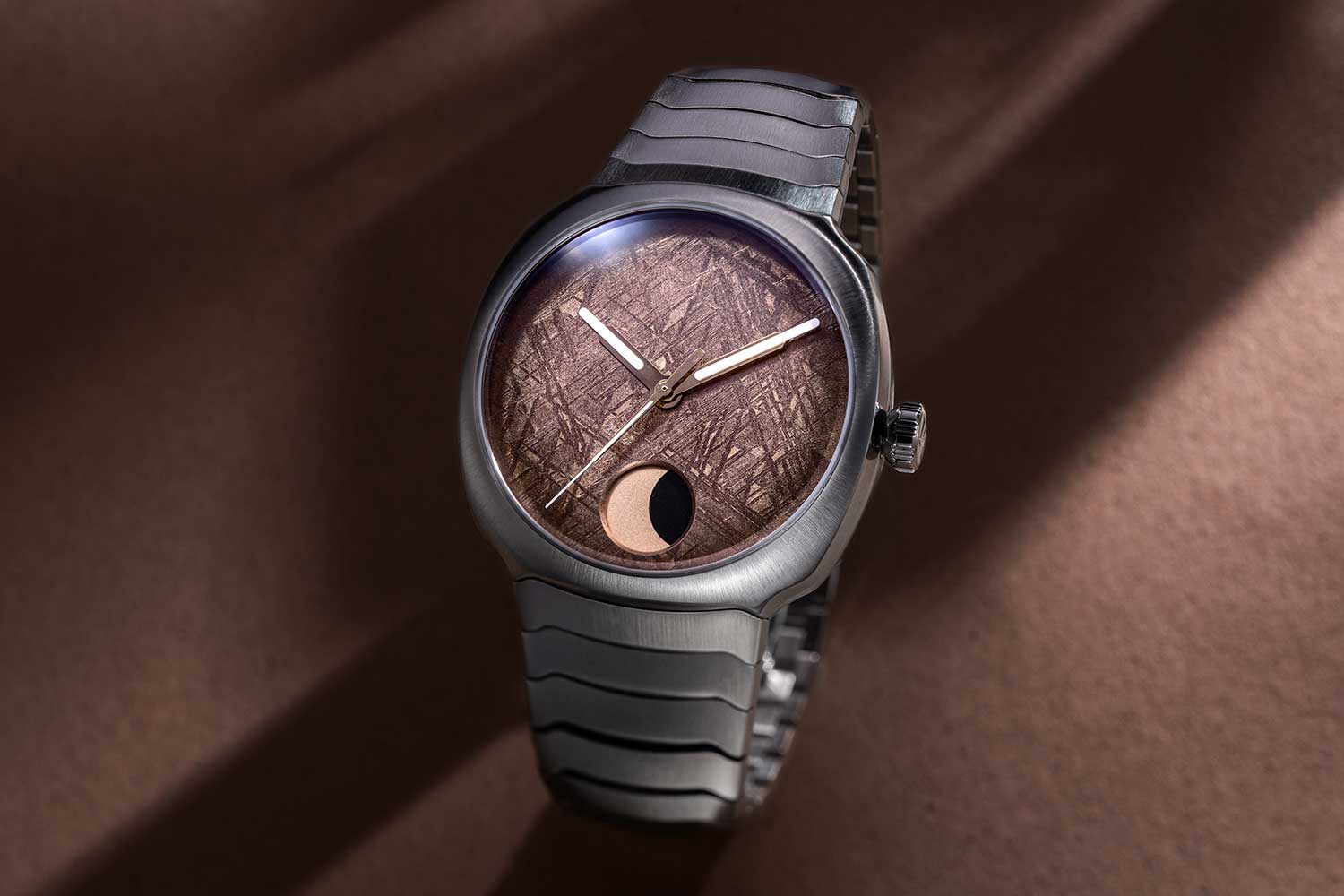
H. Moser & Cie. Streamliner Perpetual Moon Concept Meteorite (©Revolution)
Combining an integrated sports watch design with a moonphase complication is a difficult thing to do convincingly, as the two emerge from fundamentally different watchmaking traditions and priorities. A moonphase belongs to the classical language of dress watches, where it serves a poetic and astronomical role rather than a practical one, while sports watches are shaped by demands of daily wear and practical use. The reason it works remarkably well here is because the moonphase is executed as a graphic element rather than a romantic one. Just as importantly, the meteorite dial is rendered in an unusually warm, muted tone that softens the sports-oriented character of the watch.
The High-Accuracy Moonphase
The moonphase display used by H. Moser & Cie. for its Perpetual Moon is fundamentally different from a conventional moonphase mechanism, both in how the lunar cycle is represented and in how it is driven mechanically.
The moon itself is fixed. The waxing and waning of the moon is produced by occlusion where a rotating mask progressively covers and uncovers the fixed moon. The moving element is a mask disk carried by an internal toothed ring. Printed on the rotating mask disk are four identical opaque circular shadows, spaced at 90-degree intervals, spanning the full diameter of the dial. As two of these shadows successively pass across the fixed moon, they generate a complete lunar cycle, from new moon through full moon and back again.
Most moonphases are driven in a very literal way — by the calendar that advances the display only once every 24 hours. The most basic system uses a moonphase wheel with 59 teeth, chosen because two lunar cycles amount to about 59 days, which is pushed forward by one tooth per day. Each half of the wheel carries a stylized moon, so one complete lunar cycle is represented by 29.5 steps. This produces a drift by a full day every two and a half years. A 135-tooth wheel, which has become the industry standard, builds on this basic principle. Instead of 59 teeth, the moon disk has 135 teeth, again carrying two moons. The disk is still advanced by a finger mounted on the 24-hour wheel, and it is still moved exactly one tooth per day. The higher tooth count allows the lunar cycle to be approximated more closely; one lunation is represented by 67.5 steps rather than 29.5 but the underlying logic remains unchanged. The mechanism is still quantized into whole days, and the moonphase still advances in discrete daily jumps. The unavoidable fractional remainder between the real synodic month (29.53059 days) and the integer-day approximation is simply made smaller. As a result, the error accumulates more slowly, reaching one full day after roughly 122 years.
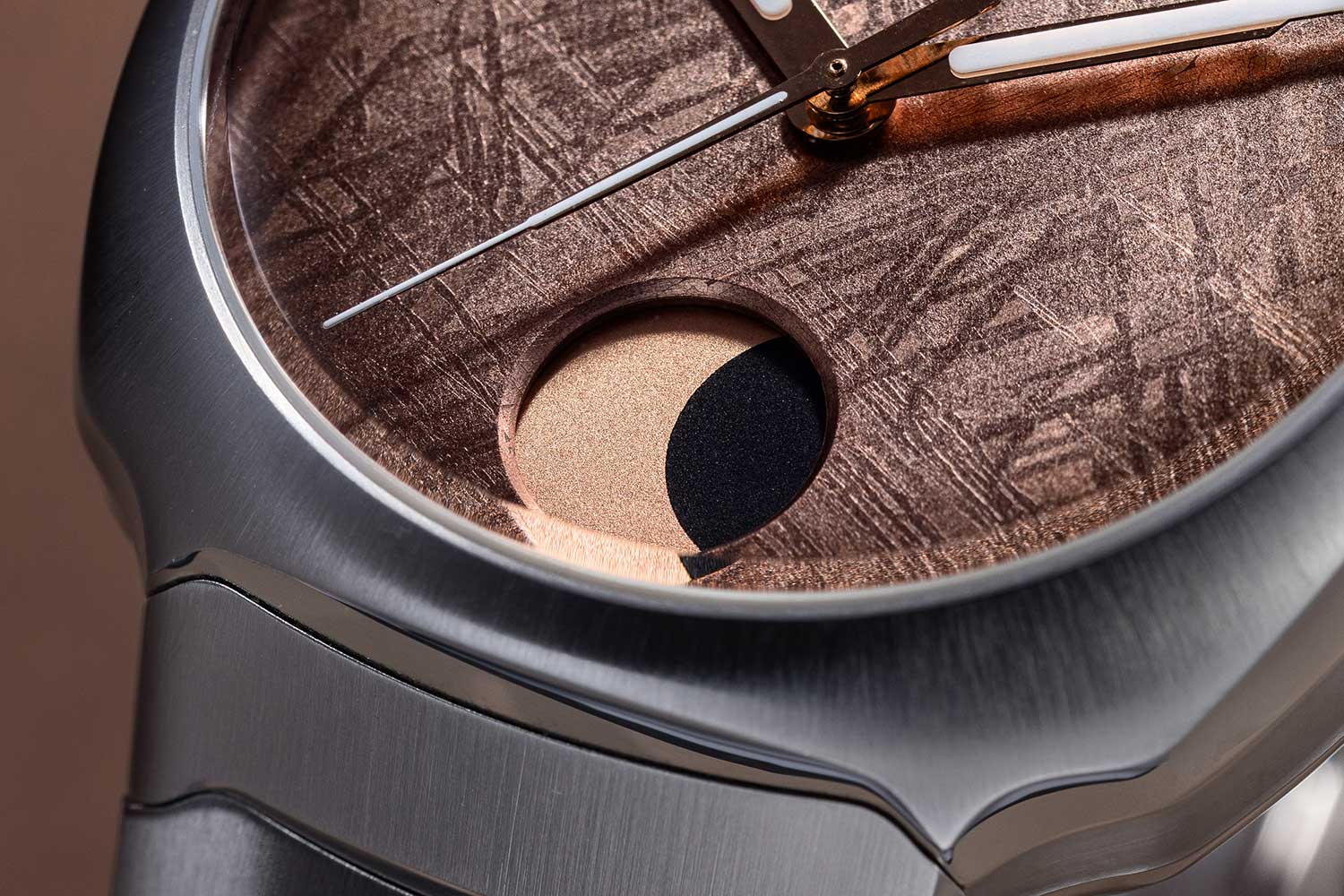
The moonphase at 6 o’clock (©Revolution)
By contrast, there is no daily switching event in the Perpetual Moon. The lunar display is never stationary. The mechanism receives a continuous rotational input derived from the 24-hour cycle and converts it into a precisely controlled angular velocity that corresponds to the mean synodic month. Because the drive is continuous, the system never has to round the lunar cycle to an integer number of days. So while a standard moonphase display is derived from a calendar-driven daily step, the Moser Perpetual Moon is derived by pure ratio. Because the moonphase is expressed as a function of elapsed time rather than calendar days, it can be set with the same temporal precision as the hands themselves — down to a minute, rather than whole-day steps.
That said, even a continuously driven moon phase can’t be mathematically perfect. The length of the synodic month, 29.53059 days, cannot be expressed exactly by any finite gear ratio. In the Perpetual Moon, the ratio is realized through carefully chosen prime tooth counts to avoid any periodic alignment within the train and to push the remaining approximation error so far into the future that it becomes irrelevant on any human timescale.
Conceptually, the Perpetual Moon belongs to the same family of ratio-driven lunar displays as Andreas Strehler’s own moonphase, which is accurate to one day’s error in 2.045 million years. Where Strehler pushes it to its absolute limit, Moser distils it into a form compatible with serial production, and moreover, compatible with its minimalist design language.
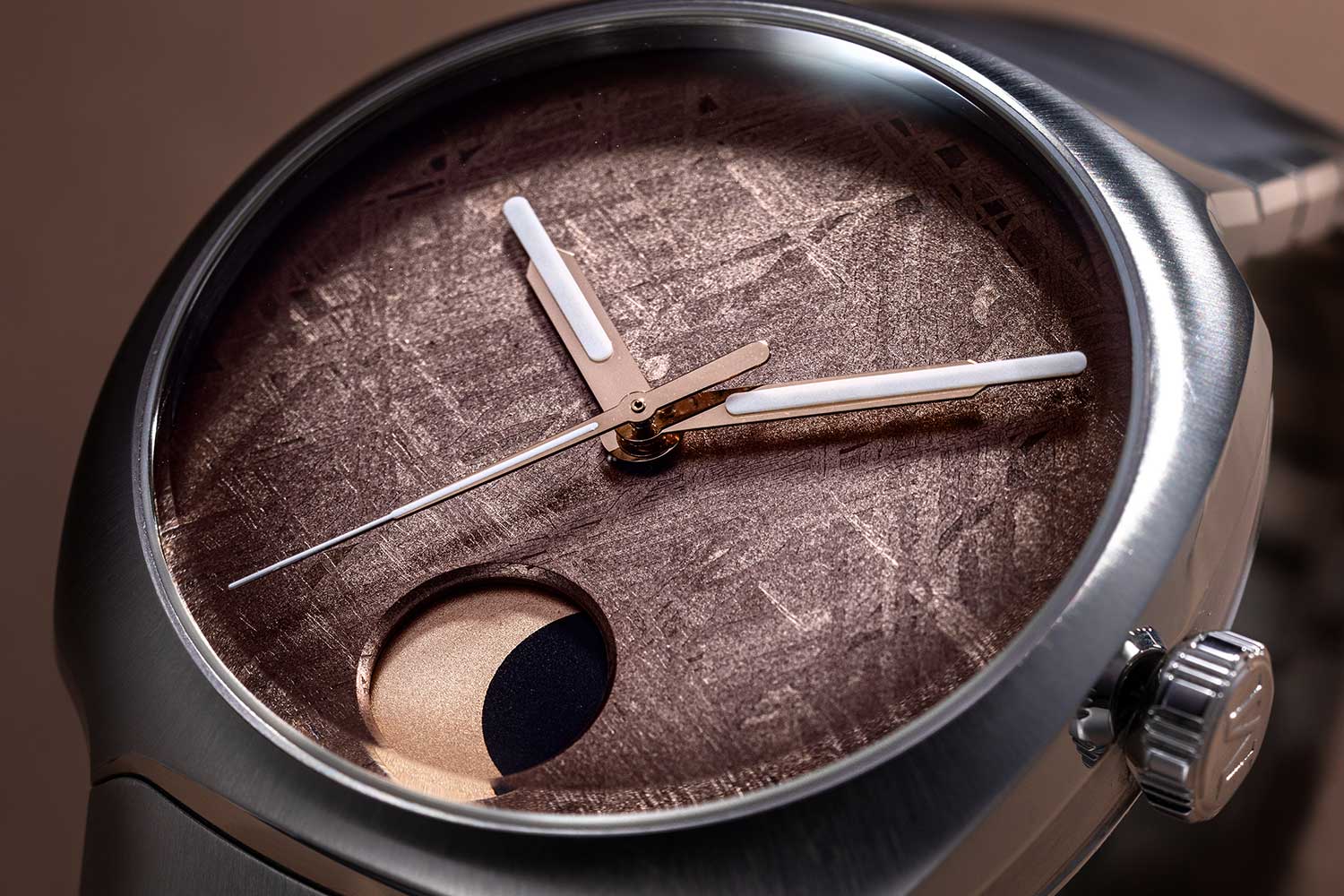
H. Moser & Cie. Streamliner Perpetual Moon Concept Meteorite (©Revolution)
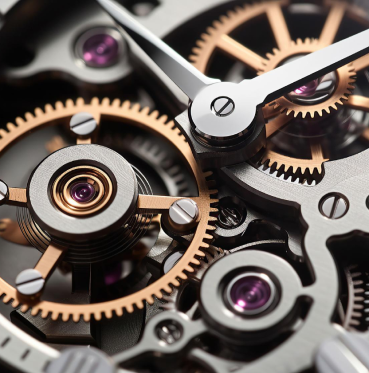
The movement is the semi-skeletonized automatic Moser Caliber HMC 270. It operates at a frequency of 3Hz and features a free-sprung balance, paired with a flat Straumann hairspring manufactured by Precision Engineering. The movement delivers a 72-hour power reserve from a single barrel and is wound by a bi-directional central rotor. The caliber has been tastefully skeletonized, leaving much of the automatic winding train, going train and escapement in view. A full balance bridge provides additional stability, which is a welcomed choice given the Streamliner’s positioning as a sports watch. It is also equipped with a hacking seconds for precise time setting.
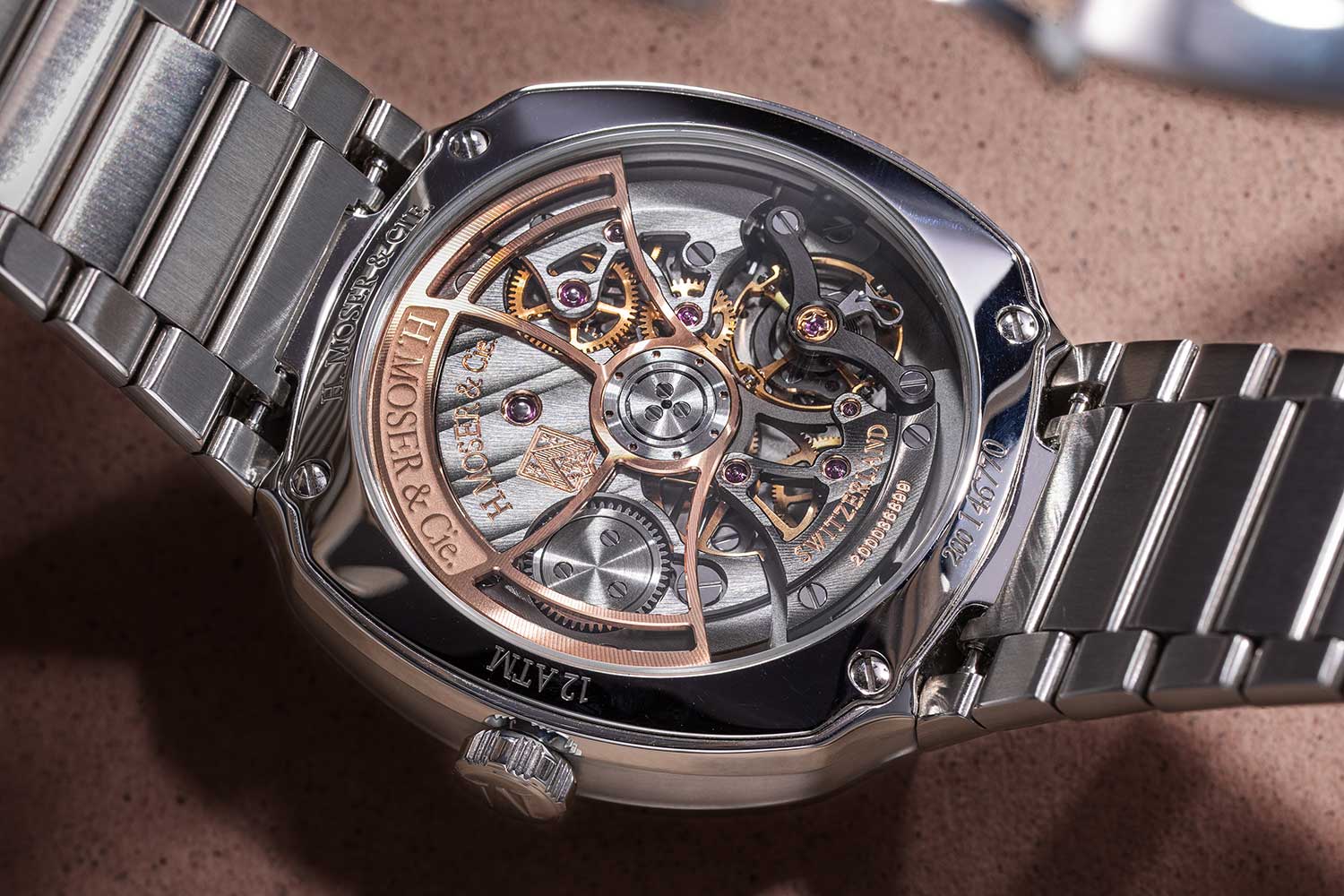
The Moser Caliber HMC 270 (©Revolution)
The Meteorite Dial
The dial of the Perpetual Moon Concept Meteorite is fashioned from iron-nickel meteorite, a material whose visual character is inseparable from its origin beyond Earth. It was formed more than 4.5 billion years ago, in the earliest epoch of the Solar System, when small bodies accumulated enough mass to melt internally and separate by density. Iron and nickel migrated inward, pooling at their centers to form metallic cores. When some of these bodies were later shattered by colossal impacts, fragments of those cores were cast loose, beginning journeys that would last hundreds of millions of years before ending, improbably, on Earth. The material used here is the Gibeon meteorite, one of the most abundant iron meteorites ever found, with tens of tons recovered across a wide strewn field in Namibia. Its frequent use in watchmaking owes much to this availability, as well as to its regular, predictable crystal structure and relative resistance to corrosion when cut and worked.
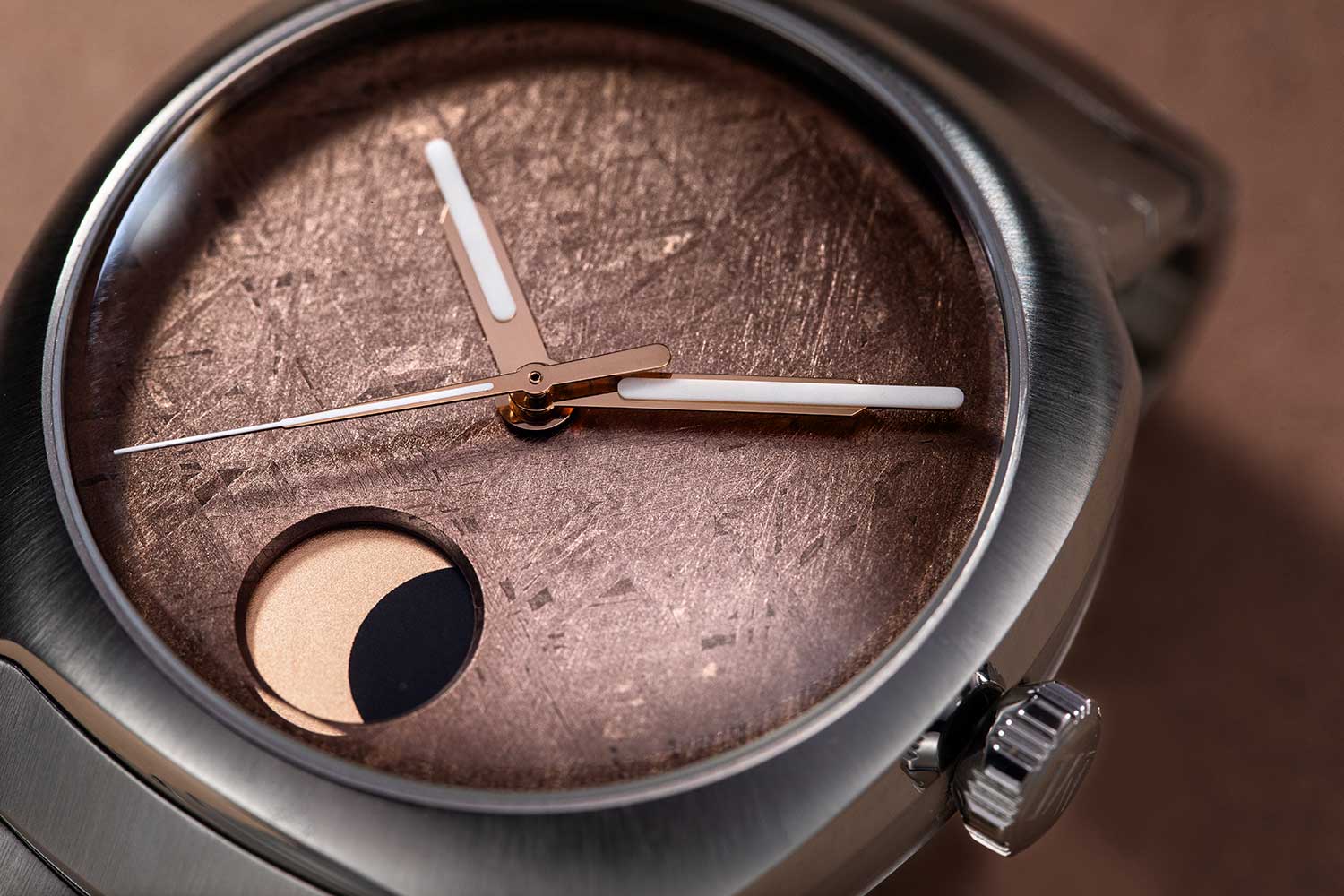
The golden meteorite with fumé effect dial (©Revolution)
The visual character of meteorite is a direct consequence of its history. Encased within the cores of their parent bodies, these iron-nickel alloys cooled at an exceptionally slow rate, allowing crystals to grow to a scale impossible to reproduce artificially. When a slice of meteorite is cut and etched with acid, this internal structure is revealed as the Widmanstätten pattern — elongated, interlocking crystals of kamacite and taenite, first observed in 1808 by Alois von Beckh Widmanstätten.
In this instance, the meteorite has been further enhanced through surface treatment, combining a warm golden tone with a fumé gradient. Paired with the moonphase, the effect is both visually and emotionally absorbing. It brings together two expressions of deep time within a single surface: matter whose history is entirely indifferent to human time and a lunar display that operates on a scale extending well beyond 10 human lifetimes. It is this sense of perspective — calm, distancing and oddly grounding — that gives the watch emotional weight.
The Streamliner Case
The Streamliner case measures 40mm in diameter and 11.4mm in height (13.2mm, including the crystal), and is water resistant to 120 meters. The top surface of the case is finished with a radial brushing while the case middle has a satin-brushed recess between polished bevels, giving it a layered appearance even though it is a single piece. This subtle interplay of textures continues seamlessly into the bracelet, whose vertically brushed links are polished in their inner edges. The bracelet closes with a concealed triple-folding clasp, giving the entire assembly a continuous, unbroken appearance.
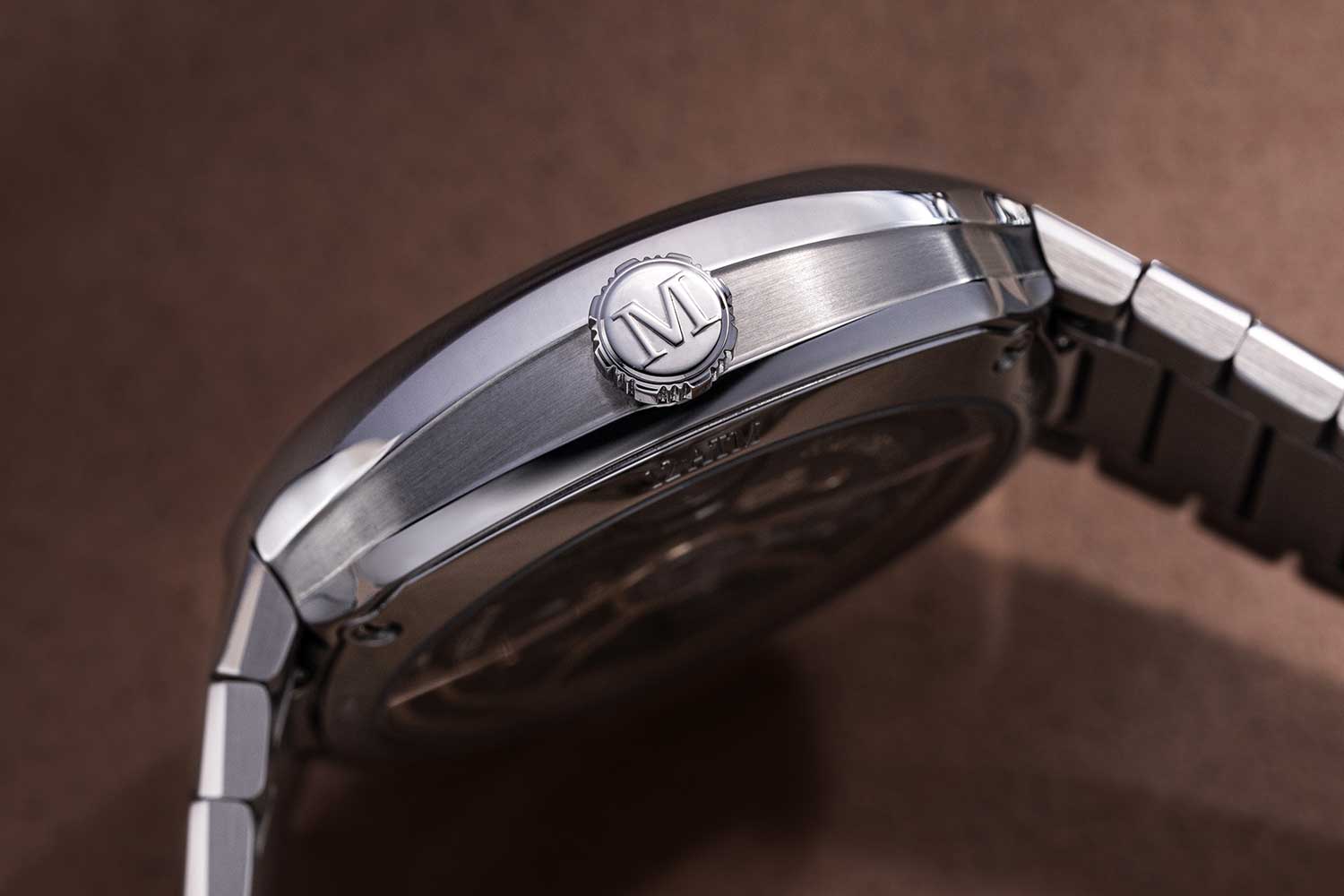
The Streamliner case in 11.4mm in height (13.2mm, including the crystal) (©Revolution)
At a glance, the Streamliner doesn’t signal comfort in the way perhaps a slimmer, octagonal integrated bracelet watch would. The case appears dense, the bezel broad and the integrated bracelet looks almost architectural. But despite those visual cues, it wears with an ease that is not immediately obvious from photographs. The case is smartly designed with short, barely-there lugs that curve gently, allowing the watch to nestle into the wrist rather than perch on top of it, while the weight is spread across the bracelet rather than concentrated in the head of the watch.
Despite its solid appearance, the bracelet is highly articulated and has a fluid feel, with short links that pivot freely and follow the natural curvature of the wrist. It is surprisingly comfortable even on smaller wrists.
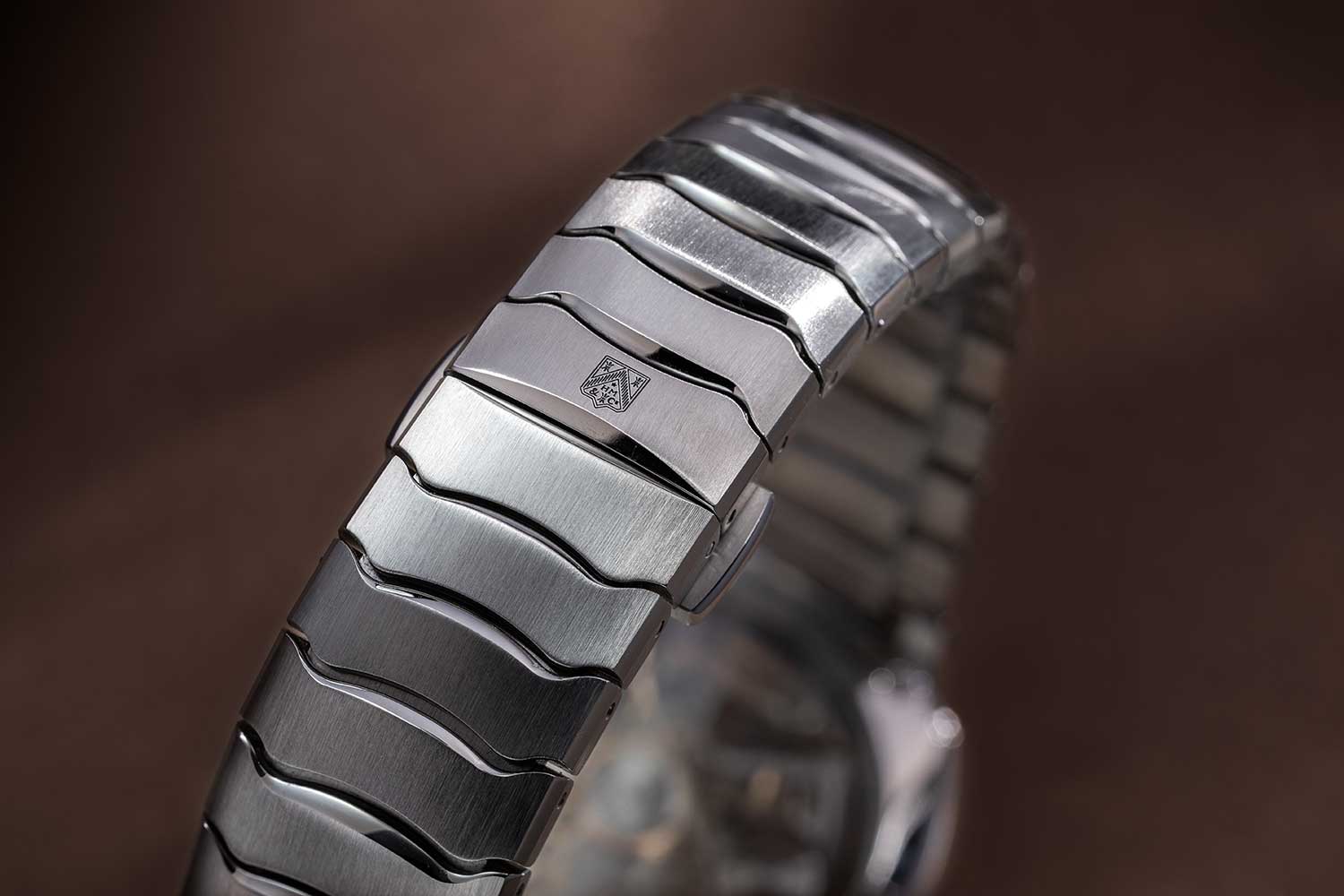
The fluid stainless steel bracelet (©Revolution)
In all, the Streamliner Perpetual Moon Concept Meteorite is a very compelling proposition. It represents a steady convergence of ideas that Moser has been refining for nearly two decades. Within the category of integrated bracelet sports watches, it is both unusually successful and successfully unusual for its dial material and finish, the restrained yet technically ambitious execution of its lunar display, and the unmistakable character of the Streamliner case. While the Moser perpetual calendar remains the brand’s most iconic watch, the Streamliner Perpetual Moon Concept Meteorite brings together multiple facets of Moser’s identity in a single timepiece and is perhaps the clearest expression of how far the brand has come.
The watch is not a limited edition. In Singapore, it is available through Sincere Fine Watches, whose role with Moser has always been as much curatorial as it is retail. The difficulty with watches like this is that much of what makes them interesting is not immediately visible. The design is intentionally quiet, and the mechanics that distinguish them operate largely out of sight. As a result, they tend to reward explanation more than any amount of hands-on time. For such watches, that kind of contextualization and guidance, and someone willing to provide it, matters perhaps as much as access.
H. Moser & Cie. Streamliner Perpetual Moon Concept Meteorite (©Revolution)
Discover H. Moser & Cie. at Sincere Fine Watches, Takashimaya S.C. #02-12A/B/C, and SHH (Sincere Haute Horlogerie), The Shoppes at Marina Bay Sands #B2M-202.
Tech Specs: H. Moser & Cie. Streamliner Perpetual Moon Concept Meteorite
Movement Self-winding Caliber HMC 270; 72-hour power reserve; 3Hz (21,600vph)
Functions Hours, minutes, seconds and moonphase
Case 40mm × 11.4mm (excluding crystal); stainless steel; water resistant to 120m
Dial Golden meteorite with fumé effect
Strap Stainless steel bracelet
Price CHF 35,000, excl. VAT
Availability At H. Moser & Cie. boutiques and select retailers, including Sincere Fine Watches in Singapore
H. Moser & CIE.
You may also like

Editorial
Inside the H. Moser & Cie. Manufacture in Schaffhausen
Feb 6, 2026
Editorial
Inside the H. Moser & Cie. Manufacture in Schaffhausen
Feb 6, 2026
Editorial
The Revolutionary List: 30 Pioneering Watches – the H. Moser & Cie. Perpetual 1
Dec 2, 2025
Editorial
The Revolutionary List: 30 Pioneering Watches – the H. Moser & Cie. Perpetual 1
Dec 2, 2025
Editorial
Independent spirits: Seddiqi’s 75th Anniversary limited editions
Nov 17, 2025
Editorial
Independent spirits: Seddiqi’s 75th Anniversary limited editions
Nov 17, 2025