What we can learn from Morgan Stanley’s Ninth Annual Swiss Watch Report
News
What we can learn from Morgan Stanley’s Ninth Annual Swiss Watch Report

Editor’s Note: The Swatch Group has written an open letter contesting some of the claims, and the overall veracity of this report. You can read about it here.
As watch lovers, we like to talk about watches as art. The bevel you only catch sight of with a loupe. The feel of a crown threading in, like it was made just for your fingertips. All romance, no spreadsheets.
Morgan Stanley’s Ninth Annual Swiss Watcher (released Feb 18, 2026) is the big light getting switched on. It doesn’t care about your favourite chamfer. It cares about who’s taking share, who’s taking profit, and why the industry is starting to look less like “lots of brands” and more like a tight little cartel at the top.
The standout message is awkward but hard to argue with. Switzerland shipped 14.6 million watches in 2025. That’s a multi-decade low. Morgan Stanley even puts the long view in black and white – units are -51% versus the 2011 peak. So no, Switzerland isn’t making more watches. It’s selling fewer and charging more.
Of course, to every cloud there’s a silver lining or two to be found, and with the growth of higher value watches, surely the techniques and finishings of traditional haute horlogerie will continue to remain relevant, and even grow in importance.
The big four

The Musée Atelier Audemars Piguet in Le Brassus, a shrine to one of the biggest watchmakers in Switzerland, Audemars Piguet.
This is where the mood shifts from “competitive market” to “winner-takes-all.” Morgan Stanley counts around 450 Swiss watch brands but estimates that four brands – Rolex, Cartier, Audemars Piguet, and Omega – now control 55% of total industry sales (up from 52.4% in 2024). Four brands. More than half the business.
That’s not a fun fact; it’s a new structure that changes the competition baseline. If you’re a smaller independent or a mid-tier brand, the implication is brutal – you’re not fighting your usual peers, you’re fighting gravity. Retailers, media and clients only have so much attention. When four brands hoover up more than half the market, everyone else is negotiating for what’s left.
And the deeper power sits with the private players. Morgan Stanley’s second “top four” is arguably the more important one: Rolex, Patek Philippe, Audemars Piguet, and Richard Mille (all privately owned) reach 49.1% combined market share in 2025, after gaining +220 bps year-on-year and +1,240 bps versus 2019.
So it seems that being private is a business advantage in watches right now. Less pressure to feed the channel means more freedom to say no and greater ability to play the long game.
The $50,000 barrier
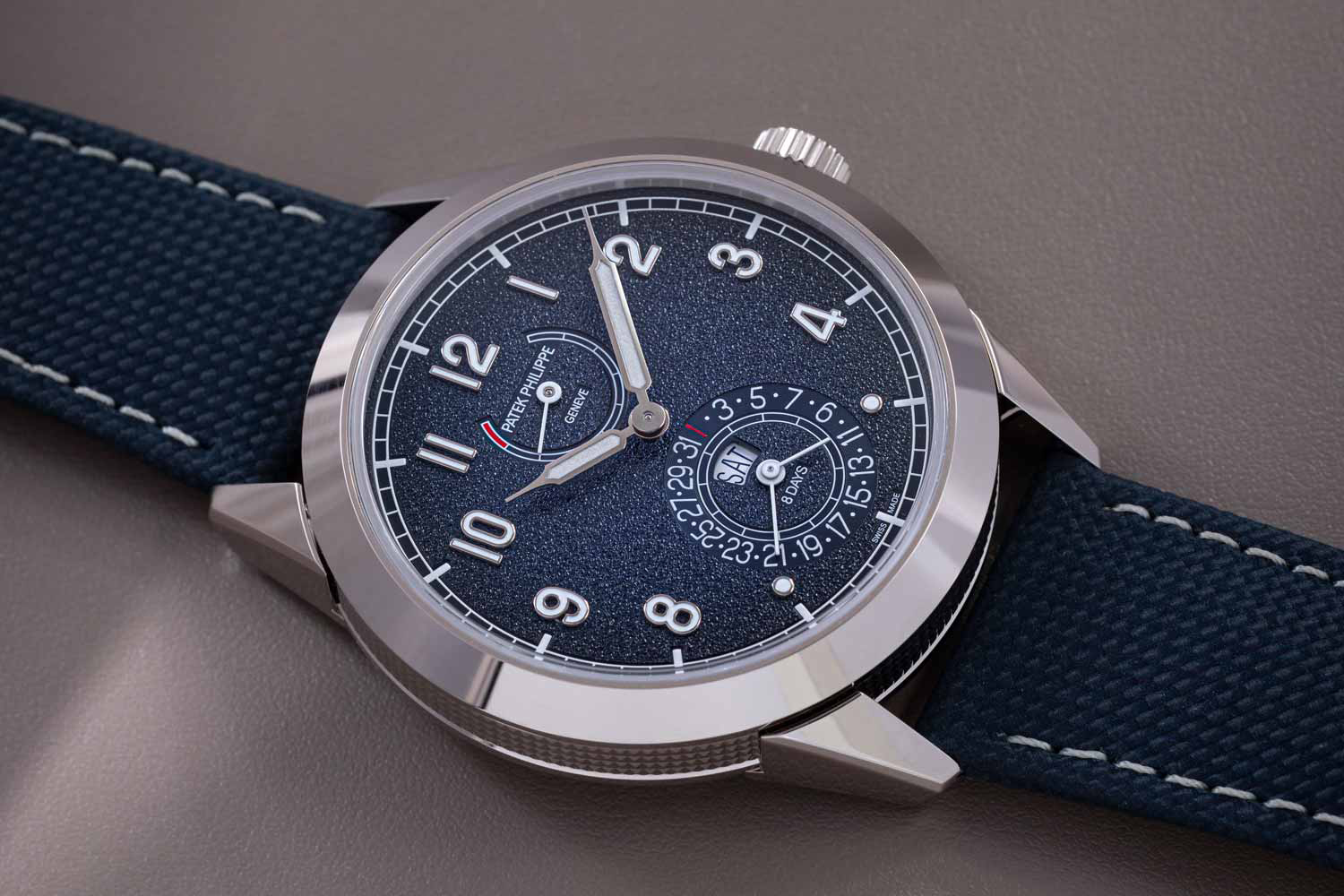
Patek Philippe retains its position as one of the largest privately owned watchmakers in Switzerland.
But, if you only remember one fact from the report, we would suggest this. Morgan Stanley estimates watches priced above CHF 50,000 represented 37% of export value and delivered 89% of growth in 2025, while being only 1.4% of units.
So yes, the market is growing in value in certain pockets. But it’s growing by selling a tiny number of ultra-expensive watches to a tiny number of people. Swiss watchmaking is starting to behave like a luxury collectables business that also happens to tell time. That’s not a moral judgement. It’s just the message of the numbers.
And the flip side is obvious. The more the growth engine lives at CHF 50,000+, the more uncomfortable it gets for brands built around volume luxury. If you can’t credibly move up, you either get squeezed or you end up donating share to the brands that can.
Where do we go from here?

If you aren’t one of the giants, you need to become culturally essential. Not “pretty good.” Not “heritage.” Not “we were founded in 18-whatever.” Something sharper.
Cartier is doing it with pure design and instant recognisability. Audemars Piguet is doing it by controlling the whole retail experience and the client file. Patek is doing it by staying Patek. For everyone else, the air is thinner than it looks.
Anyway, here’s what Morgan Stanley is actually saying when you strip out the finance formatting.
2025 by numbers
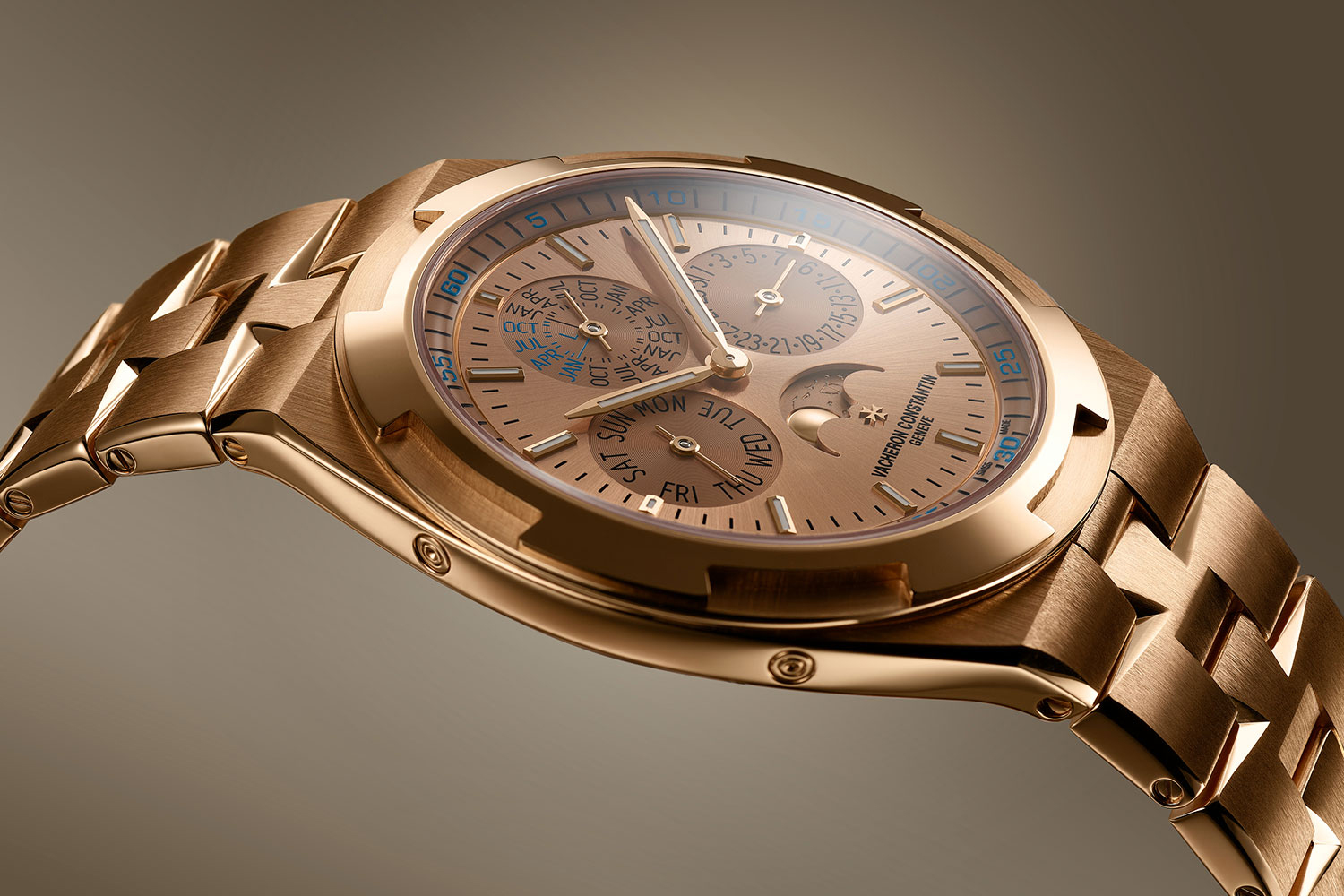
The price of gold, along with the performance of the CHF and tariff uncertainty were major drivers of pricing uncertainty.
A few statistics capture the report’s worldview at a glance:
- Swiss exports of wrist/finished watches: CHF 24.4bn, down -1.7% yearonyear (FHS).
- Estimated Swiss watch market: ~CHF 25.9bn wholesale and ~CHF 49bn retail (ex VAT), based on a 1.6x wholesale-to-retail multiplier.
- Exported units: 14.6m in total (9.4m quartz, 5.2m mechanical), down -4.8% yearonyear.
- Market concentration: the top four brands (Rolex, Cartier, Audemars Piguet, Omega) account for 55% of total industry sales, up from 52.4% in 2024.
- Private power: the four largest privately owned brands (Rolex, Patek Philippe, Audemars Piguet, Richard Mille) reach 49.1% share, +220 bps year-on-year and +1,240 bps vs 2019.
- Ultrahigh end as the growth engine: watches priced above CHF 50,000 represent 37% of export value and 89% of growth, while being just 1.4% of units.
Value versus volume
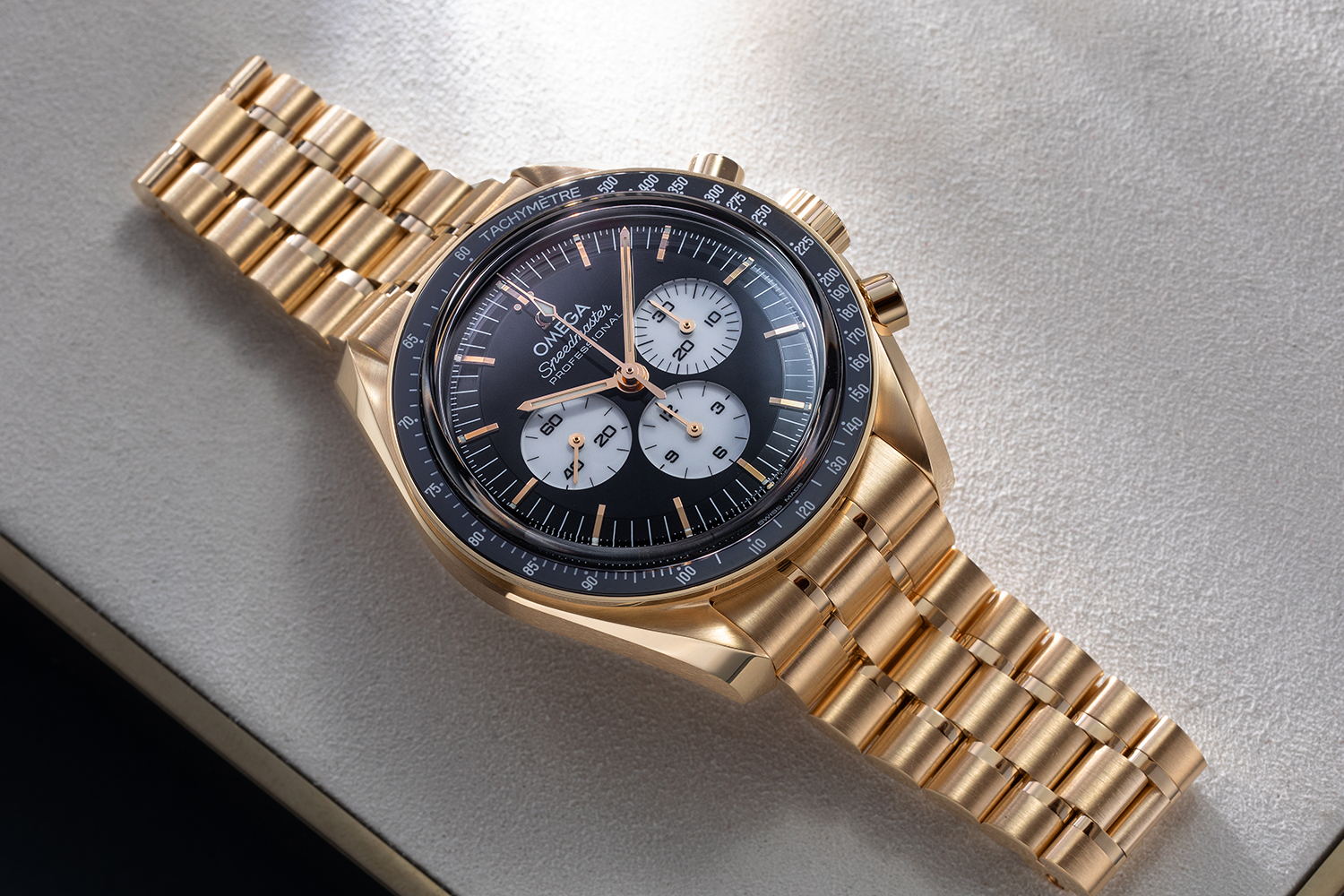
Omega remains one of the strongest performing brands in the Swatch Group portfolio.
In value terms, 2025 doesn’t look like a crash. Swiss exports of wrist/finished watches are CHF 24.4bn, down -1.7% from 2024 (FHS). Morgan Stanley also notes export value remains meaningfully higher than 2019 levels.
But the unit line is where the industry quietly confesses what it has become. Morgan Stanley puts 2025 at 14.6m exported units (again: 9.4m quartz, 5.2m mechanical) and calls it a multidecade low. Then it adds the long view: units are -44% vs 2008 (26.1m) and -51% vs the 2011 peak (29.8m).
So yes, 14.6 million watches is still a lot of watches. It’s just not the old Switzerland anymore. So, if your plan depends on a big rebound in Swiss unit volumes, you’re betting against the last decade-plus of reality.
The profit pool
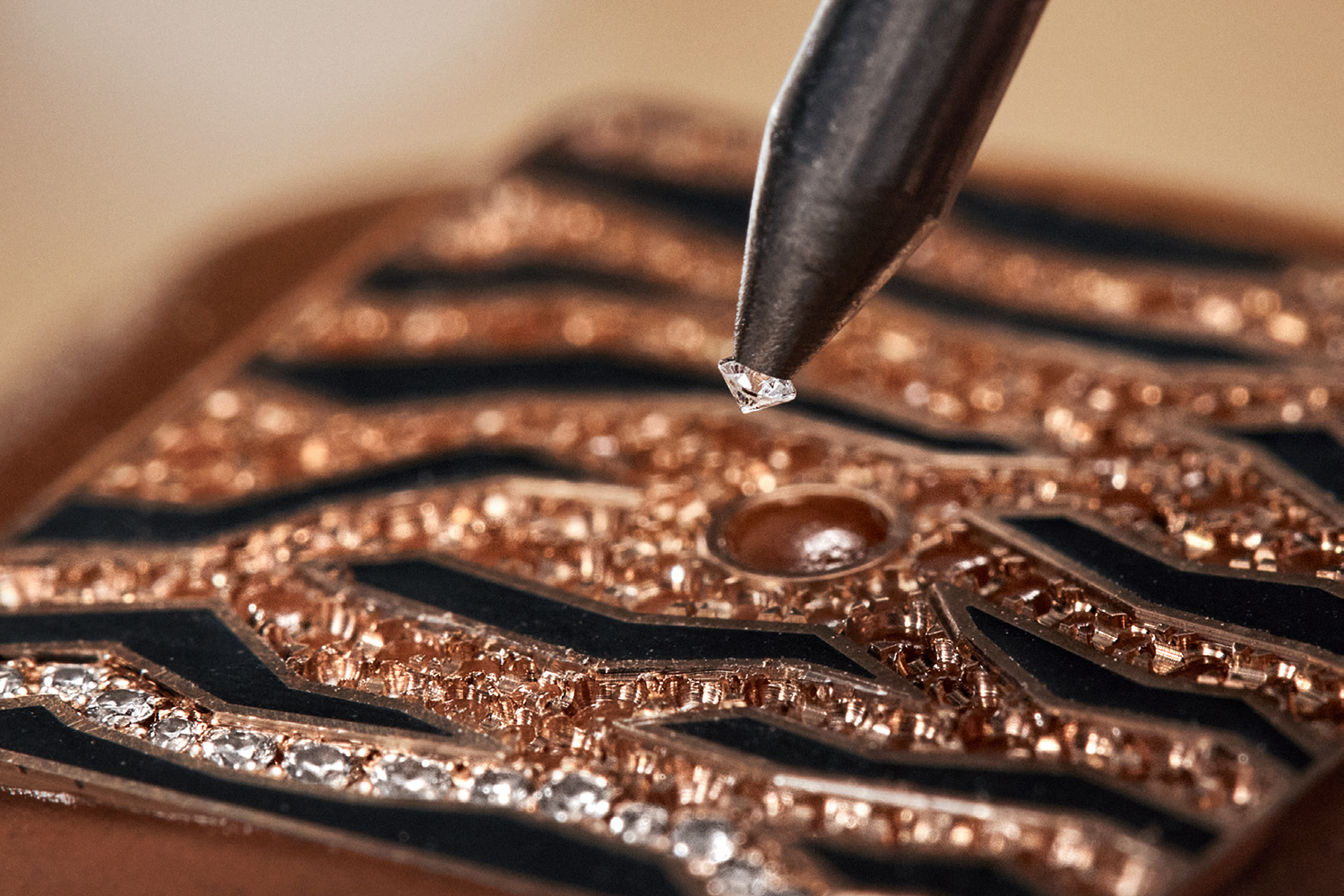
Market share tells you who sells watches. Profit tells you who gets to decide what the industry looks like next. Morgan Stanley estimates the Swiss watch industry profit pool at roughly CHF 7.9bn in 2025, implying about 22% aggregate operating margin (watch brand operating profit, excluding distributors). And the split is extreme.
The report estimates the top four privately owned brands (Rolex, Patek Philippe, Audemars Piguet, Richard Mille) capture about 76% of the profit pool with an aggregate operating margin around 33%. The three listed groups (Swatch Group, Richemont, LVMH) capture about 18% with an aggregate operating margin of around 10%.
And this is why the leaders keep pulling away. Profit buys control – more boutiques, stronger marketing, more selective distribution, better service, more patience.
The brand scoreboard
Rolex remains the gravitational centre. Morgan Stanley estimates Rolex wholesale sales of CHF 11,002m in 2025, with an implied retail value of CHF 16,063m. It estimates volumes of about 1,150,000 watches and an average selling price around CHF 14,000, up +6% yearonyear, despite volumes down roughly -2%. It also states that Rolex represents approximately 33% of total Swiss watch market value (about 34% including Tudor). To underline scale, the report compares estimated Rolex retail value of around CHF 16bn (about USD 20.6bn) with Apple Watch revenues of about USD 19bn. It also ties Rolex’s dominance to distribution power: about 1,360 points of sale worldwide, 90%+ run by third-party retailers, and a suggested longer-term rationalisation toward roughly 800–1,000 points of sale globally.
Cartier is positioned as the “listed outlier.” Morgan Stanley estimates Cartier sales of CHF 3,488m in 2025, an implied retail value of CHF 4,241m, volumes of around 695,000, and a market share of 8.7%. It highlights Cartier’s accessibility with an entry retail price of CHF 3,150 for a stainless steel quartz Tank Must. Basically, Cartier wins because it’s readable. You don’t need to be a watch person to “get it”, and that is real power.
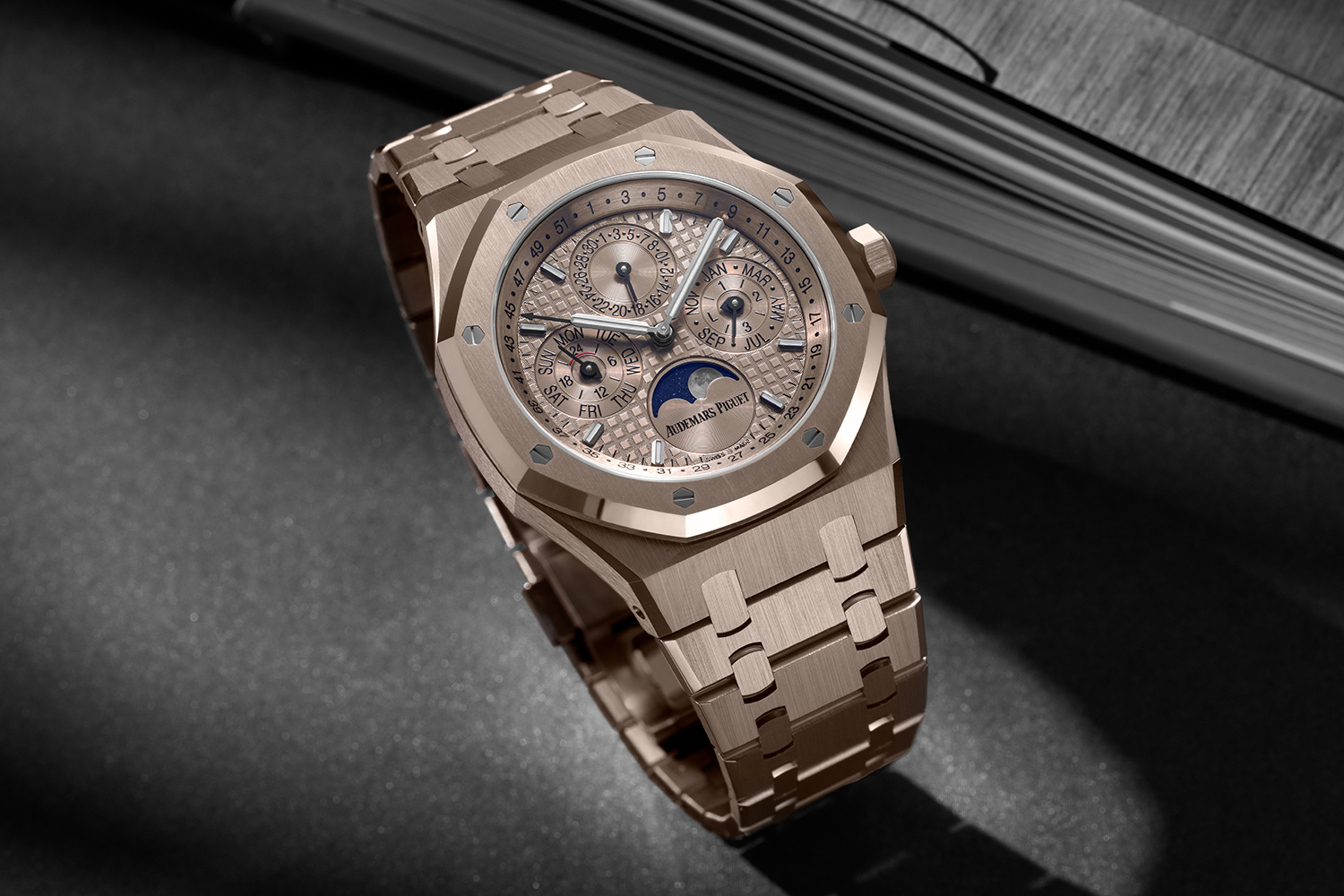
Audemars Piguet is framed as a defining mover. Morgan Stanley estimates AP revenues around CHF 2.6bn in 2025, up 9% year-on-year, and notes that AP became the third-largest Swiss watch brand by turnover. It stresses retail control as strategy: AP has fully exited multi-brand wholesale and operated 76 points of sale globally at year-end 2025 (including 25 AP Houses), with around 90% of sales generated via 72 mono-brand stores. The report is equally candid about product concentration, estimating that the Royal Oak accounts for about 88% of sales. It also publishes an estimated product split: Royal Oak 53%, Royal Oak Offshore 22%, Royal Oak Concept 13%, Code 11.59 12%.
Patek Philippe illustrates a different route. Morgan Stanley estimates Patek sales around CHF 2.5bn in 2025 (about +9% yearonyear), with production around 72,000 watches and market share around 7.0%. Unlike AP, it estimates that Patek derives less than 10% of its revenue from directly operated retail.
Morgan Stanley states Omega fell two positions to number five by turnover, overtaken by Audemars Piguet and Patek Philippe, and argues Omega’s turnover has essentially stagnated around CHF 2.2bn for more than a decade. It also points to complexity, noting Omega launched about 65 new SKUs in 2025 and has reduced its assortment from about 1,400 SKUs seven years ago to about 850 today, while suggesting a smaller core range could help. Omega isn’t “weak.” It’s just in the hardest lane – big enough to be judged like a giant, not scarce enough to be treated like royalty.
While the rest of the industry was treading water, Jacob & Co. was busy lapping the field. Morgan Stanley named them the fastest-growing brand of 2025, with revenue climbing 14% to CHF 180m and unit sales surging by 24%. It’s a massive redemption arc for a brand that many serious collectors used to dismiss as pure bling. They’ve pulled it off by getting incredibly smart with their distribution and doubling down on ultra-high-complexity products that command an average selling price of over CHF 72,000. Jacob & Co. is proof that in a contracting market, “subtle” is a death sentence.
The shrinking “Billionaires’ Club”
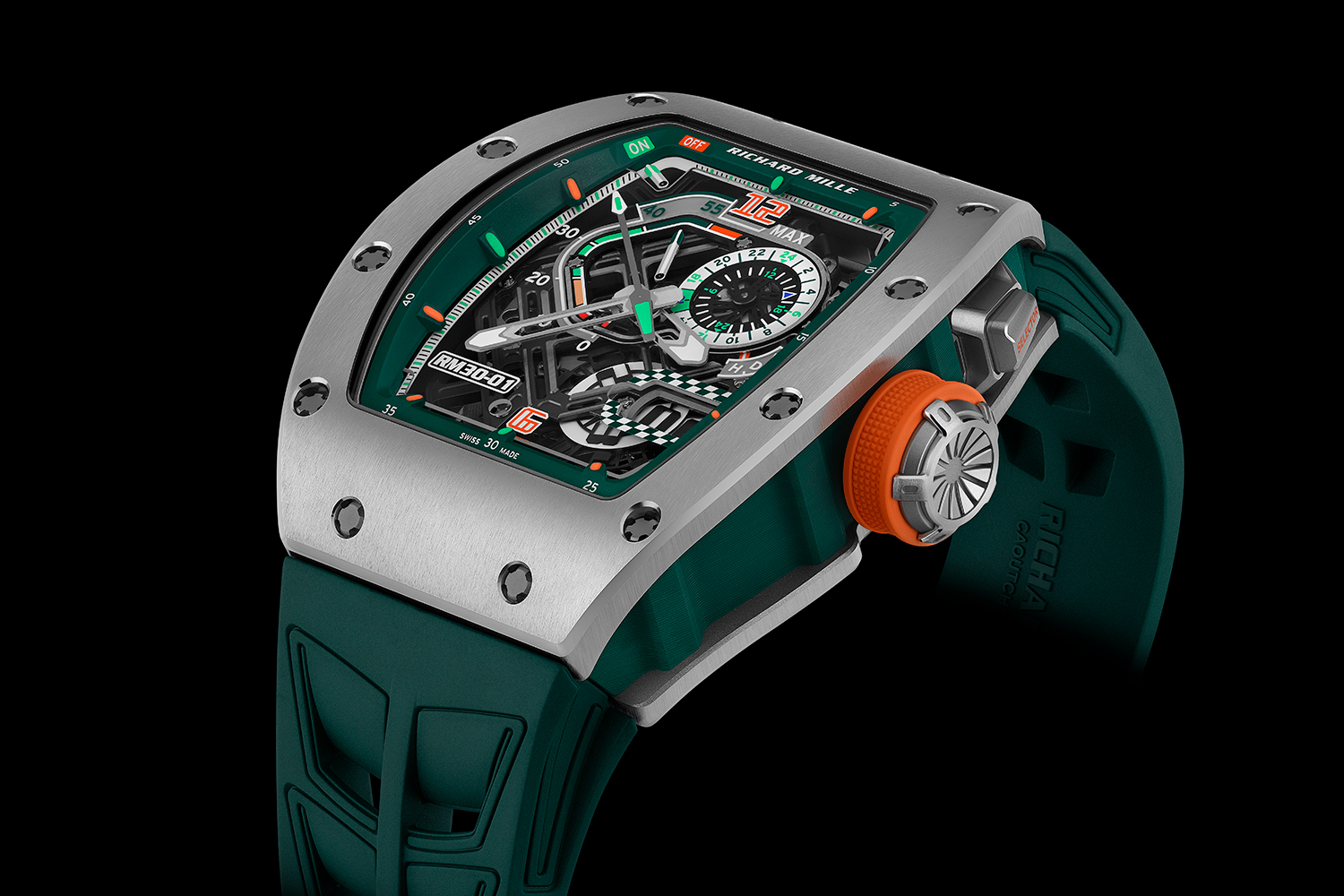
As in previous years, Richard Mille’s performance is strong.
Morgan Stanley notes that the number of brands with sales above CHF 1bn fell to six in 2025, following Longines’ exit. It estimates Longines sales down -18% to roughly CHF 920m in 2025, with volumes down -18% to about 780,000 units. Longines’ estimated market share more than halved from 6.7% in 2019 to 3.1% in 2025.
That’s what concentration looks like from the middle – the top consolidates, the growth engine floats upward, and the brands built for scale suddenly look exposed.
Taken together, the Ninth Annual Swiss Watcher describes an industry that has crossed into a new configuration. Units keep shrinking. Growth is being generated by a tiny slice of ultra-high-end watches above CHF 50,000. Sales and profit are concentrated into a small group of brands that control supply and distribution tightly.
If you’re one of the giants, you’re playing offence. If you’re not, you need a sharper reason to exist, because in a market where four brands take 55% of sales and a handful of private players take 76% of profits, being “pretty good” is a scary place to live.
All figures are taken directly from Morgan Stanley Research / LuxeConsult estimates in the report, with FHS – Fédération de l’Industrie Horlogère – data referenced where stated.

You may also like

News
GPHG President of Jury: Wei Koh
Mar 18, 2026
News
GPHG President of Jury: Wei Koh
Mar 18, 2026
Editorial
Graduation for the Greubel Forsey Balancier Convexe S2
Mar 17, 2026
Editorial
Graduation for the Greubel Forsey Balancier Convexe S2
Mar 17, 2026
Editorial
Making Its Mark
Mar 16, 2026
Editorial
Making Its Mark
Mar 16, 2026