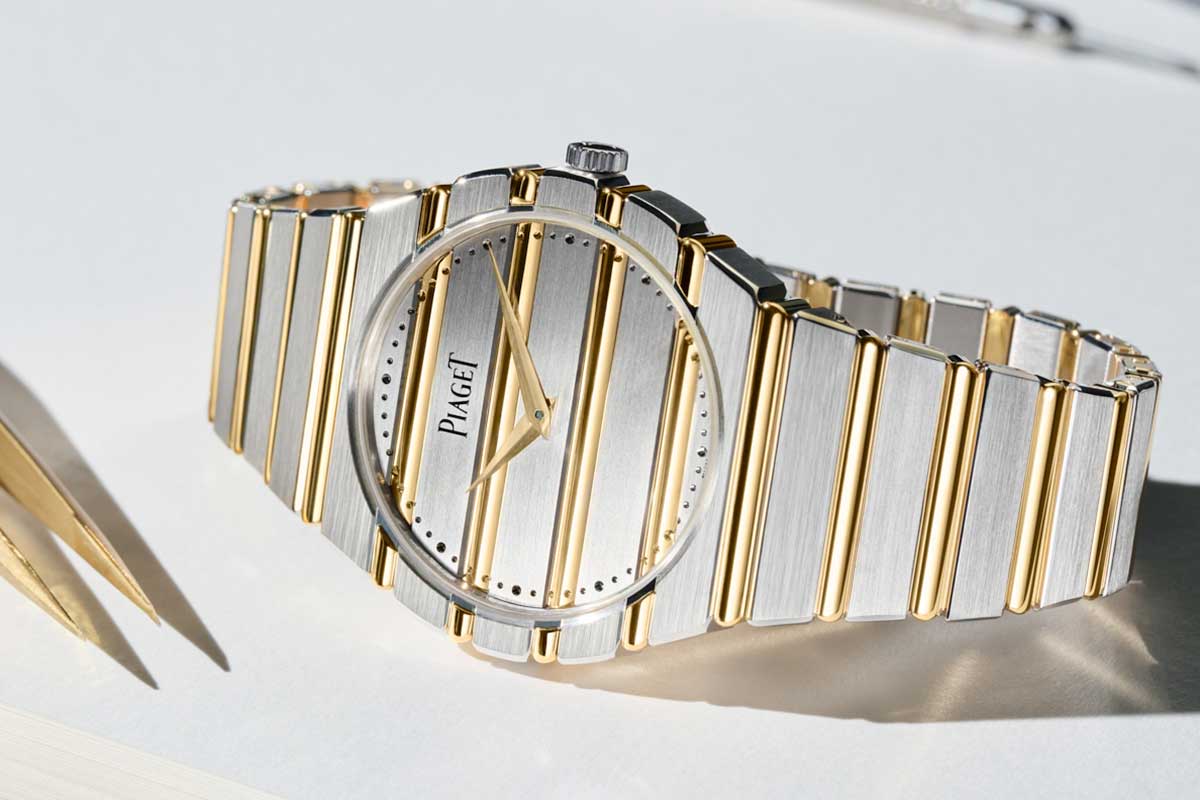
Two-Tone Fanfare: Piaget Polo Hits the High Notes
News
Two-Tone Fanfare: Piaget Polo Hits the High Notes

First came yellow gold, then white. Now you can have the best of both worlds with the eye-catching Piaget Polo 79 Two-Tone. The reborn classic sports watch is now available in three versions, all precious metal – as you would expect from a watchmaker that calls itself the House of Gold.
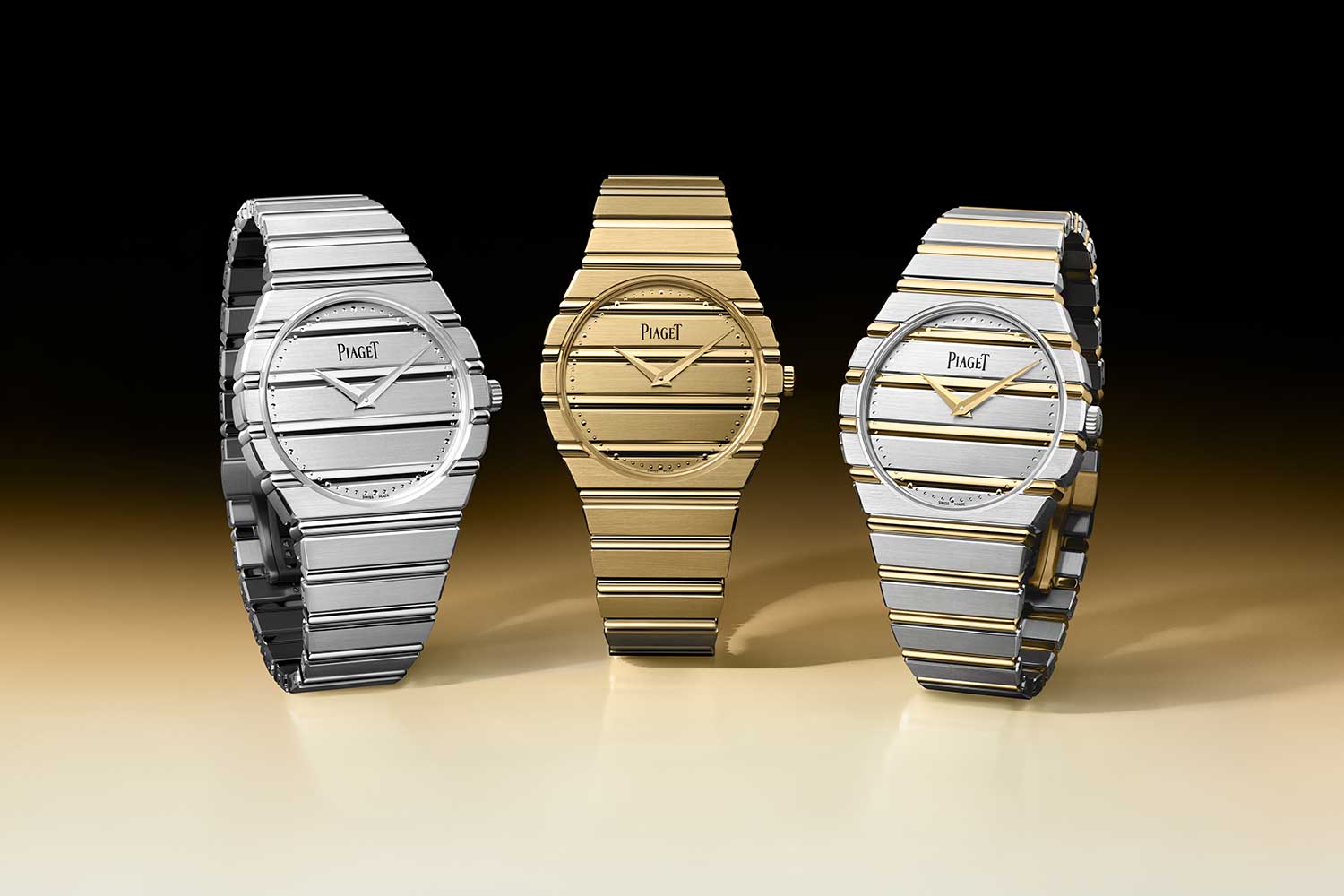
The Piaget Polo 70 Trio: In white gold (2025), yellow gold (2024) and now Two-Tone version (2026)
When the original Piaget Polo was launched in 1979, the trend for luxury sports watches was leaning towards steel. Not for Piaget, though, who opted for gold. Yves Piaget described the unapologetically glamorous Piaget Polo as “a bracelet watch and a watch bracelet”. This was a standout sports watch with enough style to slip easily into the most sophisticated après-sport social life.
-

- Yves G. Piaget (Image: Christian Coigny)
-
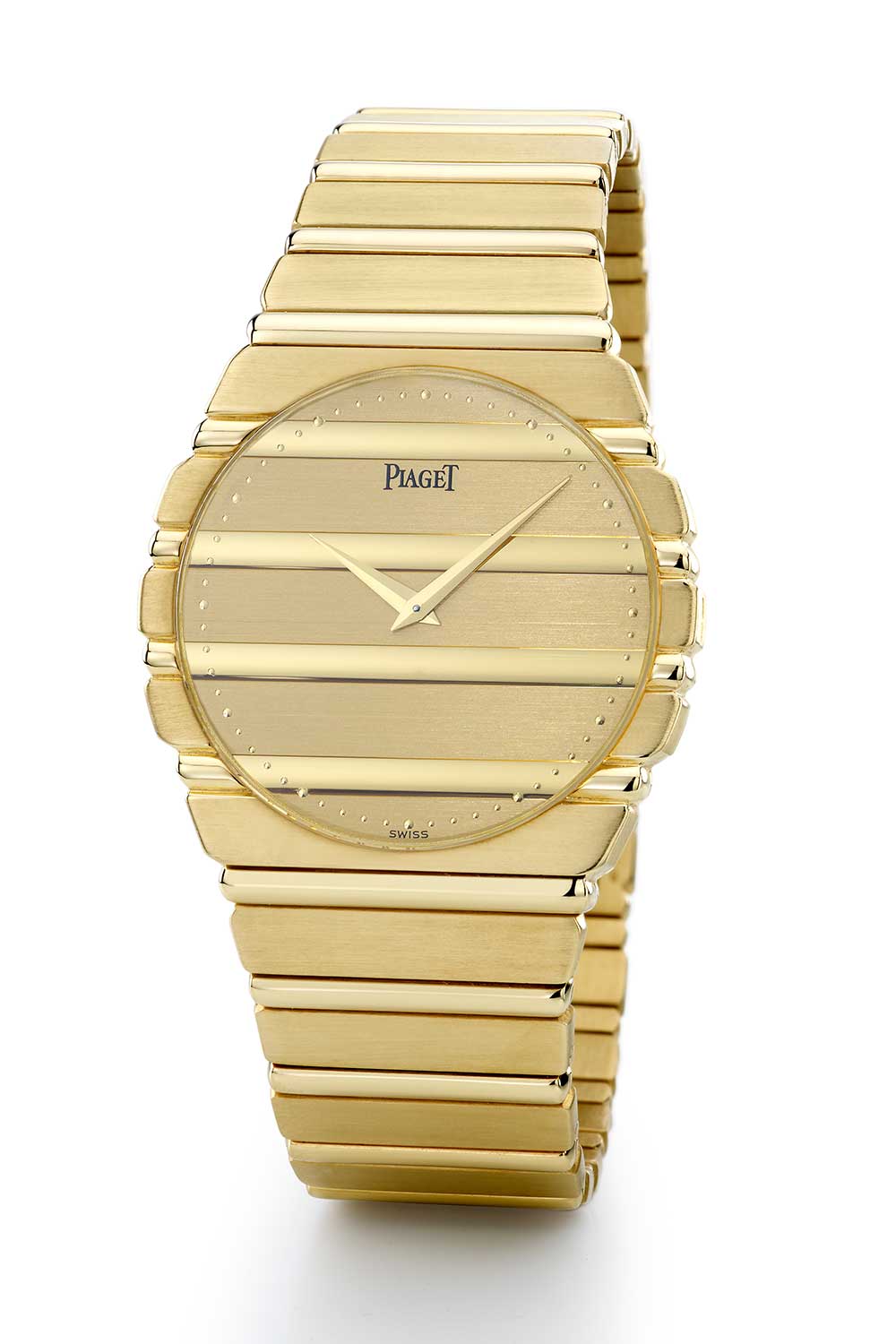
- The vintage Piaget Polo from 1979
Piaget reintroduced the model in 2024 as part of the maison’s 150th anniversary celebrations. The style was closely aligned to the original, with an integrated bracelet and gadroons – the horizontal sculpted ribs that run seamlessly across the case and bracelet. The design obviously resonated with a modern audience, and that first yellow gold watch won the Iconic Watch prize at the 2024 GPHG.
A more under-the-radar white gold version followed in 2025 and now the Two-Tone completes a trio of watches in the Piaget Polo 79 collection. The case and integrated bracelet of the Two-Tone are white gold, while the gadroons are yellow gold. The white gold has been brushed to give it a softened tone, which contrasts with the polished yellow gold which makes the gadroons stand out. This may even fool people into thinking it is a steel-and-gold watch, a style that has found favor with other brands.
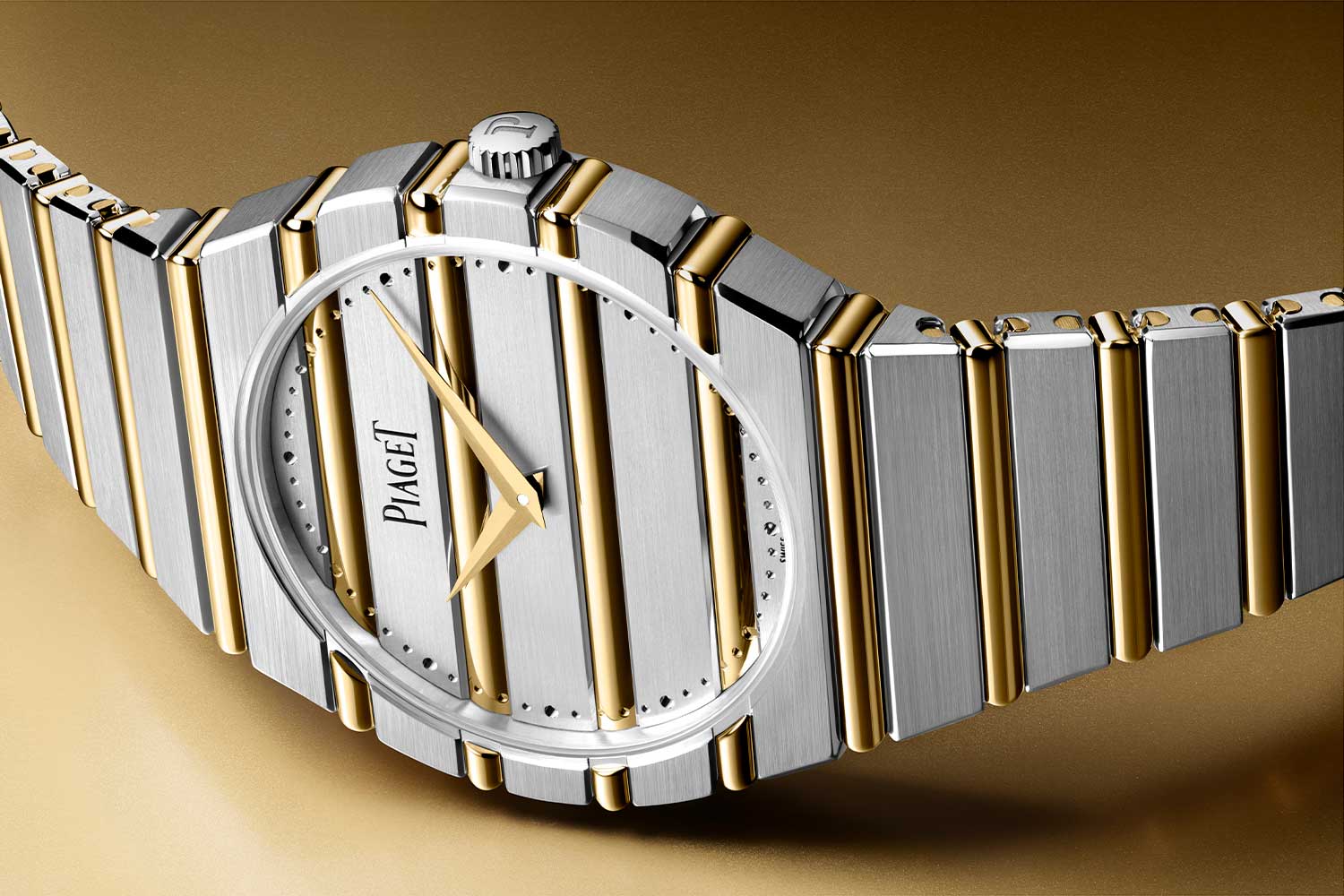
The latest Piaget Polo 79 Two-Tone: The case and bracelet in white gold while the gadroons are yellow gold
One major update is to be found inside. Back in the late Seventies, quartz was cutting edge and found its way into many luxury watches, including the original Piaget Polo. As befits modern luxury sensibilities, the Piaget Polo 79 has an automatic movement. And not just any movement. Piaget has specialised in ultra-thin movements for decades and the Piaget Polo 79 is powered by calibre 1200P1, which has a micro-rotor and is just 2.35mm thick. This is not thinness for its own sake; this movement allows the watch to maintain its slender bracelet-like proportions.
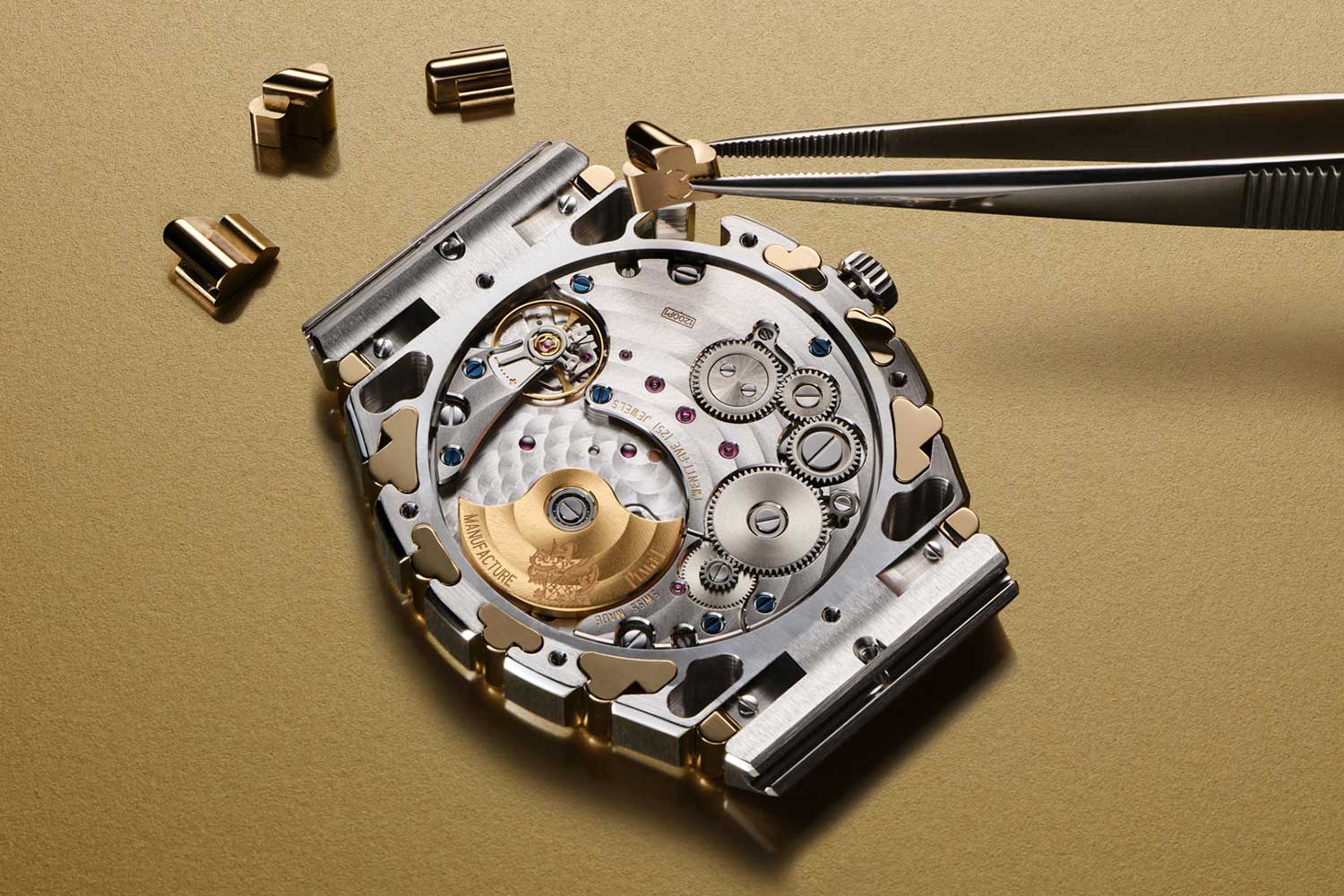
Assembling the calibre 1200P1
The modern watch is bigger than the original, but at 38mm the case is at a sweet spot where it will suit pretty much anyone. And it is designed with comfort in mind, the integrated bracelet making it fit snugly on the wrist. The dial is an exercise in minimalism, with yellow gold hands echoing the two-tone style of the rest of the watch.
The Two-Tone also reconnects the Piaget Polo to a little-seen part of its own history. Piaget offered bi-metal versions from the outset in 1979, though they are now rare enough to feel almost forgotten. Their revival feels timely rather than nostalgic. In an era where steel sports watches have become ubiquitous, the Piaget Polo 79 Two-Tone offers something different: precious without being ostentatious, elegant without being formal, and designed to be worn all day, wherever the day takes you.
What ultimately sets the Piaget Polo 79 apart is its refusal to chase trends. It is not trying to overpower modern sports watches or recreate the past. Instead, it reasserts Piaget’s long-held belief that a sports watch can be graceful and glamorous. With the Two-Tone now added to the range, the Piaget Polo 79 is restating the brand’s design language and celebrating a very Piaget way of wearing gold.
For more information, visit www.piaget.com
Piaget
You may also like
Editorial
Piaget’s Duo of 2026 Limelight Galas
Feb 26, 2026
Editorial
Piaget’s Duo of 2026 Limelight Galas
Feb 26, 2026
Editorial
Revolution Awards 2025: Iconic Watch — Piaget Andy Warhol Watch ‘Collage’ Limited Edition
Jan 27, 2026
Editorial
Revolution Awards 2025: Iconic Watch — Piaget Andy Warhol Watch ‘Collage’ Limited Edition
Jan 27, 2026
Editorial
The Revolutionary List: 24 Technically Brilliant Watches – Piaget Altiplano Ultimate Concept Tourbillon
Dec 12, 2025
Editorial
The Revolutionary List: 24 Technically Brilliant Watches – Piaget Altiplano Ultimate Concept Tourbillon
Dec 12, 2025