Time & Light – Making Moments With Leica
News
Time & Light – Making Moments With Leica
the esoteric camera company's watchmaking ambitions come into focus

This past October I found myself standing in a picturesque field just outside Wetzlar, Germany, surrounded by some of the most talented photographers and content creators around. The sun was setting just over the autumn horizon, with the sky lit up in a vibrant display of pinks, blues, and orange typically reserved for over saturated Instagram filters. Around my neck hung a Leica M-11 – a brilliant piece of German engineering, combining analog, mechanical artistry with modern technology and purpose.
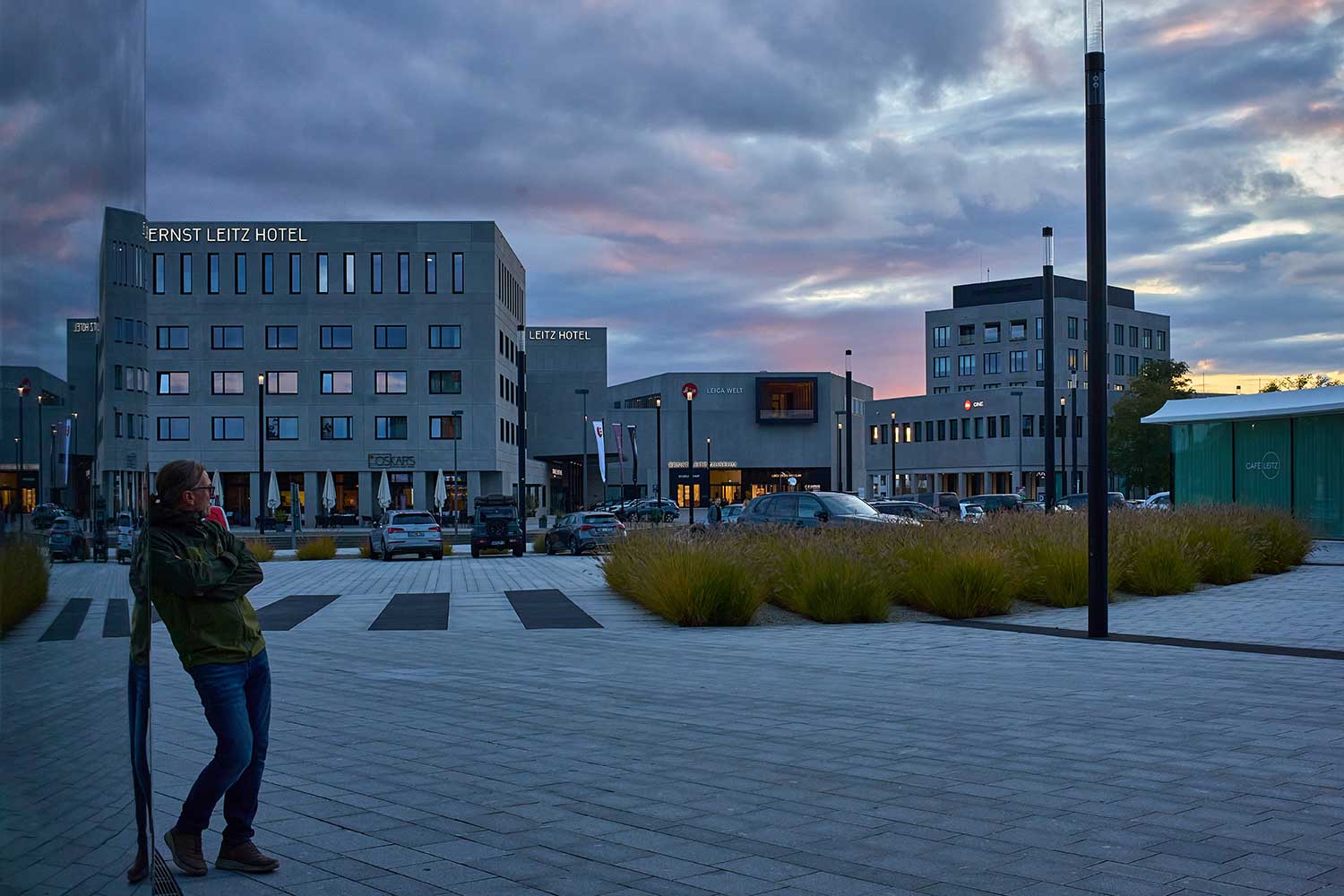
Leitz Park, the home of Leica in Wetzlar, Germany

The sunset in Braunfels, Germany
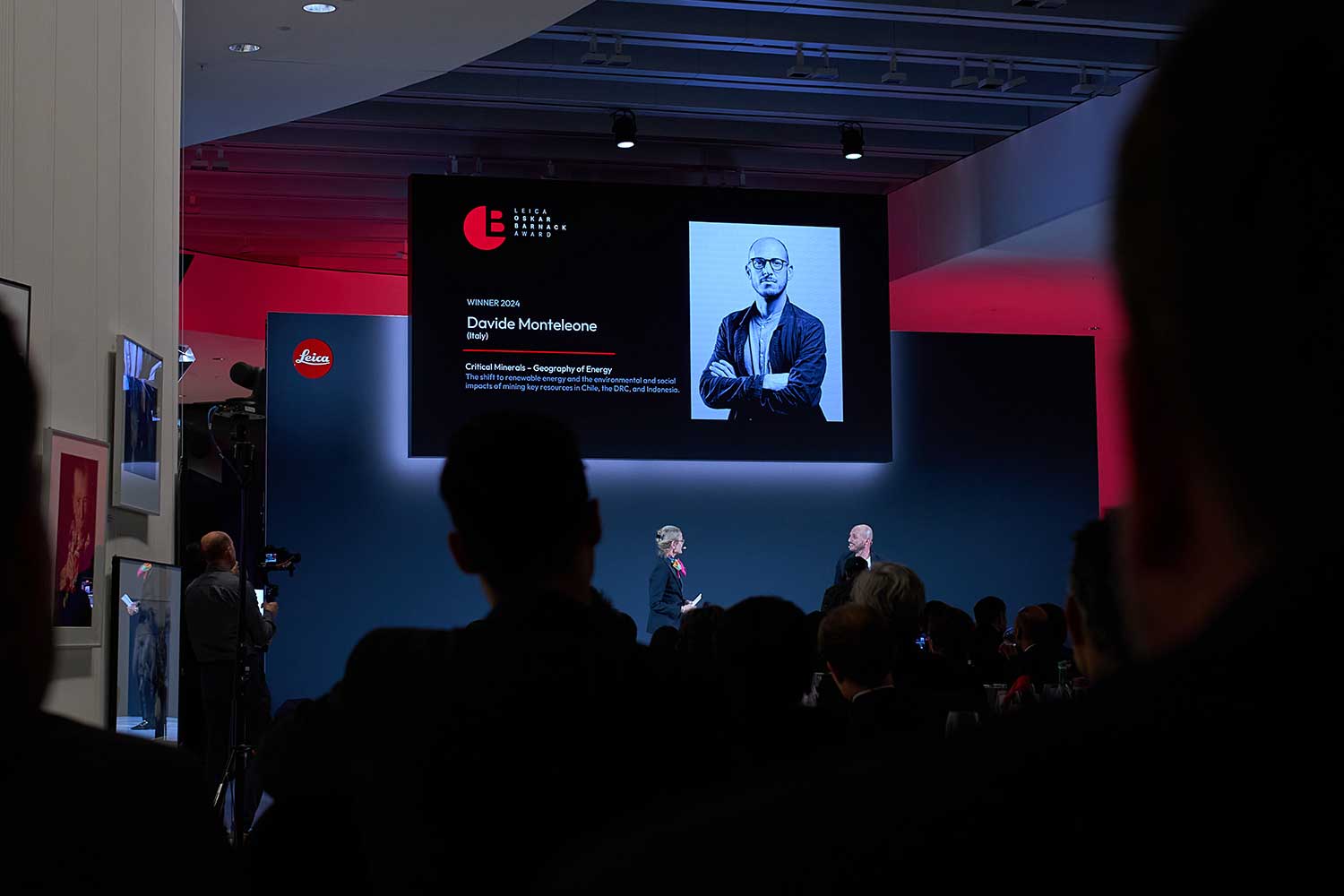
I was there for two primary reasons – the first, for Leica’s Celebration of Photography award ceremony and gala, hosted at Leica’s global headquarters at Leitz Park. This is a multi-day event in Wetzlar where Leica acknowledges and honors both up and coming photographers and well established masters of the craft, showcasing their work and creative vision, culminating in the Leica Oskar Barnack Award (think the GPHG’s Aiguille d’Or but for photographic achievement). This year’s winner was Davide Monteleone for his work ‘Critical Minerals – Geography of Energy’, a long term photographic study on resource mining for renewable energy and its impact on the environment. It is a beautiful and gut wrenching review of a historically problematic industry and the damage it causes, utilizing a wide variety of photographic techniques and styles ranging from portraiture to abstracted landscapes.
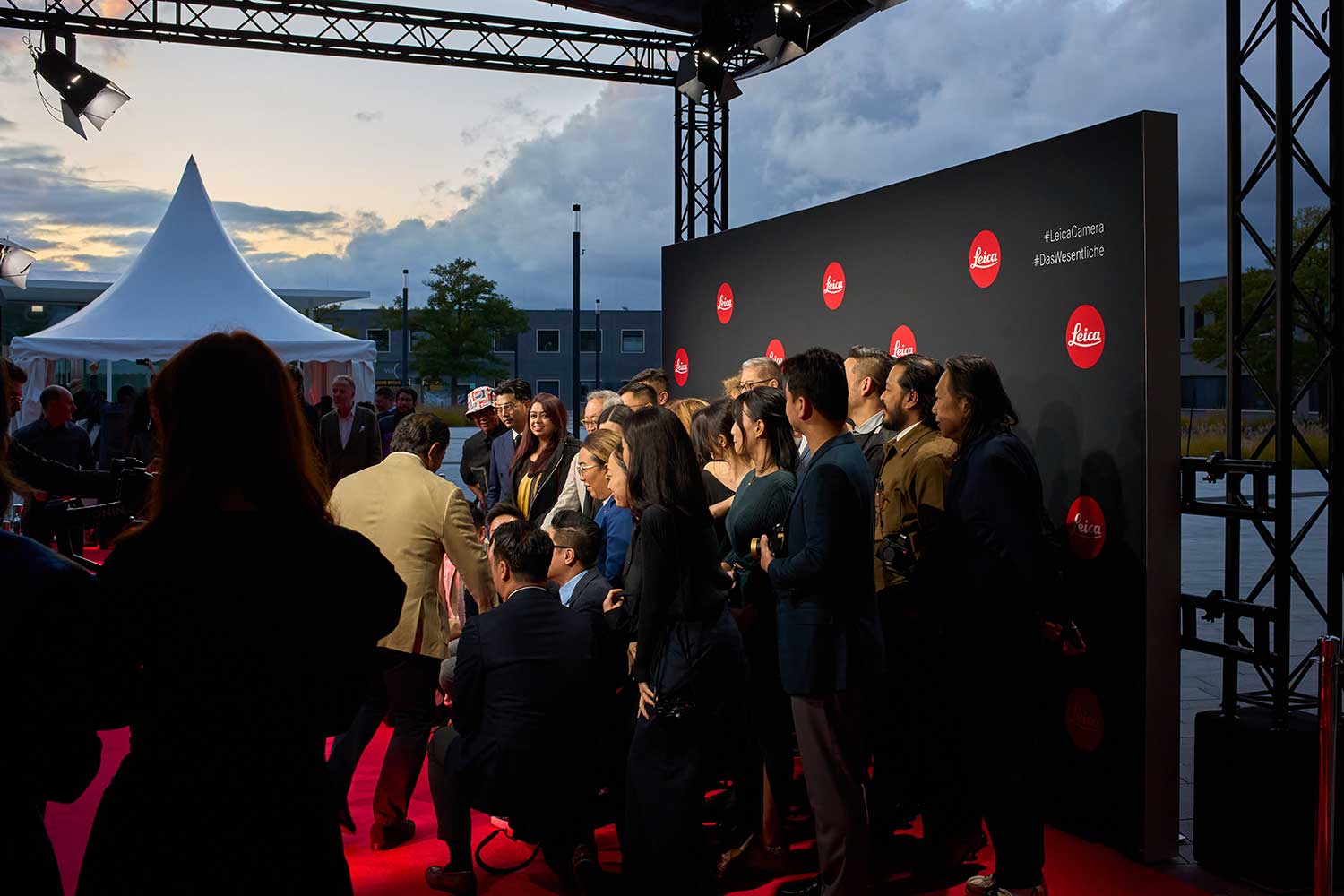
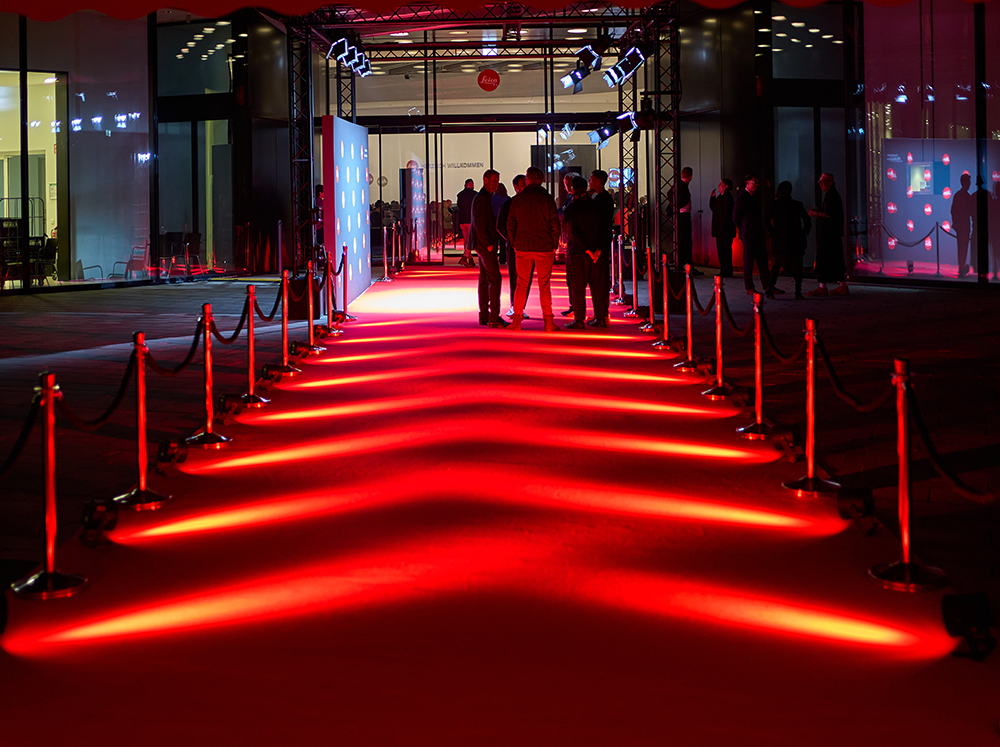
Arrivals at the Celebration of Photography Gala
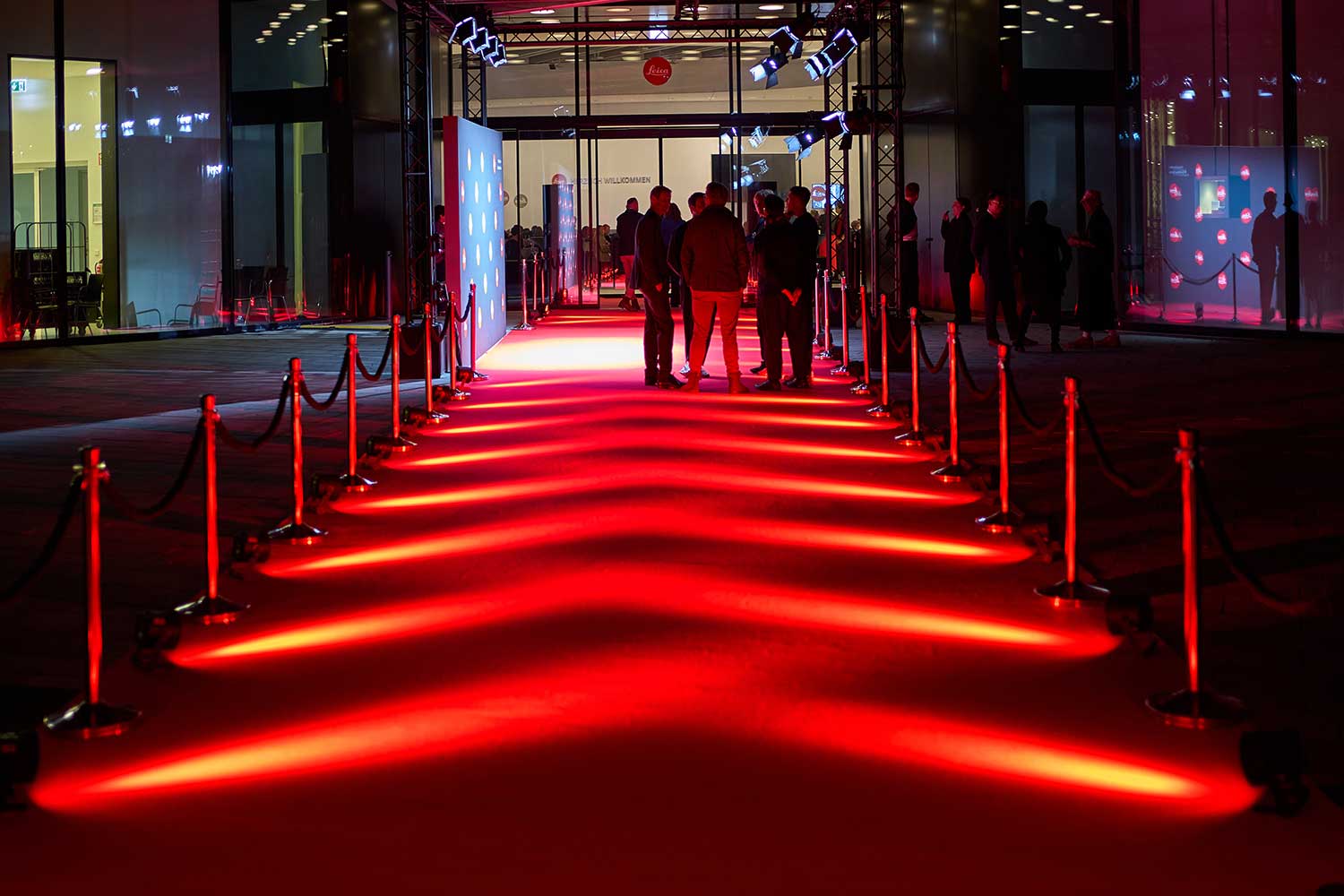
The Red Carpet, shot on Leica M11


Leica's watches offer an excited to category for the 100 year old company
Also honored at the Celebration of Photography was Herlinde Koelbl, who received the Leica Hall of Fame Award (a sort of lifetime achievement award). Koelbl is one of the most prominent and celebrated German photographers in the world, known for her wide variety of personalizing and emotional portrait projects. To be surrounded by works of such photographic greatness, pinnacles of visual story telling spanning years if not decades, was at once deeply inspiring and brutally humbling.

Herlinde Koelbl recieves a Leica SL3
The second reason I was in Wetzlar was to gain a more in depth insight into Leica’s latest auxiliary venture – watchmaking. While there were one or two instances over the years where watches have carried the Leica name, in 2018 Leica began producing watches in earnest with the release of the L2 series. At the time of their initial launch, Leica’s watches were met with a certain skepticism. Why on earth is Leica, the prestigious camera and lens manufacturer, now making luxury wrist watches? Would it be a one off project or a part of the business in the future?
From the Camera, the Watch
Fast forward to today, and that series has been renamed to the ZM series, also receiving some updates and improvements along the way. The ZM 1 and ZM 2, both featuring movements produced the mad scientists at Lehmann Uhren, a watch manufacturer located in the heart of Germany’s Black Forest. The signature mechanism of the ZM 1 and ZM 2 certainly the crown, which functions via bush button actuation, switching the mechanism between winding and time setting. It’s a playful take on the idea of pressing the shutter button of a camera.
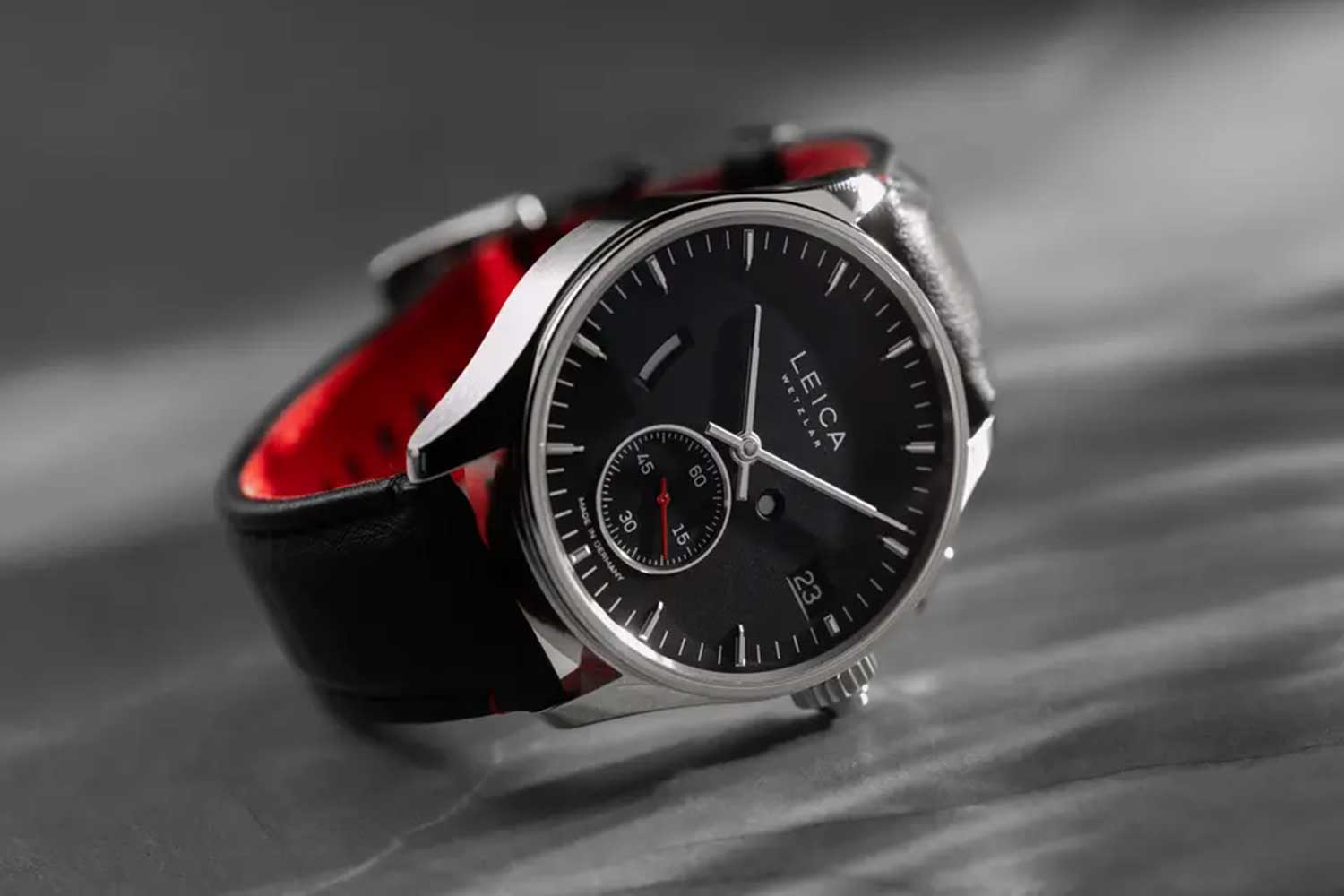
Leica ZM 1
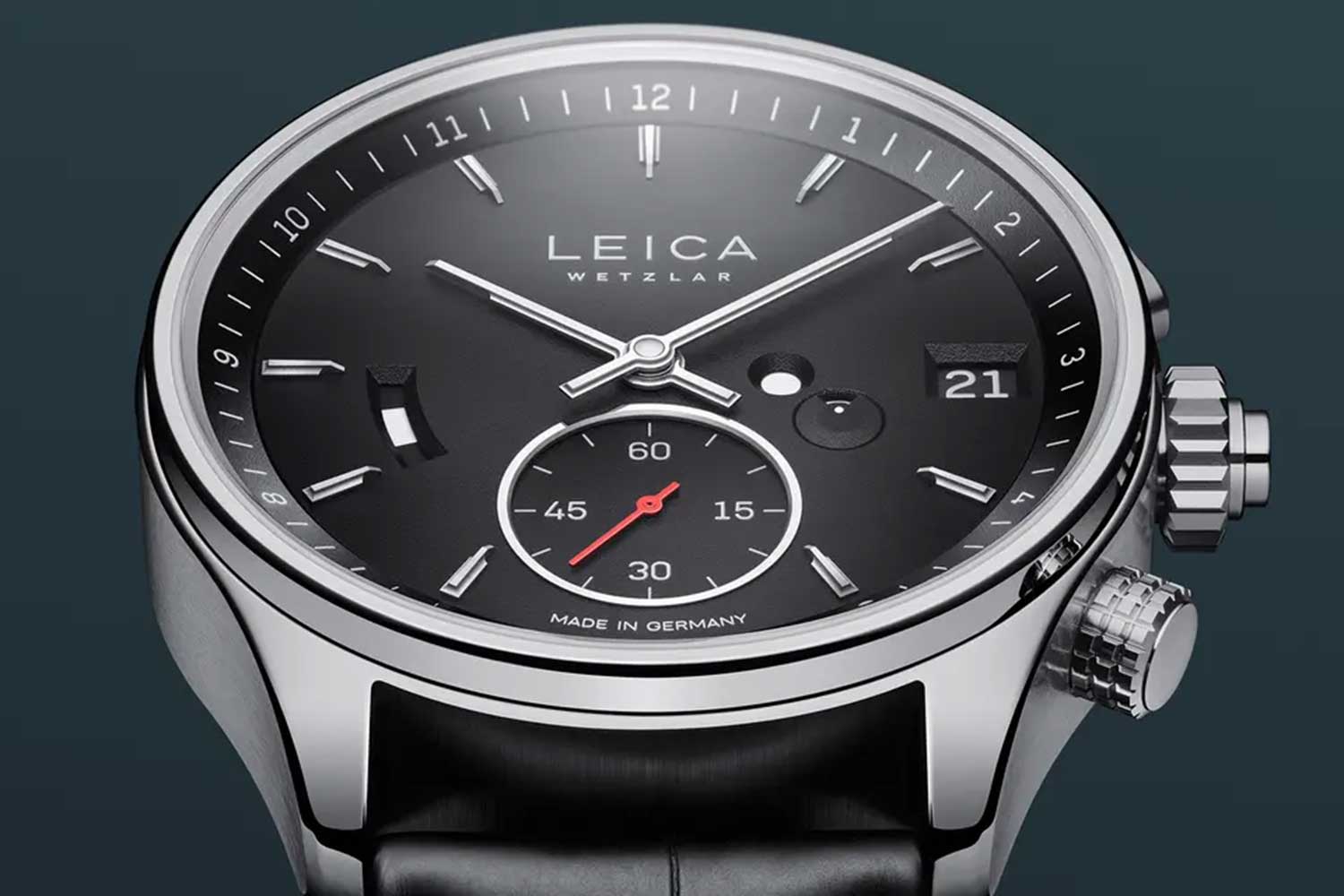
Leica ZM 2
But that is not the only reference to, or easter egg from, Leica’s cameras. Turning the watch around reveals the German movement, which is both beautifully detailed and finished with a certain understated elegance. Keen eyed observers (photographers perhaps) or those who have visited Leica’s headquarters in Wetzlar might notice that the layout of movement actually mirrors the layout of the buildings at Leitz Park. It’s the kind of detail that, at first glance may seem cute or even gimmicky, but in actuality likely took an enormous amount of time, effort, and attention to engineer. Make no mistake – these watches are a labor of love.
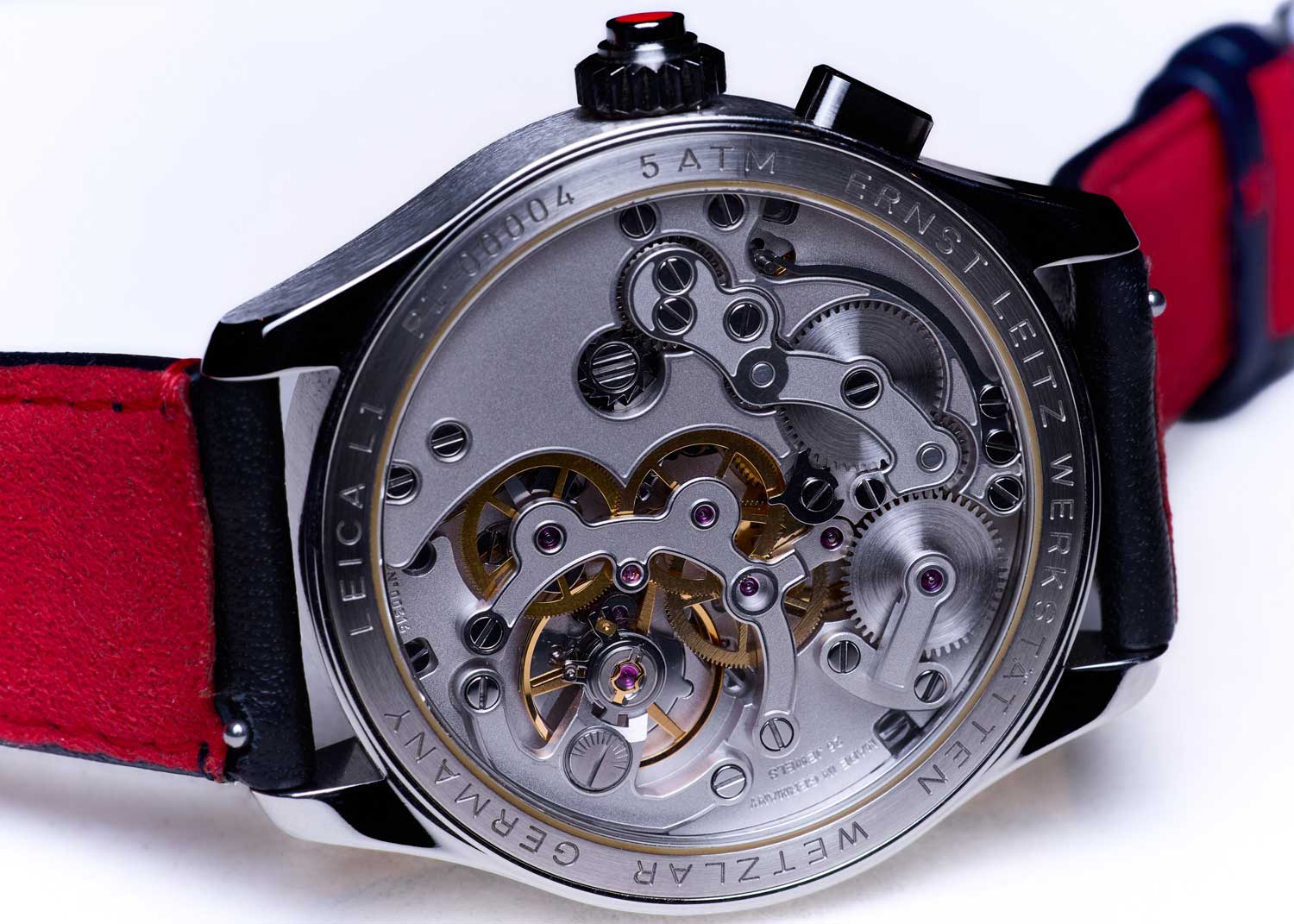
Beautifully finished German Movement, mirroring the layout of Leitz Park

Leitz Park, Wetzlar, Germany
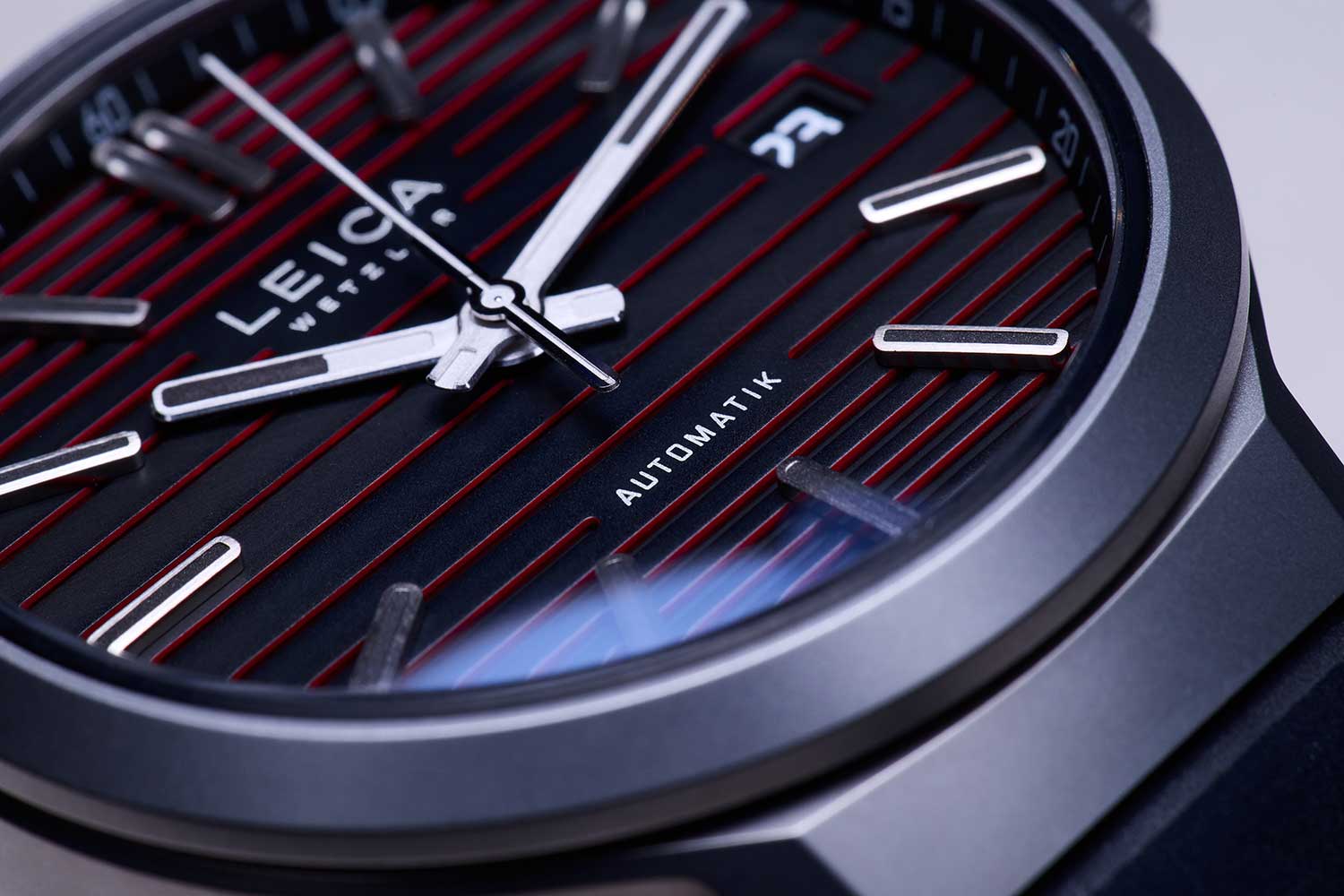
Joining the ZM 1 & ZM 2 (along with their monochrome and rose gold variants) is the ZM 11, a decidedly more modern and minimalist take on timekeeping. A slotted dial with colored accents, cased in either titanium or steel, meets a clean, articulating integrated bracelet (with rubber straps also available). Ticking away within the ZM 11s is the Chronode Signature Caliber LA-3001, a beautifully detailed Swiss movement, equality elegant in its detail and finishing to that of the ZM 1.
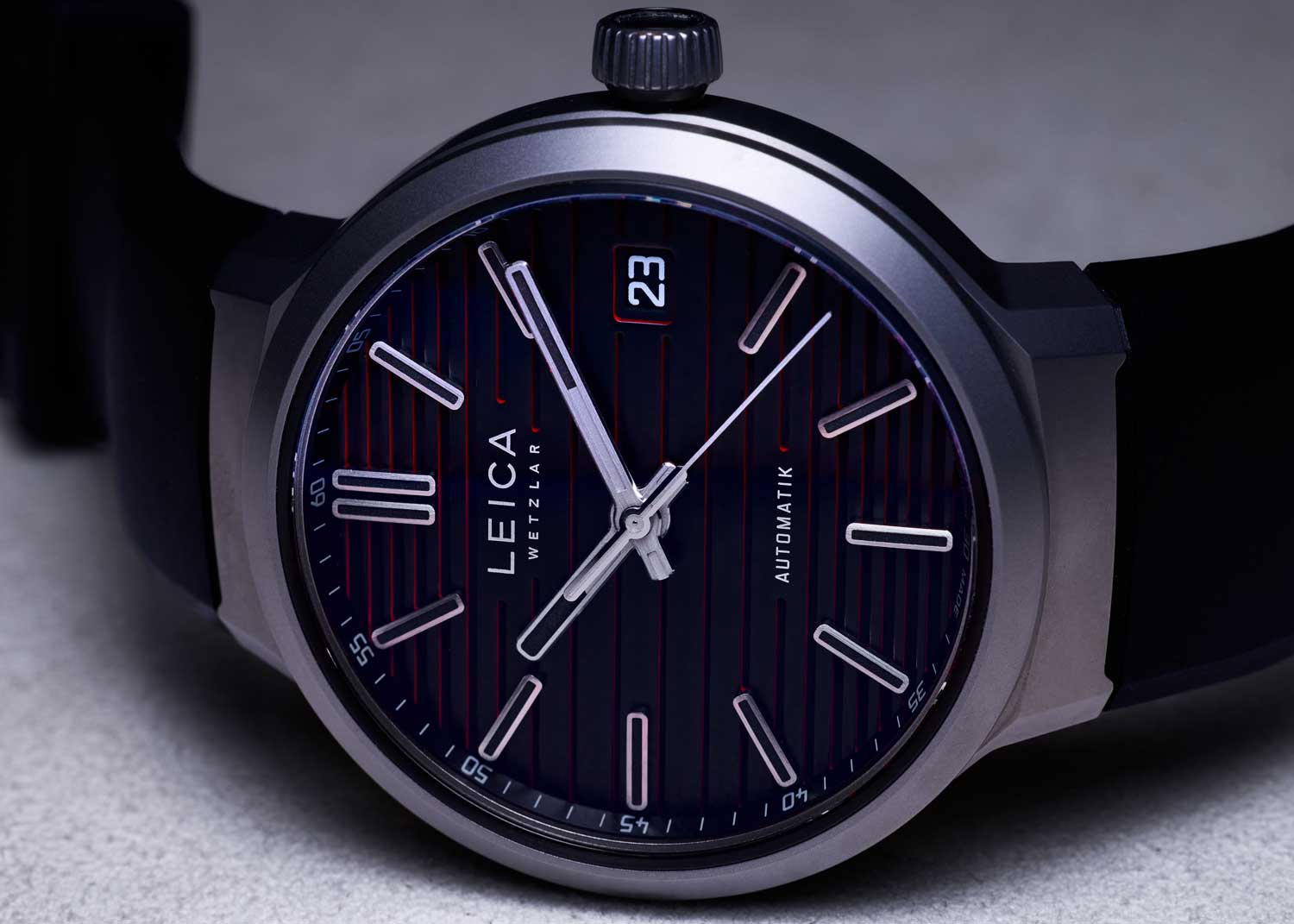
Leica ZM 11 Titanium Launch Edition
While at first glance the aesthetic differences between the two model categories may feel a bit out of step with one another, viewed within the broader context of Leica’s camera offerings, the picture becomes clearer. You see, Leica is a company that exists as an anachronism of sorts, equally split between the past and the present, utilizing the technologies of today in order to create the art of yesterday. Much like the luxury watch industry.
Seen in this light, the watches they now create can be read as analogs for their cameras – the ZM 1 & ZM 2 speak to the M series of cameras, manual winding and focusing, facsimiles of tools of yesteryear, actuated by the satisfying mechanical click of a button. By extension, the ZM 11 (despite its name referencing the M11) feels similar to the Q series – modern, elegant, simple, functional – with its own sense of style.
The Romance in the Mechanism
As Leica celebrates its 100th anniversary, and the 70th anniversary of the M series cameras, the company has entered a new phase of prominence and prosperity, with its latest releases of the M11, M11D, Q3, and SL3, all resounding successes in the camera world. Alongside this new golden era for the company, they have undertaken the goal of branching out, diversifying to other categories, such as watches, but also projectors and additional products likely to follow.
The fear, especially with a heritage brand like Leica, is that additional product lines will be nothing more than phoned in cash grabs – licensed nonsense which bears relation in name only to the products that made the Leica name one of the most prestigious and respected in its field. It is with a deep sense of relief and joy that I can say (as both a watch nerd and a camera snob) that this is far from the case. Leica is undertaking their watchmaking business with much the same passion, intention, and even borderline impractical attention to detail with which they build their cameras and lenses.

At Leica's archives in Leitz Park
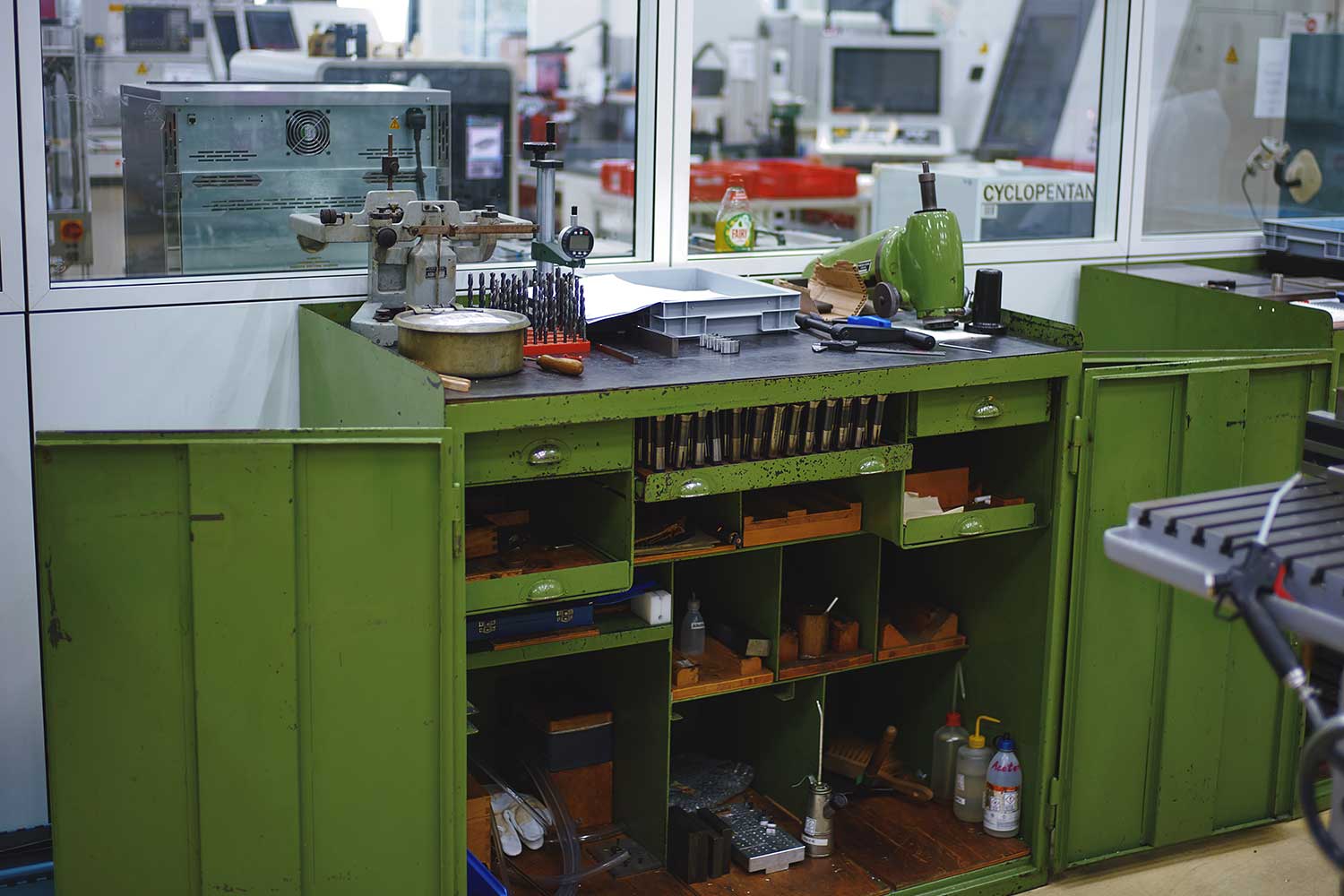
Leica's Manufacturing fascility, odly reminiscent of a watch factory
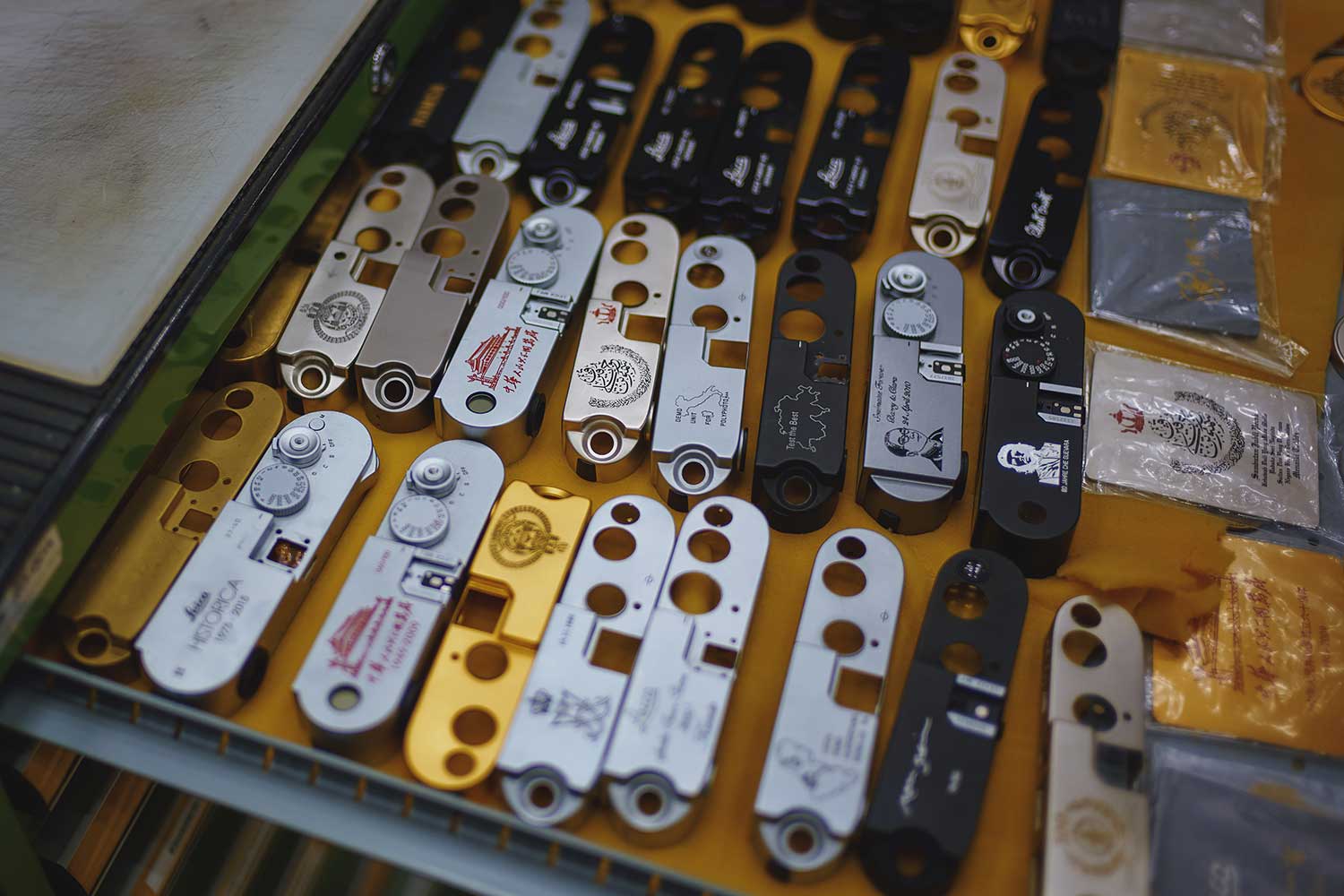
Base Plates
Are they trying to shift away from cameras and become watch company? No, they’re not. In fact, the reason they have only released a few models thus far seems to be because they’re not really following the same schedule or pattern as most watch companies today. On the contrary, their releases are much more aligned with that of a camera company – slow, intentional, generational, only bringing something new to the catalog when it actually moves the conversation forward (this is perhaps something that the broader watch market should take note of and, dare I say, learn from).


While it is a curious detail of history that Leica’s founder, Ernst Leintz actually began his professional life by training as a watchmaker before returning to Wetzlar to start a camera company, this seems to be only a superficial justification for Leica’s new horological endeavor. Though it is entirely likely that the study of miniaturization in watchmaking school likely lead Leitz to apply a same philosophy to cameras, (leading to Oscar Barnack’s design of the Leica 1(A), the first commercially available 35mm camera), this does not seem to be the entirety of the why Leica is now producing watches.

A damaged Leica M body from the war photography collection, which saved the photographer's life


Setting aside the fact that Leica’s cameras are as much a luxury as they are functional tools (yet another strong parallel with the mechanical watch world) when you really deconstruct them, from a philosophical standpoint of course, cameras and watches both share a similar intention and emotional motivation. They are romantic devices, designed with for the purpose of creating, capturing, and embodying special moments in our lives. They are wildly complicated, difficult to build, and near impossible to innovate upon, making their continued development something which can only be explained by the presence of love and devotion.
Viewed through this lens (I’m sorry, I really couldn’t resist) Leica’s watches make absolute sense. In the same way as I waited with eager anticipation on what new development would be brought to theM11, Q3 or the SL3 systems, I too look forward to seeing what other watches Leica brings out, in their own time, to round out the story of their watchmaking. Without a doubt, those watches will become treasured heirlooms, mementos of brief moments of time that live on in our memories of their owners in the same way that their cameras, and the photos they have taken, have done for the past hundred years.


You may also like
News
Back to Basics: The Squale SUB-37
Mar 20, 2026
News
Back to Basics: The Squale SUB-37
Mar 20, 2026

News
GPHG President of Jury: Wei Koh
Mar 18, 2026
News
GPHG President of Jury: Wei Koh
Mar 18, 2026
Editorial
Graduation for the Greubel Forsey Balancier Convexe S2
Mar 17, 2026
Editorial
Graduation for the Greubel Forsey Balancier Convexe S2
Mar 17, 2026