The Revolutionary List: 24 Technically Brilliant Watches – Jaeger-LeCoultre Duomètre Chronograph Moon
Editorial
The Revolutionary List: 24 Technically Brilliant Watches – Jaeger-LeCoultre Duomètre Chronograph Moon

Among collectors, the Duomètre has become one of those touchstones you can count on to come up in any conversation about Jaeger-LeCoultre. When it debuted in 2007, it had the rare quality of being both immediately intelligible and mechanically original. By giving the going train and complications their own mainsprings and gear trains, yet with a single balance wheel, the Duomètre solved the age-old problem of complications robbing power from the going train and impacting amplitude. It felt like a watchmaker’s solution from a watchmaker’s manufacture, and it remains compelling. While other manufactures have since experimented with dual barrels and trains to isolate complications, they often turn to separate oscillators — a solution that works remarkably, but feels conceptually less satisfying. The true challenge, and the Duomètre’s lasting claim, lies in uniting both systems under a single regulating organ, while preserving the mechanical integrity of the complication.
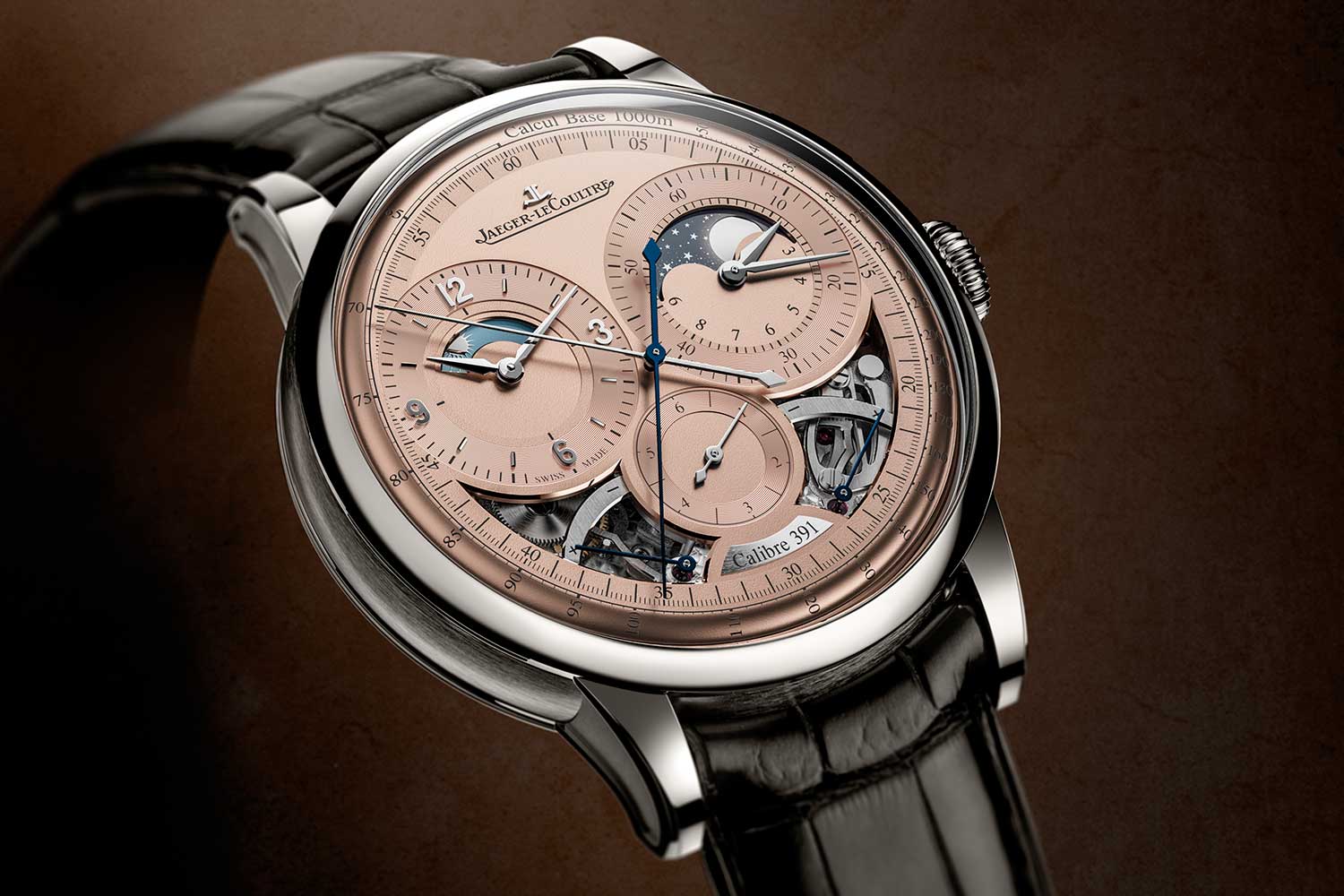
Jaeger-LeCoultre Duomètre Chronograph Moon
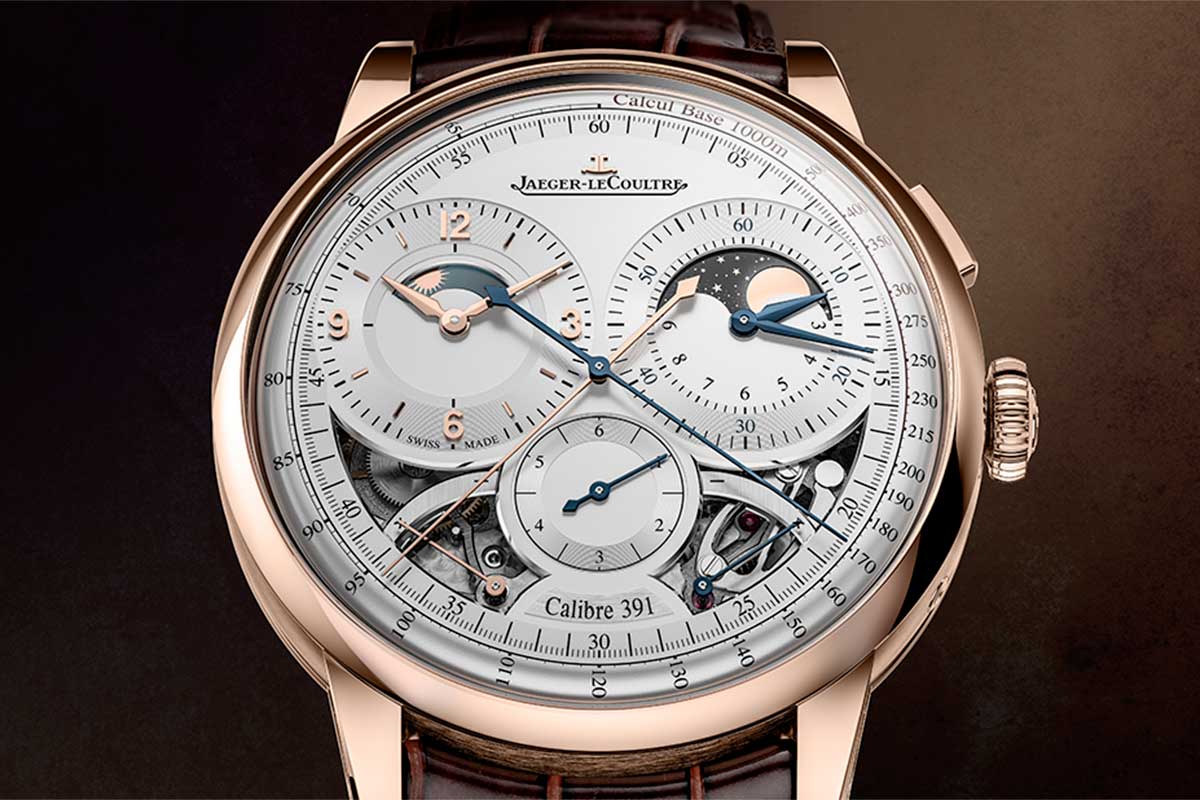
In 2024, Jaeger-LeCoultre brought the Duomètre back into the spotlight with a new generation of watches that reaffirmed the clarity of the idea. No complication stands to gain more from such a construction than the chronograph, which demands a sudden burst of power that would otherwise sap amplitude from the balance. The Duomètre Chronograph Moon, like its predecessor, has a central running seconds and central chronograph seconds, along with a foudroyante at 6 o’clock that jumps in 1/6th-of-a-second steps. To make this possible, one barrel is devoted to the conventional going train for hours, minutes and central seconds, regulated in the usual way by the escapement and balance, while a second barrel drives the chronograph train with the flashing seconds hand. Because the two barrels are separate, the entire consumption of the chronograph is isolated from the going train.
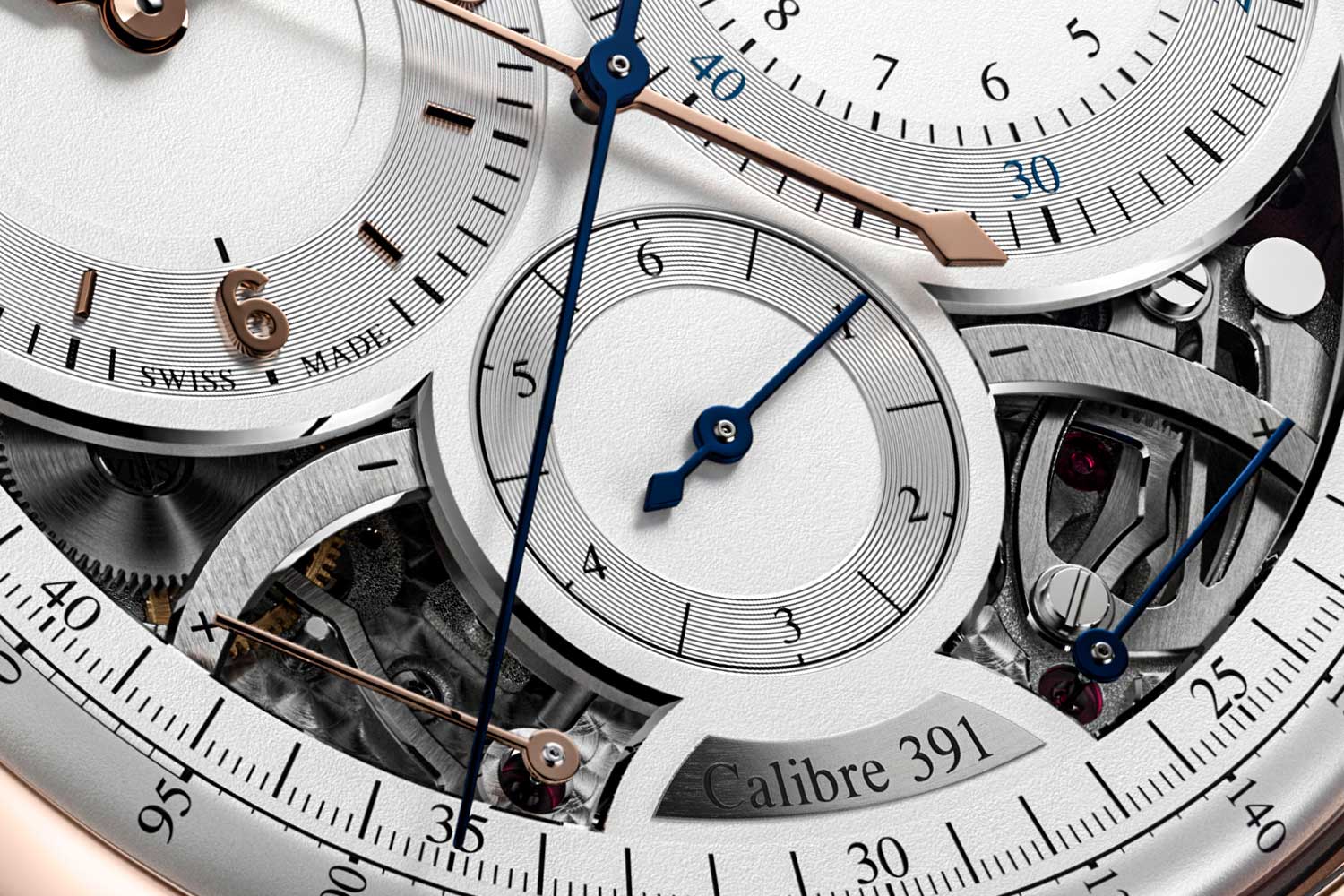
The foudroyante at 6 o’clock that jumps in 1/6th-of-a-second steps
The difficulty lies in the flashing seconds. By definition, this hand must jump in fractions of a second that are tied to the beat of the escapement, which belongs to the timekeeping train, not the chronograph train. To reconcile this, it has a special clutch. Rigidly attached to the escape wheel is a wheel cut with fine wolf teeth. It has twice the number of teeth of the 15-tooth escape wheel to ensure finer indexing relative to the beat of the escapement.
On the axis of the flashing seconds is a pair of stars: one fixed and one free, linked together by a pin running in a slot. The wolf-tooth wheel interacts with these stars so that at each oscillation of the balance, the stars are advanced step by step, transmitting the motion to the foudroyante hand. When the chronograph is running, the stars turn in synchrony with the escapement, ensuring that the flashing seconds hand reflects the true beat of the movement, even though its power source is the separate chronograph barrel.
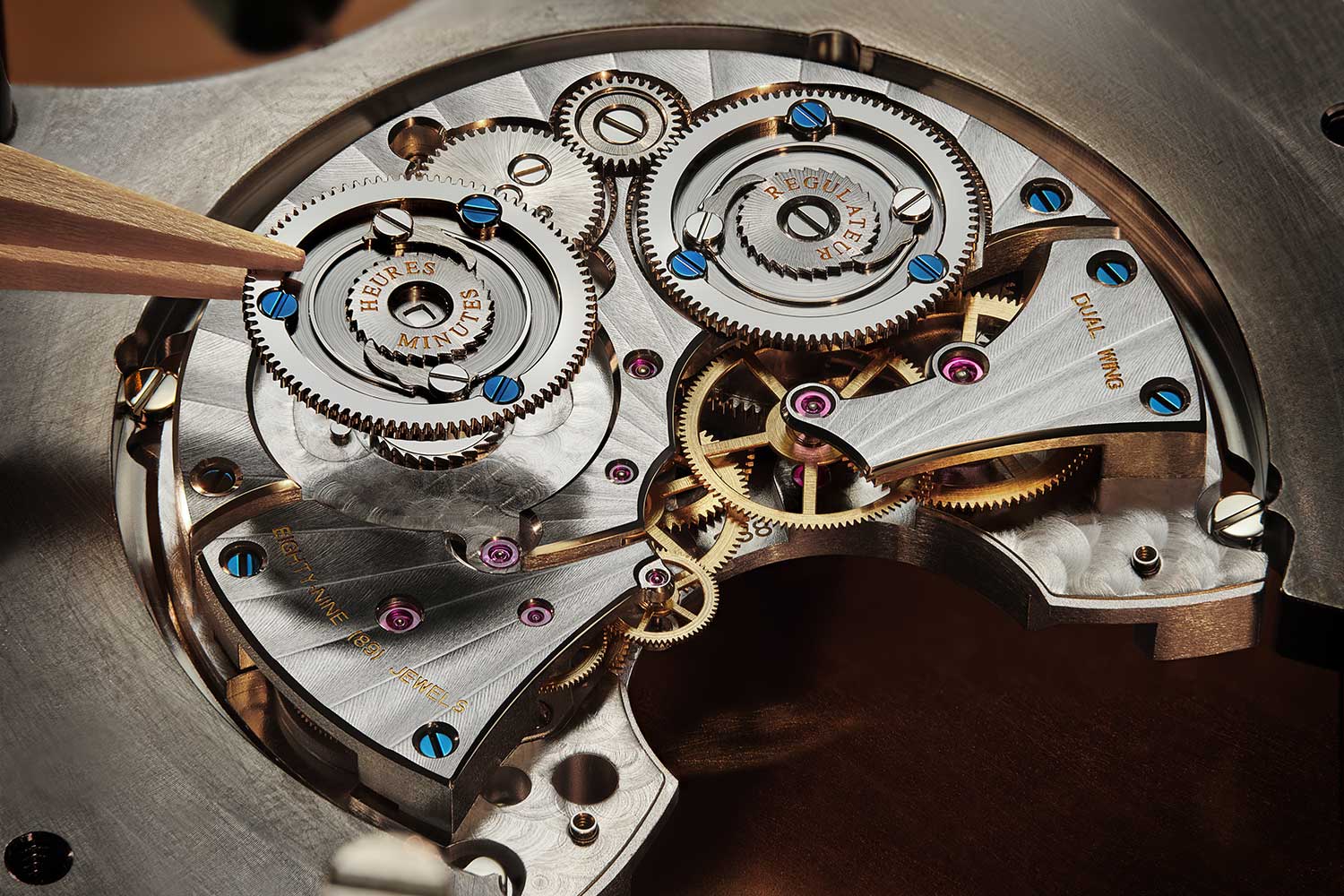
Assembling the movement
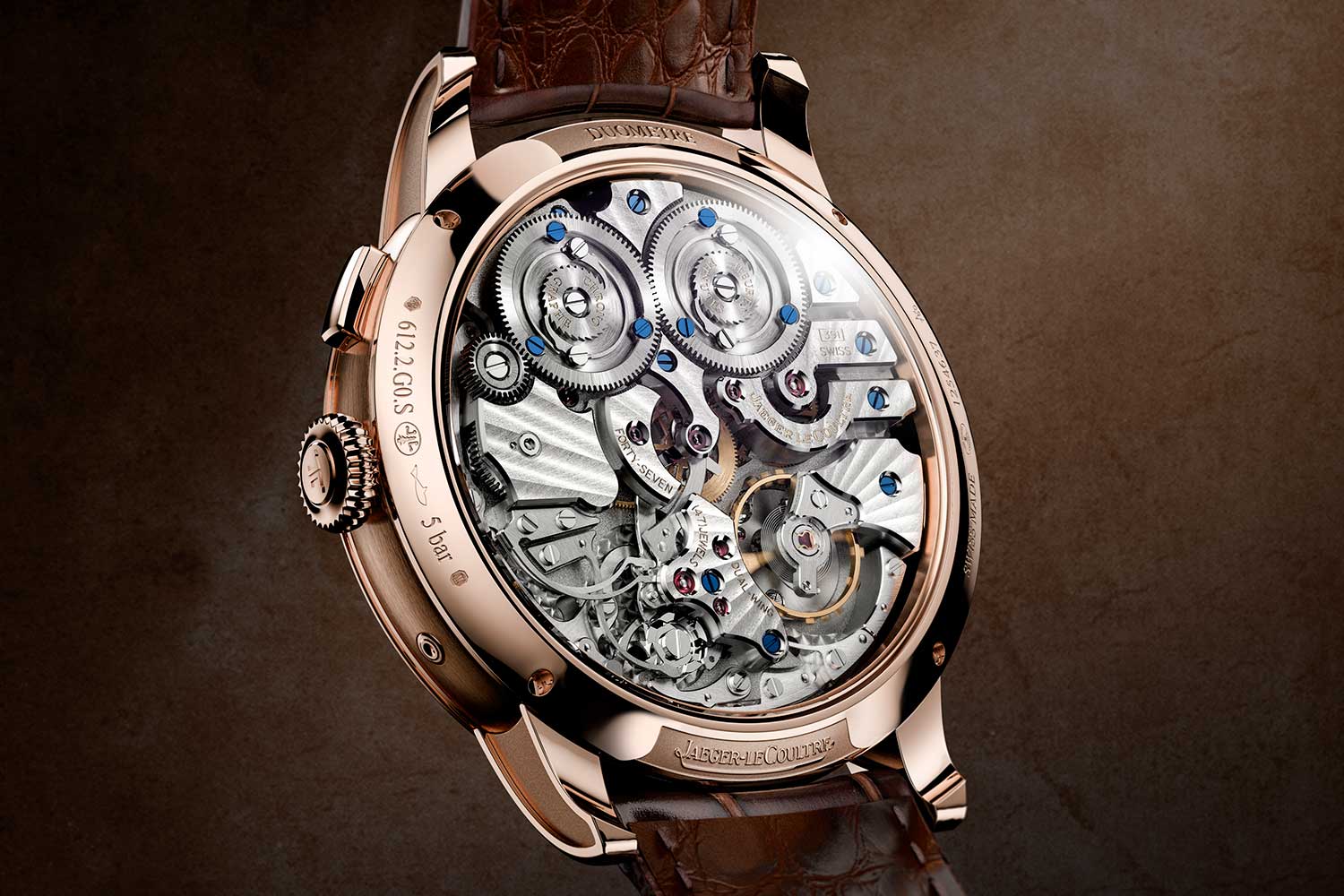
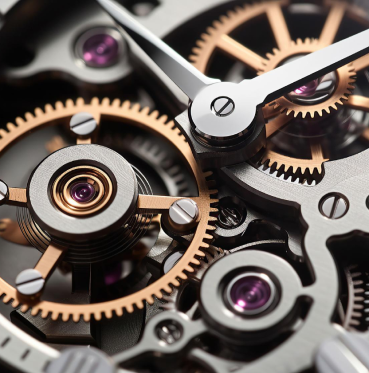
The manual winding caliber 391
The start-and-stop of the chronograph is governed by a column wheel and a rocker that can drop into the path of the star. When the rocker engages, the star is blocked, halting the foudroyante hand and, because it is the point of contact, the entire chronograph train. The escapement continues unhindered, as the second, free star and the pin-and-slot connection allow the wolf-tooth wheel to move without locking. When the rocker is released, the star resumes its stepwise advance with each beat of the balance, and the chronograph runs once more. Resetting is accomplished with hammers that strike the heart pieces of the chronograph counters, including a heart for the flashing seconds, so that all displays return to zero simultaneously.
What results is a chronograph in which the chronograph seconds and foudroyante are driven exclusively by their own barrel, yet the flashing seconds remains slaved to the escapement through this clever clutch. The watch thus achieves independence of power while retaining precision of fraction-of-a-second indication. This solution remains exceptionally compelling till this day because it is not brute force — not simply adding a second oscillator — as others have done, nor letting one train sap energy from another. The combination of conceptual purity and practical effectiveness is what makes it intellectually satisfying.
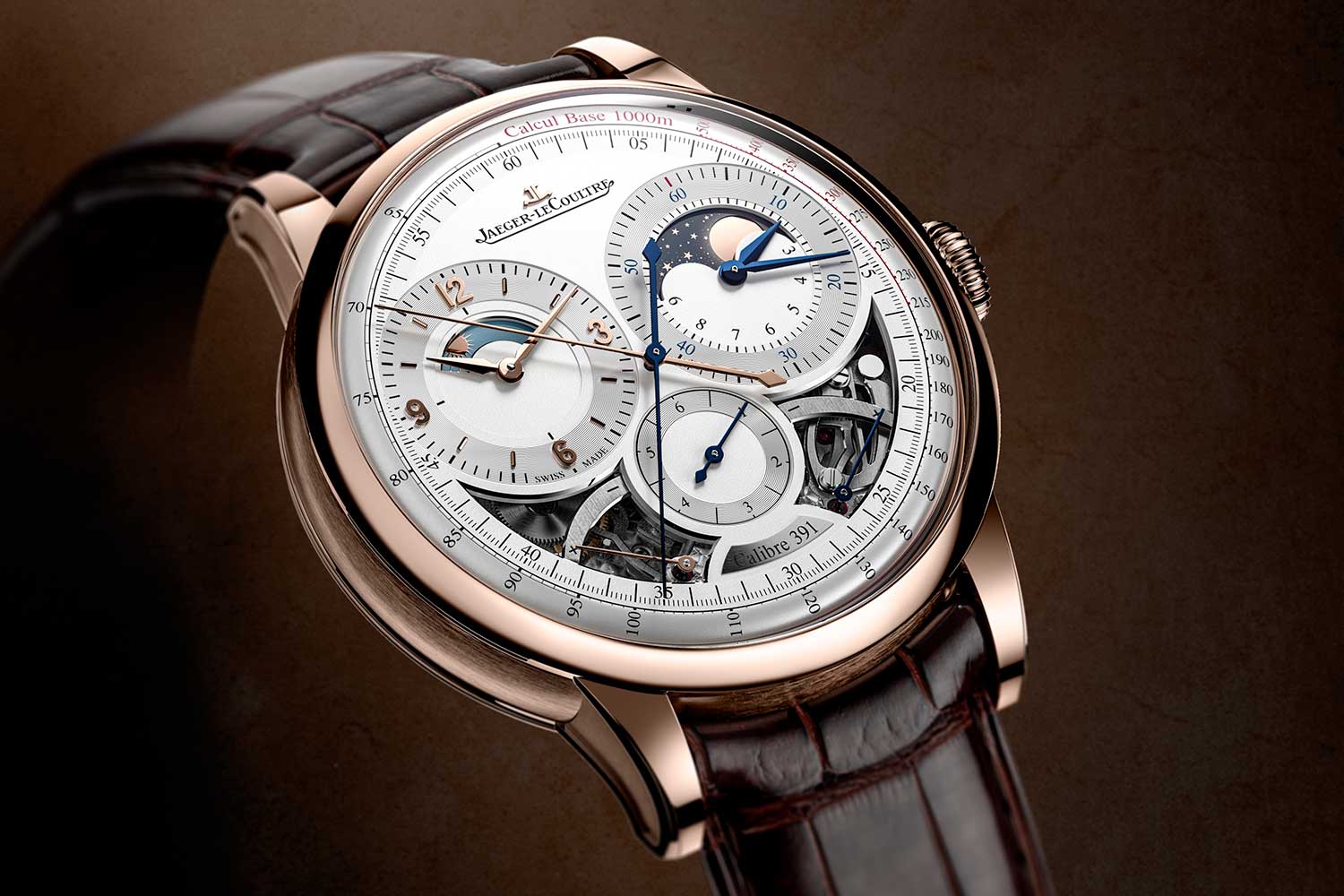
Jaeger-LeCoultre Duomètre Chronograph Moon
Tech Specs: Jaeger-LeCoultre Duomètre Chronograph Moon
Movement Manual winding Caliber 391; 50-hour power reserve
Functions Hours, minutes and small seconds; chronograph with foudroyante (1/6th-of-a-second counter); moonphase and day/night indicator
Case 42.5mm × 14.2mm; 18K pink gold or platinum; water resistant to 50m
Dial Silvered gray or copper-colored opaline
Strap Alligator leather
Jaeger-LeCoultre
You may also like
Editorial
Revolution Awards 2025: Best Design Watch — Jaeger-LeCoultre Reverso Tribute Monoface Small Seconds
Jan 27, 2026
Editorial
Revolution Awards 2025: Best Design Watch — Jaeger-LeCoultre Reverso Tribute Monoface Small Seconds
Jan 27, 2026

Editorial
Holiday Horology: Something Old, Something New, Something Special — Tracey Llewellyn, Group Editorial Director
Dec 18, 2025
Editorial
Holiday Horology: Something Old, Something New, Something Special — Tracey Llewellyn, Group Editorial Director
Dec 18, 2025
Editorial
The Revolutionary List: 30 Pioneering Watches – the Jaeger-LeCoultre Gyrotourbillon 1
Dec 2, 2025
Editorial
The Revolutionary List: 30 Pioneering Watches – the Jaeger-LeCoultre Gyrotourbillon 1
Dec 2, 2025