The Omega Constellation Observatory Makes Watchmaking History
Editorial
The Omega Constellation Observatory Makes Watchmaking History

Don’t count the seconds; make them count. That’s exactly what Omega has done with its new Constellation Observatory Collection.
All nine references in the new collection do away with the running seconds hand, relying instead on just the minute and hour hands to tell time. But here’s a seeming paradox — just how do you measure precision in a fully cased watch without the all-important seconds hand? In a post-Quartz Crisis era where expectations of mechanical watches are narrowed down to rate deviations of ± 1 second, how does one make the case for any measure of chronometric precision, especially for Master Chronometer certification that requires testing on the fully cased watch, without a seconds hand?

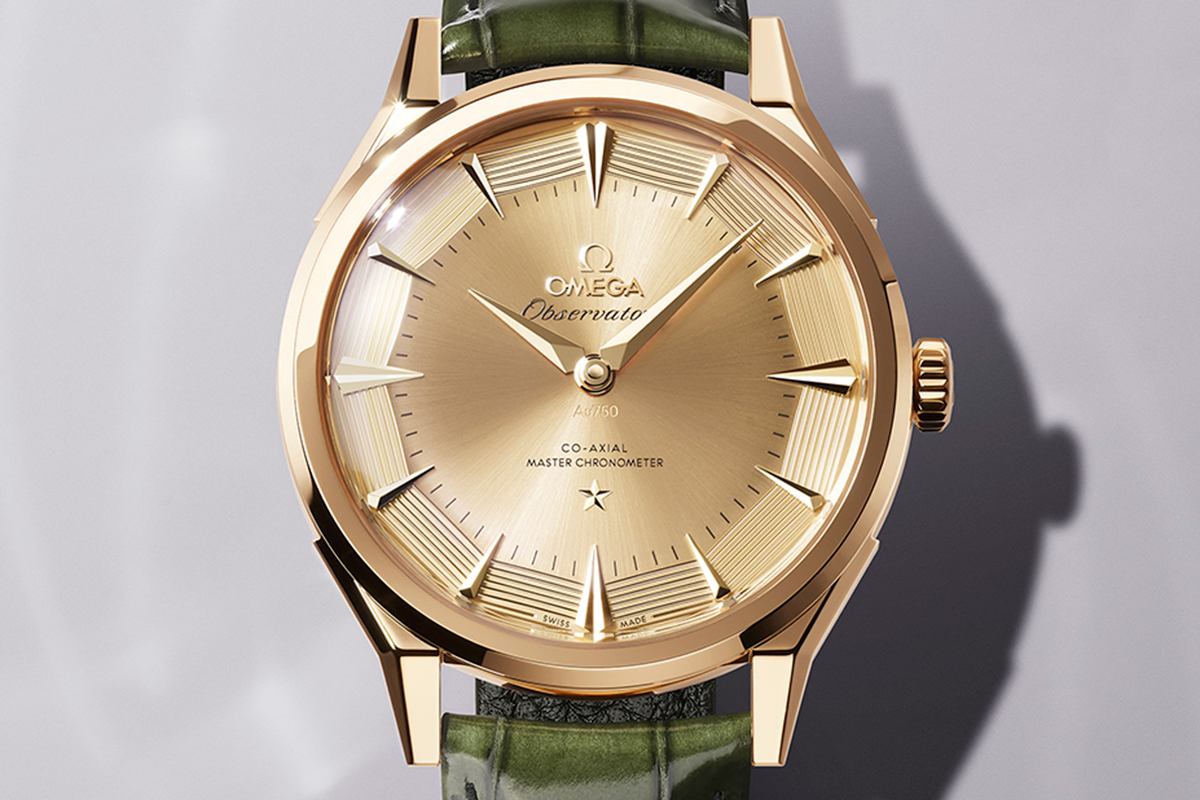
Precious Metal versions of the Omega Constellation Observatory.

The new Omega Constellation Observatory in O-MegaSteel.
Well, as it turns out, you can. In certifying a movement as a chronometer, COSC uses optical control machines equipped with ultra high-speed digital cameras to determine rate accuracy and deviation. One of the clauses in COSC’s technical rules is that a chronometer movement must feature a permanent seconds display. During testing, a temporary seconds hand is added so that the movement of the seconds hand is recorded and precision can be determined. Of course, theoretically, the brand can decide to remove the seconds hand post-COSC certification, but in practice, the hand stays, if not for anything else, to emphasize the precision at play. Not anymore. Omega has just upped the ante.
Says Raynald Aeschlimann, President and CEO of Omega, “The development of a new acoustic testing methodology has made that requirement obsolete. It is this breakthrough that has enabled us to present the Constellation Observatory, the first two-hand watch to achieve Master Chronometer certification.”

A New Testing Methodology: Dual Metric Technology
Developed by the Laboratoire de Précision, the new testing methodology centers on what is called Dual Metric Technology, which powers a wireless, self-contained testing unit that consolidates all Chronometer and Master Chronometer certification processes into a single device. In place of traditional testing that relies on photographing the position of the seconds hand to determine accuracy and deviation, it captures acoustics instead, that tick-tock sound generated as the escapement releases energy from the barrel in controlled bursts. Think of it as measuring the heartbeat of a mechanical watch.
From the very first second, that acoustic signature is captured and used to identify irregularities, sensitivities, variations and fluctuations that might occur throughout changes in the environmental parameters of the testing. To be clear, the idea of using its beat to determine precision in a watch is not new in itself. It is, however, a groundbreaking first in providing a continuous stream of data in the extensive and exhaustive certification process towards Master Chronometer status.
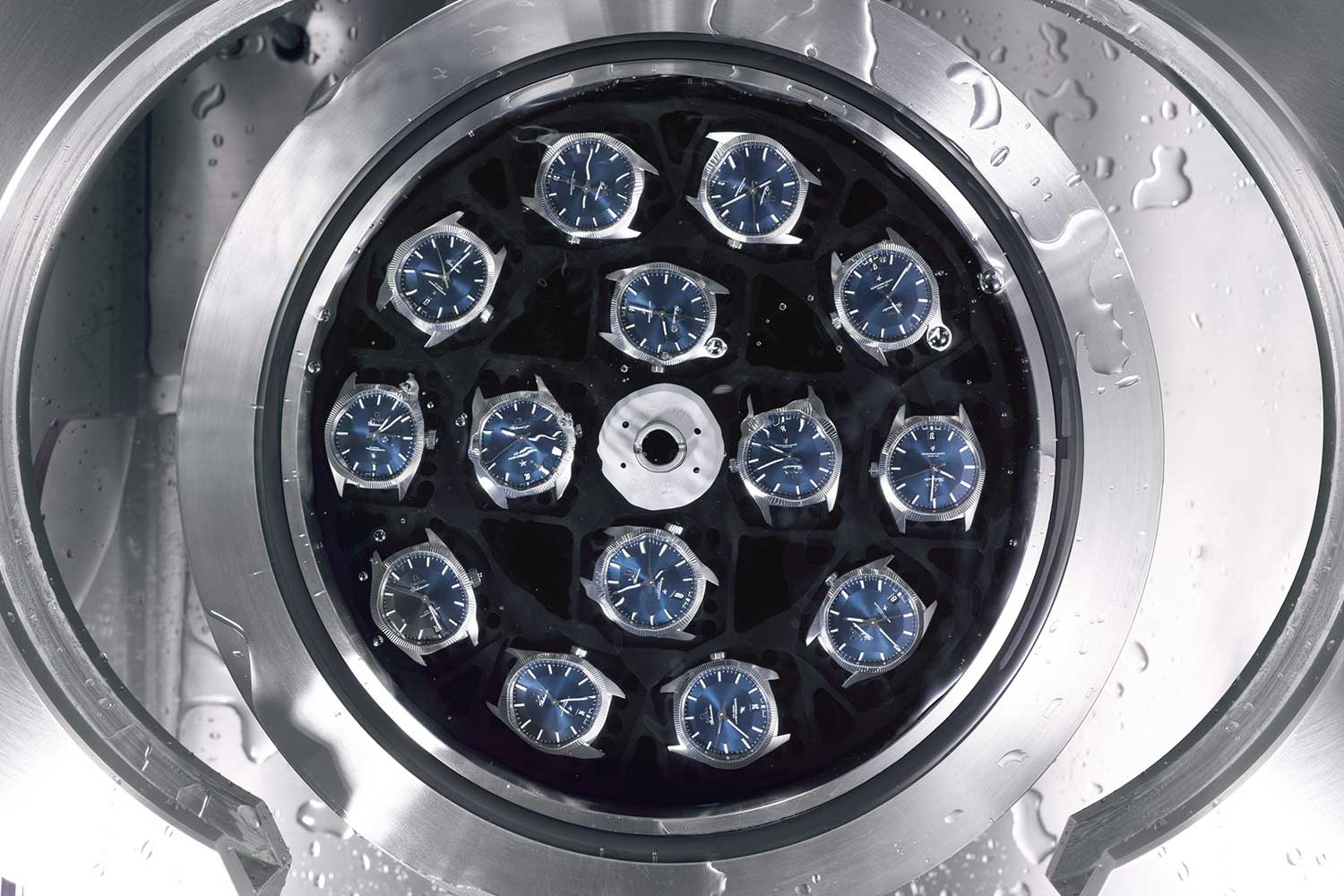
One key Omega milestone in recent years is the development of the METAS (Master Chronometer Certification), which adds a magnetic resistance requirement to ensure accurate timekeeping
Using Dual Metric Technology, the precision of the fully cased watch is measured and determined at all eight stages of the Master Chronometer testing, which runs a full 25 days. That includes: exposure to a 15,000-gauss magnetic field, measure of power reserve and water resistance, and deviation of rate in six positions. Crucially, beyond determining certification requirements of 0/+5 seconds per day in a watch, it is now possible to identify exactly where and when deviation occurs, and the pinpoint the variables.
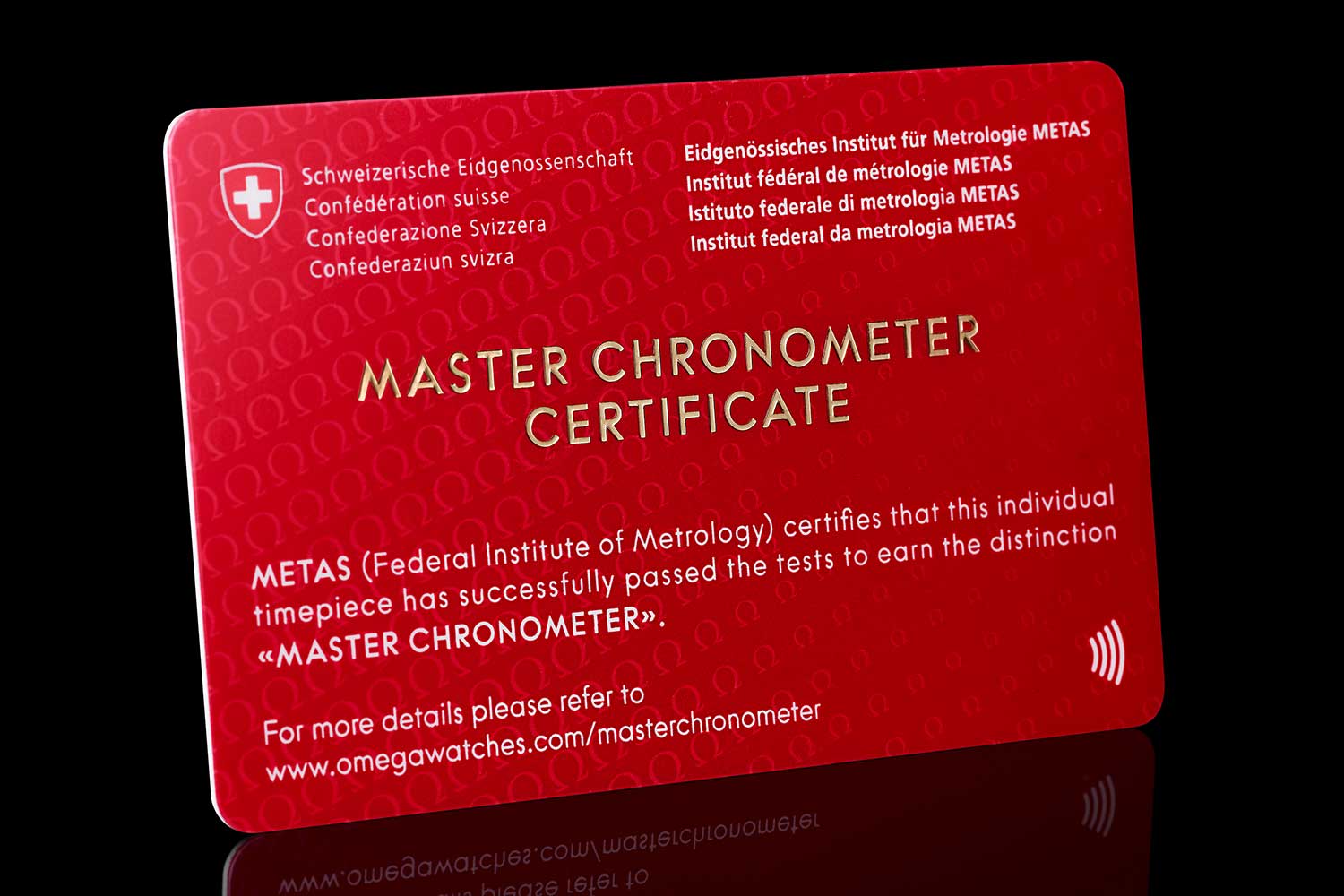
The Omega METAS (Master Chronometer Certification)
Testing aside, all of these would, of course, entail valuable data that would presumably further research and development in conceivably all fields of horology. In a nutshell, this is the next stage in marking chronometric precision.
Precious and Precise: The Constellation Observatory
For Omega, which established the Laboratoire de Précision as an independent testing body in 2023, where better to announce this development than via the Constellation? Before the Speedmaster and the Seamaster, the Constellation was Omega’s collection of choice to showcase the high precision of its movements as its first series-produced chronometer collection. And to drive home the point loud and clear and quite brilliantly, it is doing so via a family of two-hand Constellation watches, without the running second hand, and all certified Master Chronometers.
The Constellation was born from the brand’s successes at the Observatory trials, as announced on the caseback of Constellation watches. From the earliest Constellation released in 1952, you’ll find a medallion featuring the Observatory of Geneva beneath eight stars, one each for the two chronometer records in 1933 and 1936, and the six first-place awards the brand won between 1945 and 1952.
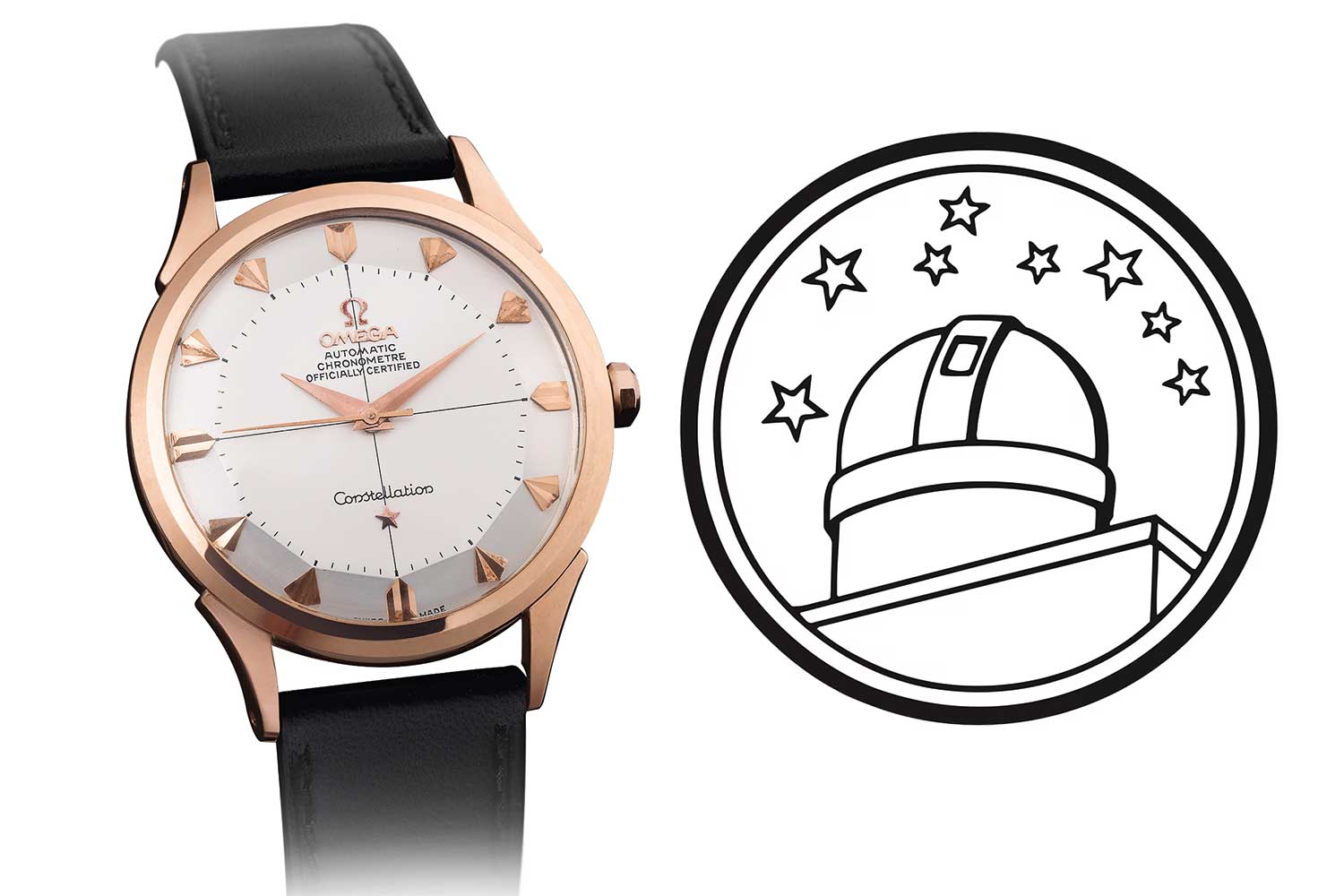
1952: The Omega Constellation. The iconic eight stars on the dial and engraving of the observatory on the caseback are in homage to the records that Omega set at Kew-Teddington and Geneva Observatory

1936: The Omega record-breaking chronometer
The new two-hand collection is powered by two new calibers — the 8915 and 8914. Both are based on the Caliber 8900, which was first launched in 2015 for the Globemaster, the first watch to be tested by METAS and officially certified as a Master Chronometer. The Caliber 8915 also bears the distinction of being the first Omega movement with 18K Moonshine Gold rotor and balance bridge, in addition to a variation with the usual 18K Sedna Gold.
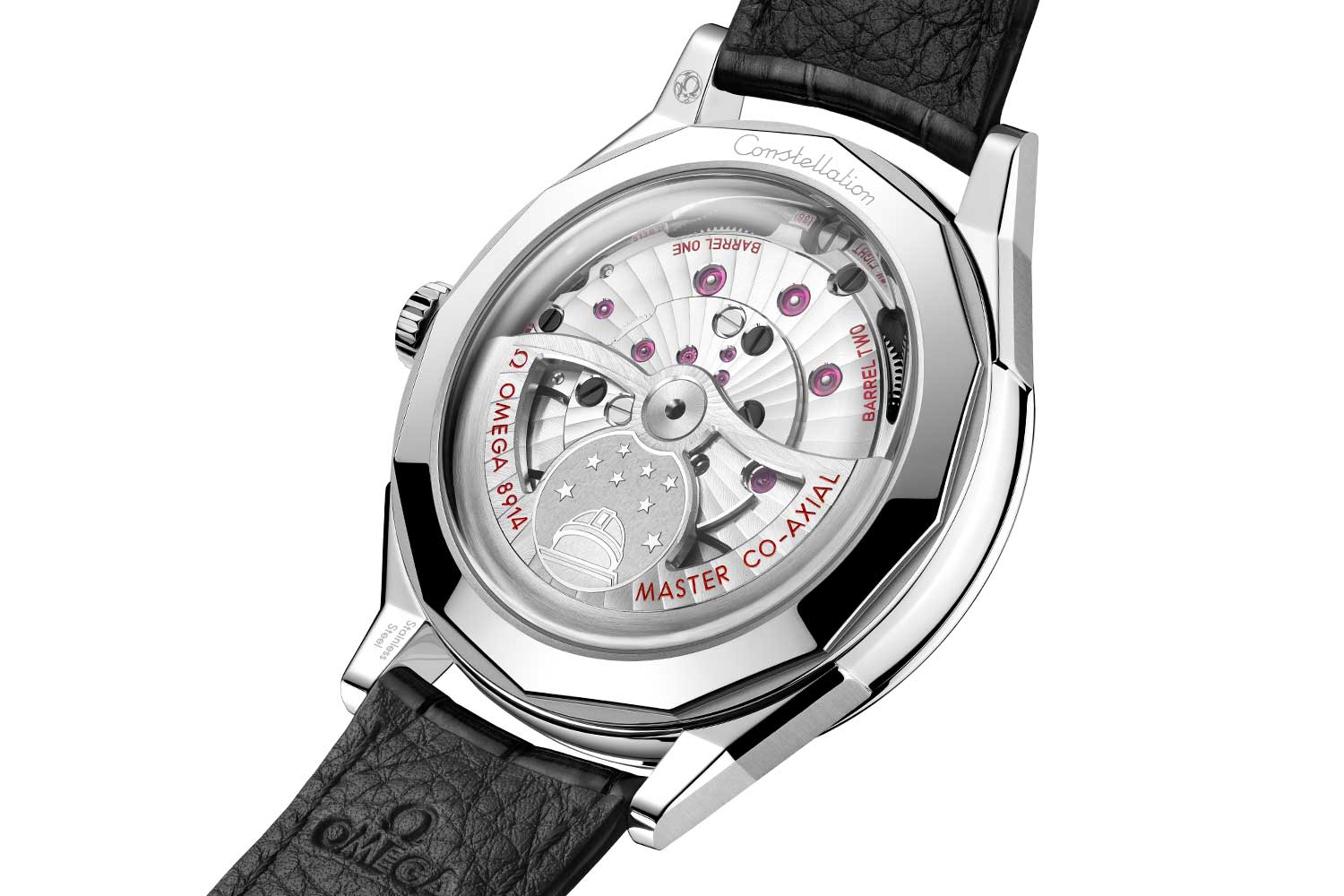
The Caliber 8914
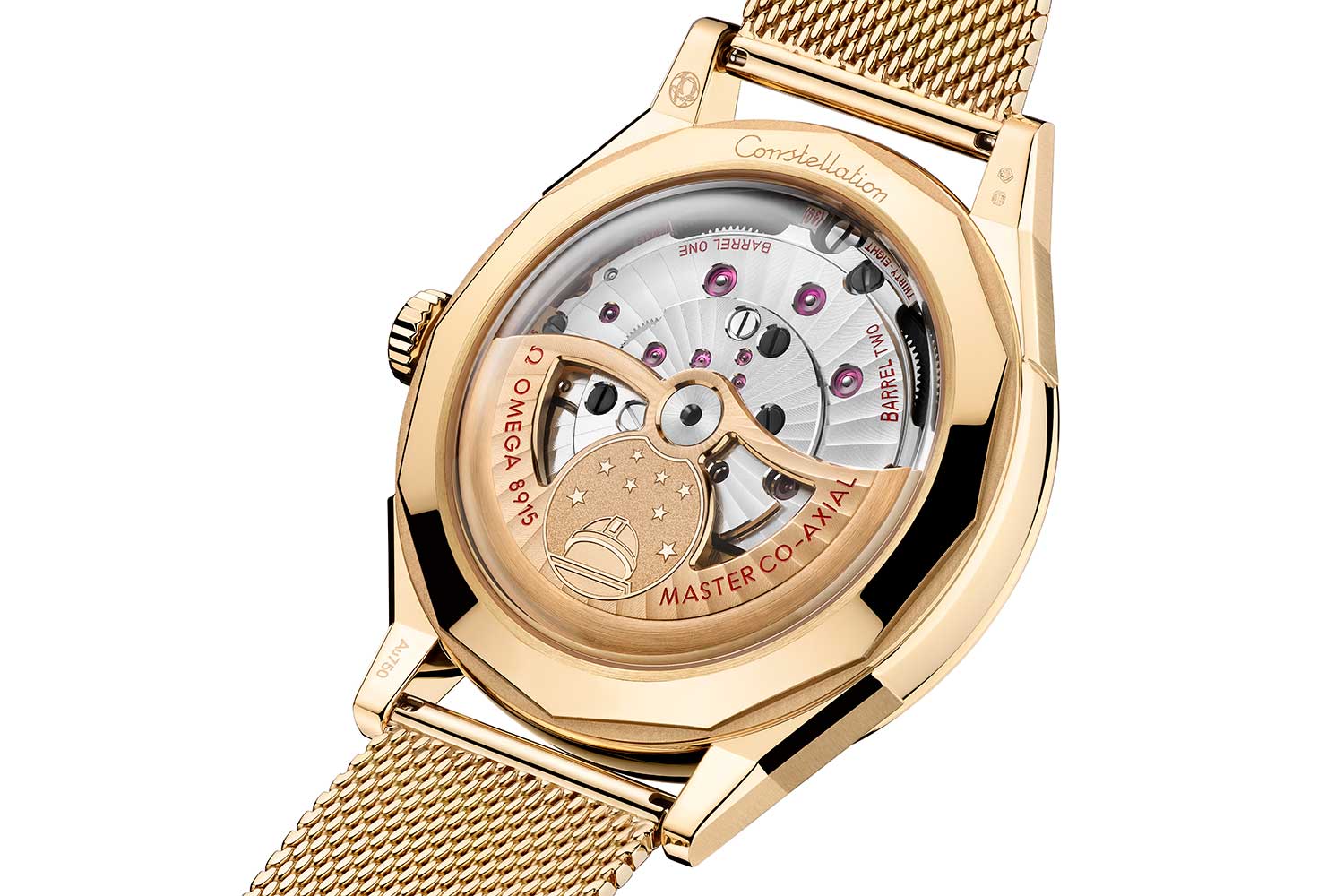
The Caliber 8915
The Omega Globemaster from 2015
Design-wise, the new Constellation Observatory Collection brings back the best of the heritage Constellation watches, beginning with the distinctive convex dials, popularly called “pie-pan.” Here, grooves (stamped on the steel pieces and guilloché in precious metal models) run across each sloping facet on the edges of the dial, which bear sunray finish on the precious metal examples, outlining and subtly emphasizing the dodecagonal shape. The sole exception is in the black ceramic dial variation, which marks off the 12 angled sides without help, an achievement that requires significant research and development. The hour markers, too, reference the original with their faceted indexes, nicely elongated in its modern iterations, as are the dauphine hands.
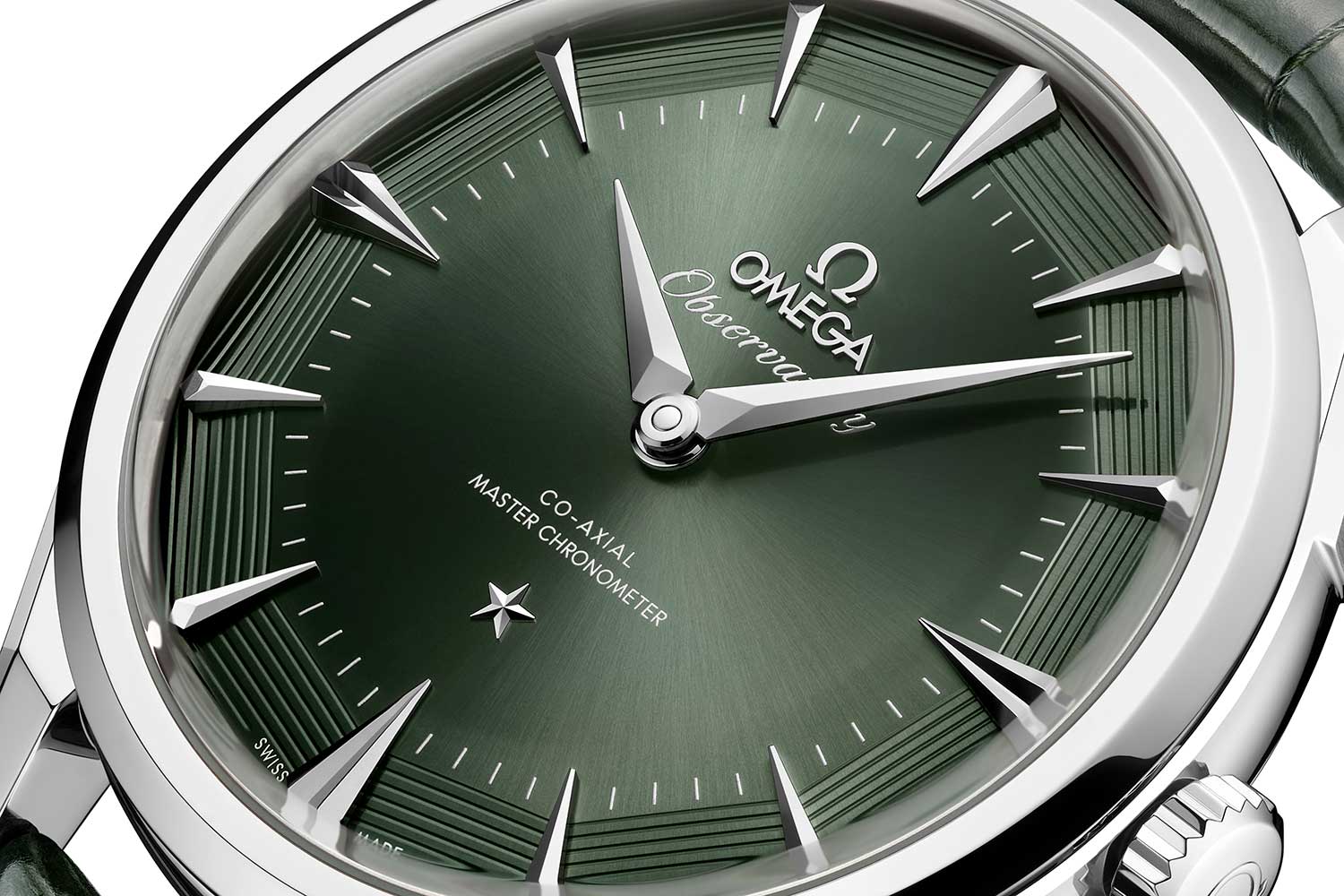
Closed-up on the “pie-pan” dial: the sloping facet on the edge and sunray guilloché on the precious metal
Omega also brought back another signature of the era — dog-leg lugs, which disappeared in the Constellation family during the 1970s but made a surprise reappearance last year in the Omega Seamaster Milano Cortina. Taut and angled, they resemble a dog’s hind legs, hence the moniker. Here, they echo the sharp lines on the dial and are polished for shine. Last and certainly not least, for the 18K Moonshine Gold iteration, Omega is bringing back a stunning nine-row brick pattern mesh bracelet, inspired by brick bracelets of the same period.
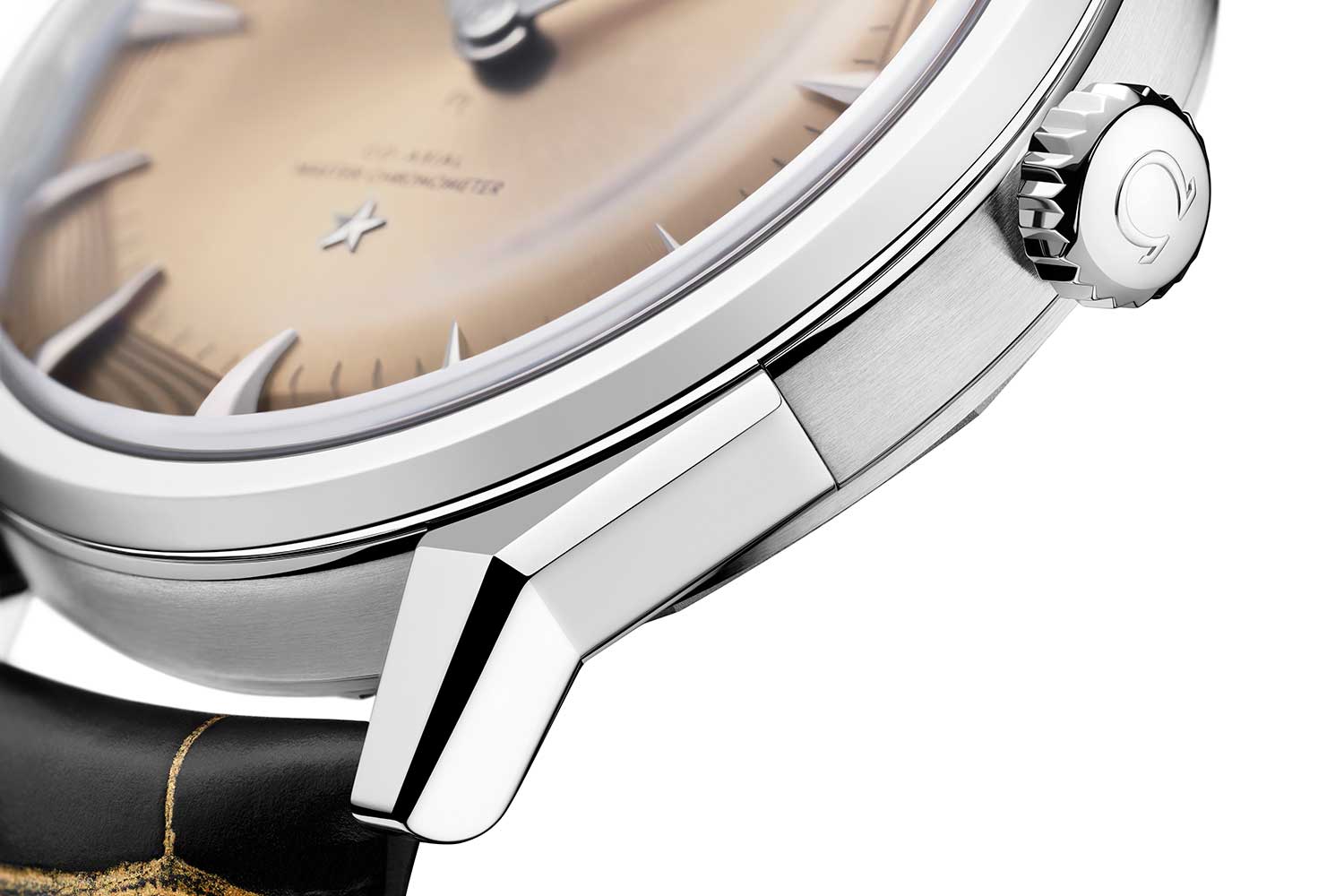
The dog-leg lugs
It is a stunningly elegant collection, one that charts new territory for Omega on manifold levels. In the name of chronometric precision, the Constellation Observatory Collection is truly making it count for Omega.
Tech Specs: Omega Constellation Observatory

Movement Self-winding Caliber 8914 (with rhodium-plated rotor) or Caliber 8915 (with 18K gold rotor)
Functions Hours and minutes
Case 39.4mm; Platinum-Gold, 18K Moonshine Gold, 18K Sedna Gold, 18K Canopus Gold, or O-MegaSteel
Dial Black ceramic, or colored pie-pan with hand guilloché or stamped pattern, depending on model, ; applied hour markers
Strap Leather or metal bracelets, including a nine-row brick pattern mesh bracelet for the 18K Moonshine Gold edition
Price CHF 8,500 in O-MegaSteel; CHF 9,500 in O-MegaSteel with ceramic dial; CHF 46,00 in Moonshine Gold on bracelet; CHF 29,500 in Moonshine Gold; CHF 29,500 in Sedna Gold on leather; CHF 34,500 in Canopus Gold on leather; CHF 45,000 in Platinum-Gold
Omega
You may also like
Editorial
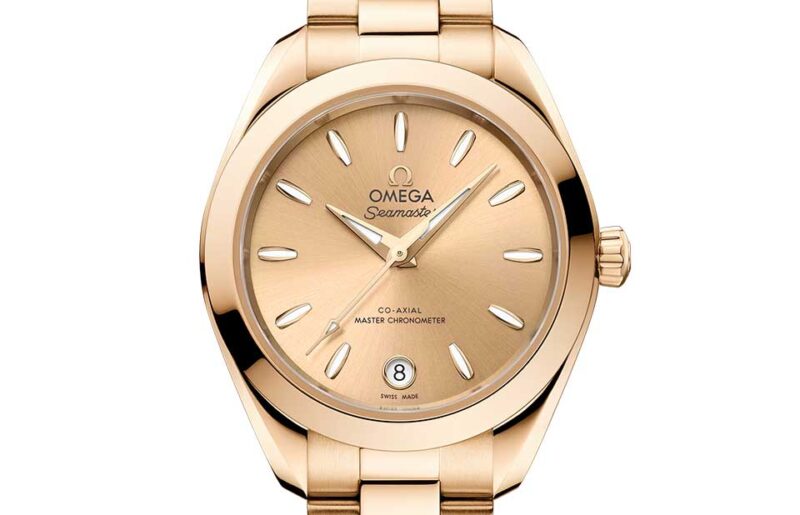
Revolution Awards 2025: Best Women’s Watch — Omega Seamaster Aqua Terra 150M 30mm, Moonshine Gold on Moonshine Gold
Jan 27, 2026
Editorial
Revolution Awards 2025: Best Women’s Watch — Omega Seamaster Aqua Terra 150M 30mm, Moonshine Gold on Moonshine Gold
Jan 27, 2026
Reviews
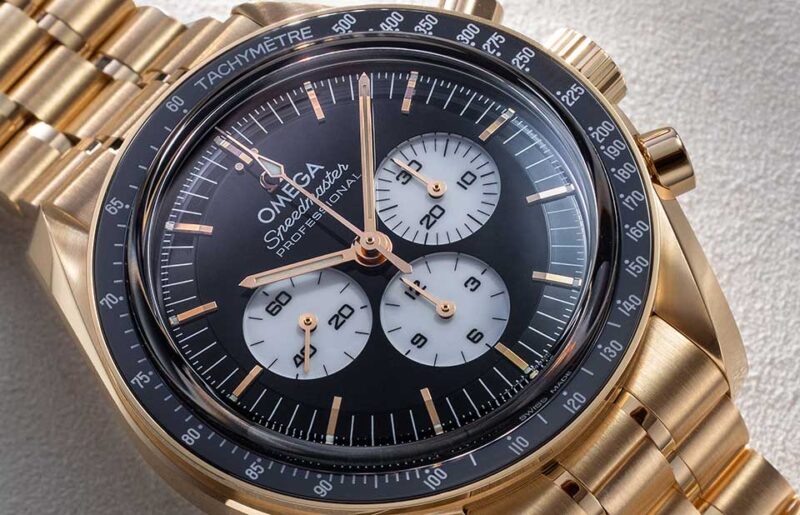
A Closer Look: Omega Speedmaster Moonwatch “Reverse Panda”
Jan 21, 2026
Reviews
A Closer Look: Omega Speedmaster Moonwatch “Reverse Panda”
Jan 21, 2026

Editorial
The Revolutionary List: 30 Pioneering Watches – the Omega Speedmaster Chrono Chime
Dec 2, 2025
Editorial
The Revolutionary List: 30 Pioneering Watches – the Omega Speedmaster Chrono Chime
Dec 2, 2025