The Grand Budapest Horologer: Aaron Becsei and the Birth of the Pameus
Editorial
The Grand Budapest Horologer: Aaron Becsei and the Birth of the Pameus

At the pinnacle of haute horlogerie is an underground community consisting of fastidious, secretive, anonymous, well-informed and, by necessity, well-heeled connoisseurs of impeccable taste. Call them “the supercollectors.” They seek out watches for which one quality is universal, beyond the mandatory, innate horological excellence: exclusivity. One is unable to put a value on sheer rarity, but for these aficionados, watchmakers whose annual production barely enters double digits have an irresistible appeal, which is lost when the numbers go beyond that. There’s no fear of this happening with the timepieces of Aaron Becsei.

Aaron Becsei in his previous studio in Hungary before moving to his new atelier
There is almost a cult feel to Becsei, whose creations until this year’s official launch bore the name “Bexei.” The 20 or so he has produced over the past 18 years, each a unique piece designed to suit the client’s own desires, are among watchmaking’s best-kept secrets, but that is about to change. The shy Becsei has succumbed to demand — but only just. He may have been dragged kicking and screaming into the world of serial watch production.
Working in almost total isolation from the watch mainstream in his atelier in Budapest, Becsei has operated under the radar, unknown to all but the most tenacious of watch enthusiasts. Obscure or not, he has been a presence among other watchmakers for nearly two decades, since he came to the attention of the Académie Horlogère des Créateurs Indépendants (AHCI) in 2007.
Becsei would become the organization’s youngest member at just 26. His achievements even then were astonishing, capturing the attention of such authorities as Justin Koullapis of the British Horological Institute. Koullapis, with his special interest and expertise in miniature clocks and triple-axis tourbillons, noted that two of Becsei’s presentations were “remarkable for any watchmaker with decades of experience, let alone a twenty-something.”
Koullapis was referring to Becsei’s miniature double-pendulum Zappler clock of 2003, which stands at only 35mm high, and the table clock he produced two years later, which he named “Tourbillon No. 1.” In addition to its tourbillon escapement, the clock showed month, day, date, power reserve, world time and temperature. But the timepiece that would both impress Koullapis and turn Becsei into a cause célèbre for a pair of proactive enthusiasts — more anon — was his first wristwatch, the triple-axis tourbillon Primus.
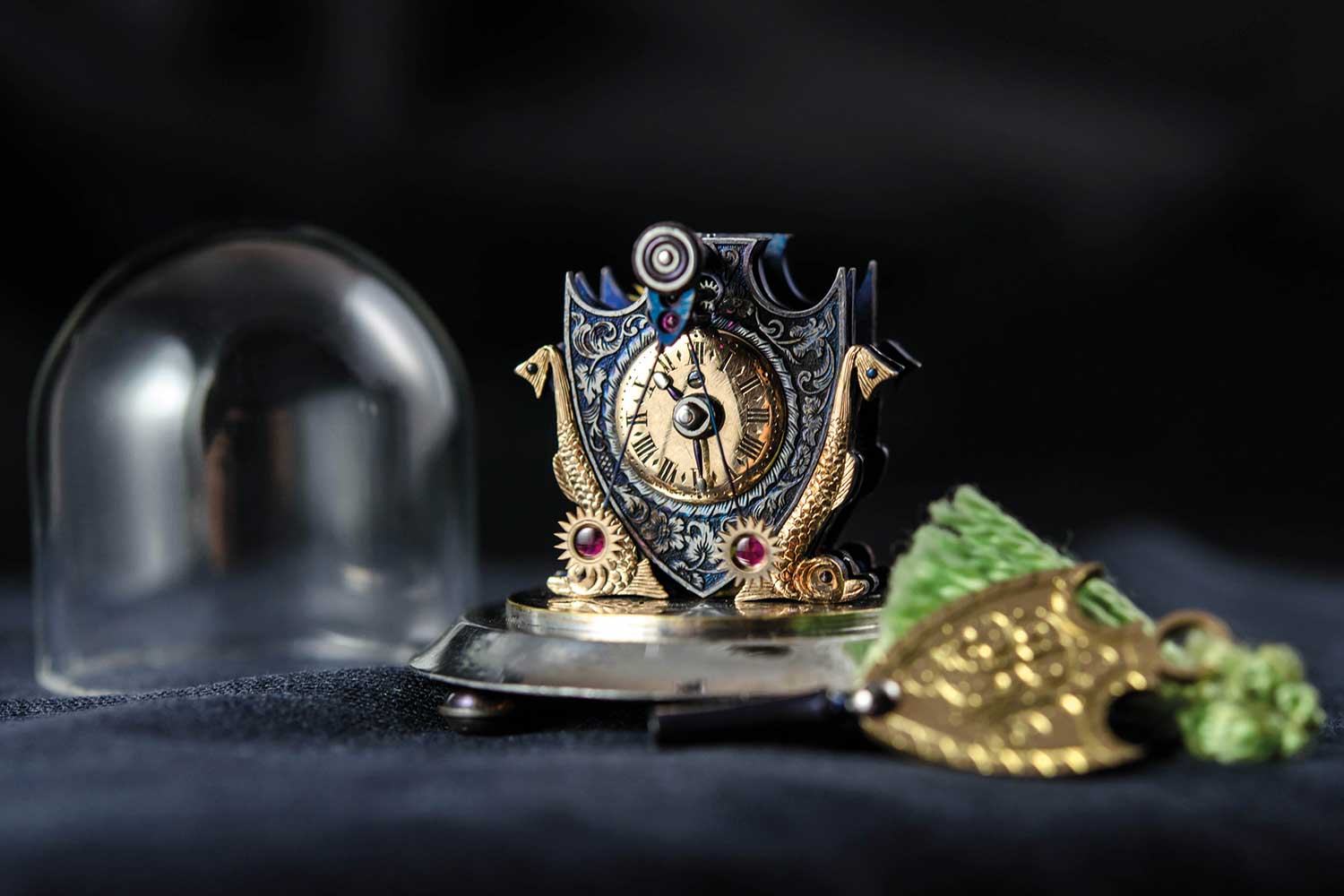
At 35mm high (with dome), the Miniature Zappler is the smallest known working pendulum clock in the world
-
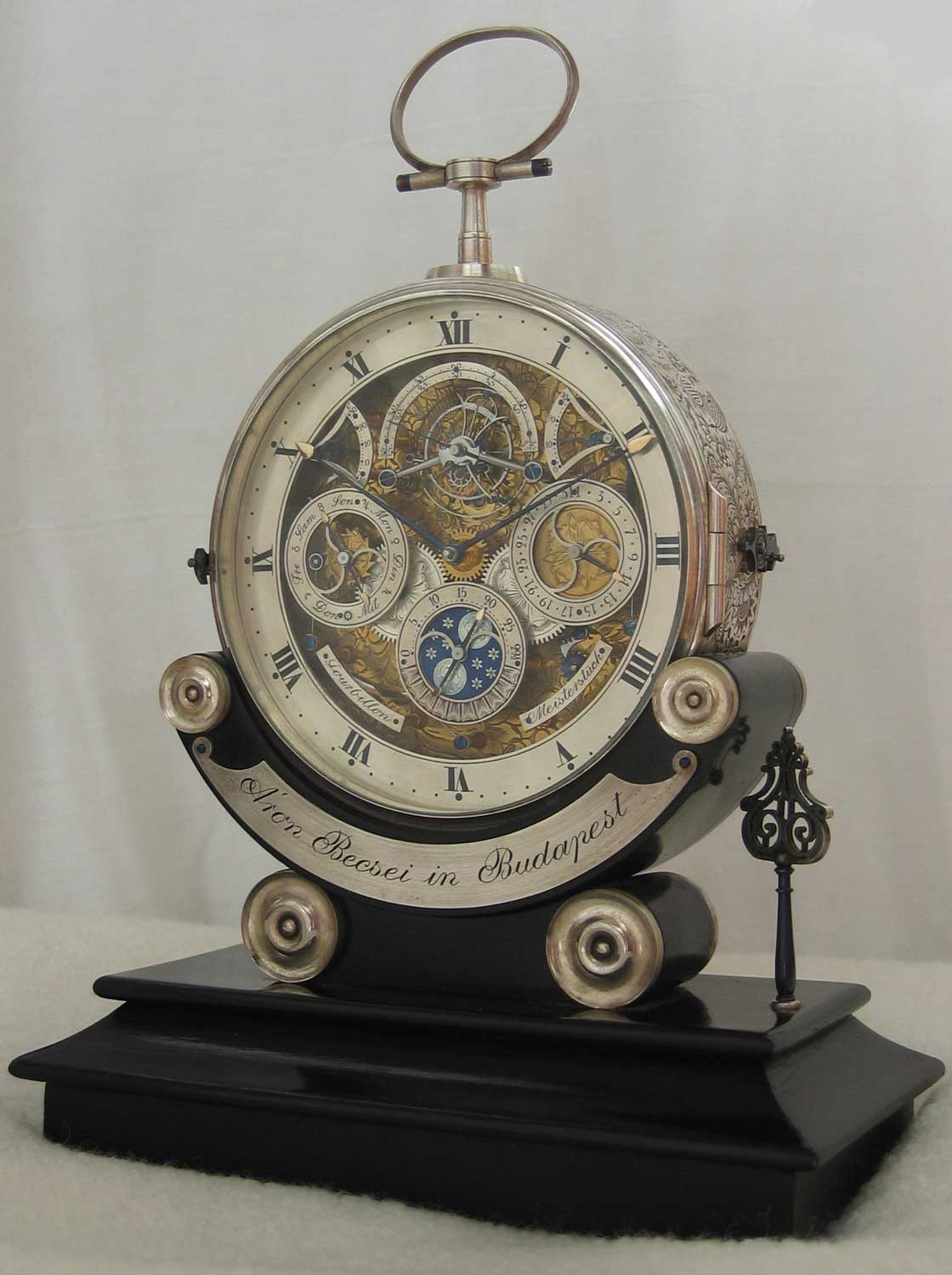
- Becsei’s Tourbillon No.1 with calendar, moonphase, power reserve indicator, thermometer and a world time function
-
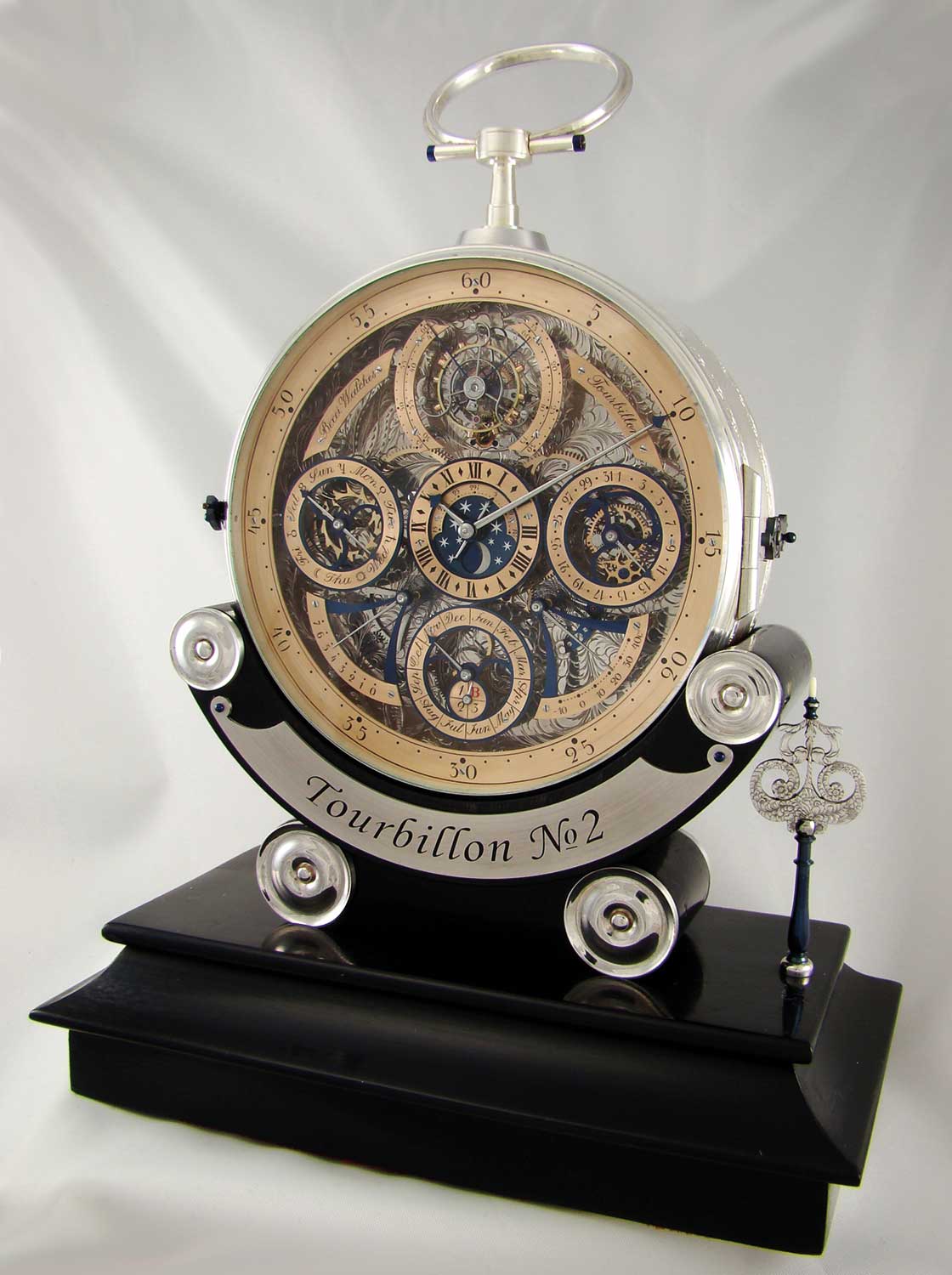
- Tourbillon No.2. features a self-designed perpetual calendar, thermometer, windup indicator and world time
With that accomplishment, Becsei joined the ranks of master watchmakers including Thomas Prescher, Vianney Halter and Eric Coudray capable of producing a multi-axis tourbillon in a wristwatch. In Primus, the inner cage makes a complete revolution every 30 seconds, the middle cage rotates every 2 1/2 minutes, and the outer revolves once every 12 1/2 minutes. It remains a rara avis.
Primus, though a complete one-off, would establish the general look of the few wristwatches Becsei would produce for clients at the rate of one a year. The style was Art Deco, the case shape vaguely reminiscent of rectangular Patek Philippe and Vacheron Constantin models of the 1930s and 1940s. What added technical noteworthiness to the Primus was a patented feature: Becsei replaced the standard ball bearings used to support a tourbillon with his own jeweled bearings.
Born To It
How did this prodigy of the AHCI come from nowhere to create some of the most difficult clocks and watches imaginable? While Hungary is not known for watchmaking, Becsei represents the third generation, following his grandfather and father who undertook watch servicing in Budapest. They repaired and restored clocks and watches, and Becsei grew up absorbing their knowledge and skills.
Says Becsei, “I enrolled in a two-year watchmaking course, but it was theoretical. The real education was acquired at the bench working for my father. My education did not stop there as I was inspired by George Daniels and his book, Watchmaking.”
Although truly a traditional hands-on watchmaker, Becsei says, “I also completed a course in CAD/CAM design at the School of Technical Sciences in Budapest.” This would prove useful when Becsei was developing the patented jeweled bearings for his Primus tourbillon. His graduation thesis in 2005 was a technical paper about his first tourbillon clock.
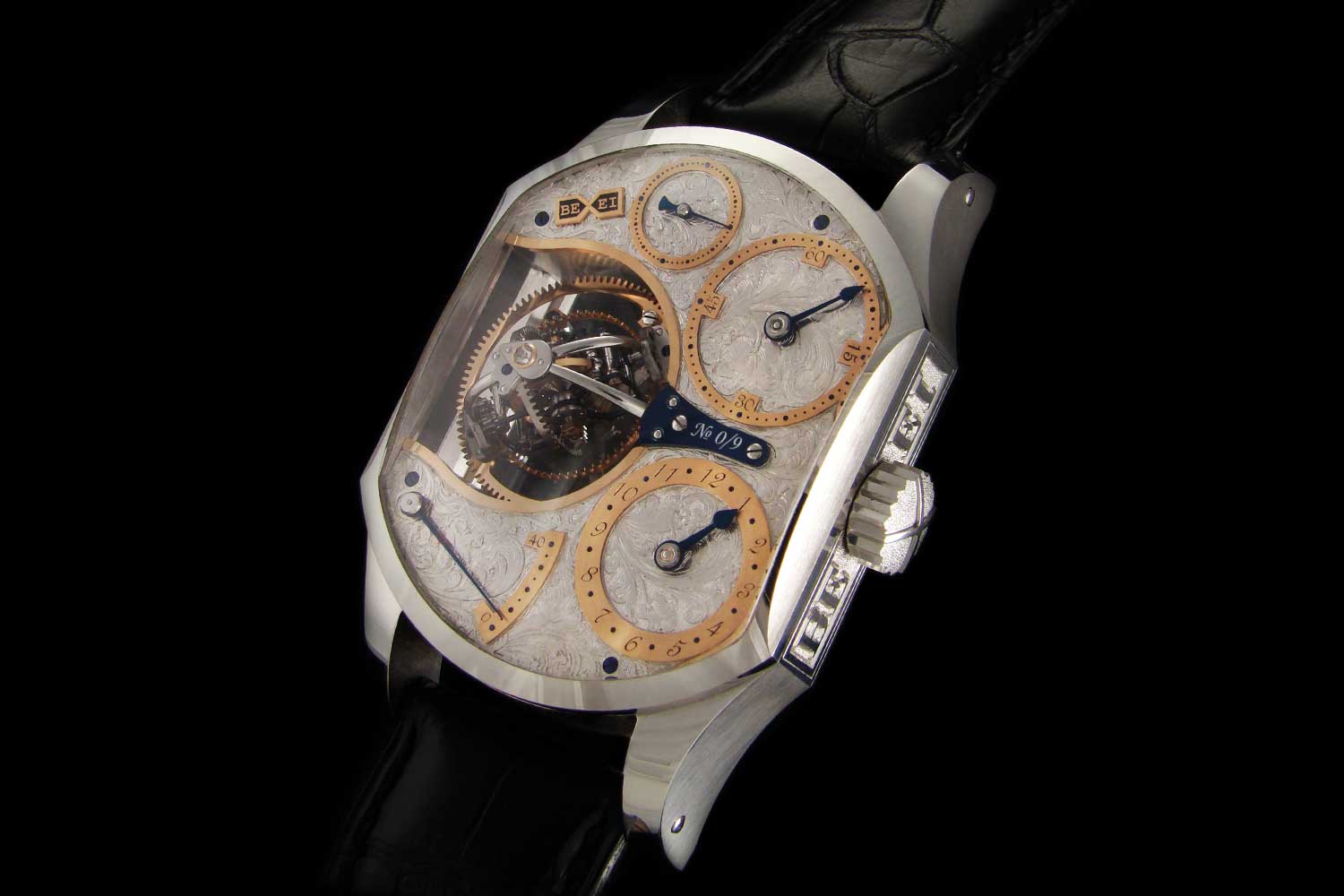
Primus features a three axis tourbillion where the external cage uses jewel bearings instead of ball-bearings
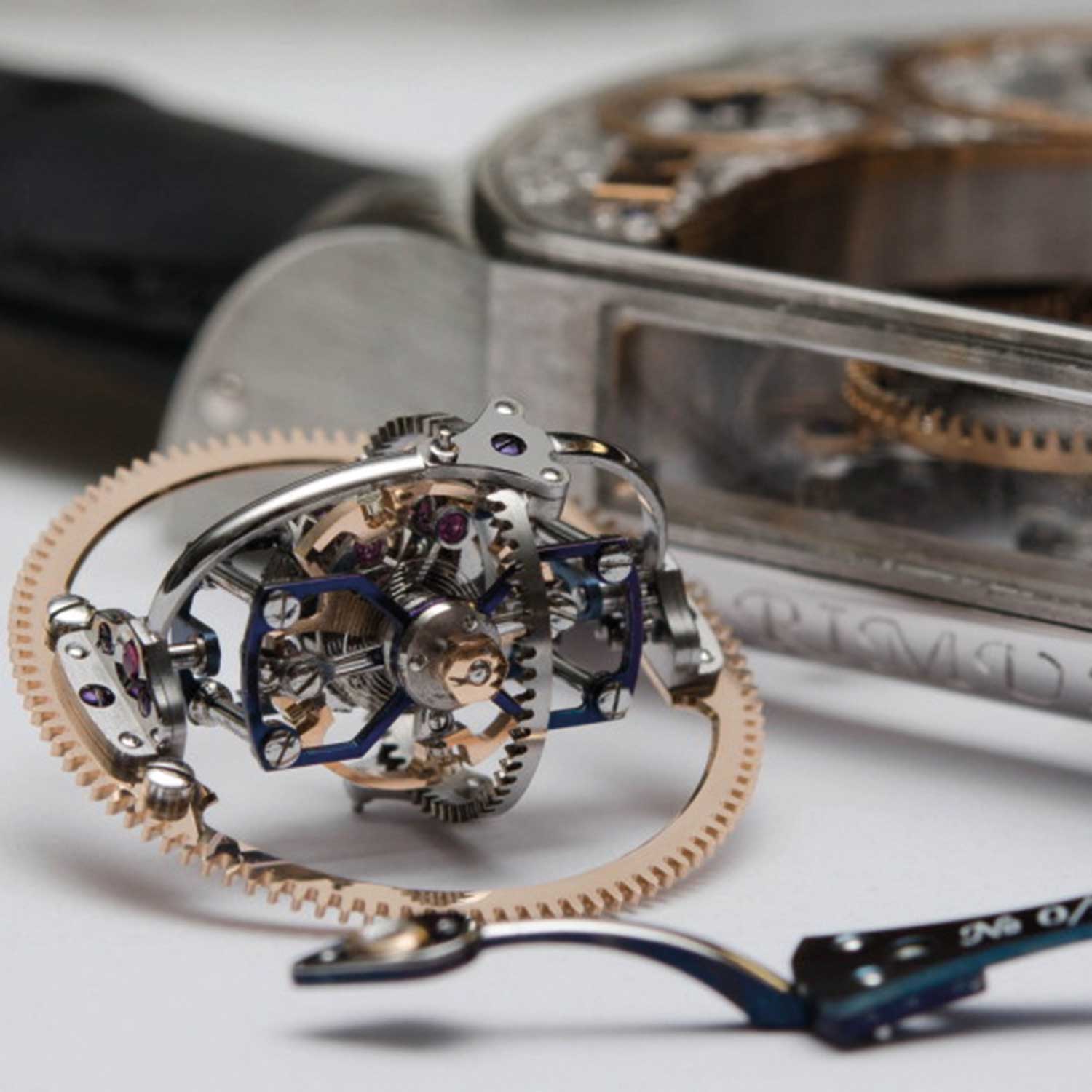
As with the majority of components, the tri-axial tourbillon system was made by Becsei in his workshop
Becsei was born the year his grandfather died, “so I could learn only from my father, an established watchmaker. I learned from him through a lot of restorations of vintage clocks and watches. Many times, when missing parts had to be replaced, I had to redesign and recreate that part, so this is how my career started.” While working in restoration and repair with his father, Becsei wanted to produce his own timepieces, finishing his first clock in 2003, the aforementioned Zappler.
Though qualified as a mechanical engineer, Becsei says, “I had to develop the skills, techniques and methods by myself mainly because it was very hard [in Hungary] to have access to the Swiss methodology. I needed to recreate and redevelop a lot of components, but sometimes it’s not a bad thing because I can see things from a different point of view and maybe I can make the same or better with another technique.”
Evolving as a watchmaker in isolation from the Swiss and German worlds of horology, Becsei realized, “If I can recreate and redesign components, I should start to make a complete piece on my own.” His miniature Zappler and Tourbillon No.1 clocks were exhibited on the AHCI stand at Baselworld in 2007; the Primus was presented the next year. This was the beginning of an awareness of Becsei beyond Budapest by horology’s inner circle, if not by the watch community at large.
Opening Doors at Basel
Among the earliest to recognize Becsei’s talents was a collector named Tony M., who commissioned the first Bexei wristwatch (after Primus) in 2010. Says Tony, “It was a birthday present to myself, for delivery in January 2011.” Part of a coterie of London-based collectors, Tony became the unofficial booster for Bexei, as well as a tester of sorts: Tony recalls that the watch went back and forth between Budapest and London as Aaron ironed out minor niggles.
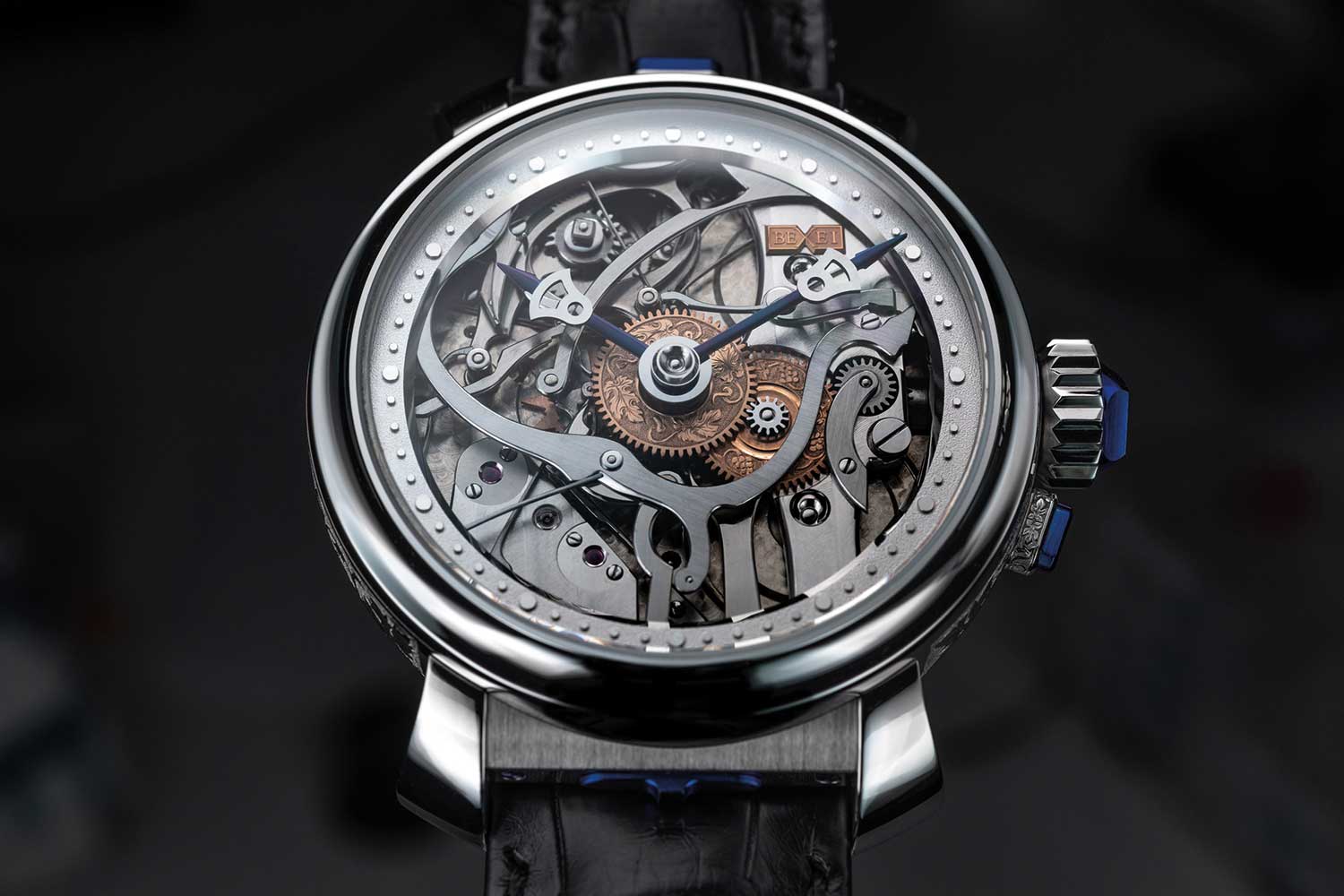
Becsei’s Vox Vinum Grande Sonnerie is a one-off grande and petite sonnerie watch that took an entire year to complete
One of Tony’s fellow collectors was Mo Coppoletta, who agreed with Tony that — above all other virtues (including exclusivity) — the Bexei watch exhibited finishing matched by few other timepieces, even in this most elevated stratum of haute horlogerie. This, both concur, is the primary quality which sets Becsei’s watches apart from the rest. Both further agreed that Becsei’s talents were underused, but Becsei himself lacked the desire to become a manufacturer of serial production watches — even for the level of restricted quantities associated with the likes of Roger Smith or Philippe Dufour.
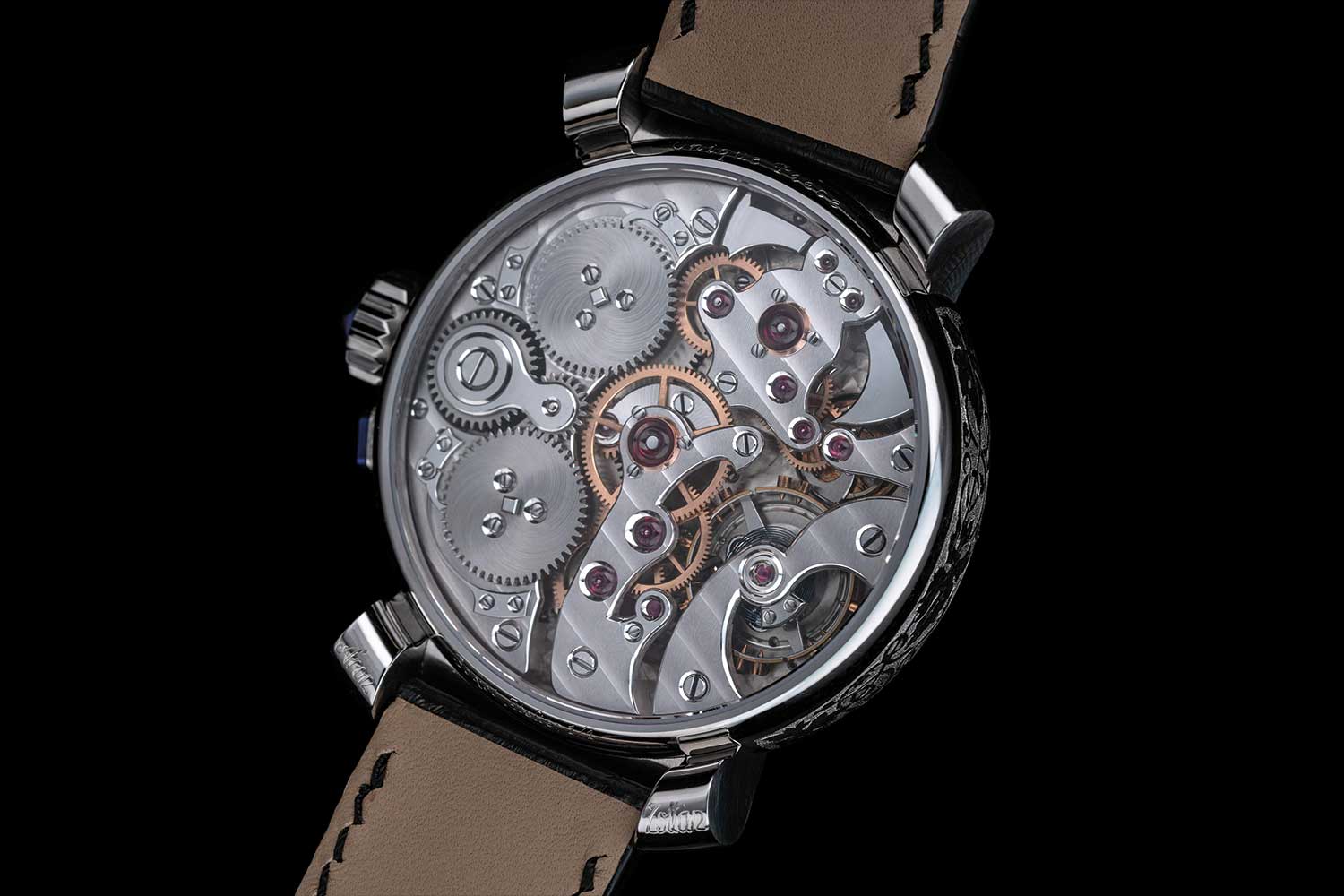
The Vox Vinum transforms a century-old ébauche with twin barrels, black-polished hammers and rhodium-plated German silver bridges
Says Coppoletta, “Tony introduced me to Bexei watches 14 or 15 years ago. I remember talking to Aaron and straightaway I got close to him because I used to go to Hungary a lot with my dad, to Budapest to collect antiques before I moved to London.” It was in London that Coppoletta established a reputation as a tattoo artist of global repute. This would prove an essential part of the Becsei launch as Coppoletta’s expertise is in the creation of striking visuals.
“Hungary to me had always been a very closed country, but then Aaron was always in the back of my mind as this ‘gray eminence’ of watchmaking with his incredible skills, with beautiful strong lines on the cases. His presence was always there as a firmly established watchmaker who never actually expressed himself with a serial production line. His thing was artisanal.”
Meanwhile, Tony, who isn’t one to take “no” for an answer and who has the patience needed to wait for a Becsei, a Ferdinand Berthoud or a Rexhep Rexhepi, impressed upon Becsei that “98 percent of the world’s watches are round,” and that he should consider becoming a producer of more than one or two watches a year. However, says Tony, “I have my own ideas about design and what I demand of a watch, but I am no designer.”
Creating a Horological Think Tank
To remedy this, he approached Coppoletta, who was already predisposed toward Becsei, to participate in an effort to turn Becsei into a maker of exclusive timepieces — with round cases. Coppoletta, too, found Becsei a reluctant participant with “no desire to be a superstar.”
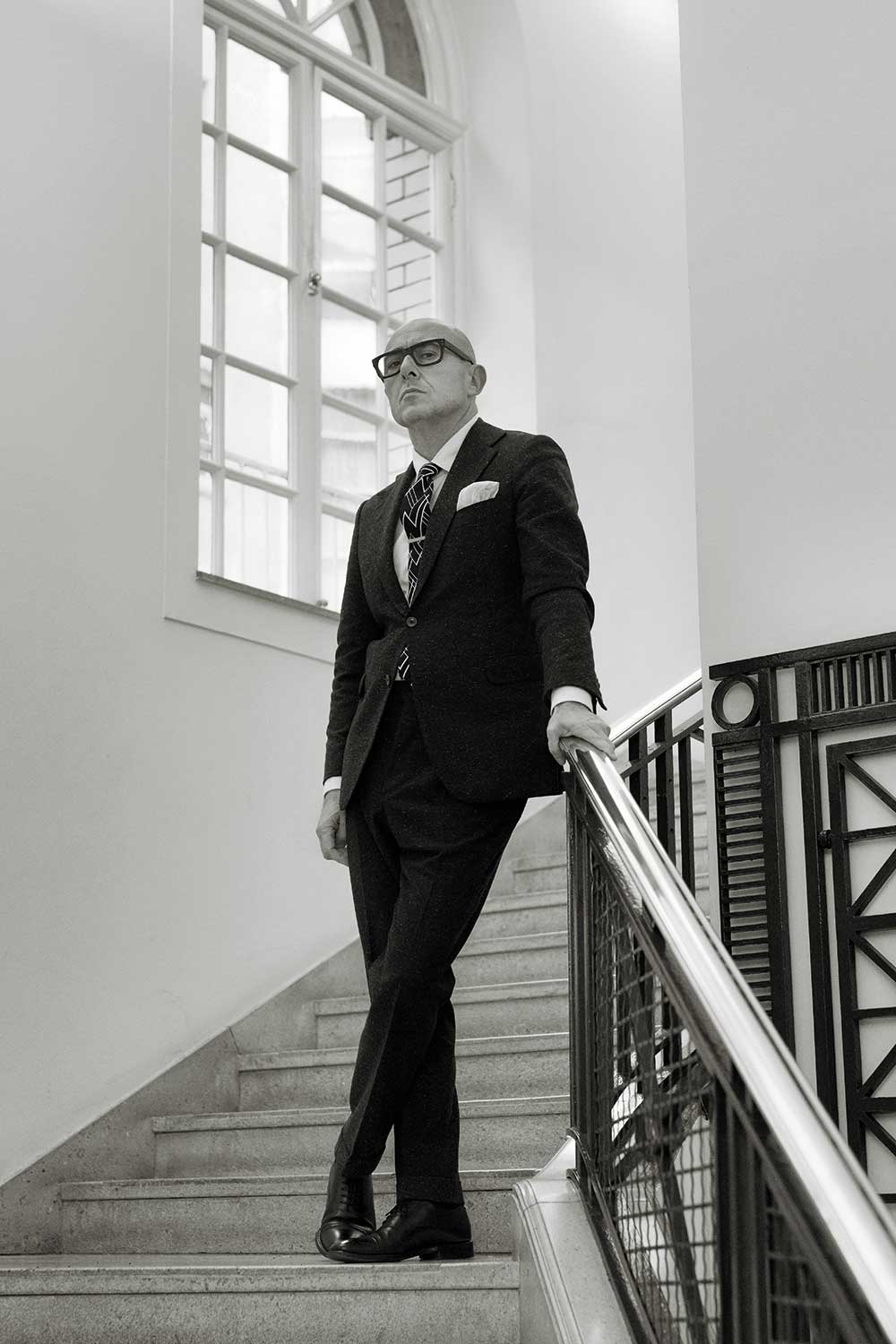
London-based designer Mo Coppoletta was brought in as a consultant for the Becsei Pameus
“Aaron came to London in January 2025, and we had a meeting, just explaining to him what I was doing at the time for other people,” says Coppoletta, referring to his consultancy work for other watch brands. “Somehow things started slowly, because we wanted first to get to know each other. For me, it could be just an assignment, but for him [it] would be to trust somebody else with interpreting what he has inside.
“So, we started with something smaller, like some ideas for the dials or hands, then it developed into the full brand identity, a new language. One thing led to another until what we were developing visually needed to be realized in a series, not just in one watch. The object of this collaboration was to take everything away from the [bespoke] customer point of view, which was dictating the dialogue.
“We were conceiving beautiful pieces for defining Aaron’s language. I don’t know how many hands, dials we went through, how many weeks working on the layout of the movement.” Here, Coppoletta pushed for a movement with visual symmetry, pointing out that “Aaron is not minimalist in terms of language, but is an opulent, maximalist guy in terms of finishing levels.
“I wanted to keep it in the language of Art Deco but you need to be legible and simple, so we developed this in the materials, the colors, what kind of gold we chose to use. When we were creating the visuals of this new watch, the sheer joy we shared in giving this modern take on Art Deco to a classic watch, in a fresh new way — it took everyone of us by surprise.”
In attempting to explain Becsei’s appeal, which can be elusive as it is primarily concerned with that literally nebulous area called “finissage,” Coppoletta offers his opinion based on decades as a supercollector. “Aaron Becsei thrives and excels in the field of classical finishing. His Côtes de Genève are meticulously executed to perfection; the anglage is remarkably deep and consistent, especially considering the shape and number of his beautiful bridges; the perlage is exquisite; and the snailing on the barrels is flawless.”
The result is not only an engineering showpiece but also an aesthetic achievement. Coppoletta posits that when discussing finishing, “people often associate it primarily with the movement. Aaron applies the same exacting standards to his complex dials.” Again, specifics rather than hyperbole take over: the batons, for example, feature three different finishes, the rings display exceptional anglage, and the meticulously crafted steel or yellow-gold-plated steel hands — an area rarely receiving such attention — exhibit beautiful curves and finishing. Becsei’s attention to detail continues with hour markers on the chapter ring which are not glued or simply fixed, but applied using a gem-setting system from the back and feature their own countersinks.
Even the buckle is subject to attention above the norm. It is inspired by Becsei’s new monogram, with a clear hint of the two As intertwining to create a multifaceted emblem, which, says Coppoletta, “feels deeply personal and meaningful.” Taken as a whole, harmony and coherence unite all the elements: dial, case and movement come together in a singular way. They do not exist as separate, albeit beautiful, parts. Instead, there is a strong sense of visual identity, unity, and purpose.
Friends — namely fellow supercollectors — responded enthusiastically, says Coppoletta, “so we have a group of ‘founders’ for subscriptions for the first batch of watches. From this, Aaron can build a legacy, and I might be able to contribute a little bit because his attention to details and his amazing engineering and finishing skills are second to nobody in watchmaking world. This is the background of how the collaboration started.” Coppoletta adds that he is not part of the brand, but an advisor or consultant.
The Finishing Line
Unlike the more radical watchmakers in the auteur segment of haute horlogerie, Becsei is not out to redesign the lever escapement, experiment with outré materials or create alternative means of displaying the time. For Becsei, it’s about the finishing and the aesthetics, but with no compromise in the movements, which he designs from scratch.
Aside from the glass, the straps and the mainspring, everything is produced in-house. “I make my own pinions, bridges, wheels, cases,” says Becsei. “I do not submit the watches to COSC, but I test and adjust the movements in six positions, and they meet all the criteria for a chronometer certificate.”
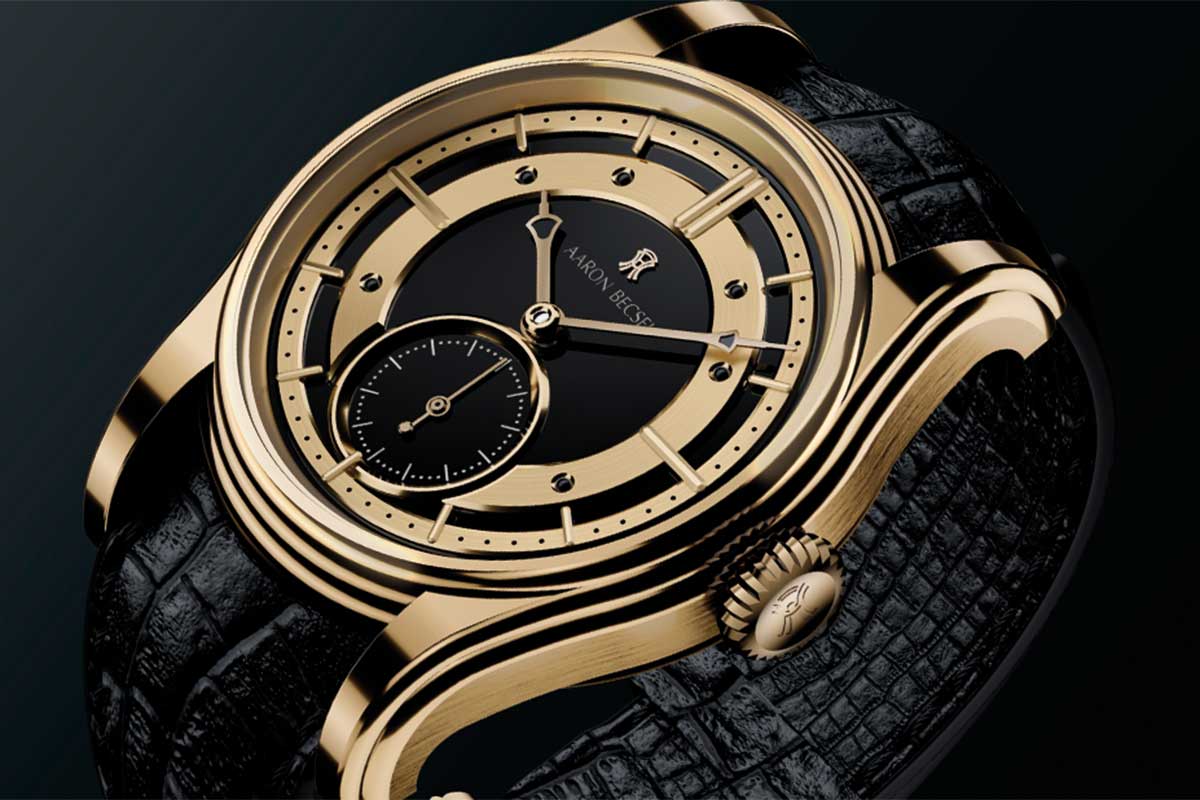
Pameus is the name of the new model. Its 38mm stepped case, with six examples in platinum and six in yellow gold for the first batch, flows into stepped lugs. It surrounds a black onyx dial with an applied outer minute ring, inner hour ring and hour marker batons. Seconds are displayed in a recessed subdial at 6 o’clock, with countersink ring, while indications are made with Becsei’s custom-designed signature hands.
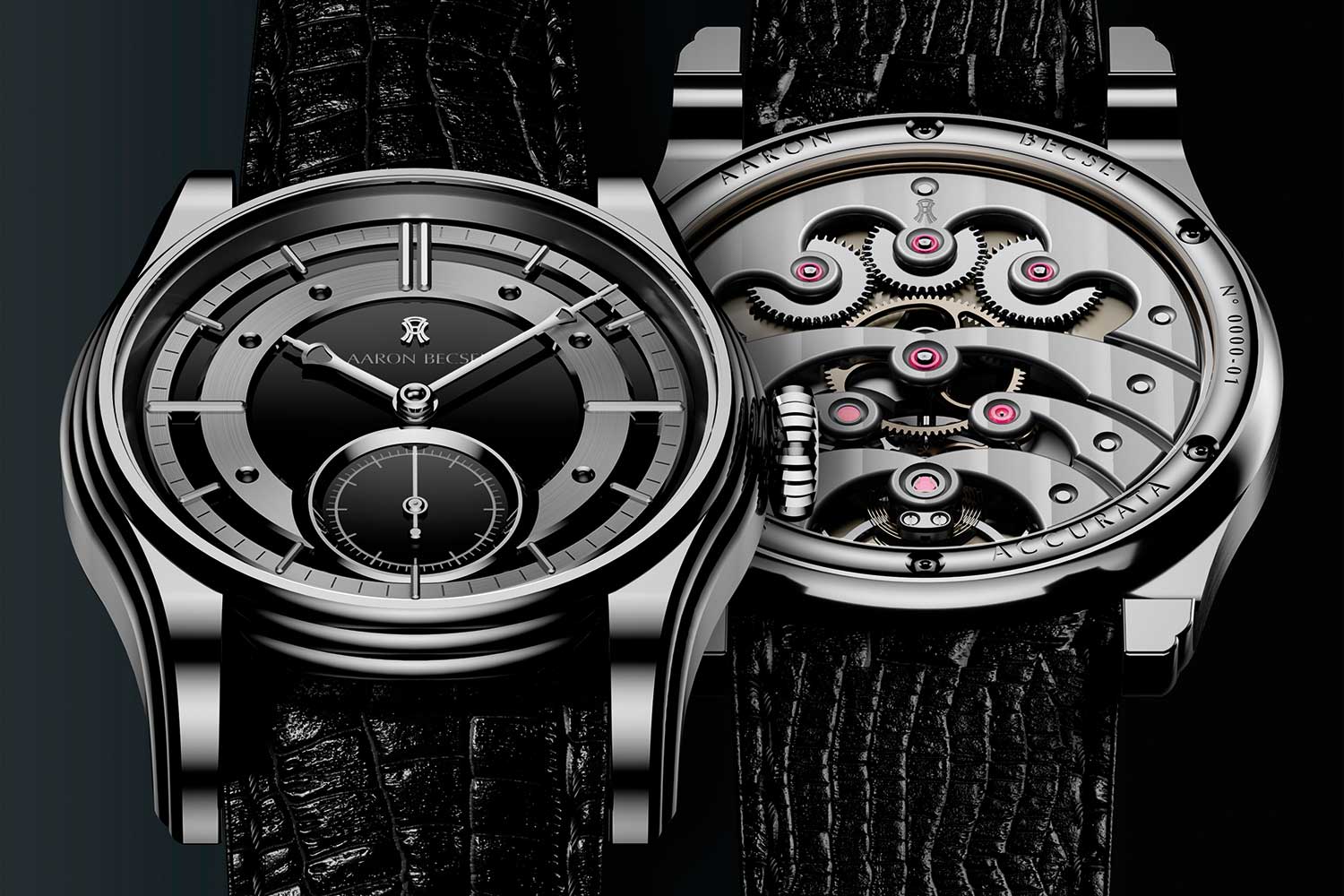
Within the case is an in-house designed and developed, manually wound, 29-jewel caliber, assembled and finished by hand. It features a titanium balance wheel beating at 18,000vph. Its double barrels deliver 72 hours of power. Completing the Pameus is a double-sided alligator strap fitted with a custom designed and hand-finished Aaron Becsei monogram buckle.
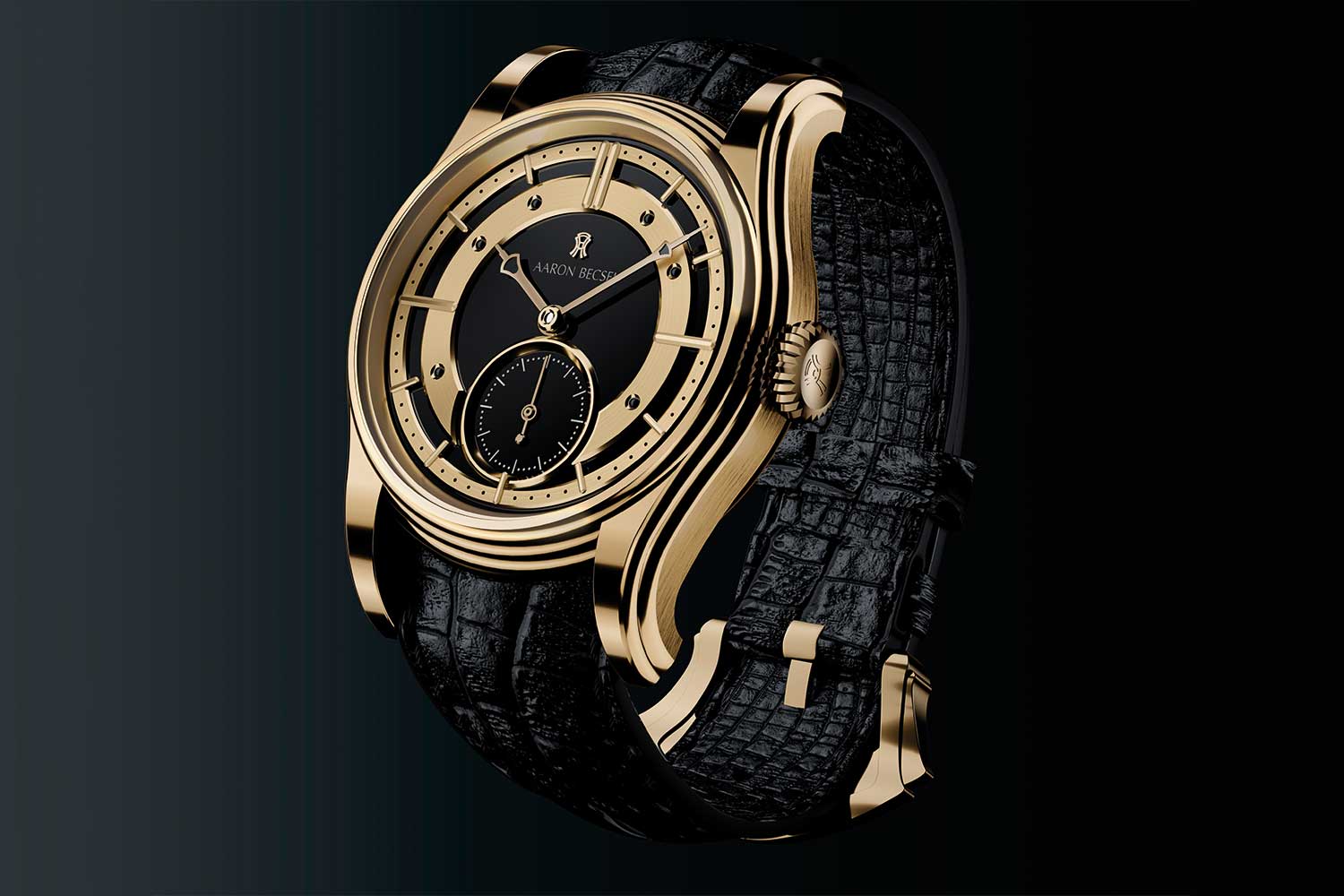
The black onyx dial is framed by a 38mm platinum or yellow gold case
It was decided that the move to creating a brand with serial production, even if only a dozen pieces a year, merited a change from the name Aaron Becsei had been using, from “Bexei” to “Becsei” to honor his father, grandfather and family. But publicizing his new direction required both word-of-mouth to reach the horological illuminati, as well as some sort of official launch for the world at large.
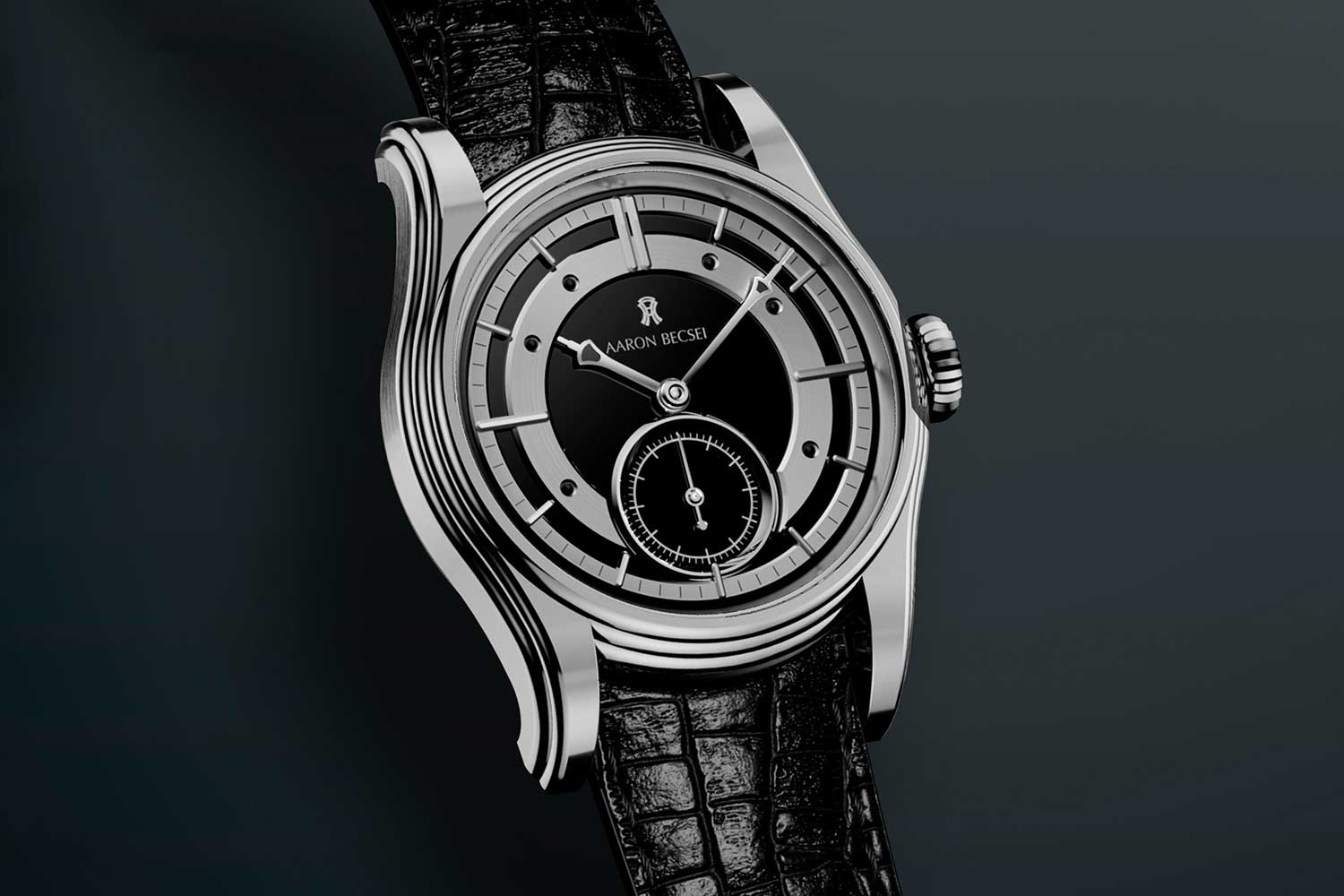
The dial batons of the Pameus require three different finishes, while the hour markers are applied using a gem-setting technique from the back
Says Coppoletta about the take-up of the entire first batch before any media coverage leaked out: “The best method to alert the supercollectors would be to send one of them a picture and say, ‘Please do not share this!’” It worked, he laughs, but adds that the real debut for Becsei involves the participation of Phillips Watches, the unveiling having taken place the night before Watches and Wonders on April 13, 2026.
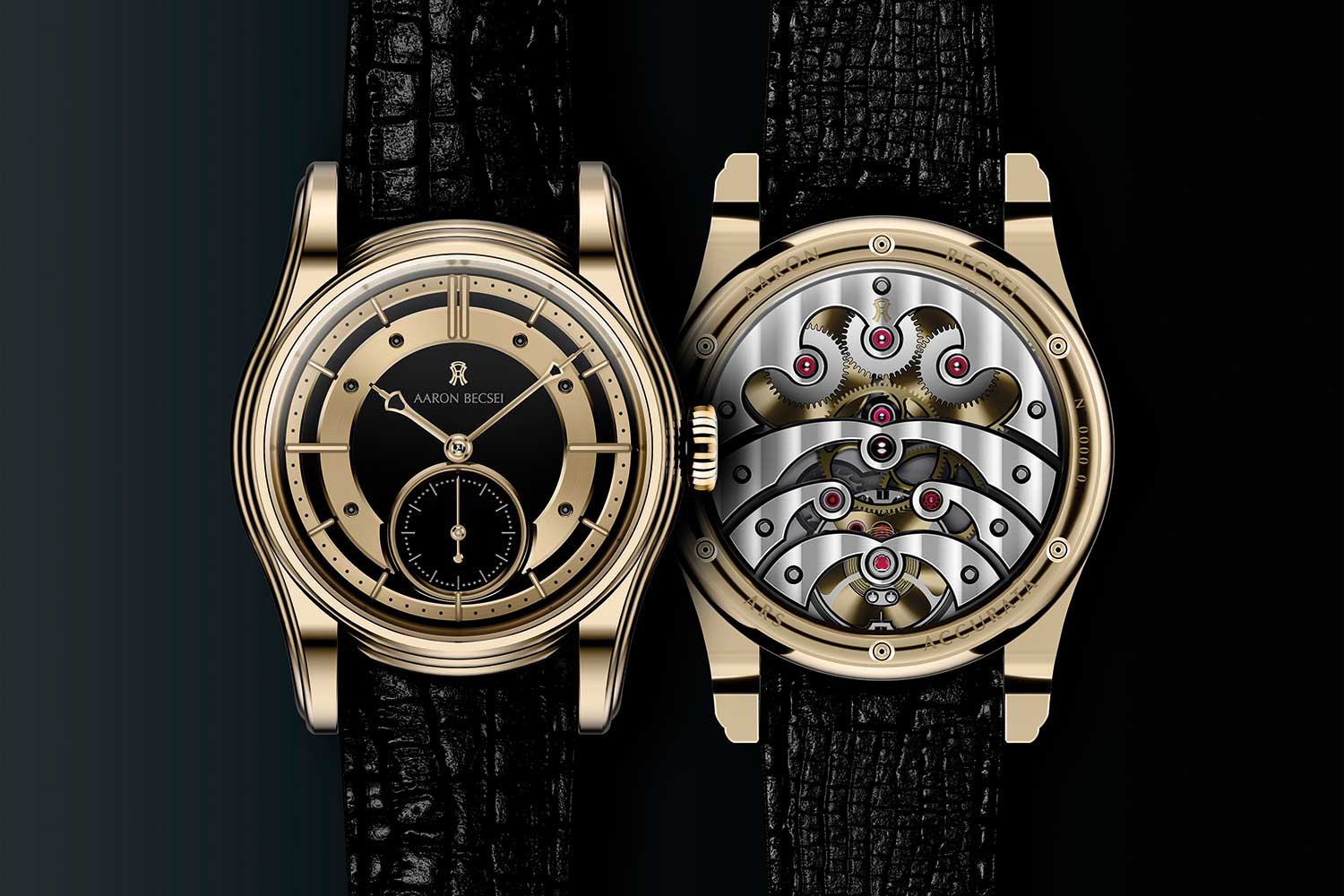
The Pameus case is sealed with screws requiring a custom tool to open
Alex Ghotbi, Deputy Chairman, Head of Europe and Middle East for Phillips Watches, says, “Aaron Becsei, while still young, is one of those old-school independent makers who builds watches that reflect his own curiosity and standards rather than the shifting tastes of the market. His range is remarkable and entirely self-driven.
“His collaboration with artist extraordinaire, Mo Coppoletta, to merge Hungarian flair with Italian panache, is nothing short of extraordinary. It’s a meeting of two strong identities. At Phillips Watches, we supported independent watchmaking long before it became fashionable. With Aaron, we are returning to what matters most: craftsmanship, conviction and individuality, and we are delighted to provide a platform for a watchmaker of genuine substance.”
Undoubtedly, there will be disappointment for those who are too late for the initial series. Becsei confirmed that “while the first batch — the first year’s production of 12 watches — is accounted for, there are still spaces on the next year’s list.” Adds Tony M. for those who want a Becsei, “Get on board as fast as you can.”
Tech Specs: Becsei Pameus
Movement Manual winding in-house Caliber AA32; 72-hour power reserve
Functions Hours, minutes and seconds
Case 38mm; platinum or 18K yellow gold
Dial Black onyx; rhodium or yellow-gold-plated German silver hour markers
Strap Double-sided alligator; custom designed and hand-finished Aaron Becsei monogram buckle
Price Upon request
Availability Limited to six pieces per metal in 2026, available exclusively at aaronbecsei.com
Aaron Becsei