Sylvain Pinaud Introduces a 30-second Tourbillon with Zero Reset
News
Sylvain Pinaud Introduces a 30-second Tourbillon with Zero Reset

It is shaping up to be a strong year for independent watchmaking, with both established and emerging names making their presence felt. Among them is Sylvain Pinaud, whose latest watch is chronometrically oriented, bringing together a high-speed tourbillon with a zero-reset mechanism and a lengthy power reserve, in a way that suggests a careful balancing of competing demands.

Sylvain Pinaud
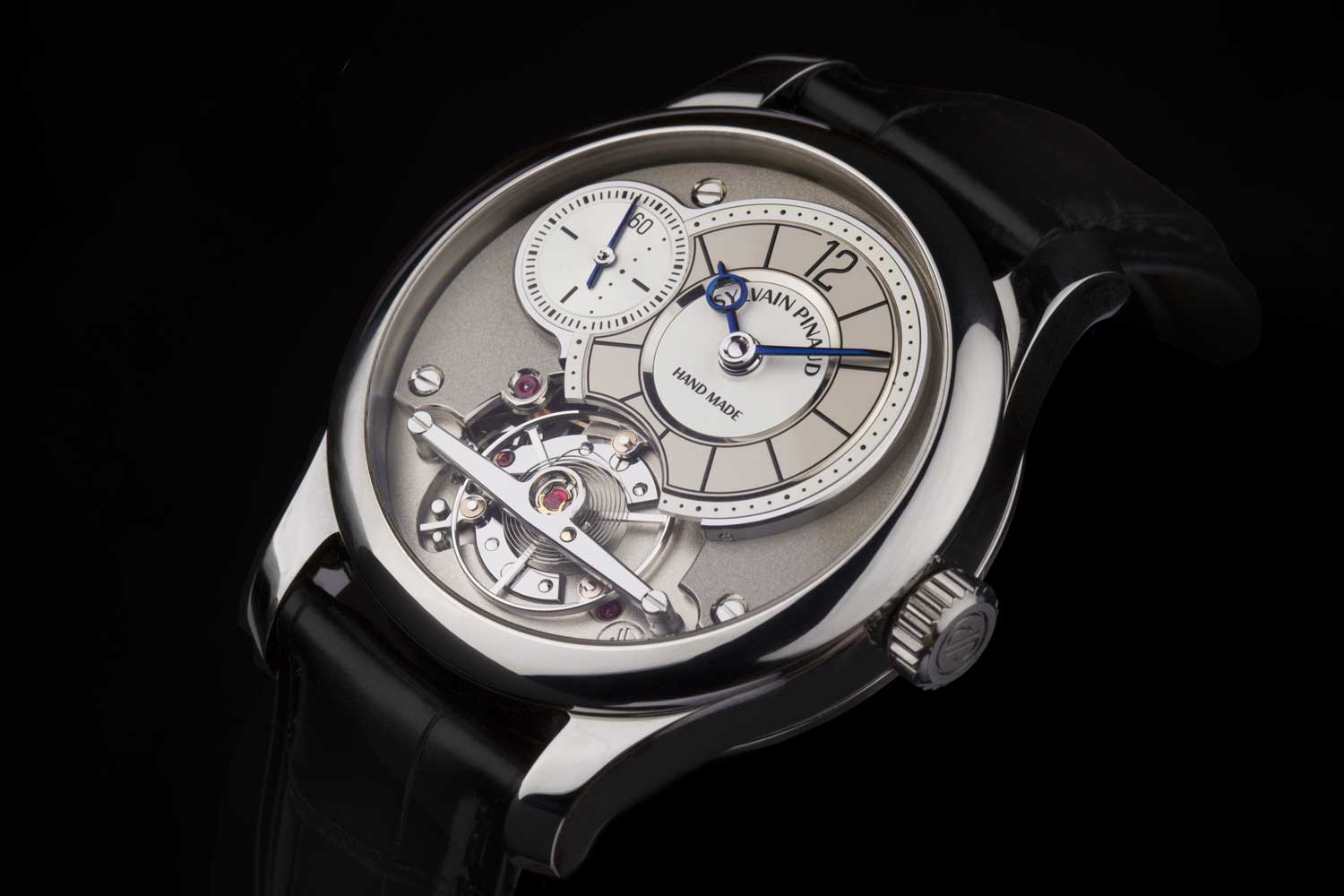
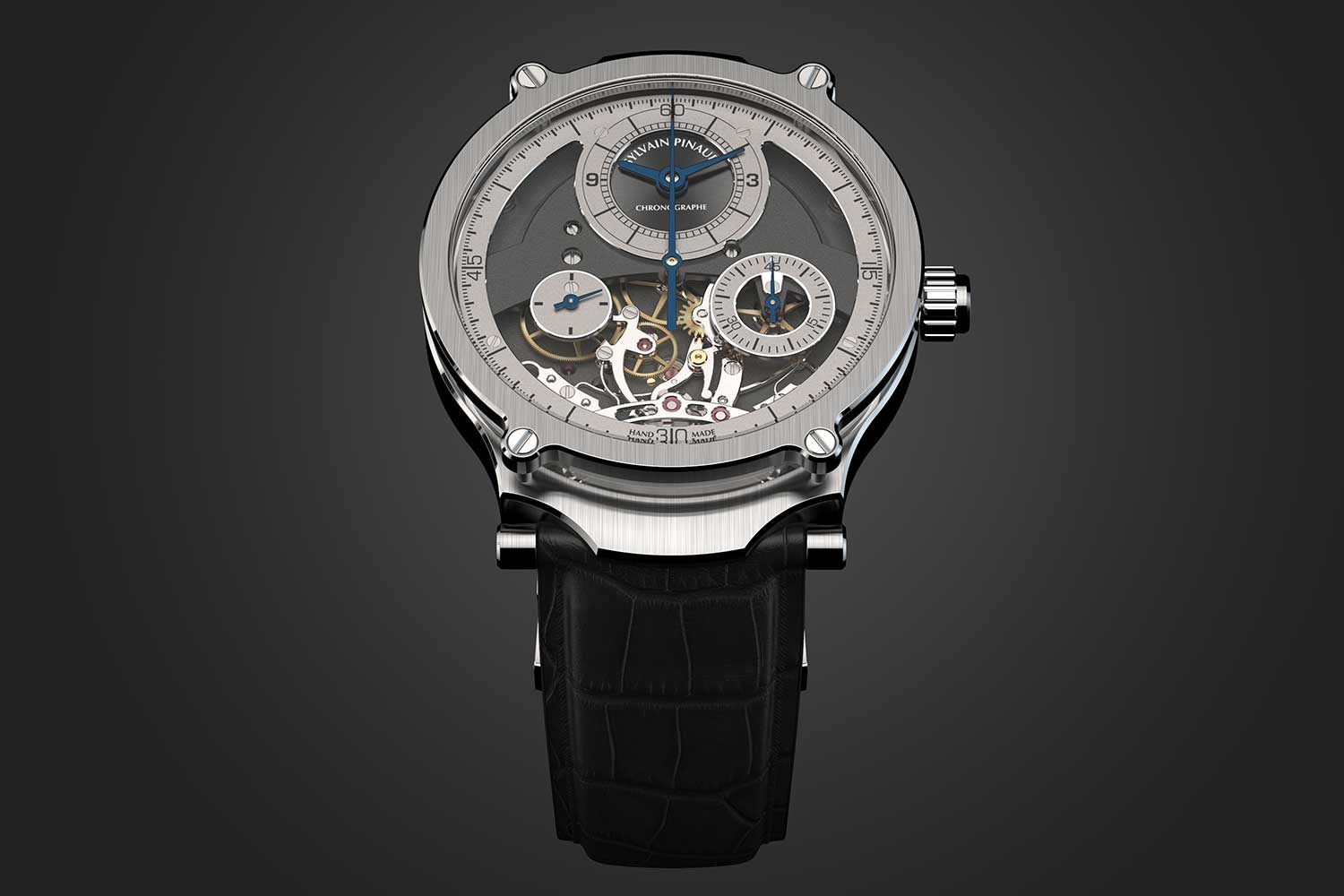
Based in Sainte-Croix, Pinaud made his debut in 2019 with the Monopoussoir Chronograph, a watch that drew attention not only for its level of finishing and dial-side chronograph works but also for the fact that it was very much the work of a single watchmaker in construction and execution. Three years later came the Origine, a time-only watch that, in the metal, has a presence that’s hard to overstate – not showy, but deeply satisfying in its proportions and finish – and which did much to establish a neoclassical direction for his work. This year, he has unveiled a watch that builds on that foundation, shifting the emphasis more decisively toward chronometry while maintaining a clear interest in how the movement is organised, presented and, naturally, decorated.
Sylvain Pinaud’s Origine
Sylvain Pinaud Chronograph Monopoussoir (Original)
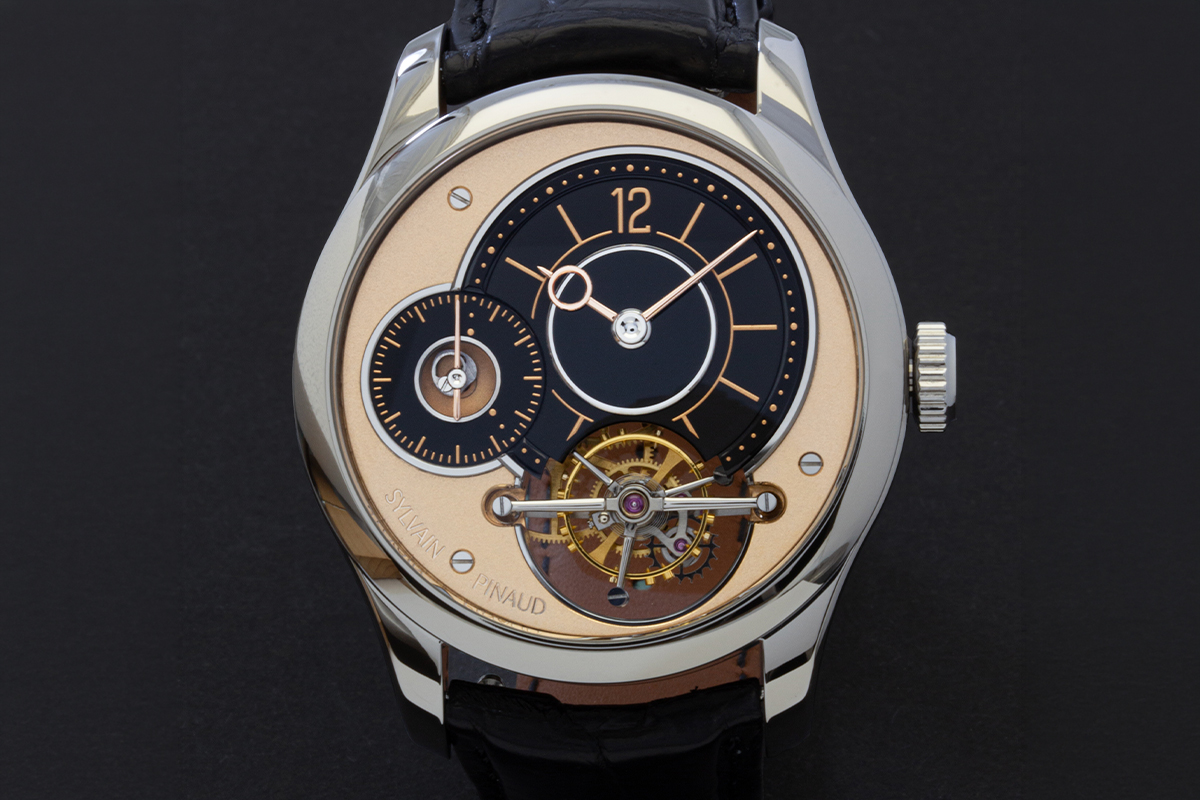
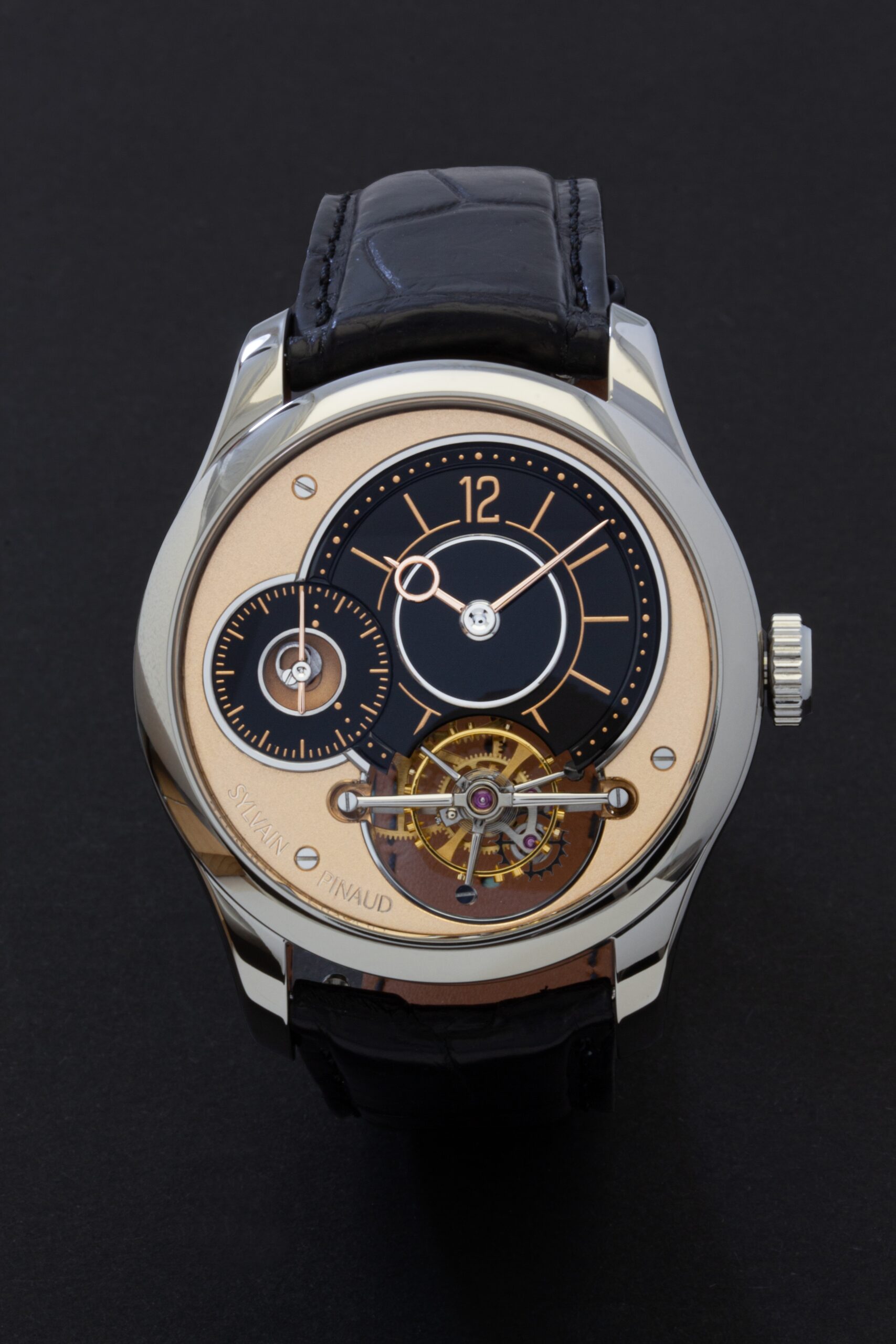
The watch is launching in three different variations: one in titanium with a silver dial and a white agate centre, as well a titanium movement, and two platinum versions – one with a black dial and onyx centre, the other with a white dial and white agate centre, along with nickel silver and rose gold movements. In terms of proportions, it lands very well at 39mm in diameter and 11.2mm in height, which is slightly smaller, but only 0.2mm thicker than the Origine. As with the latter, the case is entirely mirror-polished, and together with the relatively wide lugs and broad, rounded bezel, it gives the watch an appealing visual and tactile presence.
What is intriguing, from a design standpoint, is that it adopts a similar dial layout as the Origane, with a larger off-centred subdial for the hours and minutes, and a smaller seconds subdial set to the far left. It seems deliberate, yet the two watches could hardly be more different in the architecture of their movements. The subdials and aperture for the tourbillon are inlaid into the main dial plate, which is finished with a fine, hand-applied graining. The centre of the hours and minutes subdial is itself an inlaid stone, discreet and closely matched in tone to the chapter ring in the platinum versions.
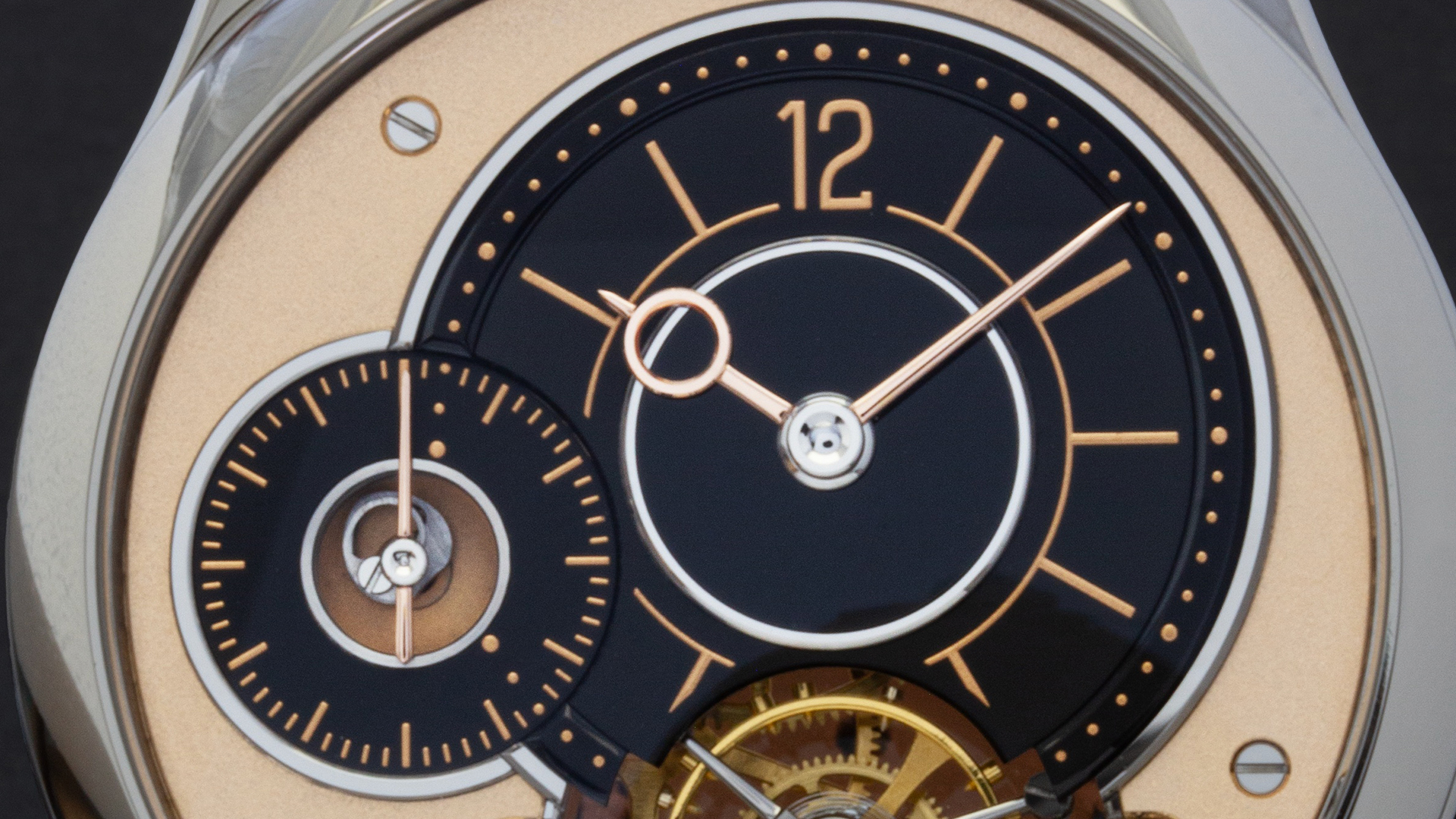
Detail of the off-centred hour and minute display paired with the small seconds subdial, revealing the layered construction and asymmetrical balance of the dial
-
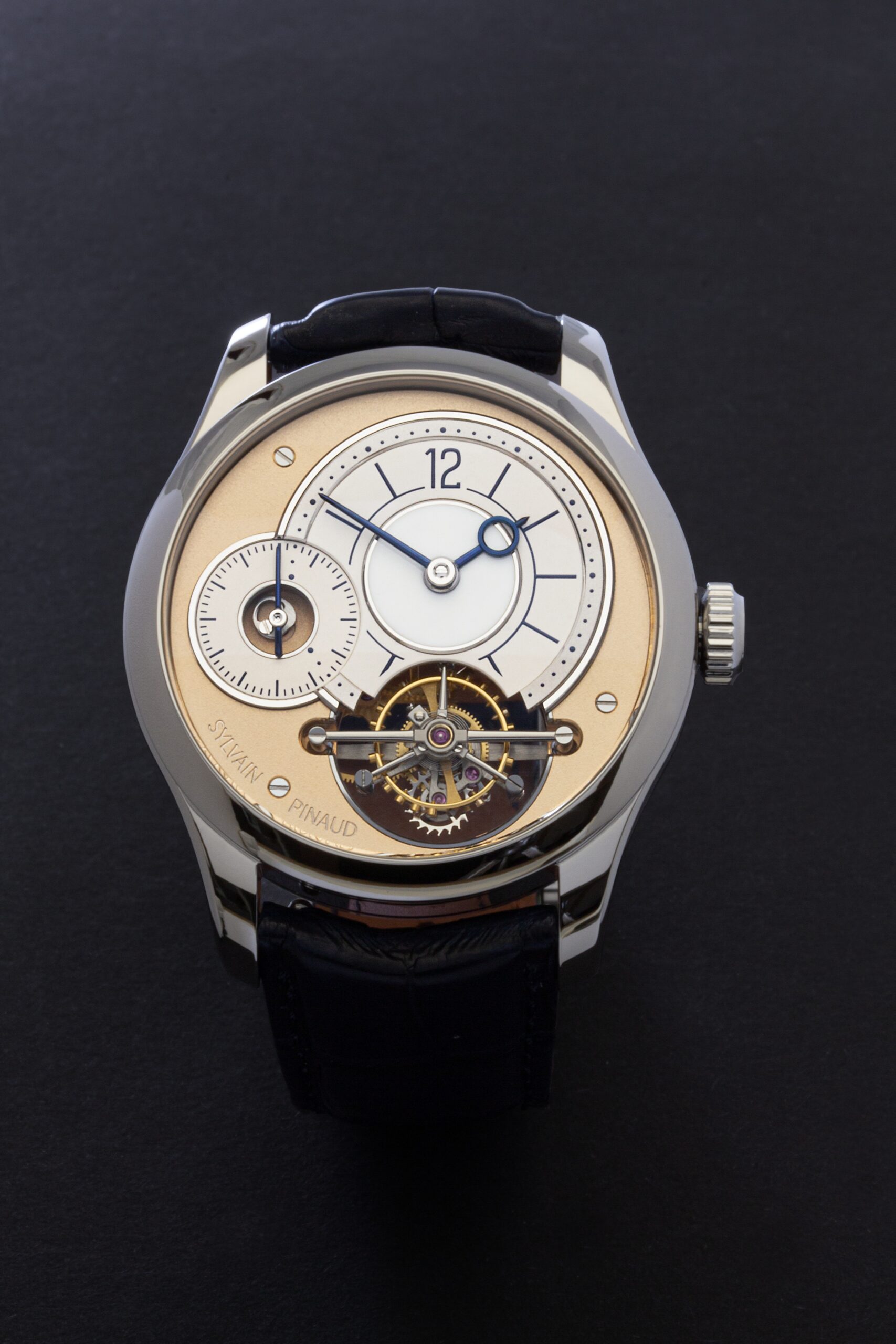
- Platinum version with white dial and agate centre, highlighting the refined asymmetrical layout
-
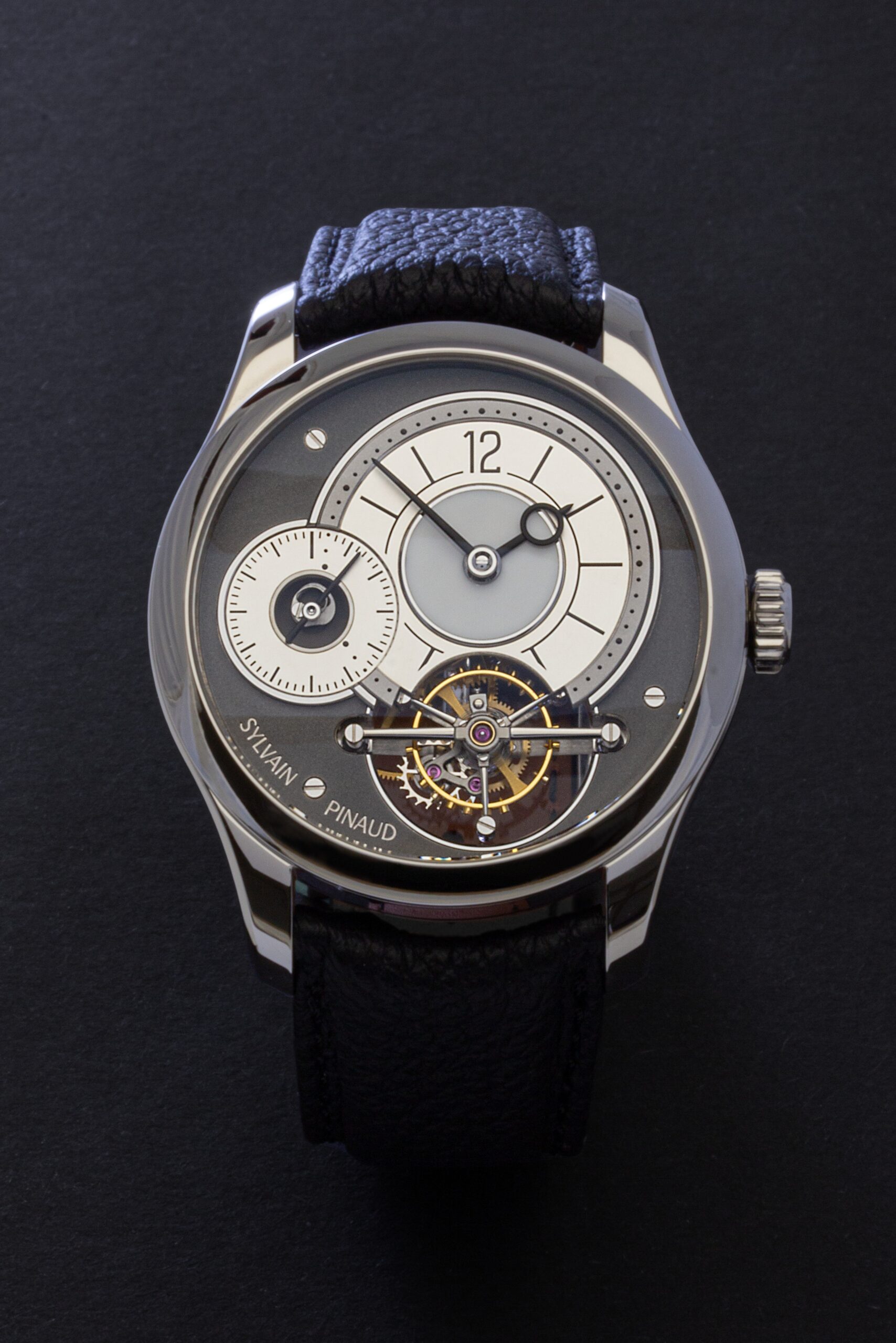
- Titanium version with a more technical, monochromatic aesthetic and lightweight construction
The seconds subdial, on the other hand, has an open centre that reveals the heart cam for the zero reset, which allows the seconds hand to be returned precisely to zero for accurate setting. The distance between the crown and the cam is notable, and it suggests a complex linkage that must route around the under-dial works while still delivering sufficient force for reset.
The decision to combine a high-speed tourbillon with a zero-reset mechanism points to something rather more grounded than the usual rhetoric around tourbillons. At 30 seconds per rotation, the cage is already doing the obvious work of averaging positional errors at a faster cadence, but on its own that still leaves the question of how the watch behaves in actual use – how it is set, how consistently it can be brought back into synchrony with a reference time. That is where the zero-reset comes in, and it changes the character of the watch quite meaningfully.
A faster tourbillon, in principle, means the escapement and balance spends less time in any single orientation, reducing the extent to which gravitational errors can accumulate before being redistributed. The effect is a more frequent averaging cycle, which, if the system is well poised and efficiently driven, will lead to a steadier rate. Of course, this comes at the cost of higher energy demand, making the balance between speed, inertia and available torque critical.
The cage is therefore made in titanium, which makes its finish all the more impressive, as the material is notoriously difficult to polish to a high standard. The cage is classical in execution, with slim, elegantly rounded and polished arms, supported by a similarly slender, polished steel bridge. It houses a free-sprung balance that runs at a measured 21,600vph, which helps contain energy demand while preserving stability. The hairspring is formed with a Phillips end curve, named after the French mathematician Edouard Phillips, who formalised the geometry of the Breguet overcoil in the 1860s.
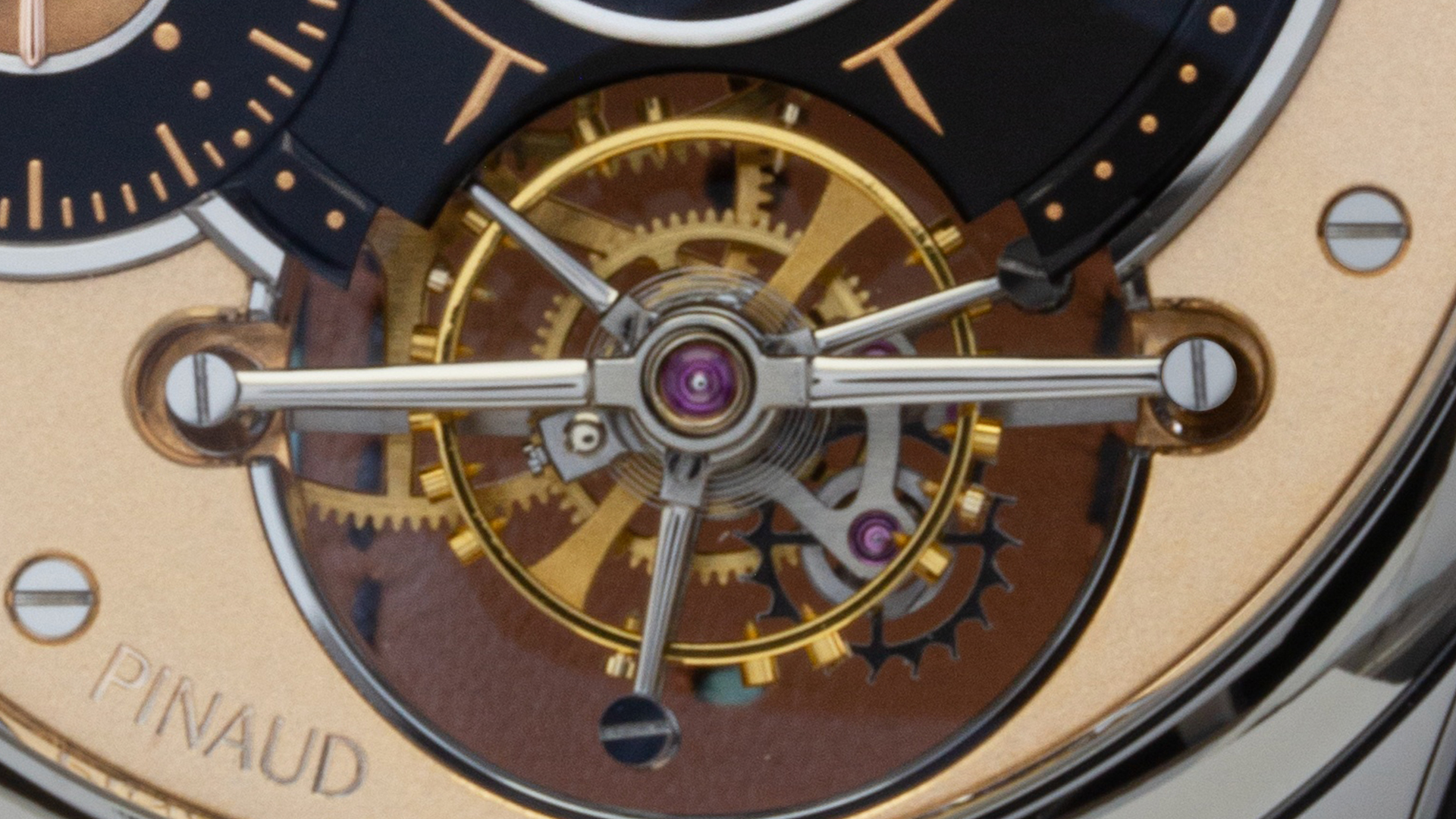
Close-up of the finely finished tourbillon cage and steel bridge
Two barrels coupled in series are used to deliver a substantial 100-hour power reserve. While a single large barrel could achieve a similar duration, it would tend to deliver torque less evenly, leading to greater variation at the regulating organ. Within a movement measuring 32mm in diameter, the space appears to have been used judiciously to accommodate both a high-speed cage and extended autonomy.
-
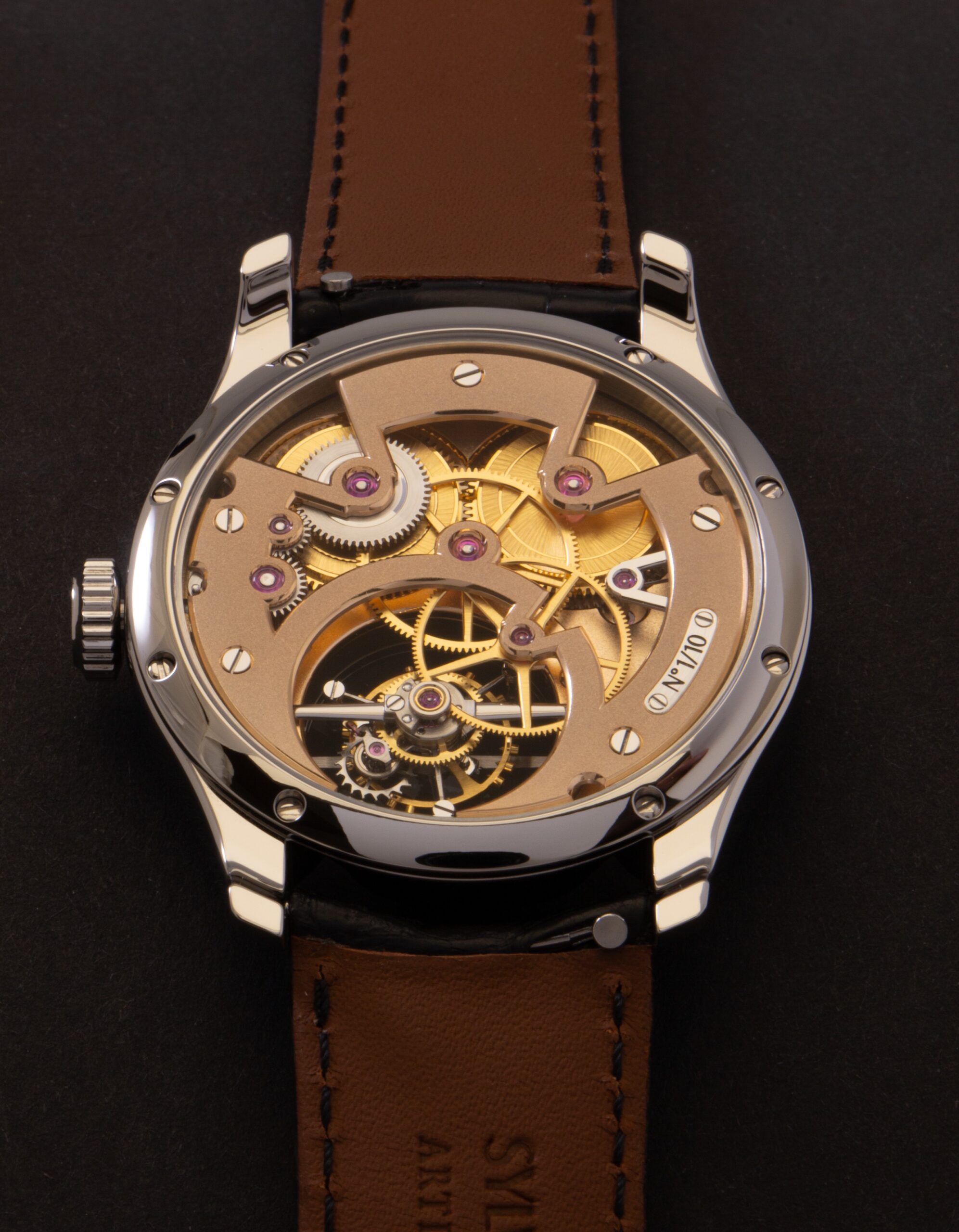
- Movement in warm tones of rose gold, with hand-applied anglage and fine graining
-
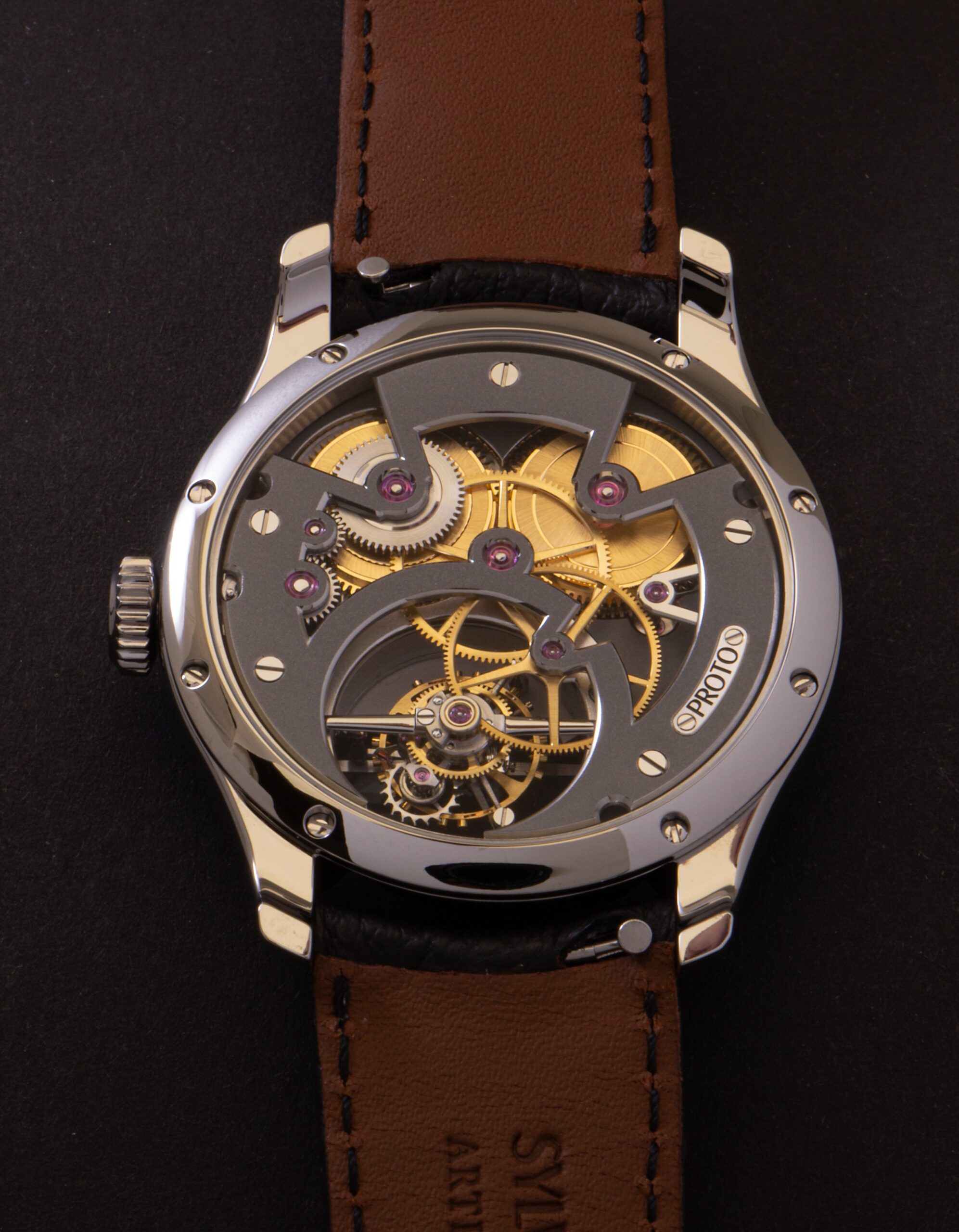
- A full titanium movement finished to the same standard
The view on the reverse is dominated by a bridge design that is both striking and unexpected. It has a single, full-bridge spanning the train, with an outline that combines broad curves with sharp angular turns. While it was most definitely intended to showcase finishing skill, it also lends the movement a certain dignity. It frames the train clearly, with a direct and easily readable flow of power. The going train is straightforward, starting from the barrel, to the second and third wheel, which then drives the tourbillon cage. Additionally, the third wheel drives an auxiliary pinion, which powers the seconds hand visible on the dial side.
The gears are large in diameter with high tooth counts, which helps spans distances and allows for a cleaner, airier tourbillon when viewed from the front. At the same time, they provide ample surface for finishing, with anglage on both sides, along with sharp angles, and circular brushing.
All in all, it is a standout launch that extends his neoclassical approach into the tourbillon itself, pairing a classical execution with a fast rotating cage, all within a beautifully and traditionally hand decorated movement distinguished by a refreshing bridge design.
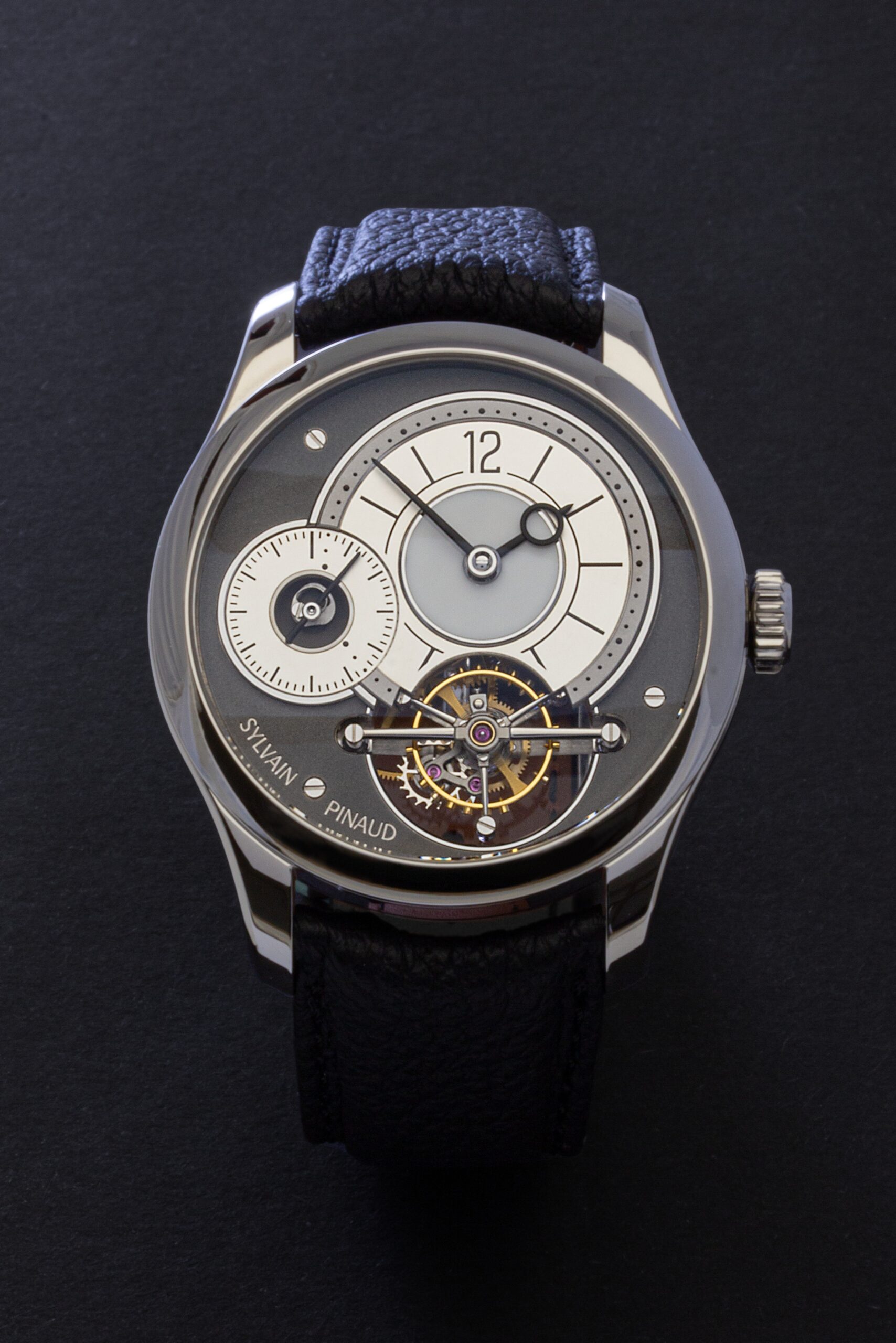
One of three variations, each limited to ten pieces, balancing technical performance with a restrained, modern aesthetic
Tech Specs
Movement: Manual winding; 3Hz or 21,600 vph; 100-hour power reserve
Functions: Hours, minutes, small seconds with zero-reset
Case: 39mm by 11.2mm; titanium or platinum; water-resistant to 30m
Dial: Main dial plate with hand-applied fine graining; inlaid subdials; tourbillon aperture; seconds subdial with open centre revealing heart cam; variations with onyx or white agate dial centers
Availability: 3 models, each limited to 10 pieces
Price: CHF 180,000 (excluding VAT)
Sylvain Pinaux