
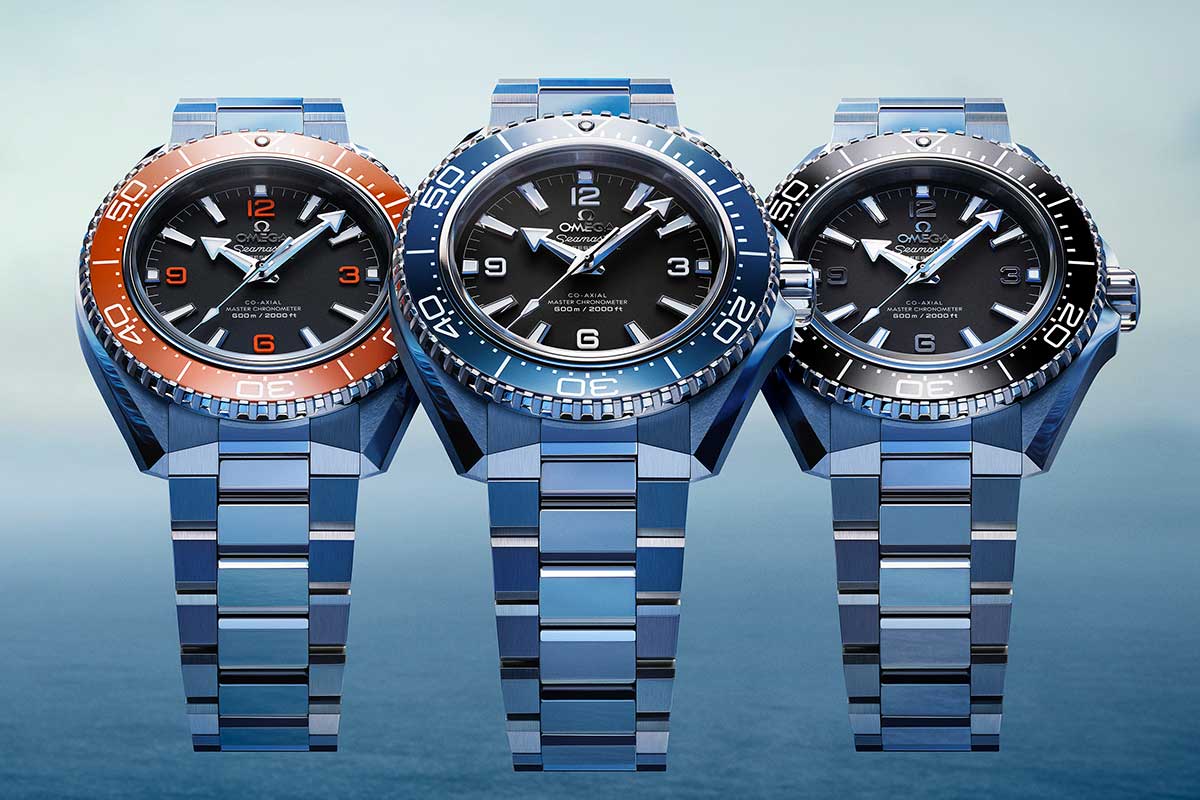
Omega Launches Fourth Generation Seamaster Planet Ocean for 2025
Editorial
Omega Launches Fourth Generation Seamaster Planet Ocean for 2025

Today in America’s Magic City of Miami, Omega launched the fourth generation of its Seamaster Planet Ocean. The new collection arrives 20 years after the first Planet Ocean of 2005, and the company has spent much of the past two decades refining its professional dive watches, with the new watches reflecting a deeper groundwork rather than a simple update. This is a family that sits within a lineage stretching back more than 90 years and the new chapter only makes sense when placed within that longer story.
The Planet Ocean has always occupied a particular place in the Seamaster universe. The Diver 300M carried the torch for the everyday sports watch. The heritage-inspired Seamaster 300 spoke to mid-century design. The Ultra Deep pushed experimental engineering to its furthest point. The Planet Ocean held the center.
It arrived at a moment when Omega was ready to define what a contemporary professional dive watch should be. The new collection continues that idea with a restrained confidence. When Omega’s President and CEO Raynald Aeschlimann told Revolution in 2020 that Omega did not make products but watches with intrinsic value, he was giving a fair description of why the Planet Ocean has endured.
Omega’s Dive Watch Lineage: Built for Life at the Depths
The story begins in 1932 with the Marine. Wristwatches designed for civilian divers were rare at the time. The Marine was tested on Lake Geneva and at the Swiss Laboratory for Horology and won attention for its two-layer case and unusually strong resistance to pressure. It did not create a category on its own, but it set a precedent that Omega returned to repeatedly.

An old advertisement for Omega Marine, 1932

The Omega Marine, 1932
After World War II, the first Seamaster models of 1948 arrived. These watches took lessons learned from military production and introduced rubber gaskets that provided a more reliable seal. In an archival article on the Seamaster, Revolution noted that the 1948 design blended battle-proven technology with a case suited to daily wear. It became a theme that Omega has subsequently refined across the decades.
By the mid-1950s, diving had captured the imagination of a new generation with a disposable income and a mindset for leisure. Both professional and recreational divers needed instruments that could be trusted at depth and Omega responded with the Seamaster 300 in 1957. The watch was legible, robust and created with the expectation of real underwater use. It was followed in the 1960s and 1970s by the Seamaster 1000 and the PloProf.
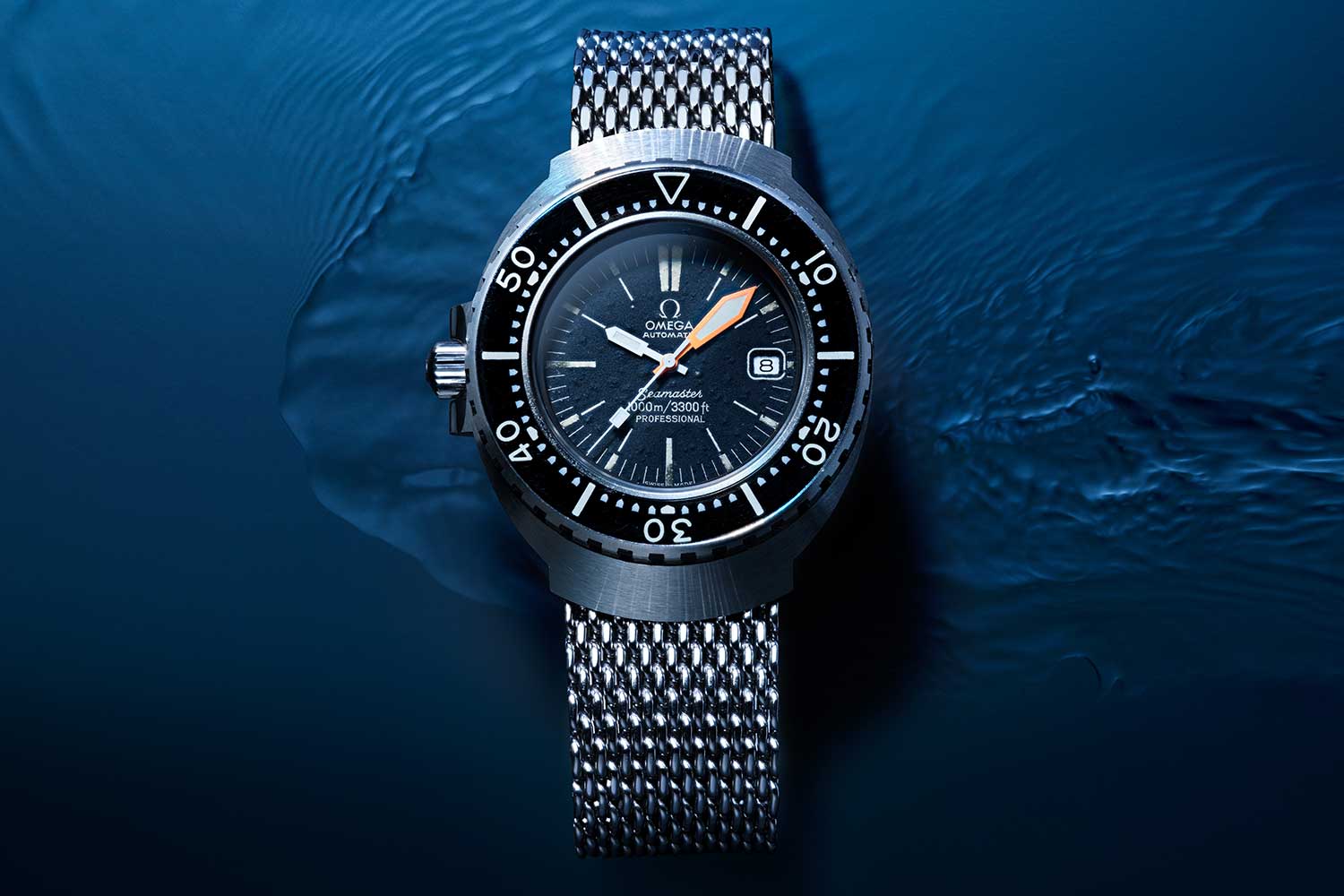
Omega Seamaster 1000
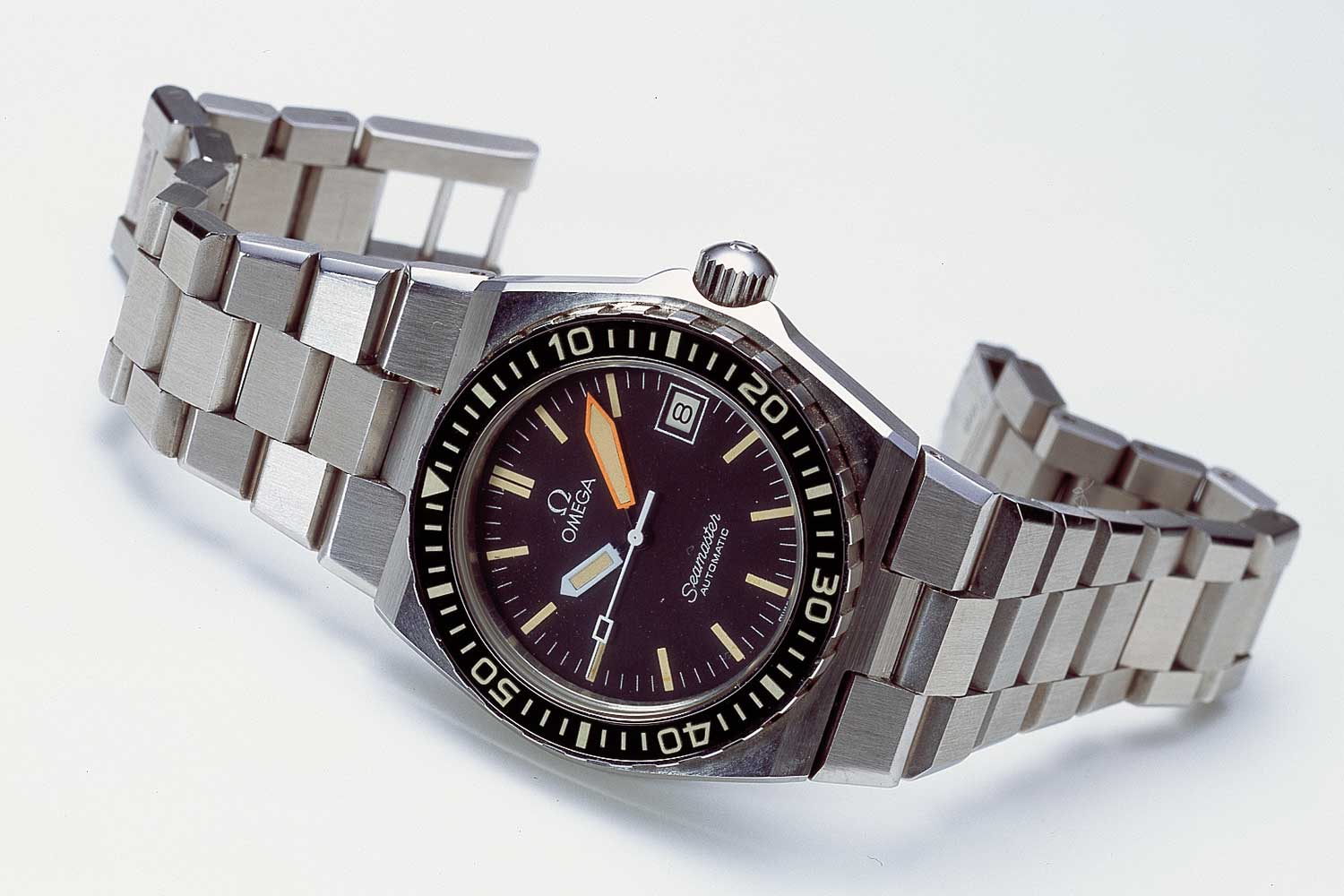
Omega Seamaster 120 PloProf
Both were built for saturation diving and were tested in demanding environments. Omega had moved far from the refined lines of the 1948 watches, yet the central idea remained. The company was interested in producing instruments that could be worn with confidence rather than objects made to signal a lifestyle. When diver and watch journalist Jason Heaton wrote in a 2016 Revolution article that a dive watch needed only to track elapsed time accurately and legibly while withstanding rough treatment, he could have been directly describing Omega’s approach during these years.
In the 1990s, the Diver 300M brought improved water resistance and a design language that resonated beyond the diving world. The watch became one of the most recognizable pieces in the Seamaster family. Omega now had three coherent strands within the collection. Heritage. Professional use. Contemporary style.
The idea of a fourth strand emerged in the early 2000s as interest grew in performance-driven mechanical sports watches. The company saw an opportunity to bring together its technical catalog and mid-century vocabulary in a way that felt modern. The first Planet Ocean of 2005 took subtle design cues from the Seamaster 300 of the 1960s. Broad arrow hands, applied Arabic numerals and a clear diving scale referenced the past without relying on it.
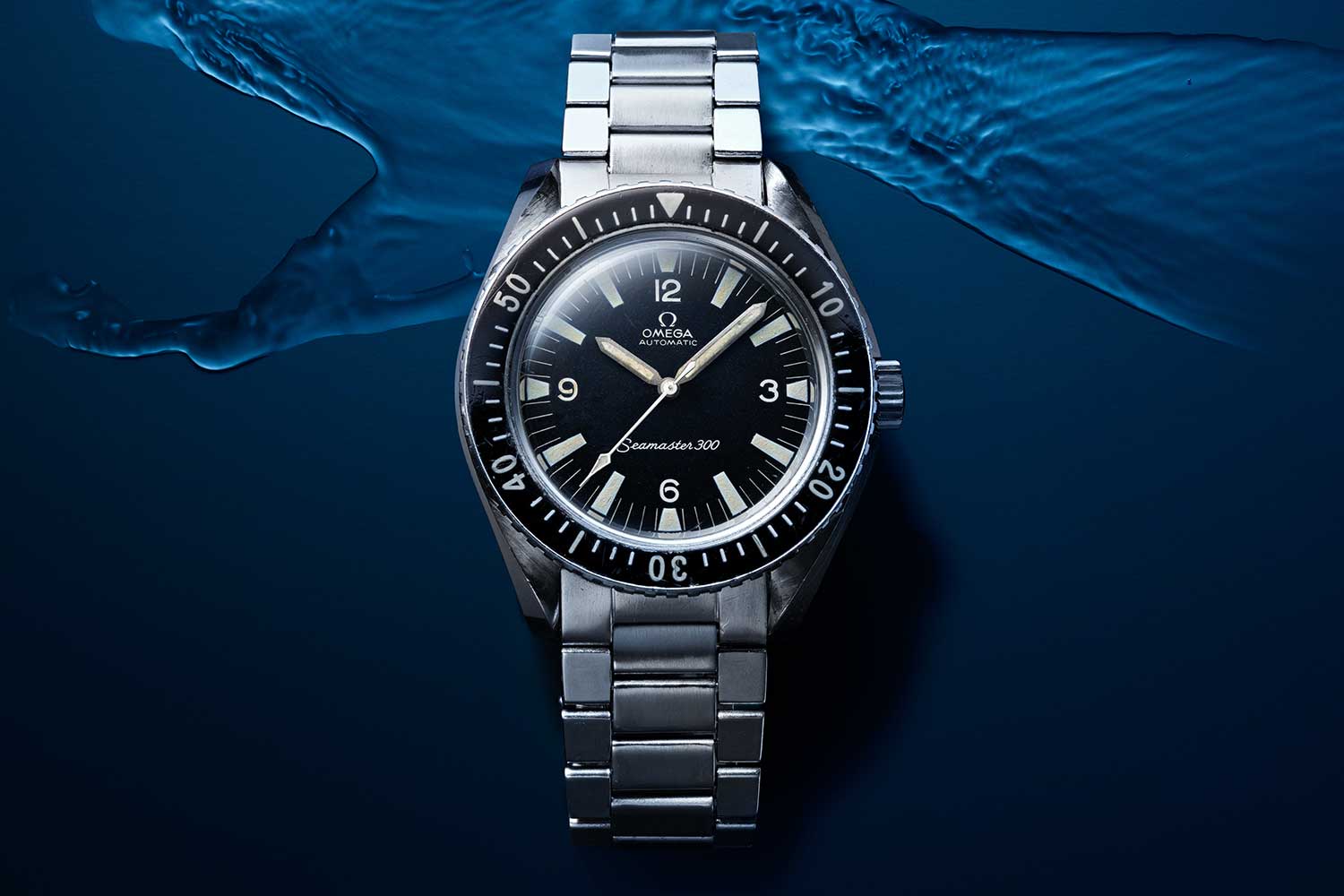
Omega Seamaster 300
The second generation arrived in 2011 and brought ceramic bezels, glossy dials and a move to the Caliber 8500 with its silicon balance spring. These updates sharpened the technical profile of the watch without altering its essential character. The third generation followed in 2016 and introduced Master Chronometer certification along with slimmer cases and new materials, including the first use of Sedna gold in the Planet Ocean family. Omega also expanded the range with the Deep Black, a full ceramic interpretation built to withstand considerable underwater pressure. Each stage showed a measured advance in materials and movement technology rather than a shift in direction.
-
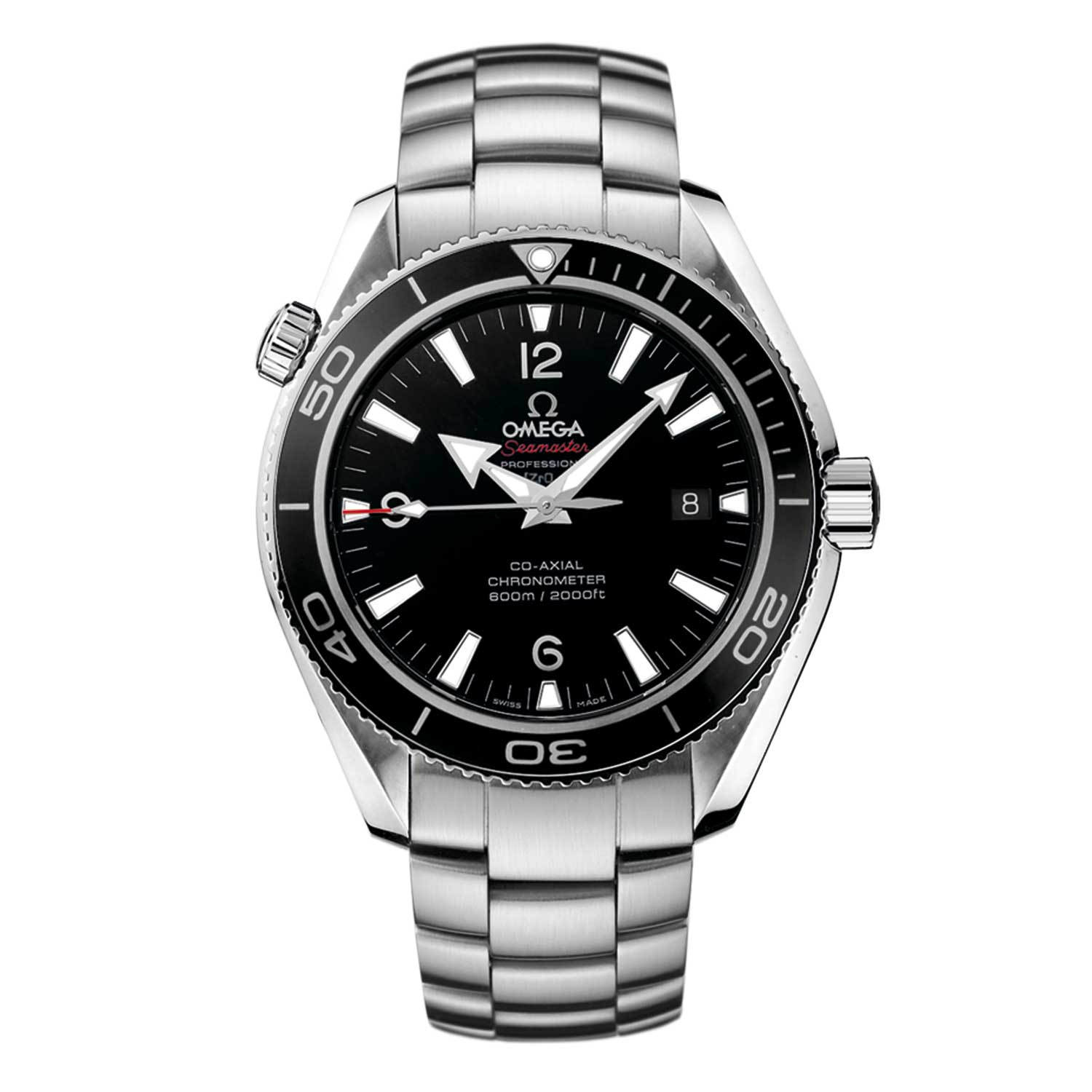
- Omega Seamaster Planet Ocean 600M
-
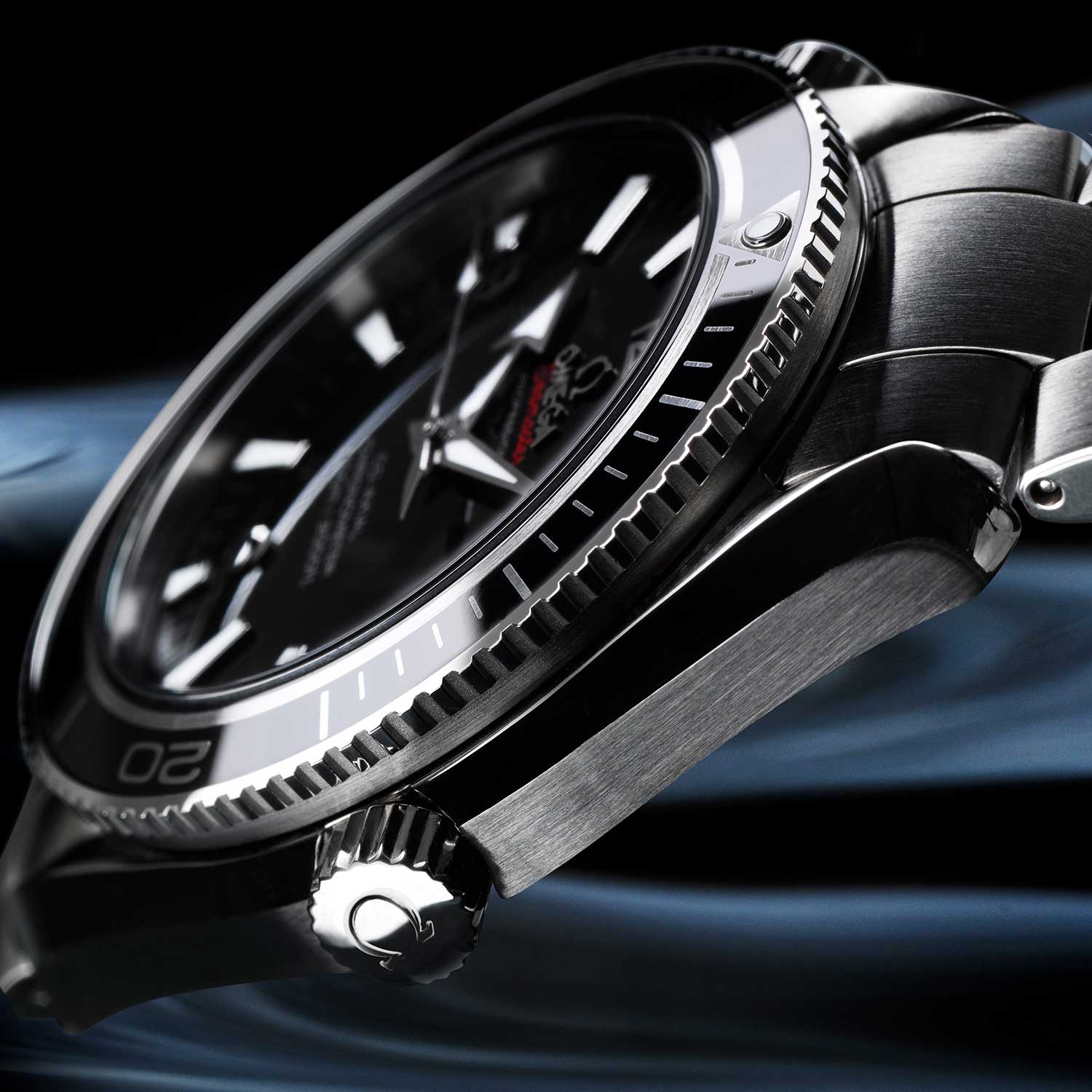
- Since 2010, OMEGA has bonded its ceramics with an alloy called LiquidmetalTM, which offers new decoration possibilities in a metal grey colour with superior scratch-resistance and enduring stability
The Fourth Generation Planet Ocean: A Fresh Look for 2025
The new fourth generation Planet Ocean draws upon that same instinct. It does not attempt to imitate earlier references, but it acknowledges them. Omega has revisited certain structural ideas from the 1980s and ’90s. The case shows sharper planes and more angular geometry. The sapphire crystal is flat, which lowers the overall height to just under 14mm. The diameter measures in at 42mm. There is a new two-part construction with an inner titanium ring that reinforces the case under pressure. This detail reflects lessons learned from the development of the Ultra Deep and shows how research carried out for an extreme purpose can inform watches intended for daily use.
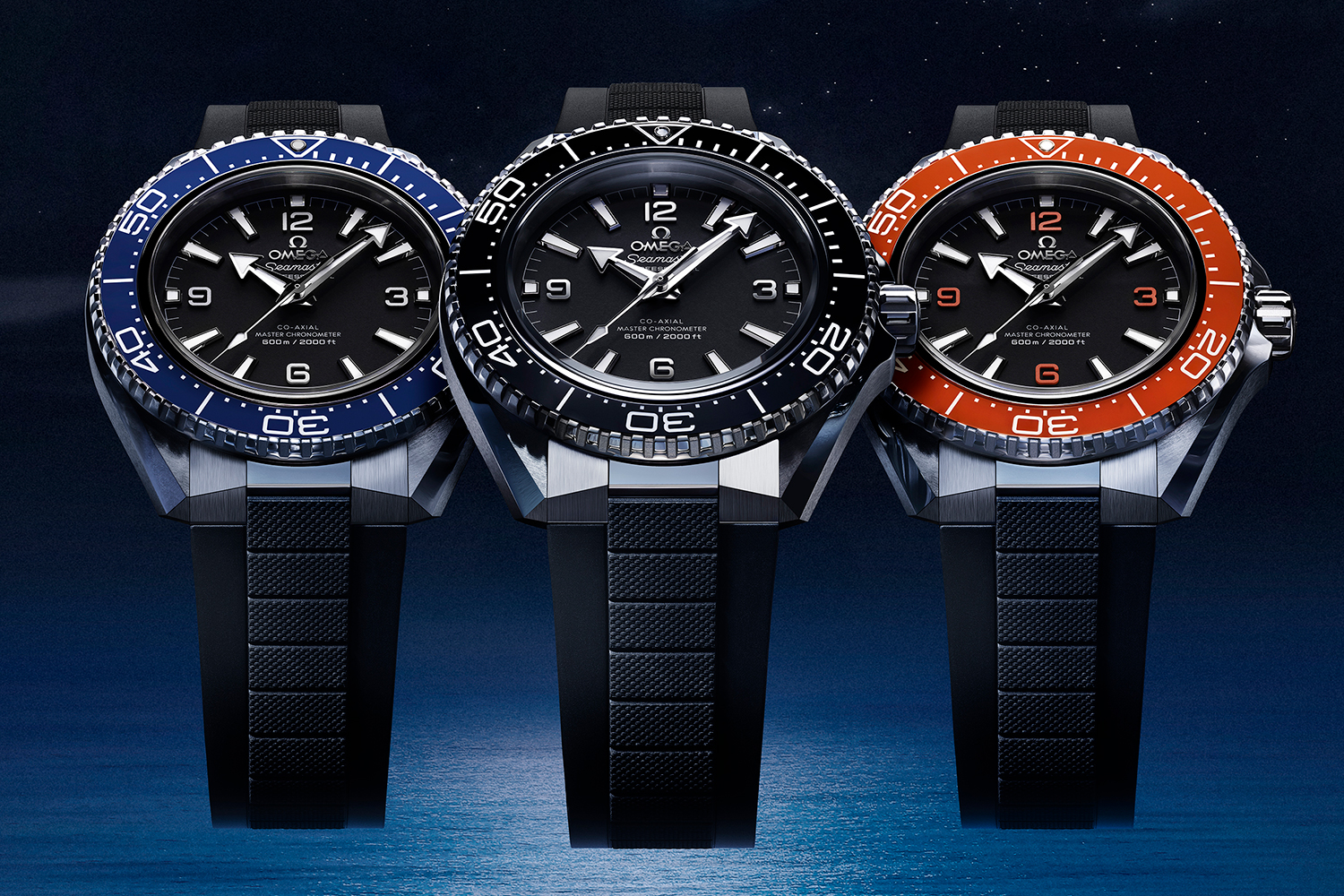
Omega Seamaster Planet Ocean Fourth Generation
Gregory Kissling, who served as Omega’s Vice President of Product before moving to Breguet as CEO in 2024, previously told Revolution that the most demanding part of developing new structures lay in the balance between aesthetics and engineering. He described the technical work behind Omega’s hand-applied luminous detailing as a process so delicate it could only be done by hand. He was speaking about another project entirely, yet the observation applies here. The new Planet Ocean demonstrates the same deliberate attention to how each component meets its function.
Omega has removed the helium escape valve for aesthetic and structural reasons. The bracelets have been reworked to suit the new case shape and now use flat links with a six-position adjustment and a diver extension. The changes feel considered rather than declarative, which fits the restrained tone Omega has adopted across recent years. The dials of the new models are matte black with applied indexes filled with Super-LumiNova. The Arabic numerals return but now use a more angular typography that mirrors the case profile. The rhodium-plated logo stands clear above the printed text.
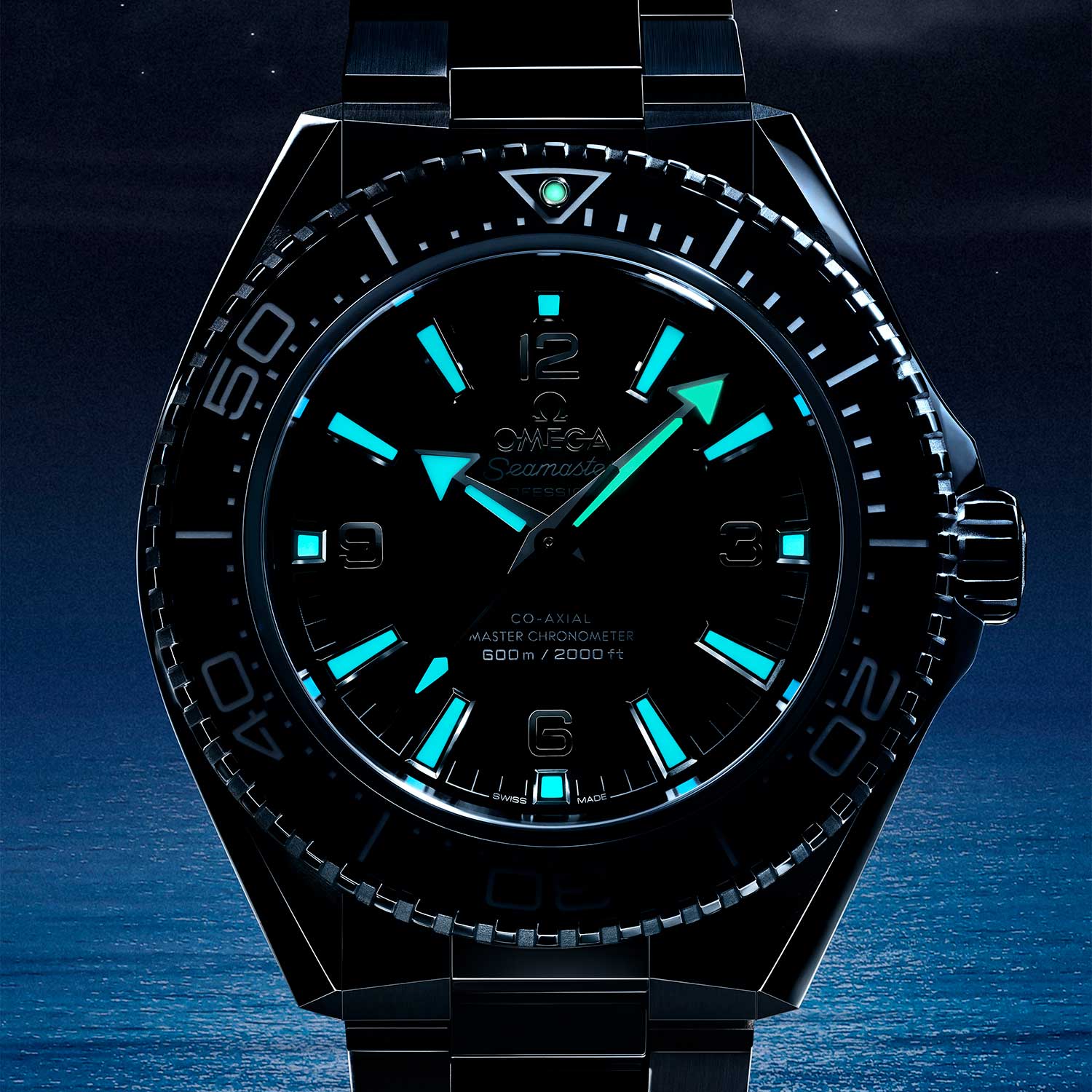
The matte black dial with applied indexes filled with Super-LumiNova
-
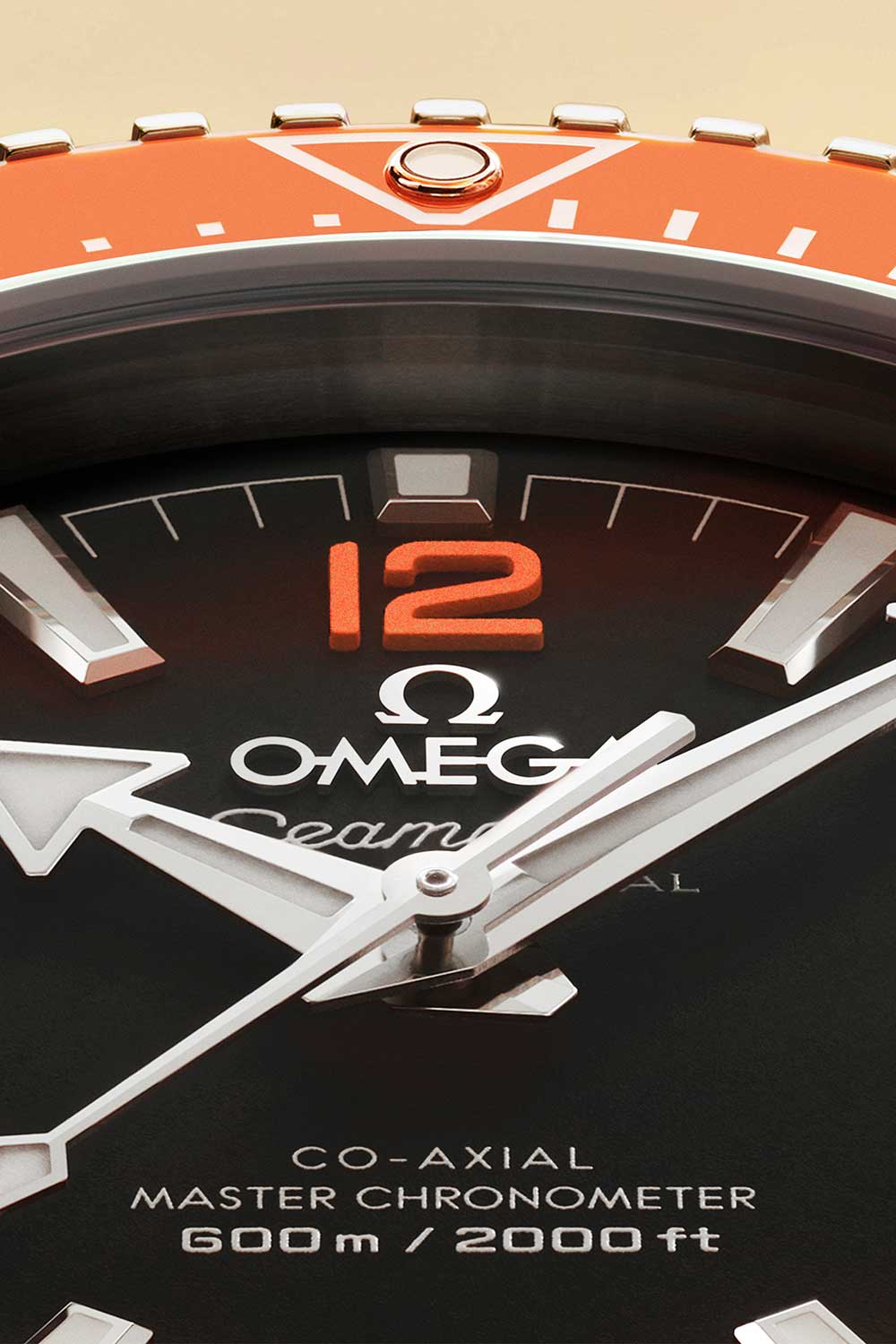
- The rhodium plated logo stands clear above the printed text
-
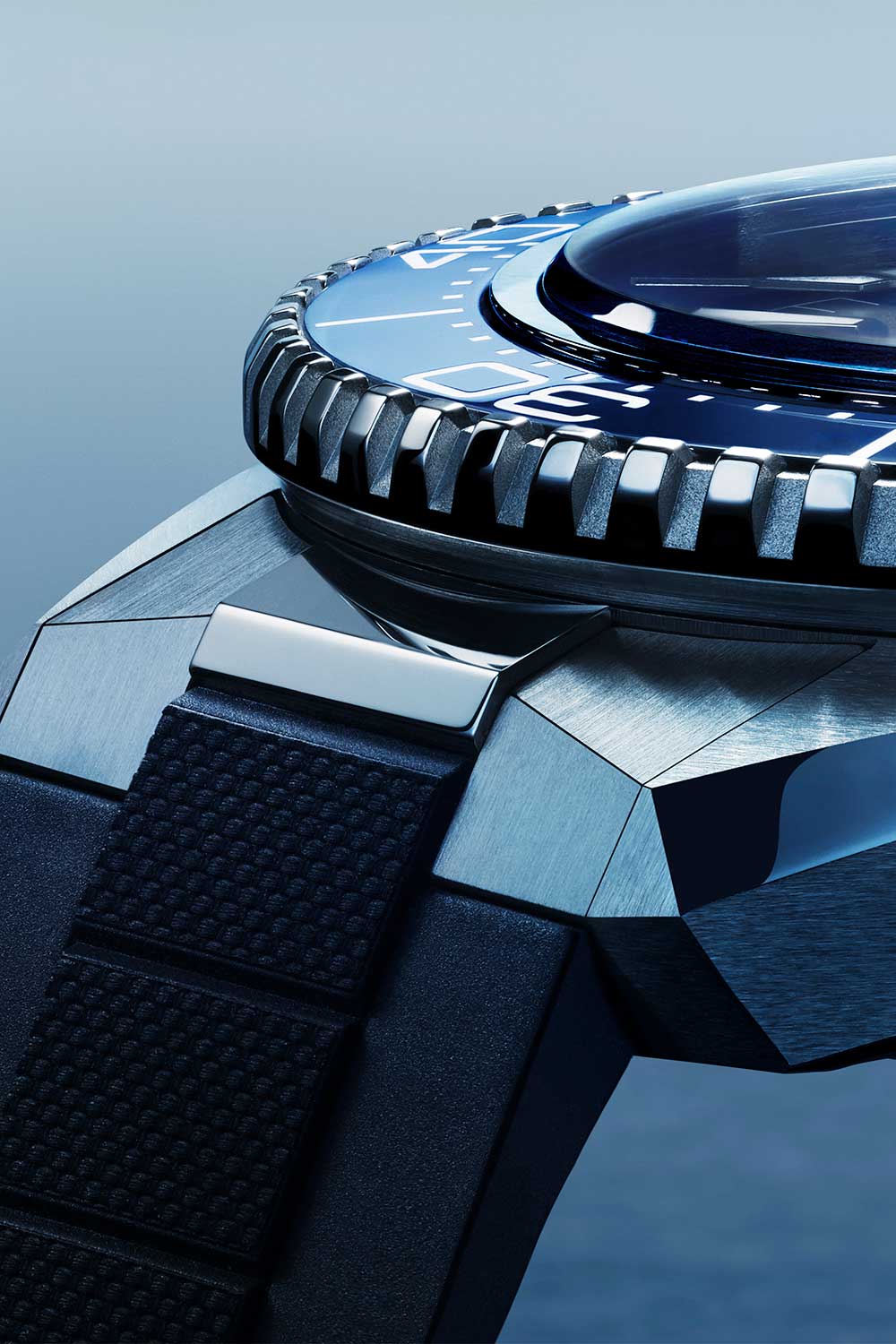
- The bracelets have been reworked to suit the new case shape and now use flat links with a six-position adjustment and a diver extension
The movements inside every watch are the Master Chronometer Caliber 8912. This is the same family of movement used in the Ultra Deep and it meets the highest METAS standards for precision, performance and magnetic resistance. It provides 60 hours of power reserve and gives the new Planet Ocean a sense of continuity within the broader Seamaster line. The titanium screw-in casebacks contribute to the slimmer profile while maintaining the tool watch character that has been central to the Planet Ocean identity.
Seven models are available at launch. Three use the signature orange that has marked the Planet Ocean since 2005. Omega has invested time in refining the ceramic formulation to achieve a vivid and stable shade, and the result is used for the bezel ring and the Arabic numerals on the dial. Two references use blue ceramic with a white enamel diving scale. Two use black ceramic. Each model can be paired with a steel bracelet or rubber strap. The variety is measured rather than expansive and reinforces the idea that this is a coherent family.
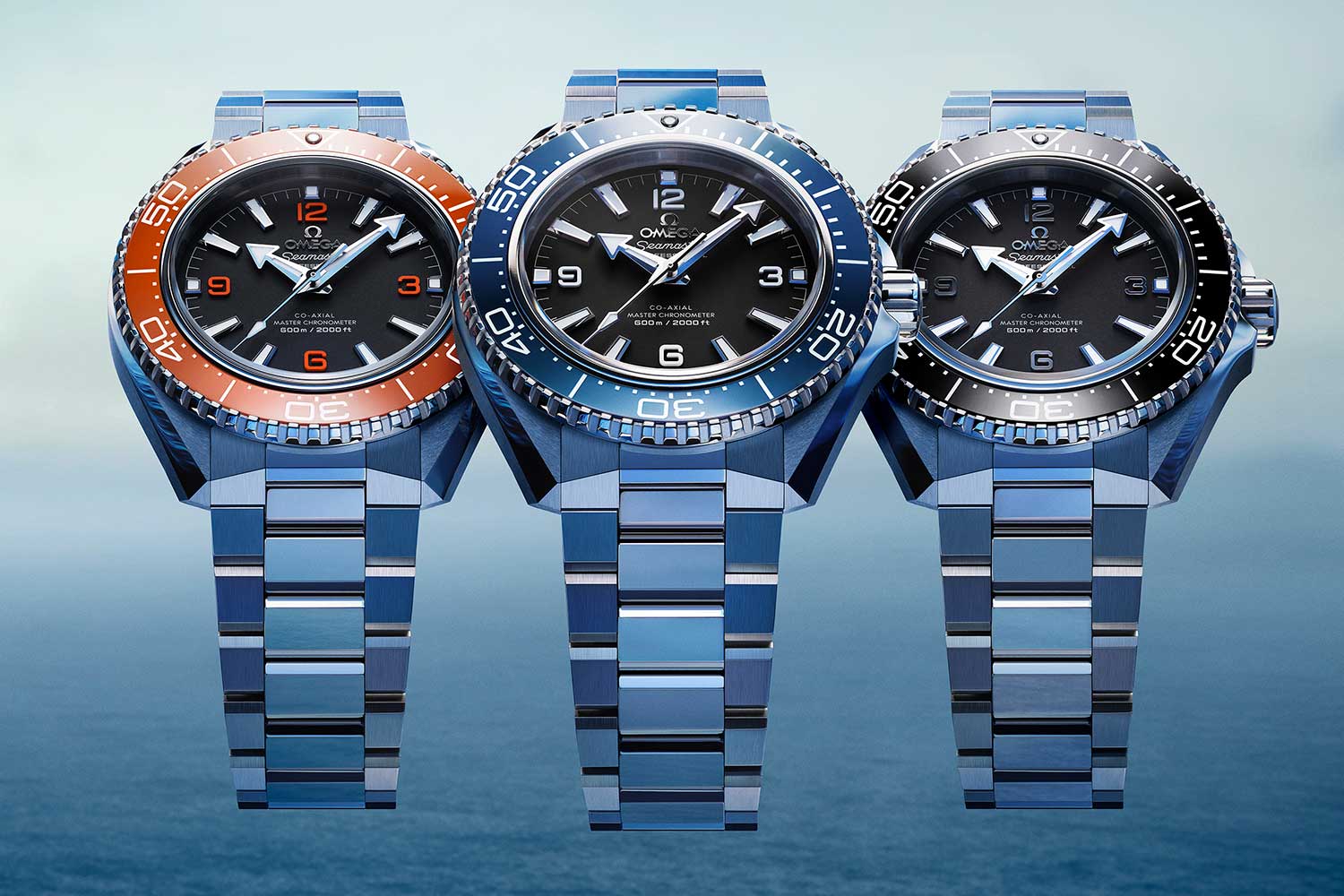
Omega Seamaster Planet Ocean Fourth Generation
It is always tempting to treat anniversaries as a hook for celebration, but the Planet Ocean has never been a watch that relied on sentiment. Its place in the Seamaster family has come from a consistent sense of purpose. When Aeschlimann reflected in Revolution on his 24 years at Omega and spoke of the respect he held for the brand’s past, he offered a simple explanation for the company’s design approach. Omega is willing to update familiar ideas when appropriate, yet it maintains the functional clarity that made the original Seamaster successful.
The new Planet Ocean fits that philosophy. It is not a reinterpretation of a past reference, and it is not an attempt to push into experimental territory. It recognizes the visual vocabulary of the Seamaster, acknowledges the technical lessons learned through Ultra Deep exploration and presents a contemporary interpretation of the professional dive watch.
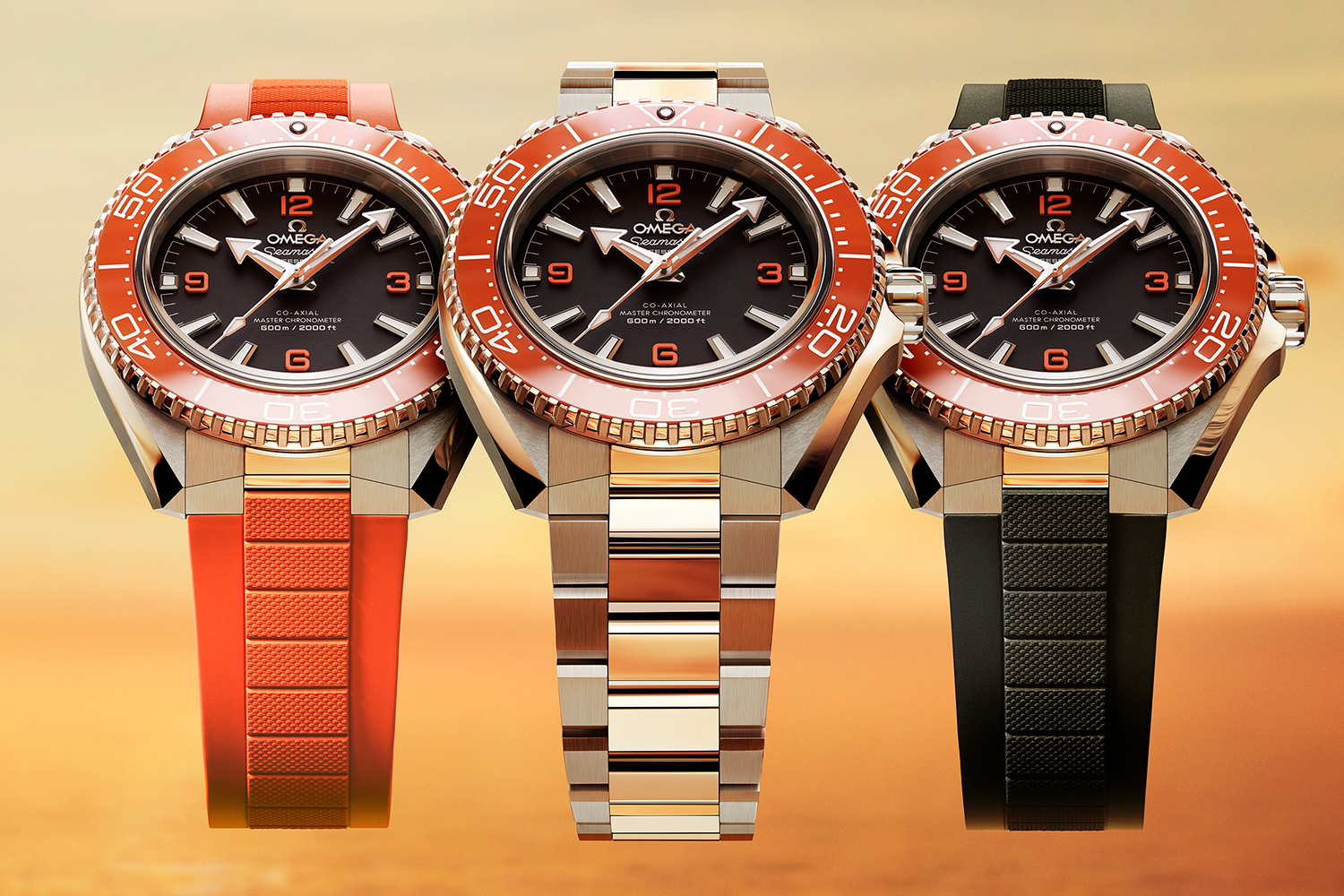
Omega Seamaster Planet Ocean Fourth Generation
A Legacy of Exploration
Omega’s claim to leadership in the category of diving instruments is earned rather than declared. The Marine of 1932, the Seamaster 300 of 1957, the PloProf of 1970 and the Ultra Deep of 2019 demonstrate a consistent engagement with underwater exploration. The Planet Ocean has played a central part in that legacy for 20 years. The fourth generation continues that work with a design that is both familiar and refined. It shows that progress does not require dramatic gestures. It can come from the patient advancement of ideas tested over decades.
The new releases mark another step in that progression and the Seamaster family feels stronger for it. Perhaps the only element that may divide opinion among dedicated collectors is the removal of the traditional helium escape valve, although the pay-off here is a cleaner profile and associated structural benefits, all of which speak to Omega’s forward-looking approach.
Tech Specs: Omega Seamaster Planet Ocean Fourth Generation
Movement: Self-winding METAS-certified, Co-Axial Master Chronometer Caliber 8912; 60-hour power reserve resistance to 15,000 gauss
Functions: Hours, minutes and seconds; quick-adjust hour (Time Zone Function)
Case: 42mm × 13.79mm; stainless steel, featuring two-part construction with inner titanium ring; unidirectional ceramic bezel in orange, blue or black, with enamel or hybrid ceramic diving scale; screw-in Grade 5 titanium caseback; water resistant to 600m
Dial: Matte black; applied indexes and Arabic numerals filled with Super-LumiNova; rhodium-plated Omega logo
Strap: Stainless steel bracelet with flat links, featuring six-position micro-adjustment and diver extension; optional orange or black rubber strap with fold-over clasp
Price: Blue or black model — USD 8,600 on black rubber strap and USD 9,200 on stainless steel bracelet (excl. taxes); Orange model — USD 8,900 on orange or black rubber strap and USD 9,500 on stainless steel bracelet (excl. taxes)
Omega
You may also like
Editorial
Revolution Awards 2025: Best Women’s Watch — Omega Seamaster Aqua Terra 150M 30mm, Moonshine Gold on Moonshine Gold
Jan 27, 2026
Editorial
Revolution Awards 2025: Best Women’s Watch — Omega Seamaster Aqua Terra 150M 30mm, Moonshine Gold on Moonshine Gold
Jan 27, 2026
Reviews
A Closer Look: Omega Speedmaster Moonwatch “Reverse Panda”
Jan 21, 2026
Reviews
A Closer Look: Omega Speedmaster Moonwatch “Reverse Panda”
Jan 21, 2026

Editorial
The Revolutionary List: 30 Pioneering Watches – the Omega Speedmaster Chrono Chime
Dec 2, 2025
Editorial
The Revolutionary List: 30 Pioneering Watches – the Omega Speedmaster Chrono Chime
Dec 2, 2025