
Mr. Talking Hands On: Mind-Blowing Reversos You’ve Never Seen
1991: Reverso Soixantième
For the Reverso’s 60th, Jaeger-LeCoultre built the Reverso Soixantième, or Reverso 60ème. Whilst the watchmaker’s way with words might be a little on the nose, its watchmaking, thankfully, more than makes up for it. The Soixantième, limited to 500 pieces, isn’t too overembellished with complications, with the caliber 824 getting an unusual central date hand and a power reserve indicator. Nevertheless, it is the first complicated Reverso, not to mention the first with a clear caseback. It was also the genesis of the larger 42mm by 26mm Grand Taille case, found on all six of these editions, which opened up the Reverso to a modern audience.
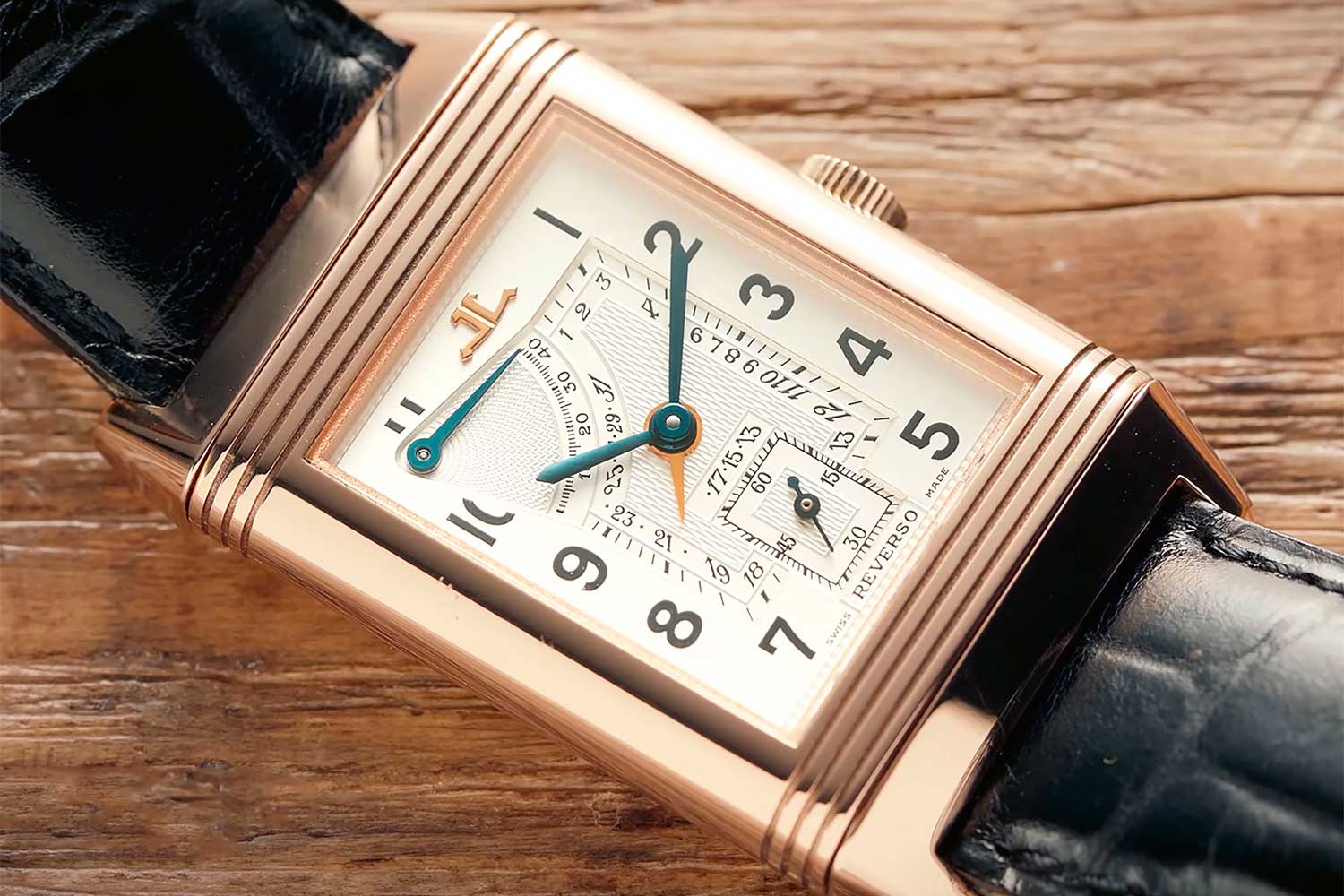
Limited to 500 pieces, the 60th anniversary Soixantième kickstarted the whole incredible collection
1993: Reverso Tourbillon
It was 1993, and the next in the line of these exceptional Reversos had to pack a punch. Why not a tourbillon? Seems like a reasonable next step, not overkill at all… The Reverso Tourbillon was, like other tourbillon watches of its time, a bit of a recluse, keeping the main event hidden around the back. Like Patek Philippe, Vacheron Constantin and Breguet, the few other watchmakers who actually made tourbillons at the time, Jaeger-LeCoultre considered this tumbling technical marvel to be better heard and not seen.
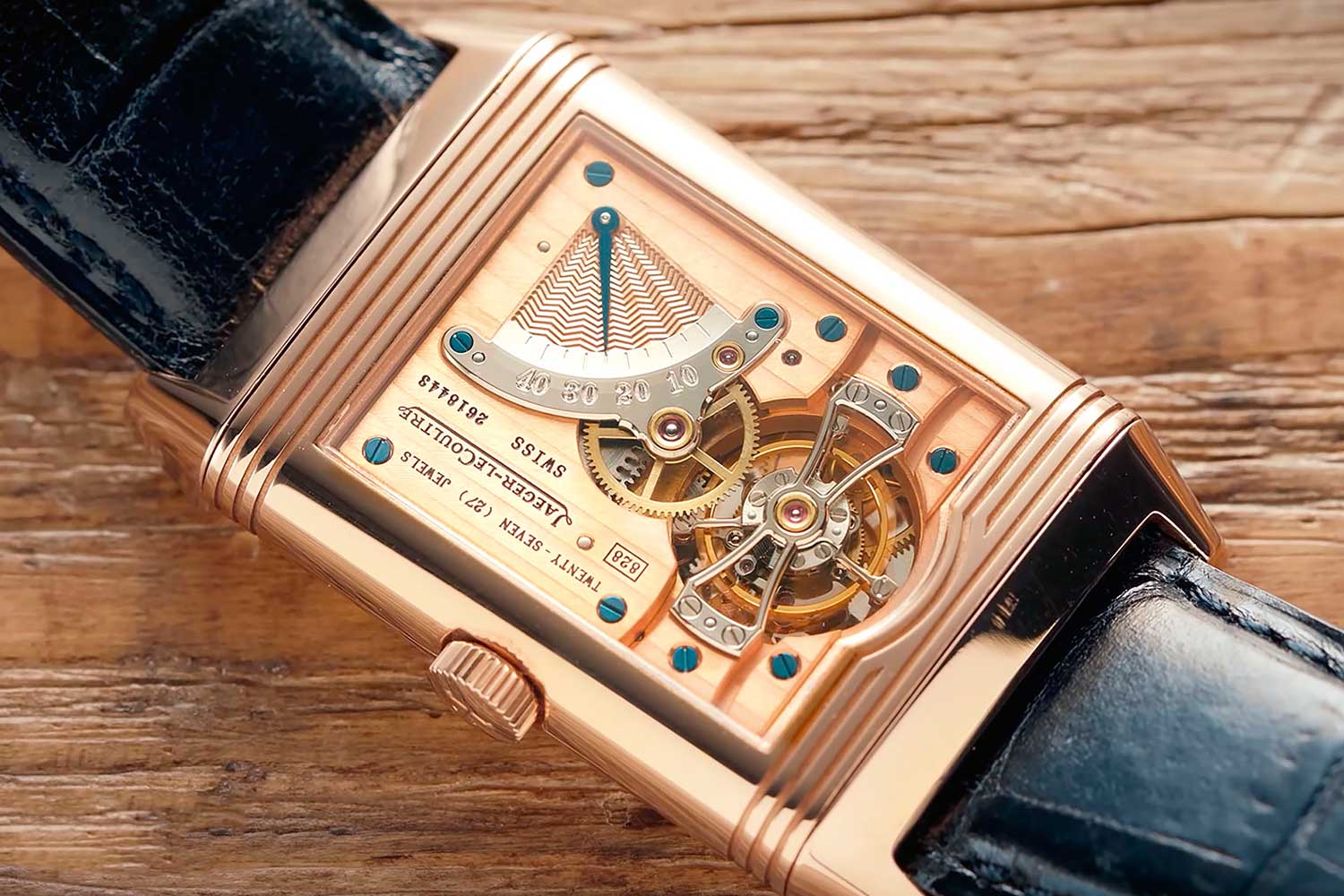
The hallowed tourbillon complication came next, tucked inside the reverse of the case with a power reserve
Only 500 examples of this watch exist and that’s pretty incredible. You don’t get a whole lot of use as a watchmaking business out of a rectangular movement design, yet here is one in gold with a tourbillon, to be built just 500 times.
1994: Reverso Répétition Minutes
So, tourbillon? Went too big too soon and ran out of room? You’d like to think so, but this is Jaeger-LeCoultre we’re talking about here, so have some respect! Well, there’s still the daddy of complications to squeeze inside a Reverso case that … no, there’s no way Jaeger-LeCoultre managed to cram a minute repeater into one of these, surely? Well, they did, in 1994, with the caliber 943.
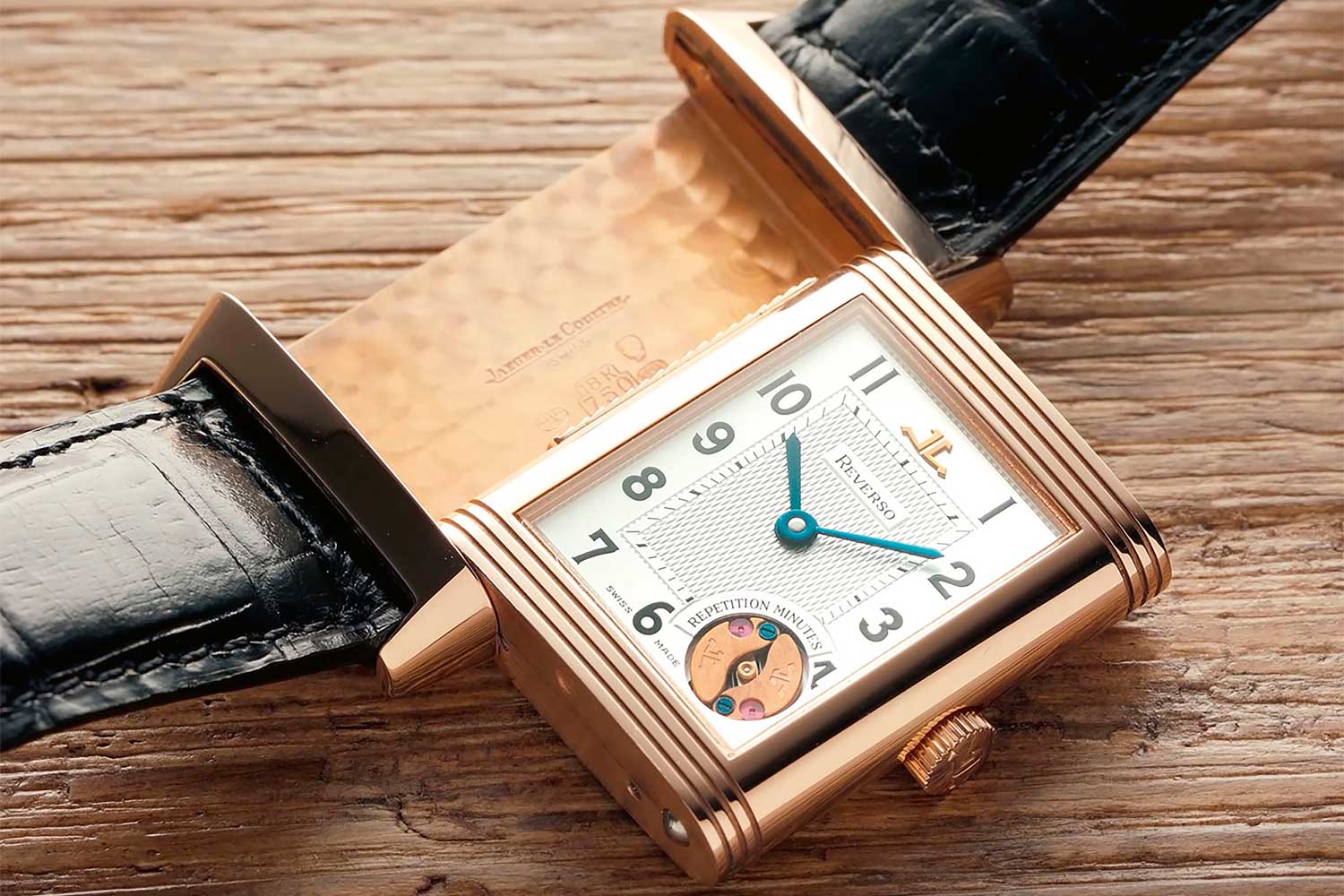
It should be impossible to squeeze a minute repeater into a Reverso, but that didn’t stop Jaeger-LeCoultre
1996: Reverso Chronographe Retrograde
Now what? If the minute repeater is the biggest watchmaking challenge of all and we’ve only got to 1994, then Jaeger-LeCoultre really is stuck. Oh well — time to start inventing a few challenges of its own then. From the front, this caliber 829 equipped Reverso seems, apparently, rather normal. Time, date and a little something else that looks a little bit like a mailbox flag.
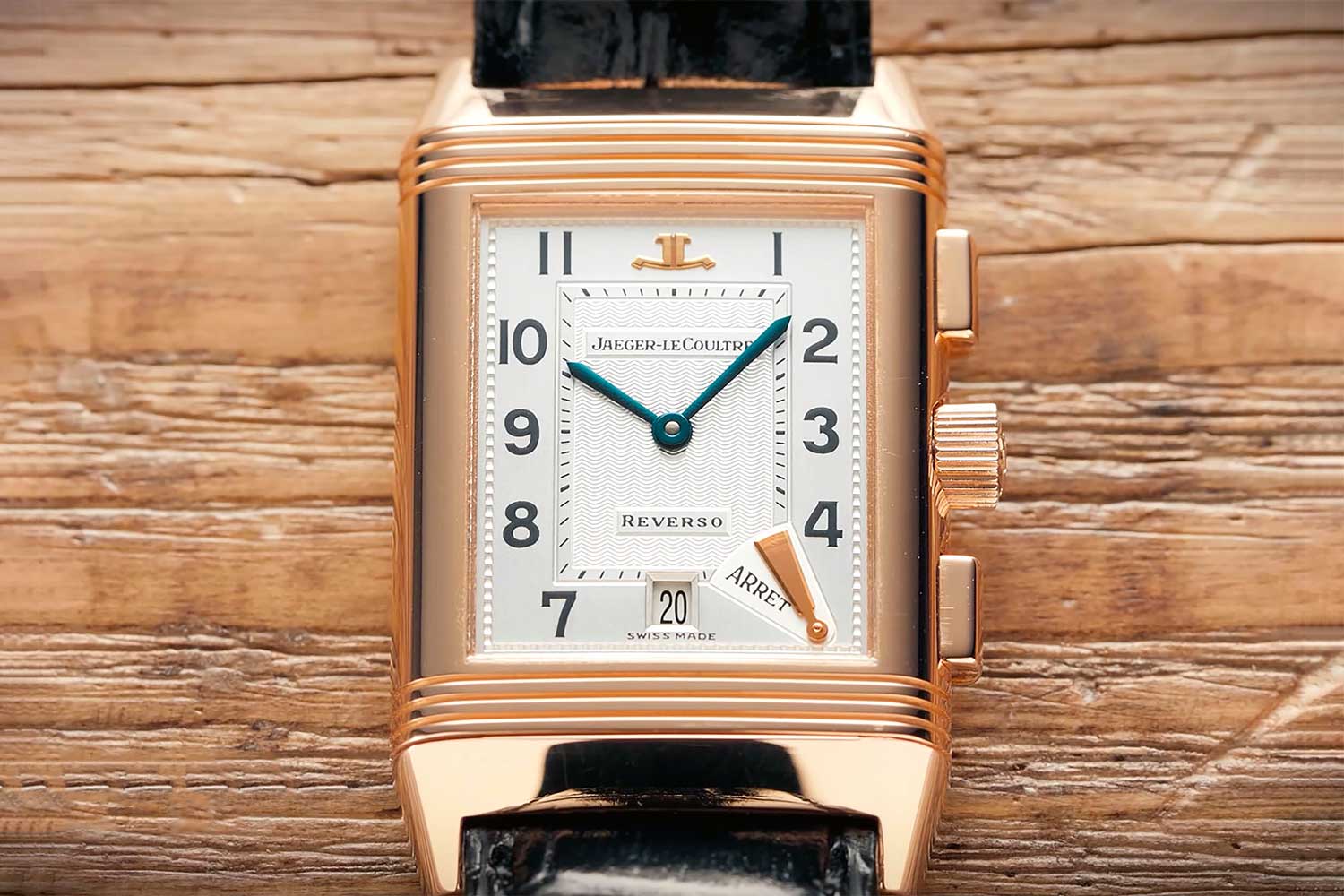
Reverso Chronographe Retrograde
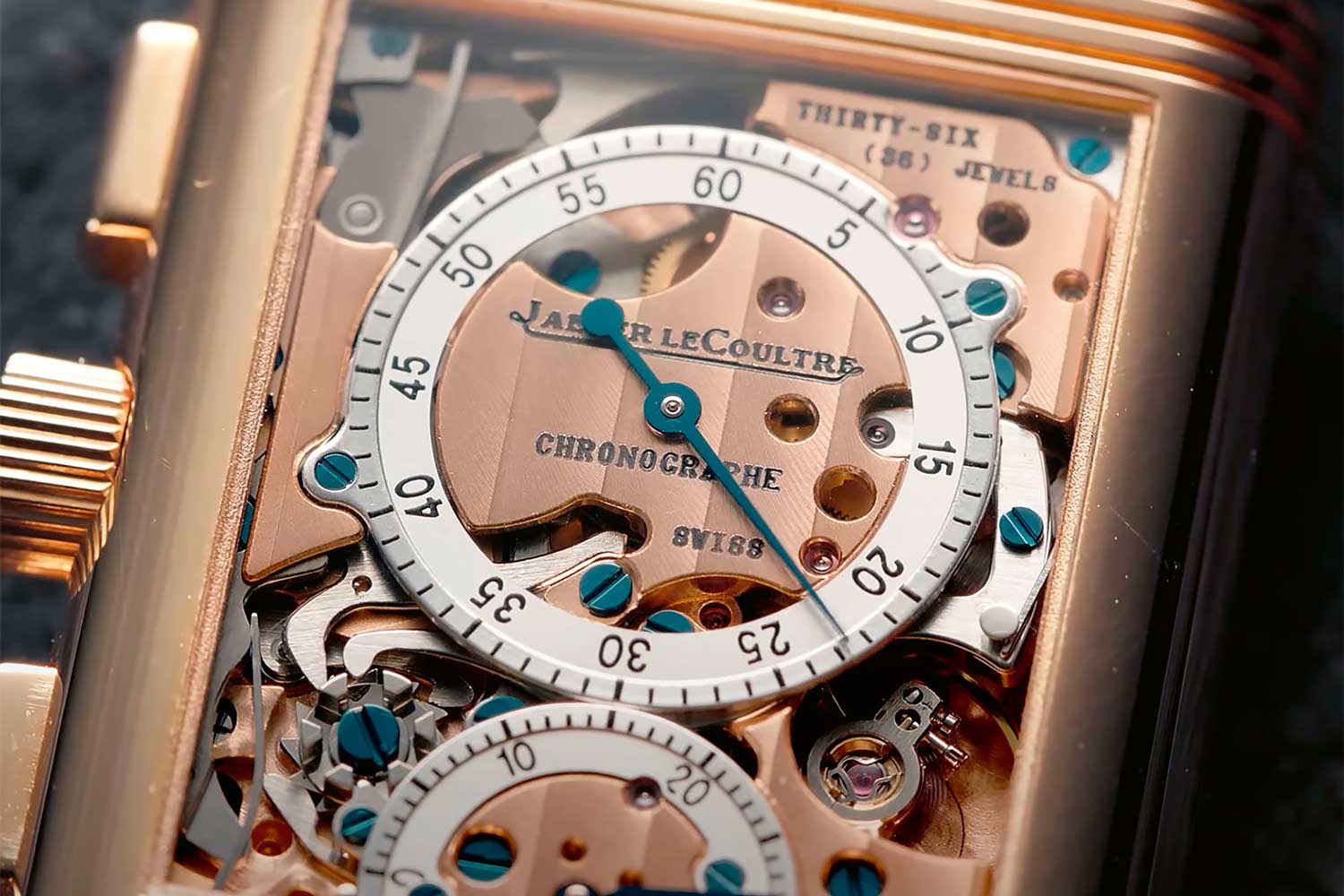
Close-up of the chronograph on the Chronographe Retrograde
1998: Reverso Géographique
The Geographic name has become synonymous with Jaeger-LeCoultre, with the master watchmaker having demonstrated a number of ingenious ways with which it has conquered the globe, so to speak — however, none quite like this little Reverso Géographique. Again, from the front, we have something quite simple, with the addition of a day/night indicator, and you would be forgiven for thinking that this might just be a more embellished version of the 1994 Duoface, a dual time zone watch that added a second dial to the Reverso for the first time.
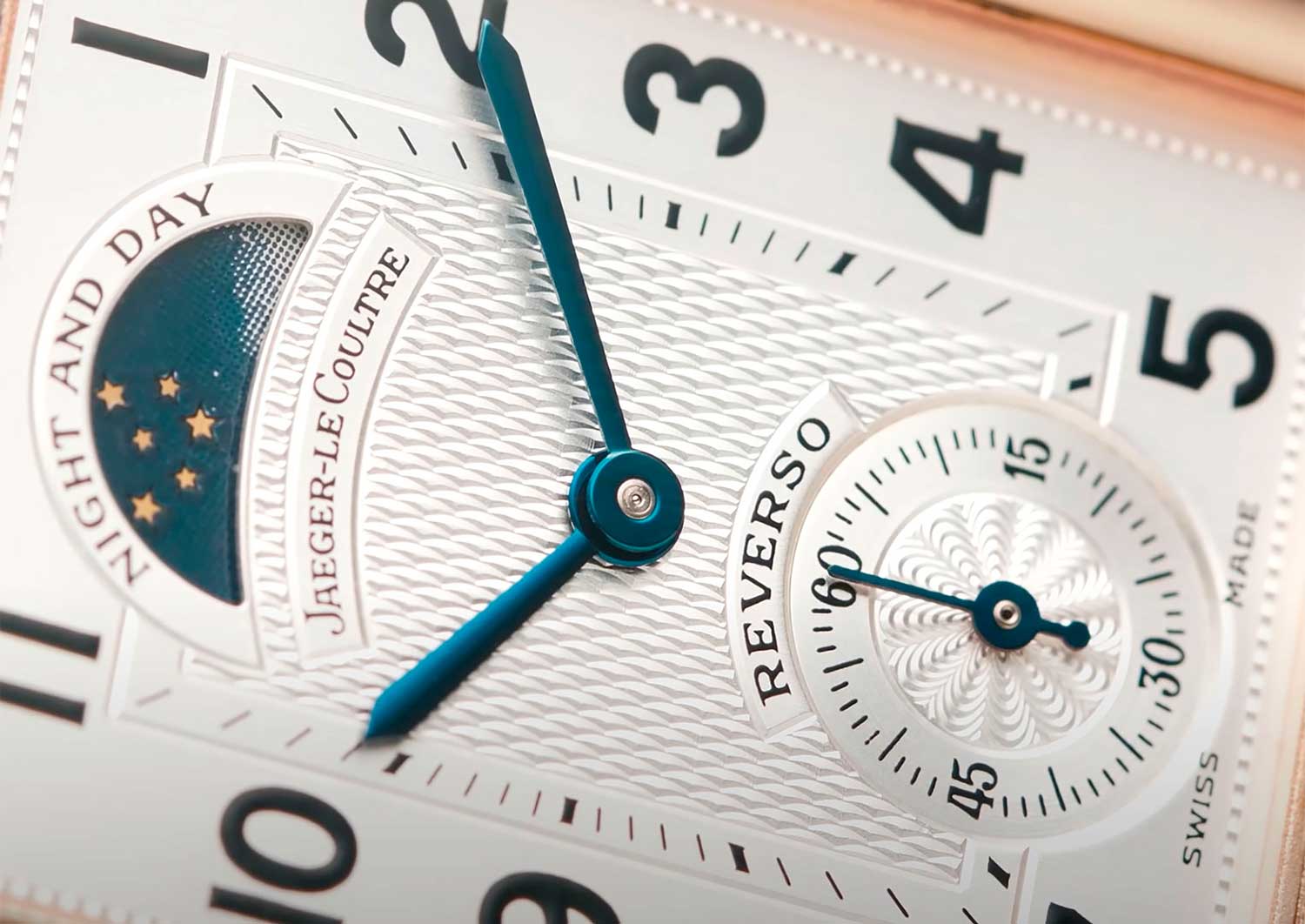
Reverso Géographique
Whilst the silver dial stays in tune with your home city, the pusher on the case side advances the rear through all 24 time zones — but it gets even cleverer than that.
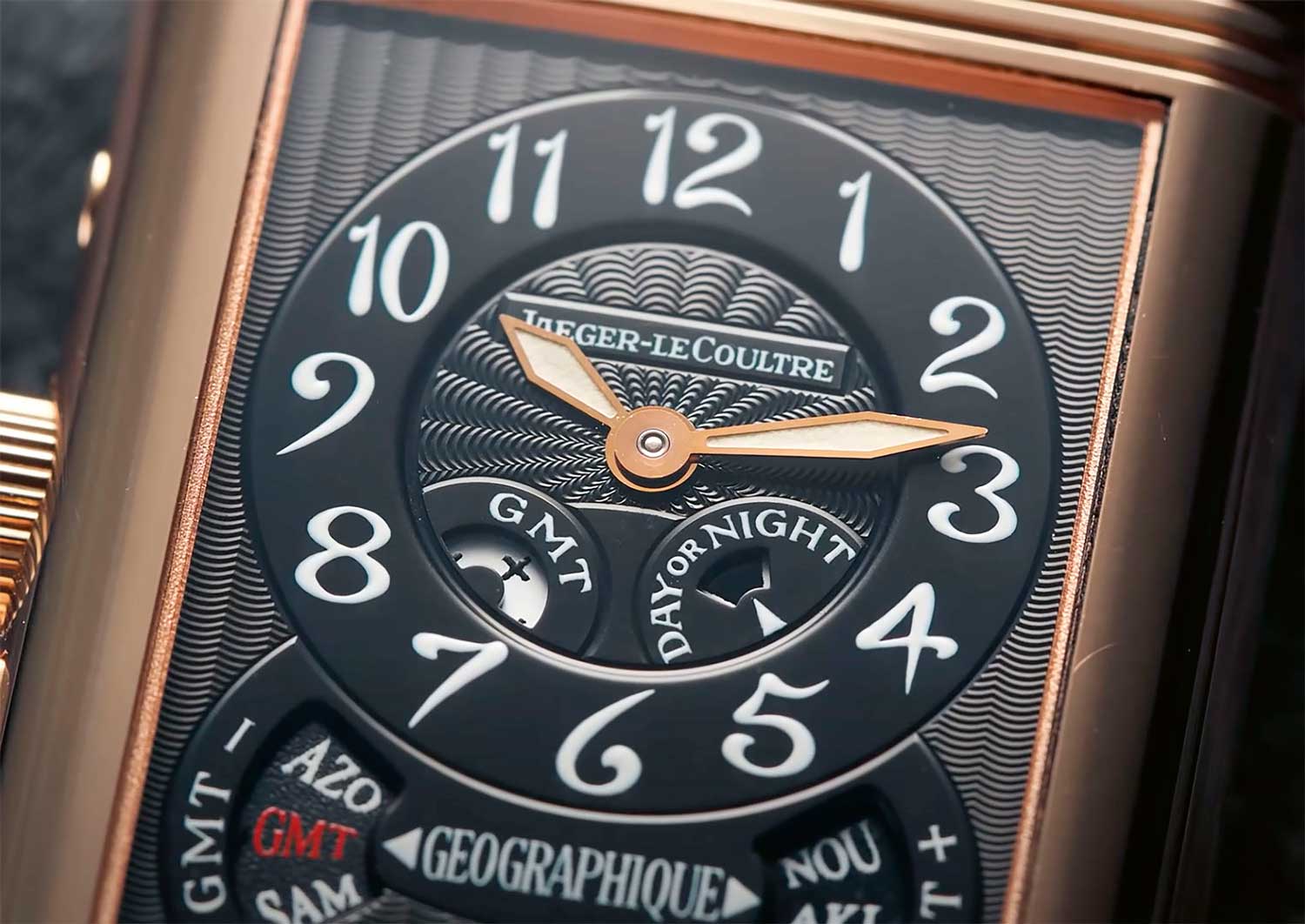
An array of globe-trotting indications feature on the reverse of the Géographique
2000: Reverso Quantième Perpétual
You might be thinking to yourself at this point, isn’t there a missing complication? You’d be right — the perpetual calendar. For the year 2000 and the final in the series, Jaeger- LeCoultre paired its by now famous Grand Taille case with the caliber 855, a 276-component perpetual calendar mechanism. But as you can imagine, this is no ordinary perpetual calendar, rather a hugely befitting send-off to a decade of tradition in, well, breaking tradition.
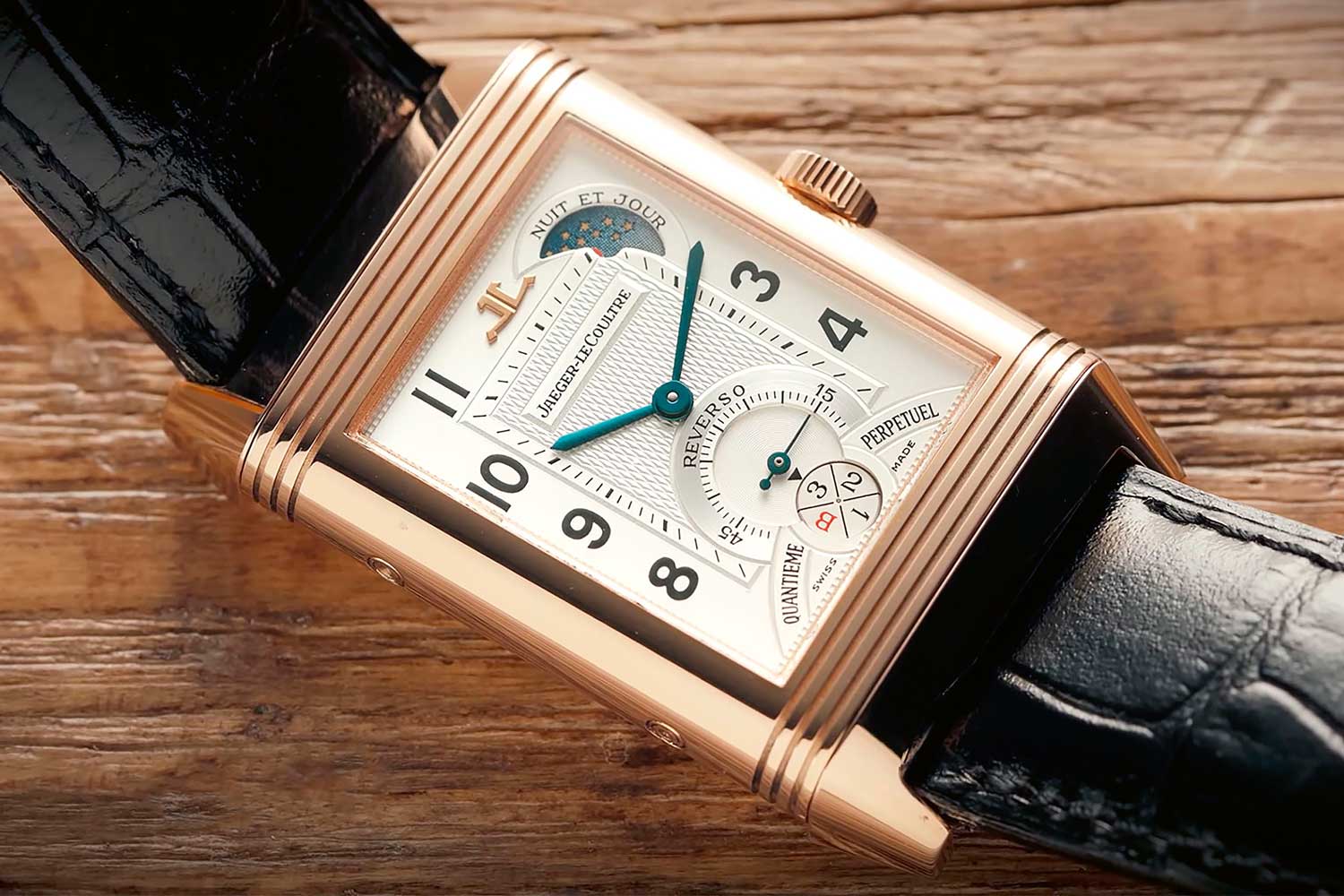
Reverso Quantième Perpétual
Never has there been a simpler, more user-friendly perpetual calendar display on a watch, let alone one of such diminutive proportions. The moonphase takes center stage around which wraps the lunar cycle and date, which, like the chronograph before it, is retrograde. Pretty impressive by itself, but this is a perpetual calendar, remember, so not only does the date hand jump back to the beginning at the start of every new month, it also jumps back from a different spot as every month ends, and that includes the irregularities of February.
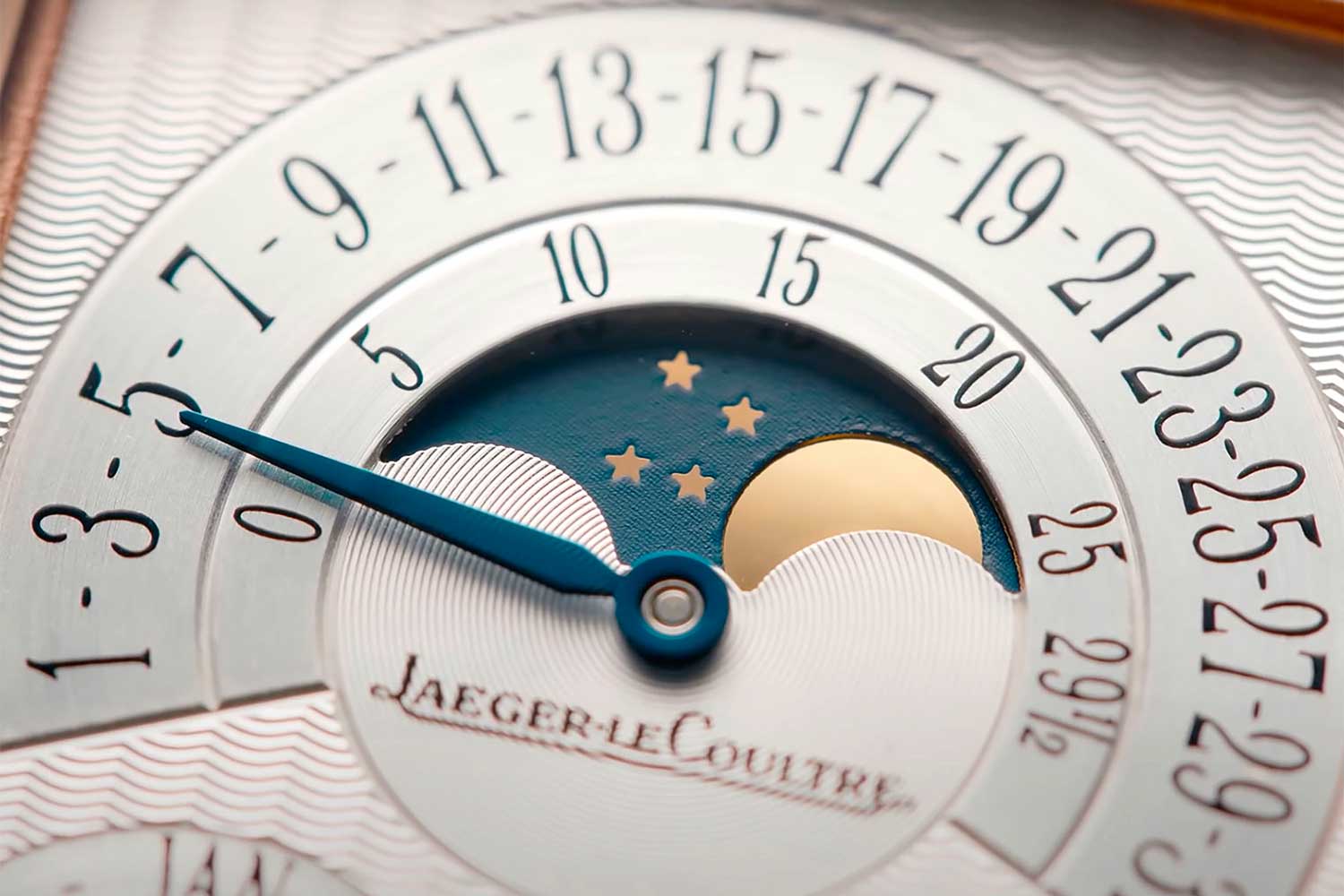
Every element of every watch is performed to an exquisite degree befitting one of the best watchmakers in the world as evinced in the Reverso Quantieme Perpetual
For many, the Reverso is a dress watch with a fanciful history and an odd party trick, but for Jaeger-LeCoultre, it has, from its very beginnings in 1931, been a platform for engineering advancement. Nothing about it or these six watches is ordinary in any sense of the imagination, making them the complete antithesis of an industry often fixated on sticking with tradition. And, for the Reverso, these watches were just the beginning.
You may also like
Editorial
Holiday Horology: Something Old, Something New, Something Special — Tracey Llewellyn, Group Editorial Director
Dec 18, 2025
Editorial
Holiday Horology: Something Old, Something New, Something Special — Tracey Llewellyn, Group Editorial Director
Dec 18, 2025
Editorial
The Revolutionary List: 24 Technically Brilliant Watches – Jaeger-LeCoultre Duomètre Chronograph Moon
Dec 12, 2025
Editorial
The Revolutionary List: 24 Technically Brilliant Watches – Jaeger-LeCoultre Duomètre Chronograph Moon
Dec 12, 2025
Editorial
The Revolutionary List: 30 Pioneering Watches – the Jaeger-LeCoultre Gyrotourbillon 1
Dec 2, 2025
Editorial
The Revolutionary List: 30 Pioneering Watches – the Jaeger-LeCoultre Gyrotourbillon 1
Dec 2, 2025