Introducing the Omega Speedmaster Chronoscope
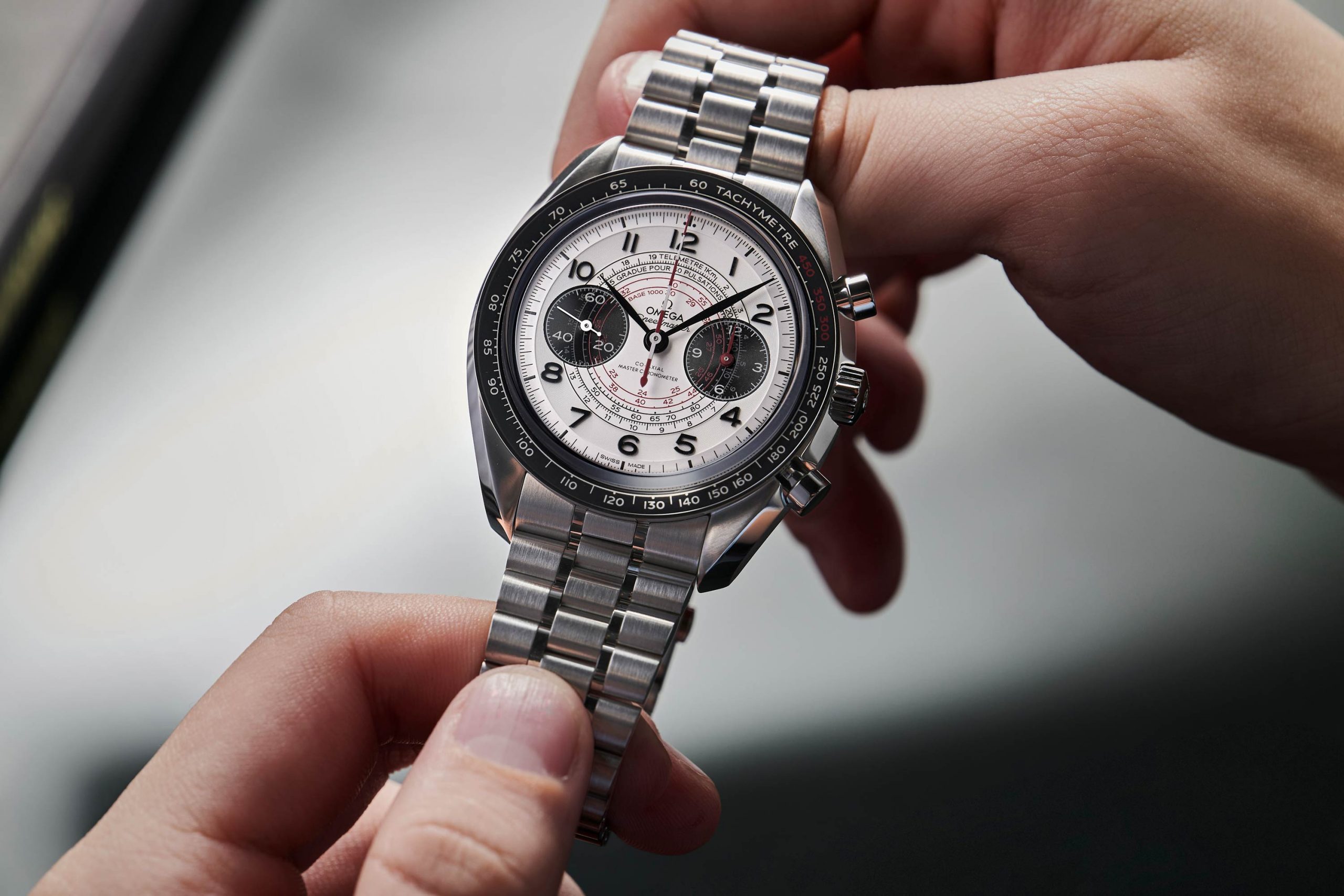
There have been white and silver dialled Speedies a-plenty over the years, but nothing like this with its applied arabic numeral hour markers, mid-20th century printed scale dial and leaf hands. The dial is what collectors refer to as a snail scale featuring all the “big three” scales; tachymeter, telemeter and pulsation. The watch also maintains the signature Speedy tachymeter bezel insert in anodized aluminium in the steel bezel. And the biggest thing to note – two registers instead of three. This truly is a tipping of the hat to some of Omega’s earliest steel chronographs! And I have to say I’m rather taken with it…
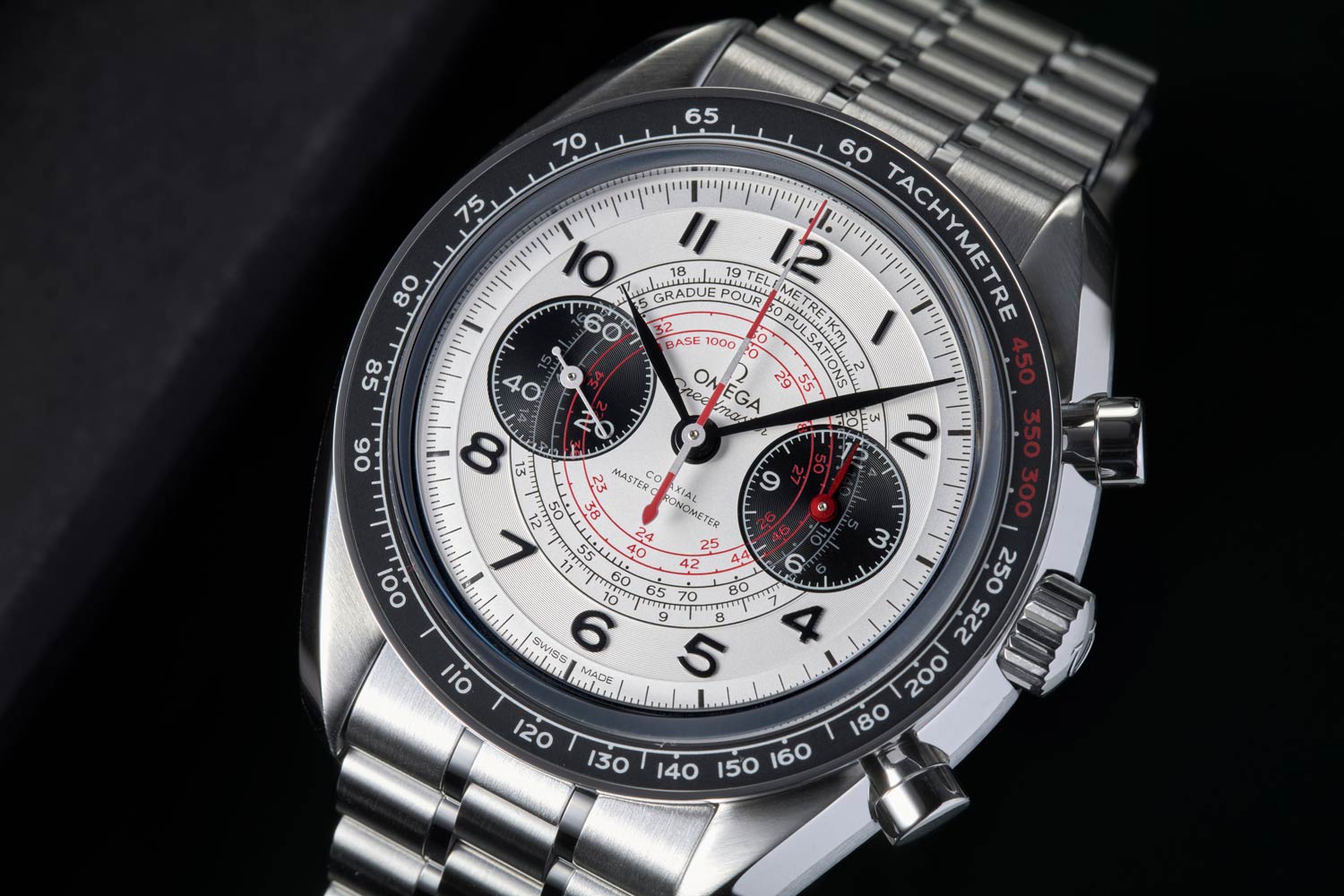
The dial is what collectors refer to as a snail scale featuring all the “big three” scales. (© Revolution)
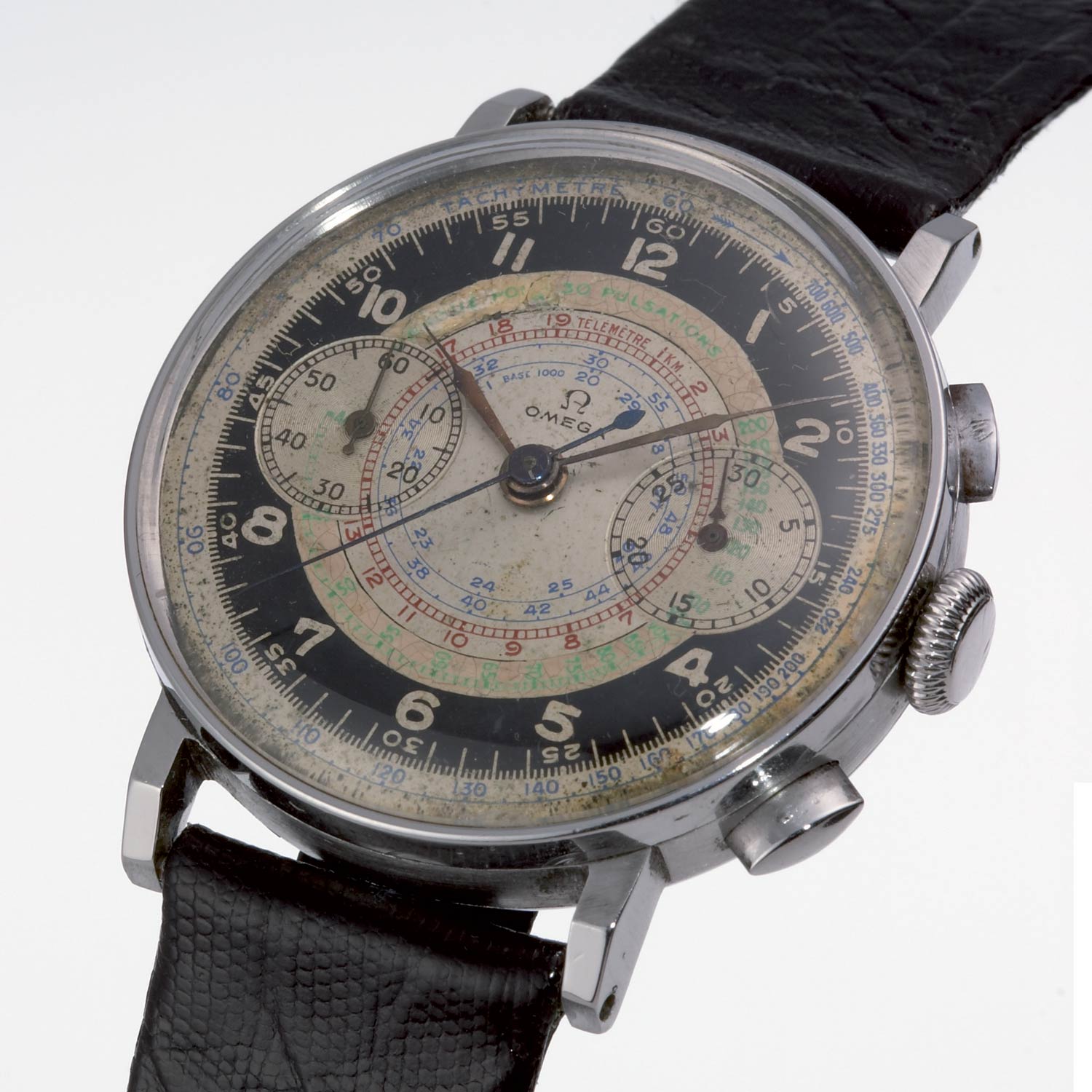
The calibre 33.3 made by Lemania was used in Omega Chronograph during 1940s
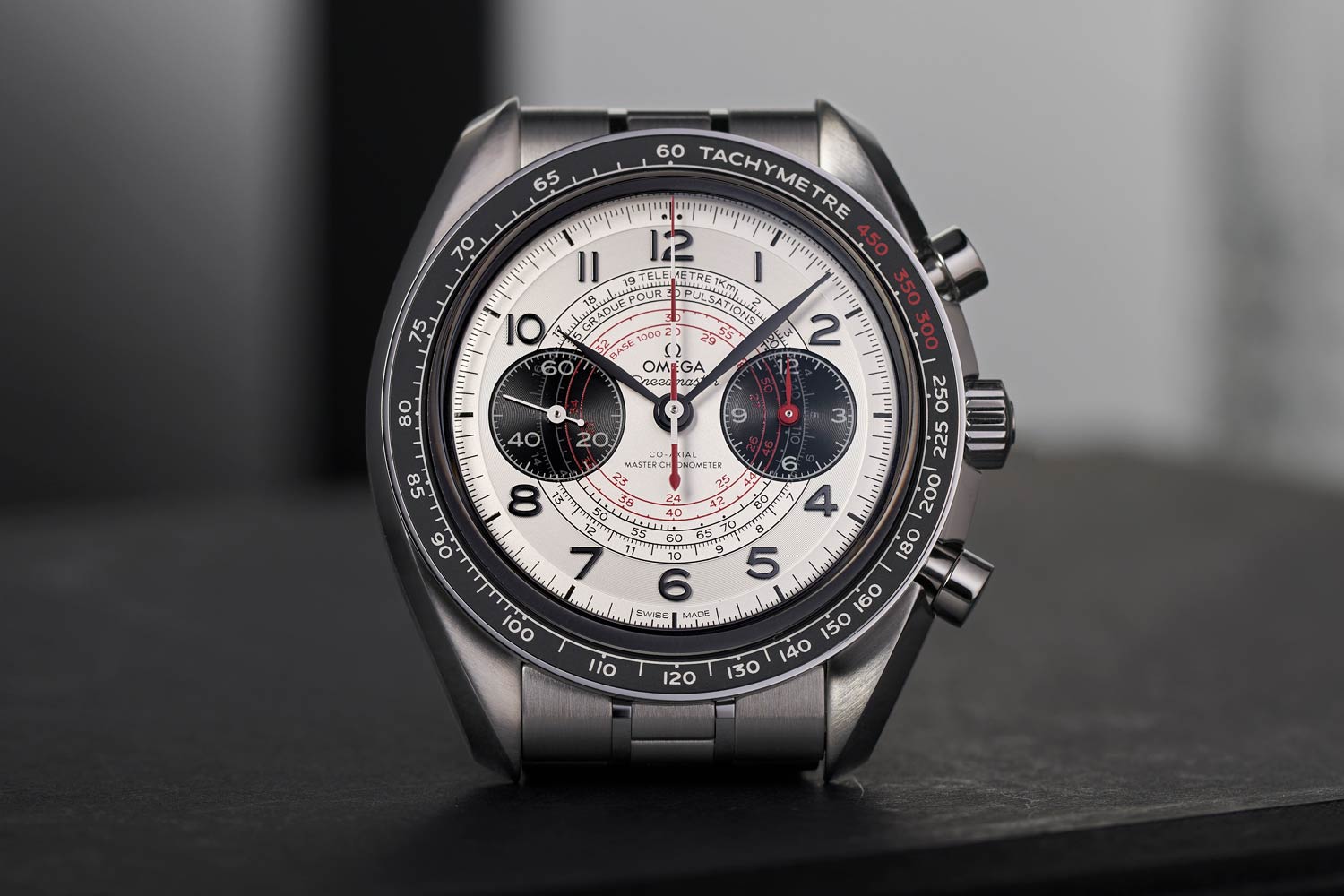
Steel Chronoscope in silver with black sub dials (© Revolution)
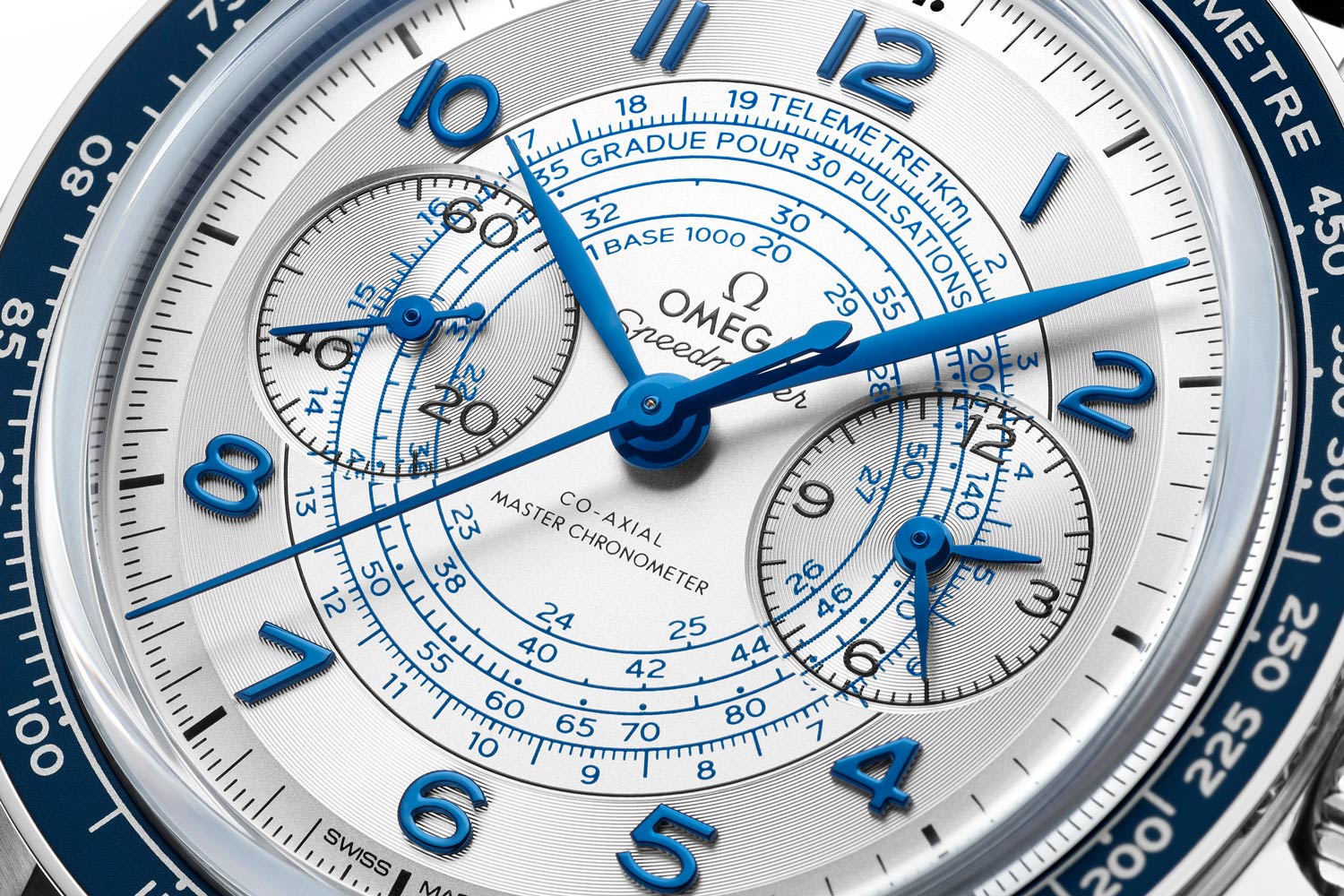
Steel Chronoscope with silver on silver dials
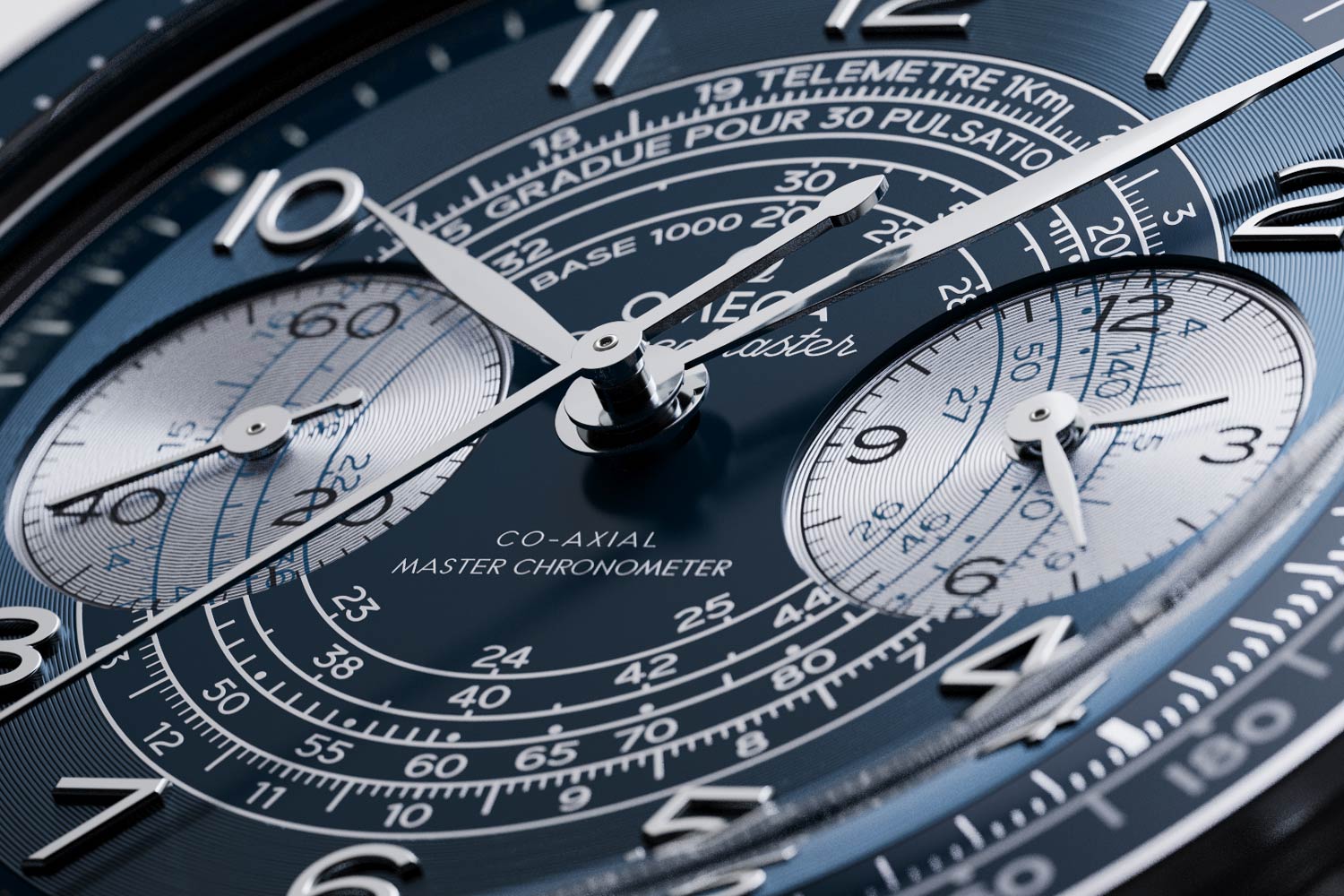
Steel Chronoscope in blue with silver sub dials
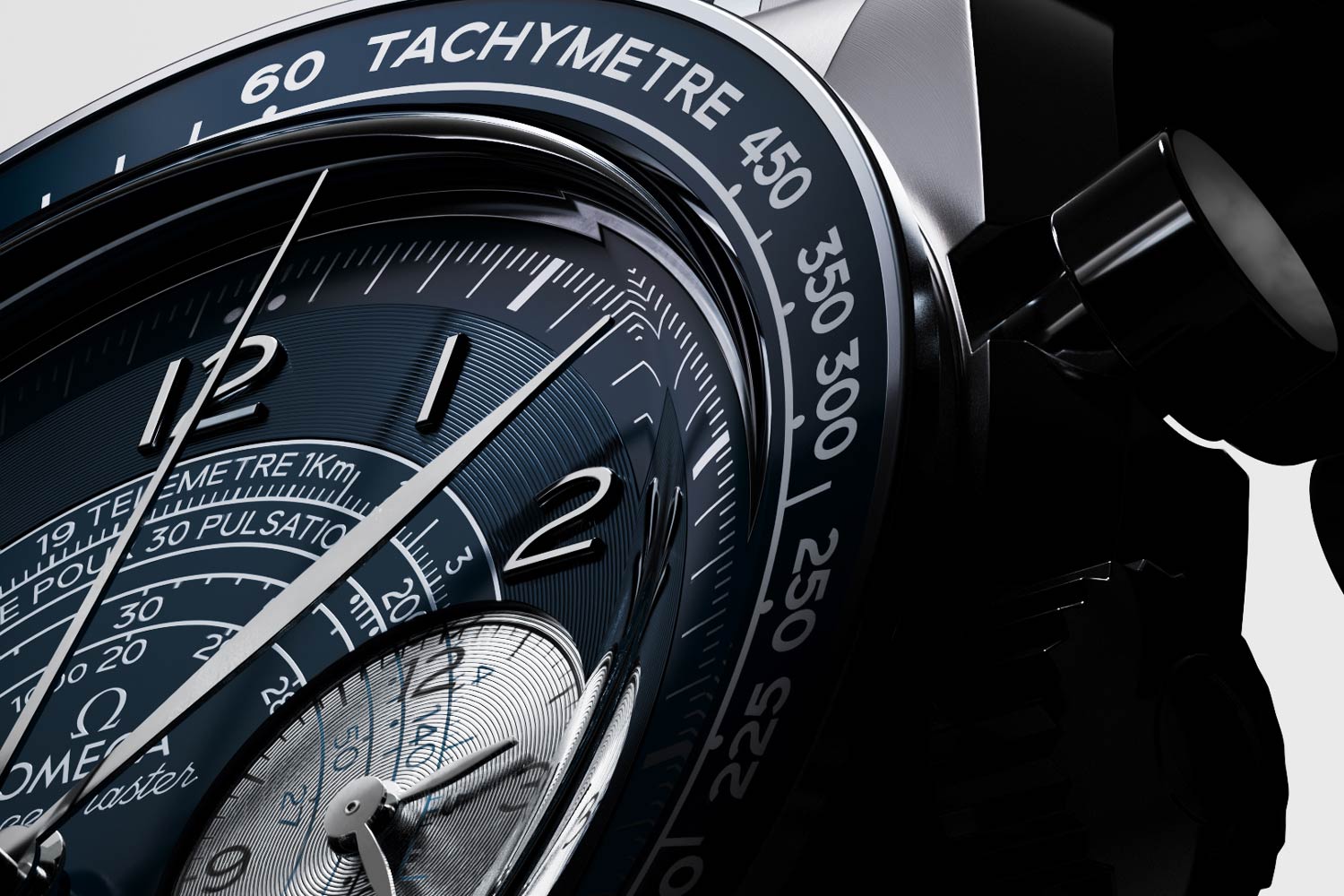
Tachymeter
Finally, the pulsation scale. This was used by doctors and medical professionals to quickly calculate a patient’s pulse. To calculate heart rate the doctor would traditionally need to count your pulse and count to ‘15’ and then multiply the number of pulses by four. This scale allowed the doctor to start the chronograph, count 15 ‘pulses’ then stop the chrono and take the reading – no need for any multiplying!
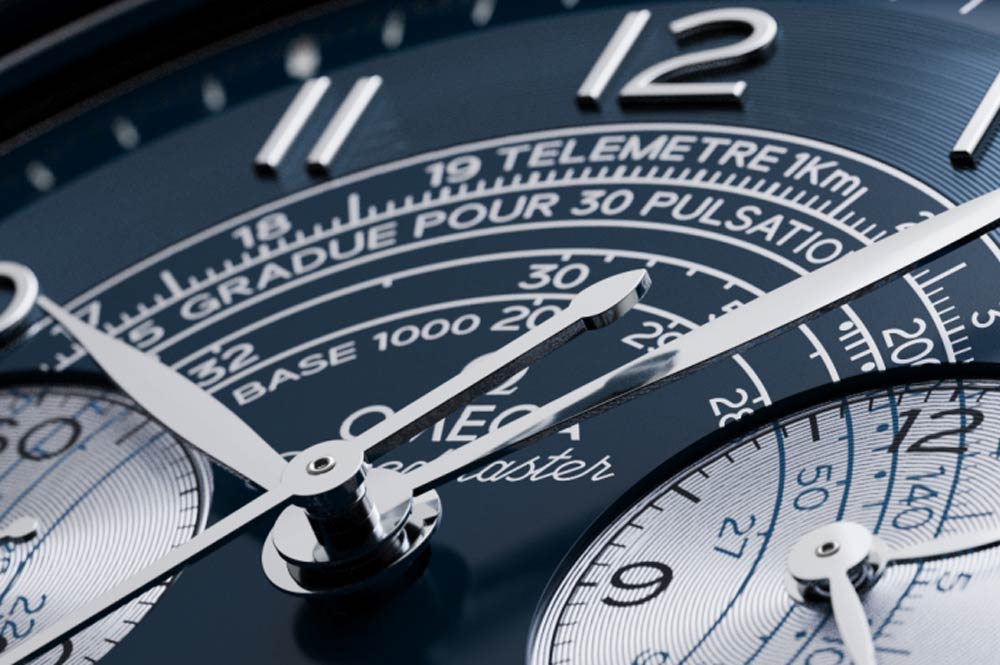
Pulsation scale
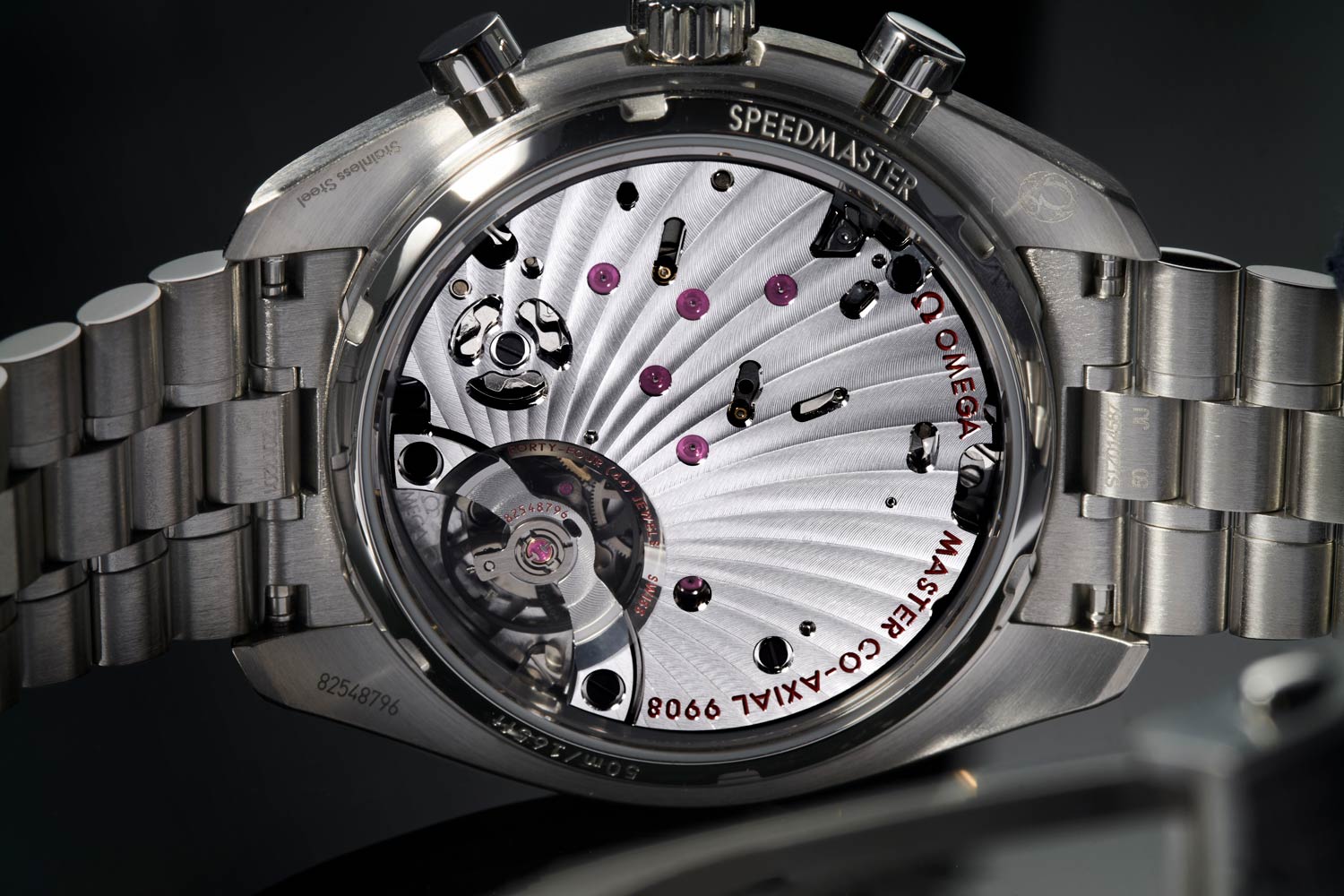
The Master Chronometer certified Co-Axial Calibre 9908 (© Revolution)
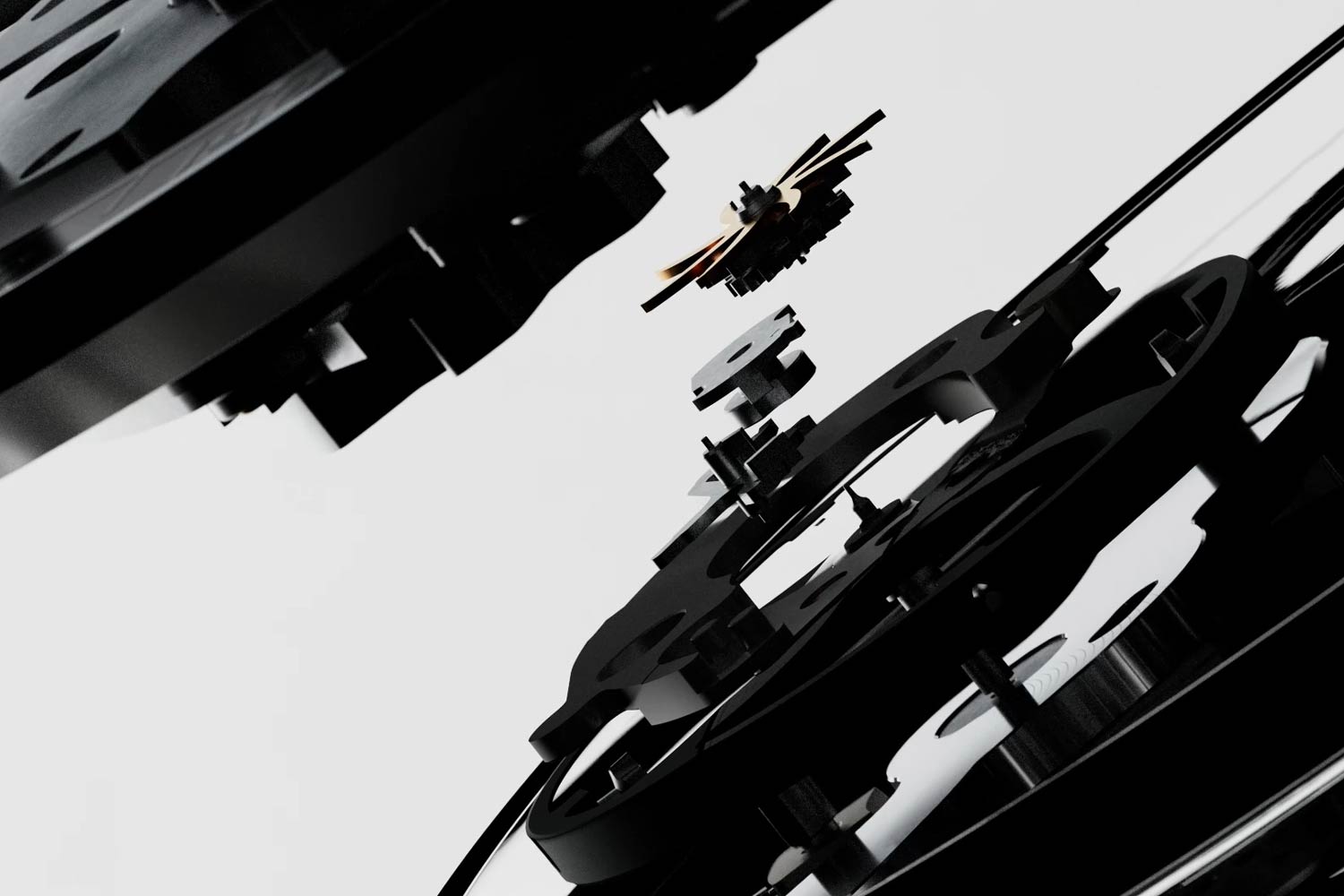
The Master Chronometer certified Co-Axial Calibre 9908
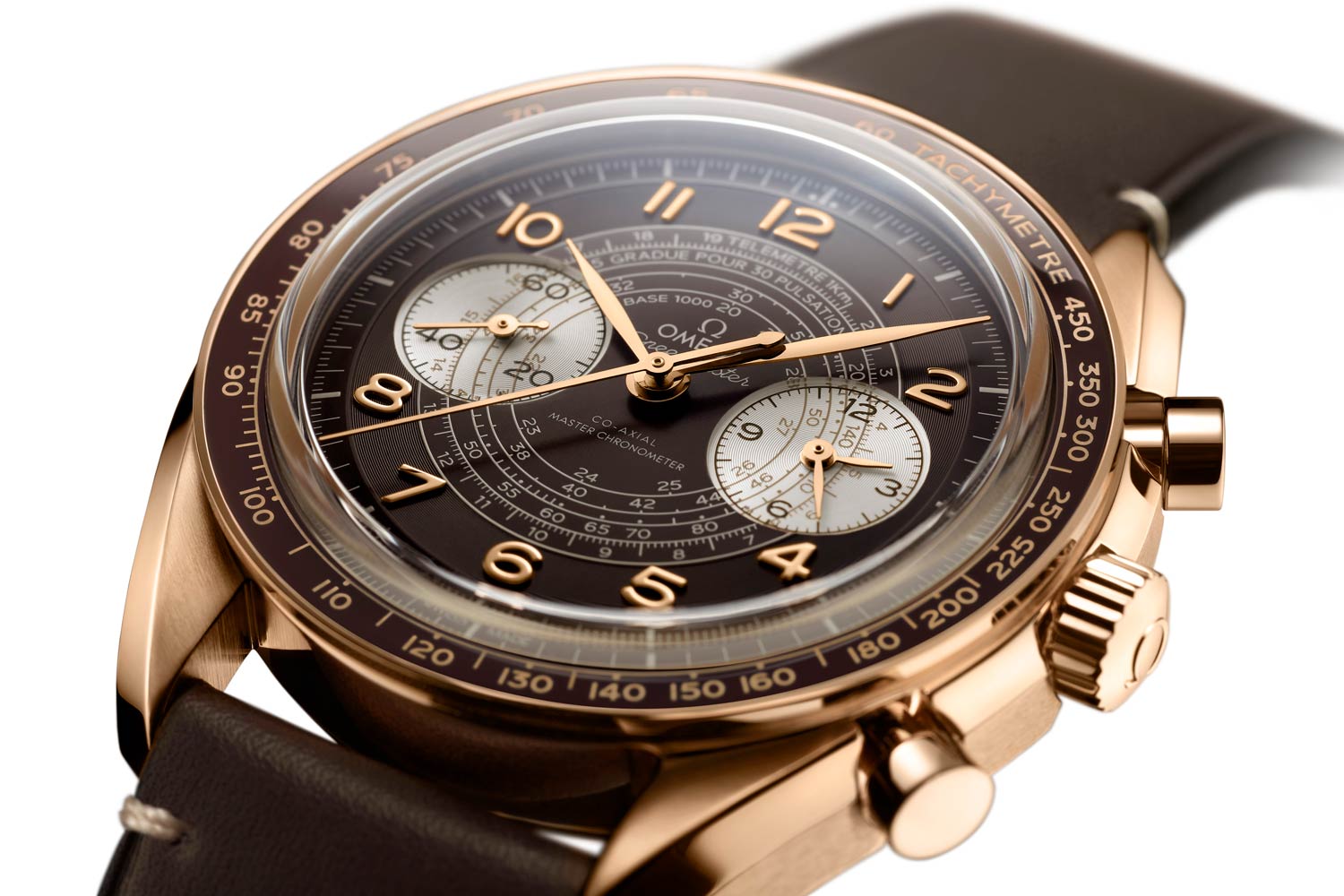
The Omega Bronze Gold Chronoscope
Tech Specs
Steel Chronoscope
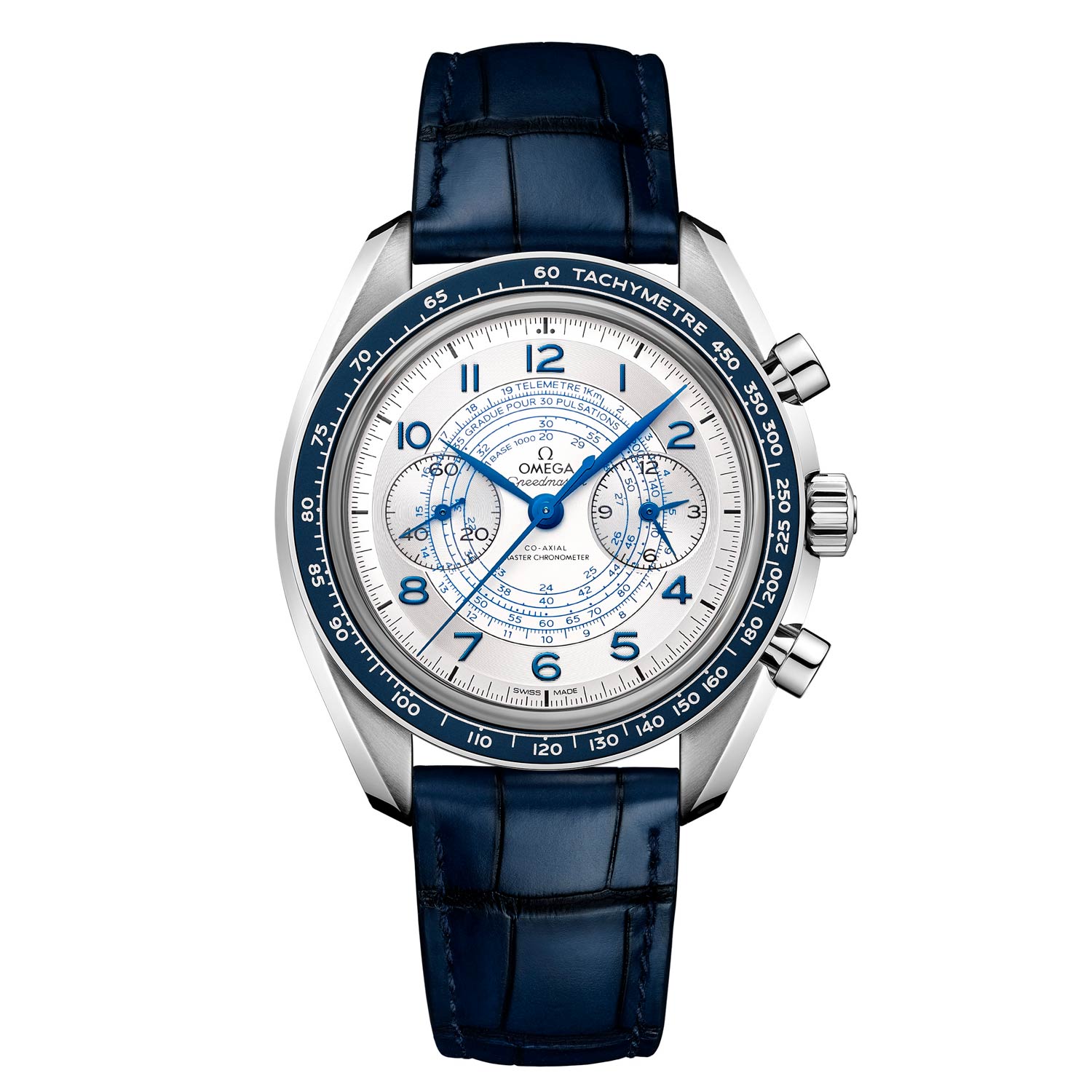
Steel Chronoscope
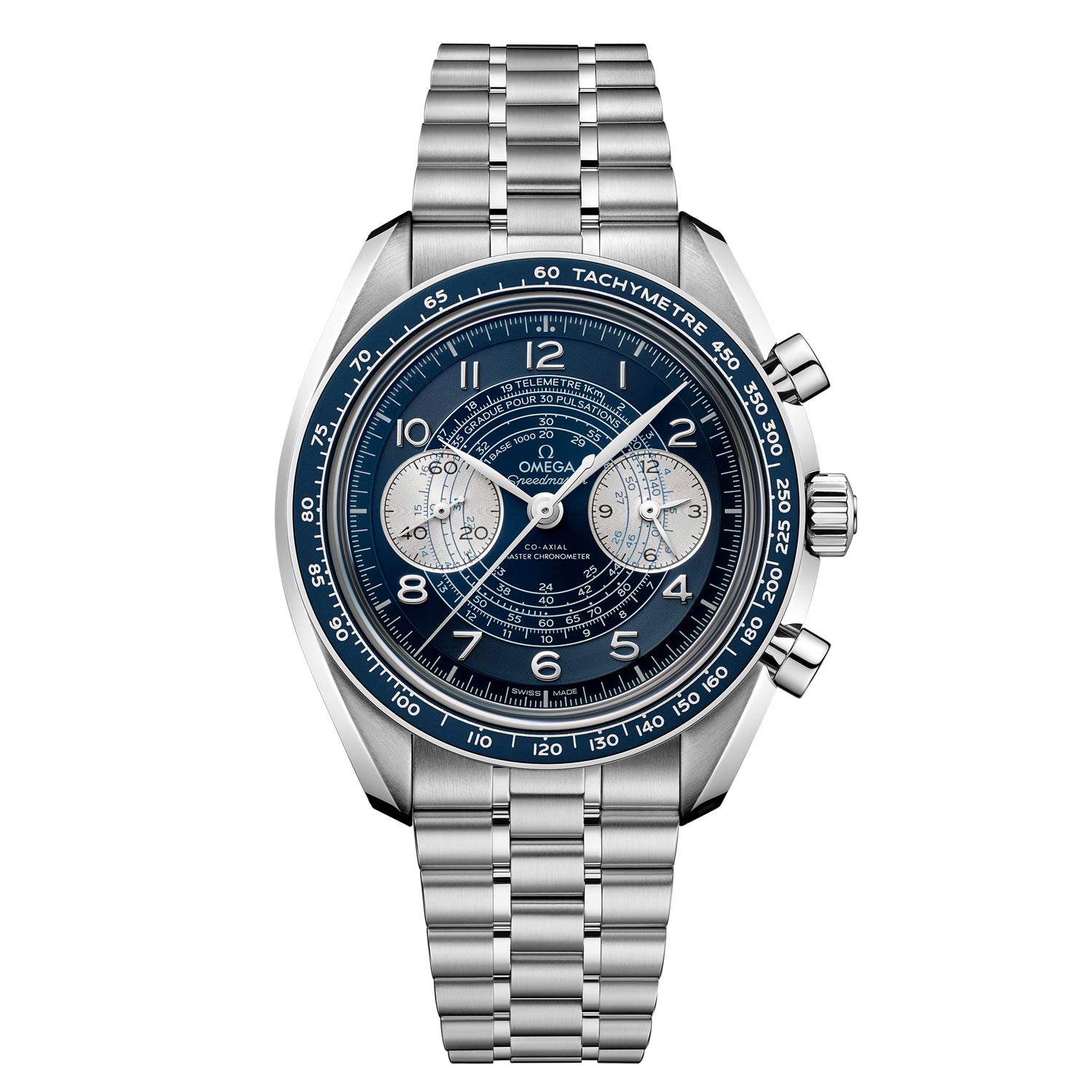
Steel Chronoscope
Movement: Co-Axial Master Chronometer Calibre 9908
Strap: Steel bracelet or leather strap with new steel buckle.
Bronze Gold Chronoscope
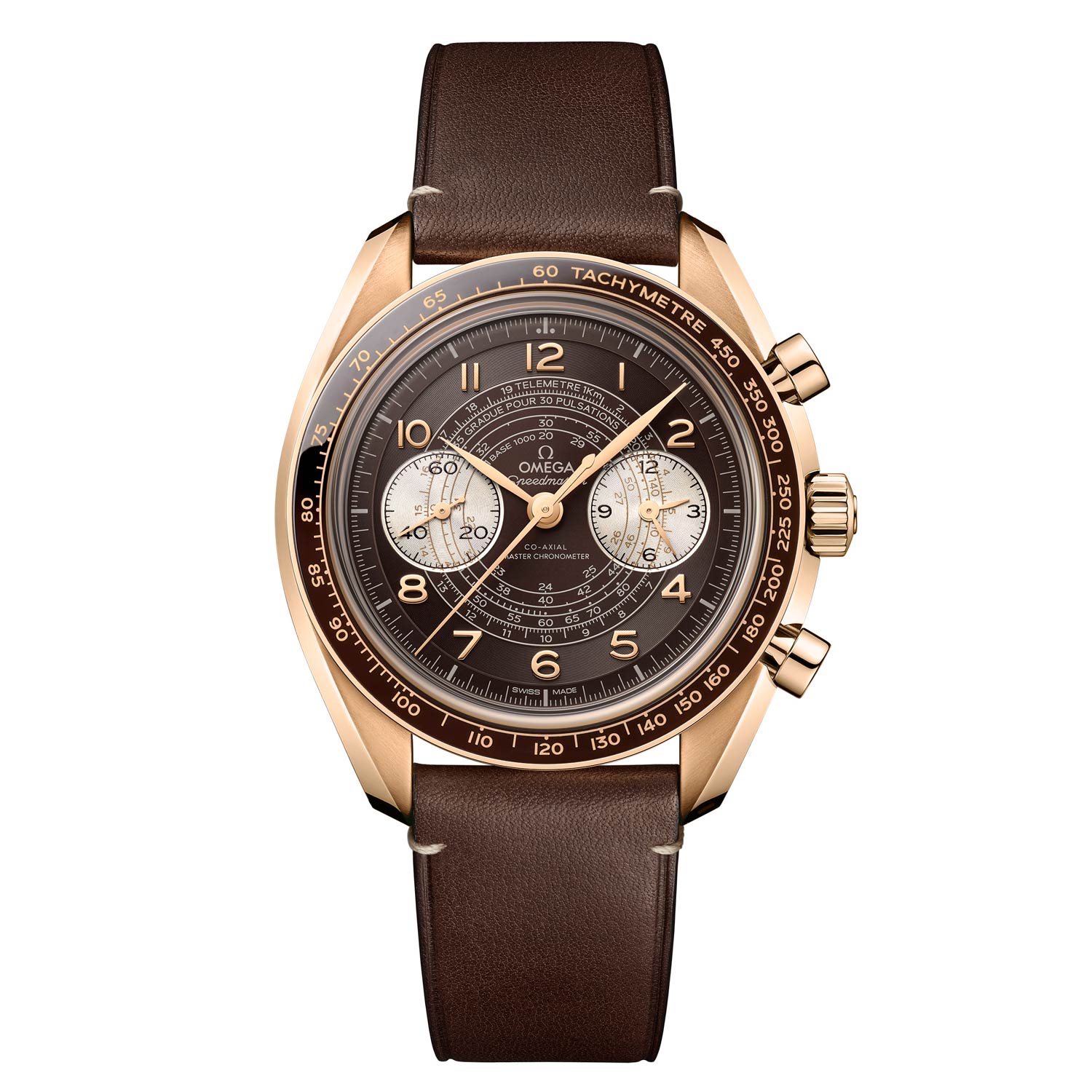
Bronze Gold Chronoscope
Movement: Co-Axial Master Chronometer Calibre 9908
Strap: Brown leather strap with Bronze Gold buckle.
You may also like
Editorial
The Revolutionary List: 30 Pioneering Watches – the Omega Speedmaster Chrono Chime
Dec 2, 2025
Editorial
The Revolutionary List: 30 Pioneering Watches – the Omega Speedmaster Chrono Chime
Dec 2, 2025

Editorial
The Revolutionary List – 26 Inspirational Leaders: Raynald Aeschlimann
Dec 1, 2025
Editorial
The Revolutionary List – 26 Inspirational Leaders: Raynald Aeschlimann
Dec 1, 2025
Editorial
Omega Launches Fourth Generation Seamaster Planet Ocean for 2025
Nov 19, 2025
Editorial
Omega Launches Fourth Generation Seamaster Planet Ocean for 2025
Nov 19, 2025