
Fleming Series 1 Mark II
Editorial
Fleming Series 1 Mark II

Thomas Fleming’s entry into watchmaking was neither planned nor particularly logical. There is no family connection, no technical apprenticeship, no long-standing ambition fulfilled. Instead, there is a sequence of events starting with curiosity, followed by obsession and eventually, the realization that building a watch might be possible. The company he founded, Fleming, is based in Carmel, California and first surfaced in 2024 with the Series 1 Launch Edition, a watch that quickly sold out and created a waitlist that continues to shape the brand’s trajectory.
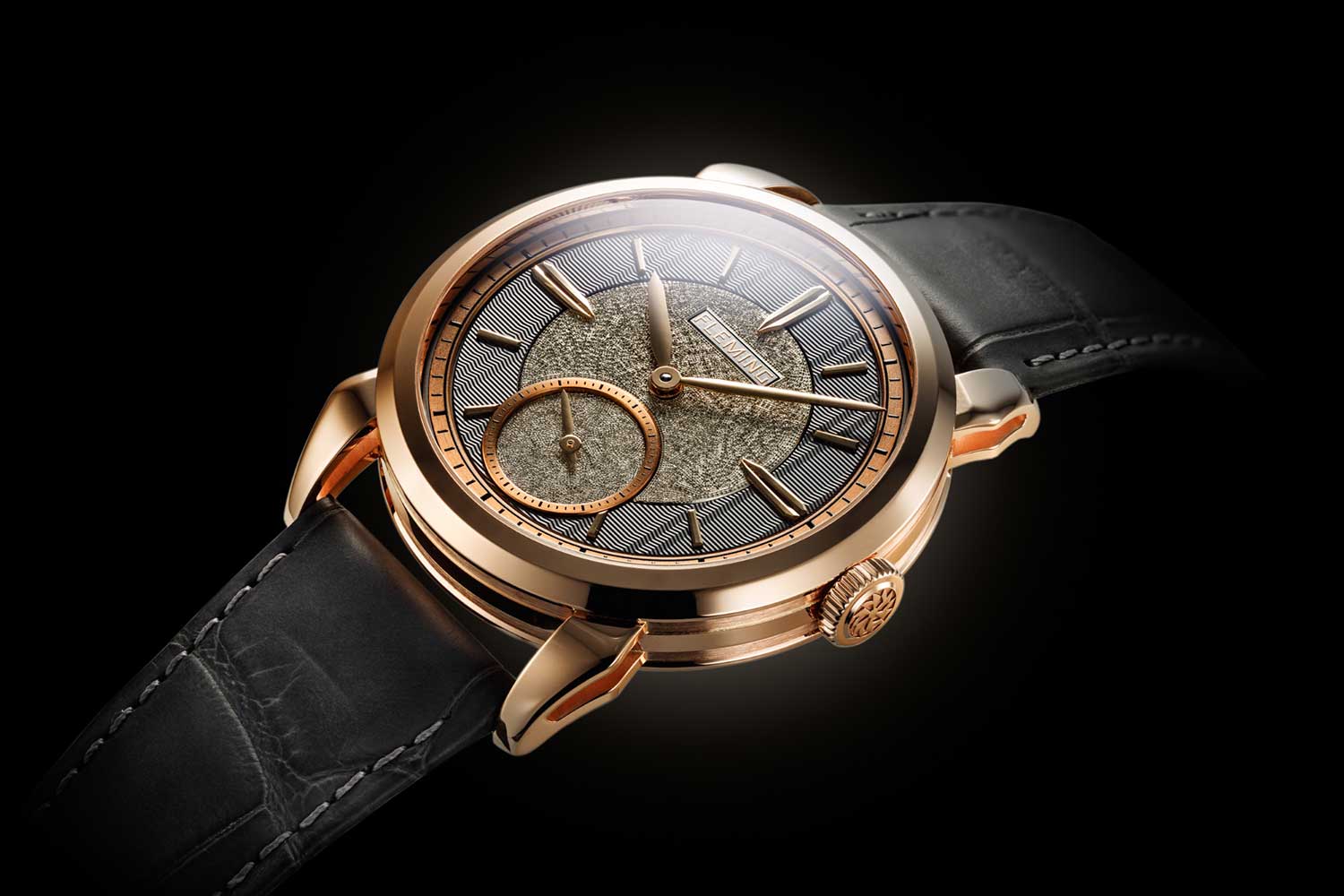
Fleming Series 1, 2024
Alongside him is James Kong, the brand’s COO and art director. Where Fleming sets the direction, Kong refines it. The relationship is genuinely collaborative and increasingly central to how the watches are conceived and executed.
The first thing that strikes you about Fleming in person is how young he is. It reframes the watches immediately. This is not someone who has come up through the traditional channels of Swiss watchmaking. Instead, there is a founder building a watch brand from the outside in. “As a kid I didn’t even know what a mechanical watch was,” he says without irony. “My dad wore a Timex Iron Man… but when I discovered them, I just thought the idea that something mechanical could last decades was the coolest thing.”
That difficult second watch
The Series 1 Launch Edition established the brand’s visual identity and, just as importantly, validated it commercially. Demand outpaced supply almost immediately. The resulting waitlist has given Fleming an unusual position for a young independent: the ability to develop at his own pace. The Series 1 Mark II arrives two years later not as a response to pressure, but as a continuation of what was already in place.

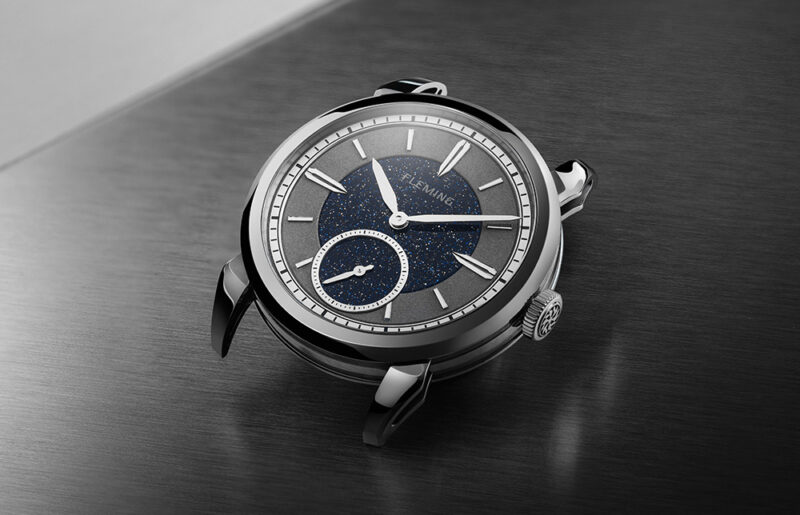
Fleming Series 1 Mark II in Tantalum
Fleming is careful not to present the second watch as a reaction to feedback. “That’s a really dangerous game,” he says. “If you design based on what people say, you’re never going to make everyone happy.” Instead, the process is about identifying what worked and what did not, then developing the former while addressing the latter.
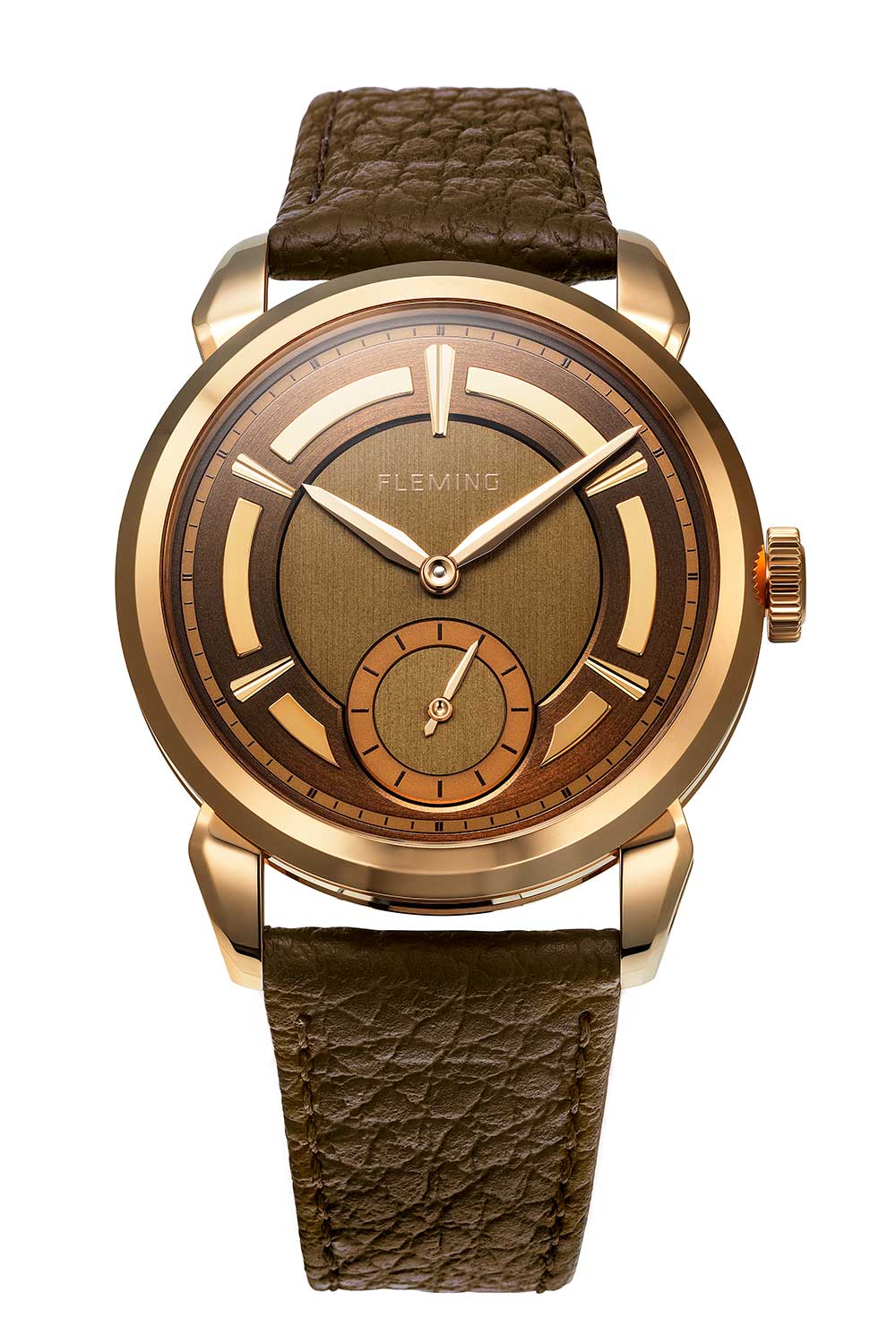
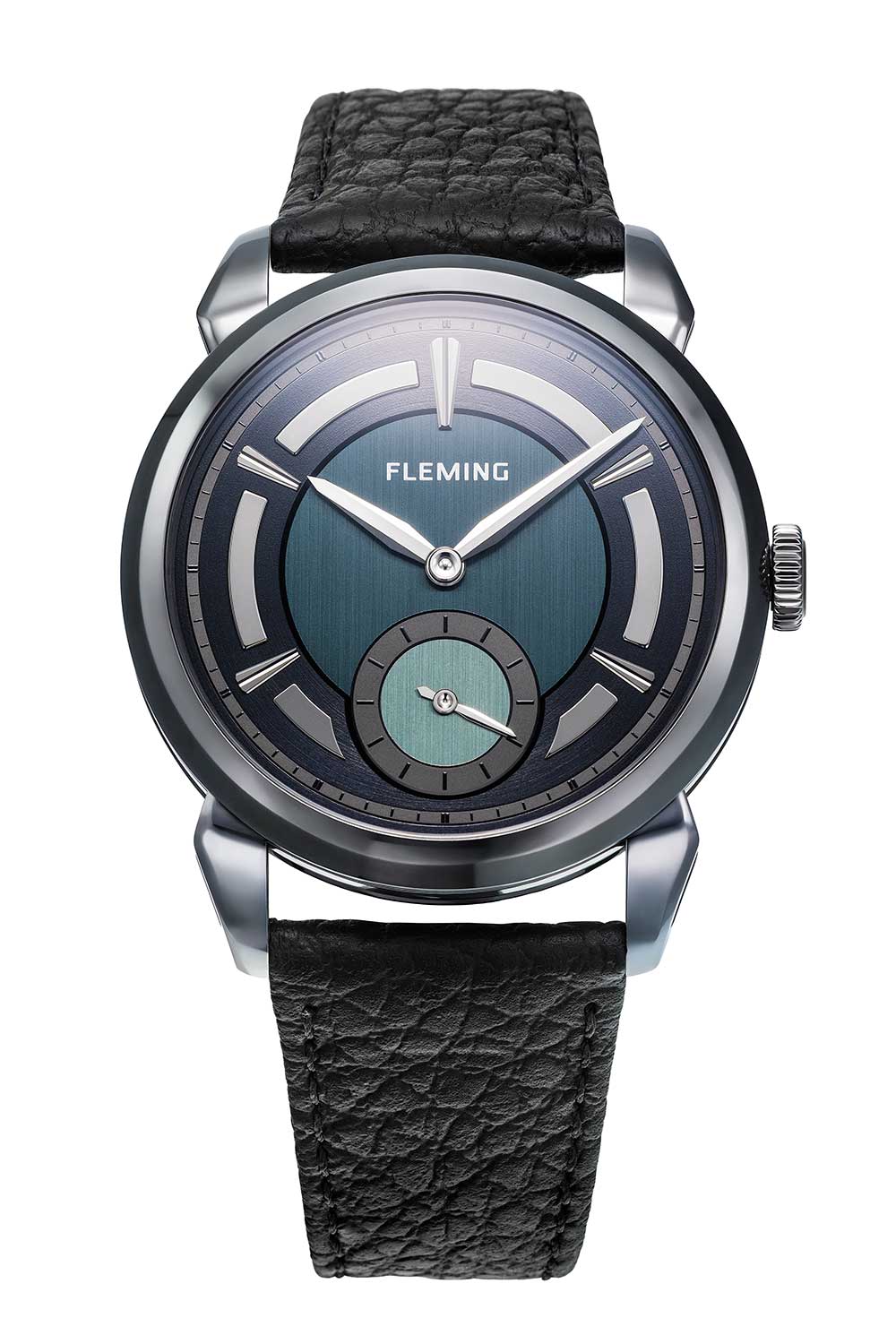
The Series 1 Mark II is produced in two distinct versions. Pacific is housed in tantalum, darker in tone and more restrained, while Redwood is rendered in 5N rose gold, warmer and more expressive. Both share the same underlying codes, but the shift in material and color gives each a different character on the wrist.
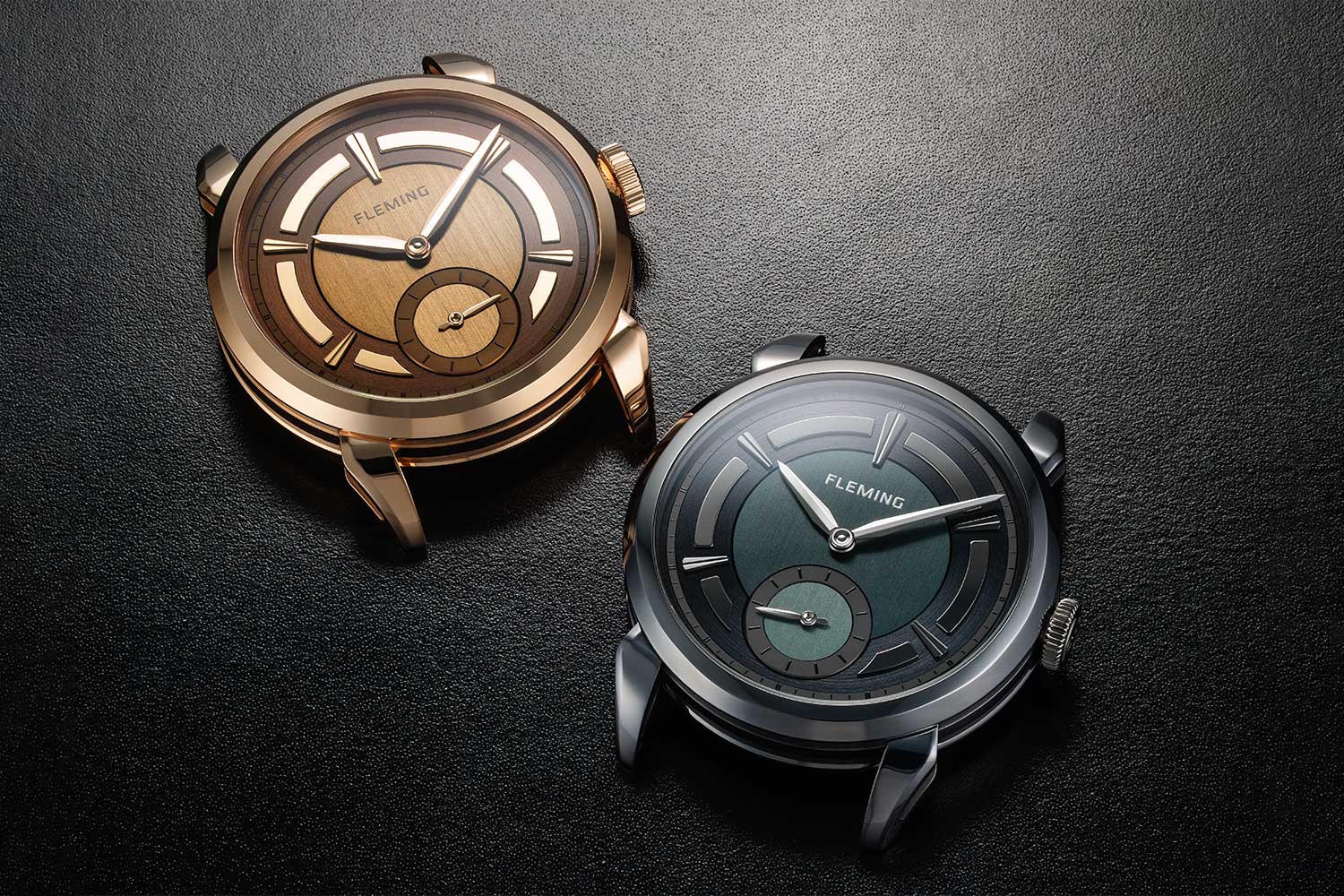
Fleming Series 1 Mark II 5N Rose Gold and Tantalum
On paper, the watch has not changed dramatically. It remains time-only with small seconds, housed in a 38.5mm case that is just 8mm thick. But almost every component has been reconsidered. The case geometry has been sharpened, the dial architecture deepened and the movement completely redesigned. Individually, the changes are small, but together they shift the watch noticeably.
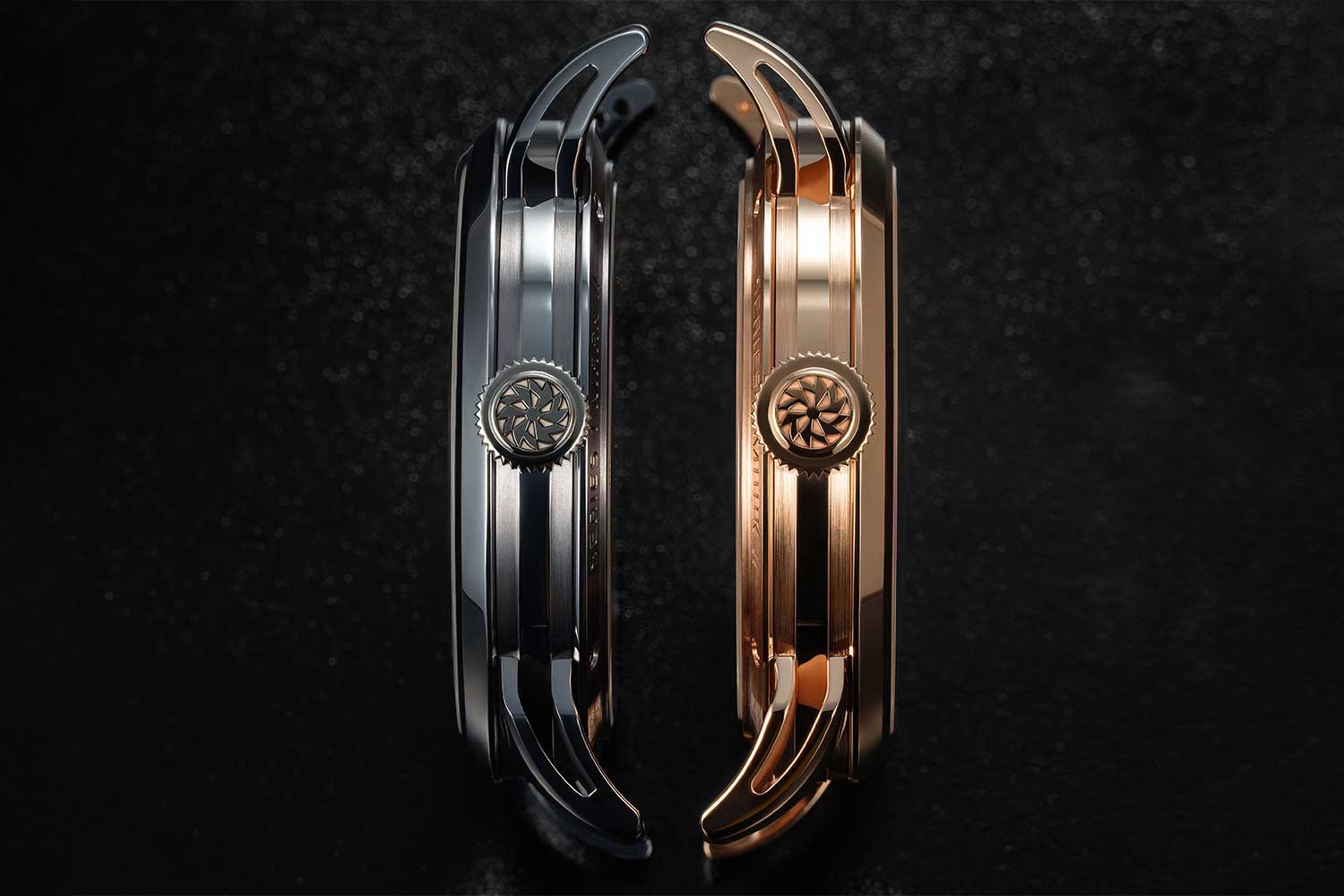
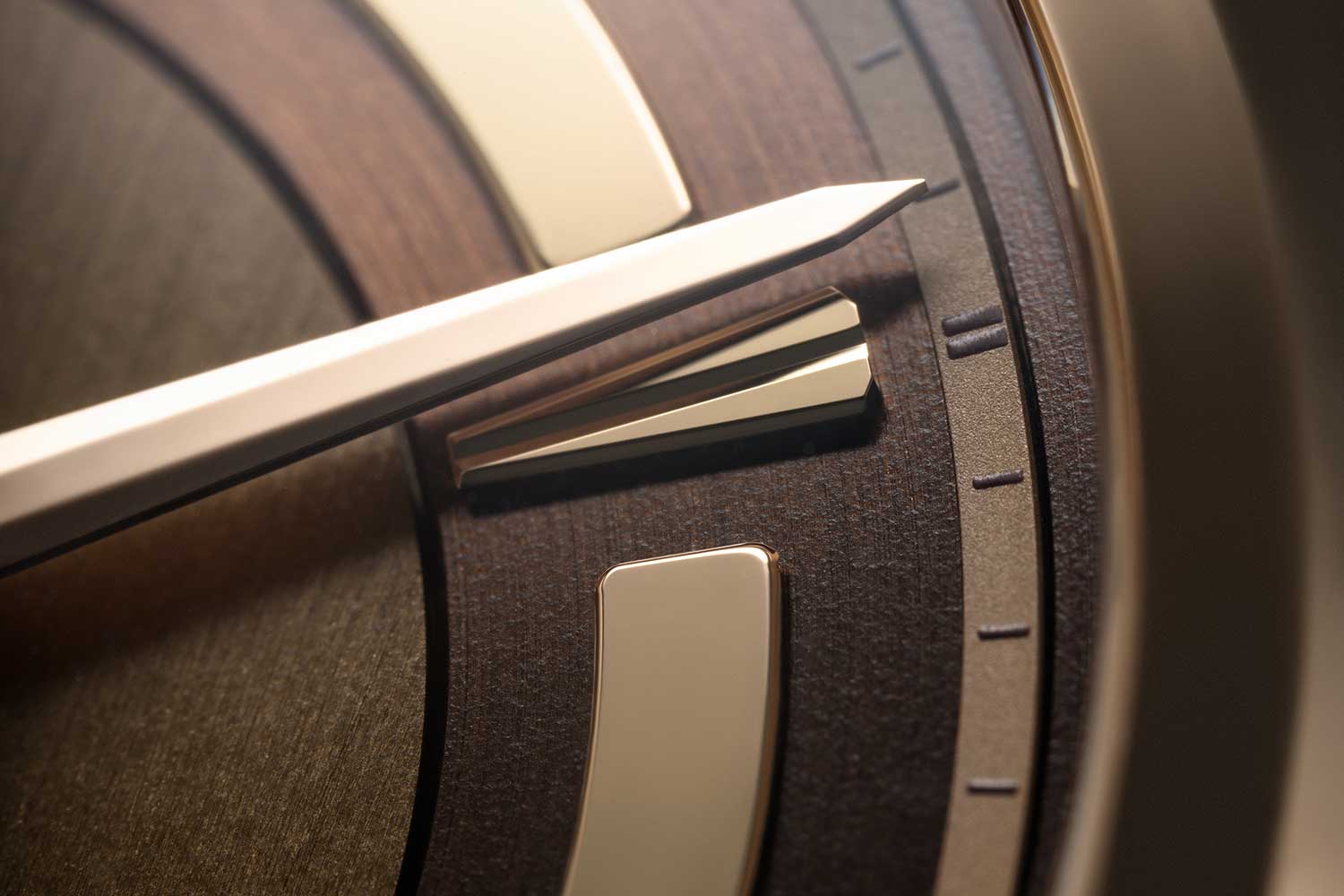
Fleming describes his approach to finishing in terms of “behavior,” though in practice it reads as a controlled way of managing how the dial reacts to light rather than simply decorating the watch. The dial shifts in tone and depth depending on how it is viewed, revealing more or less of its structure as conditions change.
The most visible expression of this is the black-polished ring that bisects the dial. It echoes the polished mid-case band and extends that geometry onto the dial. In direct light it flashes, in darker conditions it recedes, while also improving legibility by dividing the markers. It is also the point where Kong’s influence becomes most visible. “James actually deserves full credit for the idea,” says Fleming. “We were missing something that would really tie it together and set it apart as our own.” That acknowledgment clarifies the dynamic between them – a small, tightly aligned team, where authorship is shared.
Fully integrated design
The movement extends that approach beyond the dial. The Caliber FM.02, developed with Jean-François Mojon, delivers a seven-day power reserve from twin barrels while remaining under 4mm thick. It is not treated as a separate technical layer but designed alongside the case and dial. The bridges are more sculptural, with broader anglage and a geometry that feels design-led rather than purely functional. The gears are entirely bespoke, and their form quietly echoes the curvature of the case and its skeletonized lugs.
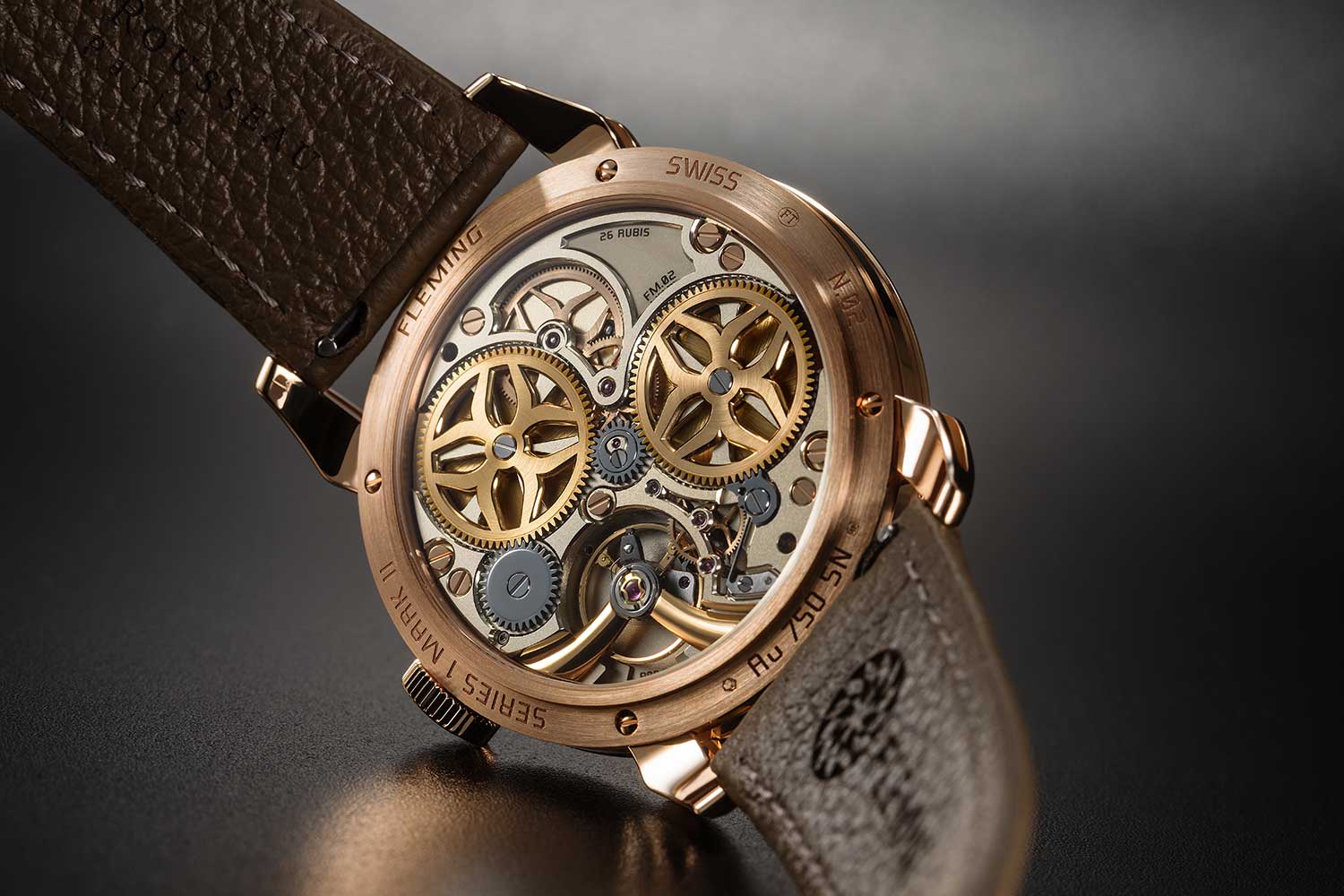
The Caliber FM.02 hand-wound developed with Jean-François Mojon
What stands out is not complexity, but purpose. Most movements at this level are engineered first and then refined visually. Here, the architecture is conceived with the final appearance in mind. Even the ratchet wheel and gears are treated as elements of design rather than neutral components. It is a coherent approach, though not a radical one. The movement’s strength lies in how it aligns with the rest of the watch rather than in any single technical departure.
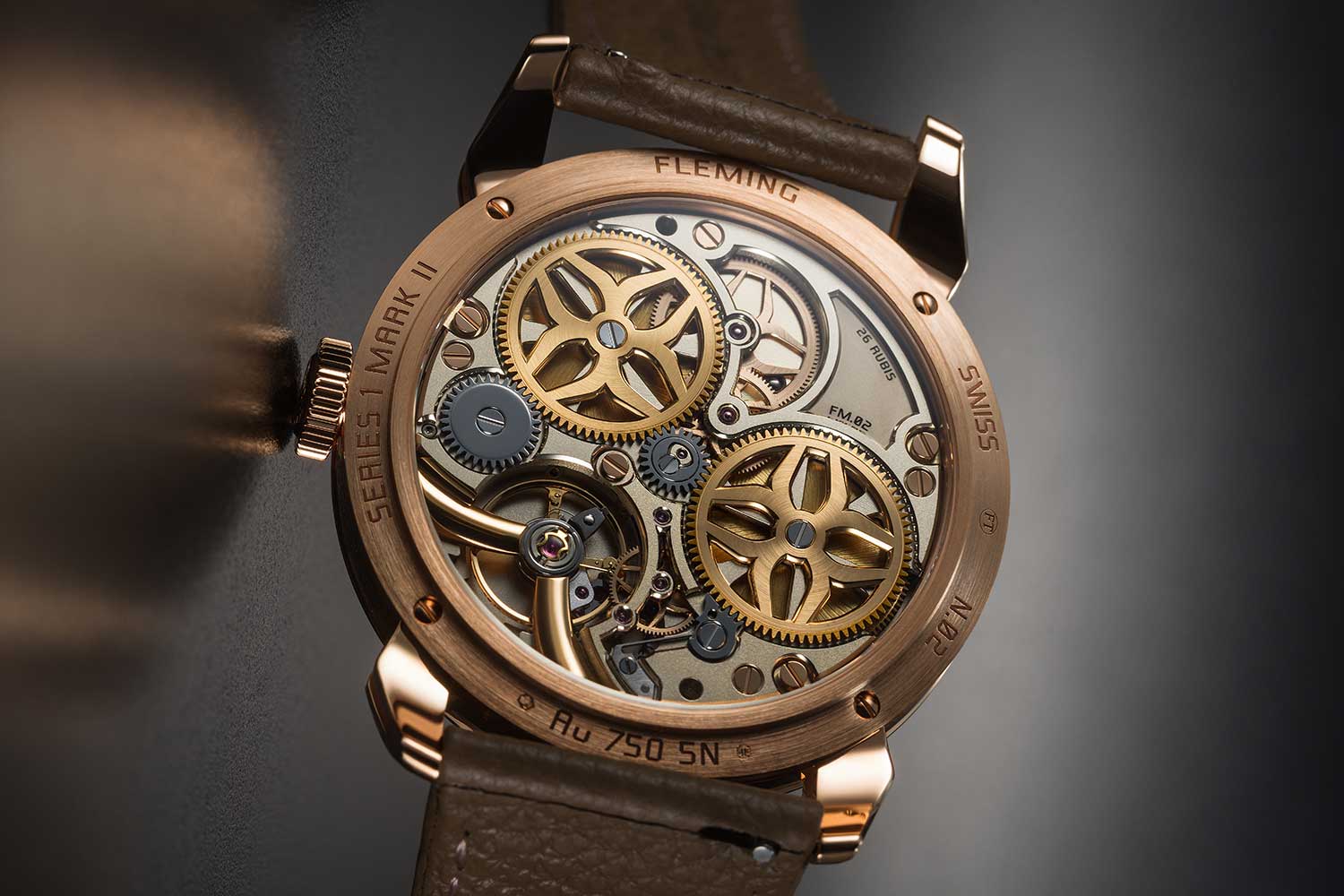
There is also a discipline to the finishing that extends beyond what is immediately visible. Each gear carries multiple sharp interior angles finished by hand, contributing to a total of 189 across the caliber. The finishing mirrors the dial, combining brushing, graining and black polishing, with different tonal treatments depending on the case material. “We wanted the movement to be a continuation of the case and dial,” Fleming says. “All components are held to the same finishing standard, whether visible or not.”
A case in point
The case that defined the first watch has been adapted rather than replaced. The changes are small but noticeable. The lugs are slightly longer with an arc adjusted to pull the watch more naturally toward the wrist. The surfaces have been simplified, favoring larger planes over smaller facets. “You print out 10 different watch blanks and then you do that a bunch of times over months and months and months,” Fleming explains.

Fleming Series 1 Mark II in 5N Rose Gold
The watches are intended to shift visually depending on their surroundings. The Redwood sits at the warmer end of the spectrum, both in material and in tone. The 5N rose gold case carries through into a dial that moves between brown, bronze and gold depending on the light. It is more expressive than the tantalum Pacific, though still tightly controlled. In both versions, the proportions allow the watch to move easily between formal and informal contexts.
The effect is gradual. It doesn’t assert itself quickly, and that will divide opinion. Some will appreciate the restraint; others may find it too controlled. What becomes apparent over time is how others react. It draws attention in stages. Someone looks once, then again, trying to understand what has shifted. The dial darkens, then lifts. The polished ring appears and disappears. The watch never fully settles into a single reading. “We wanted something that people would continue to love over time,” Fleming says. “Every time they wear it, it looks different to them and to others.”
The small things
The use of tantalum remains one of the defining characteristics of the brand. It is not an easy material to work with. It requires new tooling, new processes, and an acceptance that production will be slow. Fleming describes the process of the tantalum Series 1 Launch Edition plainly. “It took two and a half years to get one case… and another 18 months to get the rest.”

Fleming Series 1 Mark II in Tantalum
That raises the question: why persist with it? The answer is equally direct. “You can always justify cutting something… but those little things are what give the watch meaning. If you take them out, you end up with something sterile.” This approach defines the watch as much as any design decision. Efficiency is not the primary concern. Every choice is made in relation to the whole.
That extends to the choice to remain time-only. In a segment where complications are often used as a marker of value, Fleming chooses restraint. “If you start with complications, you can get away with not nailing the design,” he says. Here, there is nowhere to hide. The watch must hold attention on its own.
Production is limited to 25 pieces per variant, and there is no indication that this will change. The Mark II is not intended to grow the brand through volume, but to establish how it thinks about design. “This really sets the DNA… a pivot point for future models,” Fleming says. What follows will expand on this foundation. A lightweight watch is already in development. An integrated bracelet model will follow. Complications will come later.
“If we do our job, people will understand the watches and the company five or ten years from now,” Fleming says. For now, the focus remains on execution.
After a week wearing the Redwood, what stayed with me is not a single detail but how consistently everything holds together. The case, the dial and the movement all work within the same set of constraints, and none of them feels developed in isolation. That is where the Mark II improves on the first watch. It feels more settled, with clearer decisions and fewer unresolved ideas. Taken together, it leaves less to argue with and few obvious weaknesses.
Tech specs: Fleming Series 1 Mark II
Movement Caliber FM.02 hand-wound movement developed with Jean-François Mojon; twin-barrel construction with 7-day power reserve; 3 Hz, bespoke gear train and ratchet wheel design; extensive hand-finishing including anglage and interior angles, brushed, grained and black-polished surfaces
Functions Hours and minutes; small seconds
Case 38.5mm x 8mm tantalum or 5N rose gold; three-part case construction with polished central band; skeletonised lugs; water resistant to 30m
Dial Modern sector layout; black-polished chapter ring; applied hour markers; brushed, grained and black-polished; variant-specific color treatment: Pacific: Blue-green tones, Redwood: Brown and gold tones
Strap Calf leather
Price Pacific: CHF 55,500, Redwood: CHF 53,500
Availability Limited edition of 25 pieces per variant
Fleming