
Fabian Pellet Makes His Debut with the Essential
News
Fabian Pellet Makes His Debut with the Essential

In the years since the pandemic, tastes have developed to embrace the fine work of independent watchmakers, and today we have an interesting situation in that independent watchmakers have mushroomed on social media in great numbers, making it quite a challenge to keep up and sift the wheat from the chaff. The Essential by Tokyo-based Swiss watchmaker Fabian Pellet was attention-grabbing, to say the least, with an unusual beauty about its movement that’s reminiscent of the pocket watches made by the American chronometer maker Albert H. Potter in the 19th century.
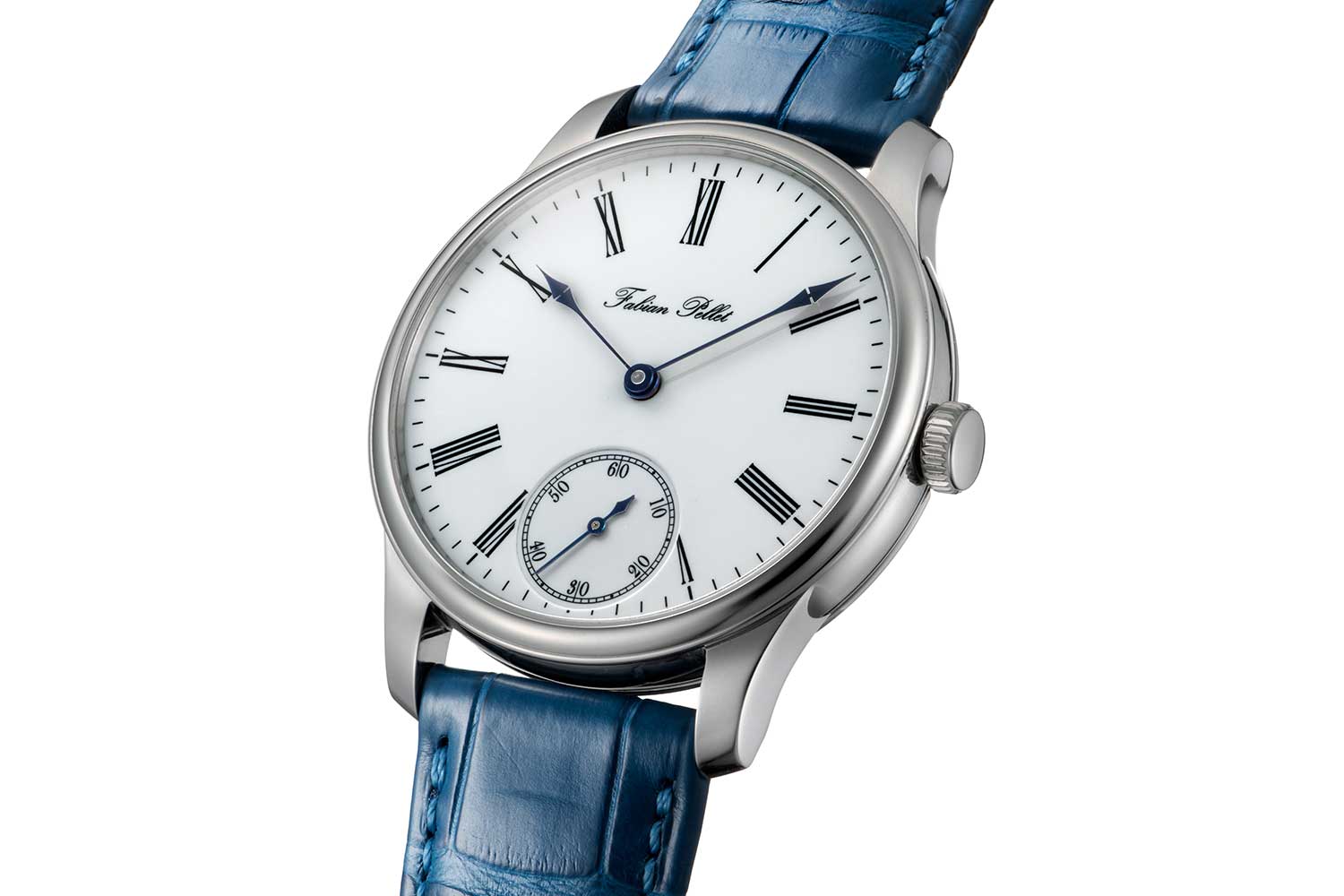
The movement in the Essential is deceptively simple at first glance. But right off the bat, with the mainplate almost fully exposed, you would realise that the crown and ratchet wheels are missing, which hints that there might be a little hidden mechanical magic at play. Apart from that, the watch is stunning and appears to be of a very high quality in all aspects. It has a classically proportioned platinum case and a Grand Feu enamel dial with exceptionally fine hands. Notably, the majority of the watch was made from scratch the traditional way by Pellet himself. As such, only three pieces will be made a year, beginning with platinum. At the time of writing, not all three have been allocated.
Fabian Pellet Essential
The Watchmaker
Creating a time-only watch might be somewhat surprising as Fabian Pellet is a watchmaker who has for much of his career specialised in complications. He spent over a decade working in the grand complications and restoration department at Breguet, where restoring old Breguet pocket watches while repairing Sympathique clocks, while producing new grande sonnerie tourbillon pocket watches was a common scenario. He was born in Lausanne, and completed his apprenticeship trainings in the Vallée de Joux and Le Locle. After Breguet, he became a teacher at the École Technique de la Vallée de Joux in Le Sentier where he was well-placed to teach complications, clock mechanisms, technical drawing as well as the finishing of School watches, among other subjects.
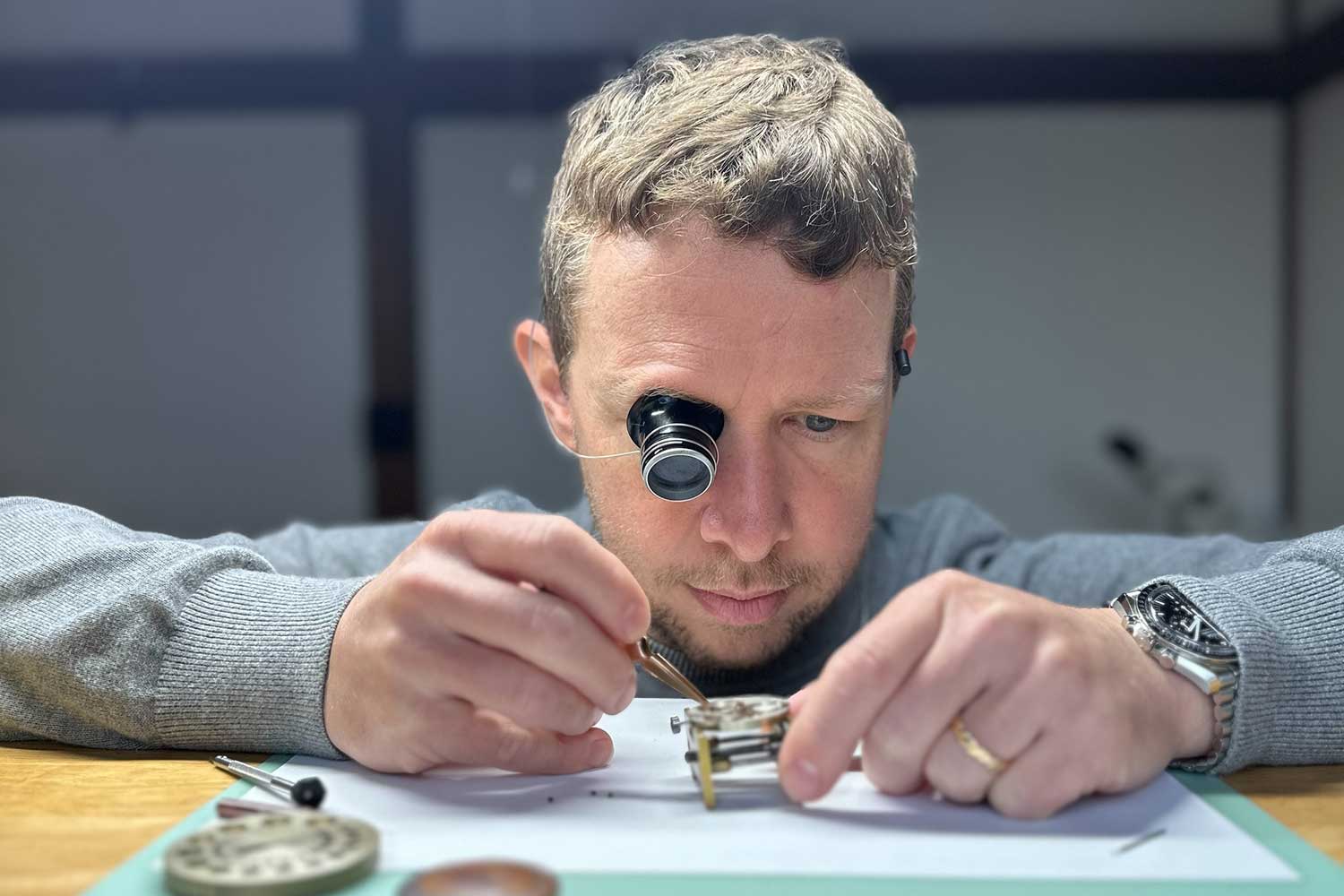
Fabian Pellet at his workshop in Kodaira
In 2022, Pellet moved to Tokyo, where his wife is from and is currently working from a workshop in Kodaira, west of Tokyo. Now 41, Pellet admits to feeling like an outsider in an industry he has known all his life. While occasionally teaching at the local watchmaking school, Hiko Mizuno, he embarked on developing his first watch and has recently completed the first prototype.
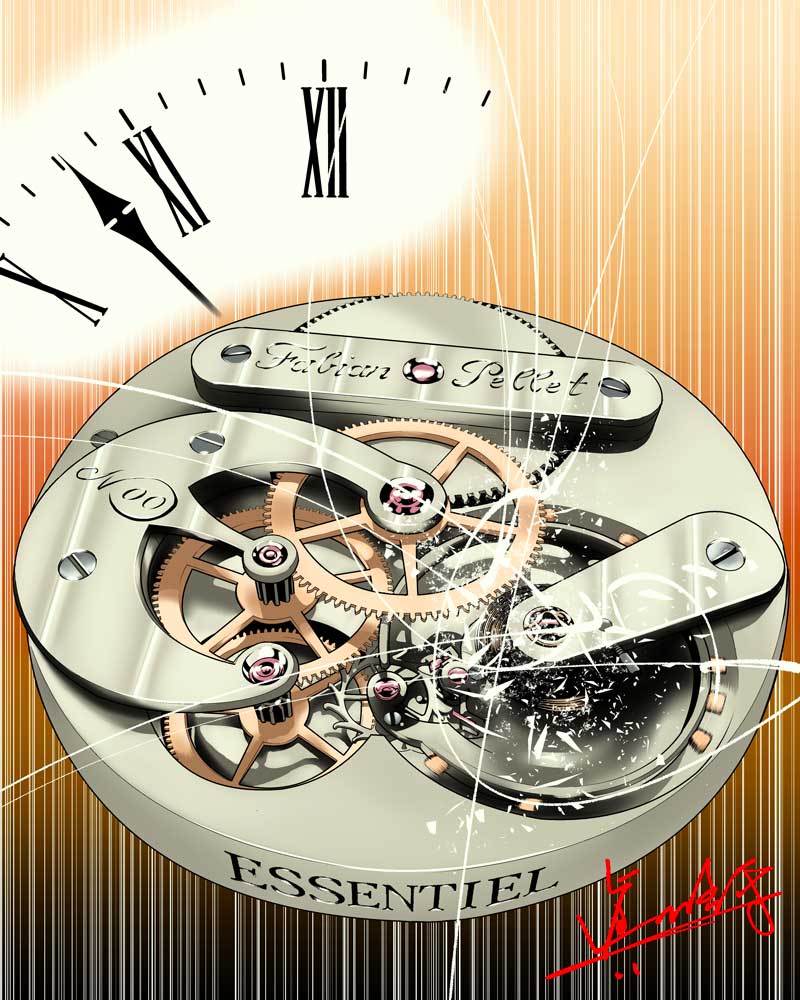
Having spent a great deal of time restoring antique watches, the Essential shows the influence of watchmakers of past centuries. Quite unexpectedly, however, rather than drawing inspiration from Abraham-Louis Breguet, the all-time greatest source of inspiration for watchmakers of our time and moreover whose work he is intimately familiar with, Pellet finds himself drawn to the work of 19th century watchmakers such as Jules Jürgensen, Louis Audemars and Albert H. Potter. Although they had rather different areas of focus, their watches were typically characterised by unusual movement layouts and bridges.
The Essential
The Essential measures 39mm in diameter and 8mm high, which is in the current sweet spot for dress watches; it evokes a connection to watchmaking tradition without being too small. Made in platinum, the case design is classical in form and execution. It is entirely polished from top to bottom. While the prototype was handcrafted by Pellet, the production cases will be made by a Swiss case maker in order to maintain a certain degree of commercial viability. Making it from scratch by himself increases the hours of work and it would be impossible to meet his goal of three watches a year.
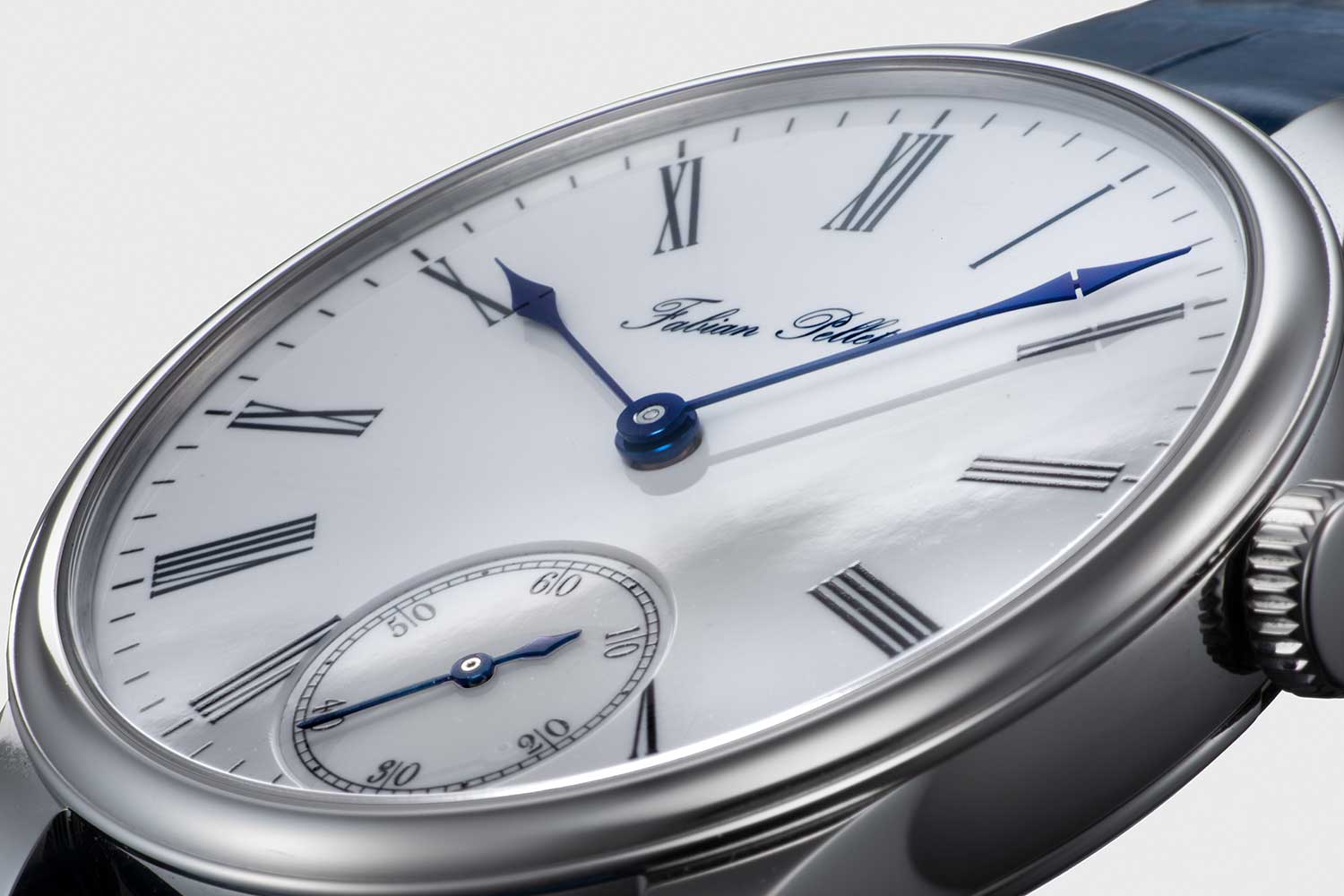
The Grand Feu enamel dial is made of two parts. The small seconds sub-dial is a separate inlay rather than a recess
The watch has a very elegantly executed dial in Grand Feu enamel. Notably, it consists of two parts. The small seconds sub-dial is a separate inlay rather than a recess. The dial was made by the most renowned enamel dial maker in the industry, Donzé Cadrans. Initially, the hands were ordered from a supplier, but they proved too thick and rough. As a result, Pellet ended up cutting them with a saw and reshaping them with diamond files to achieve their exquisite three-dimensional form. He then hardened and polished the hands with a small wooden wheel before flame-bluing them.
Turning the watch over, you’re met with a movement that is strikingly evocative of the chronometer pocket watches made by Albert H. Potter. Earlier this year in Geneva, there was a particular watch that I thought was quite beautiful in all aspects save for its awkwardly shaped bridges and I had wished that the brand had pushed its eccentricity a little further and took inspiration from said 19th century watchmaker. I was hoping that someone would do it eventually, which is why when I came across the Essential on Instagram, I was struck.
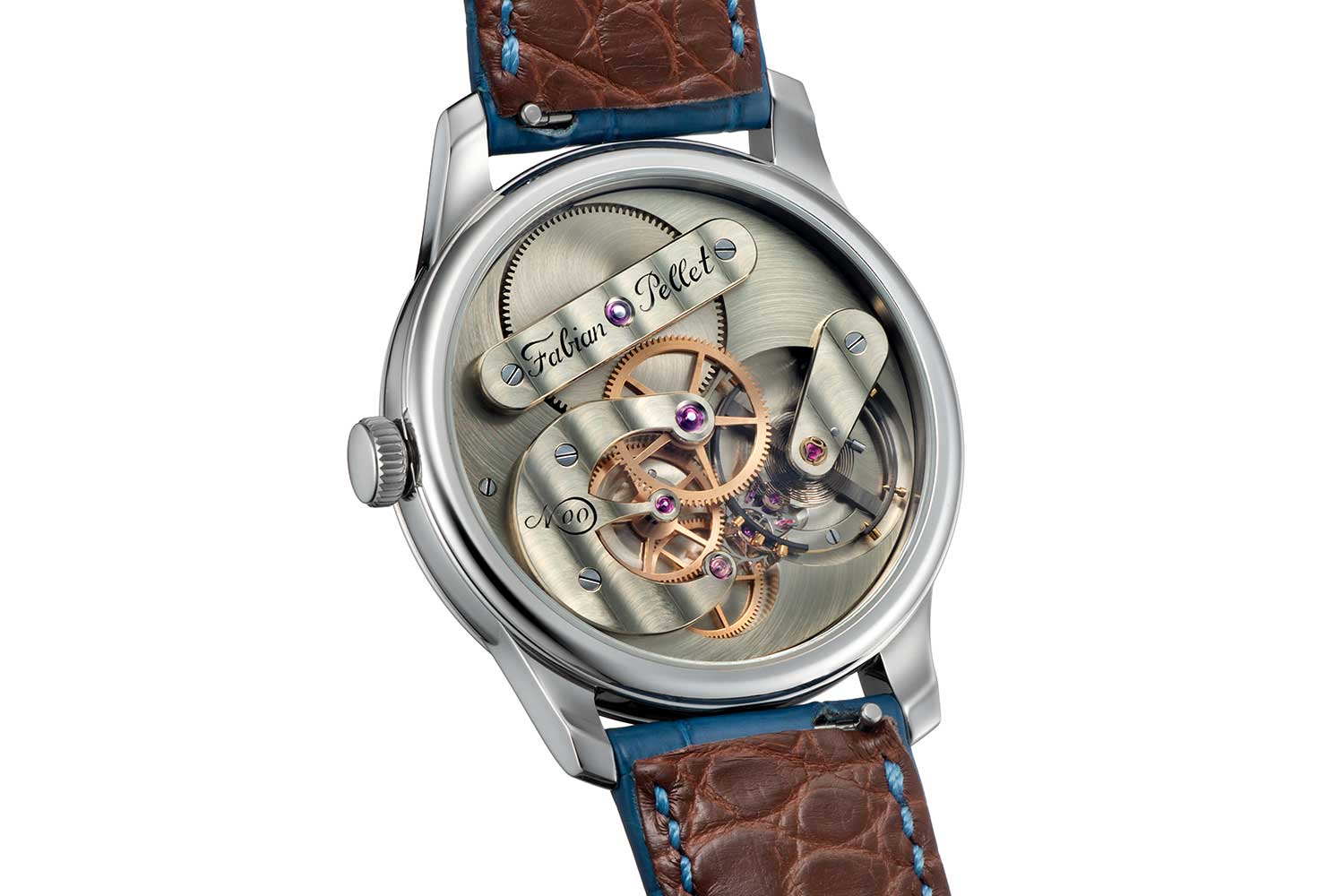
The distinct shape of the bridges offers a stunning clarity, dividing the movement into three elements. At the same time, it required some clever manoeuvring to achieve this simplicity such as relocating the winding mechanism and hiding the bridge of the escapement
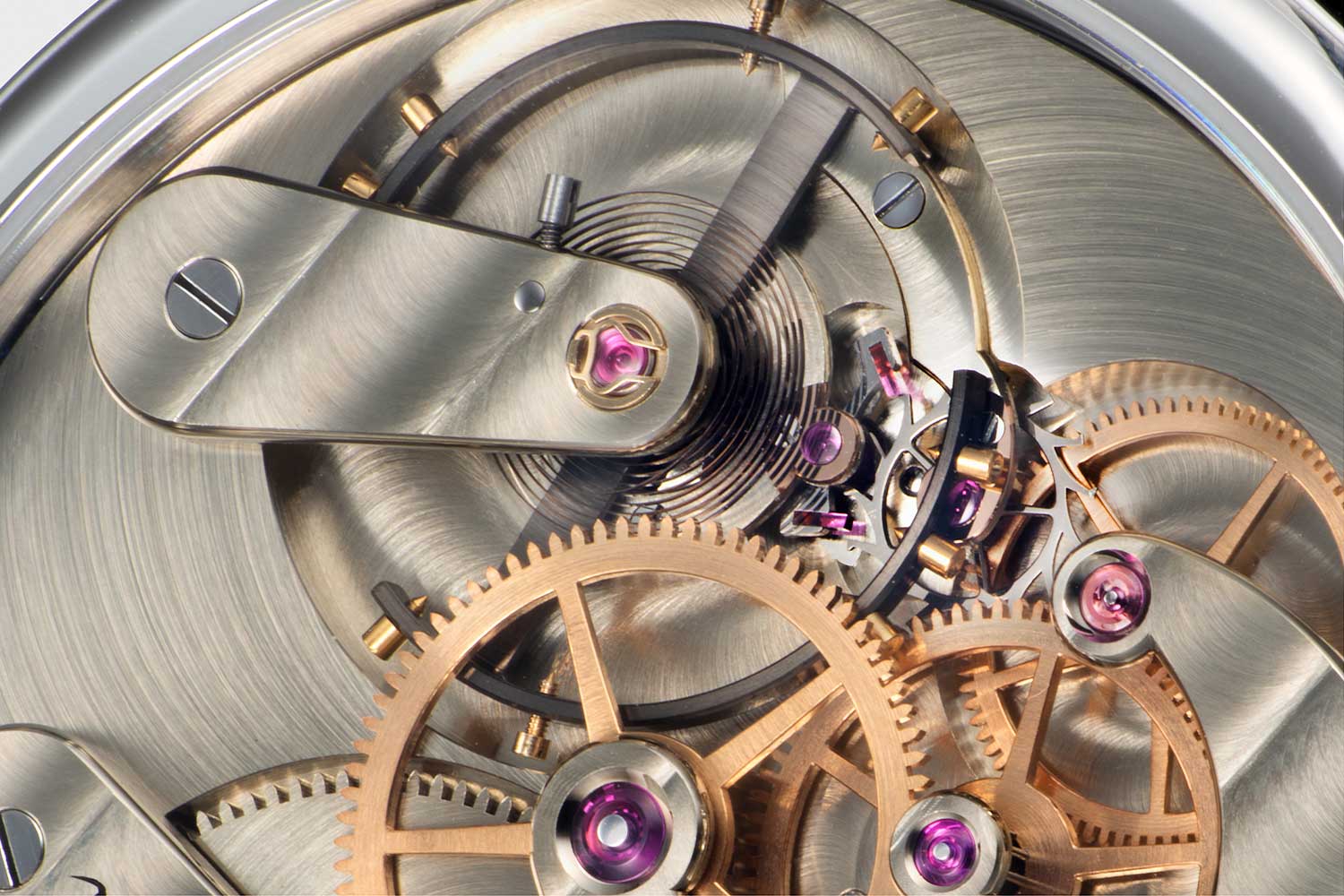
The massive 14.3mm free-sprung balance wheel

To maintain the clarity of the layout, the bridge of the the escape wheel lies in the recess under the balance wheel. The bridges of the escape wheel and pallet fork are topped by polished gold caps
Made of German silver, the main plate is almost fully exposed, showing the entire wheel train. The overall design is beautifully balanced despite having three bridges of disparate shapes instead of a series of finger bridges. They divide the movement into three elements, giving it a stunning clarity. In addition, the mainspring barrel itself is also made of Germain silver, allowing it to blend in, while the bridge of the escape wheel is hidden in a recess under the balance wheel. It becomes apparent at this point that the crown wheel along with the winding click are deliberately hidden and that their presence on the main plate would have been disruptive.

The crown wheel is integrated into an unusual winding and setting mechanism on the dial side that Pellet had made from scratch. Instead of a clutch, it features a lever shaped like a broad bean pod, which supports four wheels – three intermediate wheels and the crown wheel. When the watch is wound, the winding pinion drives an intermediate wheel on this lever which drives the crown wheel and the barrel ratchet wheel, thereby winding the mainspring. But when the crown is pulled out for time-setting, this lever pivots towards the motion works with the help of springs, bringing an intermediate setting wheel into engagement with the minute wheel. Pellet said that he has seen a similar mechanism in a collection of old tourbillon school watches while teaching at École Technique de la Vallée de Joux but it is rarely used in watchmaking today.
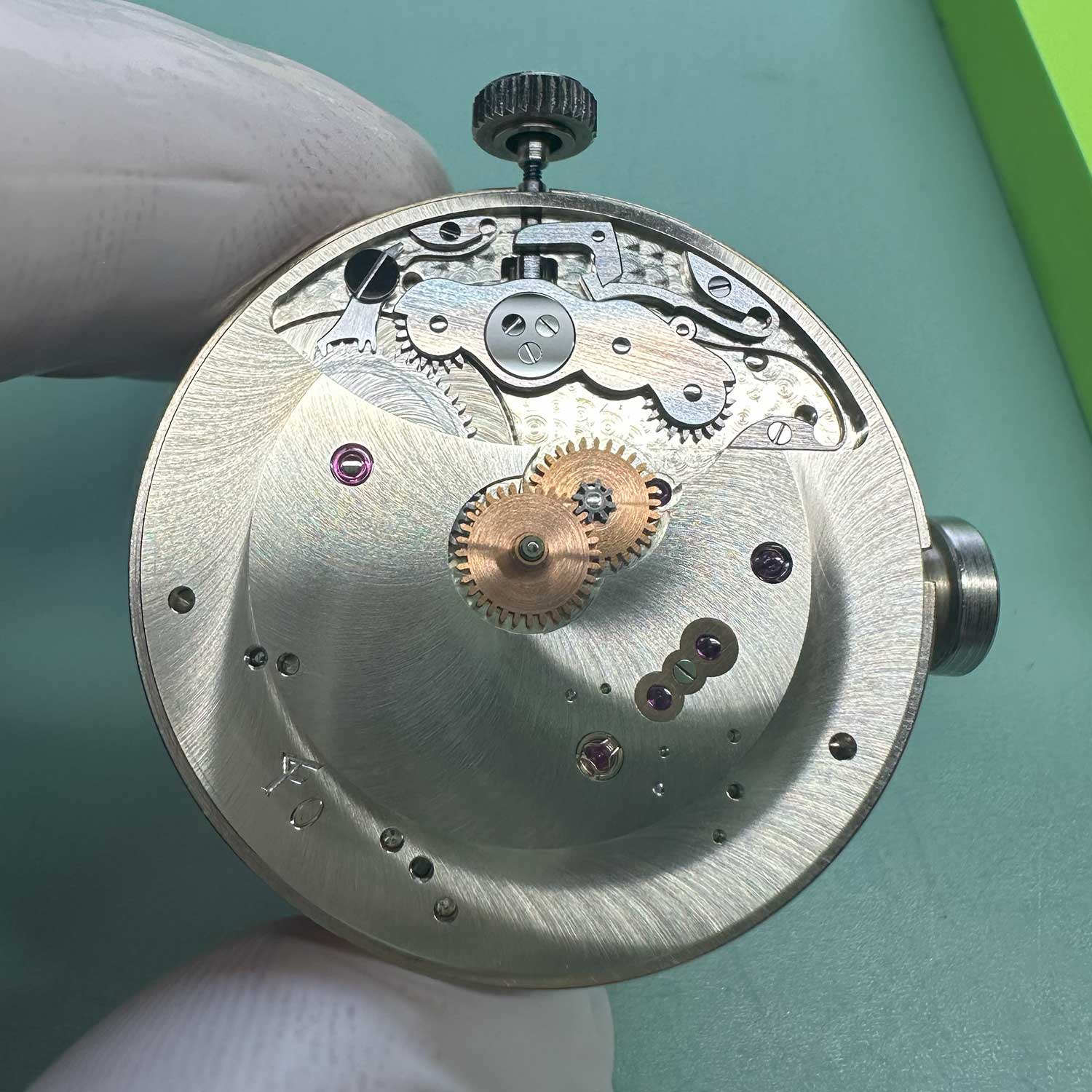
Dial side view of the winding and setting mechanism
The majority of the movement parts were made from scratch himself using manual tools including the mainplate, bridges, screws, barrel as well as the massive balance wheel. The wheels in the gear train were derived from an existing blank but Pellet had to alter their sizes using a traditional rounding-up machine. The mainplate is circular-grained, with solarization on its recesses while the bridges are subtly contrasted with Geneva stripes. Both the bridge of the escape wheel and that of the pallet fork are topped by polished gold caps for the jewel settings. Anglage and internal angles are also where they should be without being ostentatious. The balance wheel beats at 18,000 vph (2.5Hz), and at 14.3mm in diameter, it is unusually large even for its frequency. It has a free-sprung design with inertia screws and is paired with a Breguet overcoil hairspring. Power reserve is 58 hours.
The price of the watch is CHF 60,000 which seems par for the course given the amount of handiwork put in by a single person. Crafting parts from raw materials by hand and then hand-finishing them is vastly different from using CNC machining followed by hand-finishing. Moreover, the Essential has a platinum case, a Grand Feu enamel dial, and a dramatic yet beautifully traditional movement design that seems to appeal in a way that bypasses all rational thought expended on this sentence.
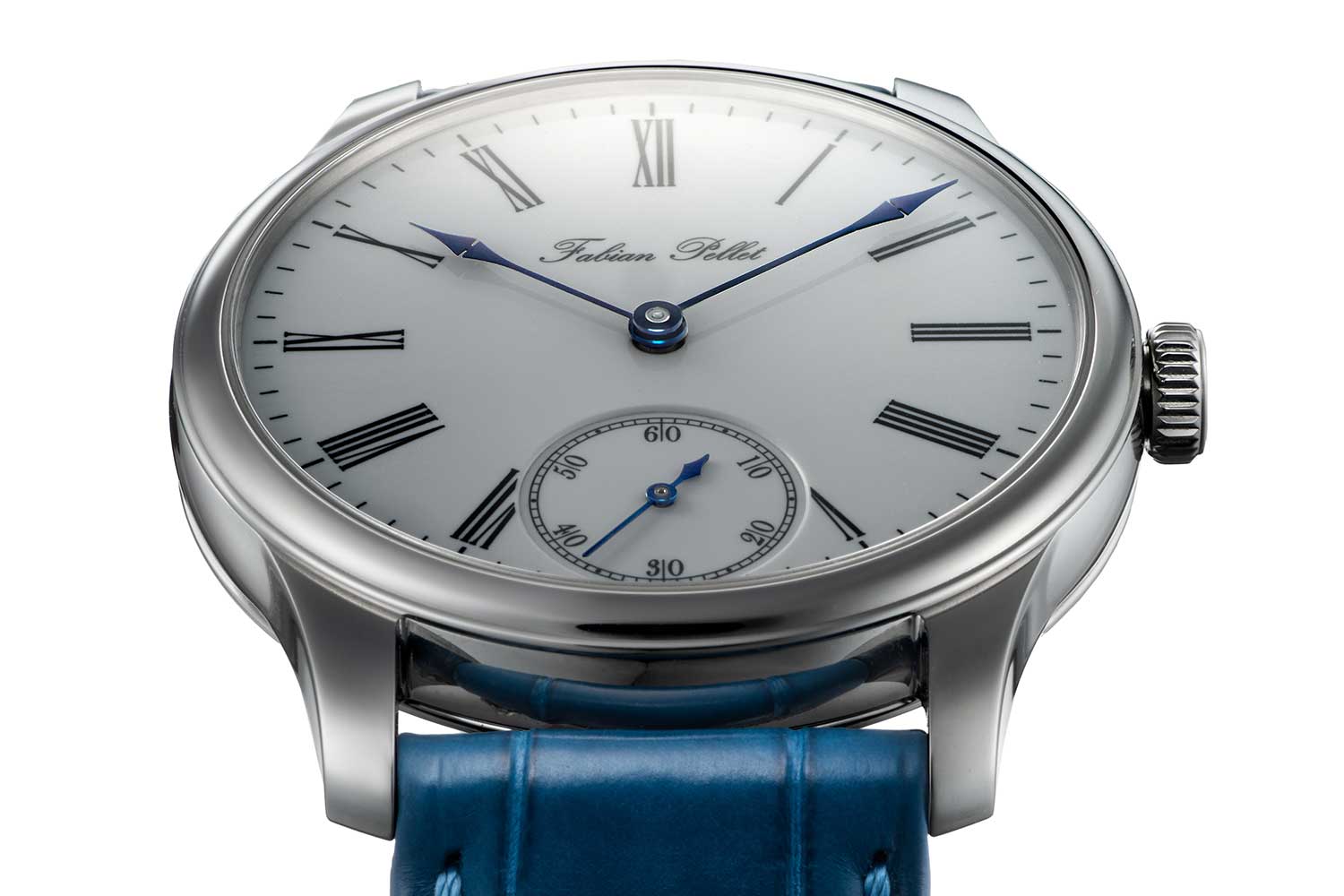
Fabian Pellet Essential
Tech Specs: The Essential
Movement: Manual winding FAP 24; 58 hours of power reserve; 18,000 vph (2.5 Hz)
Functions: Hours, minutes and small seconds
Case: Platinum; 39mm by 8mm; water resistant to 30m
Dial: Two-part Grand Feu enamel dial
Strap: Hand-sewn alligator leather strap with quick-release spring bars
Price: CHF 60,000
Availability: Limited edition of 3 pieces
You may also like
News
Montblanc Expands 0 Oxygen with New Iced Sea, 1858 and Star Legacy Watches
Apr 3, 2026
News
Montblanc Expands 0 Oxygen with New Iced Sea, 1858 and Star Legacy Watches
Apr 3, 2026

News
Back to Basics: The Squale SUB-37
Mar 20, 2026
News
Back to Basics: The Squale SUB-37
Mar 20, 2026

News
GPHG President of Jury: Wei Koh
Mar 18, 2026
News
GPHG President of Jury: Wei Koh
Mar 18, 2026