Behind the Scenes at Bovet
Editorial
Behind the Scenes at Bovet

Bovet is an old and historically significant name in watchmaking. The firm was established in 1822 by Édouard Bovet, a native of Fleurier who was at the time residing in Canton (modern-day Guangzhou) in China, while his brothers managed commercial operations from London and production from Fleurier. This tripartite structure placed Bovet in a strong position to serve the Chinese market, which was both immensely lucrative and logistically complex. Demand in 19th-century China for European watches was intense and highly discerning, and Bovet distinguished itself early by producing richly decorated timepieces made expressly for Chinese tastes. These watches became recognized symbols of prestige among the imperial court and the merchant elite.
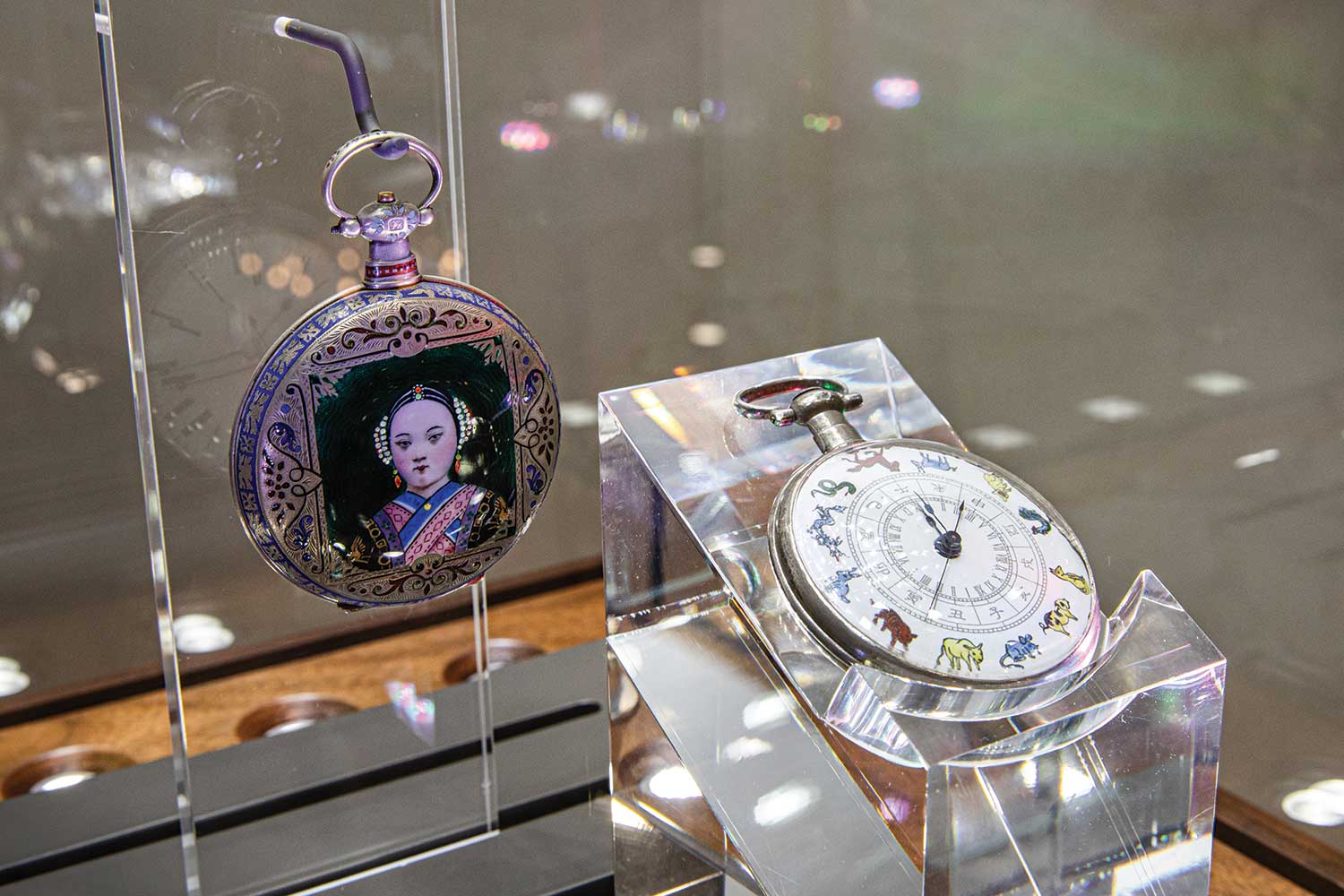
Historical Bovet pocket watches made for the Chinese market.: one with a painted enamel portrait case, the other fitted with a 24-hour dial aligned to the Chinese system of 12 double hours marked by zodiac animals
The business declined gradually following the fall of the Qing dynasty in 1911, which brought an end to the imperial court and destabilized the commercial networks that had sustained Bovet’s China-focused trade for nearly a century. By the mid-20th century, the brand had been absorbed into the Favre-Leuba group, marking the end of Bovet’s first great chapter.
This current chapter began in 2001, when Pascal Raffy, a businessman and longtime Bovet aficionado, acquired the brand and set it on its present course. The watches that have emerged since are distinguished as much by richly ornate movement and case decoration characteristic of the 19th century as unconventional movement architecture and, in many instances, progressive approaches to high complications. Such an unusual synthesis naturally invites curiosity about the environment and processes that give rise to it. Thus, when the opportunity arose to spend time at Bovet’s manufacture in Tramelan and its headquarters at the Château de Môtiers, I leapt at it. The reaction from watchmaker friends was telling — less polite interest than outright envy — which in itself said something about Bovet.
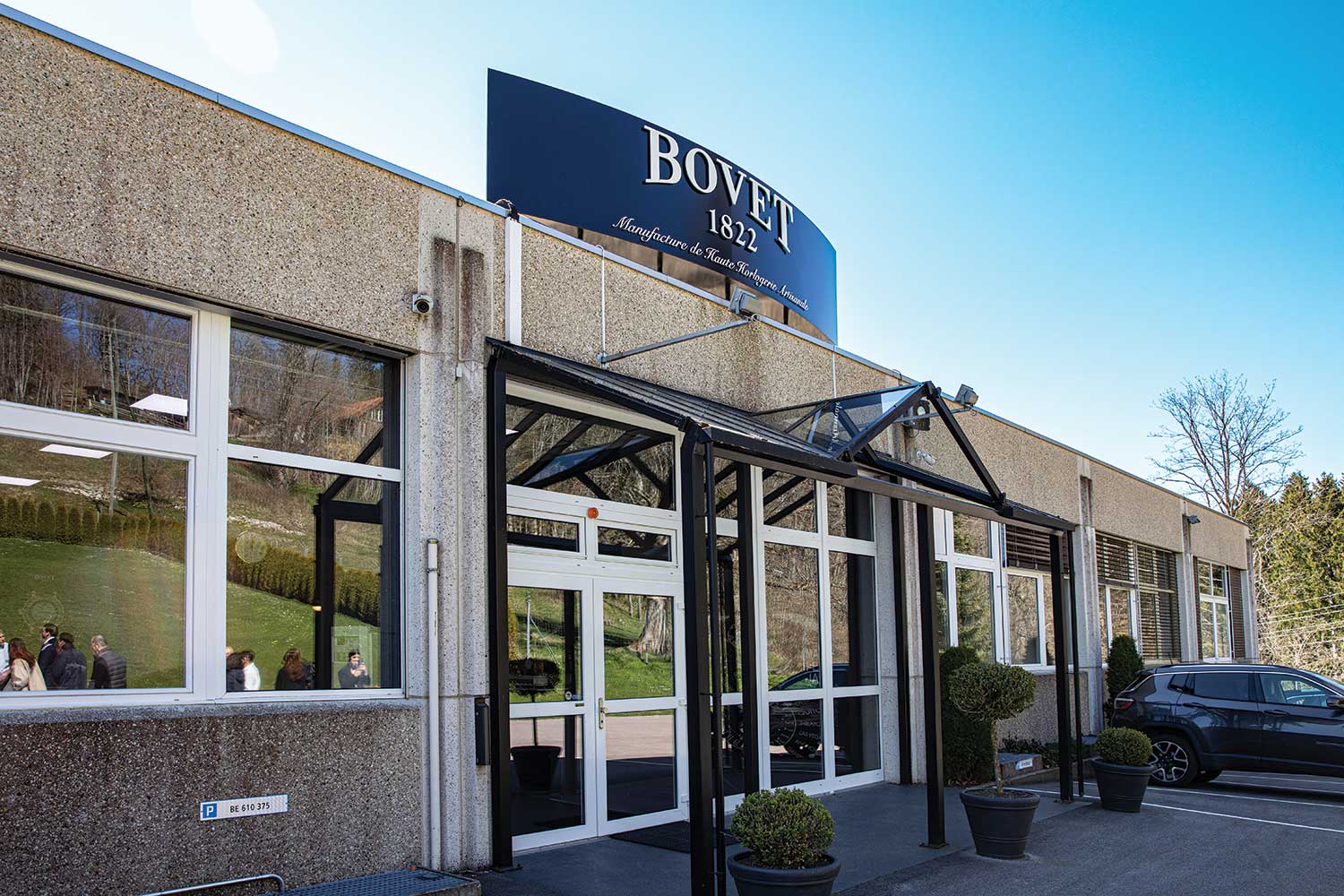
The Bovet manufacture in Tramelan is a compact integrated facility where movements and components, including cases, dials, and even hairsprings are produced
After Pascal Raffy acquired Bovet, he pursued vertical integration to secure autonomy over movement production. In 2006, he acquired multiple specialist workshops covering tourbillons, calibers, hairsprings and stamping under the historic Dimier 1738 name in Tramelan, in the Bernese Jura region of Switzerland.
Today, the renamed BOVET manufacture is where Bovet watches take shape in practical terms. It is a compact yet unusually complete manufacture. It is here that movements are designed, components fabricated, decorations executed and calibers assembled in their entirety, before being sent to the Château de Môtiers for casing and final testing. Bovet produces around 1,000 watches annually and the facility is home to around 55 employees spanning numerous functions — a figure that underscores how compact yet highly skilled the operation is.
At the heart of the manufacture sits the technical office. New projects take shape here through close, ongoing dialogue with Mr. Raffy, who works on-site at the manufacture in an office situated next to them. Ideas originate with him and the role of the engineers is not to determine whether something is feasible, but to find a way to make it so. It is uncommon for an owner without formal training in watchmaking or engineering to drive development in this way, and rarer still for it to culminate in a significant body of patents bearing his name. The manufacture is large enough to support multiple projects in parallel, yet small enough to allow his continued, hands-on engagement with each one.
Machining Room
Our first stop of the tour was the machining room. This is where the less romantic but no less critical work takes place — the manufacture of the components that never draw the eye, but on which everything else depends. A variety of CNC, or computer numerical control, machines occupy the space, each with a specific role.
Mainplates and bridges are cut on five- and seven-axis machining centers. Depending on complexity, setup can take anywhere from a few hours for a repeat job to several days for a new plan. Programming must take numerous variables into account. Differences in feature scale, part thickness and rigidity demand careful adjustment of cutting speeds, feeds, tool geometry, angles and cutting sequence. Some relationships are governed by clear rules. Smaller tools run at higher spindle speeds, larger tools at lower ones but applying those rules in practice is rarely straightforward. Tool wear, surface finish, vibration, heat generation and part rigidity all impose limits that no formula fully captures. The underlying physics makes machining a science; knowing how far those limits can be pushed without compromising the part is where experience turns it into an art. The time hence is spent ensuring that every hole, seat and surface ends up exactly where it should, rather than rushing the setup and producing parts quickly that will never assemble or run correctly.
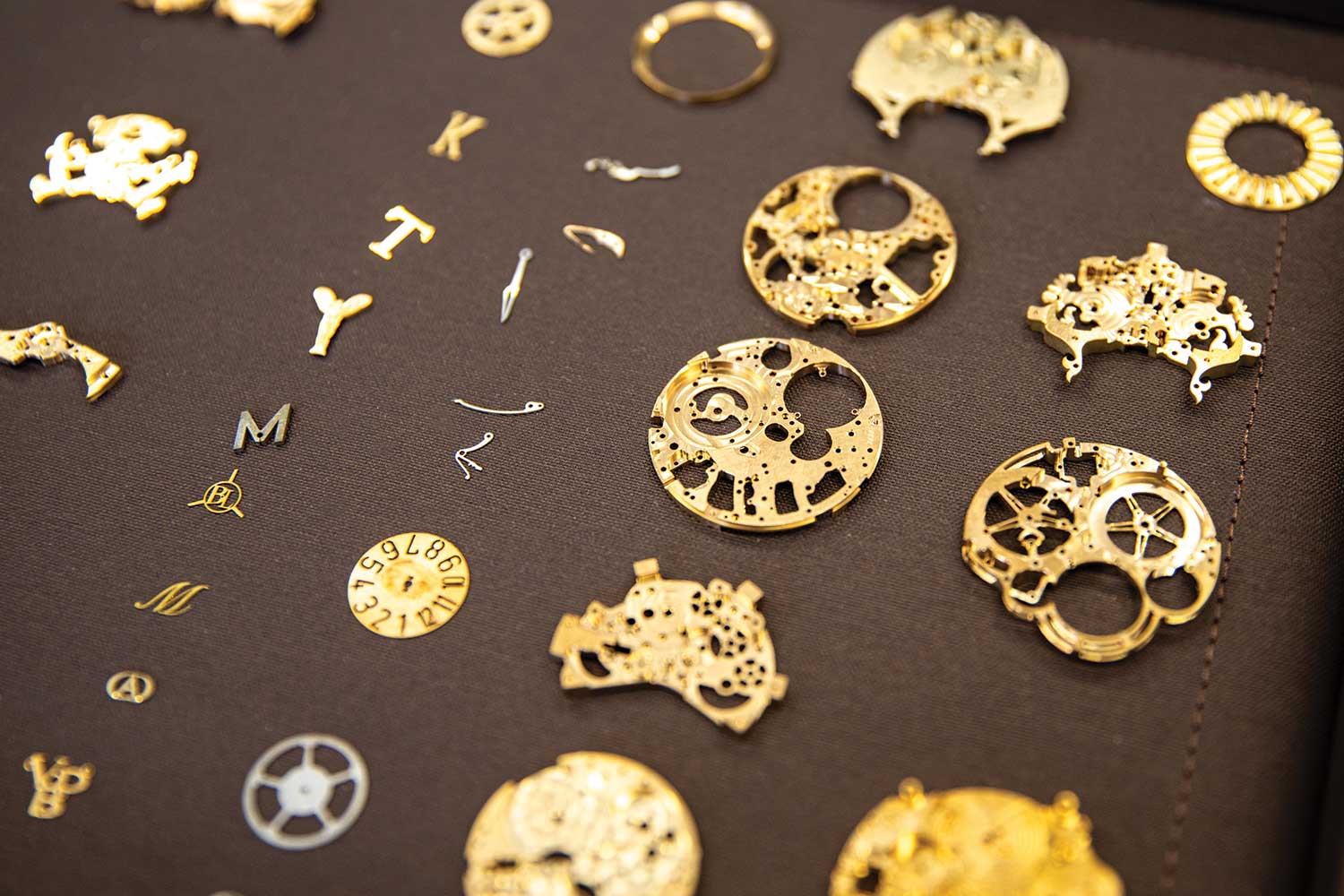
A tray of individual movement components illustrating the breadth and complexity of Bovet’s in-house production
In practical terms, the machining room resembles that of any other watch manufacture, albeit on a humble scale. One notable distinction is that Bovet is among the few manufactures that produce their own dials. Dial blanks are cut on the same floor, and guilloché is engraved using a five-axis CNC machine, which allows the tool to maintain consistent depth and alignment across the surface even when working complex patterns. Once the guilloché is complete, the dial is lacquered, followed by the final machining operations, limited to the cutting of holes and apertures.
Alongside them, sliding-headstock CNC lathes carry out profile turning of small-diameter components such as arbors, pinions and balance staffs from bar stock. By feeding the material through a guide bushing and keeping the cutting point close to the support, these machines deliver the concentricity and repeatability such parts demand.
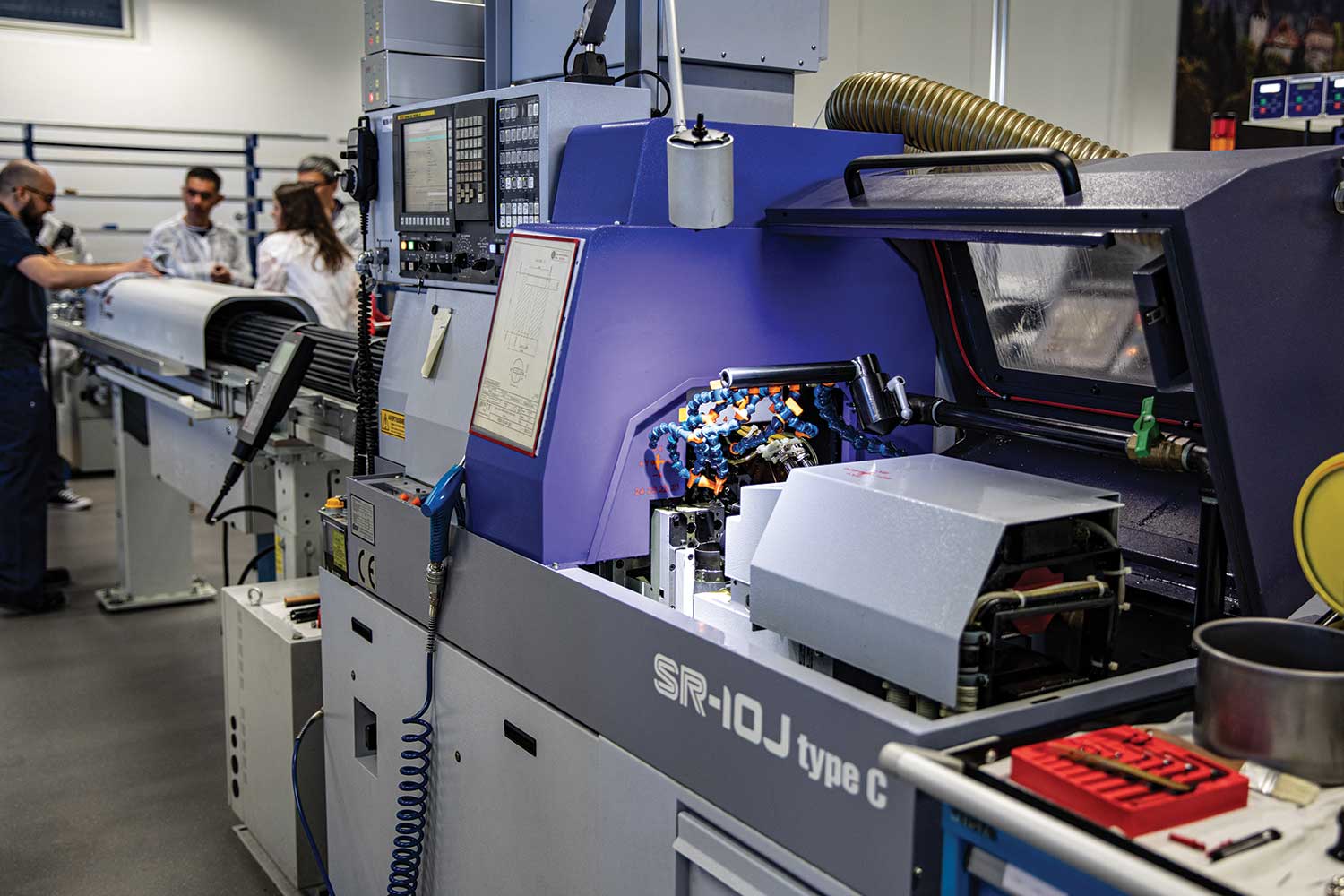
CNC lathe with a sliding headstock used for extremely slender parts
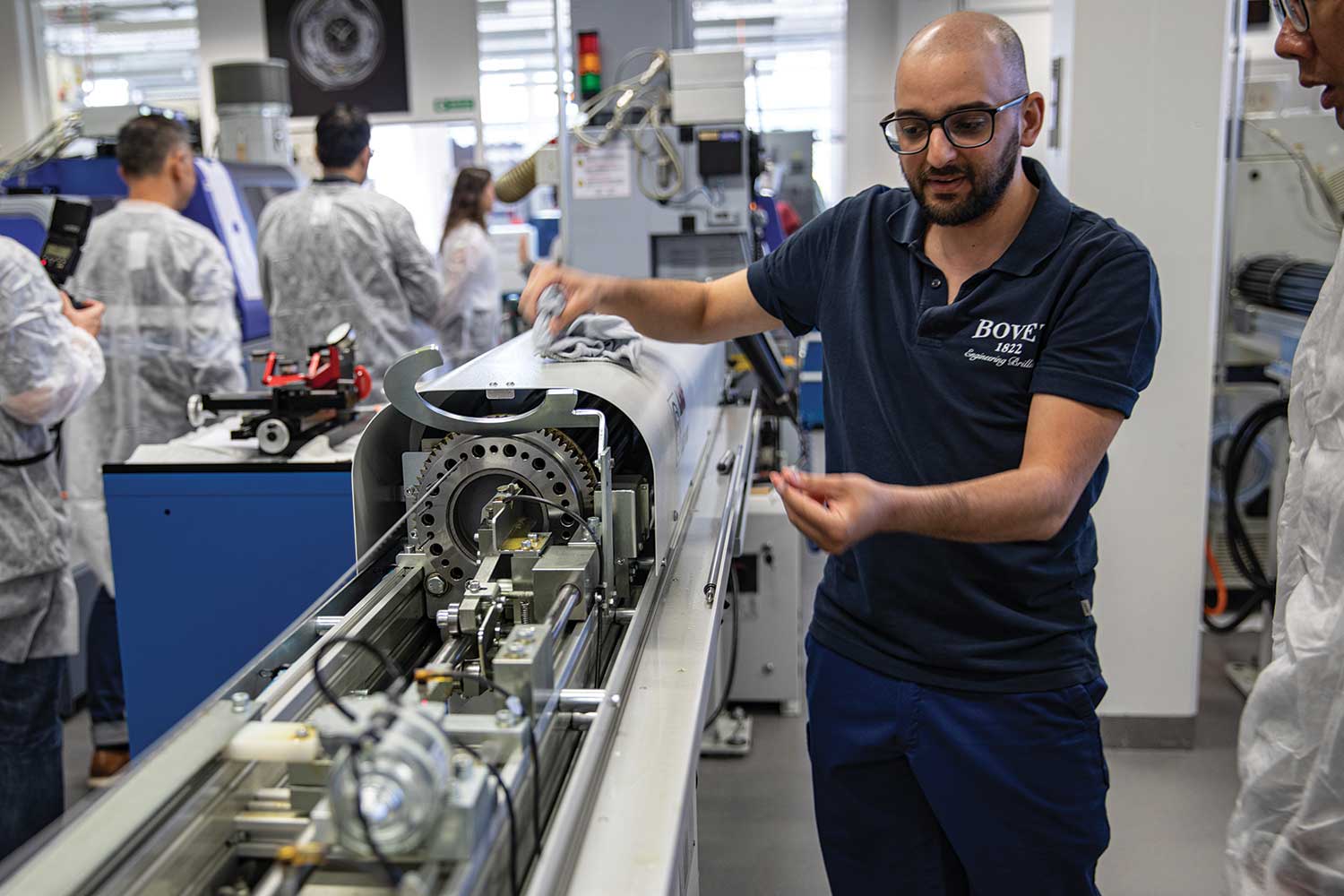
The bar stock advances through a guide bushing as the headstock moves longitudinally, keeping the cutting point rigidly supported
There were also electro-erosion machines. Unlike cutting or milling, these machines remove material without contact, using controlled electrical discharges to erode the workpiece along a programmed path. Electro-erosion comes into play where conventional machining reaches its limits — internal corners, ultra fine slots, delicate profiles or components whose geometry would deform under cutting forces. Depending on thickness and complexity, electro-erosion on a wire EDM (electrical discharge machining) can take anywhere from an hour to most of a day, with additional time spent on successive skim cuts to achieve the required accuracy and edge quality.
Next, we entered a small room where small finishing operations take place. Along one side were rotating tumbling barrels loaded with abrasive ceramic media containing copper. It is one of the most common methods used for deburring metal parts in bulk as it provides consistent results with minimal manual intervention. In this process, small machined parts are placed inside a rotating barrel and as the barrel rotates, the abrasive media continuously rub against the parts, removing burrs from CNC machining and imparting a smooth finish.
In the same room, raw brass blanks are processed on a horizontal lapping and grinding machine fitted with a rotating plate. The blanks are held against the plate under controlled pressure while abrasive media removes material evenly across the surface. The machine allows flatness to be corrected across multiple pieces at once, producing uniformly planar blanks before they move on to CNC machining.
Stamping Workshop
The highlight of the tour was undoubtedly the stamping workshop. The machinery here is markedly different from that found in the CNC-dominated machining room. Metal sheet stamping itself is a traditional production technique that has become increasingly rare today, having largely been displaced by CNC machining. The critical point is that almost all the complexity is concentrated in the tooling rather than in the machine. Each stamped component requires a dedicated tool set made up of two precisely matched elements: the die and the punch.
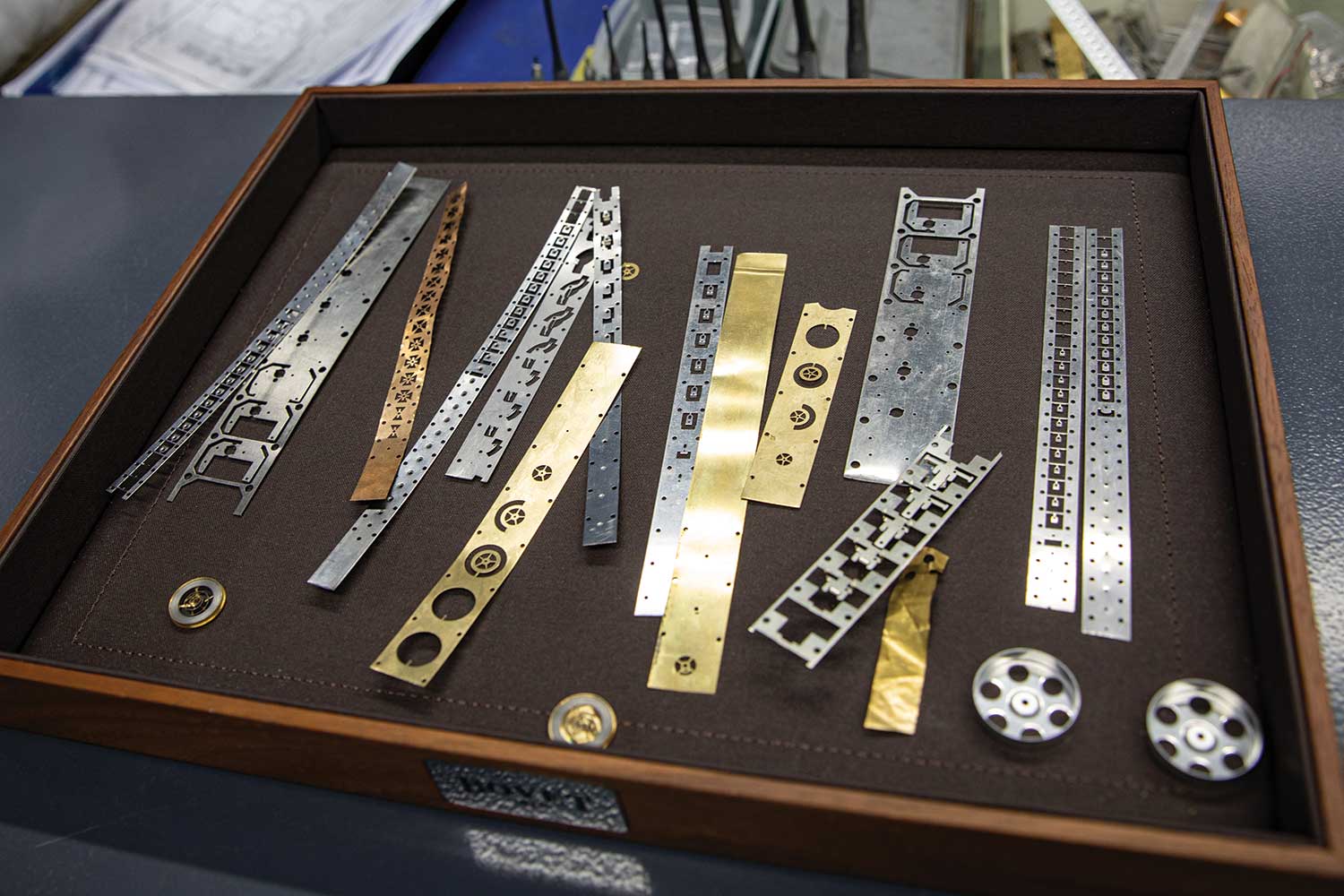
Stamped metal sheets, showing the raw intermediate stage from which multiple movement components are cut
Thierry Faivre, a master stamp maker who has worked in the workshop for more than 35 years, was present to demonstrate and explain the process of creating and assembling a punch-and-die set. The craft is incredibly manual and, when seen up close, visibly physically demanding. The die is a hardened steel plate into which the negative outline of the component is cut, while the punch, made from the same material, carries the corresponding positive form. These tools are produced through careful machining, fitting and repeated adjustment on jig borers and milling machines rather than through automated CNC processes.
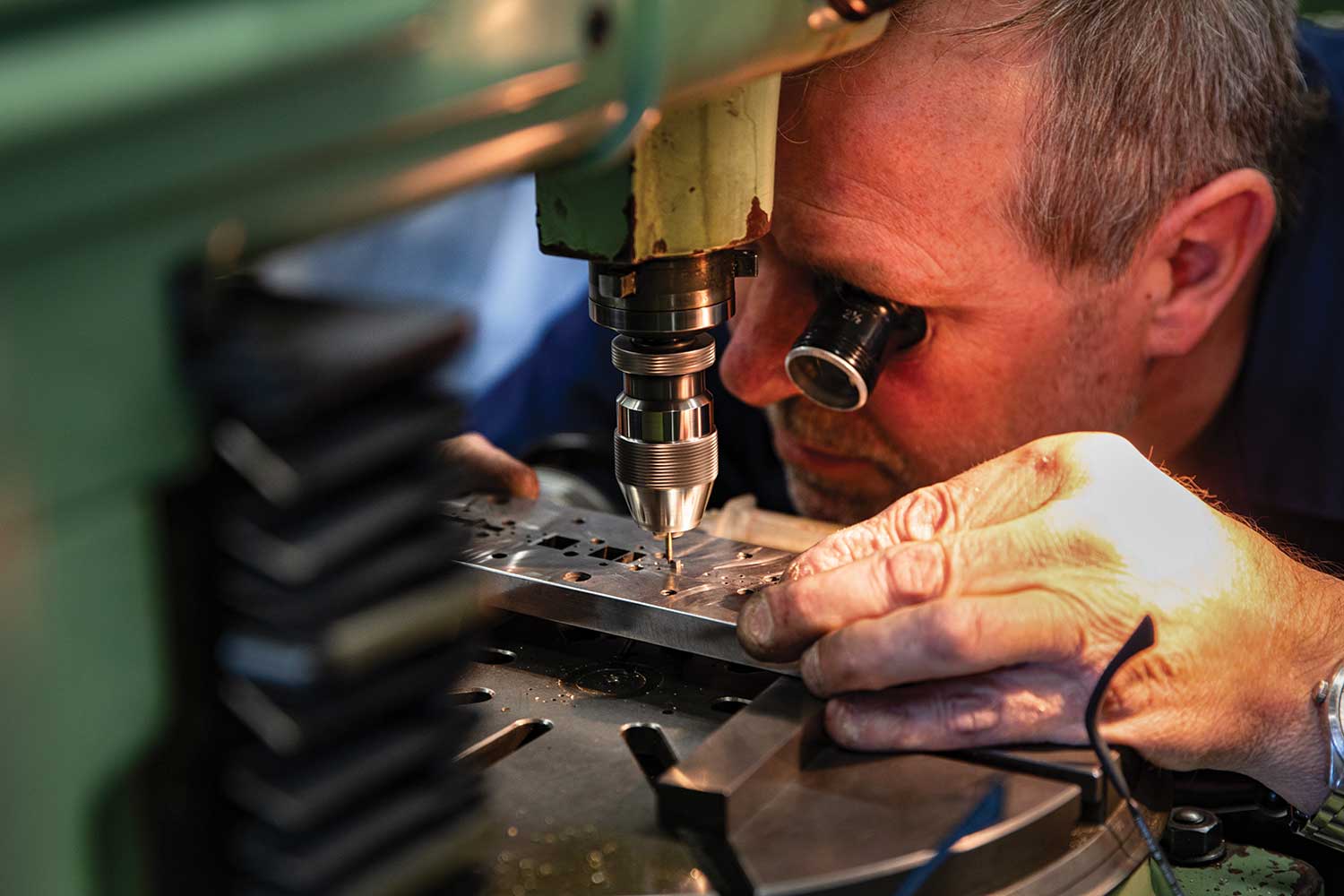
Master stamp maker Thierry Faivre
During operation, sheet metal is driven by the punch through the die, cutting the material to the required profile. Presses can operate at speeds of up to 300 components per minute. In single-strike stamping, cutting, piercing or simple forming is completed in a single press stroke. In progressive, multi-stage stamping, the work is divided across successive operations, often including intermediate bending or forming stages, allowing more complex, three-dimensional parts to be produced.
Designing and manufacturing a punch-and-die set demands a high level of skill and many hours of manual work. It requires a broad understanding of angles and forces, lubrication and friction, pressure and material behavior, as well as patience. The central challenge is ensuring that when a press is running at speed, every part is identical from the first to the last, without drift or variation over time. A punch-and-die set may be assembled, dismantled, sharpened, adjusted and tested dozens of times before it performs as intended. After stamping, parts are heat-treated in an oven to stabilize the material following high-speed forming. The stamping workshop continues to produce stamped components for long-standing client brands, including several big names, even after it was acquired by Bovet. Beyond watchmaking, the same micromechanical expertise has been applied to precision components for external technical industries, including medical, aviation, electrical, and specialized engineering applications.
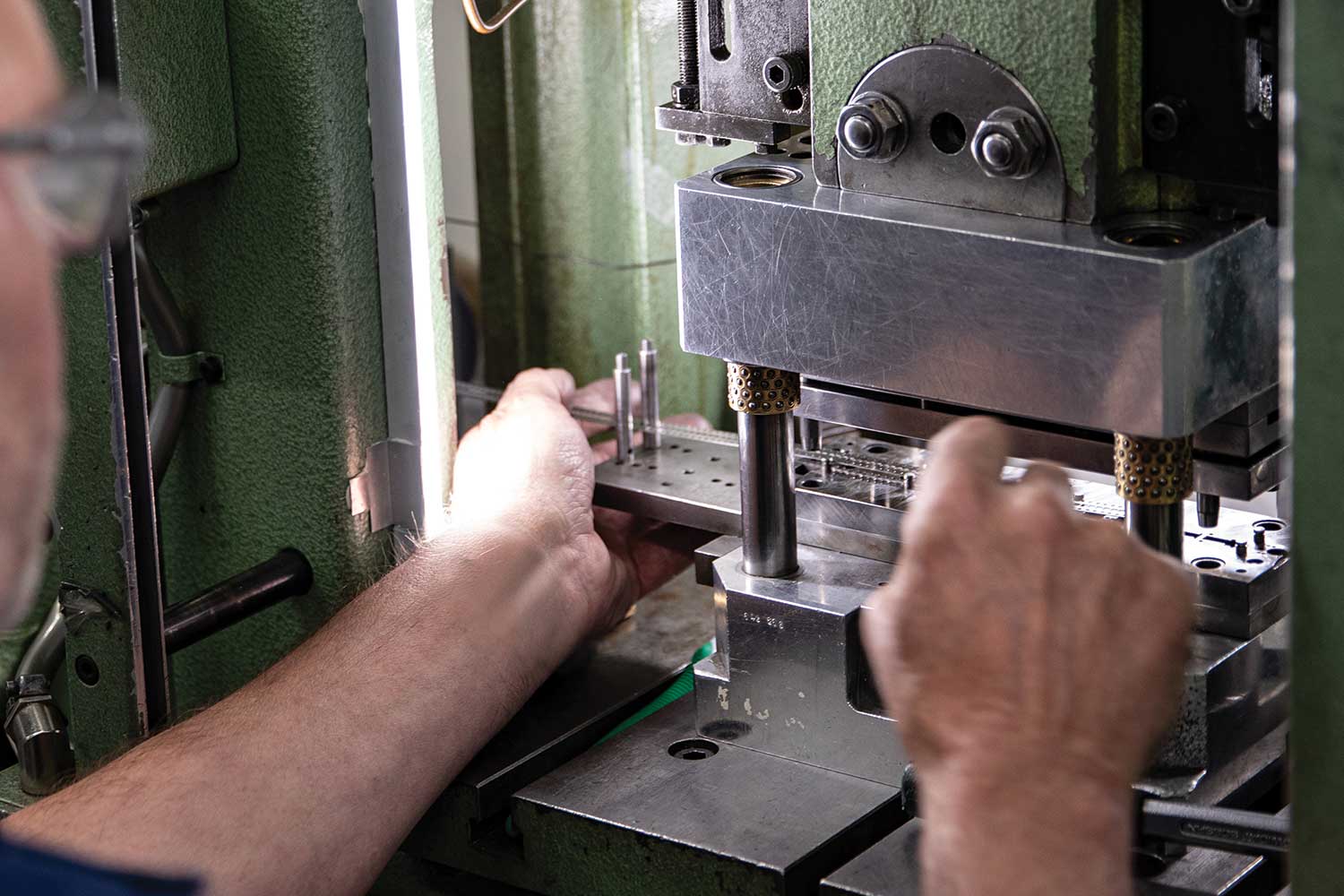
Metal sheet stamping in action, where hardened dies punch multiple movement components from metal stock
There is a dedicated room for gear hobbing machines. After gear blanks are prepared, teeth are cut by generation. A rotating cutting tool, or hob, meshes with the blank while both rotate in a fixed, synchronized action, progressively generating the tooth form. They then move on to deburring, finishing and subsequent inspection.
Hairspring Workshop
In the corner of the facility is the hairspring workshop. Bovet is one of the few manufactures that makes its own hairsprings. It begins with a specialized alloy supplied in wire form, wound on large spools. At this stage, the wire is relatively thick, measuring around 0.6mm in diameter, and bears little resemblance to a finished hairspring. The first step is diameter reduction by wire drawing. The wire is pulled through natural diamond drawing dies, which progressively reduce its diameter while increasing its length. This operation is repeated multiple times, with intermediate inspections, until the wire reaches its final diameter, typically around 0.06mm, held to tolerances on the order of ±0.001mm.
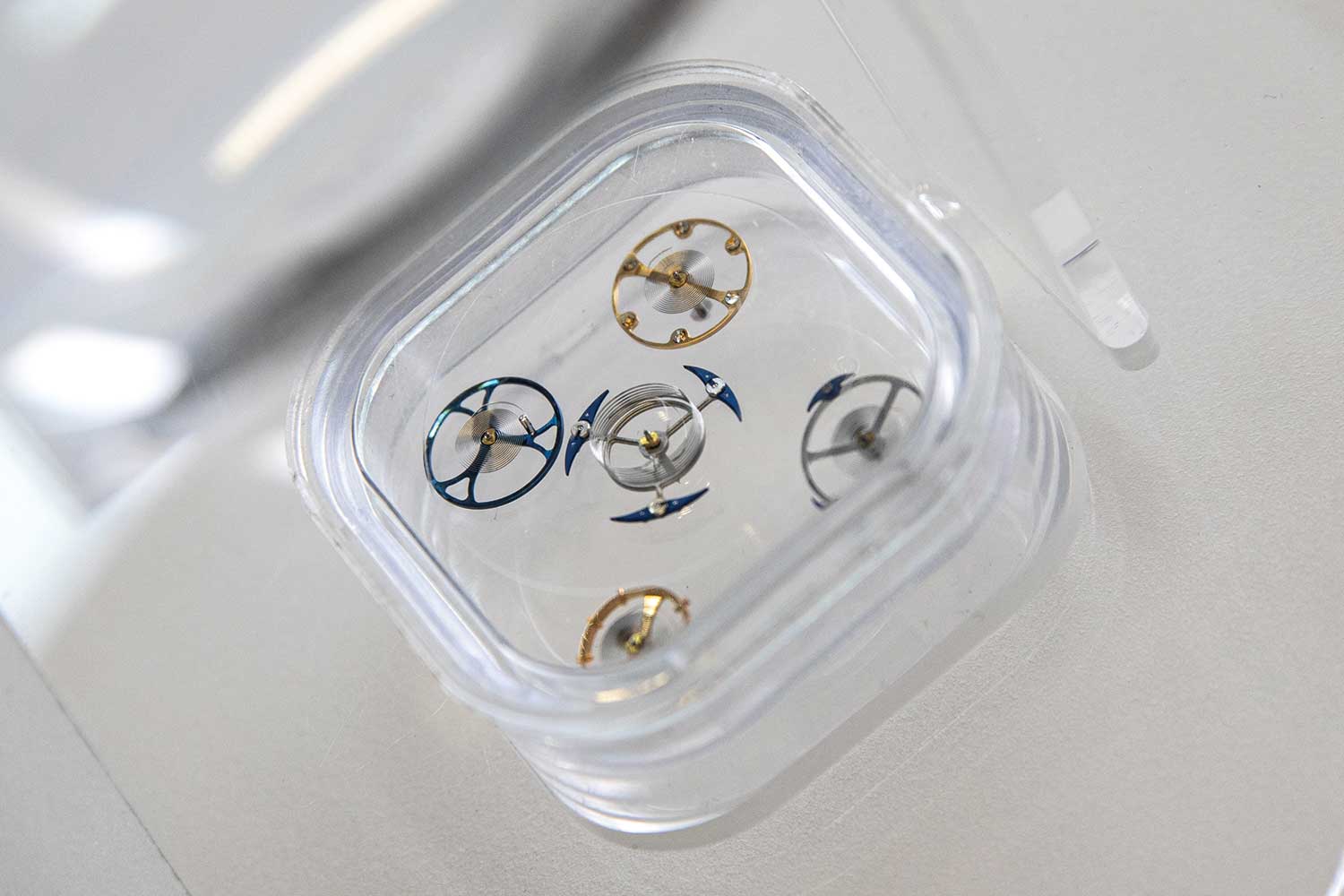
Bovet is one of the few manufactures that produces its own hairsprings and balance wheels in-house, enabling a wide variety of balance and spring designs to be developed, paired and adjusted internally
Once the correct diameter is achieved, the wire is flattened and cut into precise lengths. These strips are then prepared for coiling. Several hairspring strips are placed together into a retaining ring that constrains their shape and allows multiple spirals to be processed simultaneously. In this constrained state, the spirals undergo heat treatment. This thermal process is critical, as it stabilizes the alloy, fixes the elastic properties of the spring and permanently sets its spiral geometry.
After heat treatment, the spirals are removed from the retaining ring and separated. At this point, they exist as bare hairsprings. The inner ends of the spirals are then cut to create the center opening, allowing the spring to be mounted concentrically. A collet is subsequently fitted to the inner end of each hairspring so it can be secured to the balance staff.
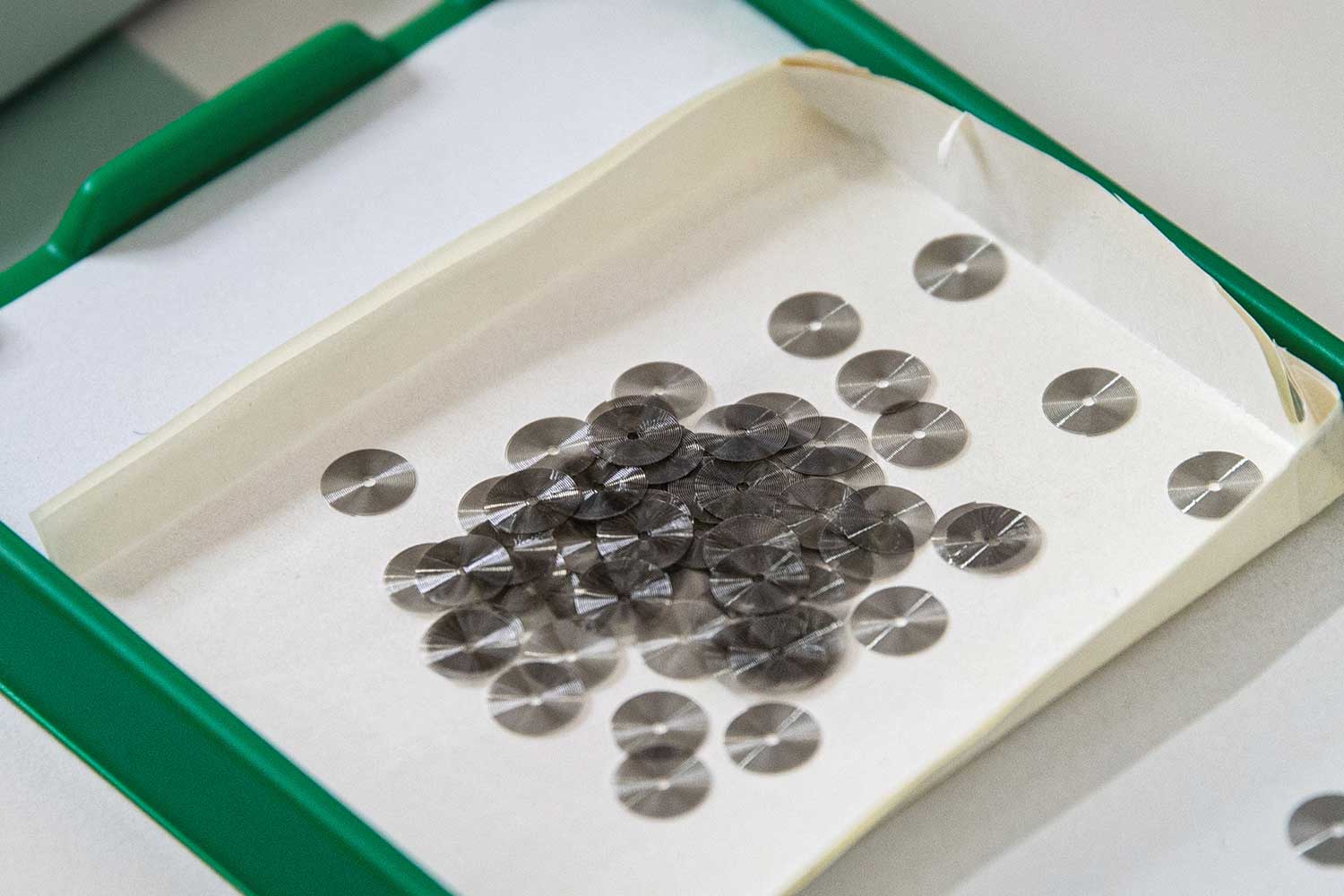
Freshly formed hairsprings after heat treatment and shaping, the result of drawing, coiling, and thermal stabilization carried out in-house before final pairing, adjustment, and regulation
The outer end of the hairspring is then cut to define its active length, typically specified by the number of turns and the terminal angle. Following this, the outer terminal curve is formed. This shaping step, which determines how concentrically the spring breathes, remains a delicate operation and is often carried out with manual intervention and fine adjustment.
In the final stage, the hairspring is mounted to the balance wheel, and the balance-spring assembly is regulated. Only once all these steps are completed does the hairspring become a functional regulating organ, ready to be installed in a movement.
Next, we headed to the cold-working room. Here, components are finished by roller burnishing, a process that optimizes the interaction between pivots and their jewel bearings while reducing wear caused by friction. Balance staffs, bushing rods and pallet staffs are treated in this way. The operation cold-works the pivots and shoulders, improving dimensional accuracy while increasing surface hardness.
Finishing Department
Bovet’s finishing department covers the full spectrum of techniques including perlage, anglage, black polishing and striping. Engraving, specifically freehand line engraving, is the craft for which Bovet is best known. There are three engravers working in the workshop, each with a unique personal style that makes even watches of the same reference different.
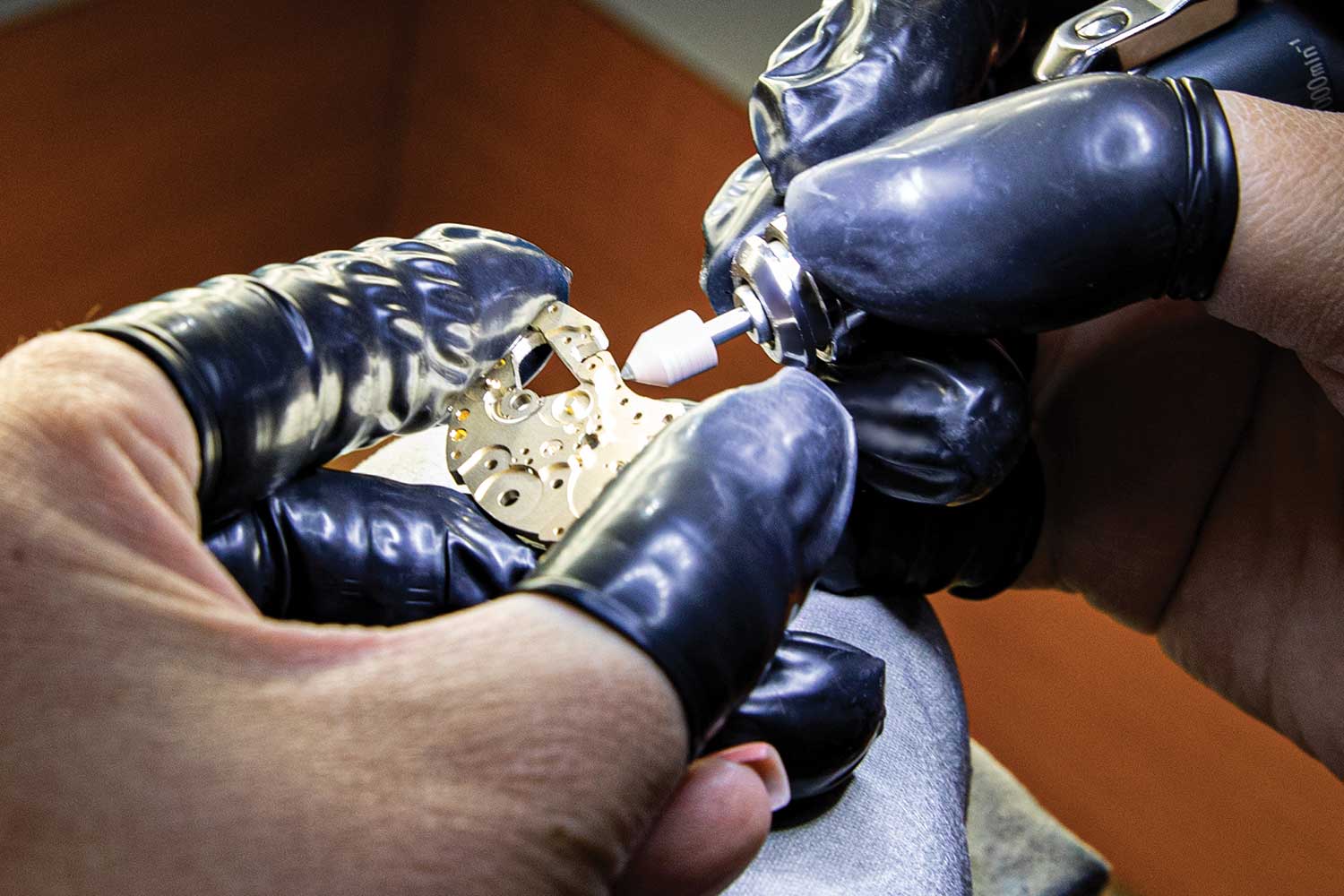
Manual pre-polishing of a movement component using a low-speed rotary handpiece, refining surfaces and internal contours ahead of final hand-finishing
Fleurisanne engraving holds a special place in Bovet’s decorative repertoire. It is a highly evolved form of hand engraving characterized by flowing floral and scroll-like patterns inspired by ancient Roman columns and the decorative traditions of the Fleurier region. The work is done entirely freehand, without templates or machines, requiring the greatest skill, endless concentration and many hours at the graver to cut away micro amounts of metal and achieve a richly detailed, balanced design that resonates across cases, bows and movement bridges.
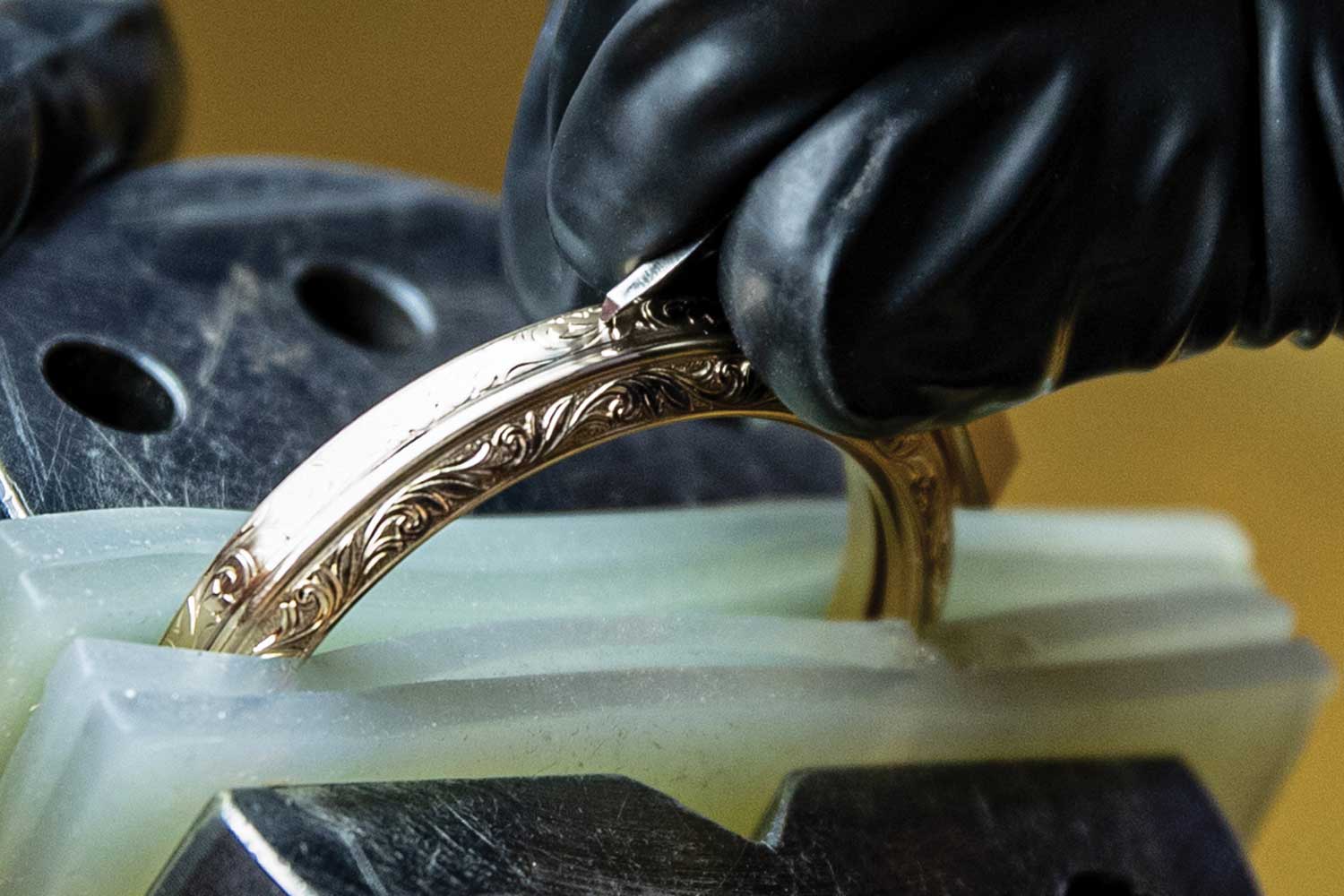
Fleurisanne engraving executed by hand on a gold case component, with the scrolling floral motif cut directly into the metal using traditional burins
Tremblage engraving is another technique practiced here, used to create a finely textured, shimmering surface on metal. Though the effect may appear straightforward, the technique is exacting in the extreme. Working with a burin — a fine-tipped engraving tool made from hardened steel — the engraver cuts a dense field of minute incisions across the surface. Individually, the marks appear irregular, but they are placed deliberately, with careful control of depth and spacing, so that they interact to produce contrast.
We also saw the post-processing of dials. Numerals and lettering are applied by pad printing, a delicate process in which ink behavior varies with temperature and humidity. For each print, the craftsperson manually fills the recesses of an engraved plate with ink before wiping away the excess. A silicone pad then picks up the image, after which the dial or dial part is positioned by hand beneath the pad before the transfer is made.
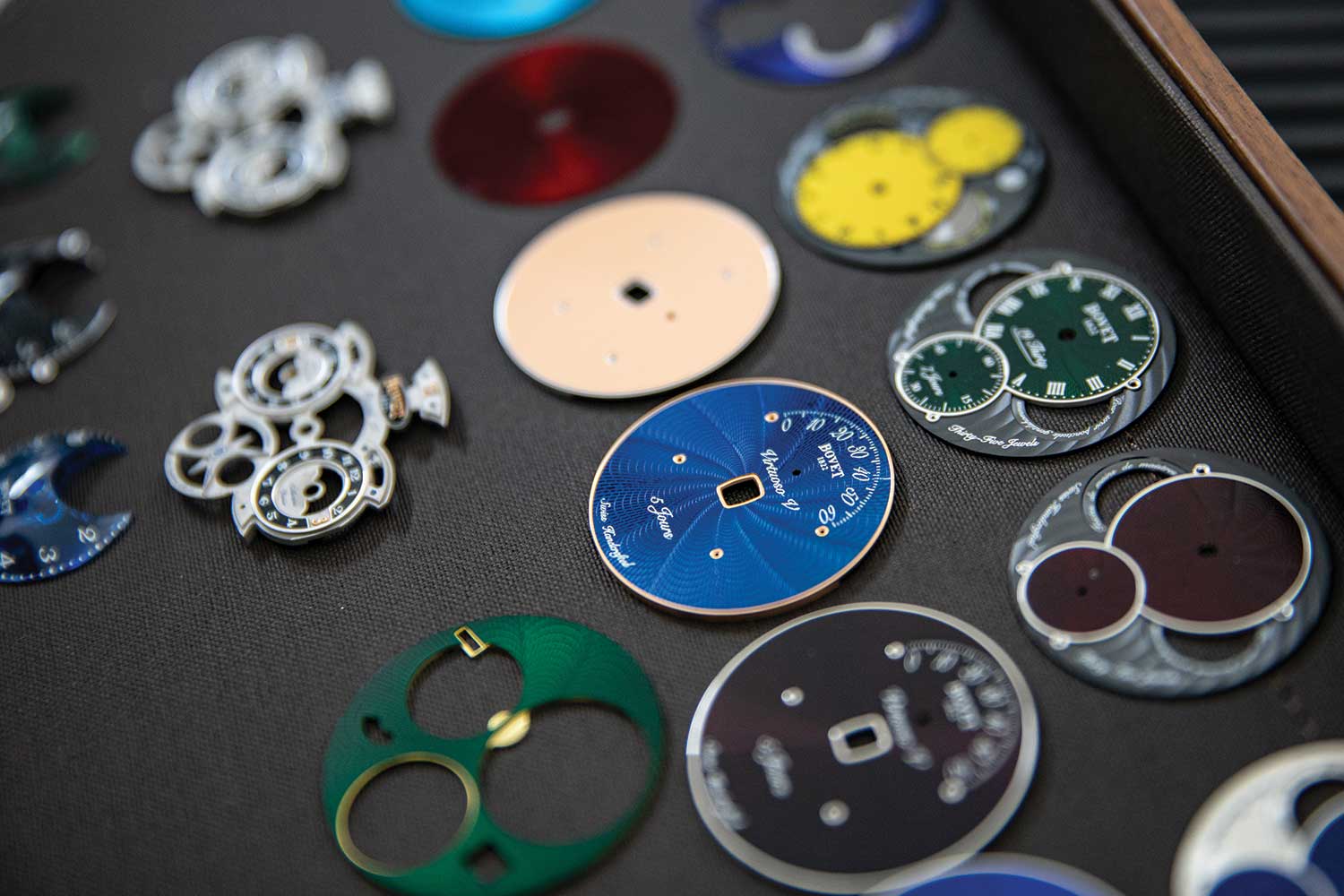
An overview of the breadth of Bovet’s in-house dial making
Quality control is carried out within each department and again by a central quality control team, which groups the finished components into their respective kits. These kits are then sent to the assembly room, where each Bovet movement, whether simple or complex, is assembled in its entirety from start to finish by a single watchmaker. The Récital 28 Prowess 1 with its complex system of rollers requires close to a month of assembly time, equivalent to any traditional grand complication. The assembled movements are then delivered to the Château de Môtiers, where casing, final regulation and testing take place before the watches are prepared for delivery.
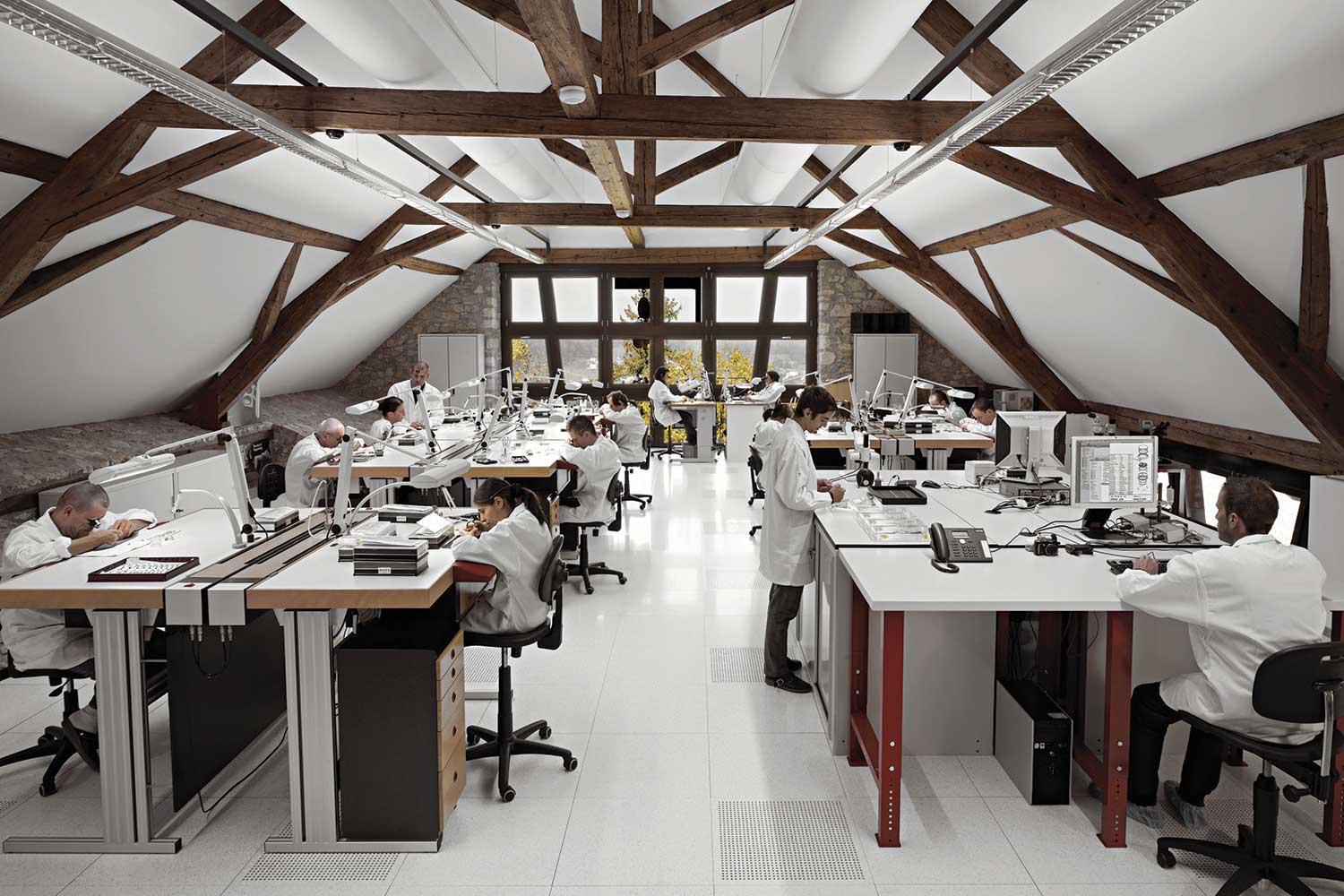
The assembly floor is equipped with a high-pressure ventilation system that maintains positive air pressure, ensuring dust is expelled through the floor
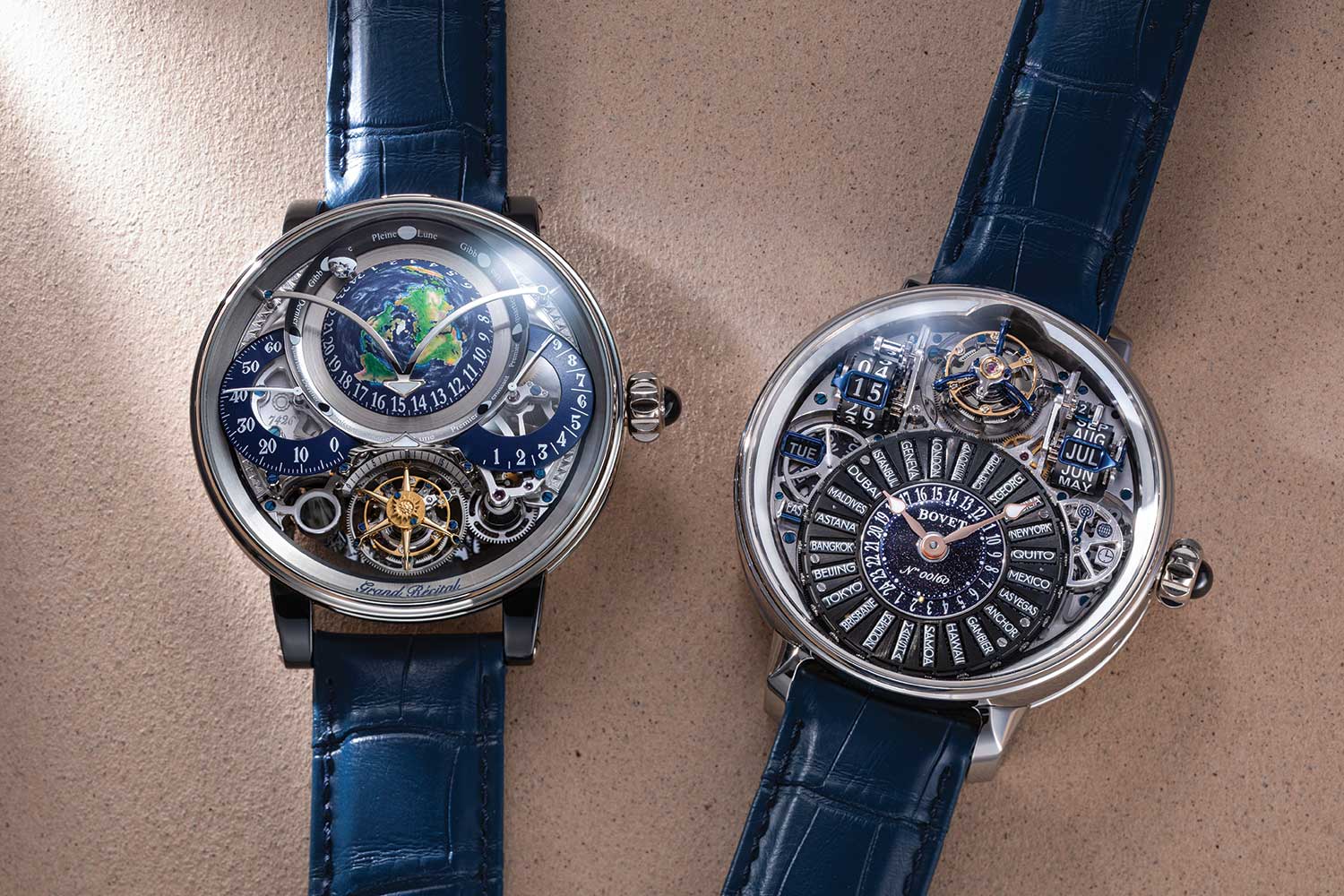
Two of Bovet’s most ambitious creations, the Récital 22 Grand Récital and the Récital 28 Prowess 1 (©Revolution)
Château de Môtiers
The Château de Môtiers is a historic castle located in the Val-de-Travers, roughly an hour’s drive from Tramelan. Built in the early 14th century by Rodolphe IV, Count of Neuchâtel, the Château de Môtiers later entered Bovet hands in 1835 when it was purchased by Henri-François Dubois-Bovet, before being donated by his descendants to the Canton of Neuchâtel in 1957. Nearly half a century later, Mr. Raffy acquired the château and reinstated it as Bovet’s headquarters.

Château de Môtiers
The castle comprises two parts. The older residential wing houses the private office of Mr. Raffy, as well as a formal presentation salon. This space looks out over the Val-de-Travers and serves as the setting in which collectors are received, surrounded by a carefully curated selection of historical Bovet pocket watches and wristwatches that place the modern manufacture in dialogue with its past. Attached to this wing is the château’s imposing square stone tower, the Tour de Diesse, a landmark that has formed part of the valley’s landscape for centuries and anchors the site in its medieval origins. It was originally home to the castle’s dungeon, and its lower level still contains a preserved prison cell.
Opposite this is the main working building, which accommodates Bovet’s administrative offices in a large, open-plan space. The interior balances exposed timber with white walls and is punctuated by photographic documentation of key Bovet timepieces and moments from the brand’s modern history. Movements that arrive at the office are transported upstairs via a dedicated elevator.
A staircase leads up to the upper level, where casing and final quality control are carried out. At the gable end of the atelier is a row of tall, multi-pane windows that admit abundant daylight deep into the workspace. The room looks out toward Fleurier on one side and Môtiers on the other. It is equipped with a high-pressure ventilation system that maintains positive air pressure, ensuring dust is expelled through the floor — an essential requirement at this stage of production, where completed movements are cased and subjected to final testing.
The watches then undergo several different tests depending on their nature, including water resistance, shock resistance, overall functioning as well as power reserve. Given Bovet’s long running time of five to 22 days, watches are kept under observation for their full power reserve to ensure stable performance before delivery, a process that helps explain the brand’s extended lead times. Quality control is conducted repeatedly at this stage; movements, cases, gemstones and even individual diamonds are inspected one by one rather than in batches. The same atelier also handles after-sales servicing, with returned watches examined and repaired here, reinforcing its role as the final checkpoint before a Bovet timepiece reaches its owner.
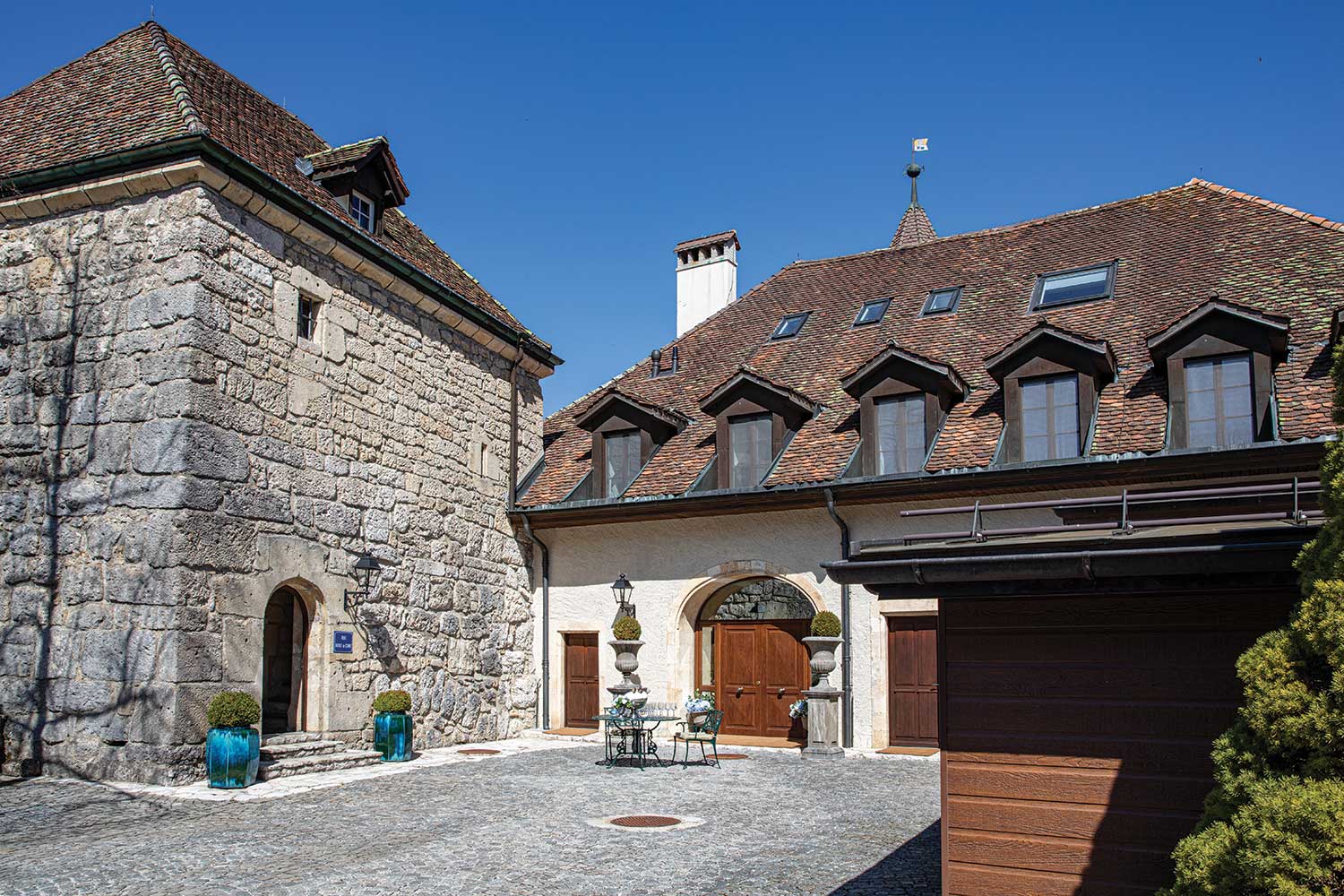
Château de Môtiers, Bovet’s mythical castle is the central hub for assembly and final quality control
For obvious reasons — it is a castle — the visit was unlike any other. There is an inescapable sense of occasion in seeing the last stages of modern watchmaking carried out in a building whose history long predates the wristwatch itself. The setting lends weight to processes that already demand patience, care and time.
Seen in full, Bovet’s operation emerges as something genuinely unusual. It occupies a narrow space between the artisanal and the industrial — substantial enough to support complex engineering, yet compact enough to sustain practices that remain deeply dependent on manual skill and judgment. It reflects Pascal Raffy’s determination to retain control over how ideas move from conception to execution, without being reshaped by external constraints along the way. Most notably, while it can’t be said for all vertically integrated manufactures where integration can seem nominal, Bovet’s in-house capability has been fully exercised. The watches that result, extravagant in both decoration and mechanical conception, can’t be more reflective of that.
Bovet
You may also like

Editorial
Revolution Awards 2025: Best Worldtimer — Bovet Récital 30
Jan 27, 2026
Editorial
Revolution Awards 2025: Best Worldtimer — Bovet Récital 30
Jan 27, 2026
Editorial
The Art of Bovet
Dec 15, 2025
Editorial
The Art of Bovet
Dec 15, 2025
Editorial
The Revolutionary List: 24 Technically Brilliant Watches – Bovet Récital 28 Prowess 1
Dec 12, 2025
Editorial
The Revolutionary List: 24 Technically Brilliant Watches – Bovet Récital 28 Prowess 1
Dec 12, 2025