Abraham-Louis Breguet: The Founder of Modern Horology
Editorial
Abraham-Louis Breguet: The Founder of Modern Horology

When Abraham-Louis Breguet established his workshop in Paris in 1775, he did so in a city still confident in its cultural authority and intellectual purpose. Paris was both a center of courtly life and a place of sustained scientific enquiry, where observatories, academies and salons encouraged research into astronomy, navigation and the accurate measurement of time. Instrument makers and horologists worked within the same culture as mathematicians and scientists, responding to practical problems with ingenuity and precision. The demands of navigation, commerce and naval power gave urgency to questions of precision timekeeping more broadly, even as Parisian horology remained primarily oriented toward portable watches made for an elite clientele. All this unfolded within an aristocratic order that still appeared stable, despite mounting economic and social pressures.
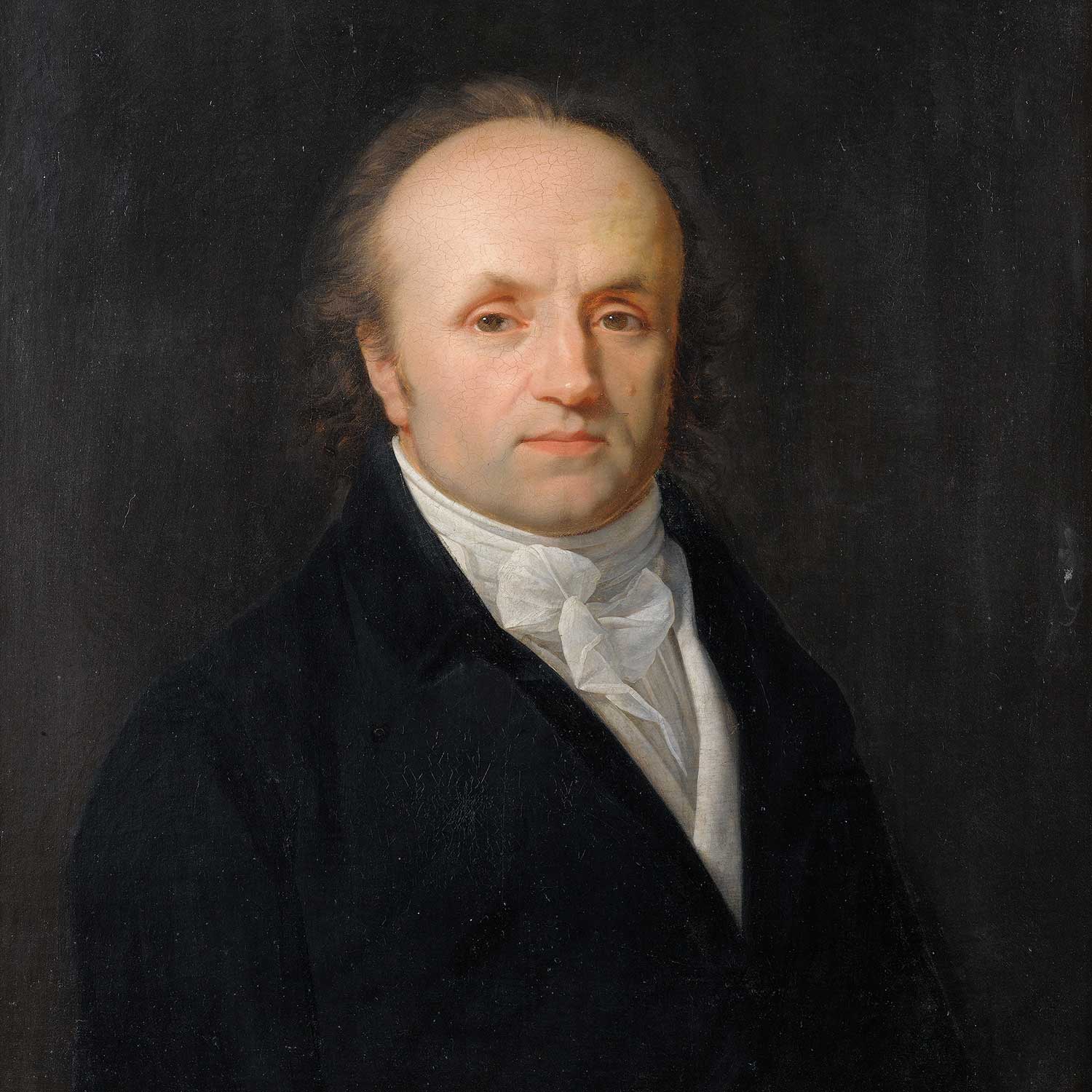
Portrait of Abraham-Louis Breguet, 1747–1823 (Image: ©Breguet Museum Collection)
Breguet was a rare figure even in such a milieu: a watchmaker of extraordinary talent, armed not only with scientific and mathematical understanding but with an acute appreciation of a watch’s aesthetics, and the commercial instinct of an entrepreneur. His watches were not merely mechanically brilliant; they were objects of exceptional beauty. He developed a style entirely his own, creating what might be described as the first truly “branded” horological aesthetic, so clear in its hierarchy, so refined in its restraint, that it remains immediately recognizable today.
Yet it is important, from the outset, to understand how closely the early phase of Breguet’s career is bound to the political and social ecosystem that enabled it. In pre-Revolutionary Paris, patronage did not simply fund technical ambition; it shaped it. The aristocratic culture of bespoke commission encouraged horological complexity and refinement, with precision and workmanship acting as markers of status within elite society. To satisfy such patrons was to compete not only on accuracy and ingenuity, but on refinement of form and legibility, on the visual coherence and quality of finish that made a watch immediately intelligible and a pleasure to use. These were qualities that found expression in Breguet’s developing dial language, his signatures, and his insistence on solutions that were practical, repeatable and reliable in daily life.
The Maker of Kings
His style proved so compelling that the international elite actively sought out his watches. War and revolution would later interrupt and redirect his production, yet Breguet repeatedly proved able to recalibrate in response to political rupture. Though he worked in Paris, this was no barrier even to the enemies of France, who continued to commission, acquire and proudly wear his watches. King George III, for example, succeeded in obtaining one of Breguet’s tourbillons, No. 1297, on June 29, 1808, despite the restrictions imposed by Napoleon’s Continental System, which formally forbade trade between Britain and France and their allies.
Abraham-Louis Breguet’s timepieces were not merely superior instruments of timekeeping; they were fashionable, trend-setting objects that mark the true beginning of the modern collector’s fascination with watches. Part of his genius lay in conceiving an astonishingly diverse range of watches. No two ever truly alike, and this ensured that for his admirers one watch was rarely enough. A survey of the Breguet Archives, with their extraordinary lists of original owners, frequently reveals the same names recurring among the purchasers. The presence of so many familiar figures, many of whom would have encountered one another in the same salons and dining rooms, suggests not only patterns of patronage but a shared pleasure in comparison and conversation. There could have been few important gatherings in early 19th-century Europe without at least a handful of Breguet watches discreetly ticking in the pockets of those present.
It was while still an apprentice that Breguet’s talents came to the attention of the Comte d’Artois, the younger brother of Louis XVI, almost certainly through one of his tutors, and it was this association that first brought him into the orbit of the French court. His early success owed much to the patronage of the King and Queen, as well as that of the wider aristocracy. The fortunes of his business would later ebb and flow as political and social upheavals made their mark on both his output and his ambitions for expansion. The foundations of that success, however, can be traced to the early development of the perpétuelle watch, an innovation that suited Enlightenment Paris perfectly.
The Perpétuelle
A significant portion of the Breguet Archives was destroyed during the French Revolution, and no records survive for the watches Abraham-Louis made before 1787. Nevertheless, it is clear that self-winding watches were among the earliest Breguet timepieces. Indeed, Breguet himself claimed that Marie-Antoinette and the Duc d’Orléans already owned examples by around 1780. The emergence of self-winding watches in the years immediately preceding the establishment of his business offered him an ideal opportunity to exploit a new horological discovery in order to promote his fledgling enterprise. With characteristic ingenuity, both as watchmaker and businessman, he recognized the invention’s potential and developed his own version, which he called the perpétuelle.
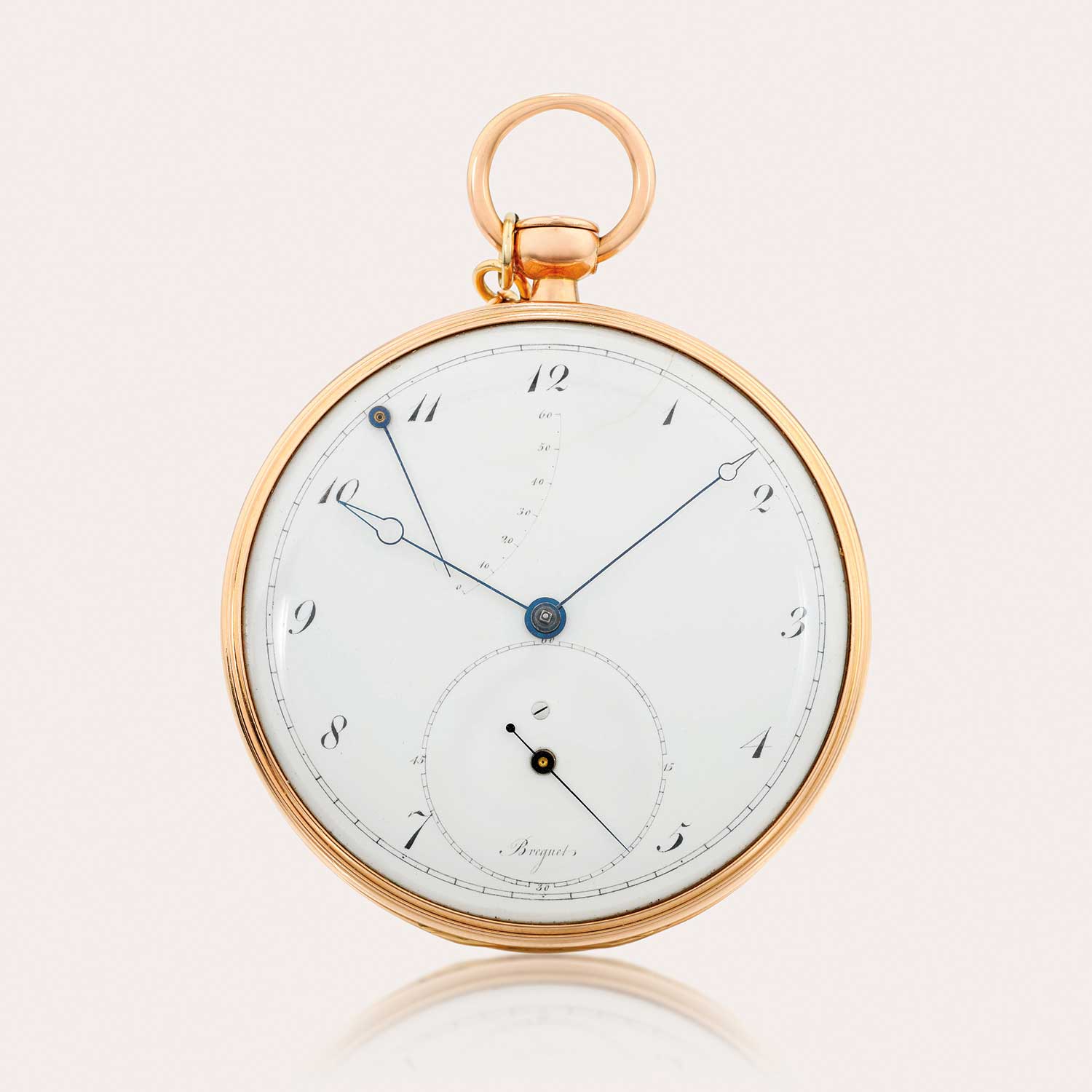
Breguet Perpétuelle No. 47, 6/87, circa 1787. A gold minute-repeating lever watch with automatic winding (Image: Sotheby’s)
Early self-winding watches had a reputation for unreliability, and Breguet was determined to produce a system that was practical and efficient. His perpétuelle employed a large platinum weight, chosen for its exceptional density, which allowed maximum winding power in a compact form. This mass was pivoted to swing freely and buffered against springs mounted at the edge of the movement’s backplate.
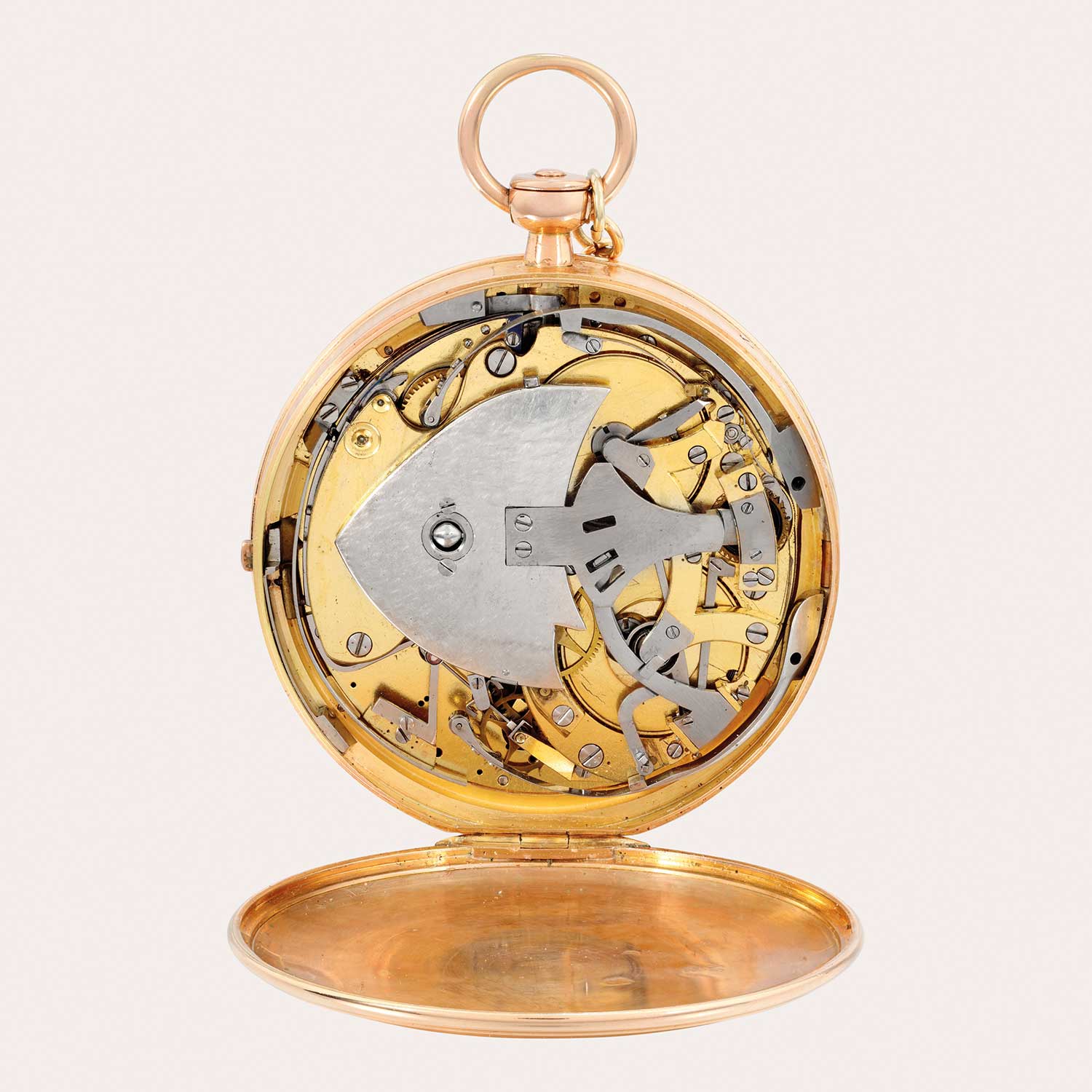
Breguet Perpétuelle No. 47, 6/87, circa 1787. The platinum pendulum winding weight can be seen mounted above the movement’s backplate (Image: Sotheby’s)
Power was stored in twin mainspring barrels, providing a reserve of up to 60 hours. When the mainsprings were fully wound, the weight was automatically locked to prevent overwinding. A further advantage of the dual-barrel system was that each mainspring could be made thinner, requiring less force and allowing greater length. As a result, the watch drew its energy from the most consistent portion of the mainsprings, avoiding the irregular timekeeping that could occur when a weak or nearly exhausted spring was allowed to run down. The combination of ample reserve and efficient winding meant that even the most sedentary owner could rely on normal daily movement to keep the watch fully wound.
Another notable innovation found in the perpétuelle is Breguet’s pare-chute, or parachute, shock-protection device, introduced around 1790–91. This system placed the balance staff between two jeweled bearings mounted on fine springs, absorbing shocks to the staff and proving such an effective safeguard that Breguet adopted it across a wide range of models.
Early perpétuelles typically had white enamel dials, often with finely painted italicized Arabic numerals, now popularly known as Breguet numerals, and blued steel hands with characteristic “moon” tips, also now referred to as Breguet hands. The watches were designed so that they did not need to be opened for winding or regulation. Regulation was usually placed discreetly beneath the bezel, accessible by a slide or precision screw, allowing the movement to remain concealed and better protected from dirt and careless handling. A réserve de marche indicated the power reserve in a sector on the dial.
Breguet chose to use the lever escapement in almost all his early perpétuelle watches. Invented in England by Thomas Mudge around 1754, the detached lever escapement was initially slow to be adopted despite its clear advantages. As Mudge himself observed in August 1776, it had great merit, yet demanded a delicacy of execution that “very few artists” could achieve. This was a challenge that Breguet was clearly equal to.
The majority of Breguet’s perpétuelle watches were also repeaters. He had therefore created an exceptionally practical watch, automatically wound, accurate and reliable through the lever escapement, and capable of telling the time in low light or complete darkness through repetition. Perpétuelle watches were consistently among the most expensive timepieces sold by Breguet, and the firm remained keen to repurchase or accept them in part exchange well into the 19th century. In these watches one sees the pre-Revolutionary Breguet at full strength, where innovation was refined, precision assured, and horological complexity acted both practically and as a signifier of its owner’s taste and discernment.
The Repeater
The perpétuelle illustrated here is an early example made for the Whig politician George John Spencer, 2nd Earl Spencer (1758–1834), an ancestor of Princess Diana. Numbered 47, 6/87, it was completed in 1787. In addition to its automatic winding, it incorporates one of Breguet’s early minute repeating systems. The hours and quarters are sounded à toc by a hammer striking a block fixed to the interior of the caseband, while the minutes are chimed by a separate hammer on a short gong mounted at the periphery of the movement.
Breguet is often credited with the invention (or at least the decisive development) of the gong form of repetition. By employing a slim wire gong integrated into the edge of the movement, rather than a bell mounted above it, the repeating work could be sounded clearly without requiring the additional depth necessitated by a superimposed bell. This innovation mattered profoundly to Breguet, whose aesthetic increasingly favored a slender profile consistent with the refined dress-watch style he championed.
The Breguet Archives record that Spencer’s watch was damaged and returned to Breguet’s Paris workshop on December 22, 1802. By that date, relations between France and England were those of uneasy adversaries, following nearly a decade of intermittent war, shaped by suspicion on both sides and the expectation that hostilities would soon resume. The moment nevertheless coincided with a brief interlude of peace following the Treaty of Amiens on March 25, 1802, which provided a window of opportunity for Spencer to return his watch to Paris in relative safety. Ironically, this was a truce Spencer himself had voted against in Parliament.
Hostilities resumed soon after, with Britain declaring war on France again on May 18, 1803. At the outbreak of war, Spencer’s watch was still at Breguet’s workshop, and it fell to the daughter of Breguet’s London agent, Louis Recordon, to spirit the watch safely out of France and return it to its owner. In miniature, the story captures one of the great paradoxes of Breguet’s career: the political world fractures, but the appetite for his objects persists, and that persistence would repeatedly force him to rethink how his business survived.
To strengthen his capital base and expand production, Breguet entered partnership in 1787 with the watch dealer and financier Xavier Gide. The relationship proved troubled and was dissolved in September 1791. Under the settlement, Breguet was required to pay Gide 50,000 livres in cash. To meet this obligation, he turned to his friend Antoine-César de Choiseul (1756–1808), later Duc de Praslin, who advanced the funds on highly favorable terms. Praslin would become one of Breguet’s most important patrons and supporters; their closeness is revealed in the fact that Praslin remembered him in his will, leaving him a diamond ring.
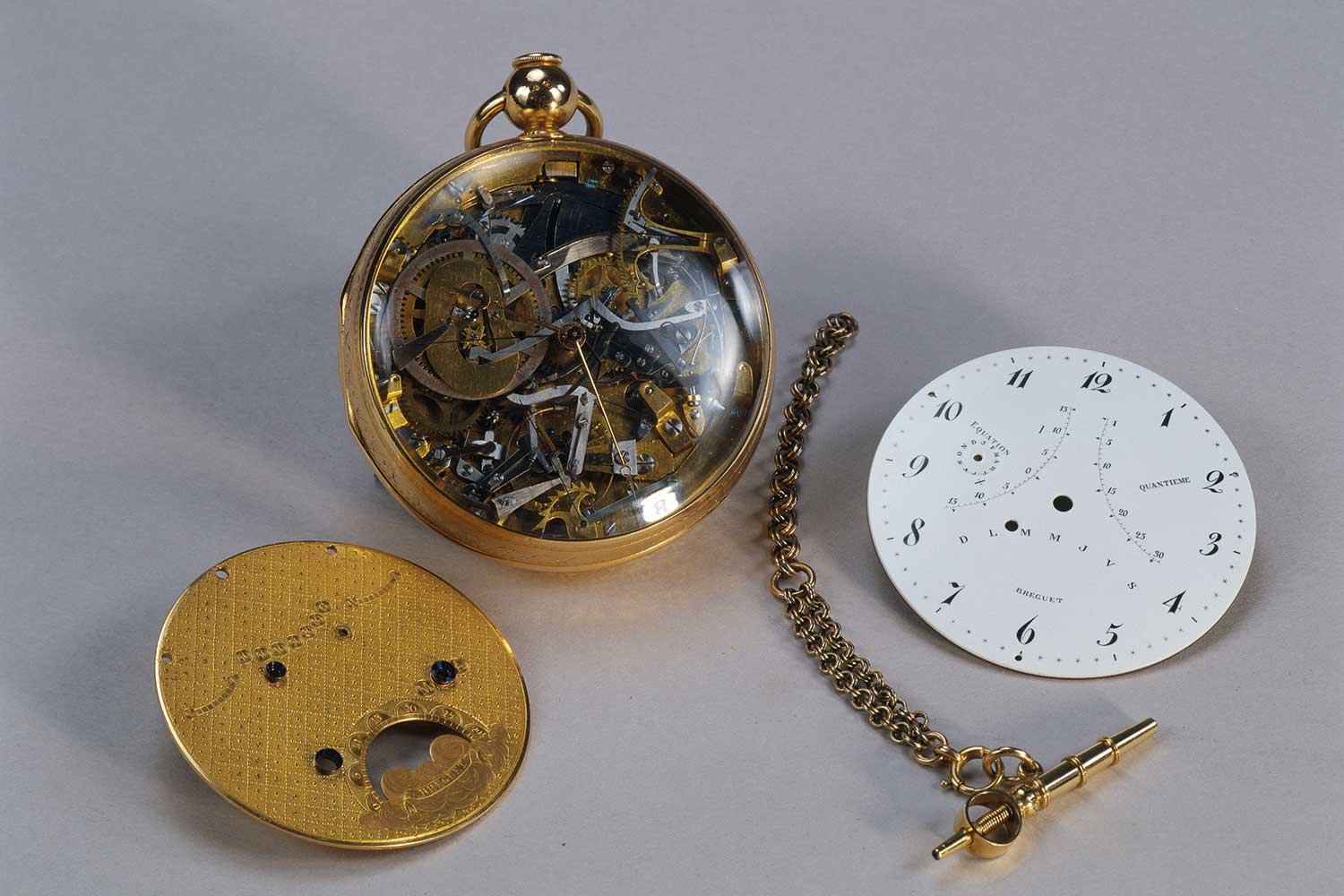
Breguet No. 92, sold to the Duc de Praslin in 1805. A highly complex masterpiece described by the great Breguet collector Sir David Salomons as “a remarkable piece of work, and not inferior to the one intended for Marie-Antoinette” (Image: ©Musée des Arts et Métiers, Paris, Inventory No. 16311-0001)
Praslin purchased 11 Breguet watches. Among them was an early minute-repeating perpétuelle with chronometer escapement, calendar and thermometer (No. 20–148, sold in 1791), as well as the extraordinary No. 92 — a watch not nearly as famous as the so-called “Marie-Antoinette” (No. 160), but one that deserves comparable recognition, not only for its sophistication but as a demonstration of Breguet’s continuing technical ambition in the aftermath of political upheaval.
Sold in 1805, well before the “Marie-Antoinette” was completed, No. 92 is a remarkable double-dialed watch combining a lever escapement, independent center seconds, a minute repeater, perpetual calendar (with subsidiary month dial and retrograde indications for date and day of the week), equation of time, thermometer, state-of-wind indicator and moonphases. It was later owned by Sir David Salomons, who described it as “a remarkable piece of work, and not inferior to the one intended for Marie-Antoinette (No. 160).” Salomons ultimately presented the watch to the Musée des Arts et Métiers in Paris, where it remains today.
International Relations
In the years immediately preceding his exile, Breguet was actively expanding his international network, particularly in Spain and England. At this time, England was the world’s leading center for watch production, and Breguet had already established an impressive circle of horological contacts and clients there. One of the most significant relationships was with John Arnold, with whom he would form a close and enduring friendship.
The two became aware of one another’s work during Breguet’s first visit to London in 1789. Their mutual respect led to an exchange of apprenticeships: Breguet’s son, Antoine-Louis Breguet, was sent to London to work with Arnold, while Arnold’s son, John Roger Arnold, was apprenticed in turn to Breguet in Paris. This exchange mattered not merely as a personal detail, but because it placed Breguet within an international republic of horology, even as the political world that had sustained his Parisian practice began to fracture.
Breguet’s world was dramatically altered by the onset of the French Revolution. On June 3, 1793, as the moderate faction was overthrown, he found himself on the wrong side of revolutionary fervor. Fearing for his life, the possible conscription of his son, and the safety of his sister-in-law, Breguet left Paris in 1793 with his son and sister-in-law, taking refuge in Switzerland as the Revolution entered its most radical and violent phase. Following the execution of Louis XVI and the rise of the Reign of Terror, Paris became an increasingly dangerous place for those associated with the court, the aristocracy or international networks. Breguet’s close ties to royal and noble patrons, his prominence as a luxury watchmaker and his Swiss origins in Neuchâtel all placed him under suspicion.
This period in exile proved decisive for Breguet’s career, forcing him to rethink not only what he made, but how his business could exist. In pre-Revolutionary Paris, a workshop built on elite patronage could pursue technical ambition through bespoke commission, using reputation as currency and courtly taste as compass. Exile and revolutionary rupture shattered that environment. Suddenly capital was scarce, political association dangerous, production uncertain, and even the continuity of the workshop itself under threat. Survival demanded new solutions, commercial as much as technical.
Initially moving to Geneva and then to his native Neuchâtel, Breguet eventually settled in Le Locle, the same town in which his son Antoine-Louis completed his apprenticeship. He was not encountering Swiss watchmaking for the first time. Like many leading Parisian horologists of the period, Breguet was already well acquainted with Swiss specialist production and with the division of labor that underpinned much of 18th-century watchmaking.
Exile did not introduce him to a new system so much as compel him to engage with these relationships more directly and more intensively at a moment when the Parisian assumptions of bespoke commission, stable patronage, predictable credit and secure labor were collapsing. During this period, Breguet continued to make watches and research and develop new ideas while strengthening and expanding his Swiss network. He also remained in close contact with his English connections, some of whom attempted to persuade him to relocate permanently to London.
Meanwhile, conditions at the Parisian maison became increasingly precarious. Under the stewardship of his loyal associate Thomas Boulanger, the firm faced the constant threat of closure and confiscation; several workers were conscripted, and recurring financial crises strained its survival. Boulanger managed these pressures on the ground, with Breguet offering what support he could through financial assistance, the supply of materials and sustained encouragement from a distance, until the eventual confiscation of Breguet’s Paris home and workshop forced the business itself to relocate. It was in this atmosphere of forced mobility, fragile capital, and disrupted labor that the conception of the Souscription watch took shape. The Souscription marked a structural reinvention, designed not only to be highly commercial, but to finance, stabilize and restructure the maison itself after the political catastrophe that had nearly destroyed it.
The Sympathique Clock
Exile also prompted some of Breguet’s most ambitious experimentations. One of the most remarkable inventions associated with this period is the Sympathique clock. Conceived to synchronize a watch with a clock, the system required a specially designed watch to be placed at night in a cradle mounted above the clock. The watch would then be set to the same time as the clock and regulated as necessary; in the most advanced, late versions, the clock would also wind the watch. Each Sympathique was an extraordinarily complex creation, typically requiring years to complete.
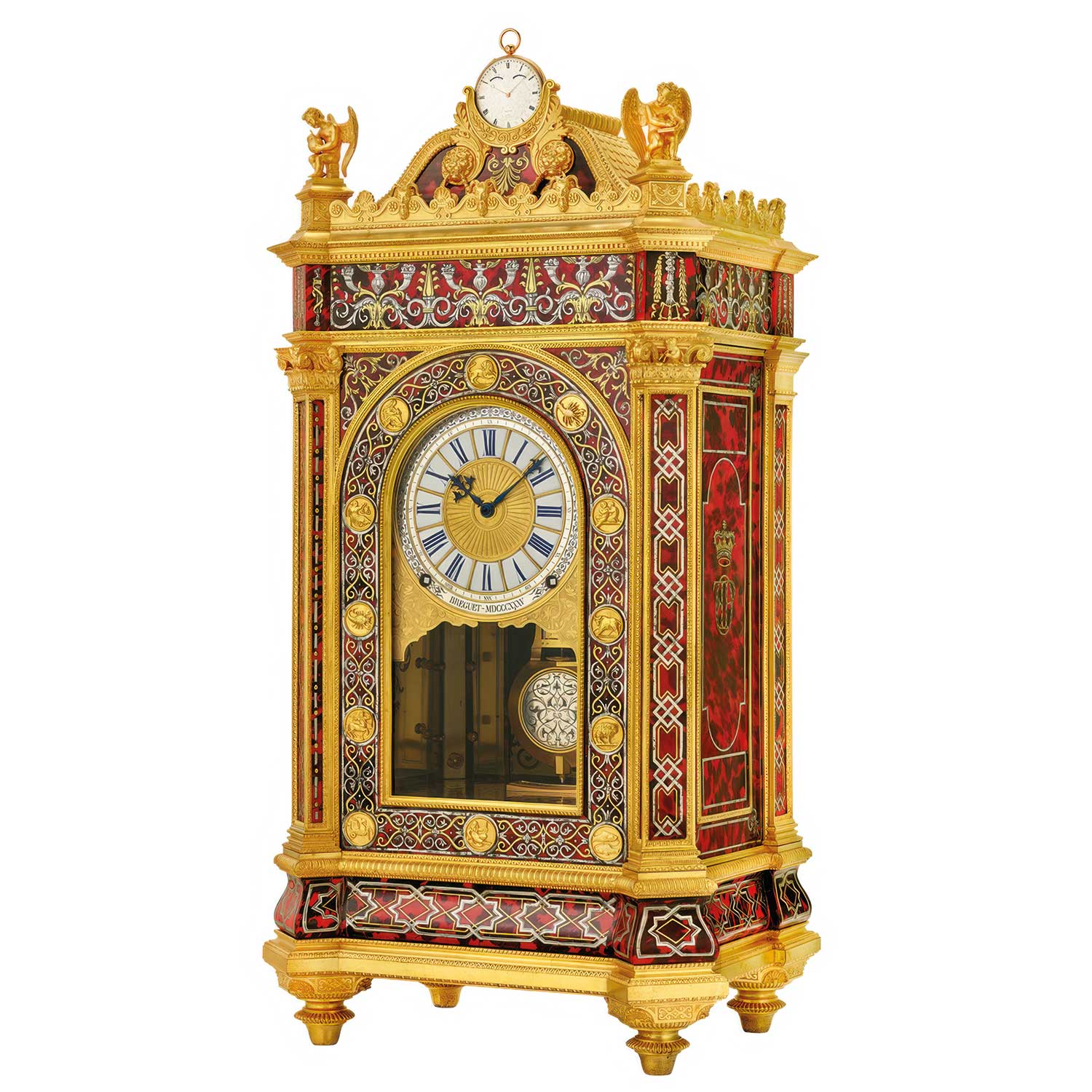
Breguet Sympathique Nos. 128 (clock) and 5009 (watch). A late Sympathique made after AbrahamLouis Breguet’s death. Completed in 1836, the watch is placed in the cradle above the clock; at 3 a.m., two rods extend from the clock to synchronize and wind the watch, while a third stops the mechanism once winding is complete (Image: ©Patek Philippe Museum, Geneva, Inventory Nos. S-970A & S-970B)
More objects of wonder than of strict practical necessity, Sympathique clocks were immensely expensive. As a result, few horological creations have been as consistently associated with the palaces and grand houses of European royalty and aristocracy as Breguet’s Sympathiques. In June 1795, Breguet wrote confidentially to his son to inform him of the invention, explaining that he expected it not only to enhance their reputation but to contribute significantly to their future fortune. The first example appears to have been exhibited at the National Industrial Exhibition held in Paris in 1798. In tone, the Sympathique is the opposite of the Souscription: where the latter is structural pragmatism, the former is reputational theater. But both belong to the same logic of rupture: when the old-world collapses, Breguet had to build new ways to command confidence, whether through a watch that finances production, or a clock that embodies mastery.
As conditions in France improved, Breguet prepared to return from exile in 1795 and revive his Paris workshop, which he knew he would find in a parlous state. To assist him, he once again turned to the Duc de Praslin. Not only did Praslin reschedule debts dating from 1791, he injected substantial new capital, providing an essential foundation on which to relaunch the business. In 1796, Breguet recovered his home and workshop at the Quai de l’Horloge. During this critical period of re-establishment, the Montre à Souscription was first introduced; it would go on to become one of Breguet’s most commercially important innovations.
The Souscription Watch
First appearing in the Breguet Archives in 1796 prior to its formal launch in 1797, the Souscription watch was conceived as a robust, high-quality timepiece of simplified construction. Breguet described it in a brochure issued that year as a watch “sufficiently perfect to rank immediately behind astronomical and marine timekeepers, but available to the public at a moderate price.” Designed for reliability and ease of repair, it featured a large, single-hand enamel dial and a movement architecture centered on a powerful mainspring designed to run for 36 hours.
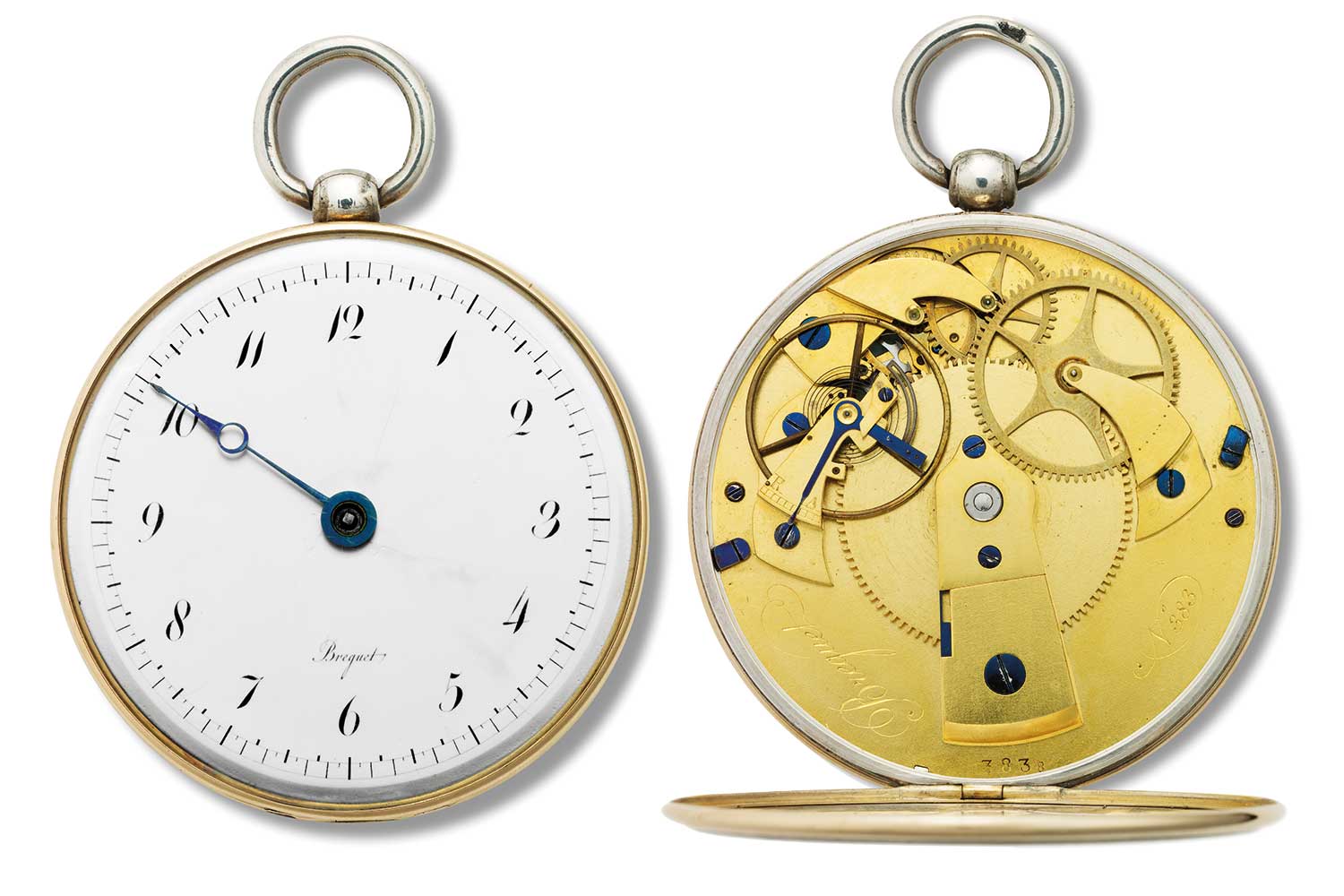
Breguet Souscription No. 383, sold to Monsieur Bergeront in 1798 (Image: ©Breguet Museum Collection)
The large dial with clear calibrations ensured that time could be read to the nearest five minutes. Breguet stated that each dial would bear “a special mark … made by a machine whose effects are extremely difficult to imitate” — a clear reference to his secret signature. The large central barrel was engineered to draw power only from the central portion of the mainspring, avoiding extremes of tension when fully wound or nearly unwound, thereby delivering a more even force over its running period. He further noted that the connection between balance and train would be entirely in steel, acting on ruby bearings, and that the escapement would be protected against shocks, even in the event of a fall (referring to his parachute shock protection).
The economic model was as innovative as the watch itself. Recognizing the difficulty of raising capital through borrowing, “which no honest industry, in the current circumstances, could sustain,” Breguet chose to fund production through advance subscriptions. “A certain number of watches must be made at once to give their execution the uniformity and perfection I seek … the subscriber who pays a portion in advance will find compensation in the moderation of the purchase price.”
Clients paid one quarter of the 600-livre price up front, with delivery guaranteed in sequence of subscription. The Souscription was therefore not merely a product: it was a financing mechanism, a production strategy, and an argument for stability at a moment when stability could not be assumed. It allowed Breguet to raise capital quickly, standardize output to a degree, and broaden his clientele beyond the courtly world. Souscription watches remained a popular and an important part of production well into the 19th century. In 1798, of the 105 watches made by Breguet, 40 were Souscription models. The Souscription watch illustrated here, numbered 383, was sold on November 26, 1798.
This return period also saw Breguet refining movement architecture and escapements in ways that served a new political and commercial reality. His version of the ruby cylinder escapement differed significantly from earlier forms. While the lower half of the steel cylinder remained conventional, the jeweled acting portion was left open to receive the escape wheel teeth. This configuration allowed the escapement to operate beneath the dial while requiring no more depth than that needed for motion work or repeating mechanism.
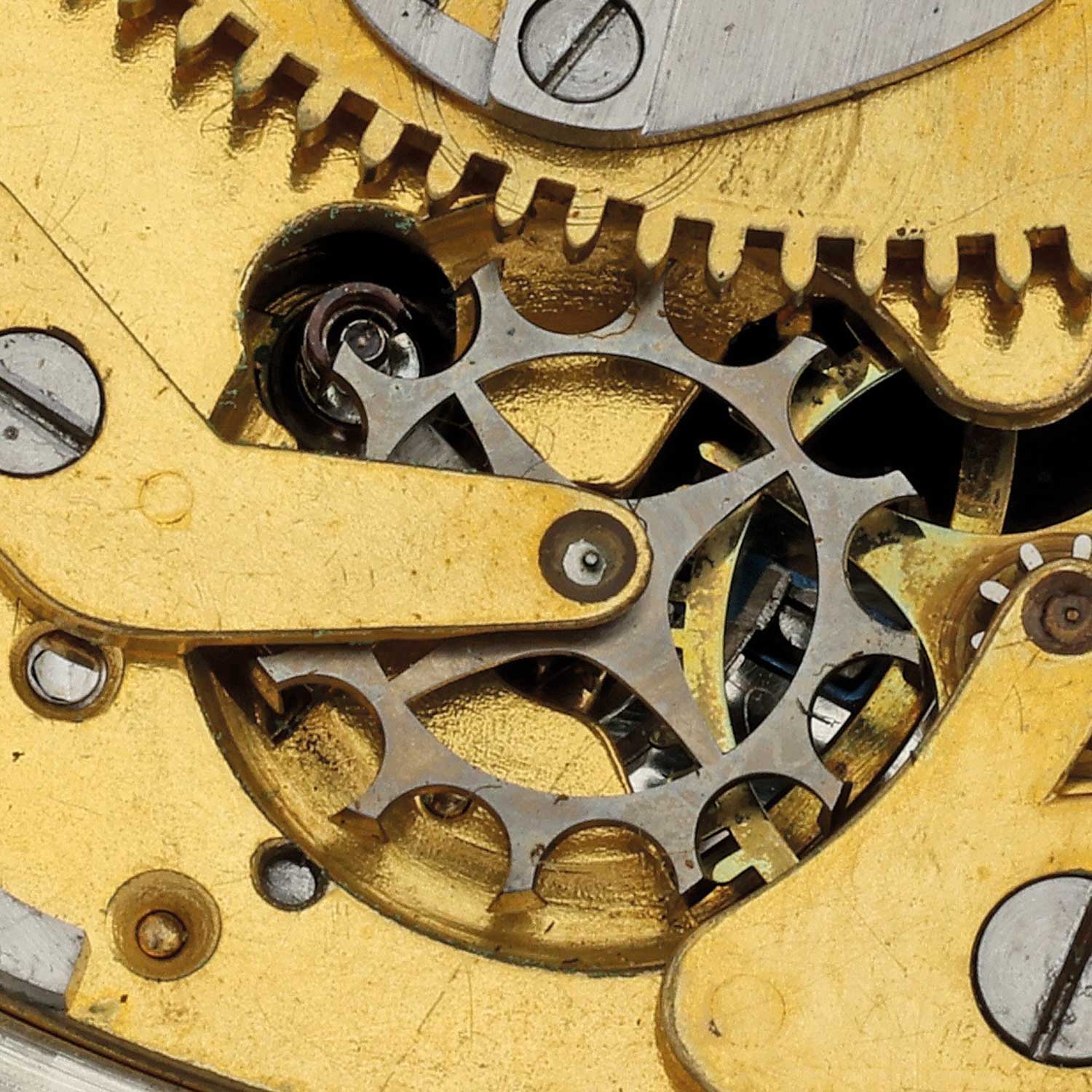
Detail of Breguet’s ruby cylinder escapement from Breguet No. 1106, sold to Lord Lauderdale in 1804. The ruby shell can be seen towards the top left corner of the image as it interacts with the teeth of the escape wheel
By this period, Breguet was also refining his Lépine-style architecture, in which components were integrated into, or “hung” from, a single plate rather than sandwiched between two plates. Through the combination of a slim ruby cylinder and Lépine caliber, Breguet could consistently produce the elegantly thin watches for which he became renowned. As thinness became fashionable, it also offered a significant business advantage in a post-Revolutionary world of shifting taste and patronage, appealing to new elites who valued modernity, clarity and the discreet expression of expense.
The Montre À Tact
Developed around the same time as the Souscription, another signature model was the Montre à Tact, which Abraham-Louis is credited with inventing sometime between 1796 and 1800. In a time before electric lighting and before the widespread use of gas lamps, oil lanterns or even matches, telling the time in the dark was far from straightforward. Repeating watches were prized for their ability to indicate time in darkness, yet by their nature they were audible, not always convenient when sharing a room or in polite company. The Montre à Tact offered a silent alternative: the wearer could read the time by touch alone, without consulting the dial or removing the watch from the pocket. It enabled owners to check the time discreetly at night and, just as importantly, to do so in company without signaling impatience or discourtesy.
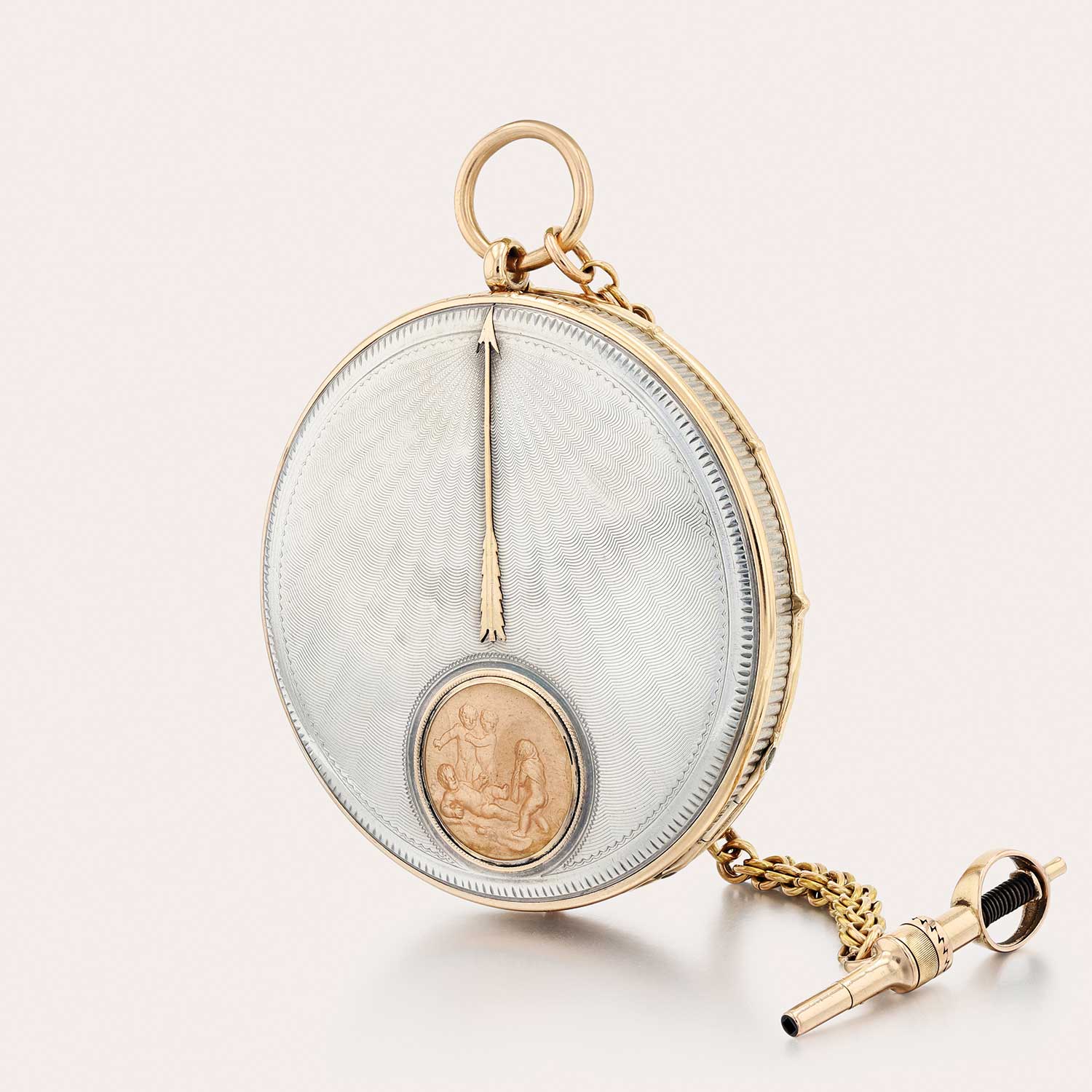
Breguet Montre à Tact No. 1106, sold to Lord Lauderdale for General Kitroff on May 14, 1804. The rotating silver caseback is mounted with the gold tact arrow (Image: Sotheby’s)
Four types of Montres à Tact are known. The most common form has a tact hand, often an arrow pointer, mounted to the caseback. The back rotates freely until stopped by an internal mechanism, and the time can then be felt against fixed hour markers on the band. Among the variations are some of the most visually striking and richly decorated watches Breguet ever produced, including covers adorned with translucent guilloché enamel and touch pins set with pearls or large diamonds. These were objects of exceptional refinement and opulence with gem-set cases selling for as much as five times the price of a plain Montre à Tact.
Illustrated is Montre à Tact No. 1106, sold to Lord Lauderdale on May 14, 1804, for 1,320 francs. A silver and gold watch, the archives note that it was intended by Lord Lauderdale for the Russian General Kitroff. The presentation took place at a moment of geopolitical realignment. Relations between Britain and Russia were quietly improving as both powers grew increasingly alarmed by Napoleon Bonaparte’s expansionism. In Russia, Emperor Alexander I was unsettled by Napoleon’s execution of the Duc d’Enghien; in Britain, fears of invasion and continental domination were mounting.
Purchased just days before Napoleon was proclaimed Emperor, the gift strongly suggests a gesture of diplomatic goodwill at a moment when Britain and Russia were cautiously rebuilding trust. The gifting of a highly sophisticated Breguet watch — ironically a French creation presented at a moment of growing hostility toward France — illustrates how Breguet’s objects could move through political fracture lines because their prestige eclipsed their origin. Yet that “transcendence” was not accidental: it was the commercial and technical outcome of Breguet’s post-exile recalibration.
On his return to Paris, Breguet recognized the growing importance of the new banking elite and turned his attention to courting this influential and trend-setting group. Between 1798 and 1809, he sold around 60 watches to prominent bankers, before a pause brought on by war, occupation and reparations encouraged more restrained expressions of wealth. From 1815, bankers once again emerged as major purchasers. During the first decade of the 19th century, trade with the Ottoman Empire assumed increasing importance for Breguet as the Napoleonic Wars disrupted three of his principal markets: Britain, following the introduction of Napoleon’s Continental System, Spain from 1808, and Russia from 1810.
His principal conduit to Ottoman clients was the Ottoman Ambassador to France, Esseid Ali Effendi, also known as Galib Effendi. A friendship developed between the two men during Effendi’s time in Paris, and after his return to Constantinople in 1802, they maintained a regular correspondence. Effendi proved invaluable to Breguet not only by introducing him to influential clients, but also by advising on Ottoman tastes, particularly the preference for watches with white enamel dials with Turkish numerals, and cases richly decorated with enamel, especially in red, a decorative language distinct from Breguet’s usual aesthetic.
The Tourbillon
This period also saw Breguet turning his attention to more ambitious technical problems. Having already developed his own form of the lever escapement for his perpétuelle watches, he began to explore alternative approaches to improving rate stability and precision in portable timekeepers. The tourbillon, invented around 1795 and patented in 1801, was conceived as a response to positional error. A portable watch inevitably operates in a range of orientations during daily use, and when carried upright in a pocket, small asymmetries in the balance, balance spring, pivots or escapement can exert a more pronounced influence than when the watch lies flat, leading to variations in rate.
Breguet addressed this problem by mounting the balance and escapement within a rotating carriage, whose continuous motion distributed the effects of gravity acting in any single vertical position. While later makers standardized a one-minute rotation, Breguet himself employed different periods. The aim was the elimination of positional error through continuous rotation, though in practice this was realized through the averaging of its effects over time. Patented in 1801, the tourbillon belongs squarely to the post-Revolutionary phase of Breguet’s career, when authority increasingly Breguet’s échappement naturel from Tourbillon No. 1890, sold in 1809. The two escape wheels are side by side with a larger 12-toothed steel escape wheel next to a much smaller three-toothed escape wheel; the spring detent with triangular ruby locking jewel sits between them rested on demonstrable mechanical achievement rather than inherited patronage, and represents one of his most rigorous attempts to address the fundamental problem of positional rate variation in portable watches.
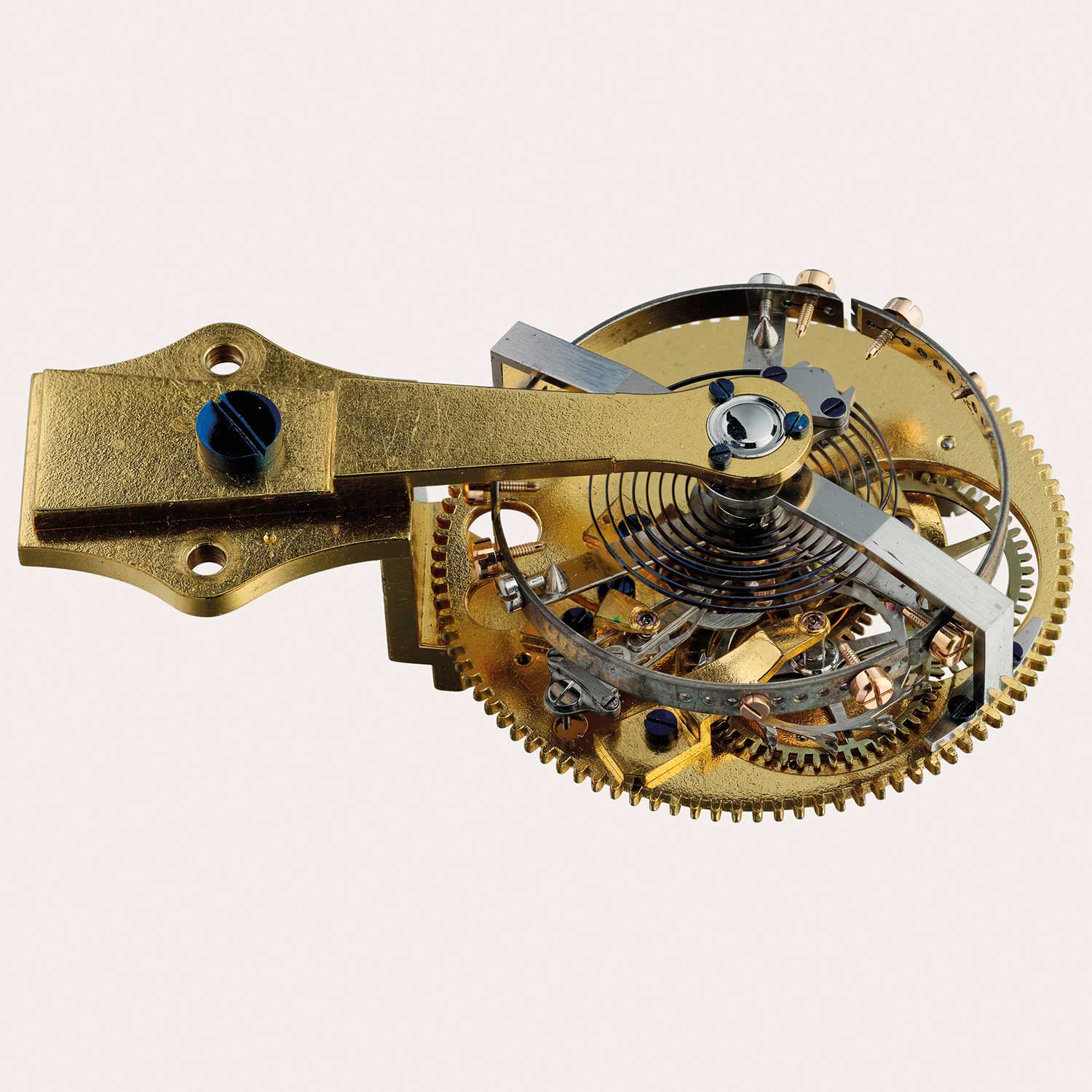
Breguet’s tourbillon carriage from No. 1890, sold on May 16, 1809 (Image: Sotheby’s)
Breguet was also carrying out ambitious work on escapements. The recent identification of the échappement libre à double roue, discovered by the author during the cataloging of Sotheby’s anniversary Breguet auction in November 2025, with its coaxially mounted escape wheels, further highlights the exploratory spirit of this period. This double-impulse escapement delivers impulse in both directions, once via the lever and once directly to the balance roller, and offers a striking insight into Breguet’s willingness to experiment with alternative watch escapement solutions. Watch No. 1052, fitted with this system, was sold in April 1802 to the Duc de Praslin, apparently just as development of the échappement naturel was underway.
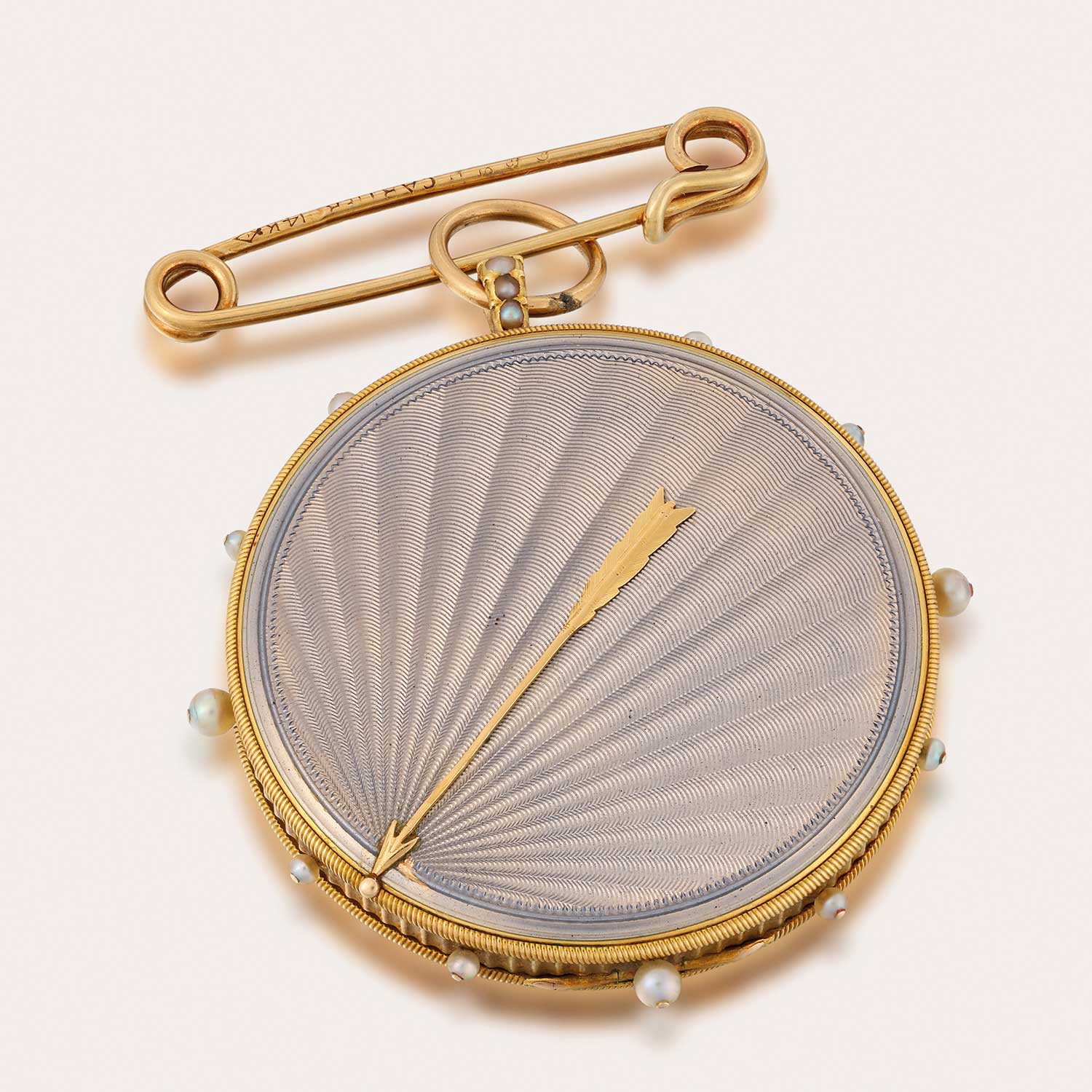
Breguet Montre à Tact No. 1052, sold to the Duc de Praslin on April 18, 1802. A 20K gold, enamel and pearl-set watch with a recently rediscovered Breguet escapement: échappement libre a double roue (Image: Sotheby’s)
The Échappement Naturel
The échappement naturel — or natural escapement in English — was among the most original of Breguet’s inventions and was conceived as a response to the shortcomings of the two dominant detached escapements of the day. The detent escapement was admired for its efficiency, with impulse delivered directly to the balance and minimal energy loss, yet it could be prone to stopping and was not always easily restarted in a portable watch. The lever escapement, by contrast, was robust and self-starting, but relied on sliding contact surfaces requiring lubrication and suffered energy loss as oils thickened or dried, a serious drawback in an era before highly refined watch oils. Breguet’s ambition was to unite the strengths of both systems: a detached escapement with direct impulse and no sliding friction, yet reliable in everyday use.
The design of the échappement naturel employs two escape wheels mounted side by side and geared together. In operation, one wheel is locked by a sprung lever; as the balance swings, it lifts the lever to unlock the wheel and simultaneously receives impulse directly from it. The lever then locks the second escape wheel, and on the return swing, the sequence is repeated, with locking and impulse alternating between wheels. Because impulse is delivered directly to the balance without sliding along a lever face, no oil is required on the active surfaces.
Breguet combined the échappement naturel with the tourbillon’s ability to average positional errors in a series of four-minute tourbillons. In doing so, he sought to create watches of extraordinary accuracy and reliability. Ultimately, however, the practical difficulties of manufacture and maintenance prevented the échappement naturel from replacing the lever escapement as the universal solution he may once have envisaged. Illustrated here is Breguet No. 1890, one of the four-minute tourbillons with échappement naturel. It was sold to Frédéric Frackman on May 16, 1809. Frackman was a dealer in Russia entrusted by Breguet to sell a few watches each year. The watch was to be supplied to Comte Alexis de Razoumoffsky and, in addition to the secret signature between XI and I o’clock, bears a pantographic signature honoring Razoumoffsky at the bottom of the chapter ring. Alexis was a Privy Councilor, member of the Council of the Empire, and Minister of Public Instruction from 1810 to 1816, directing educational reform under Tzar Alexander I. In addition to his patronage of Breguet, Alexis was also a client of Louis Berthoud. His brother André, Russian Ambassador in Vienna, was a patron of Beethoven and commissioned the three “Razoumoffsky” string quartets Op. 59 (1806).
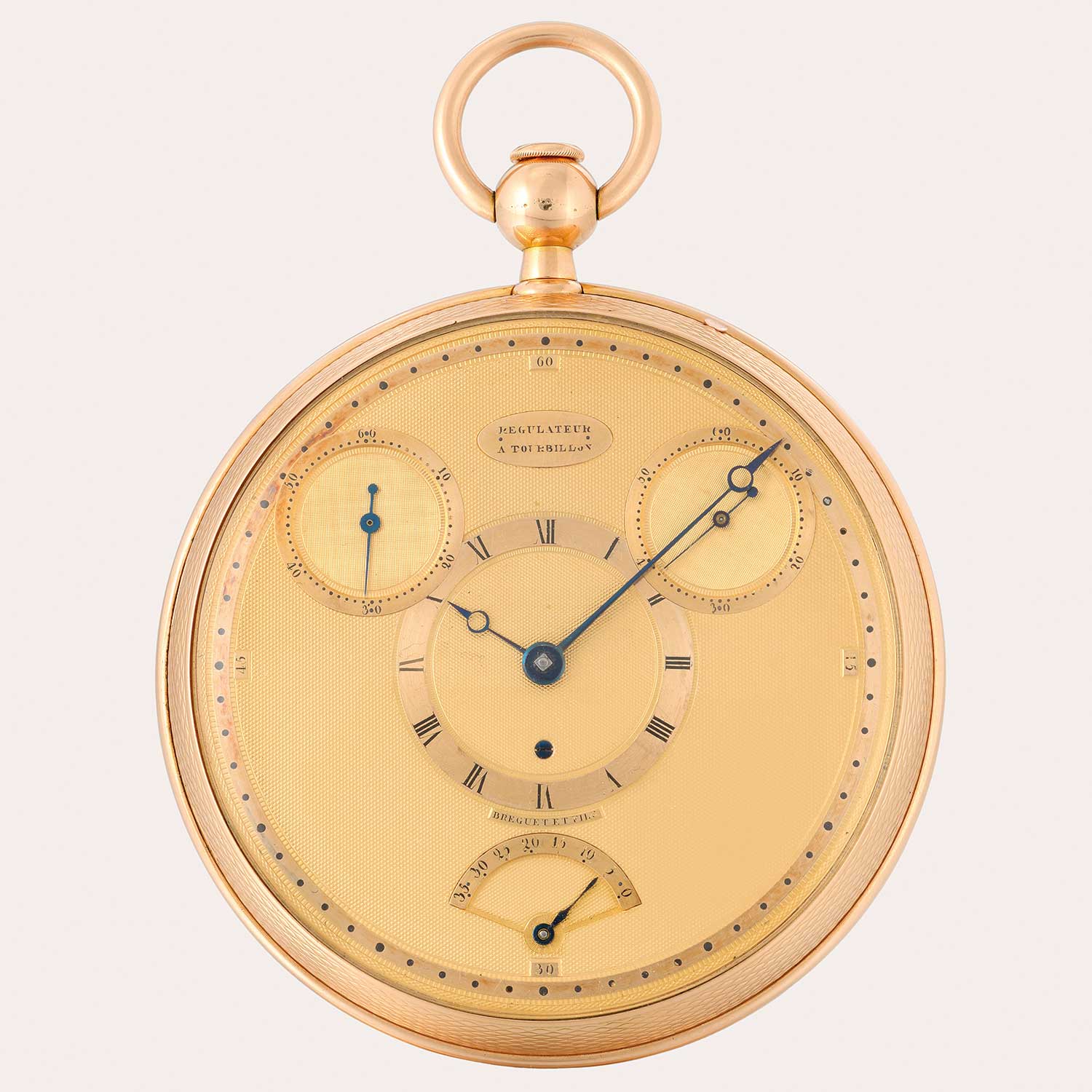
“Breguet et Fils” Tourbillon No. 1890 made for Comte Alexis Razoumoffsky and delivered in 1809. An 18K gold four-minute tourbillon watch with échappement naturel, state-of-wind indication, subsidiary seconds and piston activated observation seconds (Image: Sotheby’s)
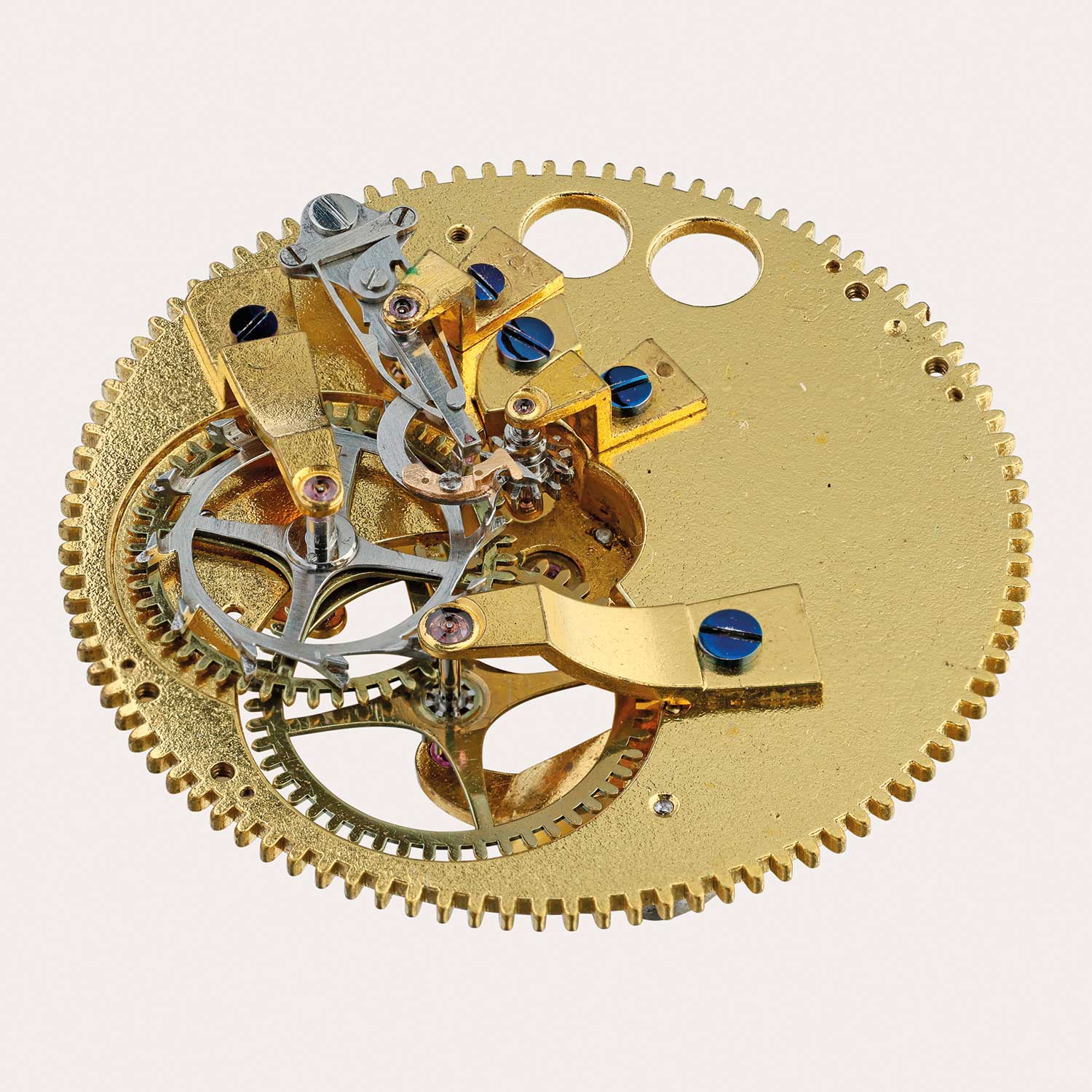
Breguet’s échappement naturel from Tourbillon No. 1890, sold in 1809. The two escape wheels are side by side with a larger 12-toothed steel escape wheel next to a much smaller three-toothed escape wheel; the spring detent with triangular ruby locking jewel sits between them (Image: Sotheby’s)
Almost 150 years after its original sale, the watch passed into the hands of Cecil Clutton, the collector, writer and friend of Dr. George Daniels. Clutton enjoyed timing his watches, eager to prove their performance. After having Breguet 1890 cleaned and adjusted, he tested it over 16 days and found the maximum daily variation to be a mere three seconds, an astonishing result for a mechanical timepiece of any era.
Russian clients such as Razoumoffsky became increasingly important. Breguet’s efforts to establish a foothold in Russia began in earnest during the early 19th century. Initially leveraging diplomatic channels through the Russian embassy in Paris, he supplied watches to dealers and watchmakers in Moscow and St. Petersburg. In 1808, he sent his salesman Lazare Moreau to establish a dedicated branch in St. Petersburg, La Maison de Russie. Moreau gained access to elite circles, secured audiences with Tzar Alexander I, and helped Breguet obtain prestigious titles including watchmaker to the Imperial Navy. By 1809, sales to Russia had risen dramatically, with more than half of Breguet’s annual output destined for Russian clients.
The trade came to an abrupt halt in December 1810 when Tzar Alexander I issued a ukase banning the importation of French goods, following the collapse of the Franco-Russian alliance. Moreau left Russia for England in spring 1811, abandoning equipment, materials and unpaid debts. However, trade resumed swiftly once political conditions stabilized. On April 2, 1814, even before Napoleon’s abdication, Tzar Alexander I personally visited Breguet at the Quai de l’Horloge. By 1823, Russian clients again accounted for a substantial portion of total sales. What emerges consistently is that Breguet’s technical ambition and commercial strategy were never insulated from politics, but were repeatedly reshaped by moments of political rupture.
Carriage Clocks and Marine Chronometers
Breguet’s signature engine-turned, or guilloché, decoration was first found in the decorative finish of watch cases even before the Revolution. This aesthetic was soon translated to dials, which increasingly moved away from enamel to silver and gold. In the early 19th century, metal dials almost entirely supplanted enamel in Breguet’s production. These dials became increasingly complex in arrangement, sometimes incorporating multiple guilloché patterns, allowing clearer division of complications such as calendar and moonphase. They were not restricted to watches; they also appeared on carriage clocks.
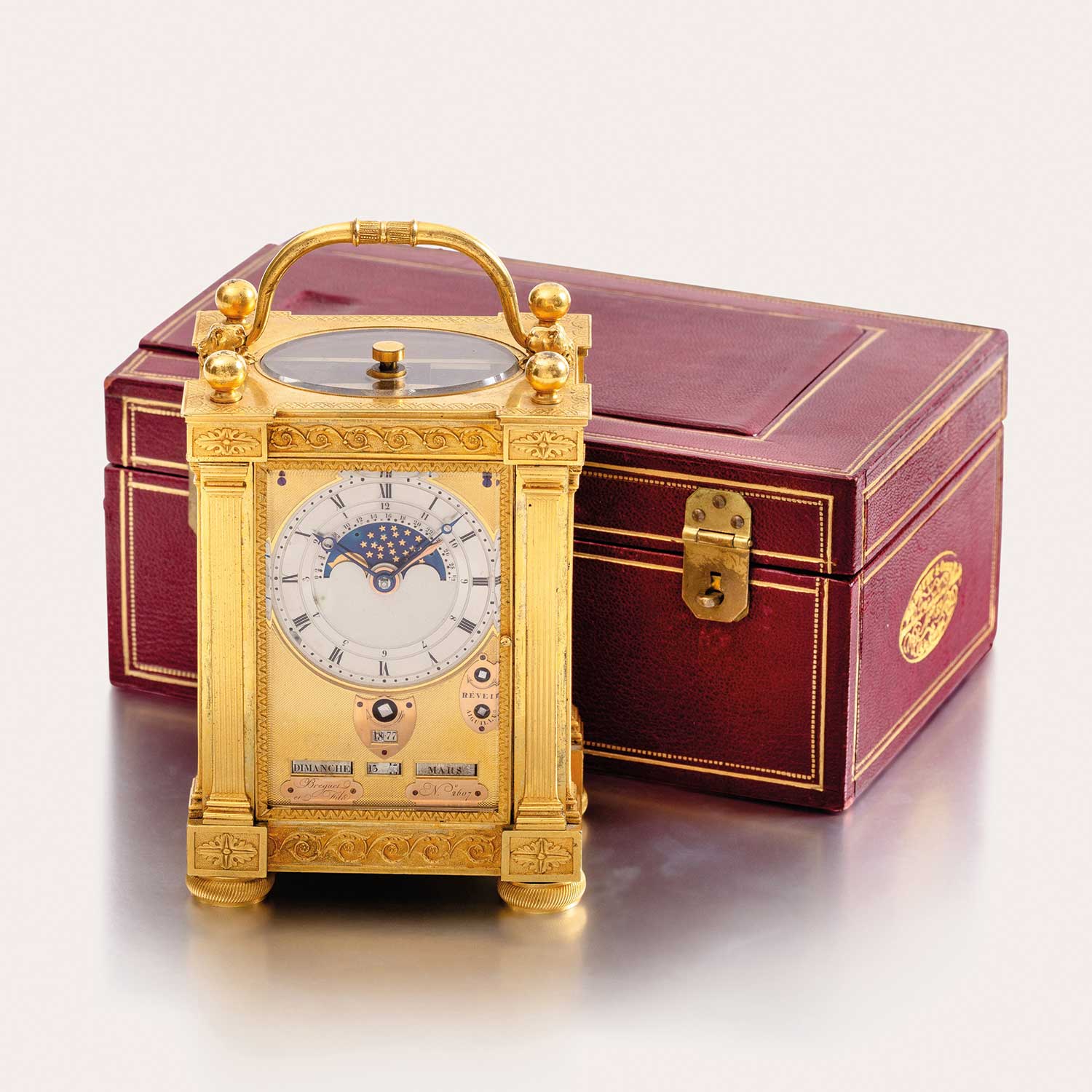
“Breguet et Fils” Pendule de Voyage No. 2607, sold on December 6, 1811. A gilt-brass eight-day carriage clock, quarter repeating on a bell and with alarm, calendar and moonphase (Image: Sotheby’s)
Conceived for the affluent traveler of the early-19th century, Breguet’s Pendules de Voyage were luxurious objects and statements of their owner’s wealth, but also instruments of remarkable practicality, utility and elegance. Measuring just 120mm in height, the example illustrated here is highly portable. In addition to time and alarm, the dial provides a full calendar and the age and phase of the moon. During darkness, a pusher at the top could be depressed to strike the time to the nearest quarter on a bell mounted to the movement’s backplate.
Such clocks were supremely practical for travel by coach, and an elegant companion in temporary lodgings or as a guest of a distinguished host. The moonphase disk is unusually large and decorative. In the early 19th century, the indication of the moon’s age and phase still carried genuine practical importance, shaping, for example, the feasibility of travel at night and assisting with the calculation of tides for costal navigation. The clock shown here was designed and decorated in the Empire style, the dominant neoclassical expression of Napoleon’s reign (1804–15), drawing inspiration from ancient Rome and enriched by the renewed fascination with Egypt following Napoleon’s campaign (1798–1801). In horology, the style’s symmetry and authority aligned naturally with Breguet’s own carefully developed aesthetics.
The first carriage clock recorded in the Breguet Archives is No. 178, sold to Général Bonaparte on April 24, 1798. Breguet’s Pendules de Voyage may be regarded as the archetype from which the later French carriage clock ultimately derived, yet they occupy a category entirely their own, conceived with a refinement of proportion, complexity of mechanism and quality of finish far surpassing the generic carriage clocks that proliferated later in the 19th century.
Marine chronometry was not initially a central focus of Breguet’s work, and it was only after his appointment as Horloger de la Marine in 1815 that he devoted sustained attention to the field. Nonetheless, experimentation began earlier: by the early 1790s, he was exploring marine timekeeping and later stated he had completed several chronometers during this decade, though none of these are known to survive.
The earliest extant Breguet marine chronometers are Nos. 104, 105 and 106, with 106 the first sold, in 1816. These instruments drew in part on ideas developed by John Arnold, notably compensation balances and helical balance springs. Yet they displayed a high degree of originality. Among the most significant innovations that Breguet made in his development of marine chronometers was the detachable escapement platform, allowing rapid adjustment and repair. He also adopted gimbal-mounted boxes to help keep chronometers level aboard ship. The French navy paid particularly high prices for precision instruments, enabling Breguet to house them in luxuriously finished mahogany cases fitted with elegant brass mounts.
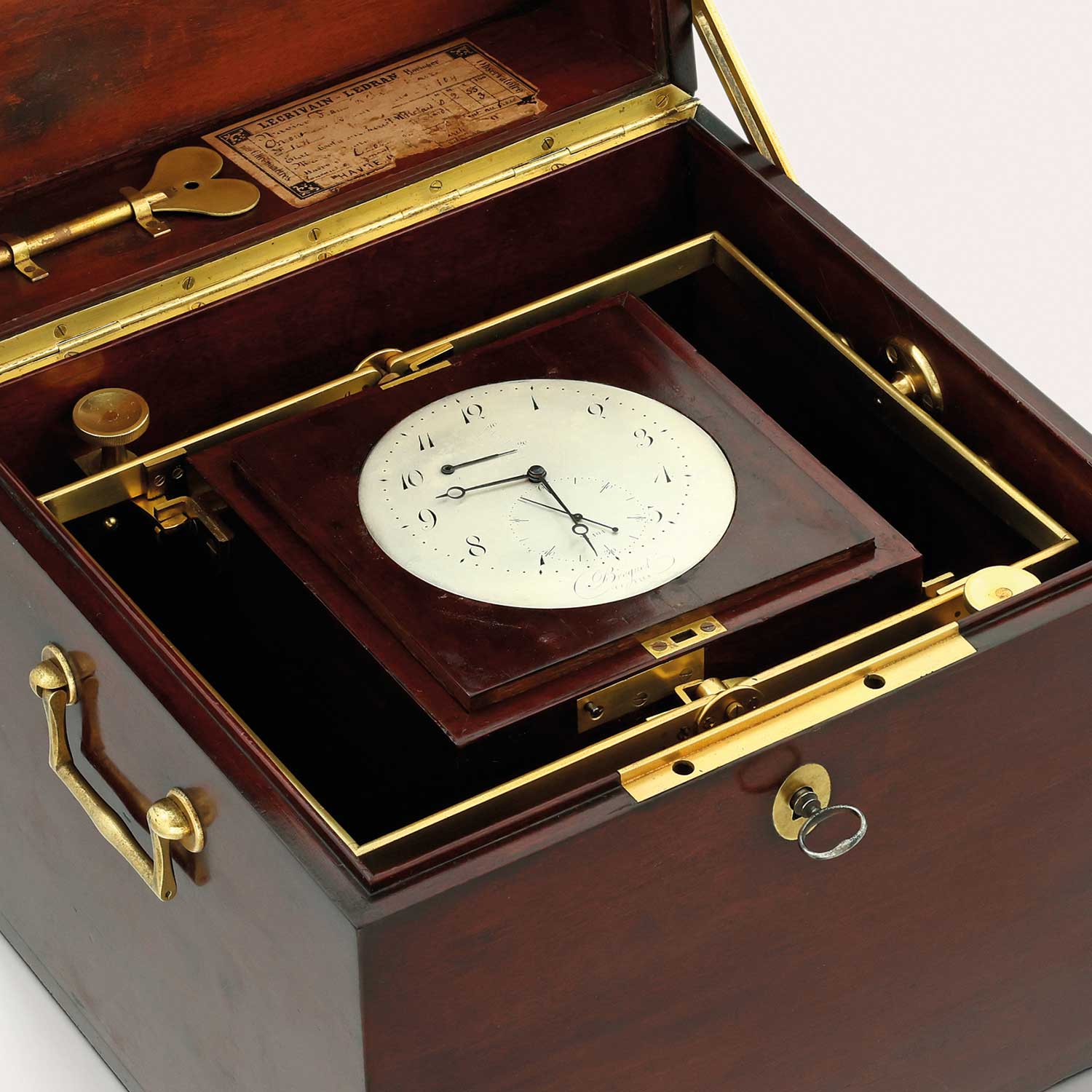
“Breguet et Fils” No. 104, sold on April 9, 1818. A two-day double-boxed marine chronometer (Image: Sotheby’s)
Technical Solutions
Breguet’s creative output extended far beyond the examples discussed above, encompassing a wide range of watches, clocks and experimental mechanisms that reveal both the breadth of his interests and his willingness to explore ideas that lay at the margins of practical horology. Some of these developments refined existing solutions; others extended horological thinking into less conventional, but still rigorously worked, directions.
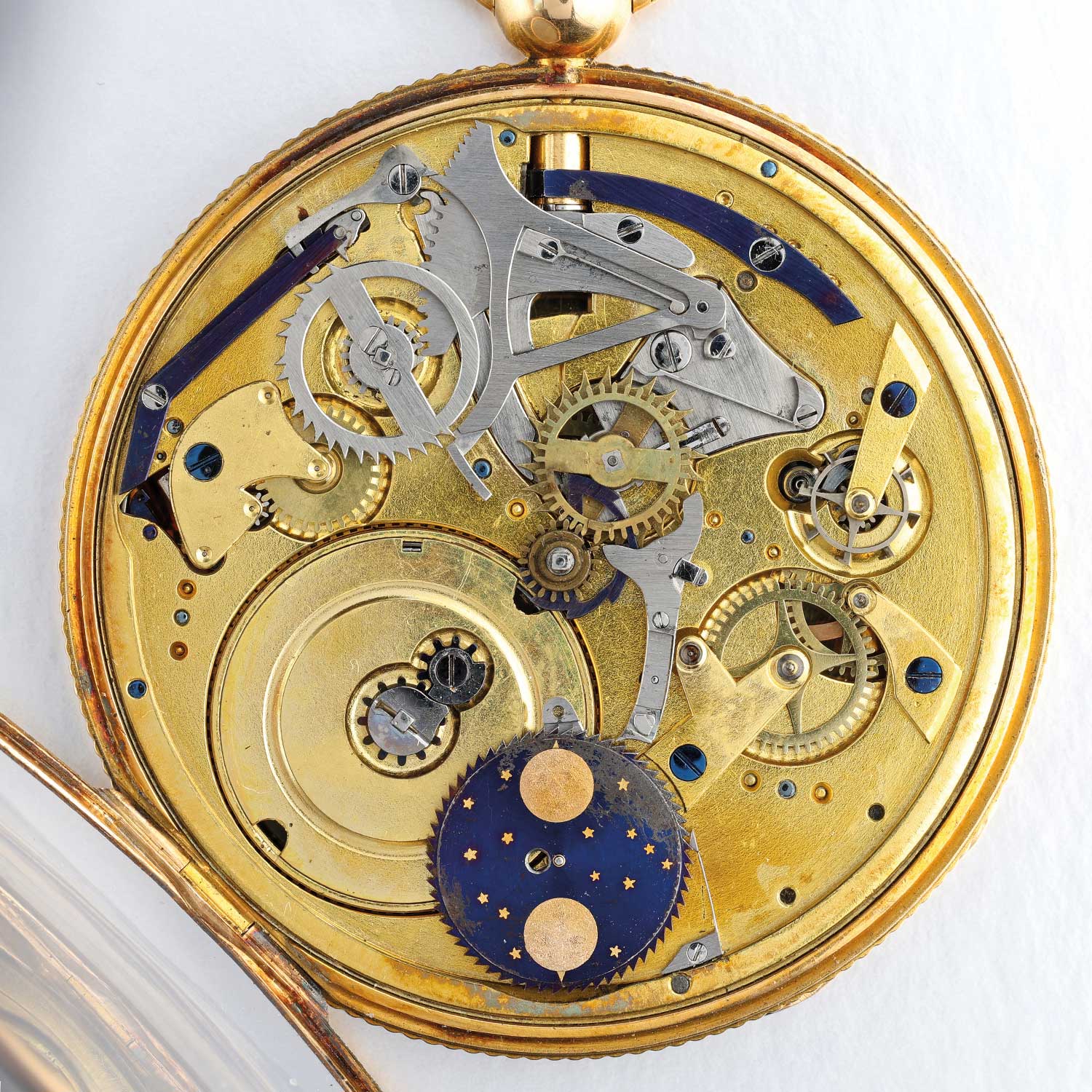
Breguet No. 3053, sold to Lady Guilford on December 5, 1817. Detail of the under-dial showing one form of Breguet’s repeating work. The quarter-repeating work strikes on a gong mounted to the edge of the movement’s backplate (not illustrated) (Image: Sotheby’s)
Among his most enduring technical refinements was the overcoil balance spring, developed before 1800. By raising and curving the outer terminal of the spring, Breguet allowed it to breathe more concentrically, improving isochronism and positional stability. The principle itself was evolutionary rather than revolutionary, but its execution proved decisive. The overcoil became a lasting standard in high-grade chronometry and remains fundamental to traditional precision watchmaking today. Similarly, the parachute shock protection for balance staffs, already discussed in relation to the perpétuelle watches, introduced a resilient suspension system whose underlying principle survives in modern shock-protection devices such as the Incabloc.
Breguet also paid close attention to how the watch was handled and used. The Breguet ratchet key, introduced around 1789, was not a conceptual novelty, but its distinctive form quickly became recognizable. Worn on its chain, it discreetly signaled that its owner carried a Breguet watch. Beyond this symbolic role, the key was carefully designed to prevent winding in the wrong direction, while its ratcheting action allowed the watch to be wound with a simple back-and-forth motion without removing the owner’s fingers from the key. Practical, ergonomic and instantly recognizable, it is characteristic of Breguet’s attention to everyday use.
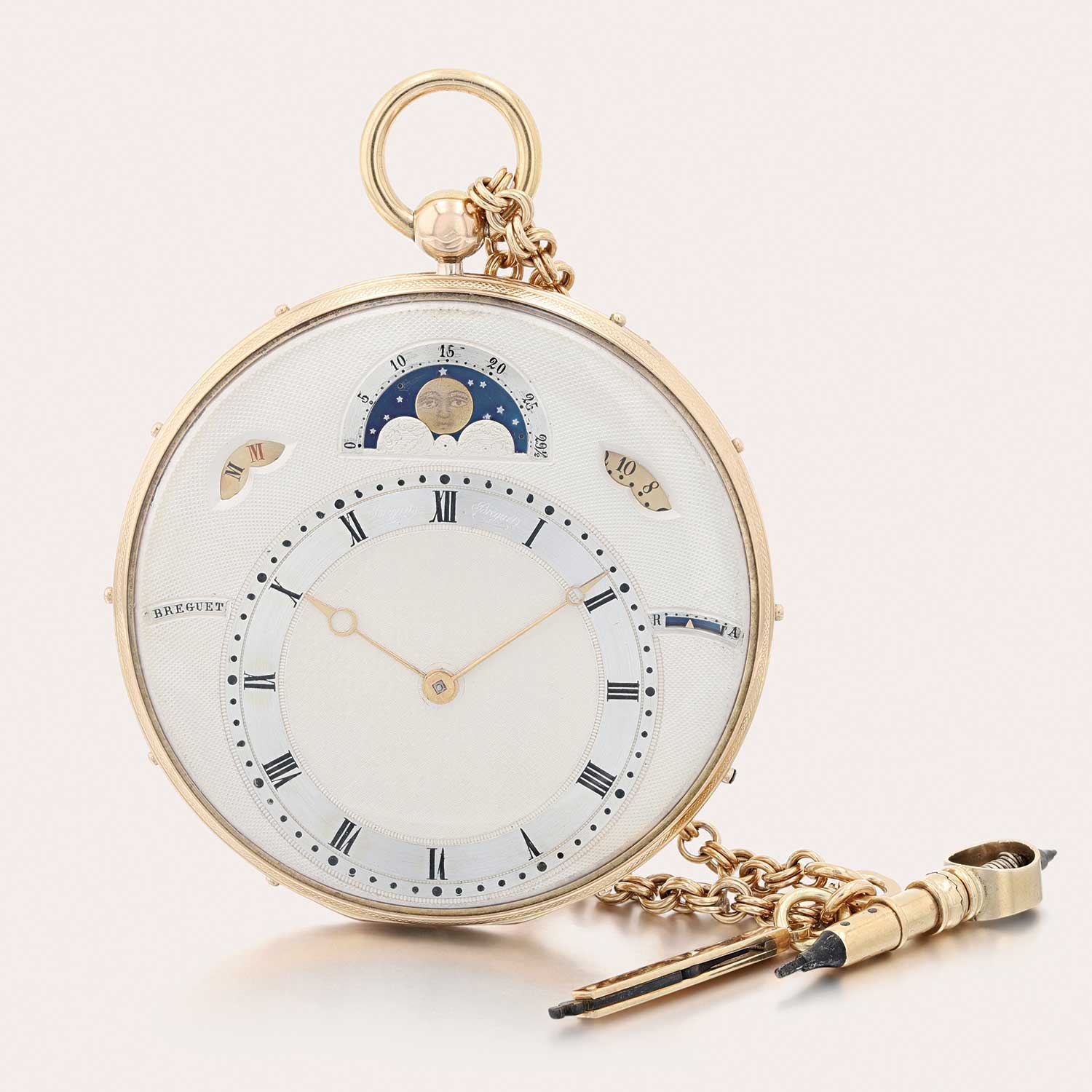
Breguet No. 4579, sold to Monsieur de Roos on June 1, 1829. Although made after the death of Abraham-Louis Breguet, this watch embodies the quintessential Breguet aesthetic that continues to define the house today. The signature Breguet ratchet key can be seen in the foreground (Image: Sotheby’s)
In the field of repeating mechanisms, Breguet developed numerous variations, ranging from conventional quarter and minute repeaters to highly elaborate special commissions. Among the most remarkable was a répétition quantième, or calendar repeater, made for the Queen of Spain in 1808. This extraordinary double-dialed watch displayed mean time on one side and calendar indications on the other. A collar at the base of the pendant offered four positions: one to lock the pendant; a second to repeat the hours and each 10-minute interval; a third to repeat the date in Roman numerals; and a fourth in which the watch would repeat the time when viewed on the date dial, and the date when viewed on the time dial. Such watches were not conceived for practical necessity, but as demonstrations of mechanical virtuosity and intellectual play.
Resonance
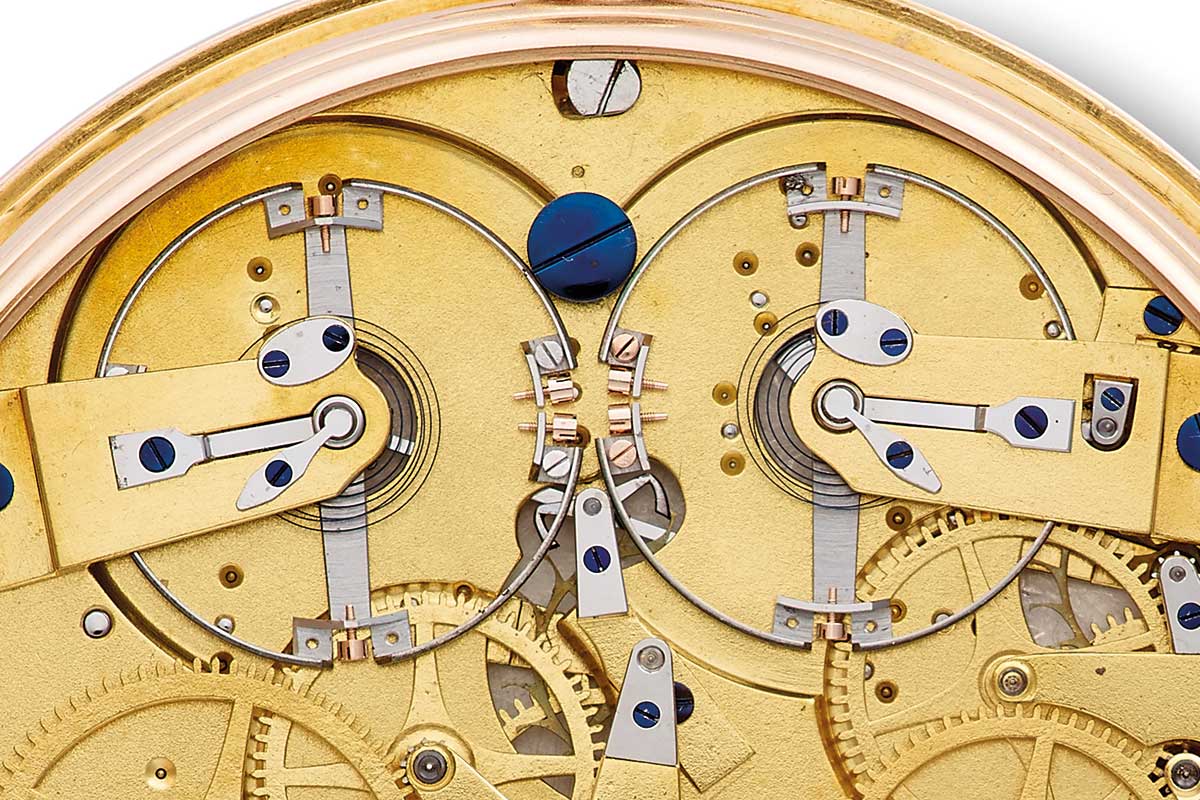
Breguet’s most philosophically ambitious experiments are found in his work on resonance, explored in both clocks and watches. He produced at least three pocket watches containing two independent trains and balances within a single case. The underlying principle is that two oscillating bodies placed in close proximity will influence one another. Breguet was the first to apply this phenomenon deliberately to a watch movement. His double-movement watches demonstrated that the balances could enter a state of sympathetic opposition, effectively sharing and compensating for errors.
-
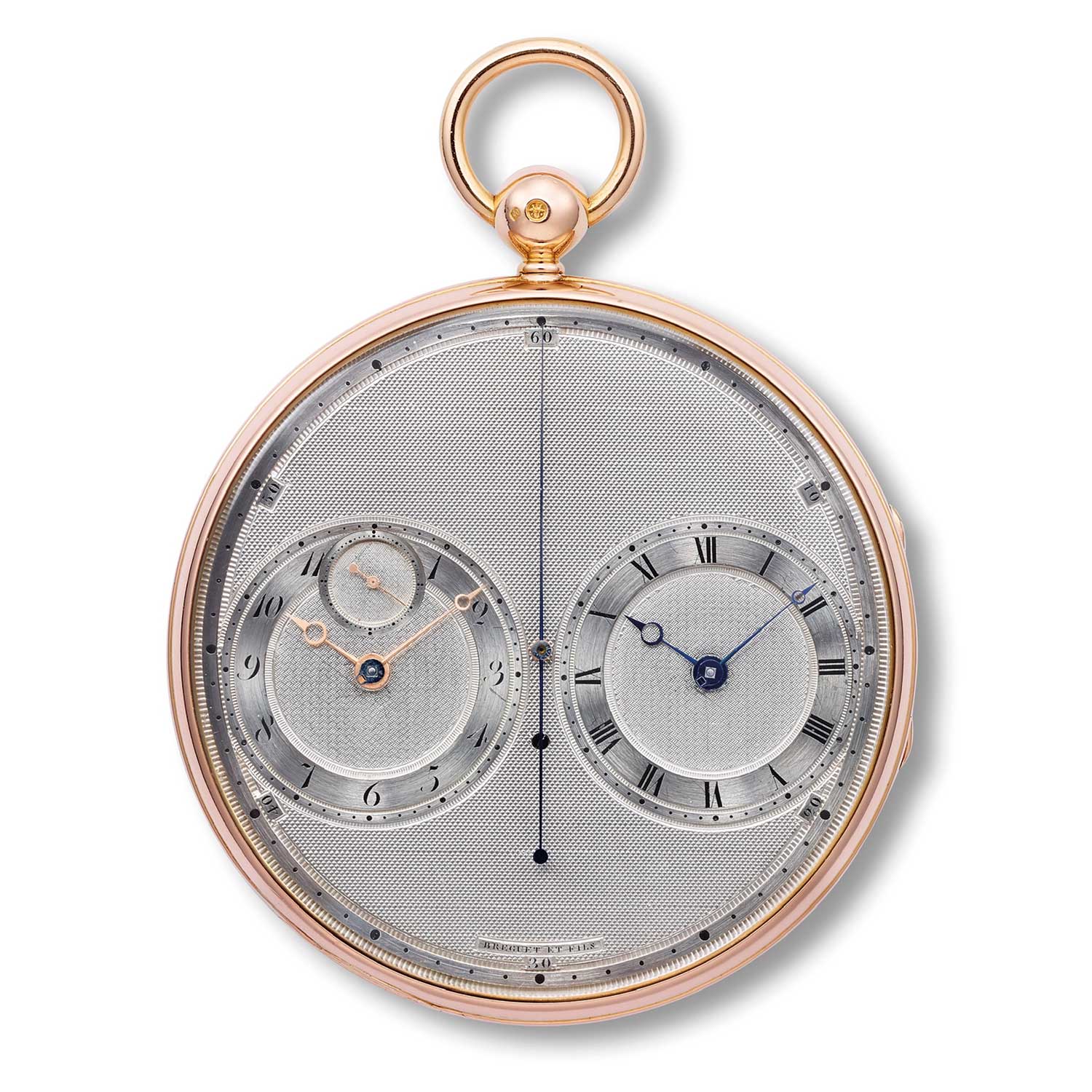
- “Breguet et Fils” No. 2667, sold to Mr. Garcias in London in 1814. Large gold precision watch constructed on the principles of resonance with two subsidiary dials and two movements, each with lever escapements and seconds indications (Image: ©Breguet Museum Collection)
-
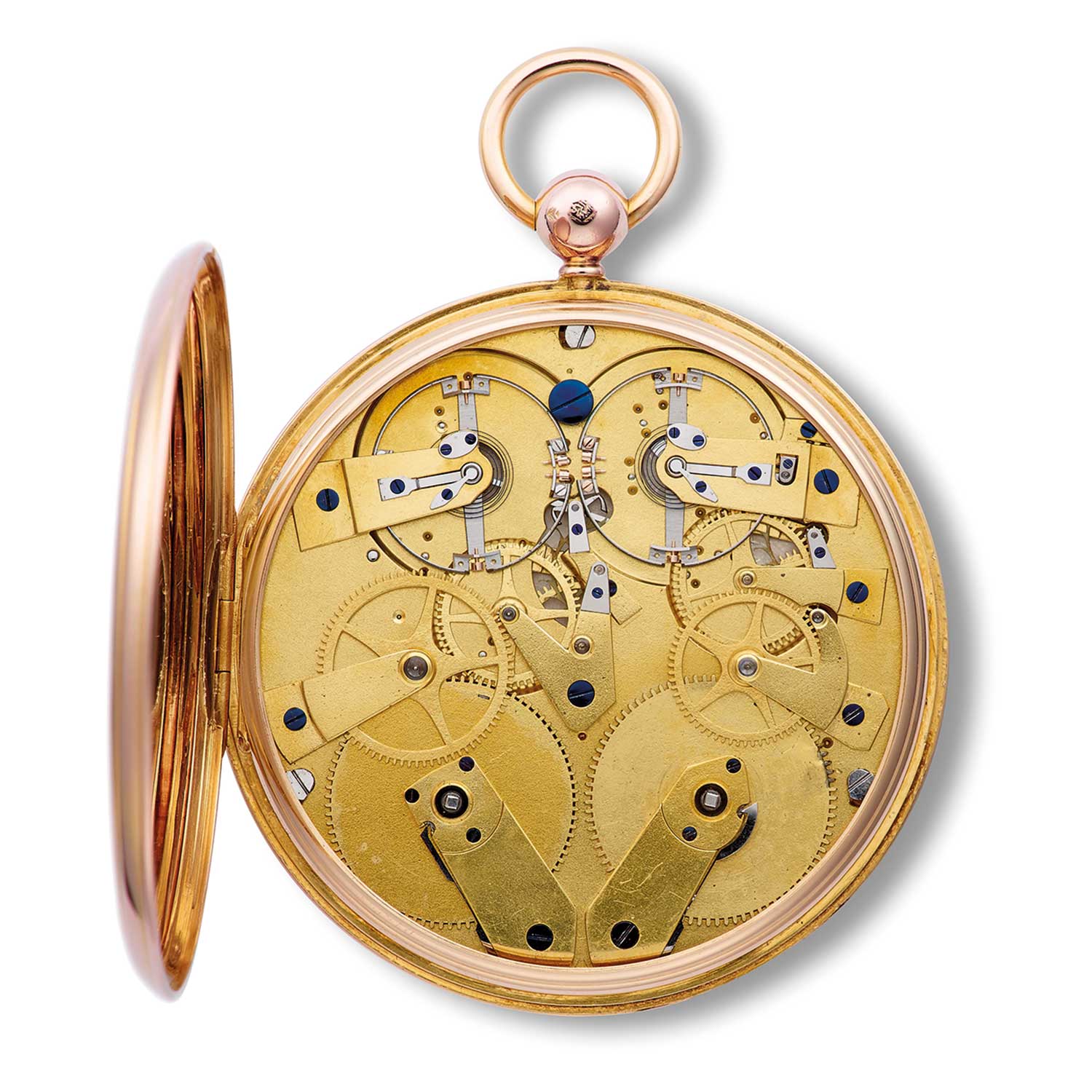
- “Breguet et Fils” No. 2667, sold to Mr. Garcias in London in 1814. The two movements are incorporated into the same movement plate, each with its own train of wheels. The free-sprung balances are adjacent to one another at the top of the movement, and parachute suspension can be seen on both balance cocks (Image: ©Breguet Museum Collection)
This idea grew out of his earlier observations in clocks, where he noted that the vibration of a pendulum transmitted through the frame could be moderated by the presence of a second pendulum. Translating this insight to portable watches, he reasoned that two balances mounted close together would influence one another through the plate, allowing errors in one system to be mitigated by the other. These resonance watches were experimental by nature and never intended for broad production, but they reveal the depth of Breguet’s theoretical curiosity.
Breguet also devoted considerable attention to timing instruments and scientific measurement. He introduced a Compteur in 1802, followed by the so-called Compteur Militaire in 1809, and he is well known for his production of inking chronographs. The inking chronograph itself was invented by one of Breguet’s most talented workmen, Frédéric Louis Fatton, who was granted British patent No. 4707 for the device on February 9, 1822. Breguet also produced a small number of split seconds stopwatches, of which four are currently known. Often described as “observation” stopwatches, these instruments are regarded as important precursors to the modern split seconds chronograph. Constructed to first-class standards, they were clearly intended for precise scientific or astronomical observation rather than short-duration timing.
-
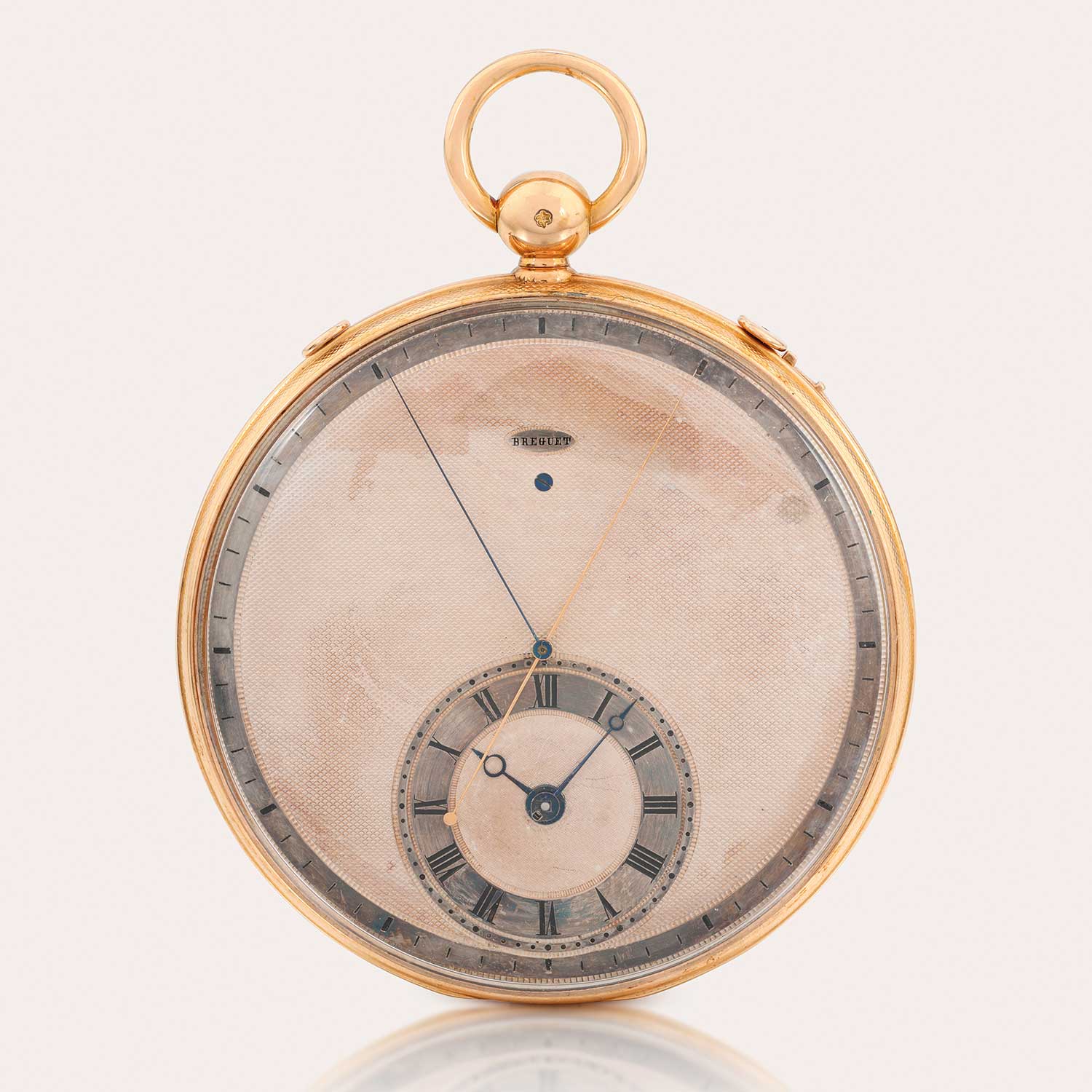
- Breguet No. 3168 sold to Monsieur Fournier on January 14, 1822. A 20K gold split seconds stopwatch (Image: Sotheby’s)
-
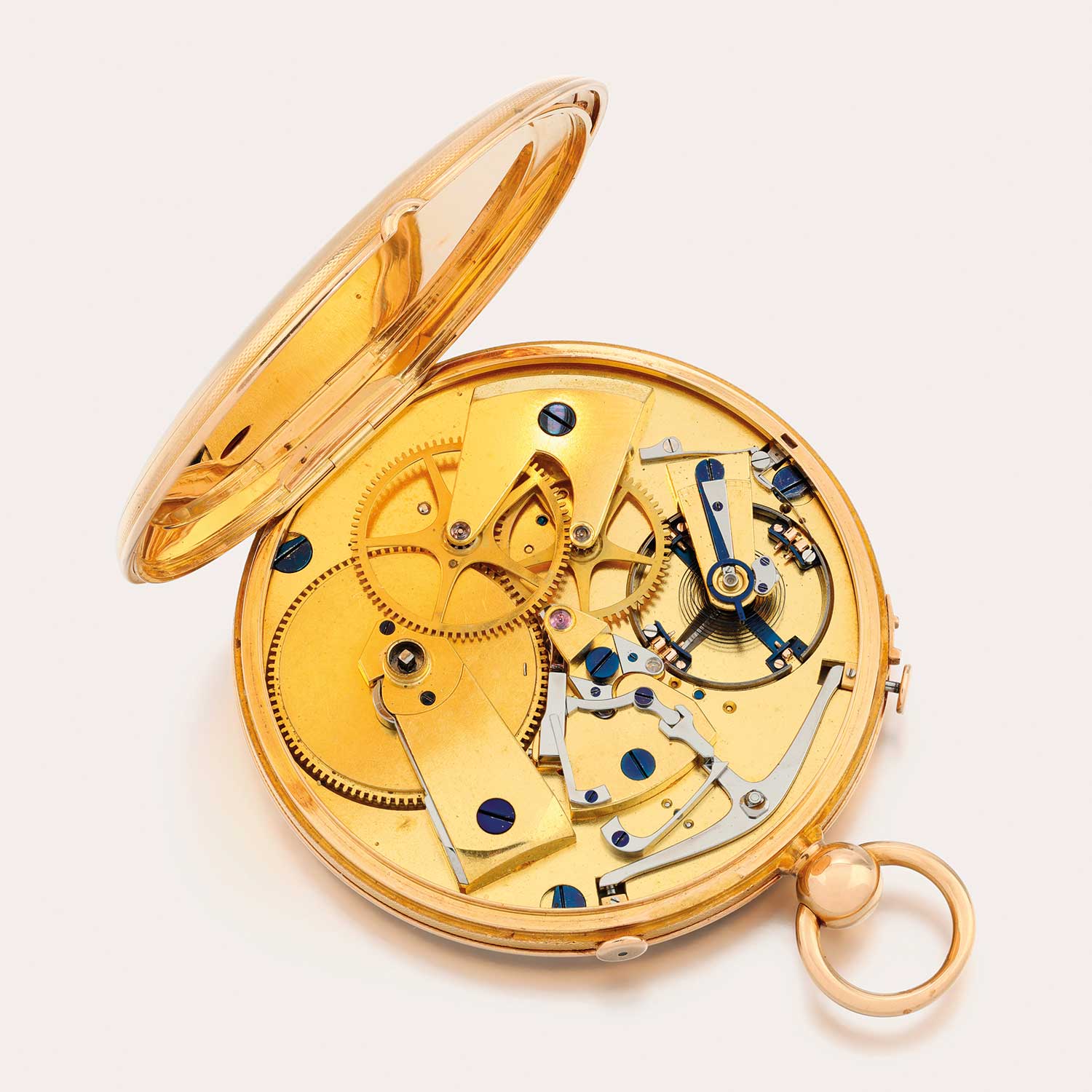
- Breguet No. 3168 sold to Monsieur Fournier on January 14, 1822. Detail of the movement (Image: Sotheby’s)
Taken together, these works underline an essential aspect of Breguet’s legacy. His genius lay not solely in invention, but in an exceptional ability to refine existing ideas, to test their limits, and to integrate theory, practice and use into coherent horological objects. Even where his experiments did not lead to widely adopted solutions, they reveal a watchmaker continually probing the boundaries of what portable timekeeping might achieve.
Across revolution, exile and restoration, Breguet’s career reveals a rare continuity of purpose. Political rupture repeatedly dismantled the structures that had sustained his early success, yet it never altered his conviction that the creation of a great watch required the unity of precision, utility and aesthetic beauty. His achievements were not confined to inventions that answered technical problems, but extended to the creation of a recognizable visual language through which the watch itself became a fashionable object of distinction. In this language, clarity, proportion and restraint operated not only as aesthetic principles but as markers of taste and modernity.
Guilloché dials, disciplined layouts and the quiet authority of his signatures were not decorative afterthoughts, but the visible expression of a coherent philosophy of making. Whether addressing elite patronage in ancien régime Paris or rebuilding stability through new commercial models after revolution, Breguet repeatedly recalibrated without sacrificing the elegance that defined his work. In this sense, his legacy lies not only in what he improved, but in what he made imaginable: a modern idea of the watch as both instrument and object of enduring style, and a “Breguet” aesthetic whose echoes remain audible in high watchmaking today.
Breguet
You may also like
Editorial
Revolution Awards 2025: Brand of the Year — Breguet and Vacheron Constantin
Jan 27, 2026
Editorial
Revolution Awards 2025: Brand of the Year — Breguet and Vacheron Constantin
Jan 27, 2026

Editorial
Revolution Awards 2025: Revolutionary of The Year — Gregory Kissling
Jan 27, 2026
Editorial
Revolution Awards 2025: Revolutionary of The Year — Gregory Kissling
Jan 27, 2026
Editorial
Revolution Awards 2025: Best Concept Watch — Breguet Expérimentale 1
Jan 27, 2026
Editorial
Revolution Awards 2025: Best Concept Watch — Breguet Expérimentale 1
Jan 27, 2026