Milestone Military Chronographs
As aviation became a critical part of modern warfare – much of WWII, in fact, took place in the skies – wristwatches became essential in managing new technologies and deploying strategies, paving the way for some of the 20th century’s most admirable and desirable watches.
With the coming of the war, various types of watches created with the pilot in mind came into being, some more impactful than others. The British Royal Air Force was issued with the legendary IWC Mk 11 while across the Atlantic, the U.S. Army Air Forces were equipped with the comparatively prosaic A-11, often referred to as “the watch that won the war.”
However, arguably the most fascinating and highly spec’d variety of pilot’s watches, particularly from a mechanical standpoint, was the chronographs, which enabled pilots to make rapid calculations and conduct precise timing. While most of them went undervalued for many years, they are – pardon the pun – flying high at the moment, not least because they offer a synthesis of purpose and beauty inside and out that is worth preserving.
The Flieger Chronograph
It all began with the Germans, who were said to be the only combatants during the Second World War to be strapped with proper stopwatch capabilities. The chronographs made for the Luftwaffe are no doubt among the most important WWII-era watches, being highly sophisticated both inside and out, and to which the more famous Type 20 owes much of its design.
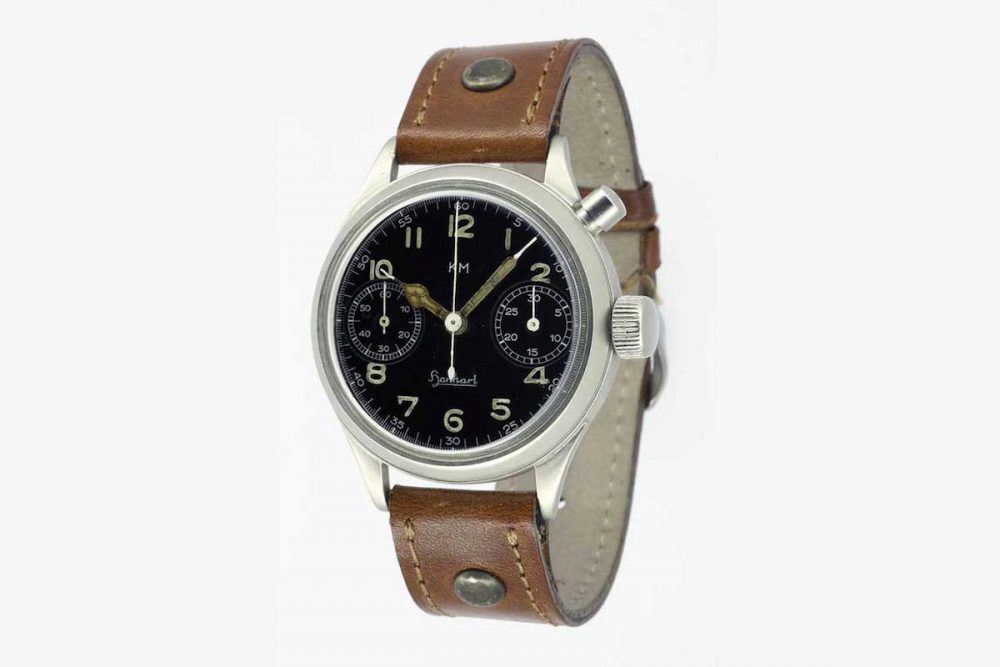
A 1938 Hanhart monopusher chronograph containing the calibre 40
Several versions of the watch were made by both companies, but the archetypal variant was the dual-button flyback chronograph that was powered by the Hanhart cal. 41 (1939) or the Tutima cal. 59 (1941). Hanhart also produced a version using the monopusher cal. 40 (1938) without a flyback mechanism. Mechanically speaking, the most apparent difference in a flyback chronograph would be the lack of a tab on the reset hammer which allows the chronograph to be reset while running. Upon reset, a separate lever disengages the chronograph. Then once the pusher is released, the lever is released, and a spring then pushes the gear train to engage the chronograph seconds once again.
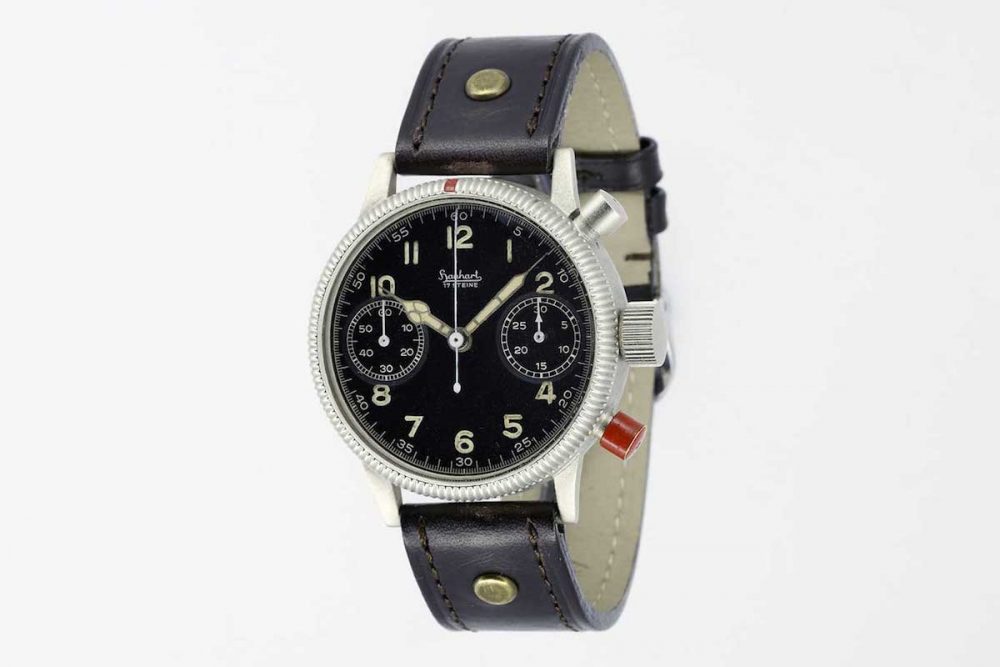
Hanhart's dual-button chronograph with the legendary flyback calibre 41
Alas, military watches, by their very nature, were used and abused, and these chronographs are rarely found in good condition also due to their case material. Their historical significance, however, is undeniable.
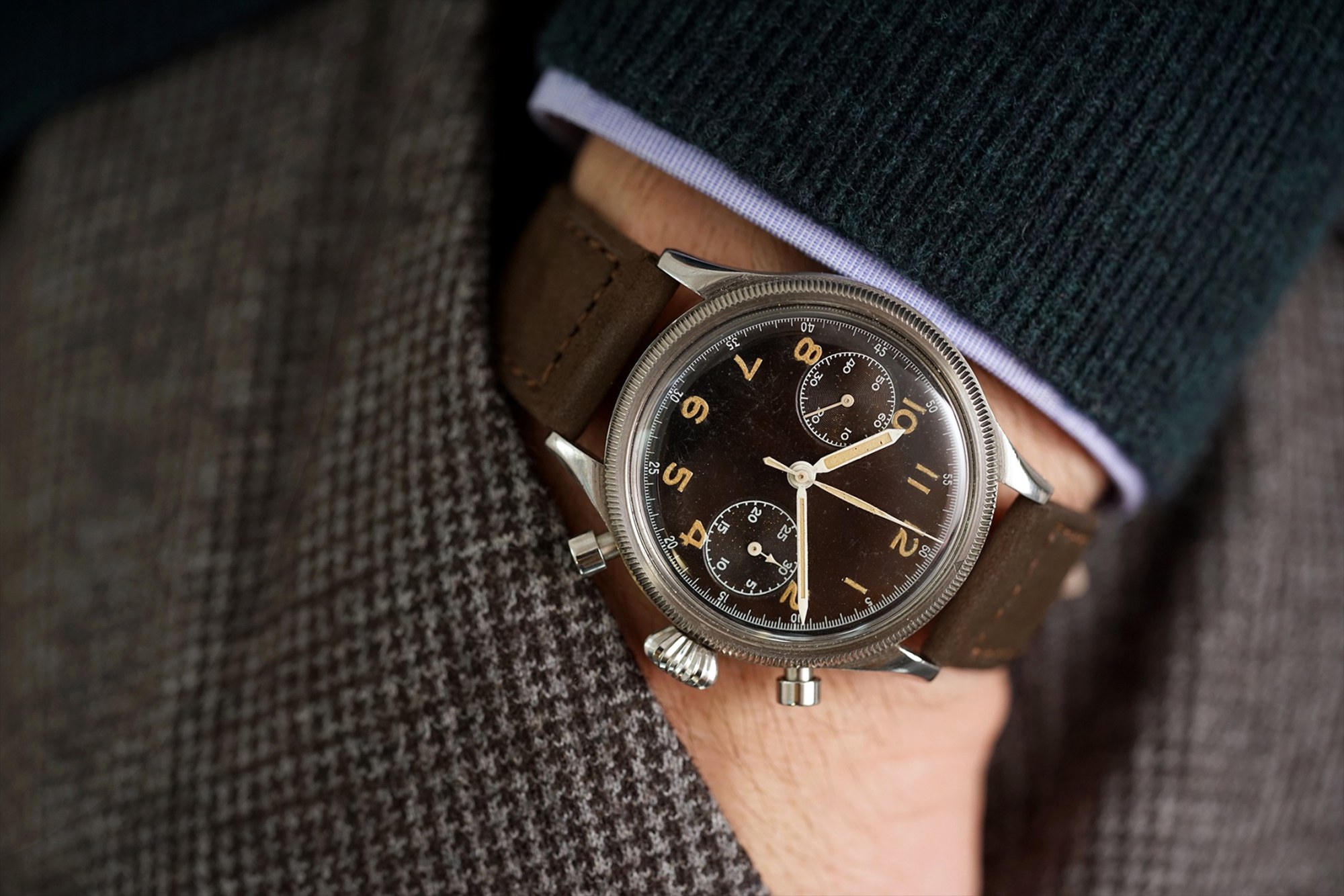
Following the Second World War, as part of reparations to France, Hanhart went on to produce Type 20 watches for the French Air Force under the name Vixa. It was one of at least seven firms who produced these Type 20 chronographs, along with Mathey-Tissot, Airain, Auricoste, Seliva Chronofixe, Dodane, and of course, Breguet whose Type 20s are the most coveted today.
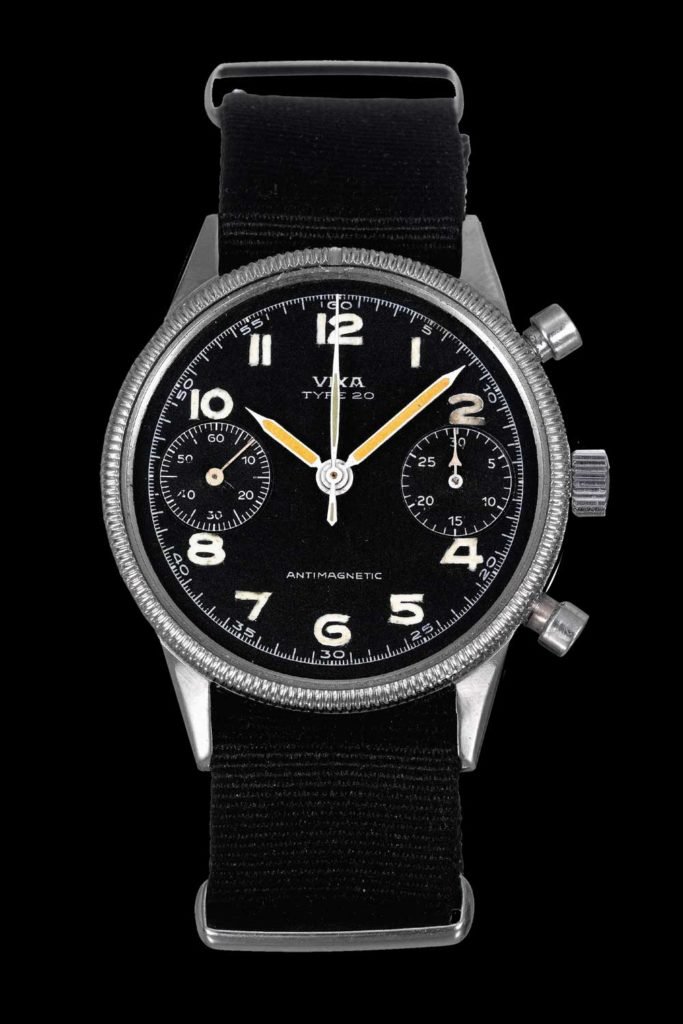
Vixa Type 20 made by Hanhart
Mathey-Tissot, who delivered chronograph wristwatches to the U.S. Army’s Corps of Engineers during the first world war, was subcontracted to produce the Type 20 for Breguet. It is believed that approximately 2000 Type 20 chronographs were delivered by Breguet in the 1950s. They were equipped with the Valjoux 222. Later versions sold to the civilian market were powered by the 222, 225, 235 and 720.
As manufacturing costs rose, the French government discontinued its use. However, Breguet began selling these watches to the general public with their name on the dial. In contrast to the original, military-issue versions, the watches are identified by the model name in Roman numerals – Type XX.
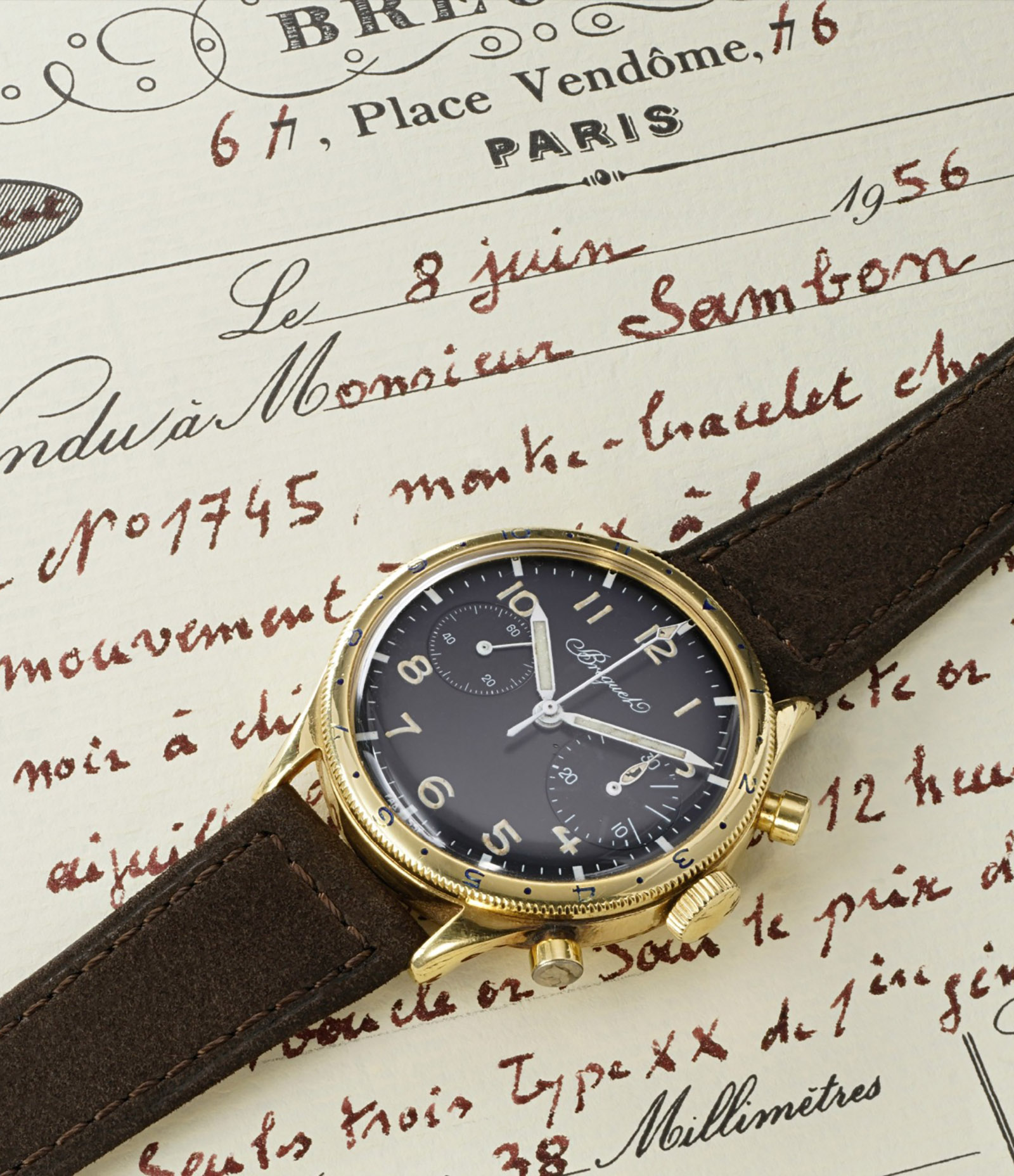
Breguet Type XX in yellow gold sold at Phillips for 200,000 Swiss francs in 2018. (Image: Phillips)
RAF Lemania
The most famous military watch on the other side of the English Channel is no doubt the legendary IWC Mark 11 issued to the British Royal Air Force. But there was also an interesting monopusher chronograph developed for issue to the MoD in the late 1940s to 1970s by Lemania.
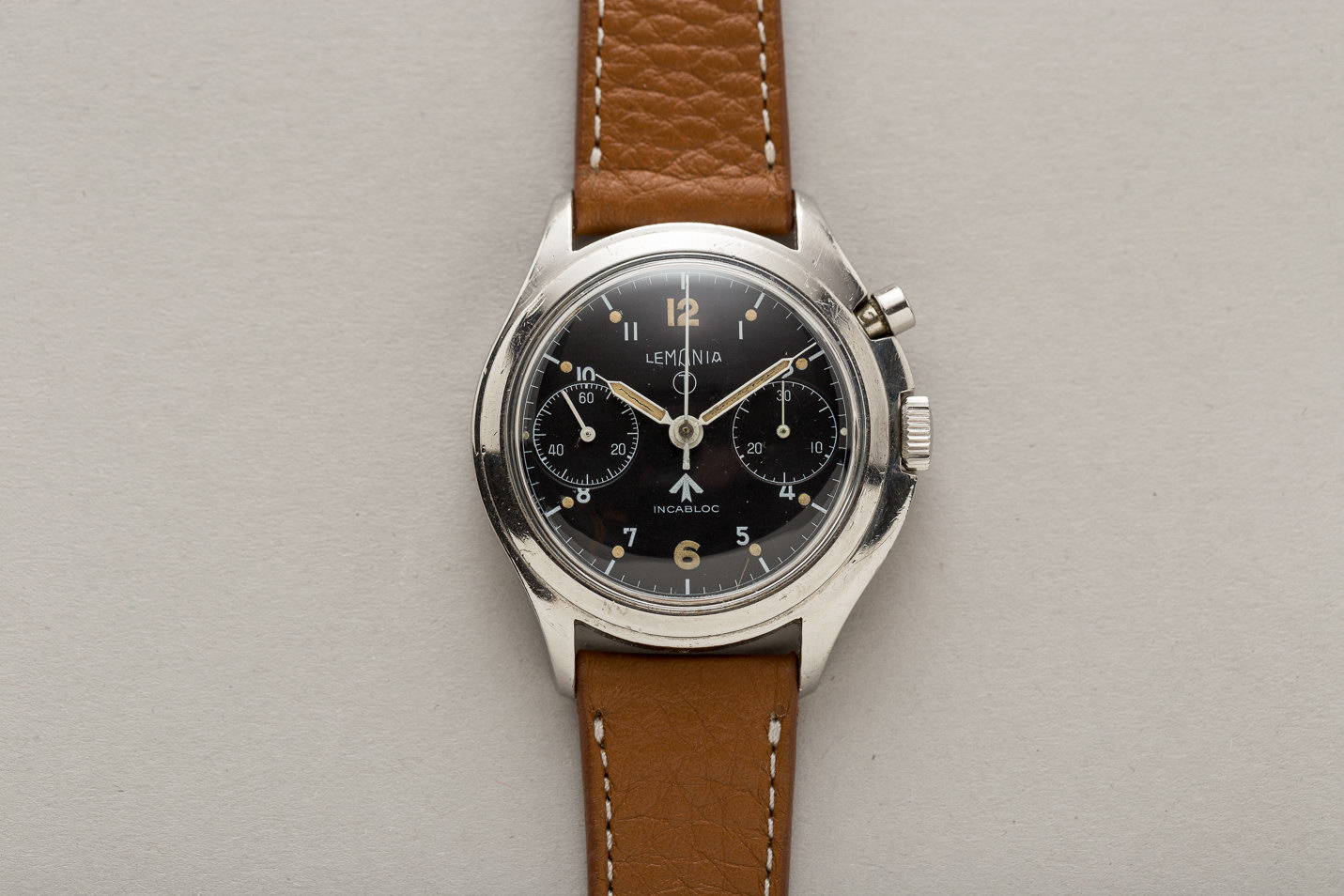
A fine example of a RAF Lemania Series 3 with a distinctive asymmetric case to protect the crown and pusher. (Image: Shuck the Oyster)
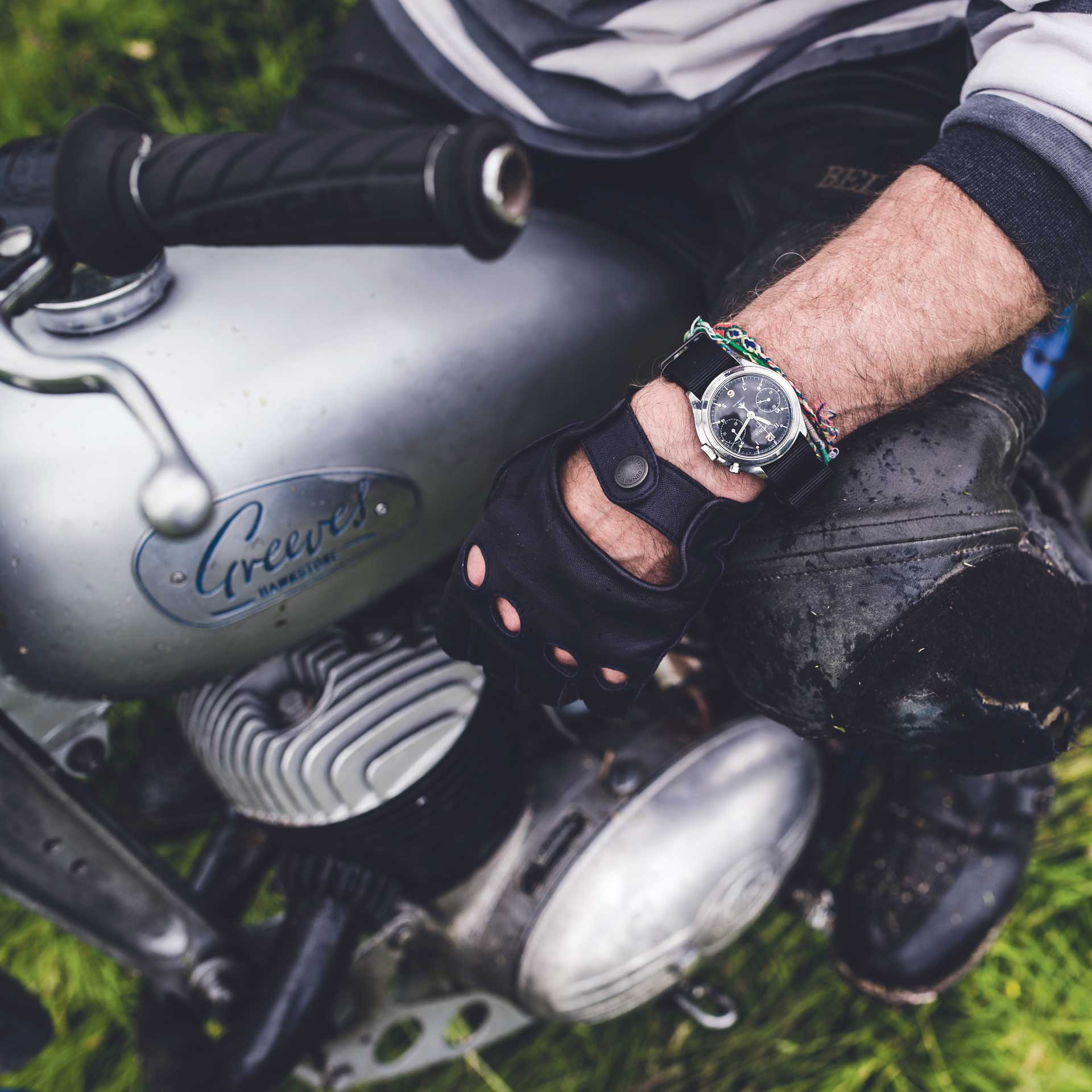
Another example of the RAF Lemania Series 3
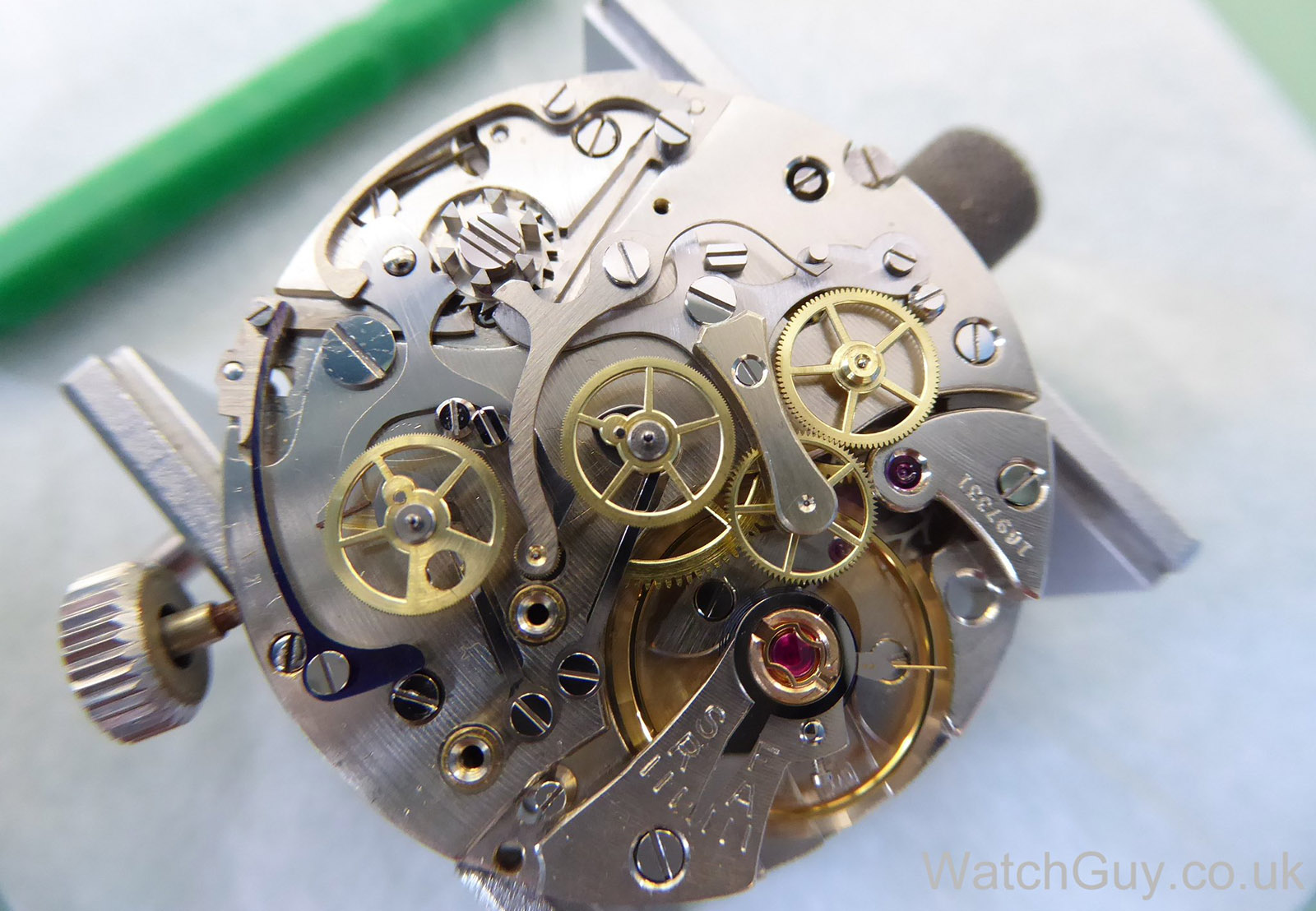
The Lemania 2220 movement with an oscillating pinion visible on the left next to the minute recorder wheel. It couples the center wheel of the movement to chronograph minutes wheel. (Image: watchguy.co.uk)
Among some of the most highly prized military chronographs today are the CP-1 and CP-2 (Cronometro da Polsa Type 1 and 2) developed for the Aeronautica Militare Italiana (AMI), or Italian Air Force in the 1960s through the 1970s and sold by Roman retailer A. Cairelli. However, the story of the CP-1/CP-2 chronograph began with an even more remarkable watch – the Type HA-1, an extremely rare, oversized split-seconds chronograph from 1953 made by Universal Geneve.
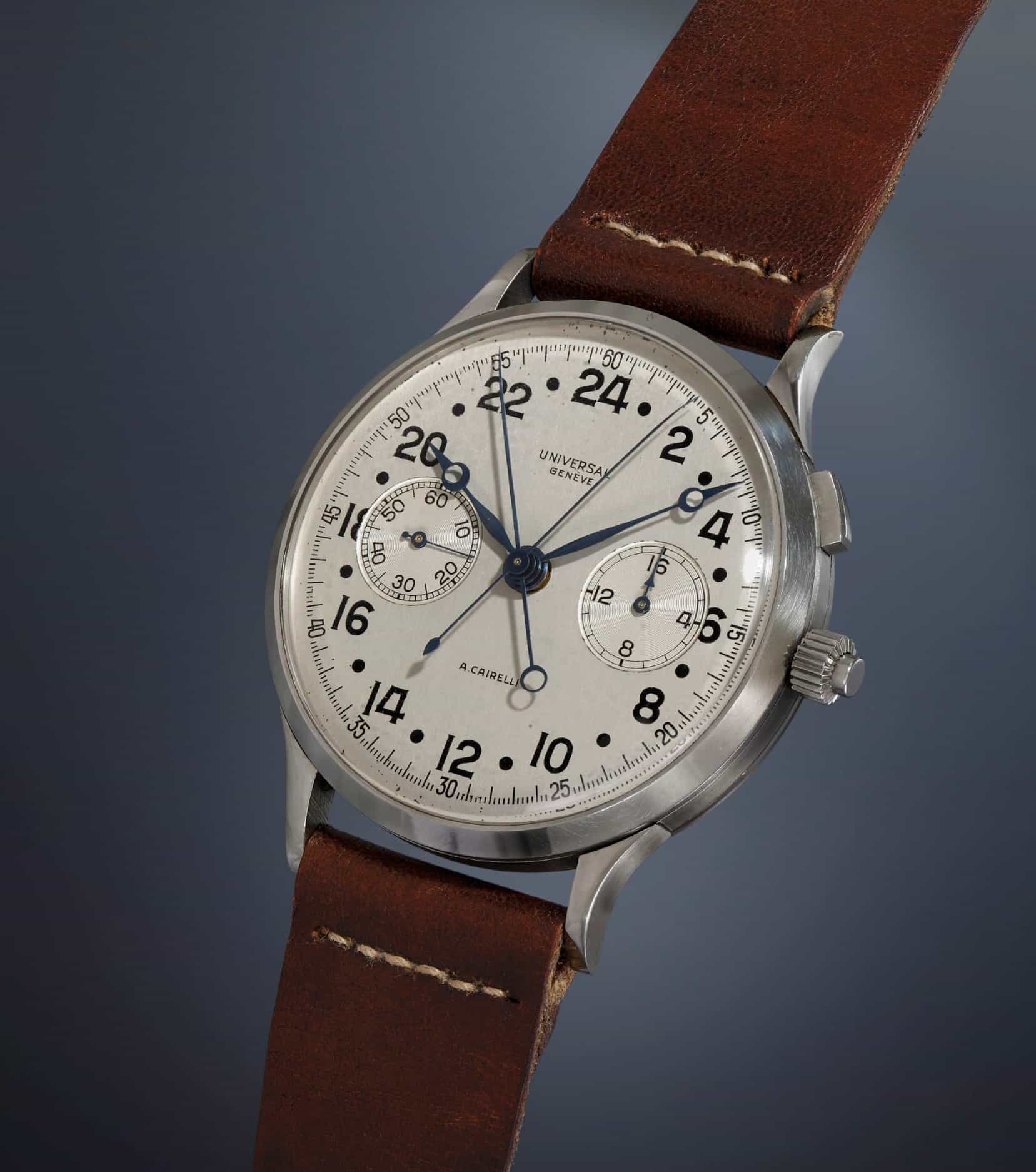
The Universal HA-1 that sold for 197,000 Swiss francs at Phillips in 2016. (Image: Phillips)
The HA-1 was replaced by the CP-1 produced by Leonidas and later the CP-2 by Universal Genève, Zenith and once again, Leonidas. The two generations differed in size: the CP-1 was 39mm wide while the CP-2 was 43mm. Both, like the HA-1, were powered by movements originally designed for pocket watches, hence their dimensions. The CP-1 was powered by the Valjoux 22-2 movement with flyback and hacking functions.
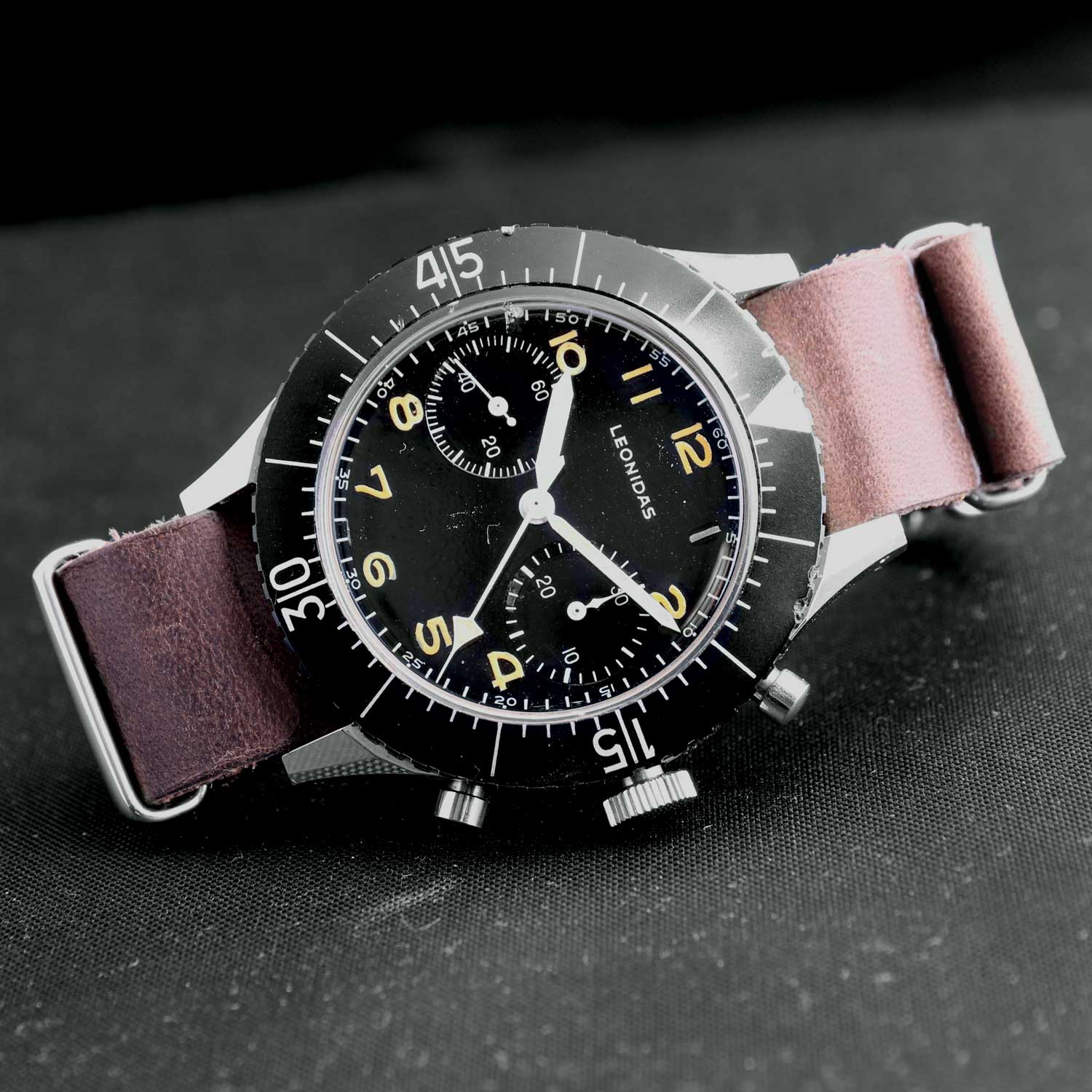
Leonidas CP-2, the predecessor of the Heuer Bundeswehr
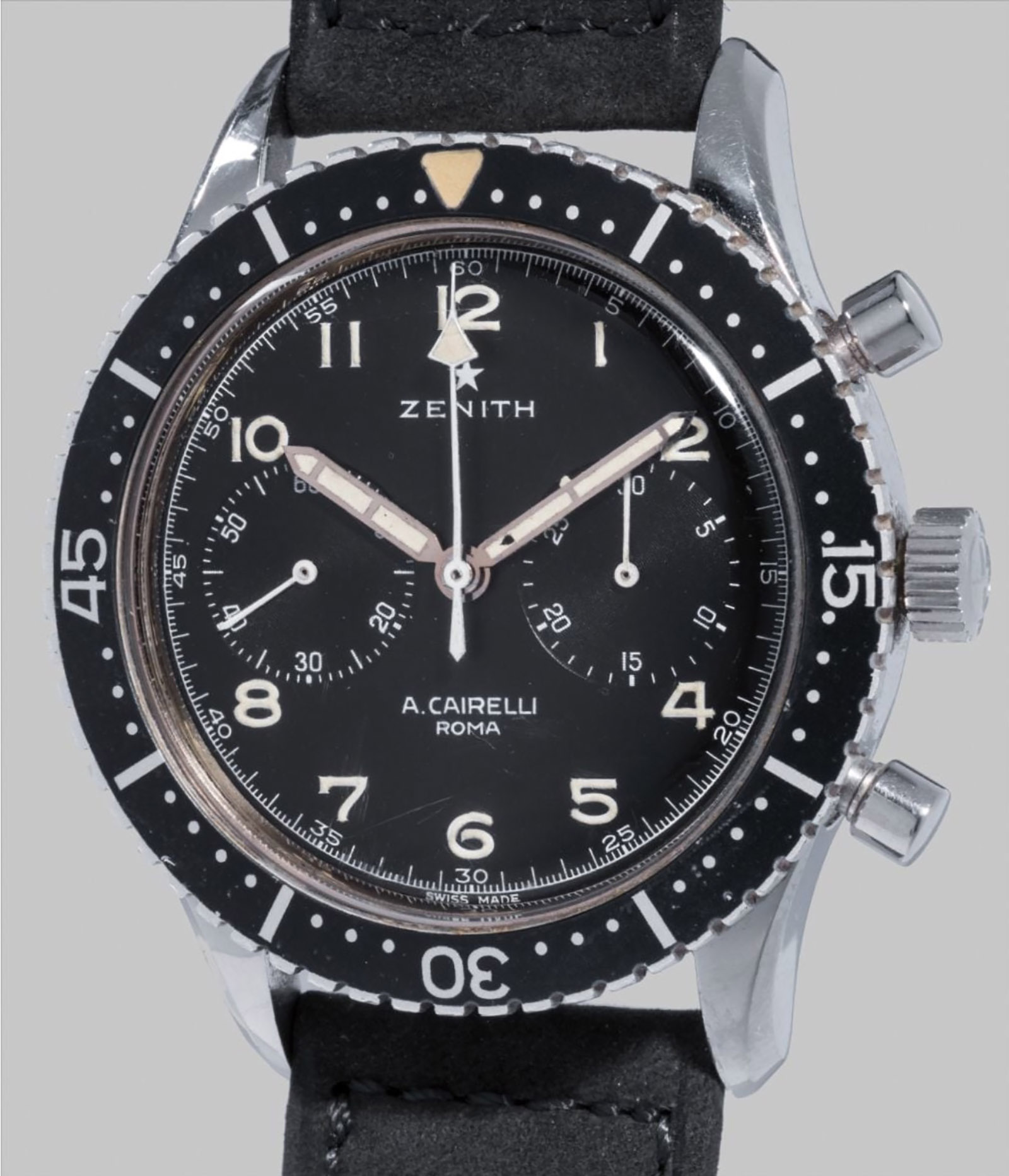
Zenith CP-2 from circa 1970. (Image: Phillips)
All CP-2s featured a three-part case with screw-down case back, an inner dust cover, a black dial illuminated with tritium, a bi-compax chronograph layout and an outer railroad track. In recent times, the CP-2 watches produced by Zenith have fetched sky-high prices on the vintage market.
Bundeswehr Chronographs
From the early 1960s to the early 1970s, Heuer, which acquired Leonidas in 1964, produced the 1550 SG flyback chronograph for the West German Federal Defense Force, or Bundeswehr. Though it is manifestly designed as a pilot’s watch, it was made to conform to the specifications of other service branches as well.
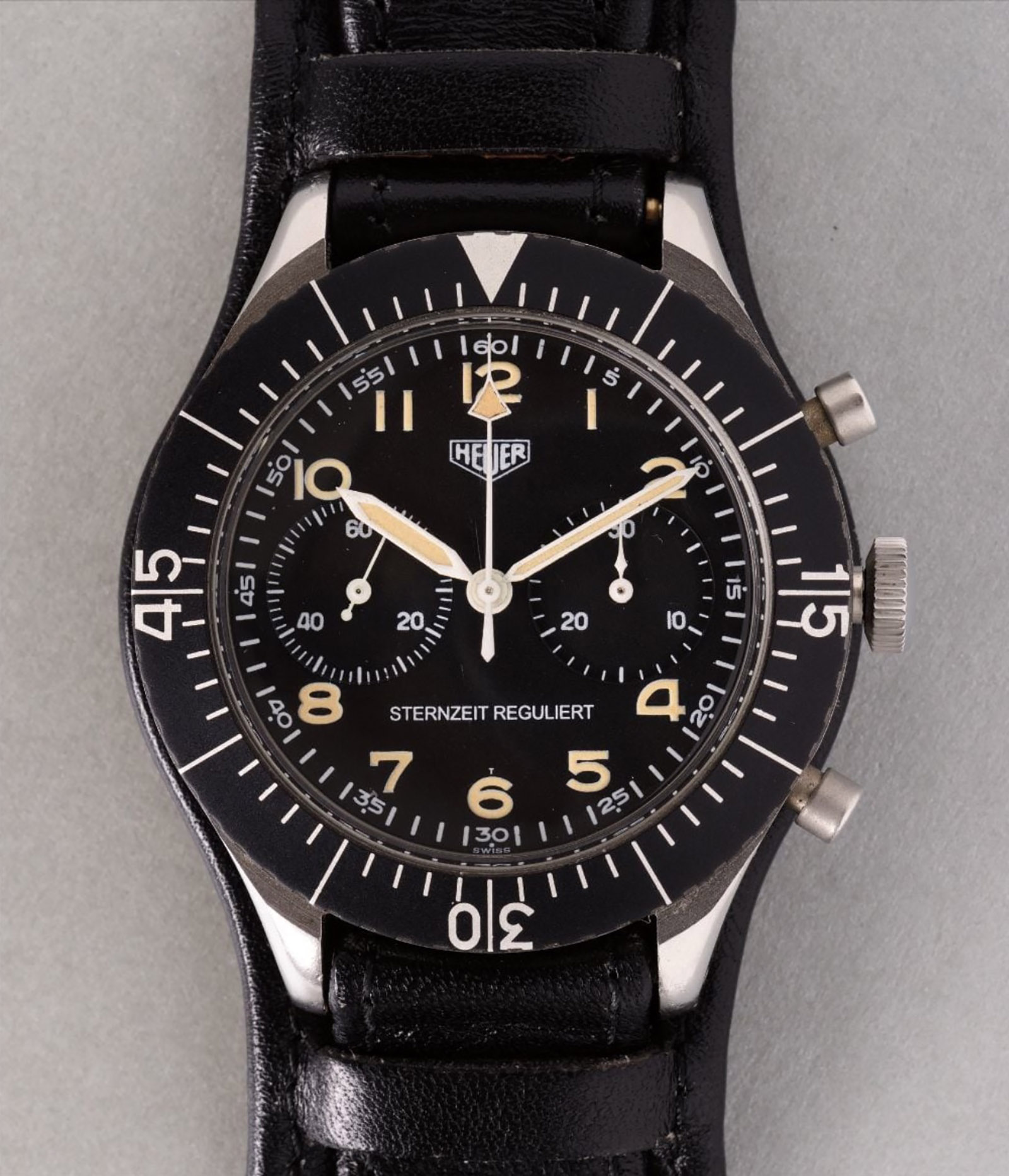
The Heuer ref. 1551 SGSZ “Sternzeit Reguliert” with a movement that is geared for sidereal time. (Image: Phillips)
Like its predecessor the Leonidas CP-2, the Heuer Bundeswehr is a well-proportioned, contemporary-sized chronograph with a strikingly wide, black-coated rotating bezel and oversized sub-dials. They were powered by the flyback Valjoux 222 and later, 230 movements. One quirk was that the case was constructed such that the movement loads from the front. The bezel and crystal are attached to the inner case with four screws visible on the back.
The watches were fitted with a Bund-style leather cuff strap, which was meant to protect the pilot’s skin against extreme temperatures.
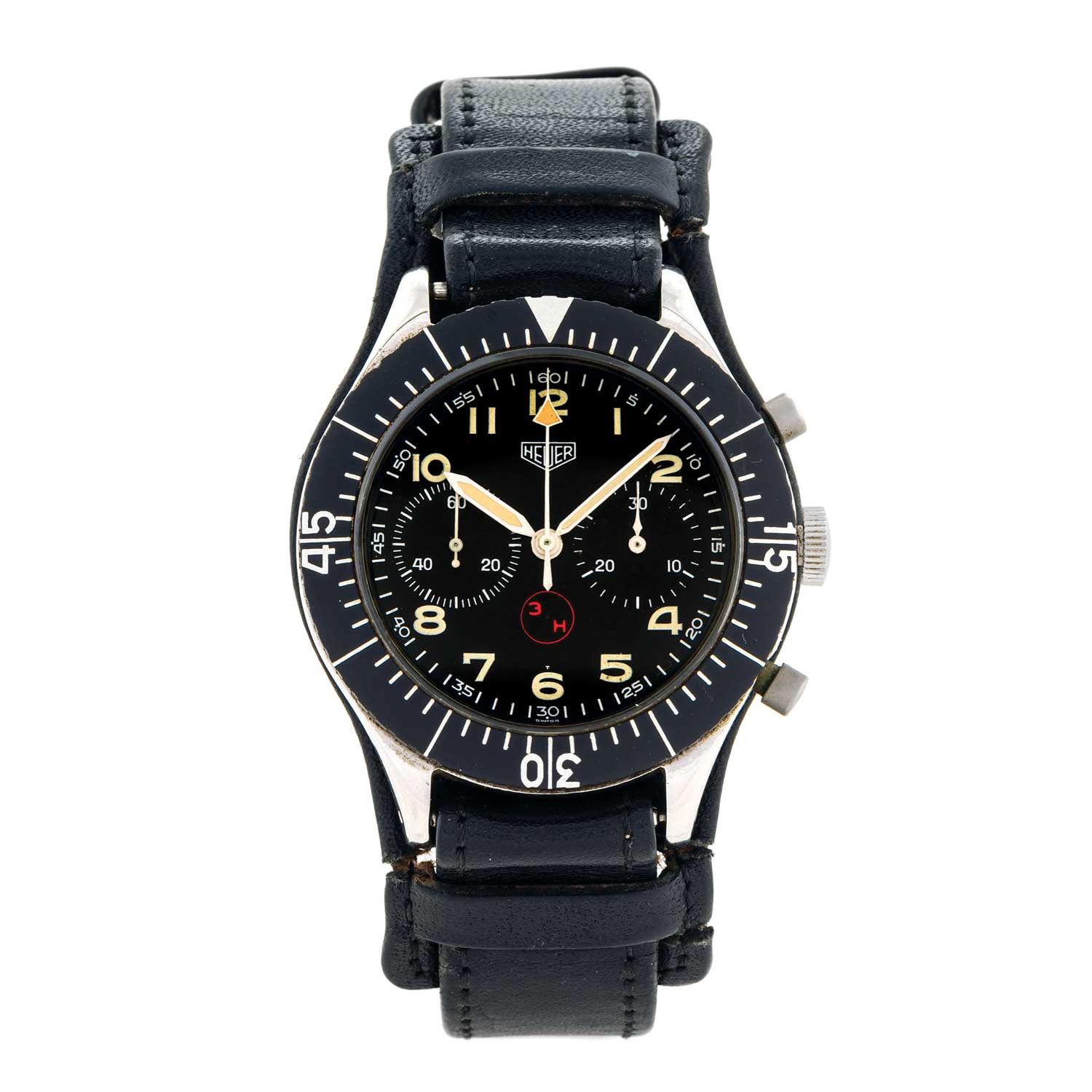
Heuer '3H' 1550 SG Bundeswehr
While there are numerous versions of the watch, they vary superficially in terms of logo and markings. The earlier radioactive substance was replaced by tritium, hence the dials were marked with “3H”, an abbreviation for Hydrogen-3, the chemical compound for the luminous material. Some versions of the dial included a small “T” above the six o’clock index to denote the use of tritium.
Today, the Heuer Bundeswehr, with the exception of the “Sternzeit Reguliert” version, can be had for 5,000 to 10,000 Swiss francs, which is still a bargain considering its military provenance, contemporary good looks and the superb flyback movement within.
One of the most iconic yet underrated military watches of the 80s was the Porsche Design Chronograph 1 made by Swiss military-watch supplier, Orfina. The watch was originally designed for sale to the public in 1972 by Porsche before it was adopted by various air forces around the world.
Importantly, the ingenuity of its aesthetic design and movement was a sharp reflection of its time as the quartz crisis prompted many inspiring breakthroughs across the board as a last hurrah. The case was ovoid in shape paired with a bracelet, but the key feature was its uniform, matte black finish. The Porsche Design Chronograph 1 was the world’s first all-black watch achieved with a surface treatment then only used on military aircraft – physical vapor deposition (PVD).
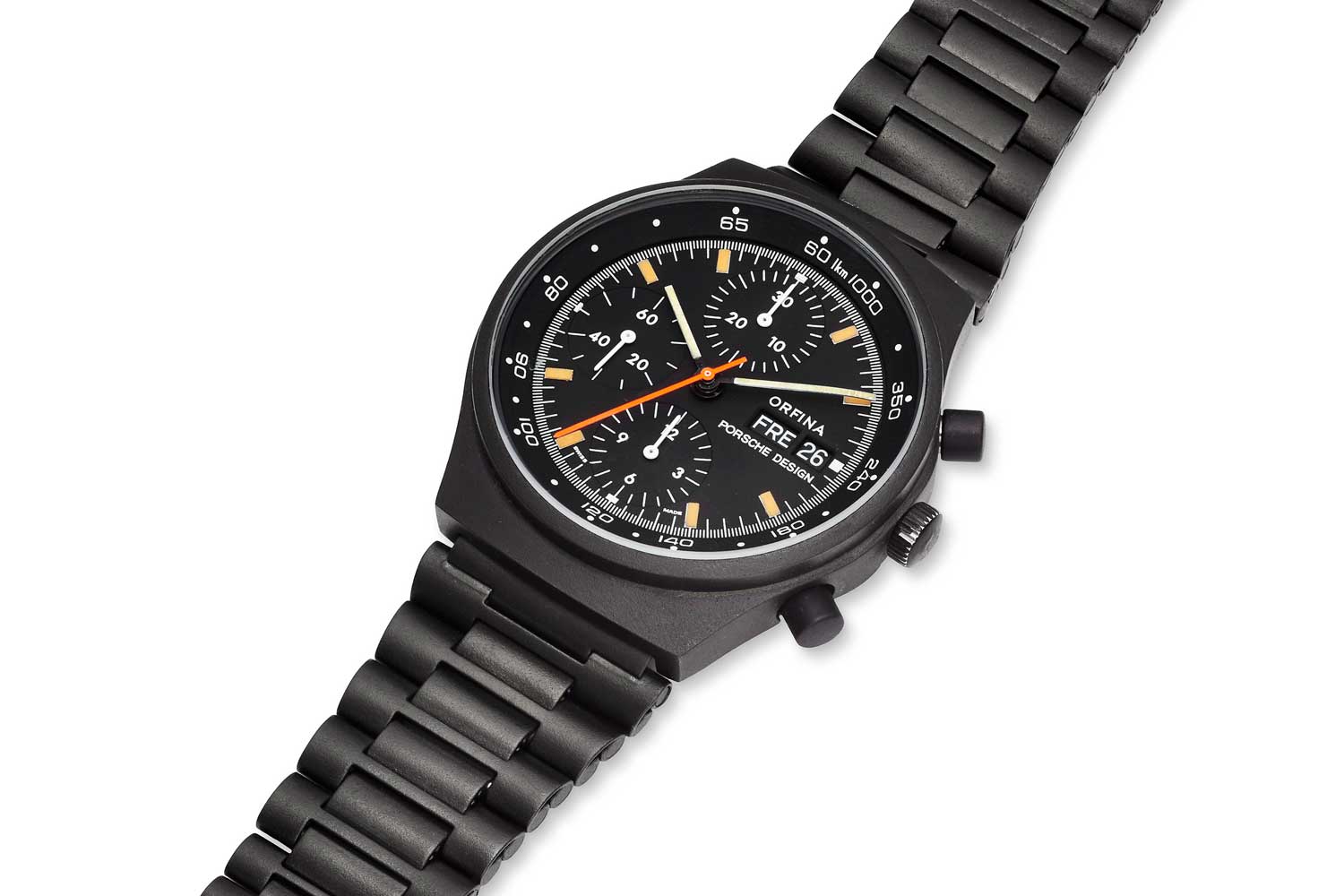
Orfina chronograph by Porsche Design driven by the 7750 (Image: Christie’s)
Though both were cam-switch chronographs, they were worlds apart in terms of construction. While the Valjoux 7750 relied on an oscillating pinion to couple the fourth wheel of the movement to the chronograph seconds, the Lemania 5100 had a vertical clutch integrated with the fourth wheel, which drives the chronograph seconds wheel above directly.
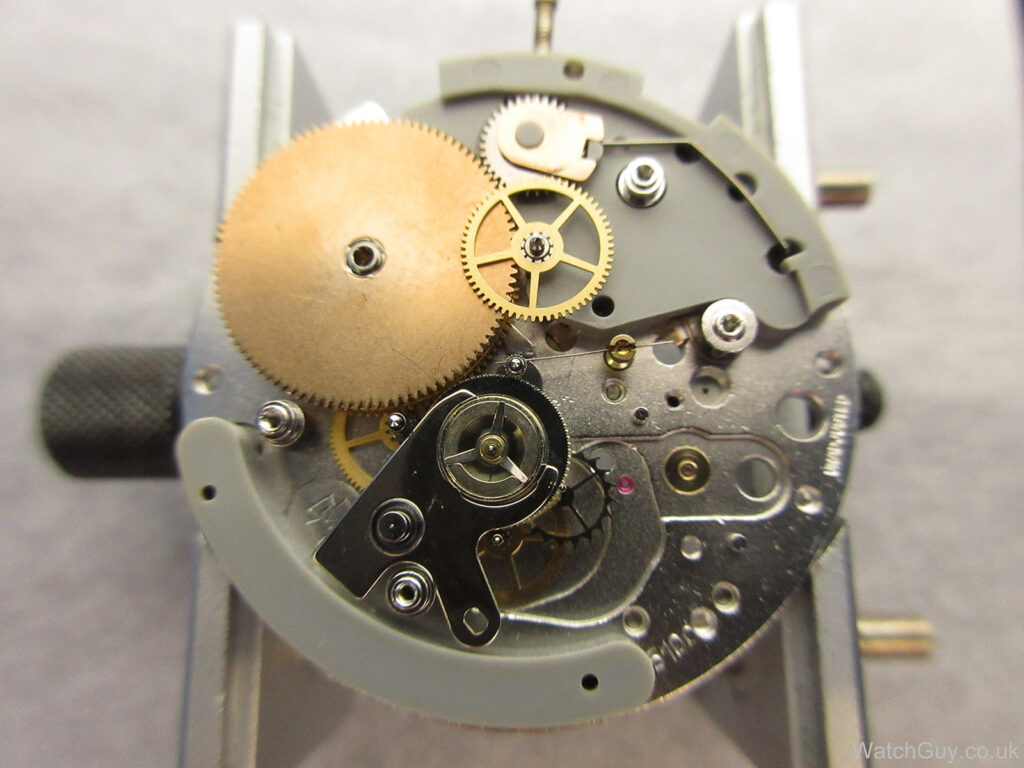
The Lemania 5100 with an anachronistic pillar-type construction. The vertical clutch next to the escape wheel is integrated with the fourth wheel and drives the chronograph seconds wheel above directly. (Image: watchguy.co.uk)
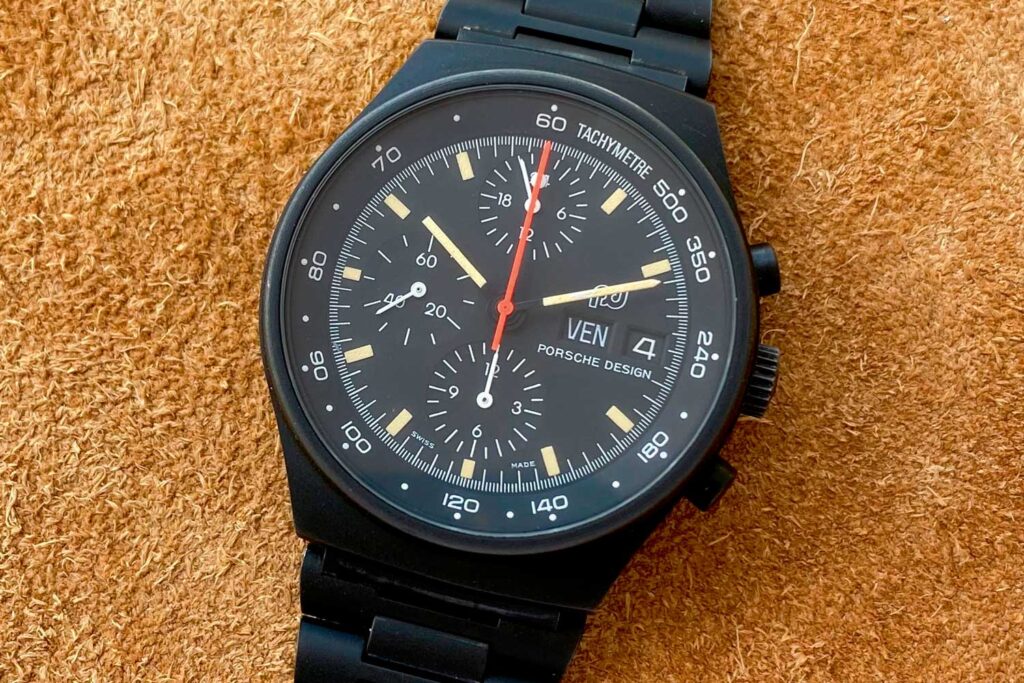
The Lemania 5100 was easily distinguished on the dial side by a 24-hour sub-dial at 12 o'clock and a central minute hand mounted co-axially to the chronograph seconds hand. (Image: Watchpool24)
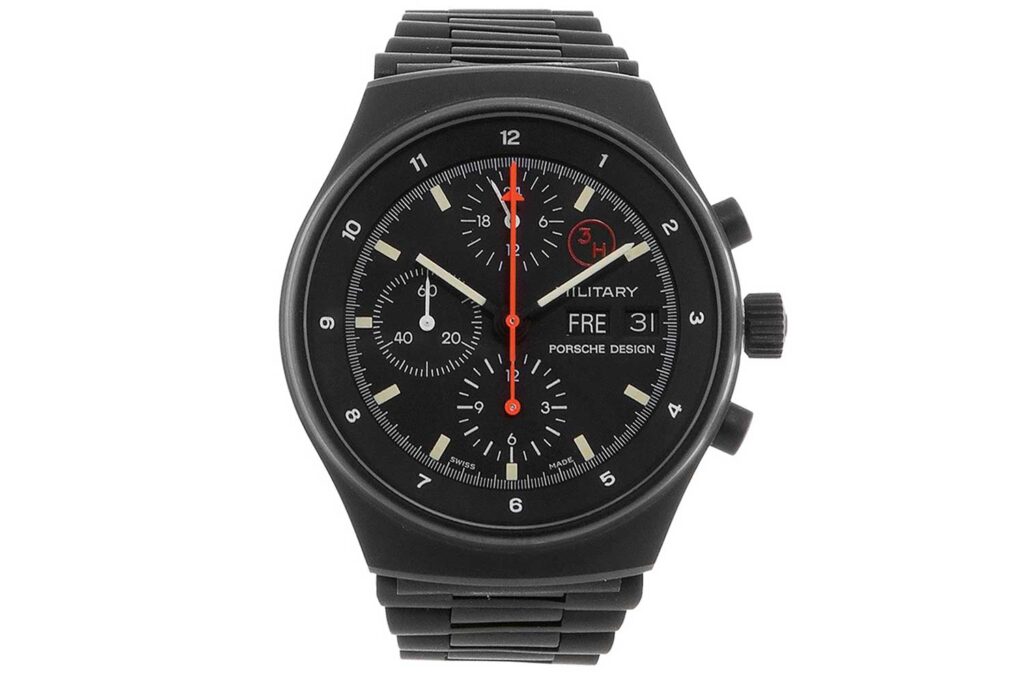
An example of a military version with a 12-hour scale to enhance readability in a cockpit. (Image: A Collected Man)
You may also like
Editorial
The Angle of the Angels: The 165-Year Quest for the Inclined Tourbillon
Oct 2, 2026
Editorial
The Angle of the Angels: The 165-Year Quest for the Inclined Tourbillon
Oct 2, 2026
Reference
Five Chapters of Innovation in Complications: The Audemars Piguet RD Series
Oct 22, 2025
Reference
Five Chapters of Innovation in Complications: The Audemars Piguet RD Series
Oct 22, 2025
Reviews
The Slow Burn: My Love Affair with Grand Seiko
Jul 28, 2025
Reviews
The Slow Burn: My Love Affair with Grand Seiko
Jul 28, 2025